
A Fortress of Order Within Chaos • Ingrina Shieh
BY INGRINA SHIEH
Urban landscapes have always enticed to me. I love how lines intersect with other lines and the way shapes within, through, on top of other shapes create the towering skyscrapers we recognise so well. At a distance, city skylines emanate a beautiful stillness and unflinching majesty while within them pulses the movement and sounds of millions of lives. People, machines, and people on machines, darting around at a frenetic pace; opportunities opening and shutting before me. It exhausts and excites me. And though I’m constantly surrounded by people, I can sometimes feel the loneliest I’ve ever felt. Such contrasts hold me captive between repulsion and absolute adoration, so I‘ve come to simply accept the city as it is: a fortress of order within chaos.
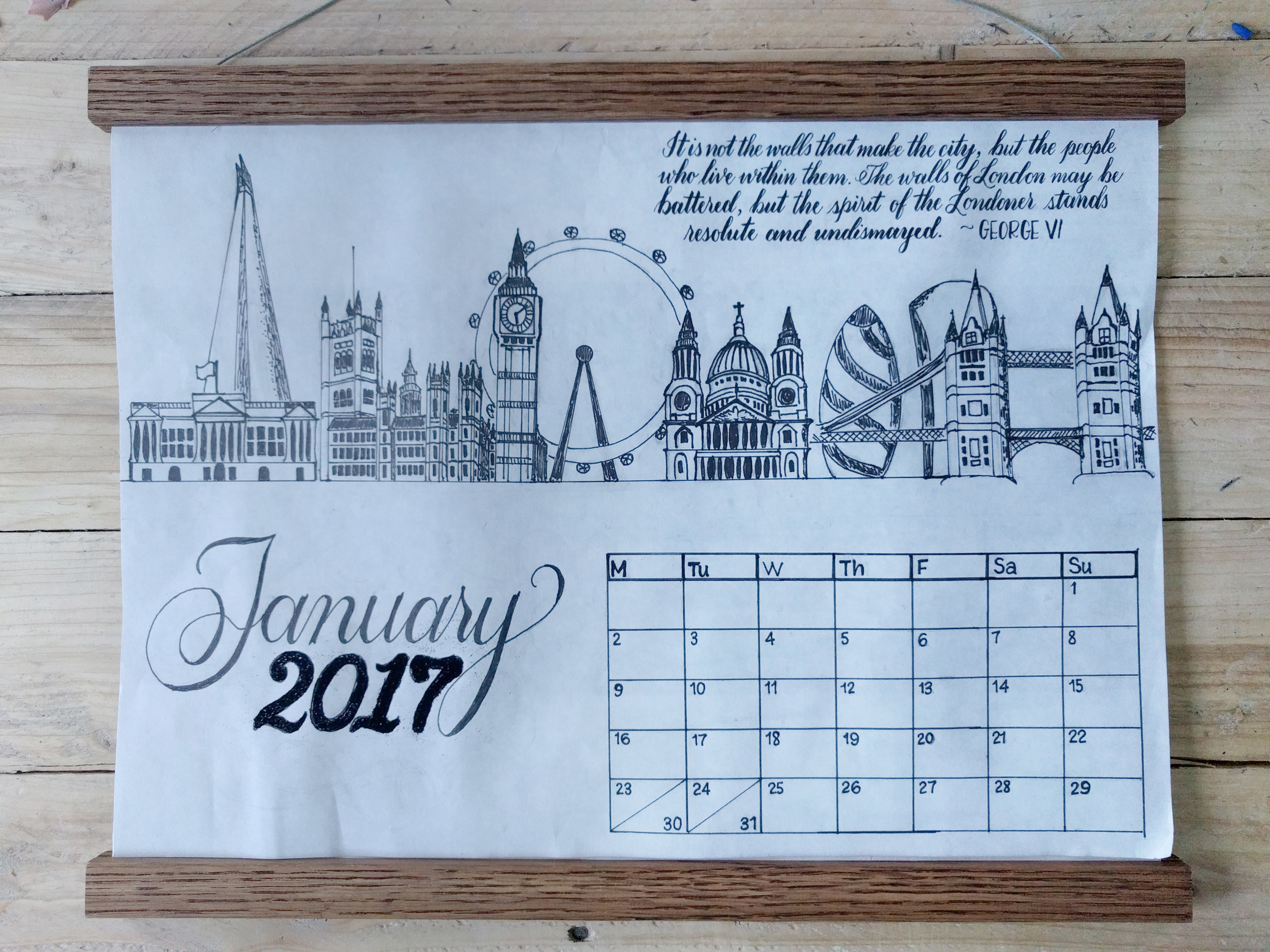
It thus seemed fitting that I design my first hand drawn 2017 calendar based on cities of the world. I don’t know what possessed me to draw it rather than design it with software, but once I got the idea, it stuck. I also thought working with cityscapes by hand might help me learn the basics of design and drawing: how to put lines and shapes together and how light hits objects at certain angles.
Naturally, I started off with the city I call home — London — though I had already done practise sketches with Venice and Boston. This sketch took a good deal longer and involved more ruler-ing and erasing than I’d anticipated, but two days before 1 January 2017, my shaky hands committed the sketch to ink, and I even embossed ‘2017’ for the hell of it.
As a tribute to Londoners, I added a quote by George VI: It’s not the walls that make the city, but the people who live within them. The walls of London may be battered, but the spirit of the Londoner stands resolute and undismayed. The end result is not completely what I had envisioned — a little flat, lacking in character and depth, a little boxy — and I realise that I need to upgrade my drawing pens. But this first step has provided a foundation for the coming months’ designs and further ideas to zoom into cities on a micro level.
I’m excited about interacting differently with the iconic buildings I see so regularly in person and online. In drawing London, an unexpected intimacy came from having to examine details — ornate and simple — and deciding how to transfer them to paper. When I passed Big Ben and the Palace of Westminster during my early morning run, I noticed how many elements I missed or couldn’t fit onto the page. But, by studying it as I had, I was able to appreciate its grandeur and craftsmanship more deeply and to admire the fact that, long ago, this icon was borne out of someone’s careful etchings on paper.


Ingrina Shieh lives and works in London, where she is learning design and lettering in her small loft. When her hands are hurting, she takes her legs out to run, walk, or cycle around London's windy streets. Or she goes to buy more paper and pens.
Creating a Visual of the Very Big Picture • Steph Jagger
When I look back at my life, a pretty clear pattern emerges: I like to go big.
It started with Egg and Spoon races and then turned into things like traveling to far-flung countries, smashing world records, and writing books. Well, to be fair, it’s just one book so far, but I know I’ve got some more in the chambers, so let’s just say books (plural).
In any case, when I dig deeper into all of those things, I see another pattern, one that’s buried one layer under going big. And when I think about it, perhaps its one of the ways I go big. The pattern is called writing, by hand, on paper. I scribble ideas, notes words, and phrases, I use them to create a visual of the very big picture. I scrawl paragraphs down in journals to “skim the fat” from my brain before writing things in a more solid form. I put ink to paper because it helps ideas come out of my head because what use are they in there anyway? I need them out. And once they’re out in some hand-written, half-formed way I can start playing with them and turning them into something big, something bigger than big.
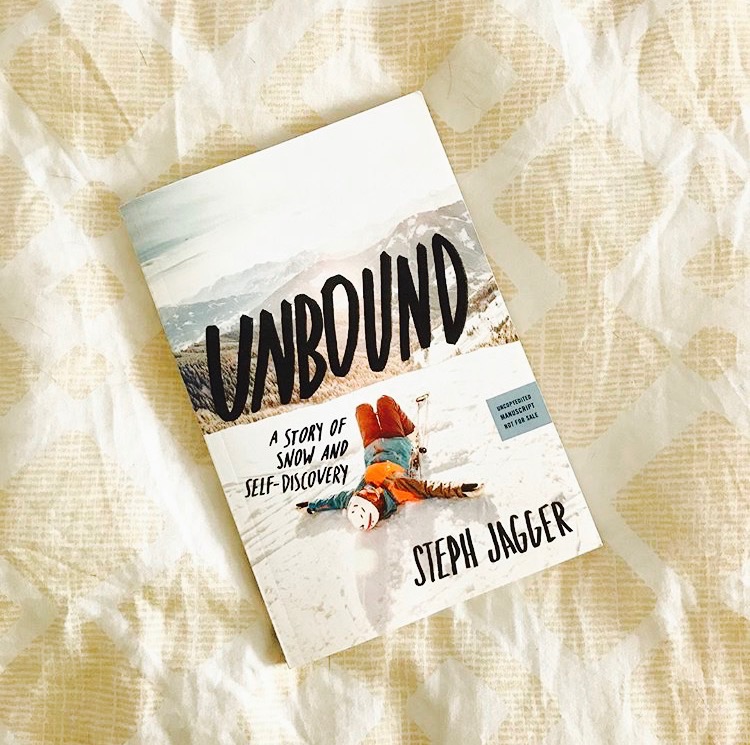
My first book is called Unbound: A Story of Snow and Self-Discovery, and because this is a place that celebrates the handwritten, I thought I’d show ya a little behind the scenes, sneak peak into the pen and paper part of my process.
From one writer to many others,
Steph

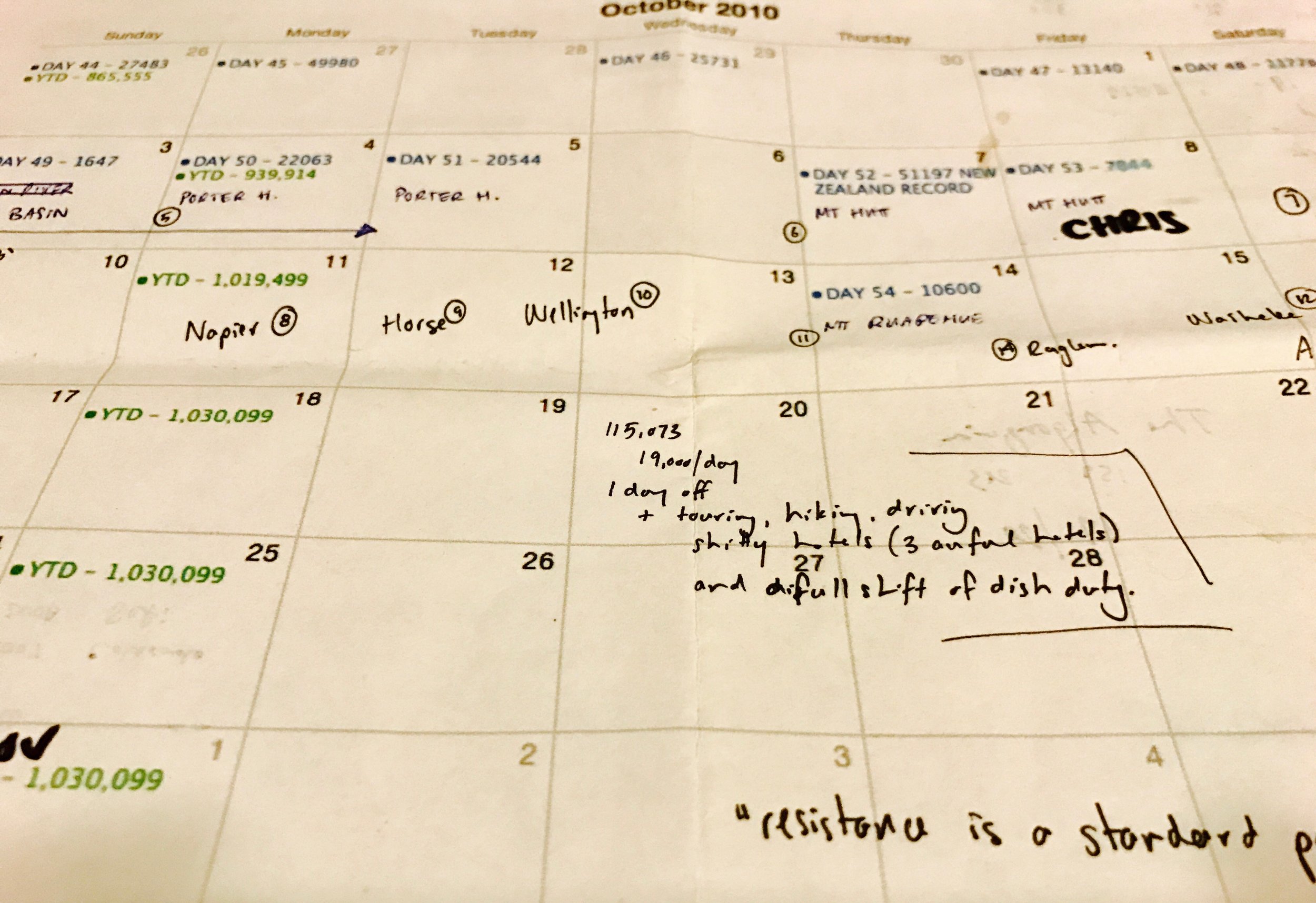
I printed off the calendars I kept from my ski trip. They served as a log for the vertical feet I skied on any particular place and when I was writing I used them to fact myself as well as jog my memory about particular places.
Handwritten notes I took while workshopping my very shitty first drafts with the wonderful Carly Butler and the unbelievable Patti M. Hall:

Cue cards developed at HarperCollins with my editor to help me understand the placement of each scene. The cards were changed, altered, and manhandled up until the very end:

A close up of one cue card:

People used to ask what it looked like to write a book, and about how I kept things straight when my brain and my heart were on fire. This is how: I booked a cabin in an isolated part of British Columbia, and filled one of it’s walls with my cue cards and post-it note additions:

This is what “skimming the fat” looks like — the journals I kept throughout the writing process. They had NOTHING to do with the content, just a practice that allowed me to get rid of the shit in my head before I started writing:

I started with the Hero’s Journey story arc. It was drawn onto paper and pasted on the wall behind my computer. This was the first thing I did before ANY of the writing began.

Notes from others: a note from my agent about my contract, and a note from my editor when the final book was mailed to my door. These are both hanging up in my office.

So what does all of that hand-writing get you — a lovely winter jacket. God I love puns.


Steph Jagger splits her time between Southern California and British Columbia where she dreams big dreams, writes her heart out, and runs an executive & life coaching practice. She holds a CEC (certified Executive Coach) degree from Royal Roads University and she believes courageous living doesn’t happen with one toe dangling in, but that we jump in, fully submerge, and sit in the juice. Think pickle, not cucumber.
Her first book, Unbound: A Story of Snow and Self-Discovery was published by HarperCollins in January 2017.
You can find more at www.stephjagger.com or on Instagram @stephjagger
Krautsalat (Cabbage Slaw) • Sonya Gropman
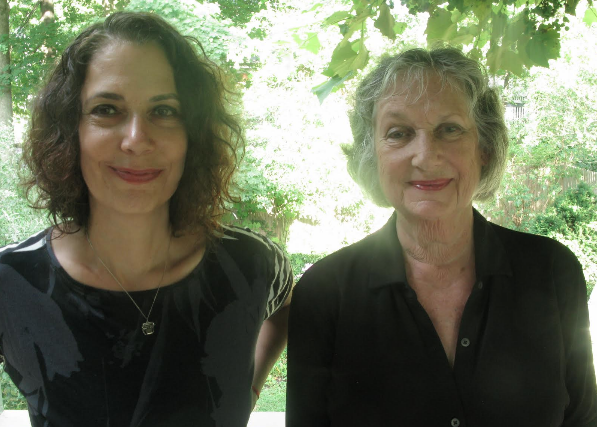
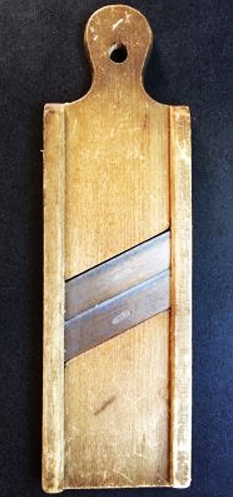
Note from curator Rozanne Gold: We are delighted to have this beloved recipe for Emma Marx’s cabbage slaw, translated and submitted by her great granddaughter, Sonya Gropman. It is but one of more than 100 recipes to be published next year in “The German-Jewish Cookbook: Recipes and History of a Cuisine,” co-written by Sonya and her mother, Gabrielle Rossmer Gropman (University Press of New England). The gorgeous narrative, spanning the kitchens of four generations, is part of the HBI Series on Jewish Women (the Hadassah-Brandeis Institute.) I especially love the photo of Emma’s old-fashioned wooden mandolin that was used to shred cabbage, cucumbers, and onions. And you will no doubt enjoy preparing the dish, faithfully, just as much as I did. We look forward to the book’s publication in September 2017.

Krautsalat (Cabbage Slaw) by Sonya Gropman
My mother grew up in a household where three adults cooked on a regular basis — her mother, grandmother, and father (her grandfather, who also lived with them, didn’t cook). The family had fled Nazi Germany in 1939, when my mother was a one-year old baby and settled in Washington Heights, a neighborhood in upper Manhattan that was home to approximately 20,000 German-Jews. German was frequently heard spoken by people on the street and there were many businesses that catered to the community, including food shops. Thus, it was easy for people to continue eating the same foods they had eaten in Germany.
Many German-Jewish families arrived in the U.S. with a household worth of personal belongings. Unlike most other refugees — who might arrive with just a single bag or suitcase after fleeing their homeland — German-Jews often brought the entire contents of their homes, which had been packed into enormous wooden crates called a lift van. This box of possessions included all the usual items that fill a household, both big and small — from furniture, to clothing, to cookware, and everything in between. That this happened was due to a perverse policy of the Nazis. It was a way for them to collect taxes on everything Jews packed, and it also demonstrated their imminent departure from Germany.
Much of the cookware and dishes brought by our family, which dates from the early 1900s to the 1930s, survives and is still in use by both me in my kitchen, and by my mother in hers. There are family objects that I use on a daily basis, including knives, a colander, and sauce pans. It is a testament to how well-made these objects are and still functional many decades later.
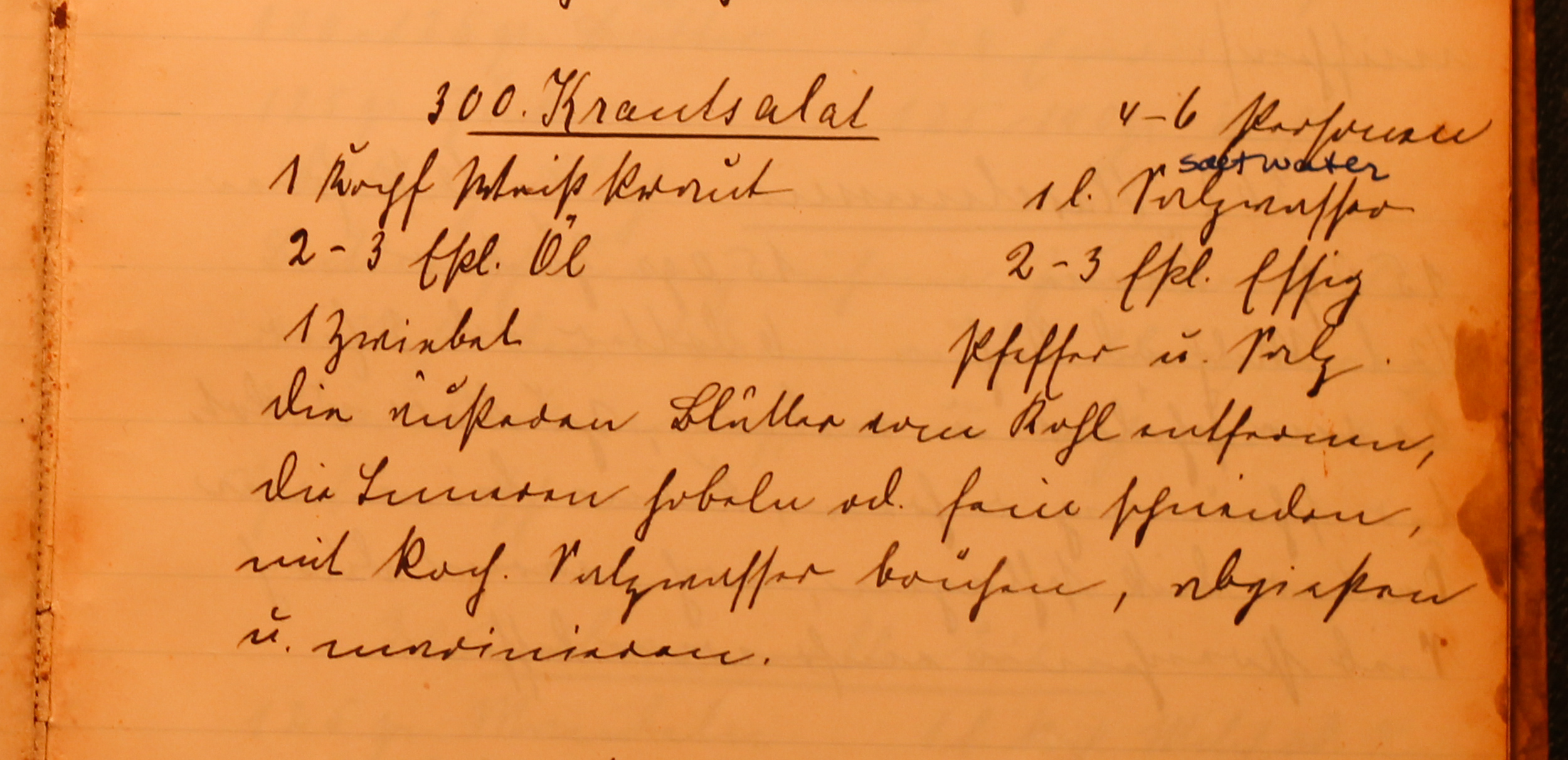
My mother has a wooden mandolin that belonged to her grandmother, Emma. By today’s standards, it seems very basic as it lacks folding legs to prop up the blade (instead it must be held at an angle with one’s hand), and is has a fixed blade, so that the thickness of the slices is not adjustable. To our knowledge, the blade has never been sharpened, yet it remains quite sharp. My mother uses it regularly to slice vegetables such as cucumbers and onions. She also uses it to shred green cabbage in order to make Green Cabbage Slaw, or Krautsalat, a dish that her grandmother frequently made for holiday meals during her childhood. It accompanied any number of meat meals, such as roast duck or goose, tongue, or veal roast. It was a favorite dish of my mother’s and she was thrilled to find the recipe in a cookbook her grandmother had handwritten when she attended cooking school in Germany before she was married in the early 1900s. My mother set about making the recipe, but the finished dish didn’t quite match her memory of how it tasted during her childhood. She tinkered with the recipe, comparing the list of ingredients and the written instructions with her memory of it. She realized that even though the written recipe included onion, Emma had not used it in her version. Eventually she came up with a recipe for the dish that tasted exactly the way she remembered it.
When I first saw the recipe, I was struck by my great-grandmother’s beautiful, fluid script, written in a form of Old German that is very difficult to read. I then noticed a translation for “salt water” written in blue ink, jotted down by a frustrated translator (my mom), who was relieved to figure out the word. At first I was sorry to see the page marred by contemporary writing, but I later realized that it adds another layer to the history of the recipe, keeping it alive and in the present.
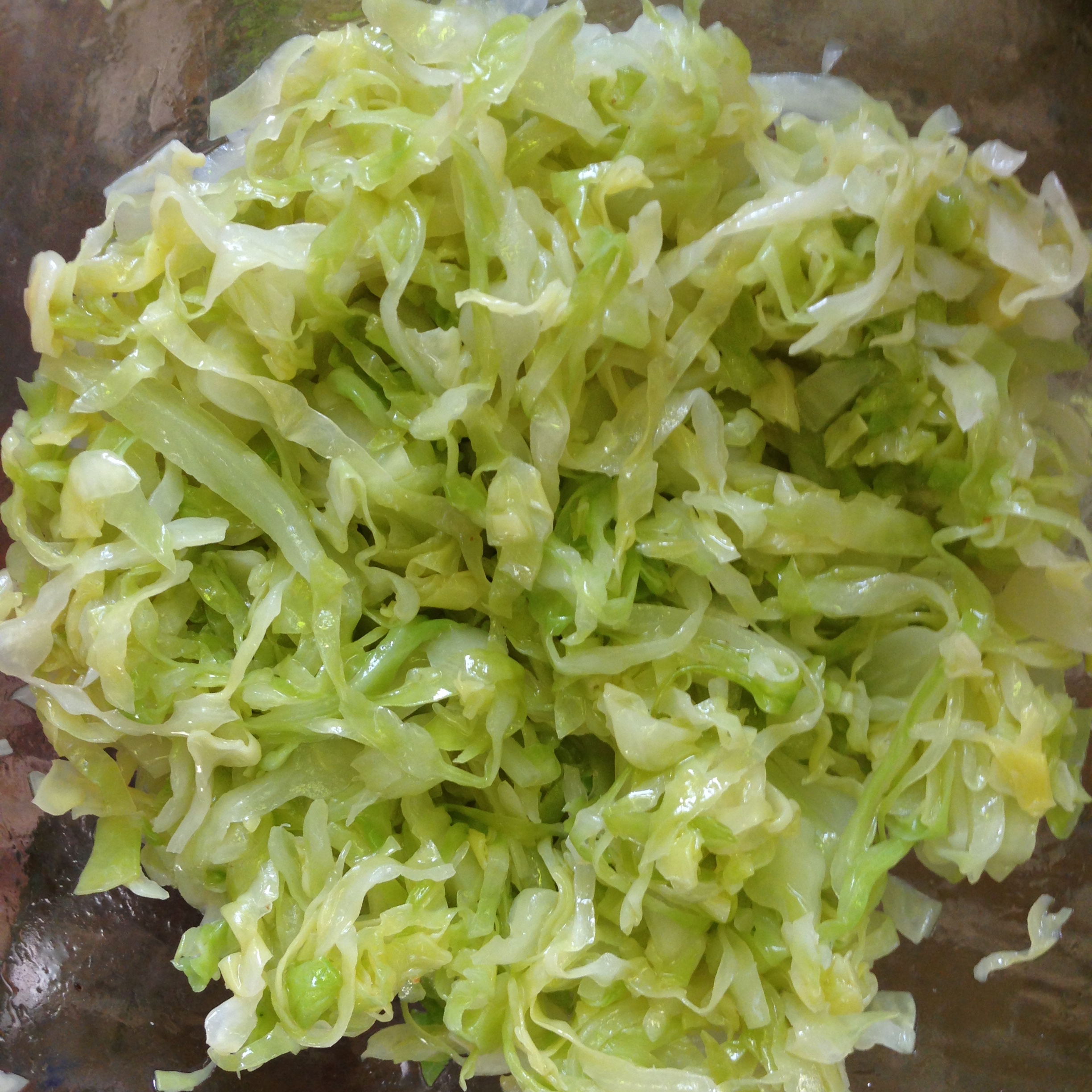
This recipe is remarkable in that a short list of ingredients is transformed, seemingly through a bit of alchemy, into something so addictively delicious. Falling somewhere between coleslaw and sauerkraut, it uses boiling salt water to break down the shredded cabbage into a slightly wilted and softened state. A light vinaigrette dresses the cabbage, while brightening its taste with the acidity of vinegar.
Cabbage Slaw (Krautsalat)
8-10 servings
This dish is best if the cabbage is finely shredded. If you do not have a mandolin, use the long blade on a box grater, the slicer attachment on a food processor, or a sharp knife to slice the cabbage as thinly as possible. This recipe is the original version, but feel free to try the variation we discovered below which uses a few non-traditional additions.
1 medium sized head of green cabbage
1 quart of water
2 tablespoons of salt + extra if needed
4 tablespoons white wine vinegar
ground white, or black pepper, to taste
2 tablespoons neutral oil, such as canola or safflower
Prepare the cabbage:
Shred the cabbage into a large glass, ceramic, or stainless steel bowl. Boil the water with the salt. Pour the boiling saltwater over the shredded cabbage. Let it sit until the water is cool, between 30 minutes to 1 hour. Pour the cabbage into a colander set in the sink to drain the water. Press down with a plate that is slightly smaller than the colander to press out as much water as possible. Put the shredded cabbage in a serving bowl.
Make the Vinaigrette:
Pour the vinegar and pepper into a small bowl. Slowly add the oil, while whisking, until blended. Pour the vinaigrette over the cabbage, tossing to coat evenly. Taste for salt, adding more if needed.
Serve:
The slaw will be ready to eat immediately, though the taste and texture will mellow and improve if allowed to stand for an hour or more. Serve chilled, or at room temperature.
Variation: Prepare cabbage as in step #1 above, adding some or all of the following ingredients to the drained cabbage in the bowl:
2 carrots, shredded on large holes of a box grater
1 small shallot, minced
1 bunch arugula, finely chopped
1-2 tablespoons minced fresh herbs, such as marjoram, parsley, or thyme
Continue with steps #2 and #3
© 2016 Gabrielle Rossmer Gropman & Sonya Gropman The German-Jewish Cookbook: Recipes and History of a Cuisine
*HBI is the Hadassah-Brandeis Institute, an academic center at Brandeis University which promotes scholarly research, artistic projects and public engagement.

The Declaration of Dessert • Allison Radecki
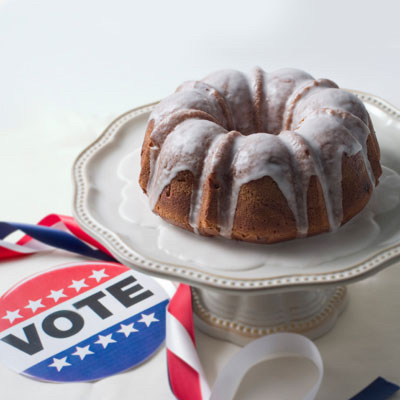

Note from curator Rozanne Gold: Election Day cake (once known as Muster Cake) has gone viral. Although this remarkable story, researched and recounted by food writer Allison Radecki, is geared for Election Day 2016, it ties together the history of food and politics better than anything could. Surely it will carry us into future elections. This particular journey begins in Asheville and snakes its way to Montclair, New Jersey. Feel free to adapt the recipe given here (courtesy of Susannah Gebhart for O.W.L. Bakery in Asheville, NC) to reflect your own tastes, family food culture, place, or historical curiosity. For more information on Election Cake and The Montclair Bread Company, visit: http://www.owlbakery.com/electioncake/ and http://www.montclairbread.com. A major salute to Ms. Radecki for bringing #makeamericacakeagain — a great culinary campaign — to our attention. (photos: by A. Radecki).

Election Cake and Election Doughnuts 2016 by Allison Radecki
America, we’re going to the polls.
For some, Election Day may spark a memory of winding lines of waiting voters or the distinctive swish of the privacy curtain that separates personal choice from the hum of activity outside. But to me, Election Day once meant meat pies; specifically, Jamaican patties — butternut-hued, half-moon pockets, filled with ground beef and a wallop of spice.
My earliest voting memories involved standing, waist-level by my mother’s side, in the confines of a tiny booth, and then purchasing patties from the polling station food table after her vote was cast. Flakes of the buttery, curry-tinged dough always accompanied us home; sometimes within the brown paper bags in which they were wrapped, or else scattered on our shirts if we just couldn’t wait to take a post-ballot bite.
I have been thinking a lot about those Jamaican patties lately as I listen to the news, perhaps because I want to reach for anything that might mollify the taste of such a bitterly fought presidential campaign.
I am not the only one with this desire.
As a way to celebrate American culinary history, shine a light on voter rights and access, and link a scattered village of professional and home bakers, Susannah Gebhart and Maia Surdam, proprietors of Old World Levain (O.W.L.) Bakery in Asheville, North Carolina, are calling on their country to “Make America Cake Again.”
This project focuses upon historical Election Cakes, whose boozy, fruit-and-spice-filled recipe dates back to the early days of the 13 Colonies and the first baby steps of American Independence.
These New England-based confections, originally named Muster Cakes, were made by Colonial women for the men called upon for military training or “mustered’ by order of the English Crown. A close relation to the great cakes of England, these monstrously huge sweets were made to feed the masses of people gathered (and encourage turnout) at important civic events. Revelers would tear off a bit of the enormous cake to sustain them as they trained, debated, and congregated.
After the American Revolution, Muster Cakes became known as Election Cakes, and played a central role in the rowdy gatherings at the polls. Unlike today, the original American election days were national holidays marked by festive community celebrations that served plenty of food, wine, and spirits.
Within the first known cookbook written by an American, Amelia Simmons’ American Cookery (published in 1796), the Election Cake recipe calls for “thirty quarts flour, ten pounds butter, fourteen pounds sugar, twelve pounds raisins, three dozen eggs, one pint wine, one quart brandy…” along with loads of spices such as cinnamon and allspice. We’re definitely not talking about a puny pan here.
Long before American women were granted the right to vote, they would meet at community ovens across the colonies to bake these gigantic cakes as a way to participate in the democratic process.
In the spirit of highlighting the community aspect of this tradition and to encourage debate on today’s issues, the owners of O.W.L. Bakery have asked bakers across the country to riff on this old recipe and post their locally flavored results to social media using the hashtags #makeamericacakeagain and #electioncake.
A few participating bakeries will have their own interpretations of election cake for sale on November 8th, 2016. A percentage of proceeds from these sales will be donated to the League of Women Voters, a non-partisan, non-profit organization dedicated to fair voting access, education, and policy.
Though my beloved Jamaican patties may be but a spicy memory, I am blessed on voting day, once again. My local bakery, the Montclair Bread Company, in Montclair, New Jersey, is a creative participant in the Election Cake project.
Rachel Crampsey, head baker and owner of the Montclair Bread Co., met O.W.L. bakery’s Susannah Gebhart this past summer at a ‘honey summit’ for professional bakers. Along with a group of other historical recipe fans, the gathered bakers found themselves discussing Muster Cake and the idea for the Election Cake project took flight.
Working from a base recipe, researched and adapted by Richard Miscovich of Johnson and Wales University, Susannah asked Rachel if she would be interested in baking for November 8th. She eagerly signed on.
Rachel’s twist? She’s doing it in doughnut form.
“I like old recipes,” said Rachel, as she lowered a pan of speckled and glazed election doughnuts from a nearby cooling rack to the table before me. She sees this project as “a way to connect with fellow bakers and crafters. It might be obvious but we don’t get to spend much time together.” Along with civic involvement and sparking conversation, this crowd-sourced project is also a way to unite artisans who usually work alone amidst clanging pans and whirring mixers.
Montclair residents are familiar with Rachel’s decadent creations; maple bacon and Tres Leches donuts are two of my favorites, along with the summertime Margarita special, which contains tequila and features a salted rim. Her doughnuts have a cult following, with snaking lines that extend down the block on holidays and farmers market mornings.
To adapt the historic recipe into an Election Cake Doughnut, Rachel took inspiration from a family recipe for Barnbrack (báirín breac), a traditional Irish bread/cake, dotted with raisins. The resulting doughnut, whose dough is completely different than Montclair Bread Co.’s signature brioche, contains whiskey, currants, candied oranges and lemons. The fruit is soaked in black tea before being mixed in. Dense, glazed, and dunkable, I enjoy it most with a cup of milky tea.
The Election Cake doughnut will only be available at the Montclair Bread Company on November 8th, 2016, along with a range of other patriotically clad brioche doughnuts.
“Food, in general, is a way to unite people,” reflected Rachel, as we chatted about the the role of bakers and connecting the community. “It is no surprise that, for centuries, there was a village baker and community ovens where everybody brought their raw dough. In a way, baking was a civic duty. As a business owner, I try to abstain from expressing political views. But, this (non-partisan) project allows me to be involved, so that every member of the community can participate.”
Rachel, an accomplished runner, is no stranger to community building. Between founding the local Welcome to Walnut Street street fair, celebrating National Doughnut Day (with doughnut story time and donut decorating for local children) and launching the Fueled by Doughnuts Running Club (“a running club with a doughnut addiction”), she is constantly bringing people together.
Now, please, get out and vote! Bake a cake. And, maybe, eat a doughnut, too.



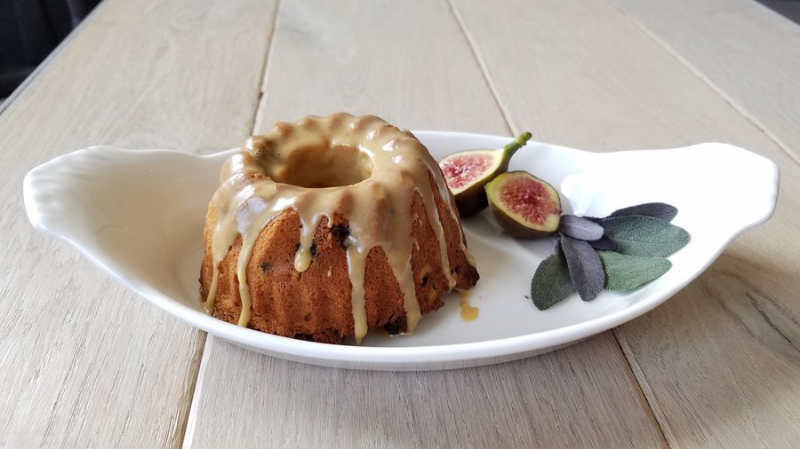
Election Cake Recipe & Directions:
Day 1 (Prepare Preferment):
Using Sourdough Starter:
240 ml whole milk ~70º F (280 g)
¼ cup active starter — 100% hydrated (75 g)
2 ¼ cups All Purpose or whole wheat pastry flour (280 g)
OR
Using Instant Yeast:
275 ml milk ~70º F (320 g)
¼ tsp instant yeast (1 g)
2 ¼ cups plus 2 Tbsp All Purpose or whole wheat pastry flour (320 g)
Combine milk and sourdough starter or yeast and mix thoroughly until starter or yeast is well dispersed in the milk mixture. Add flour and mix vigorously until the starter is consistent and smooth. Scrape the sides of your bowl and cover with a damp towel or plastic wrap. Allow your starter to ferment for 8-12 hours at room temperature. When ready to use, your preferment will have bubbles covering the surface.
Soak Dried Fruits:
If you plan to use dried fruits in your cake, we recommend soaking them overnight, or for several days beforehand. Measure out your dried fruit and cover with your liquor or liquid of choice (for non-alcoholic options, try apple cider/juice, other fruit juices, or steeped teas) in a small sauce pot. Warm over low heat for a few minutes, remove from the heat, and allow to soak, covered, overnight or for several hours.
Before incorporating into your cake, strain the liquid off of the fruit. Use this fruit flavored liquid as a cordial or to make a simple glaze after the cake is baked.
Day 2 (Prepare Final Dough, Proof, and Bake):
1 cup unsalted butter (226 g)
¾ cup unrefined sugar (155 g)
2 eggs (100 g)
1/3 cup whole-milk yogurt (85 g)
¼ cup sorghum or honey (60 g)
Preferment (560 / 635 g)
2 ¼ cups All Purpose or whole wheat pastry flour* (280 g)
2 Tbsp spice blend** (12 g)
¼ tsp ground coriander (1 g)
¼ tsp ground black pepper (1 g)
2 tsp salt (12 g)
2 Tbsp sherry or another - optional (30 g)
2 cups rehydrated fruit (300 g)
1. With a paddle attachment in a stand mixer, cream the butter very well, then add sugar, mixing until very light and fluffy. Add the eggs one at a time on medium speed. Mix in the sorghum/honey and yogurt.
2. Exchange the paddle with a dough hook. Add the preferment (starter or sponge) and mix until just incorporated. Combine all of the dry ingredients before adding them to liquid ingredients and mix until just incorporated, being careful not to over-mix. Gently fold in the sherry (optional) and rehydrated fruit.
3. Divide evenly into a bundt pan or cake rounds that have been buttered and lightly floured. OWL Bakery uses mini bundt pans, which yields 8-10 cakes. Proof for 2-4 hours, until the cake has risen by about ⅓ of its volume.
4. Bake at 375° F (190° C) for 10 minutes. Reduce oven temperature to 350° F (177° C) and continue baking for about 25-30 minutes, until a tester comes out clean. Cool completely before cutting and eating. You may enjoy this cake plain or topped with a simple glaze.
Notes:
* Choose high extraction flour if possible
* Create a spice mixture with warm spices like ground cinnamon, allspice, nutmeg, clove, star anise, or mace. OWL Bakery’s house spice blend is a combination of 8 spices.
* Adapted by Susannah Gebhart for O.W.L. Bakery from Richard Miscovich’s formula. Note: OWL Bakery’s version of election cake reflects their place in the southern Appalachian Mountains. They use flour that has been grown and stone-milled locally by Carolina Ground and local, grass-fed milk. Additional ingredients are sourced close to home as well — bourbon, dried apples, and sorghum molasses — flavors that evoke the bounty of the food landscape of their region. Feel free to adapt this version to reflect your own tastes, family food culture, place, or historical curiosity!

Grandma Rozie’s Pot Roast • Tina Barry
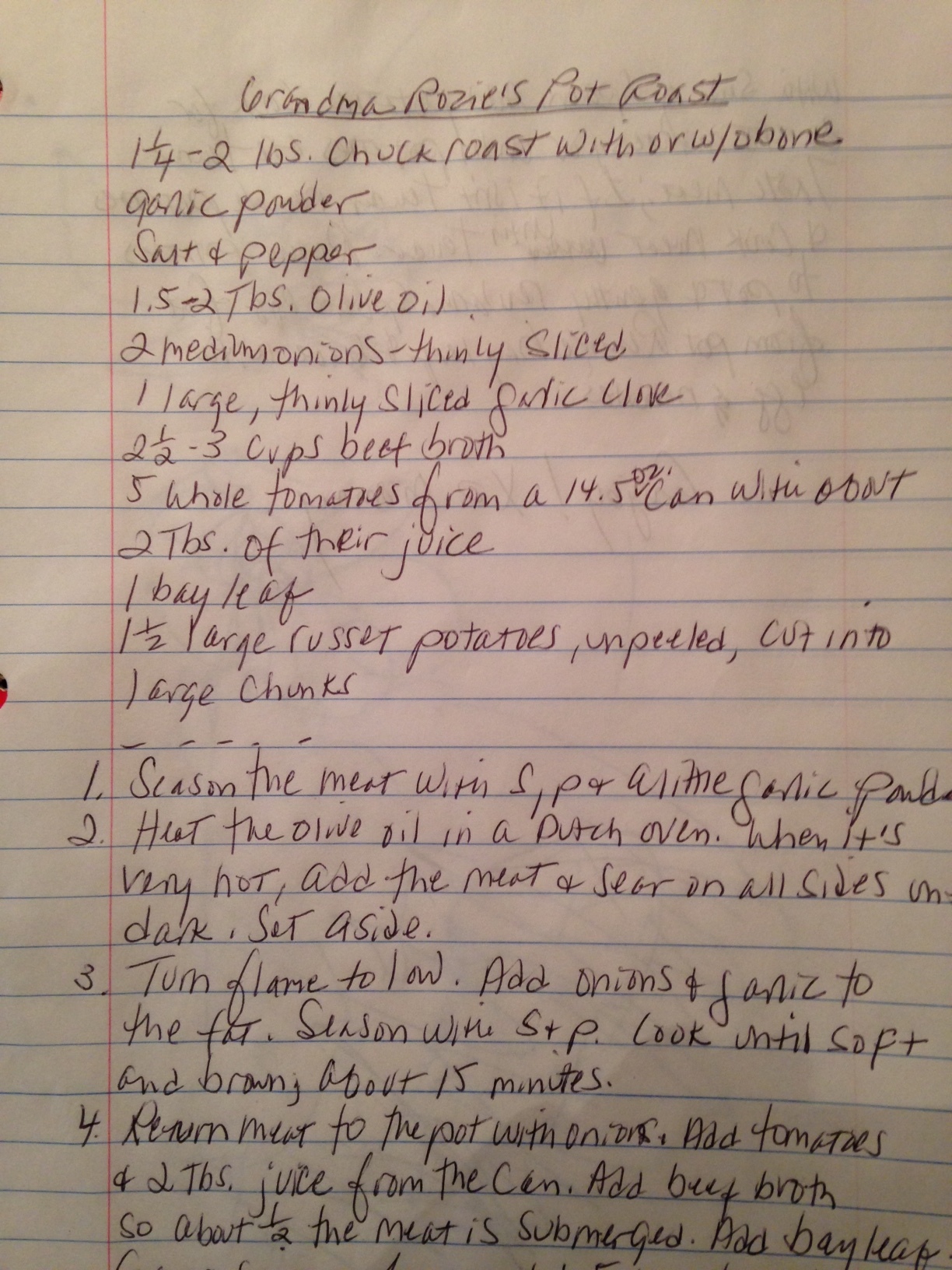
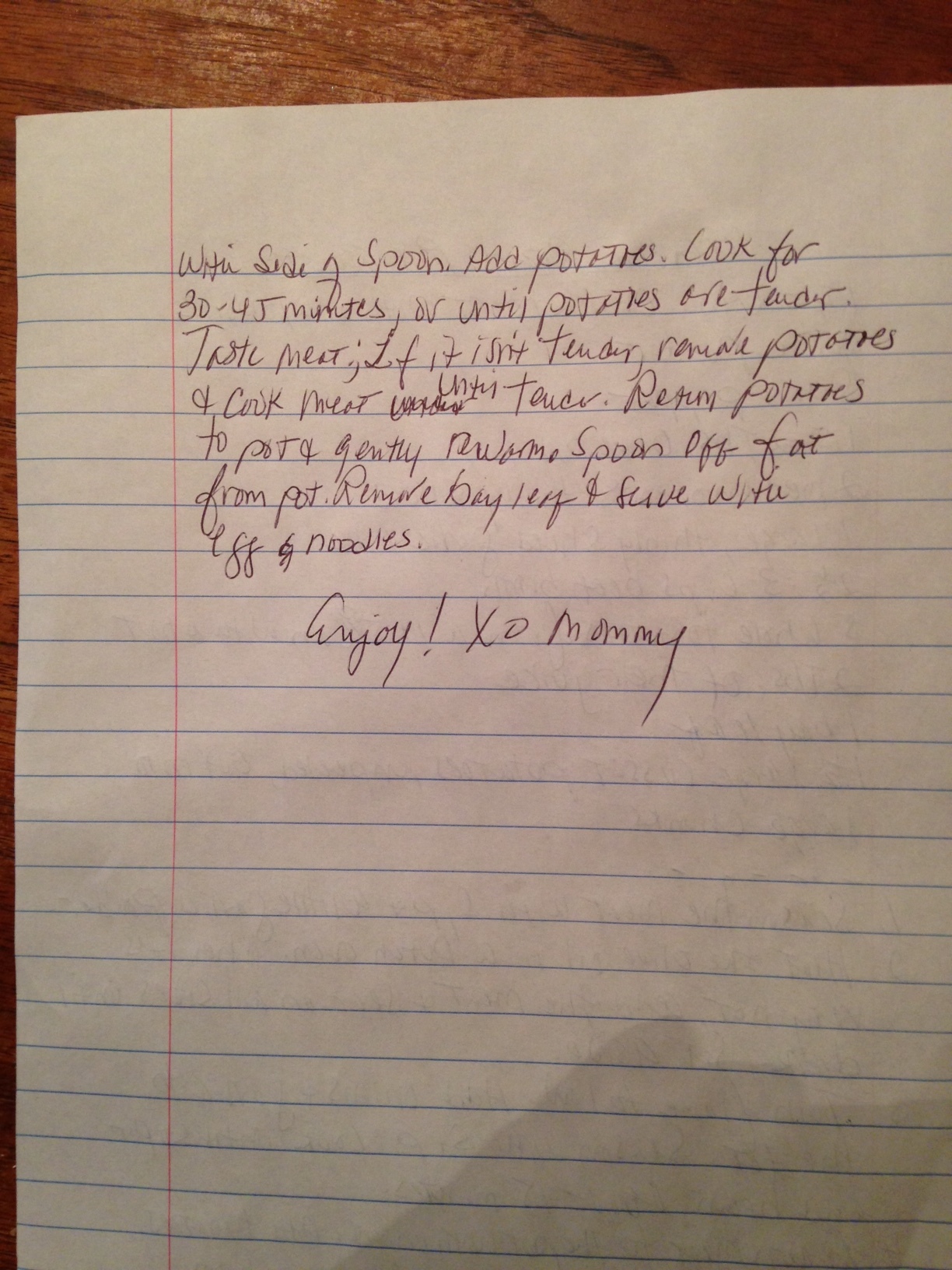
Note from curator Rozanne Gold: Tina Barry, poet, writer, and former restaurant critic for the Brooklyn Paper is a woman of myriad talents. Her poems and micro-fiction have appeared in numerous literary magazines and two pieces in her poetry book, Mall Flower, were nominated for Pushcart prizes. But her biggest prize may be the generational embrace she nurtures with her 91-year old mother, Roz (the creator of this story’s succulent pot roast), her beautiful 26-year old daughter Anya, and the precocious Vera, nearly two years old. A writer of great warmth and wit, Tina extends these qualities to everything she touches — her joie and appreciation for whiskey sours, the empowerment of women, great design, and great meals (especially in France). An evening at her upstate New York home includes feasting from husband Bob Barry’s exquisite handmade ceramic plates. Tina is a teaching artist at the Poetry Barn in West Hurley, New York, and is an editor for the restaurant and fashion industry. Many bows to her for this beautiful story.

Grandma Rozie’s Pot Roast by Tina Barry
My mother, Roz Ehlin, the daughter of Russian immigrants, cooked four dishes perfectly: pot roast, stuffed cabbage, roast chicken and chicken soup. She broiled lamb chops, boiled frozen vegetables. Mashed potatoes came from the box. She has never, and, at 91 years old, has no intention of ever owning measuring cups or spoons. “I’m creative,” she told my sister and me when we were children, “creative people don’t measure.”
As limited in variety as our meals were, everything she cooked tasted great to us. That was a good thing. Divorced with a full-time job, she didn’t have time for elaborate dishes and she didn’t tolerate picky eaters. A friend of mine, who asked for her food separated on the plate so nothing touched, was never asked back for dinner.
My mother may have kept her repertoire of meals well edited, but she loved, and still loves food, was curious about culinary trends and enjoyed reading recipes. Once a month she’d visit the library and, after perusing the latest Vogue and Cosmopolitan, head home with a stack of cookbooks. After dinner, she’d sit on the couch with a cookbook on her lap, my sister on one side, me on the other, and slowly turn the pages.
“Look at that,” she’d say. My sister and I sighed over quivering Jell-O molds, bubbling pots of fondue, crisp pastry shells cradling Chicken á la King. Pineapple Upside Down Cake left us speechless. “One day,” we’d say, staring at a delicately browned dome of Baked Alaska.
On our kitchen shelf she kept Peg Bracken’s I Hate to Cook Book; my mother appreciated Bracken’s dry wit. The other book was a tiny collection of recipes that my sister and I scribbled all over with purple crayon. One recipe for potted shrimp, turned up in my second grade class’s holiday cookbook, rechristened “Shrimp á la Ehlin.” She didn’t have a single handwritten recipe.
Out of the house and into my own kitchen, I vowed to cook and cook well. I bought measuring cups and spoons and used them. I baked apple pies and layer cakes, whisked batter for wisp-thin crepes. I mastered the perfect omelet.
I was not, though, “creative” the way my mother was. I needed recipes, at least in the beginning while I learned the basics. Recipe or not, I was determined to nail her pot roast. First attempts were okay, if lacking the joie de vivre of her dish. One trial produced tender meat but a sauce without much flavor; I should have used broth, not water. Once I added too many tomatoes, turning the dish into a kind of pot roast ragu. I overcooked the potatoes; my mother’s potatoes were soft, not mushy. It took awhile but one glorious night, I served a pot roast identical to my mother’s.
My daughter Anya married recently. She has asked me for recipes for the dishes she loves. I emailed them to her, until she requested Grandma Rozie’s Pot Roast. I have the recipe in my computer but I couldn’t bring myself to send it. Something so weighted with memories, so redolent of good times at the table, deserves more than clicks on the computer to attach and download.
Her pot roast recipe is a part of our history: my mother’s, daughter’s and mine. And will be a part of my granddaughter Vera’s history, too. When Anya cooks for Vera, my mother will be with them in all the flavors on the plate. There will be a little of me, too, in the slant of my “t,” the dot that never quite caps the “i.” That’s what a recipe does, especially one that’s handwritten: it brings loved ones closer with the proof of their hand on paper, the memory of clangs and chatter, the perfume of onions cooking slowly on the stove.


Roz Ehlin’s Pot Roast
1.5-2 lbs. chuck roast (with or without bone)
garlic powder, salt and pepper
1-1/2-2 tbs. olive oil
2 medium onions sliced thin
1 large, thinly sliced garlic clove
2-1/2 to 3 cups beef broth
5 14.5 oz. cans, whole tomatoes
(with 2 Tbs. of their juice)
1.5 large Idaho potatoes
(unpeeled, cut into large chunks)
1 bay leaf
1. Season the meat on both sides with salt, pepper and garlic powder. Heat the oil in a Dutch oven. When it’s very hot, add the meat to the pot and sear on all sides until dark. Set aside.
2. Turn heat to low. Add the sliced onions and garlic to the fat. Season with salt and pepper. Cook until soft and browned, about 15 minutes.
3. Return the meat and any juice collected on the plate to the pot with the onions. Add the tomatoes to the pot with the 2 Tbs. juice from the can. Add beef broth so about 1/2 of the meat is submerged. Add bay leaf. Cover and simmer for about 1.5 hours, then turn the meat to finish cooking.
4. After about 2 hours, add more broth if necessary; you want enough liquid to make a nice sauce. Crush tomatoes with side of spoon. Add potatoes. Cook for about 30-45 minutes. Remove potatoes when they’re soft. If meat is still chewy, cook until tender. Return potatoes to pot to warm. Cook for a few minutes. Spoon off fat from sauce. Remove bay leaf and serve. My mother always served pot roast with egg noodles.


Collecting Words • A Reflection on Lenore Tawney by Kathleen Mangan
Kathleen Mangan, the Executive Director of the Lenore G. Tawney Foundation discusses the role of handwriting in Lenore Tawney’s daily life and in her artistic practice.

Lenore Tawney (141), postcard to Maryette Charlton, February 15, 1969
This essay was originally a part of collaboration with The Smithsonian's Archives of American Art, Pen to Panel.

BY KATHLEEN MANGAN
The handwritten word played an important role in Lenore Tawney’s daily life and in her artistic practice. Tawney was a regular correspondent and diarist who filled dozens of tiny journals with fine script. These writings only rarely referenced her artwork or reflected events in her life. More typically, Tawney ‘s notebooks were filled with quotations from her extensive readings. “Collecting” passages in this way provided the opportunity for meditation on their deeper meanings.
![Lenore Tawney (142-3), letter to Maryette Charlton, Jan. 27, 1970 [cont'd below]](https://images.squarespace-cdn.com/content/v1/54de6652e4b05fac69e8f2b2/1476480009833-F6A2ZBJM02E7FBEOGL70/image-asset.jpeg)
Lenore Tawney (142-3), letter to Maryette Charlton, Jan. 27, 1970 [cont'd below]
In 1964, she began sending postcards to friends. In her own words, “the postcards came from wishing to communicate…but not knowing what to say. You know—you don’t want to say anything but you want to be a friend. So I began making these postcards with messages that looked like writing but they were just signs. There was a message but it was [an] invisible, unreadable message.”
Almost immediately, she began to incorporate her handwriting in collages and constructions. The meaning of these written words was also fugitive, intended to communicate, but in a mysterious, elusive way. Fine, thread-like script was superimposed upon lines of text from old manuscripts; written lines were piled atop one another so they could not be deciphered; and at other times delicate lines on translucent paper were turned upside-down. Tawney’s goal was to make “visionary” experiences “visible.”

In this 1970 letter to Maryette Charlton, Tawney alludes to a deep, unconscious form of communication. She describes a visit with Nanrei Kobori, the chief abbot of Ryoko-in in Kyoto, a Zen master and a highly regarded calligrapher. Reflecting on Kobori’s teaching, Tawney notes that “When we are drawing a line, it is a part of our being.” And as such, she believed in the power of art to convey “unreadable messages” from deep within.

Kathleen Nugent Mangan is the Executive Director of the Lenore G. Tawney Foundation. A former curator at the American Craft Museum, Mangan was guest curator of the Museum’s 1990 traveling exhibition, Lenore Tawney: A Retrospective. Following the retrospective, she continued to work with Tawney on numerous exhibitions and projects. Mangan joined the board of the Lenore G. Tawney Foundation in 1995 and became its director following the artist’s death in 2007.

The Spark
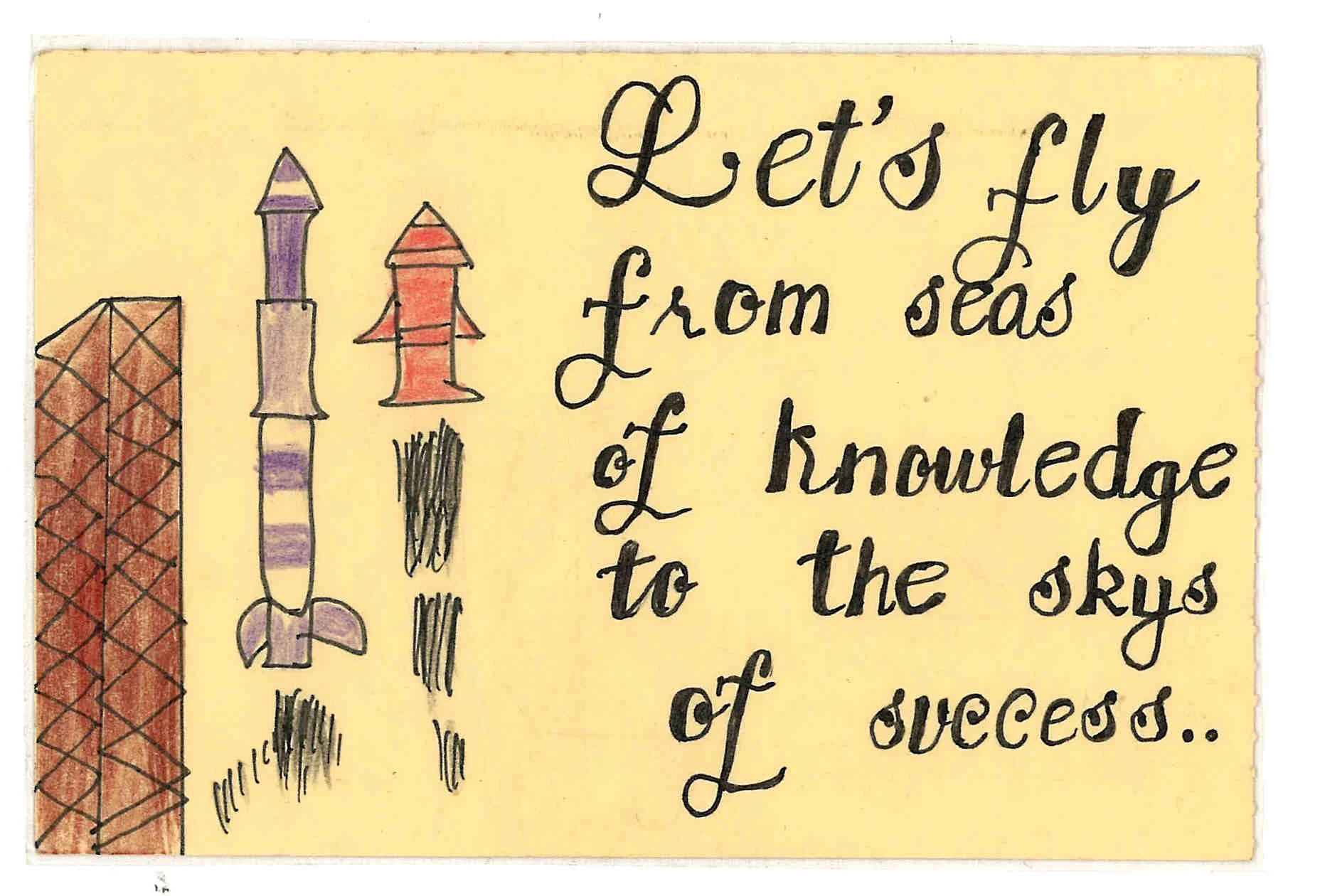
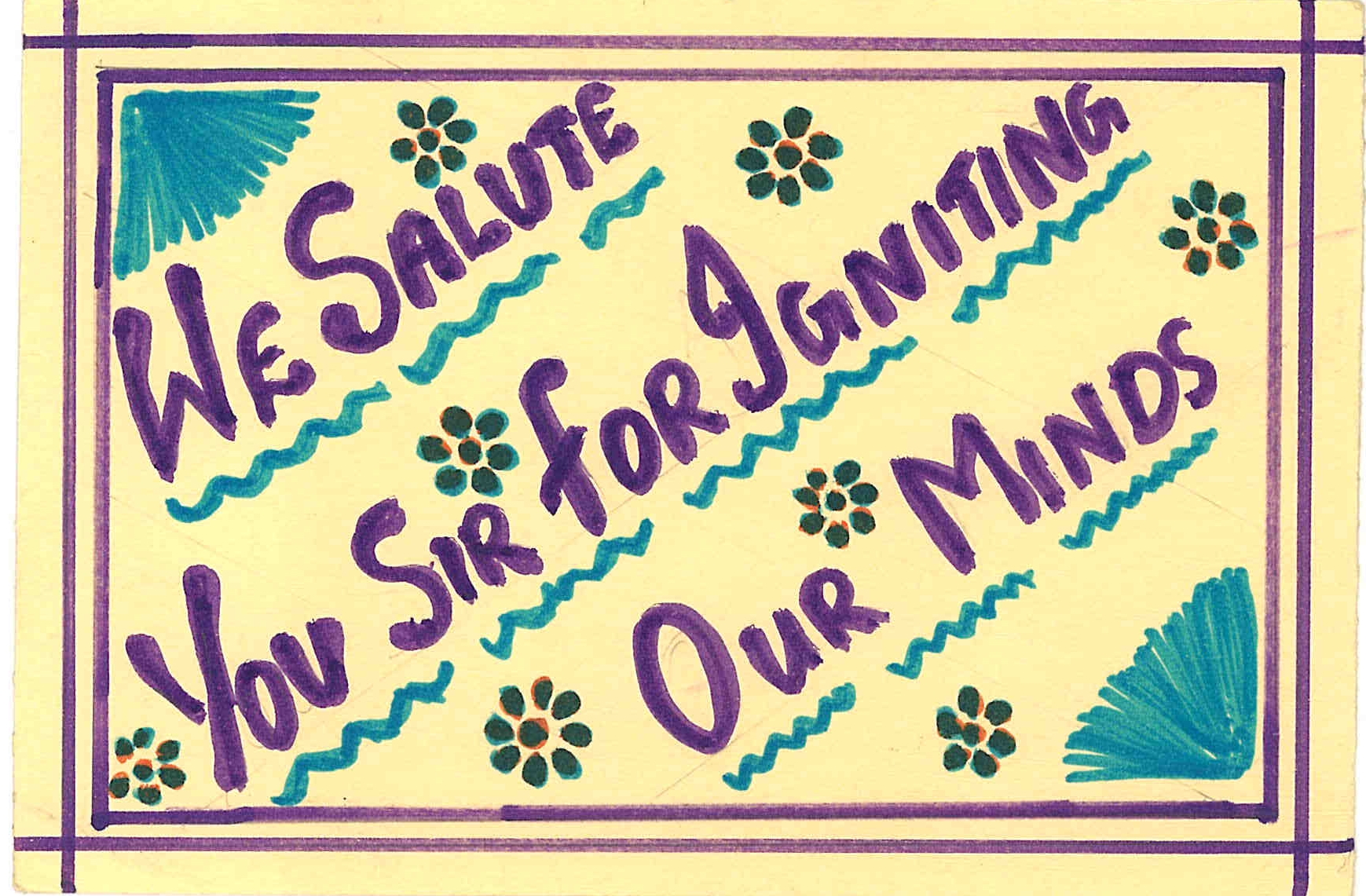
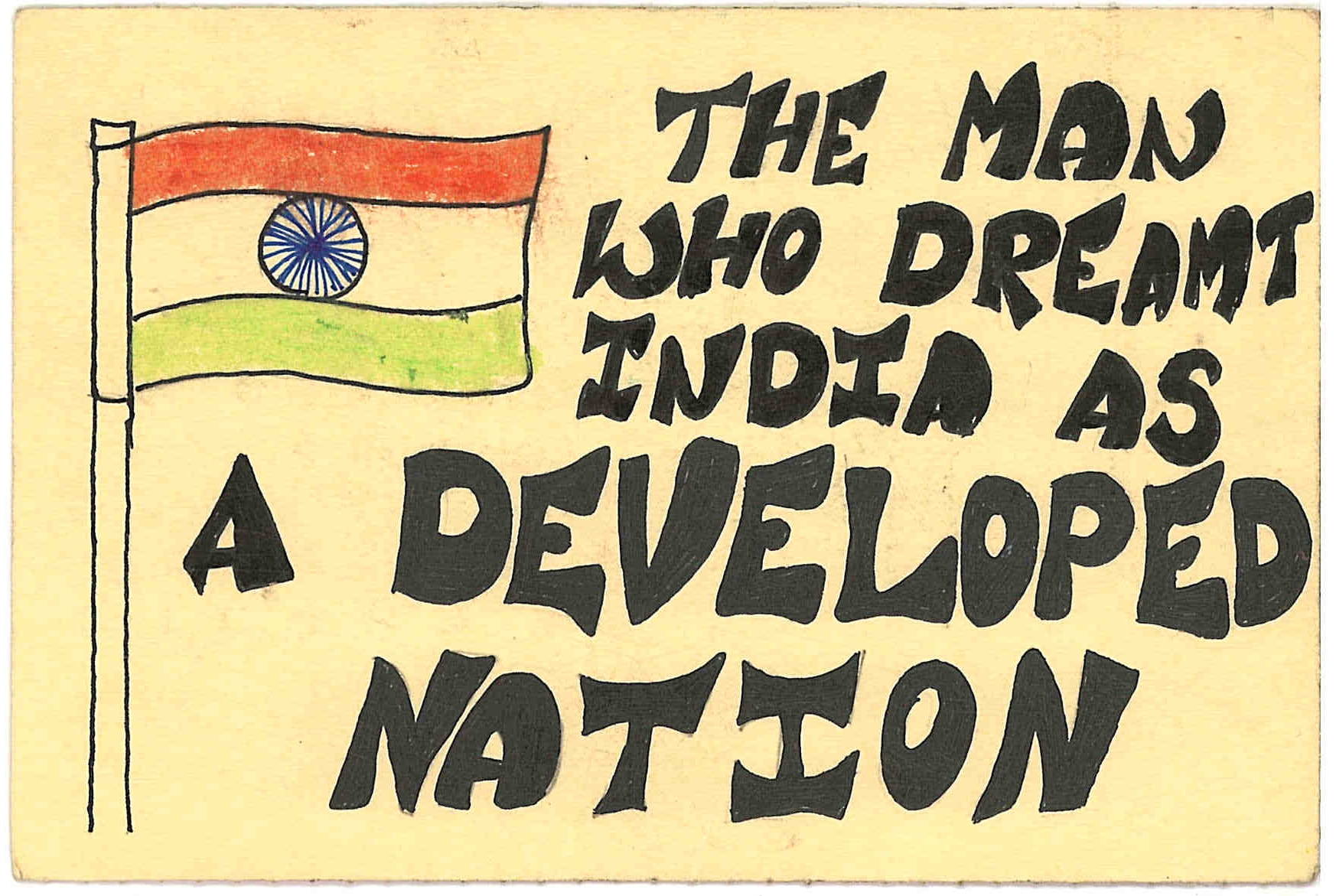
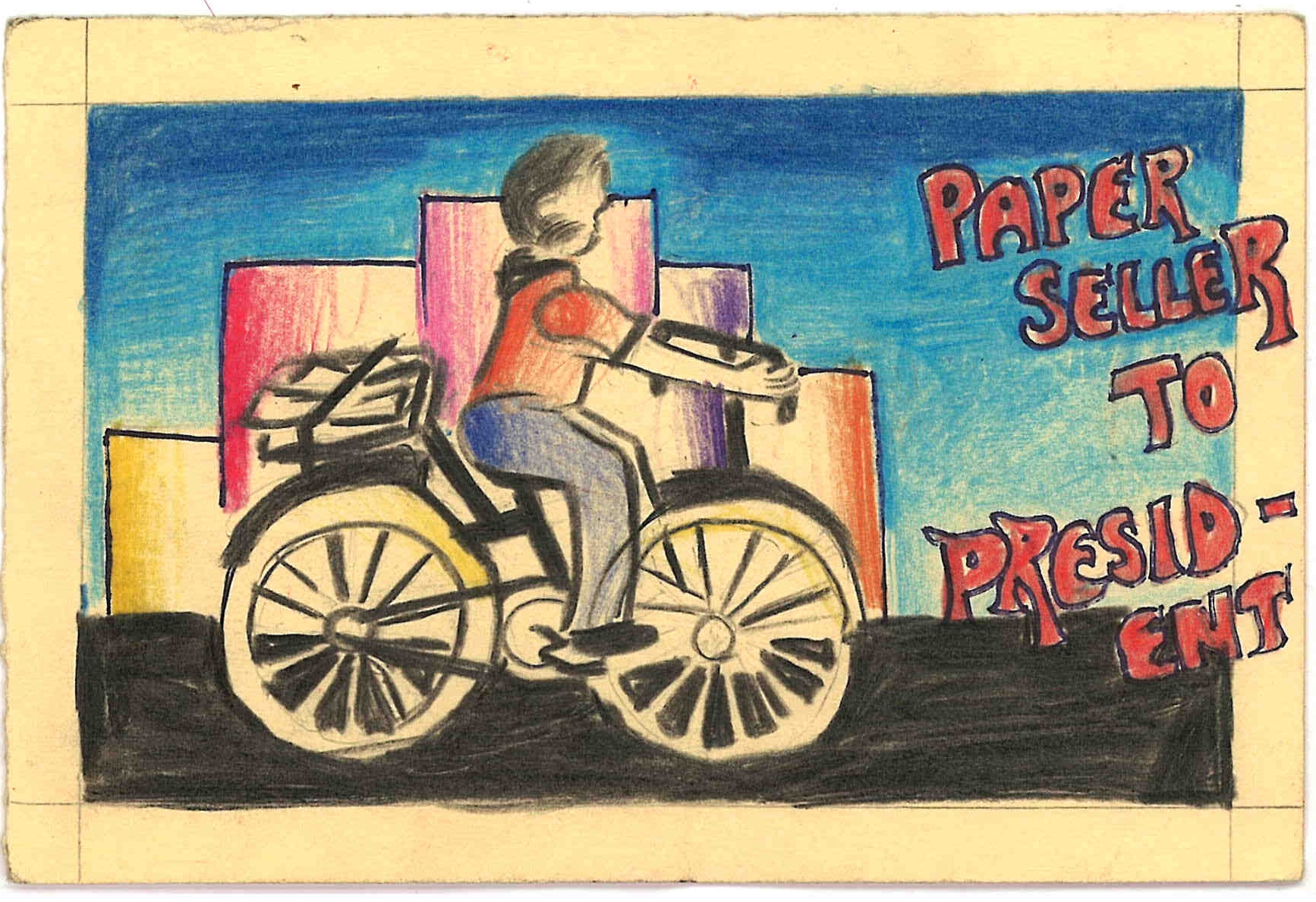
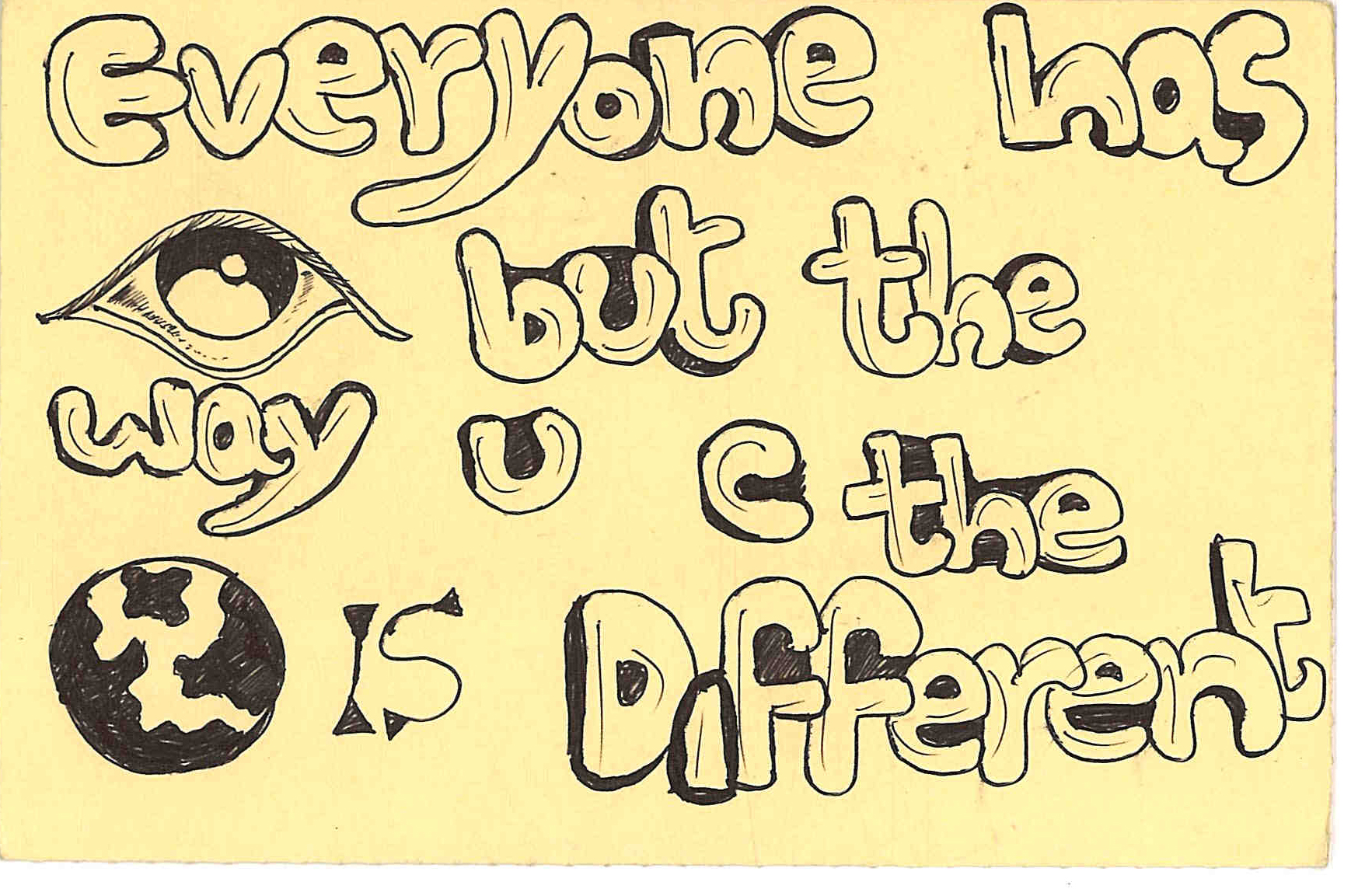
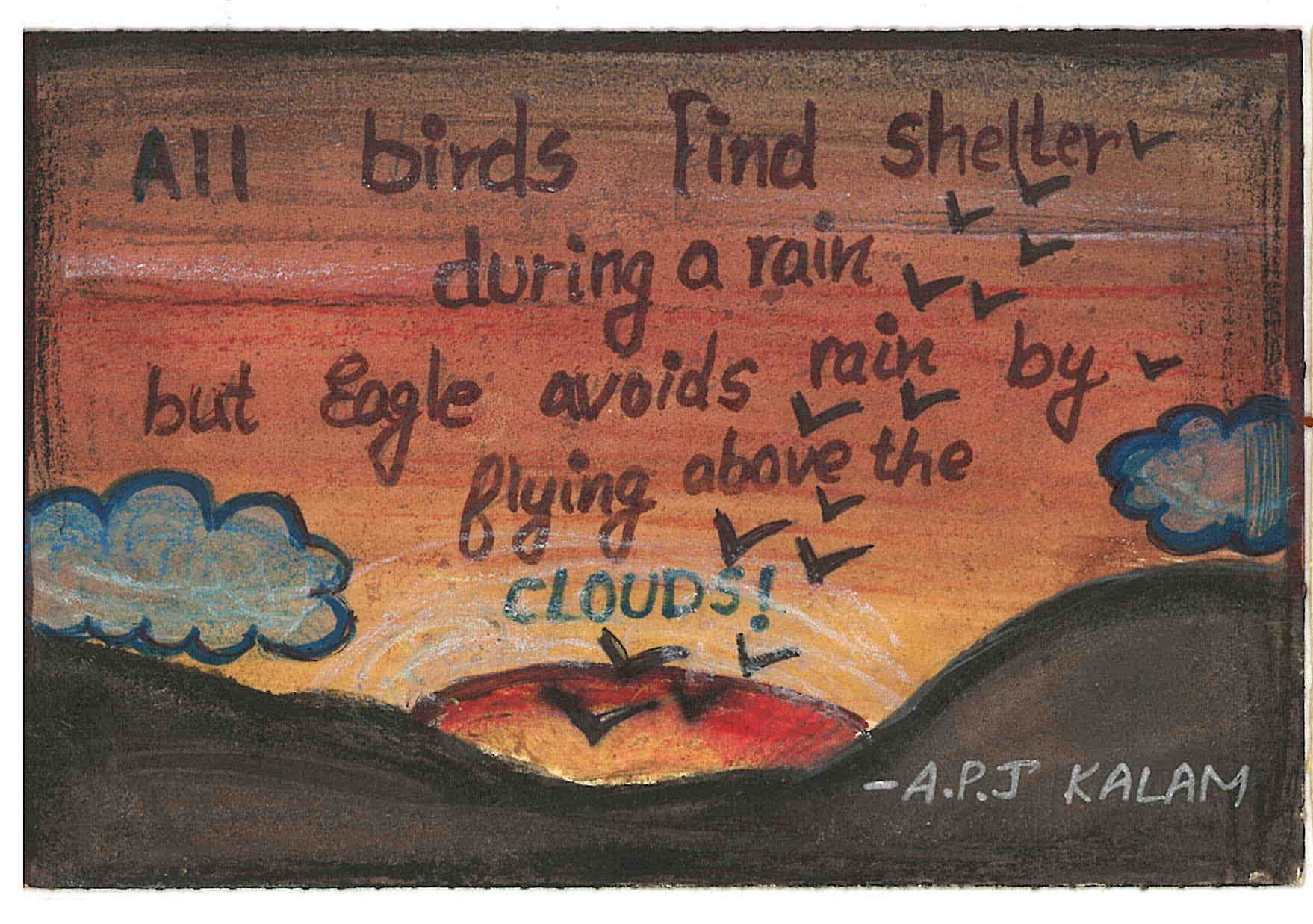
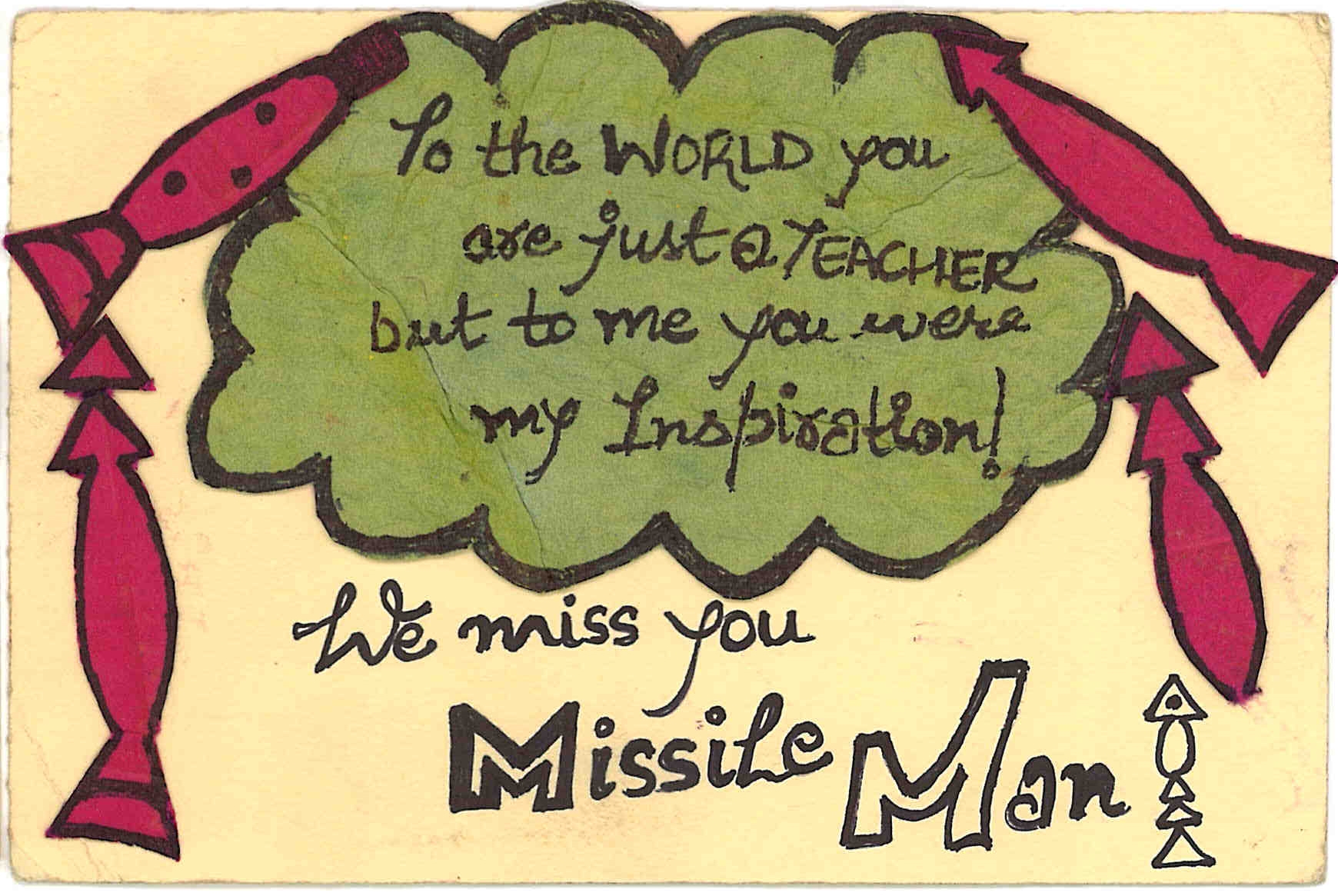
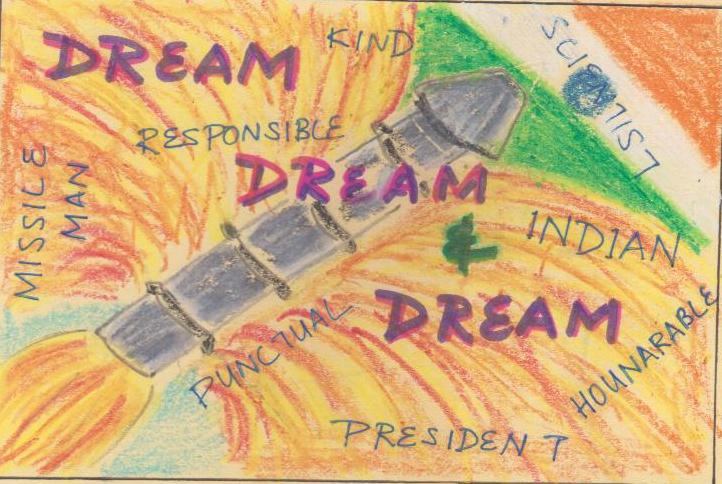
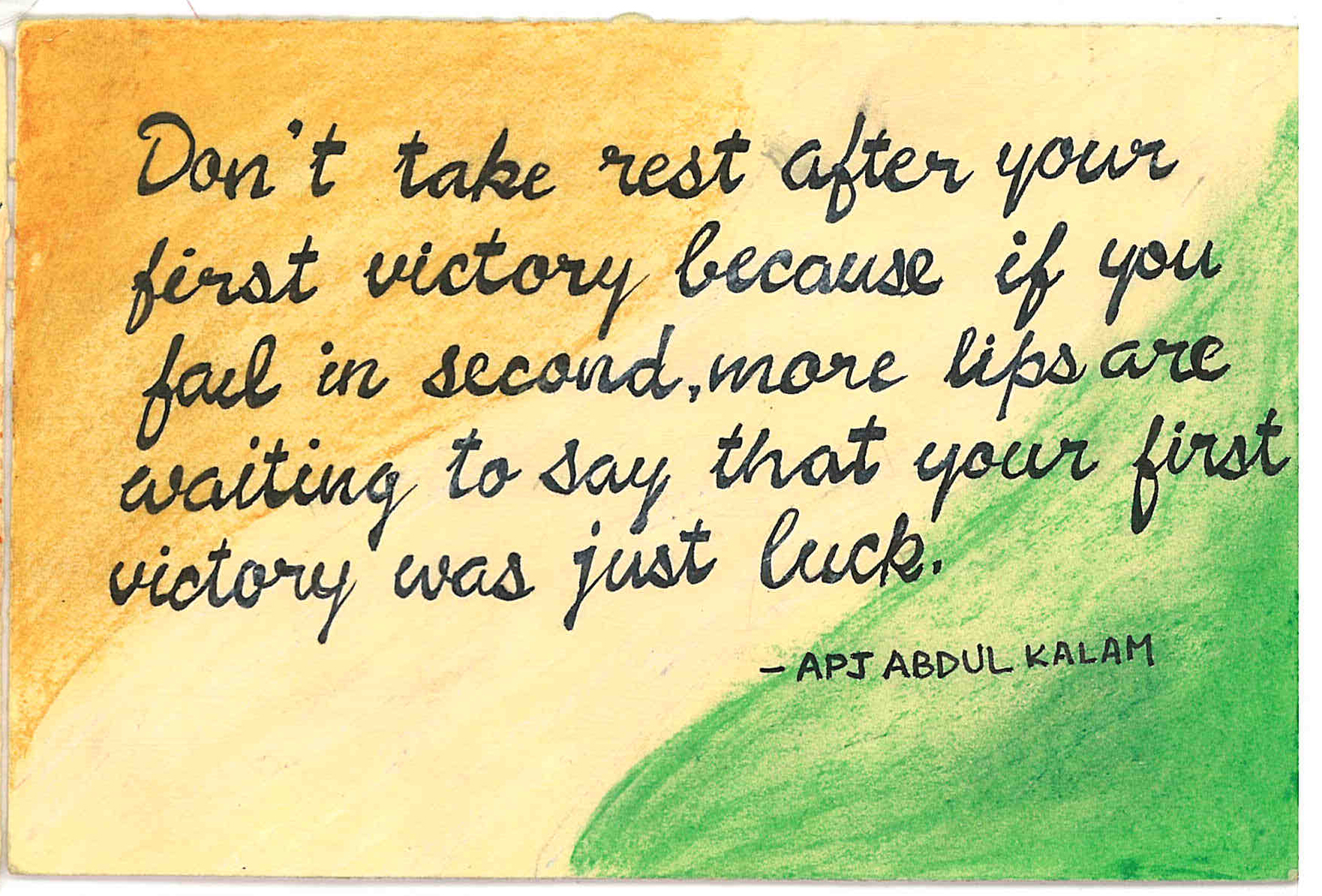
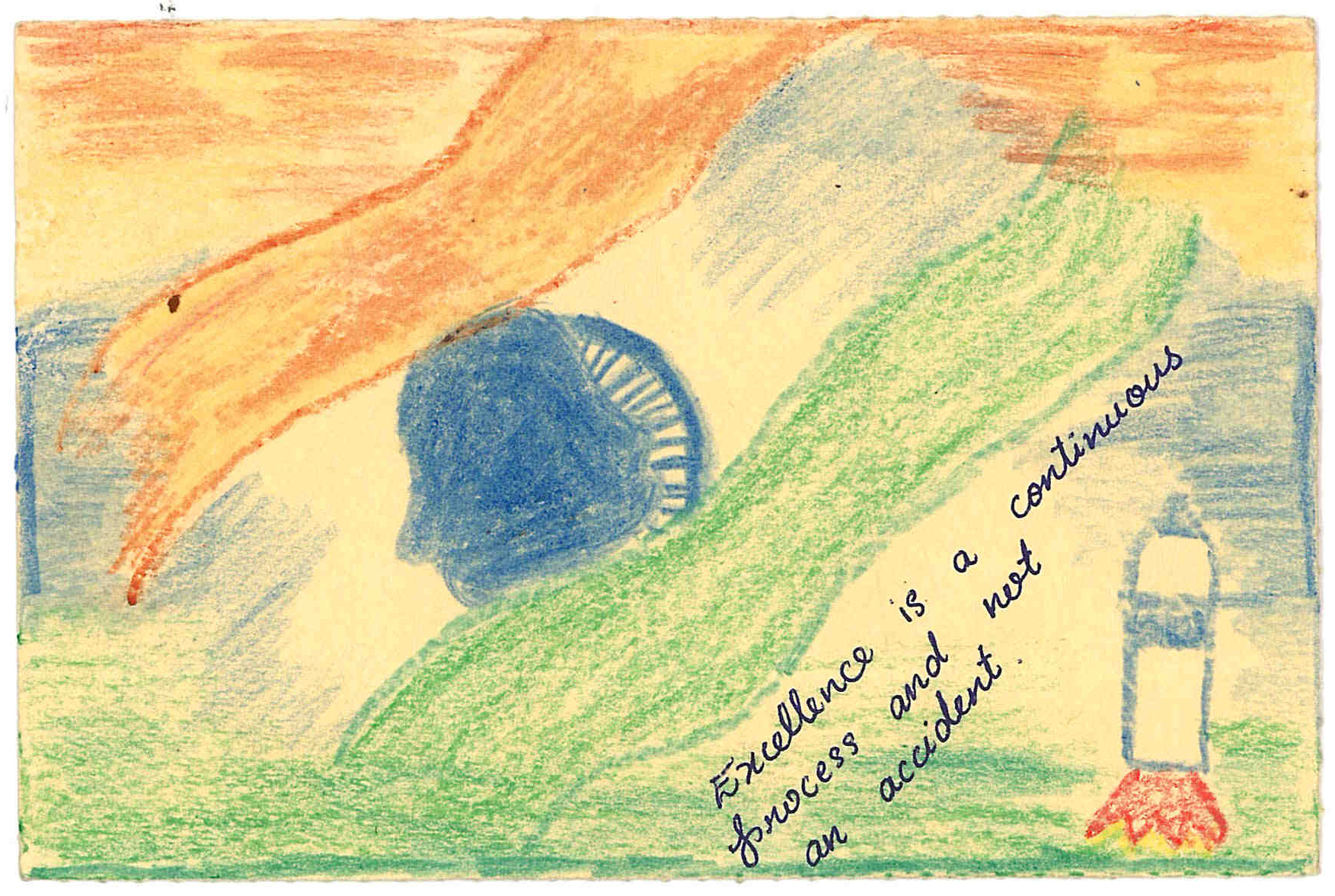
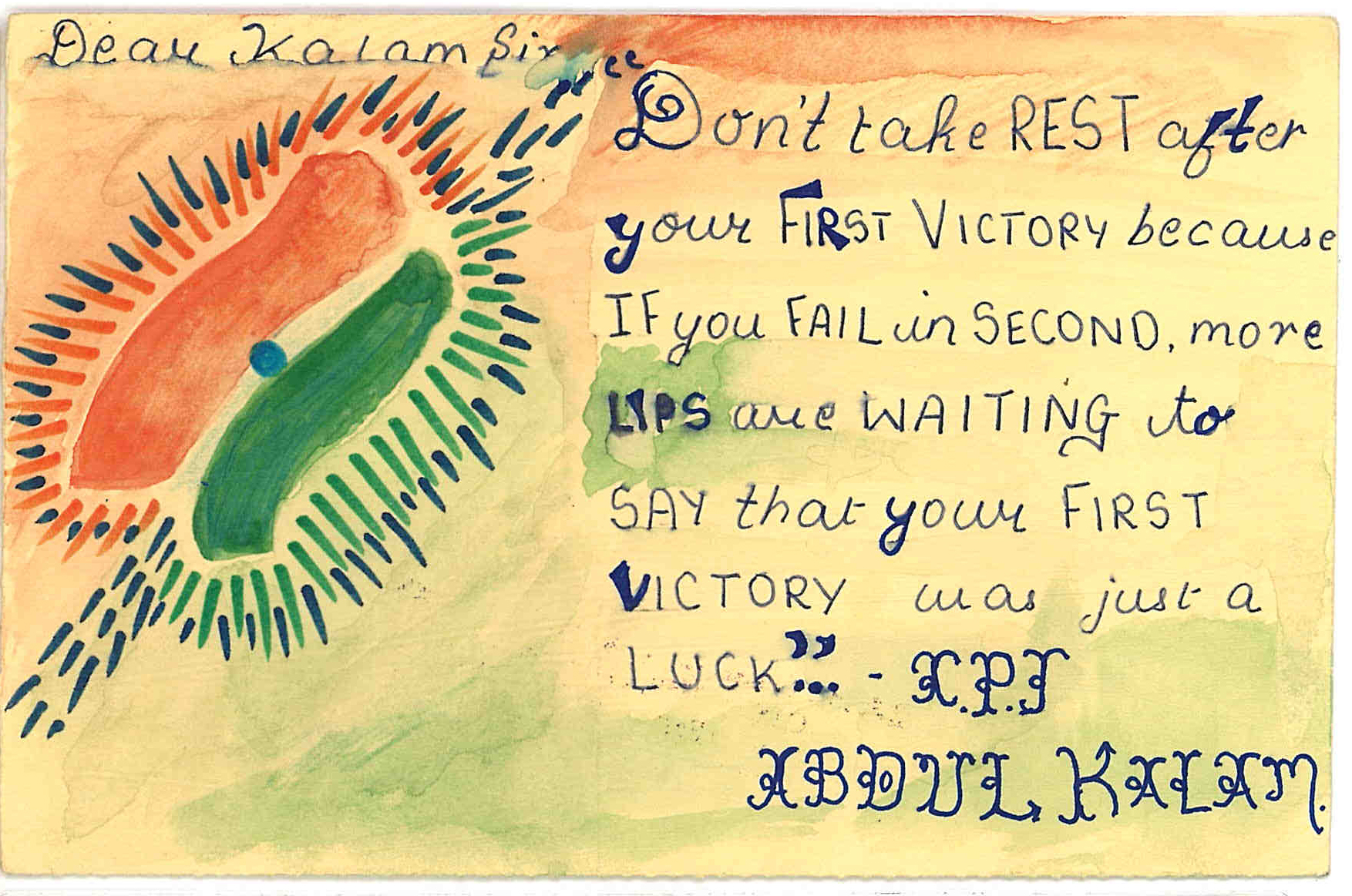
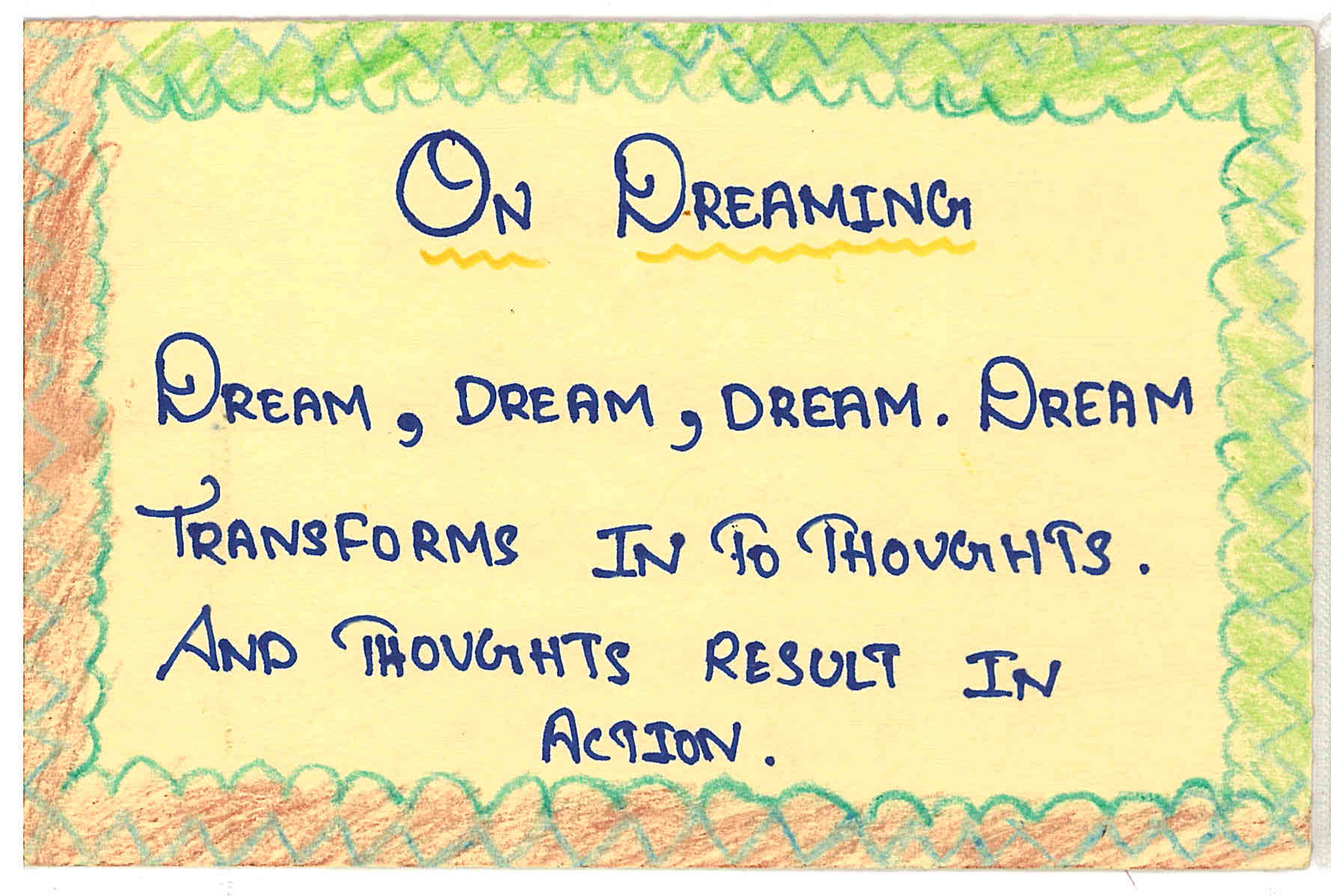
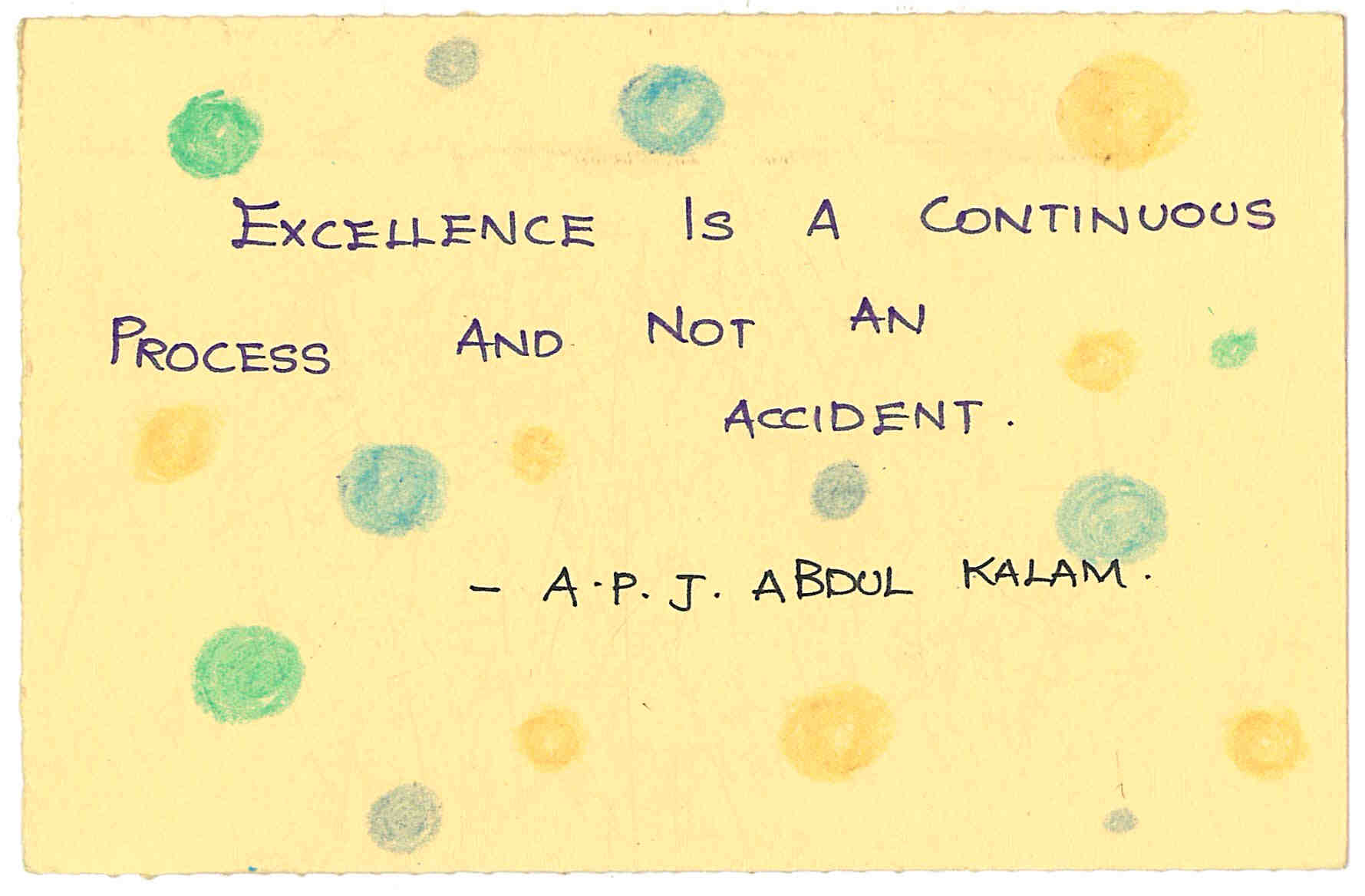
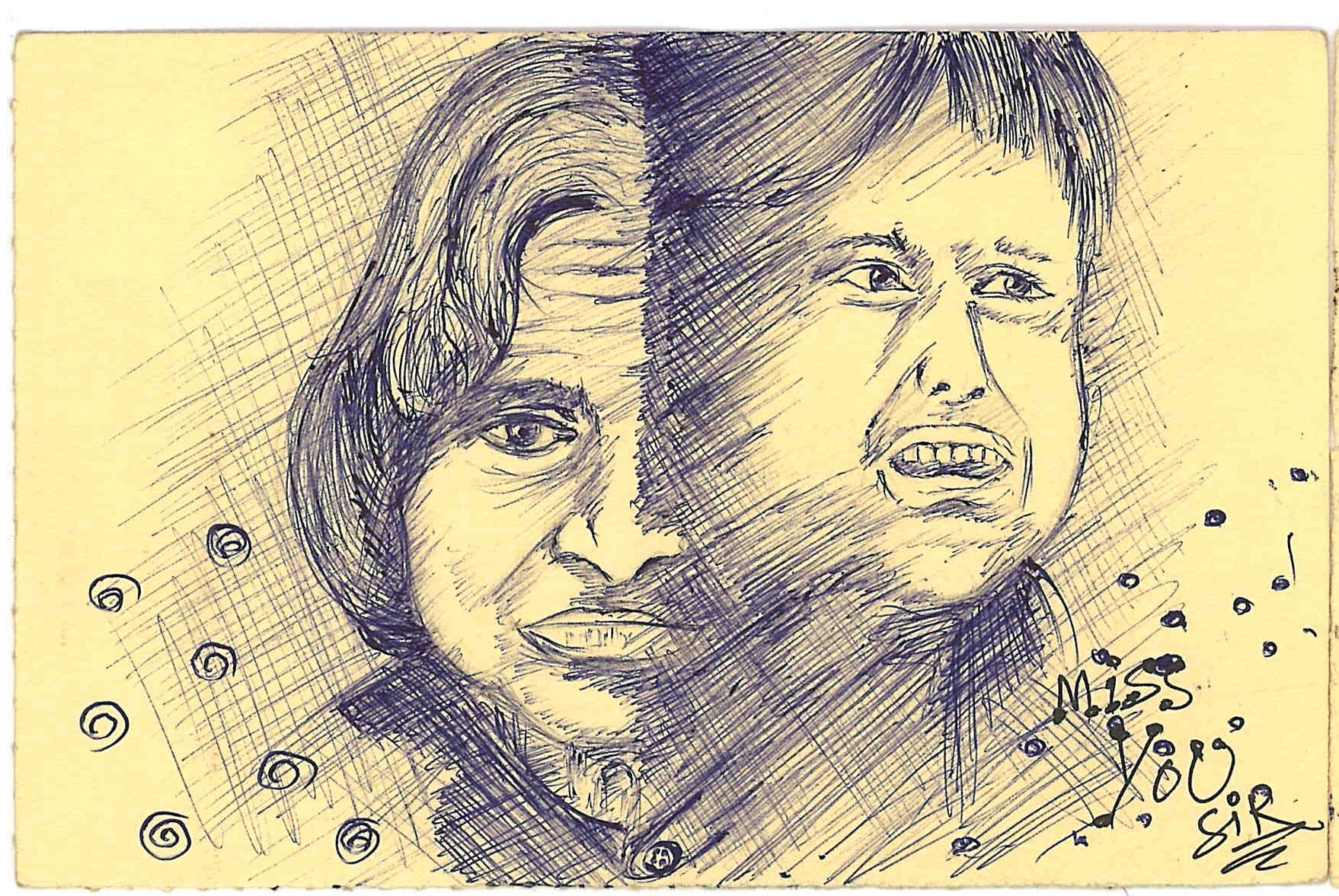
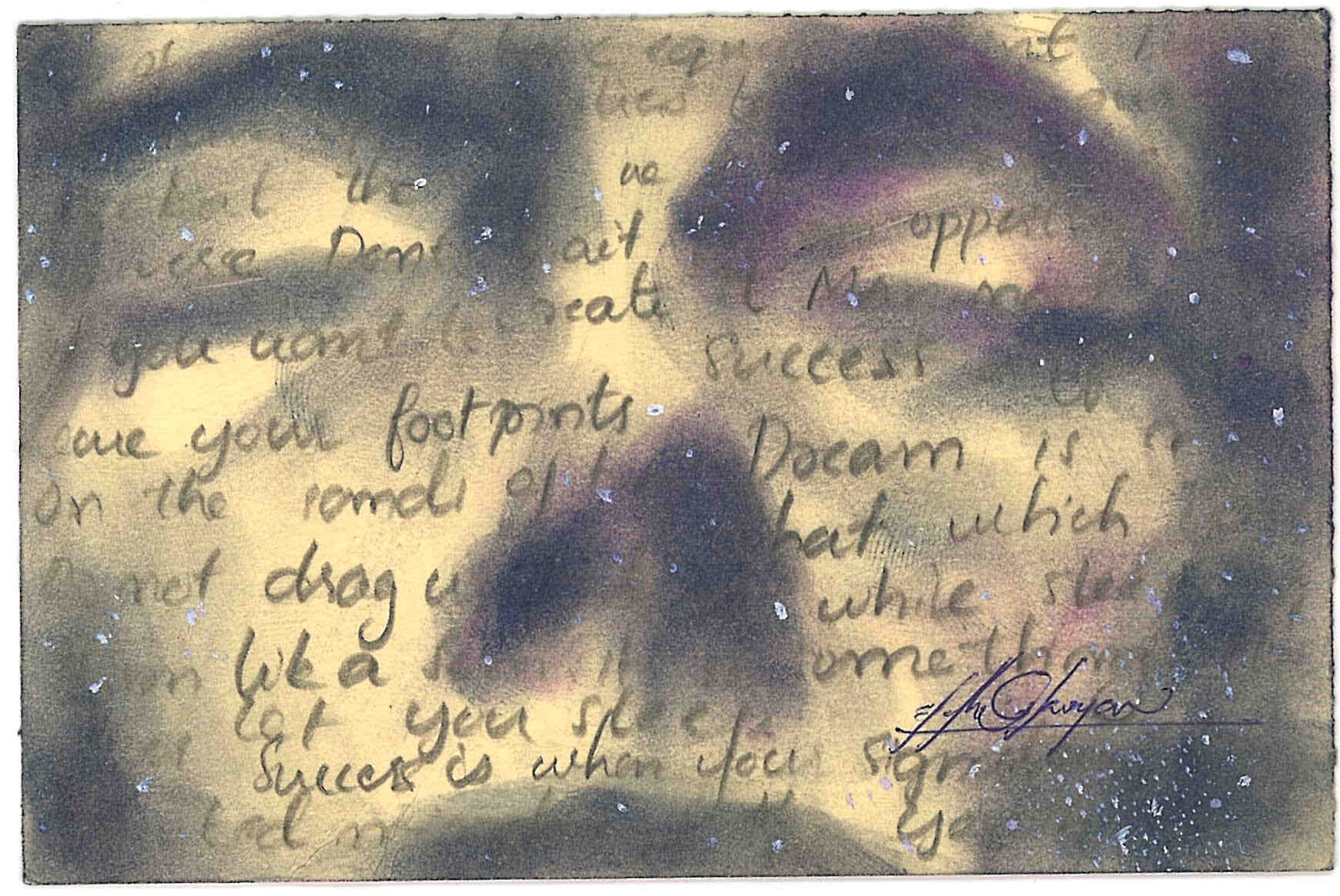
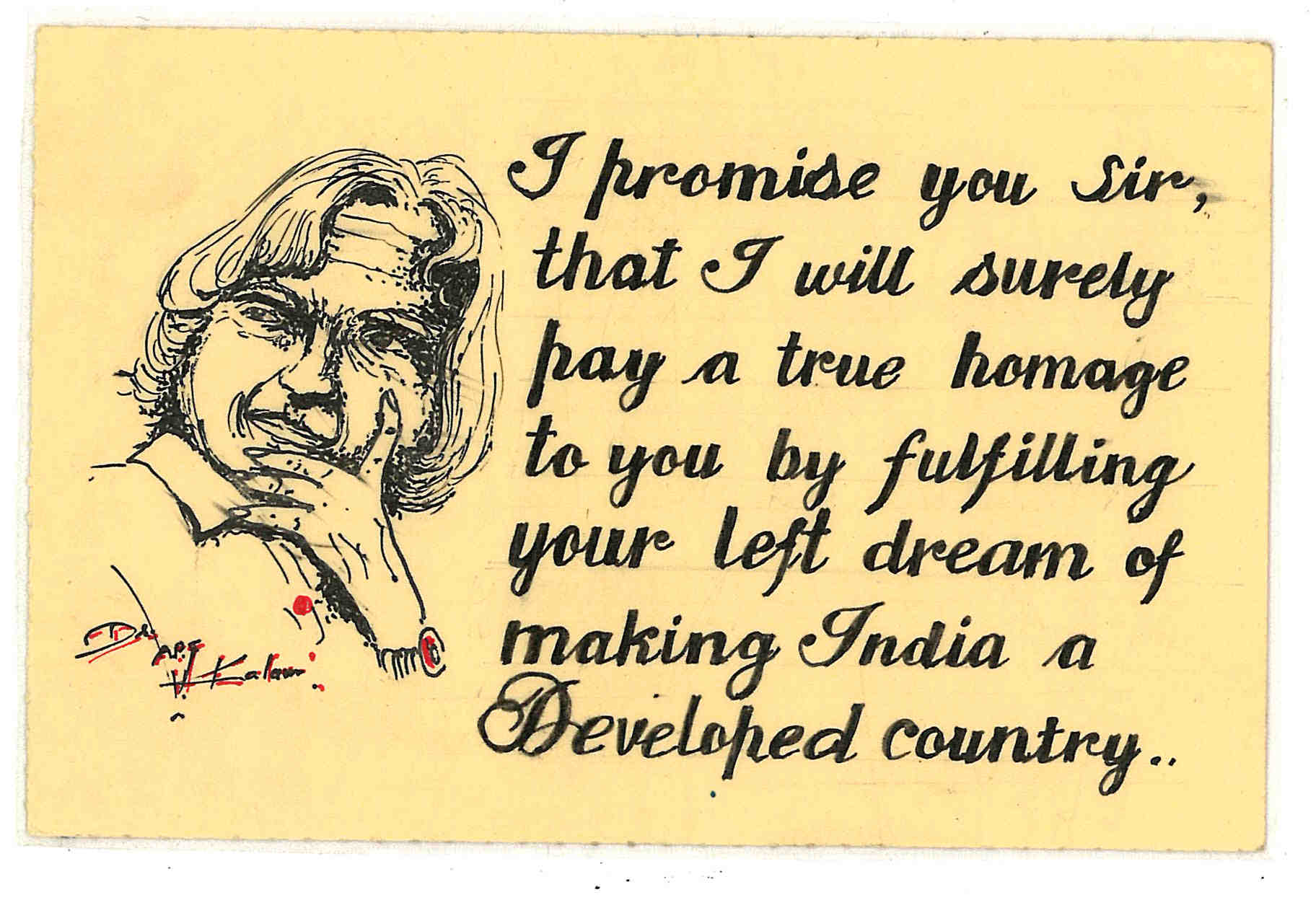
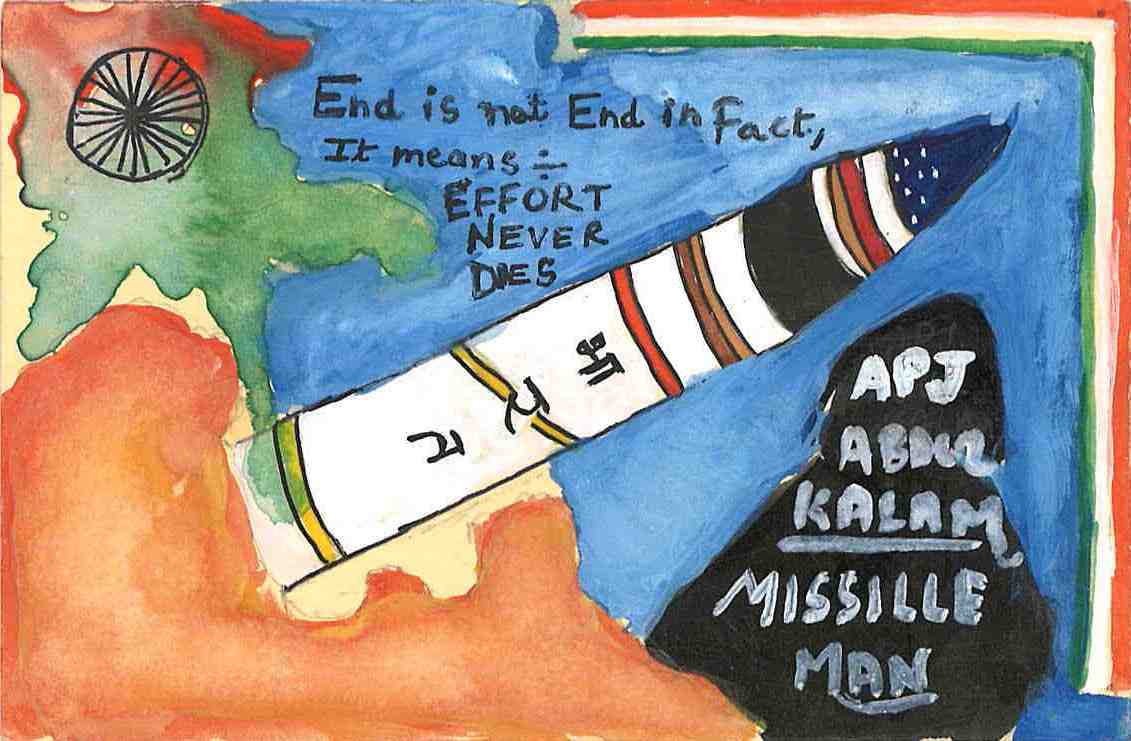
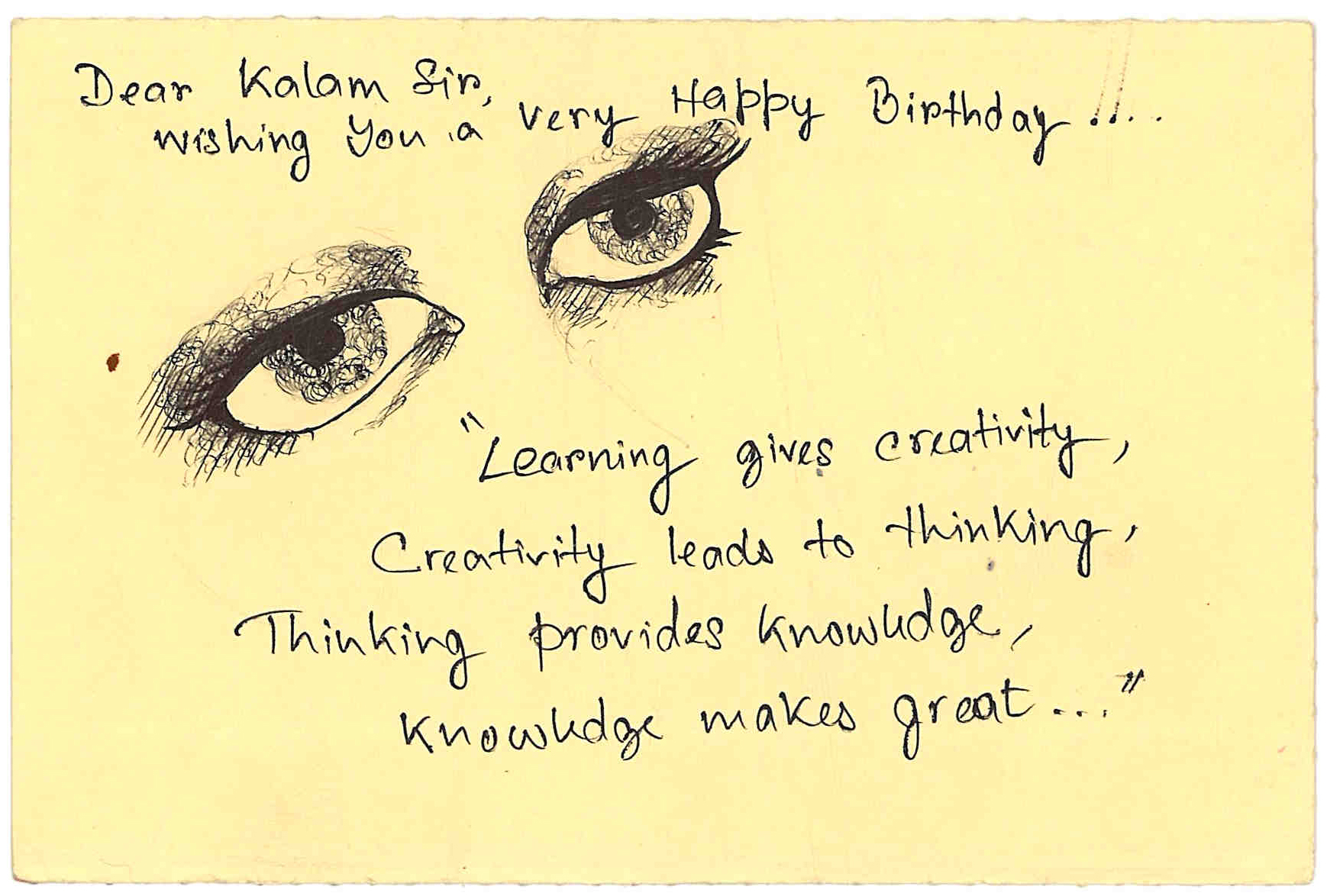
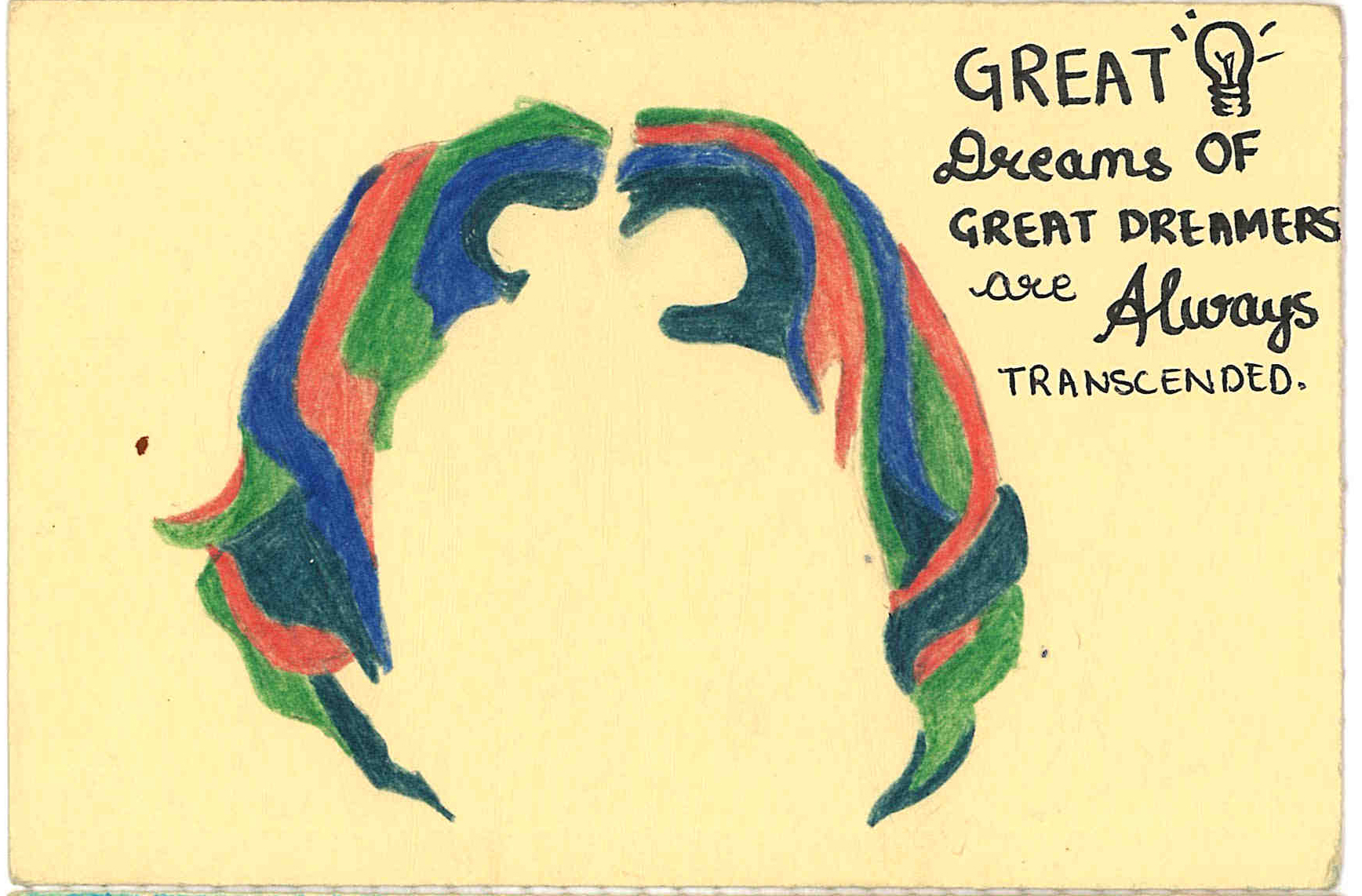
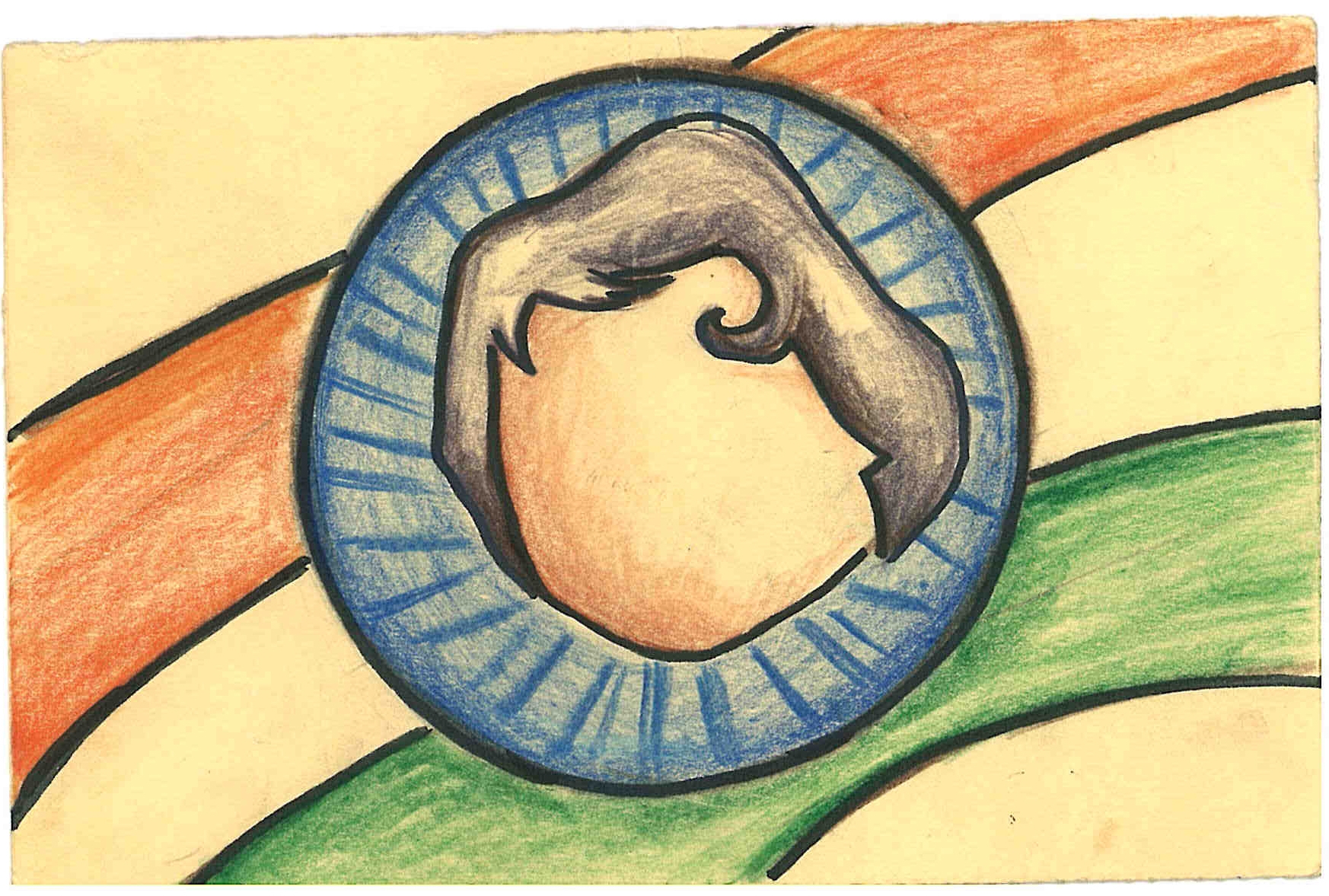
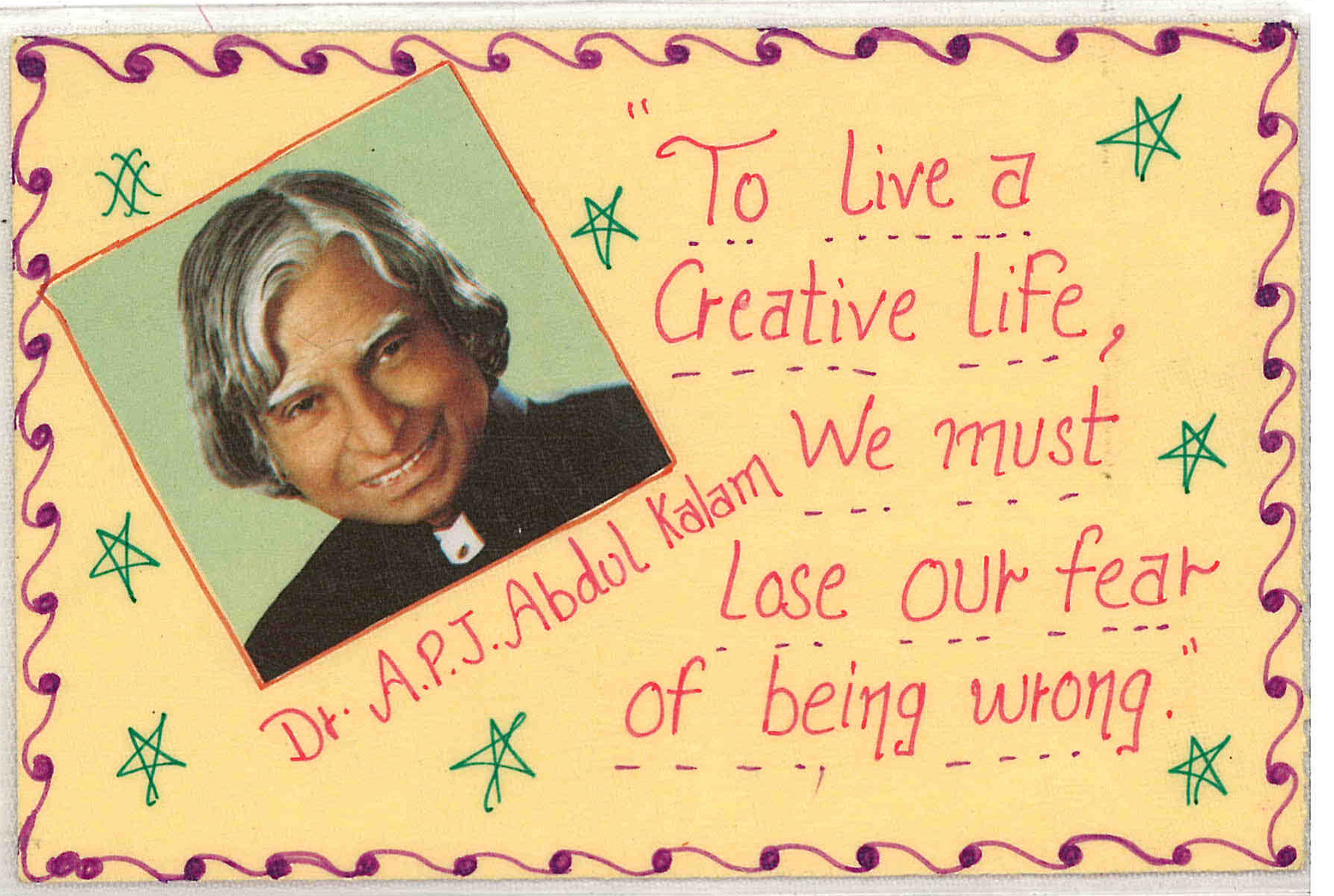
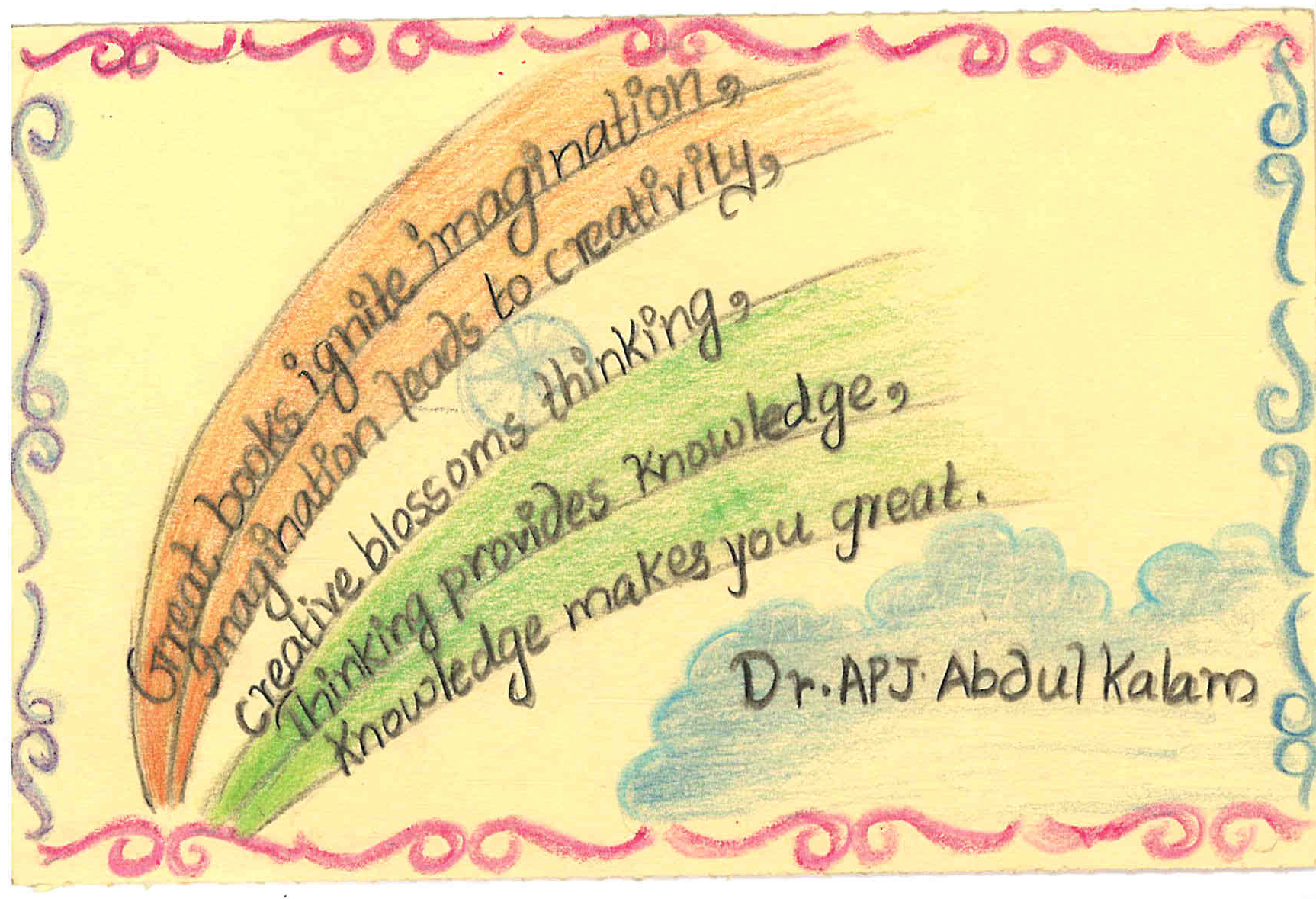
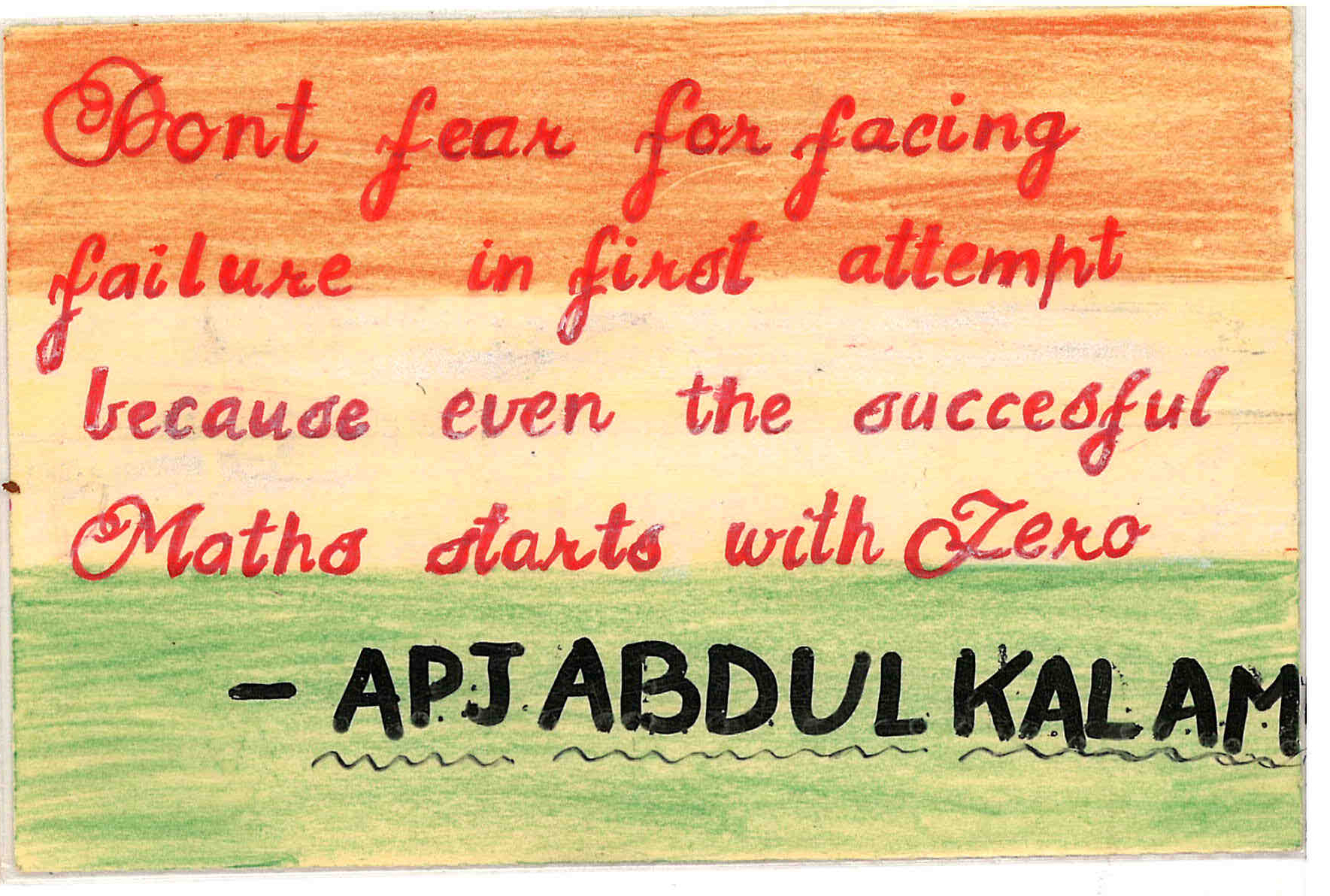
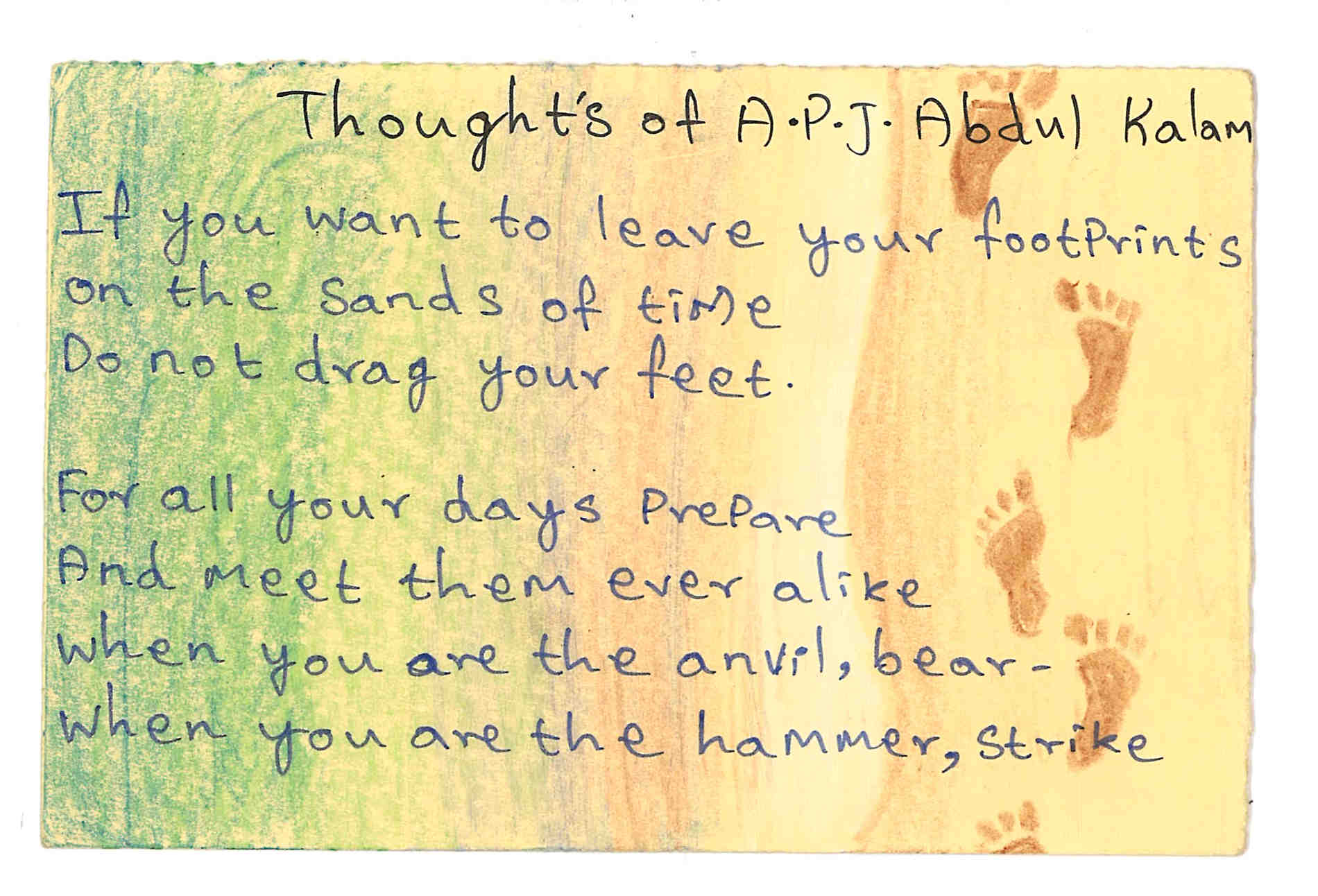
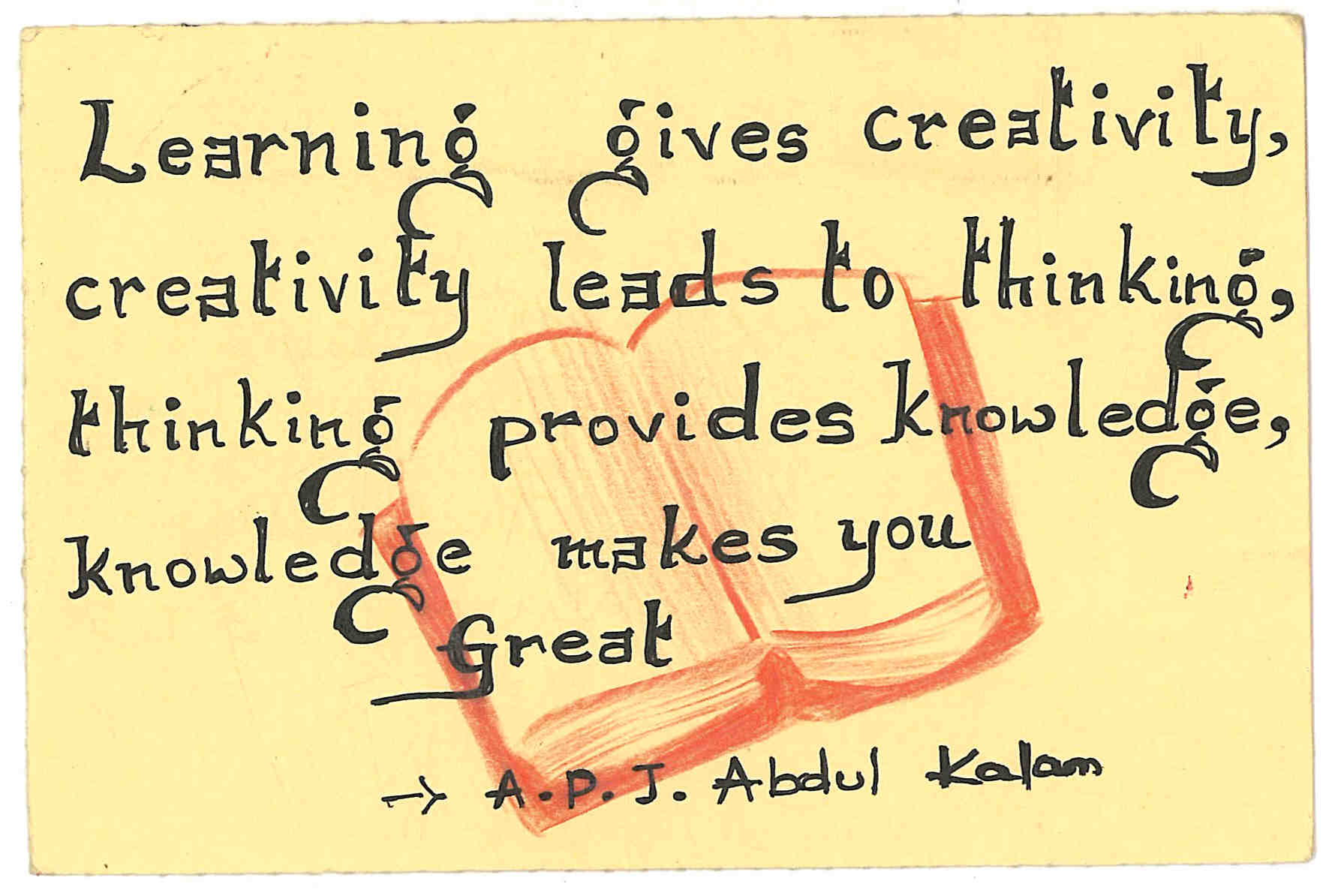
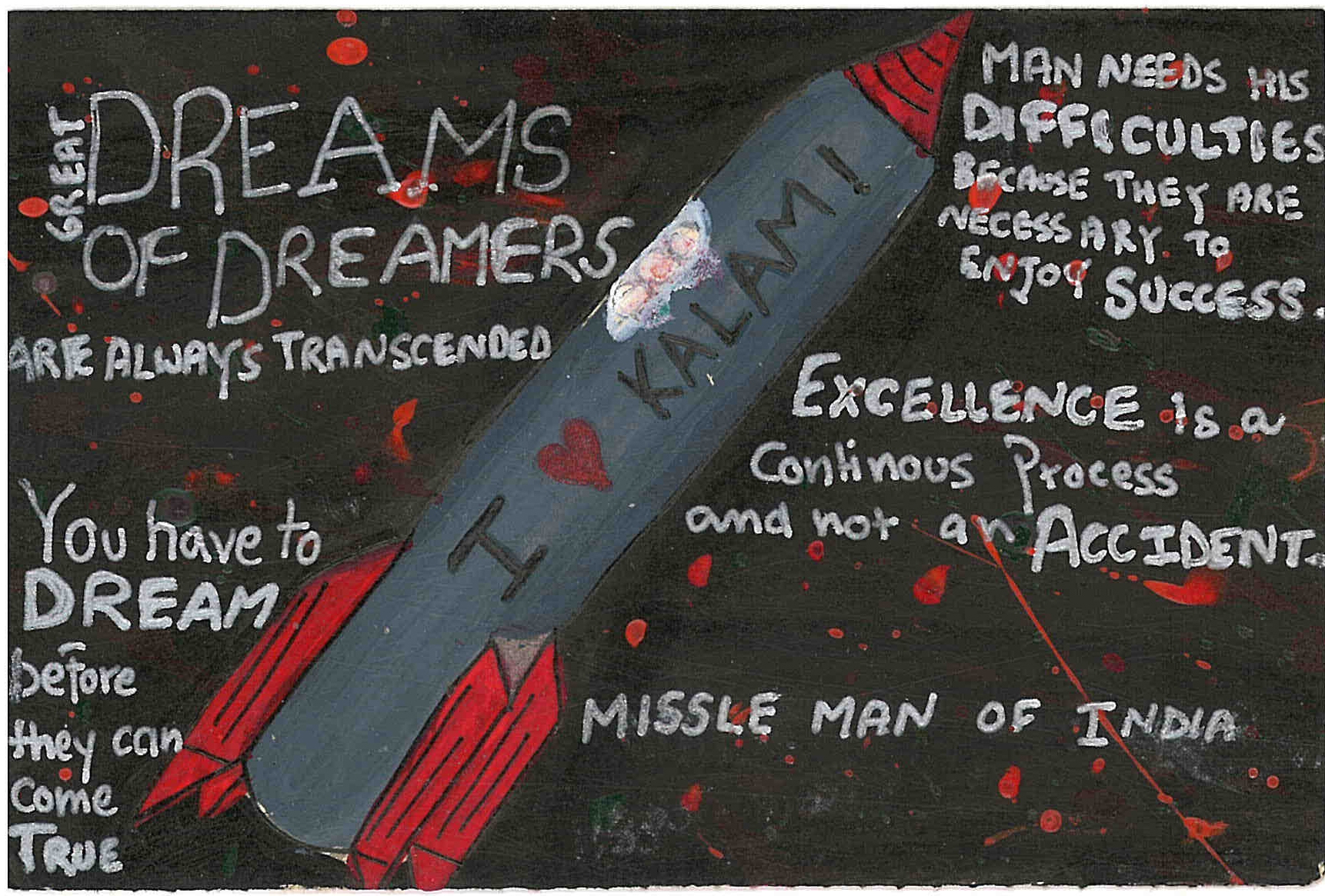
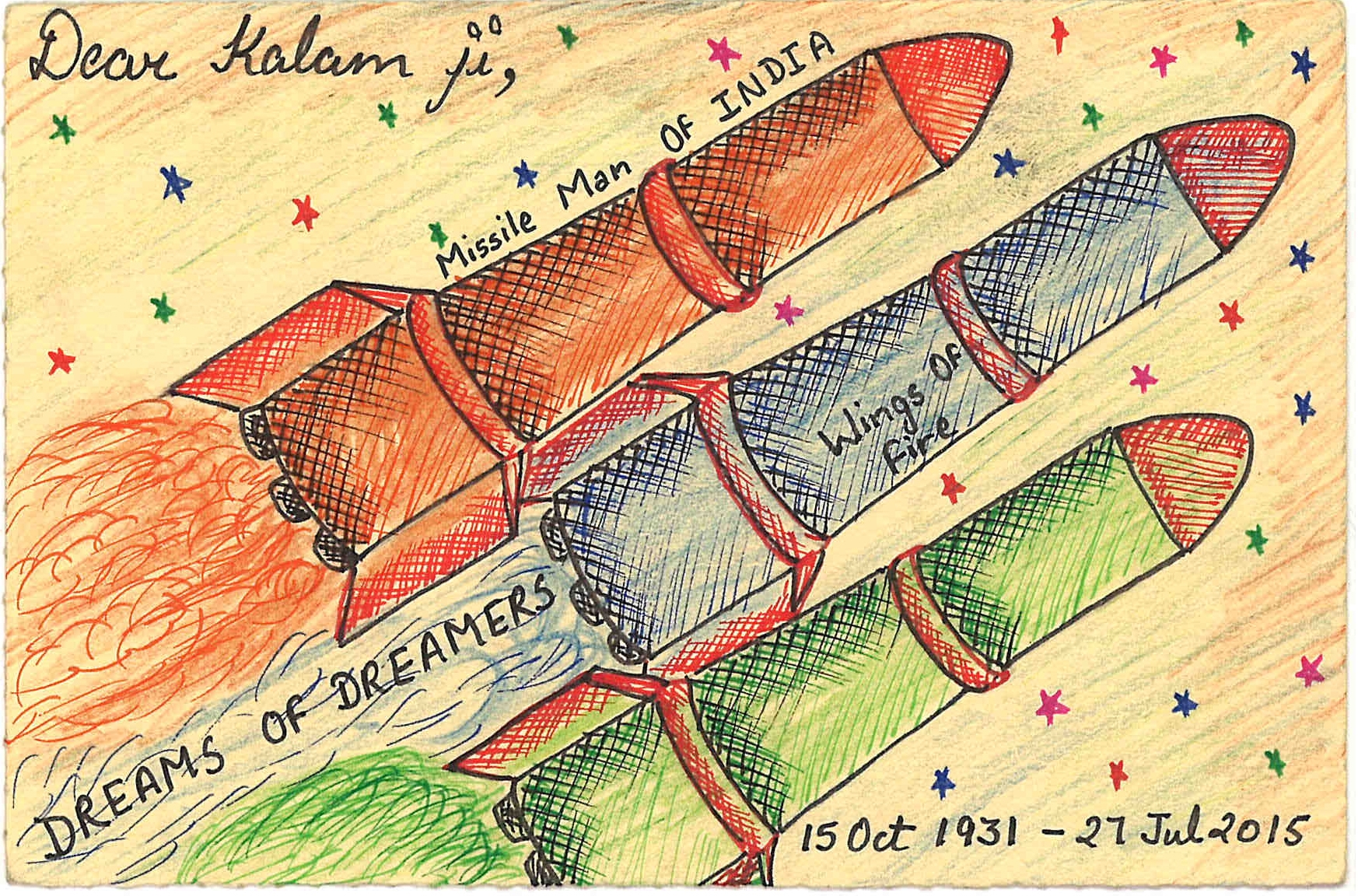
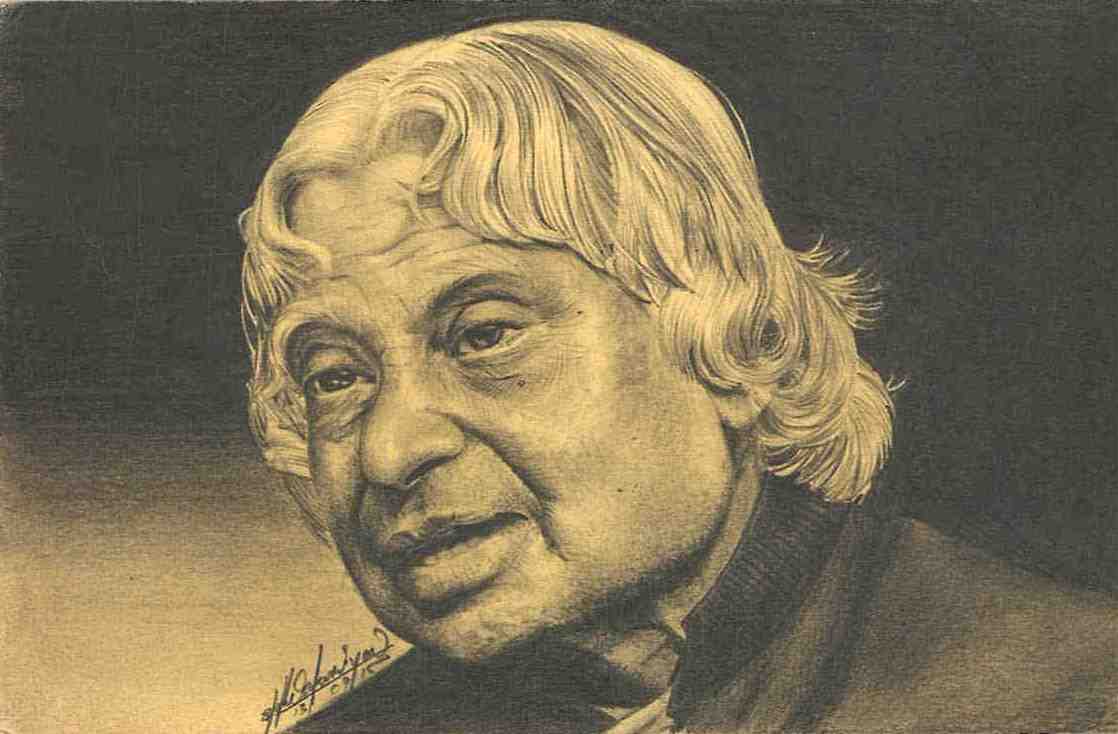
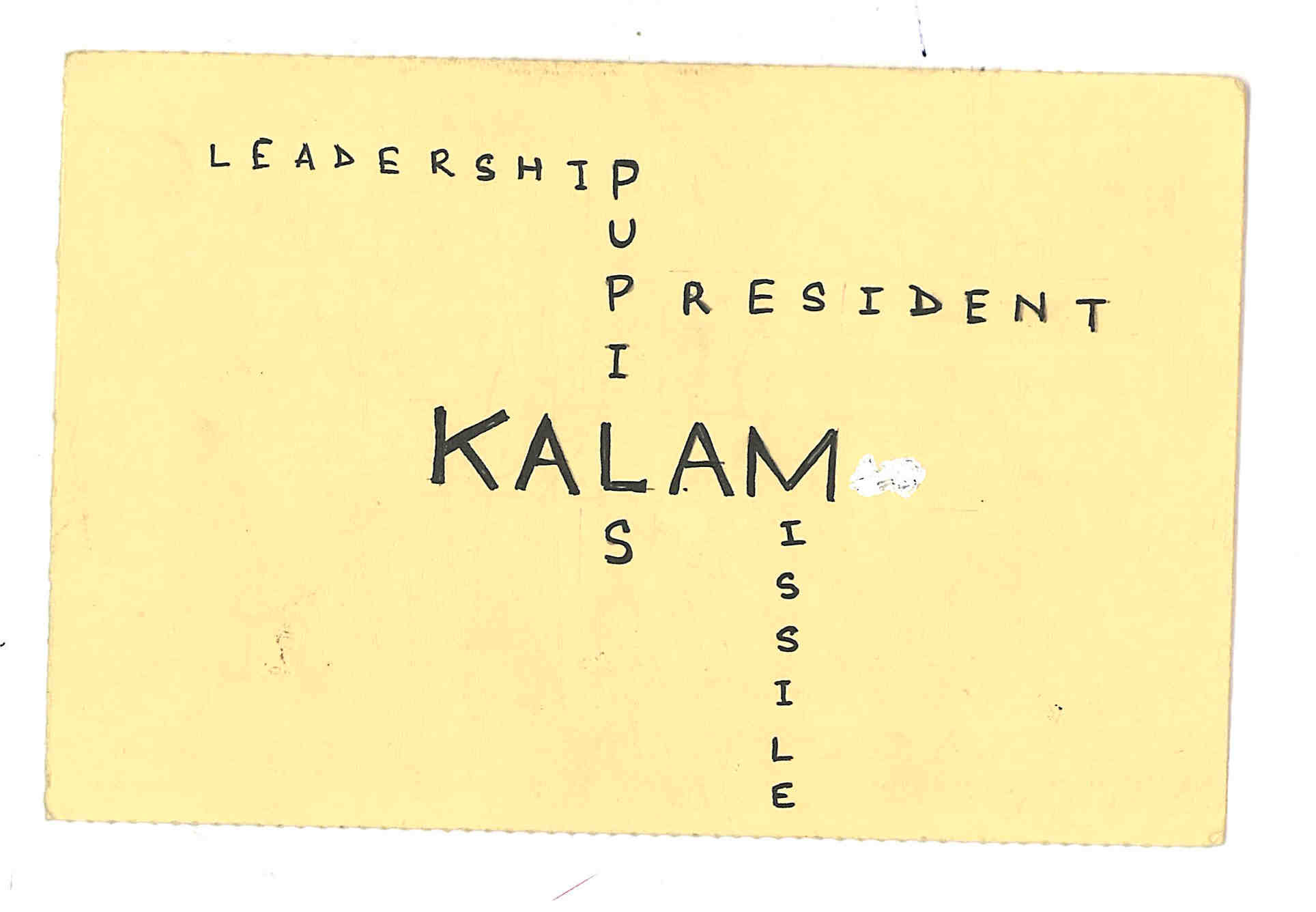
In partnership with LetterFarms, we celebrate the 85th birth anniversary of Dr. A.P.J. Abdul Kalam, the 11th president of India (2002-2007) with 85 handpicked postcards from the year-long Dear Kalam Sir campaign—the largest postcard tribute campaign for a public leader in history. Grouped into four categories—Spark, Resilience, Decision, and Take-Off—these postcards celebrate those foundational elements of Kalam Sir’s life and essence. Send us your own postcard tributes to submit@handwrittenwork.com.
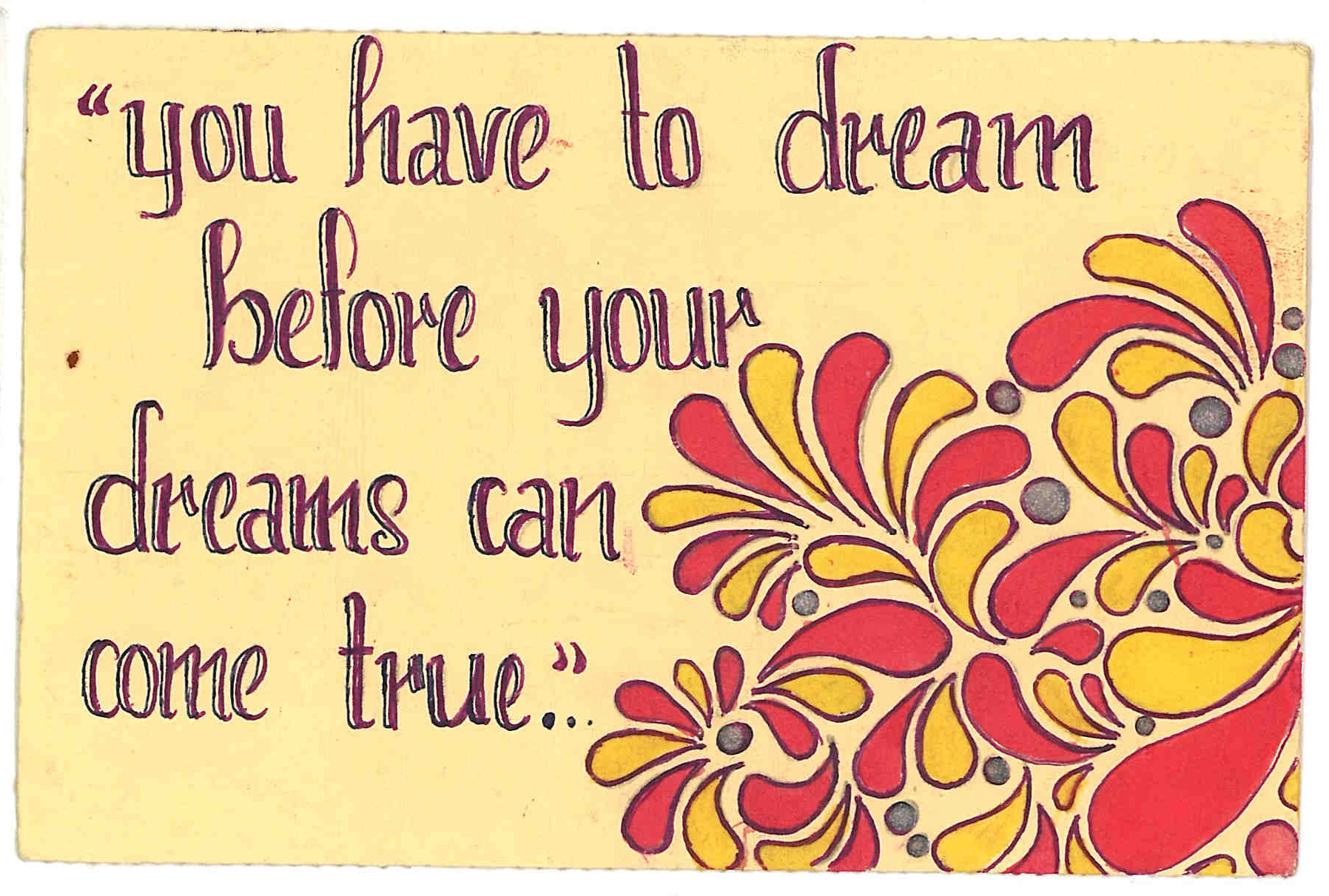
Definition of spark:
noun \ˈspärk\
1a : a small particle of a burning substance thrown out by a body in combustion or remaining when combustion is nearly completed
b: a hot glowing particle struck from a larger mass; especially : one heated by friction
2a : a luminous disruptive electrical discharge of very short duration between two conductors separated by a gas (as air)
b: the discharge in a spark plug
c: the mechanism controlling the discharge in a spark plug
3: sparkle, flash
4: something that sets off a sudden force <provided the spark that helped the team to rally>
5: a latent particle capable of growth or developing : germ <still retains a spark of decency>




Spark - Resilience - Decision - Take Off
* This is a part of an online exhibition curated in collaborated with LetterFarms. To experience the exhibition, you can see the components linked above, or enter through the front door here. *

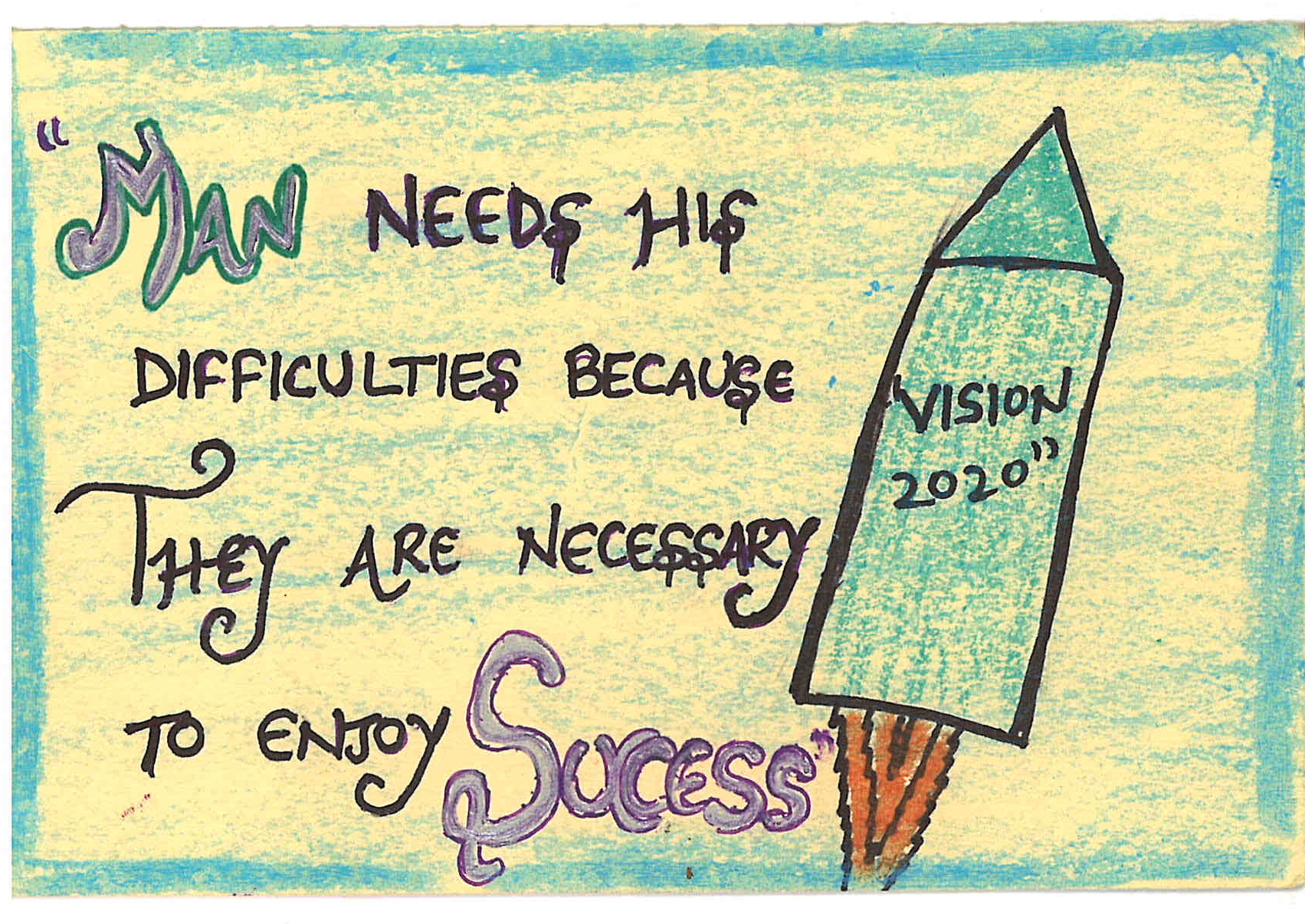
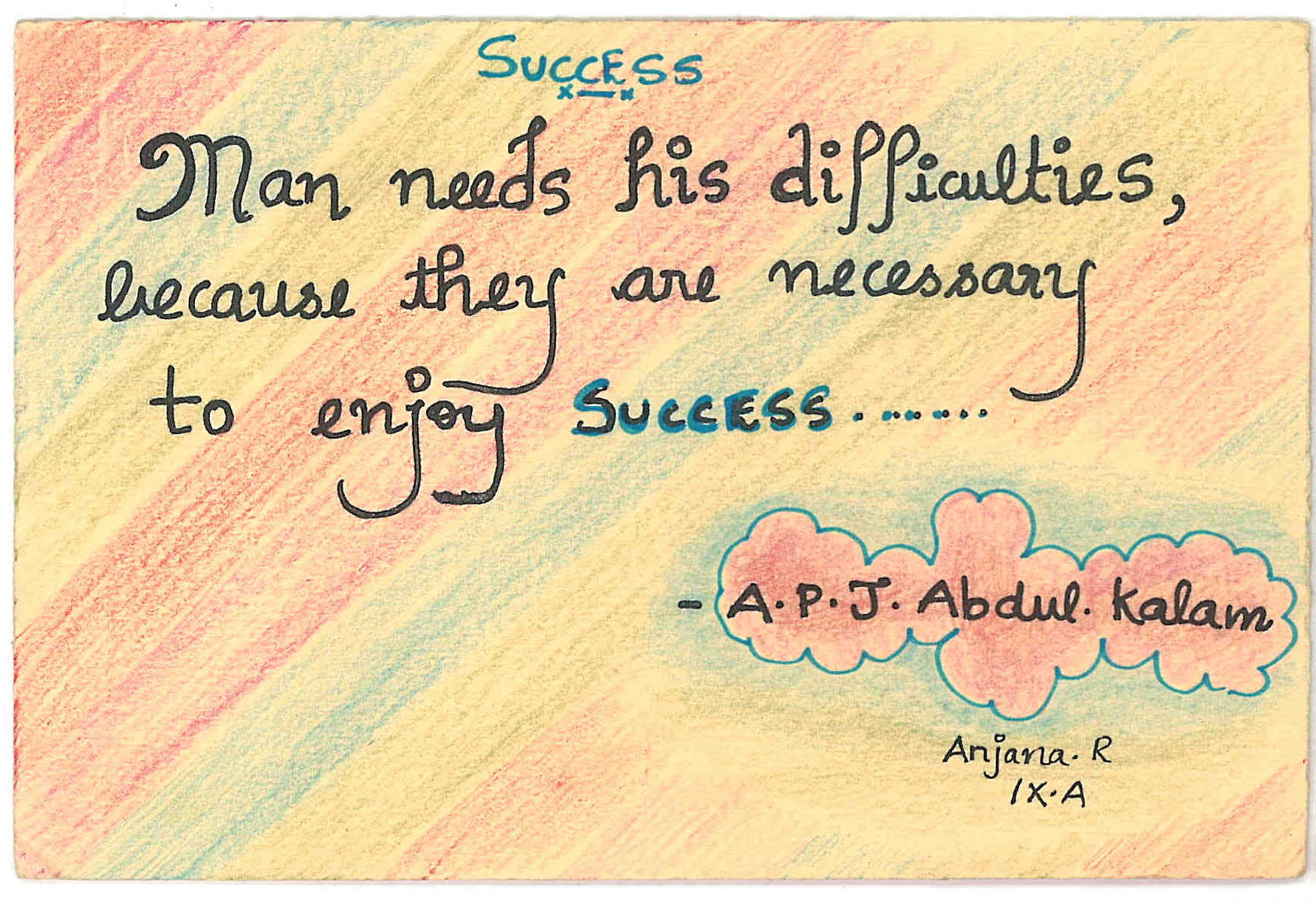
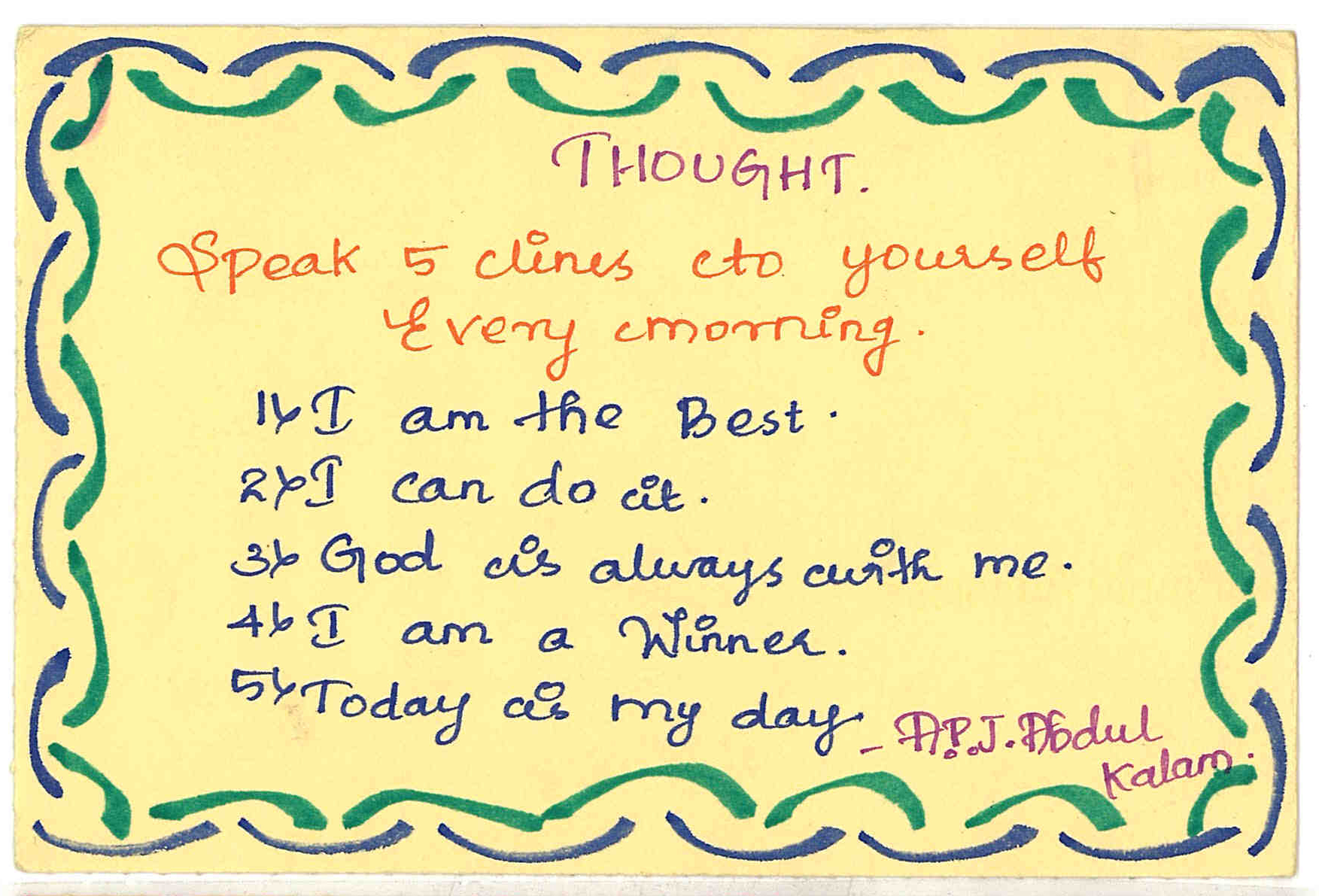
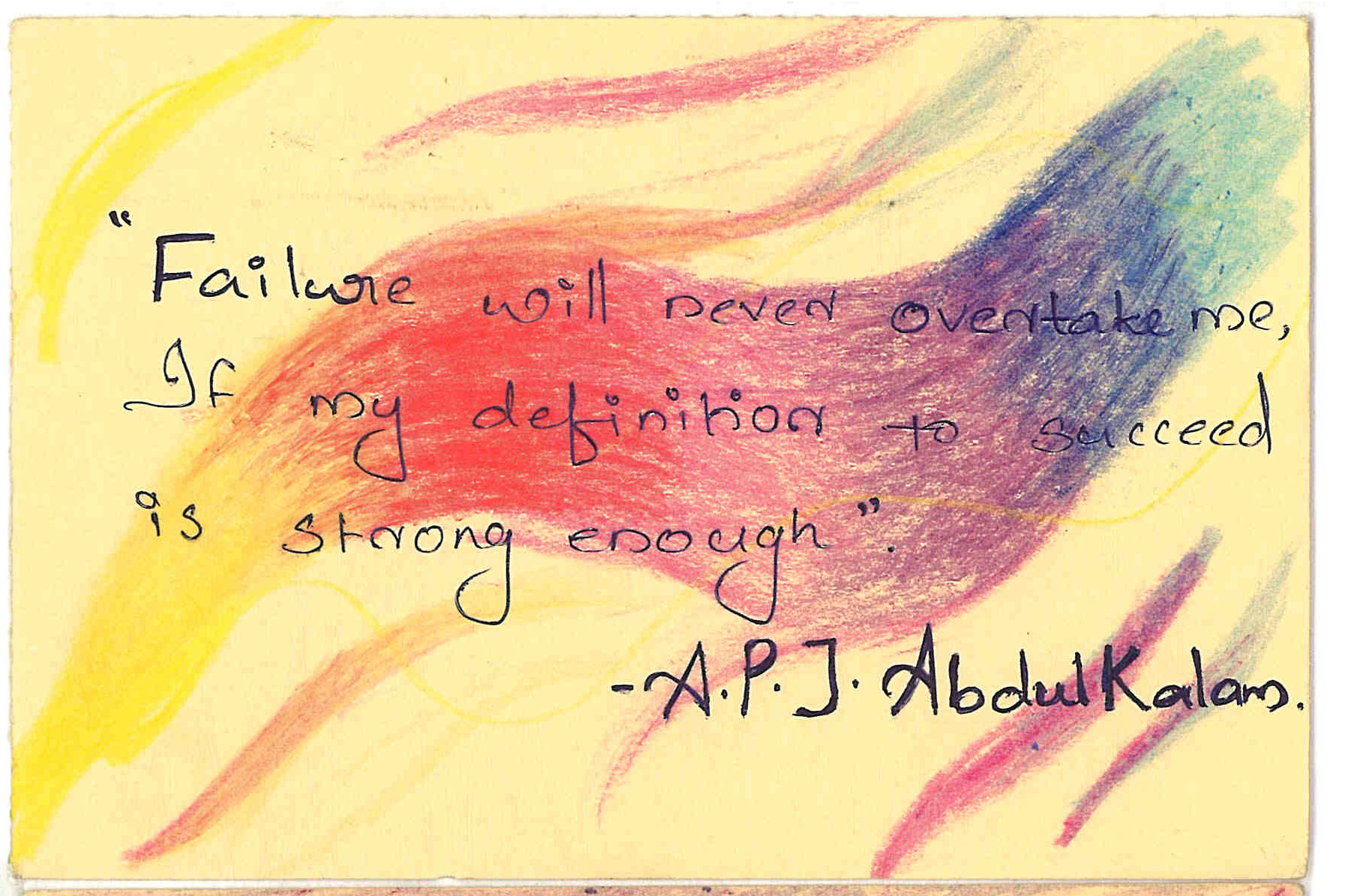
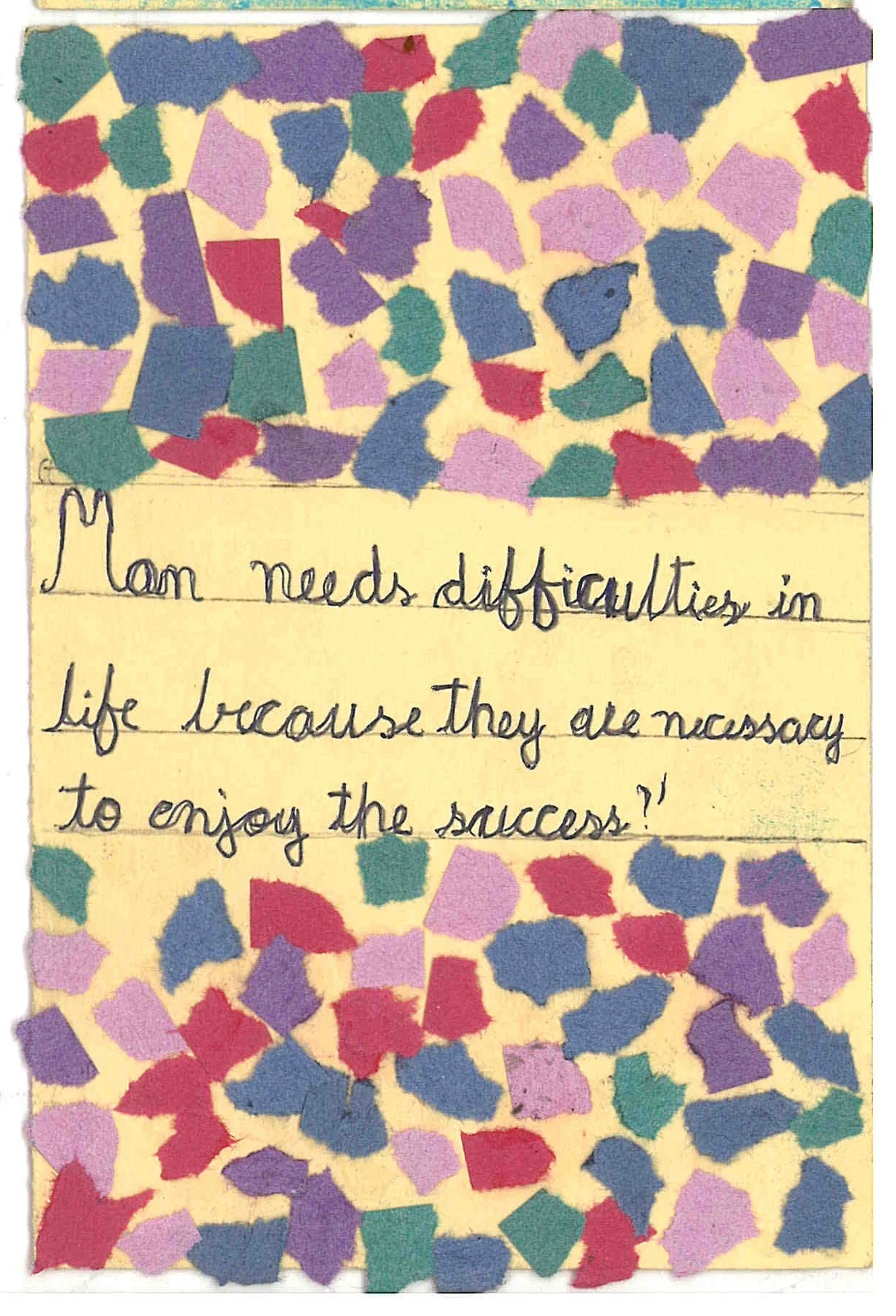
Resilience
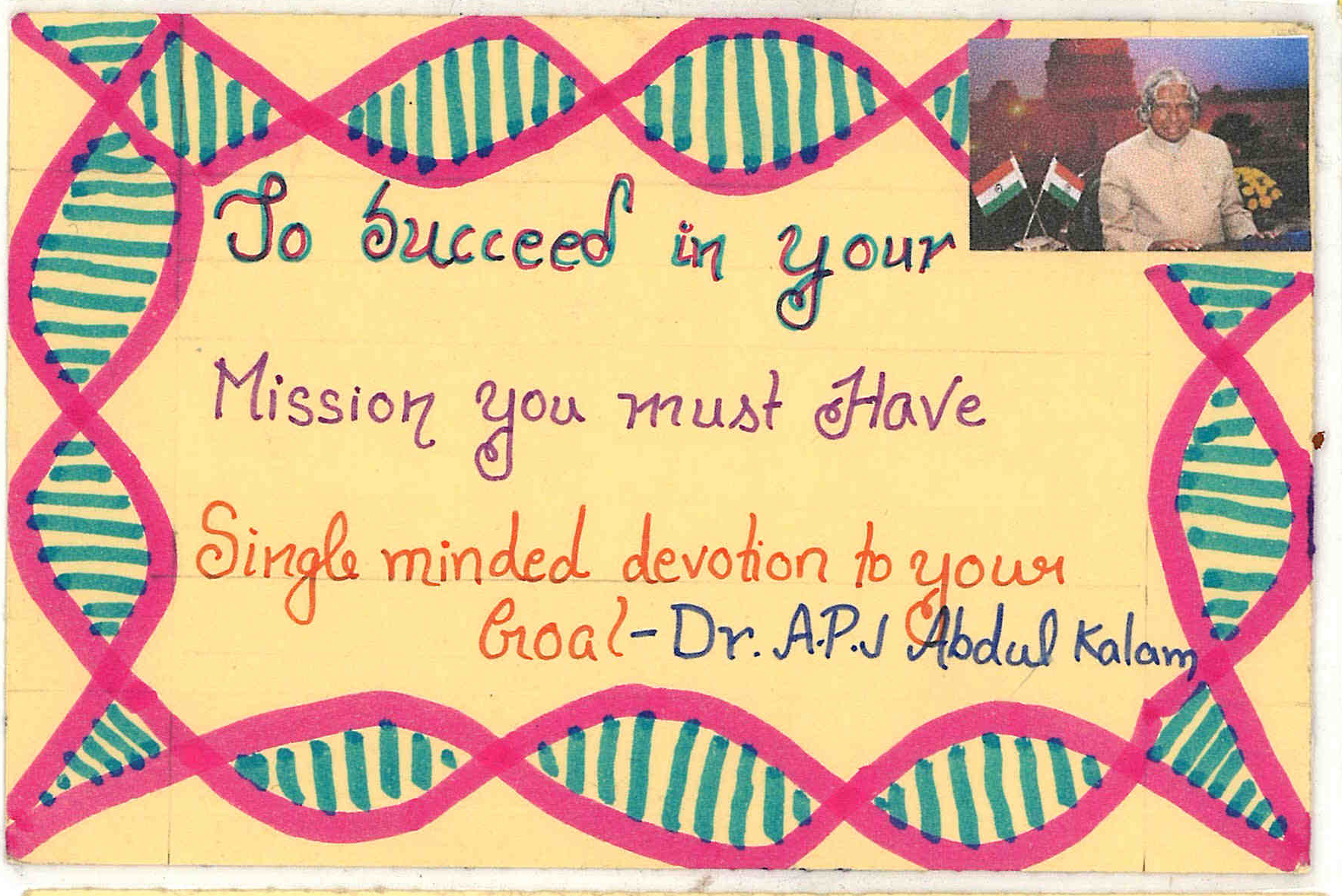
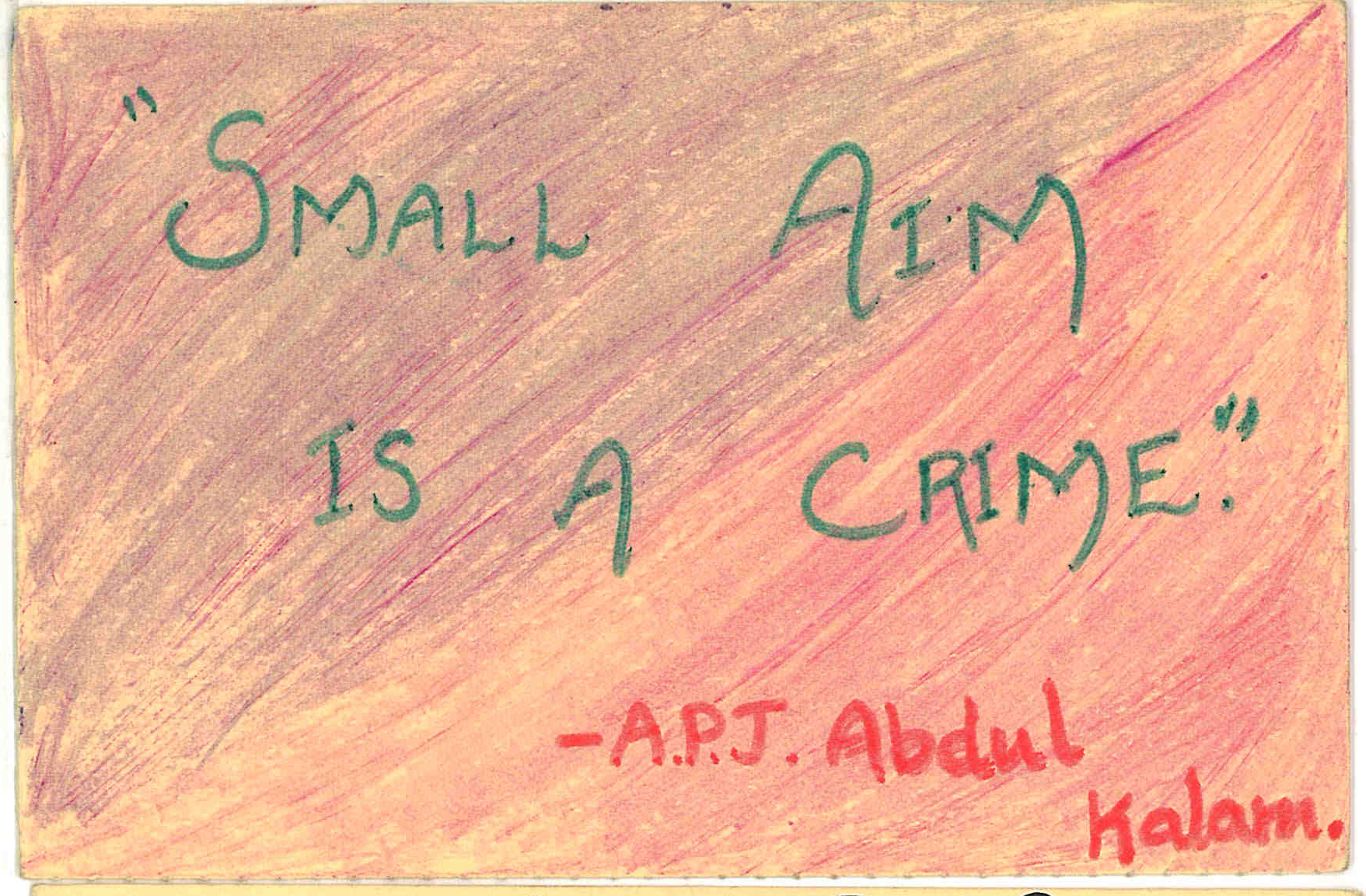
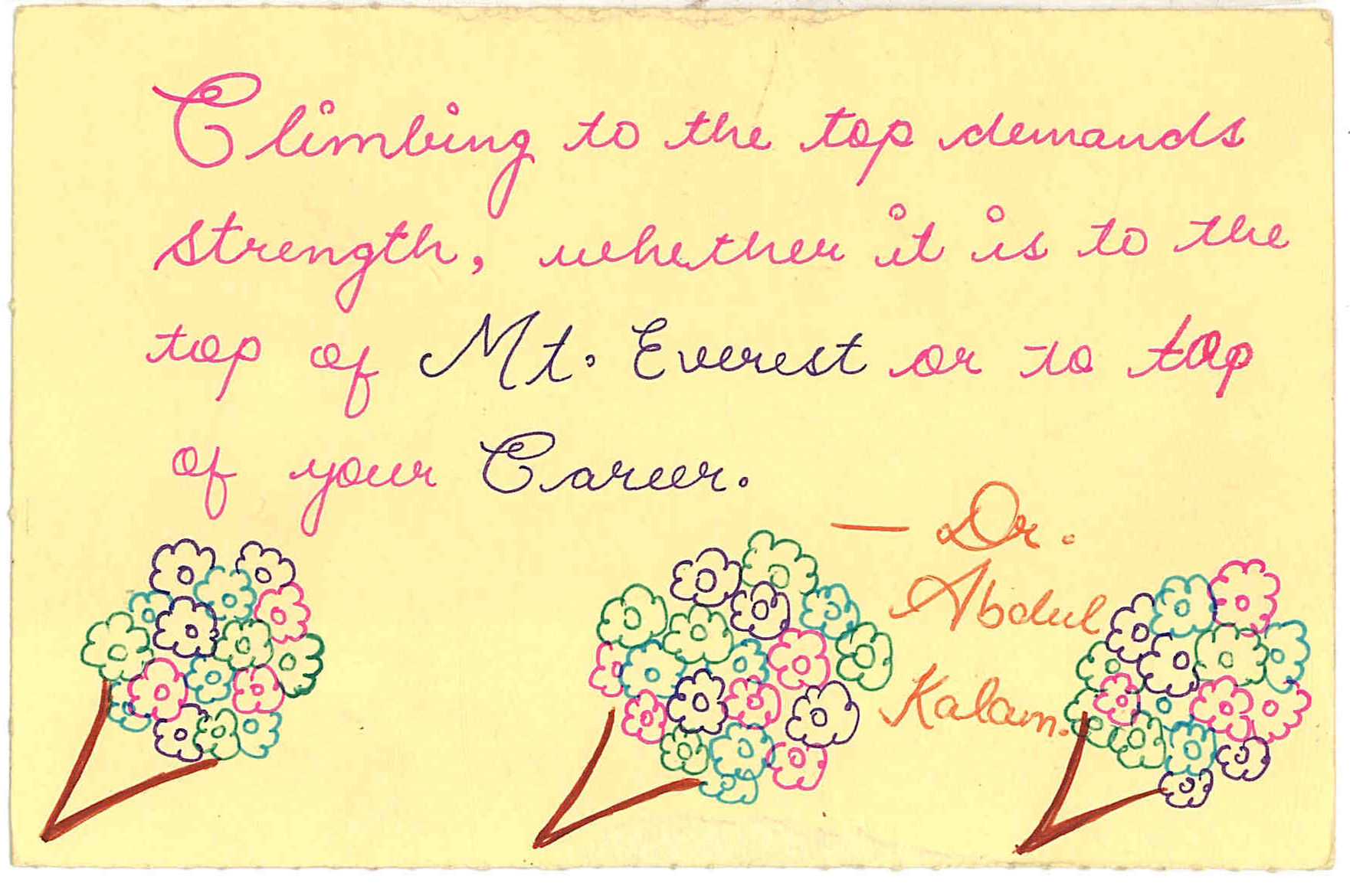
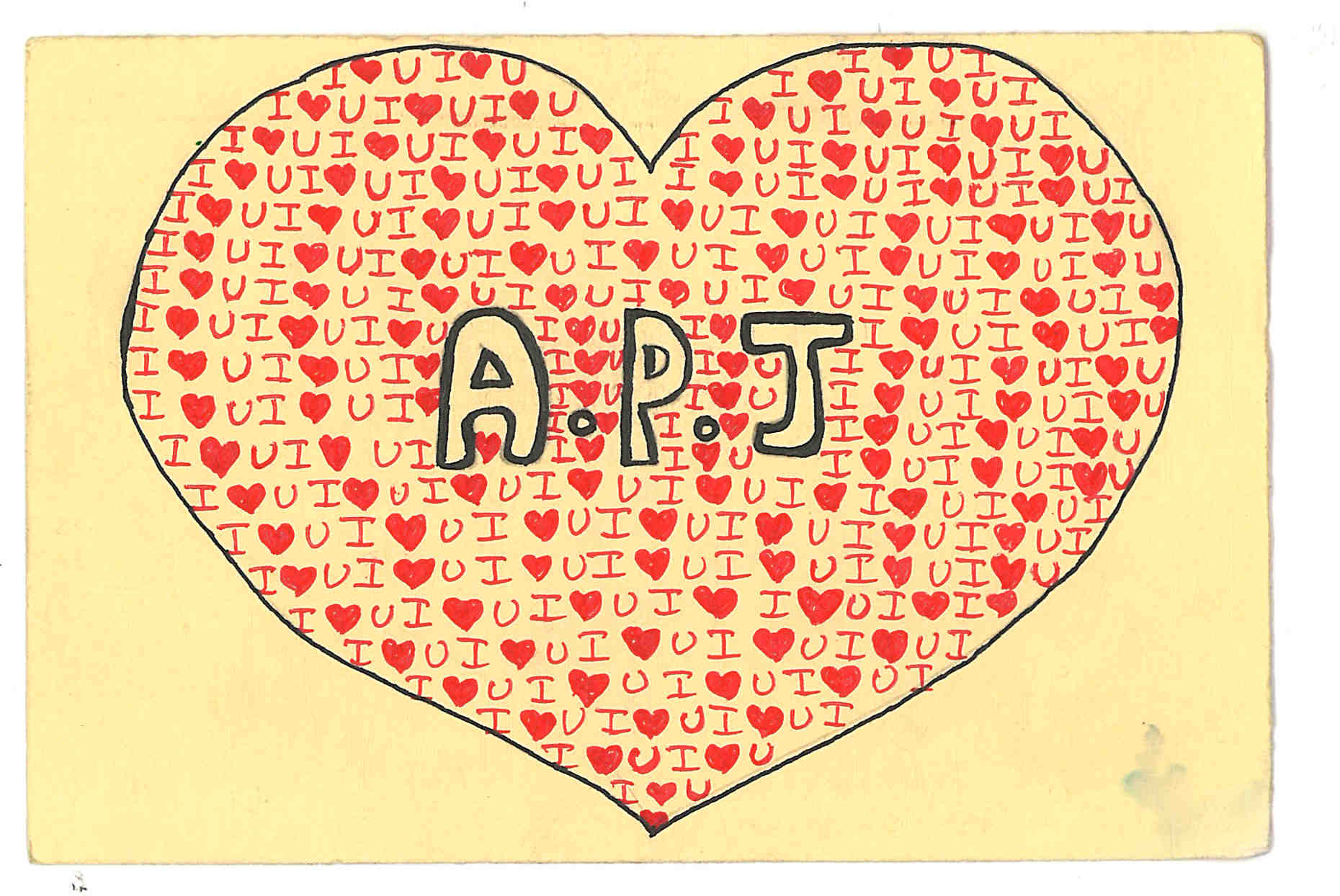
The second gallery of inspiring images from the Dear Kalam Sir campaign--the largest postcard tribute campaign for a public leader in history--and our collaboration with LetterFarms. Together we celebrate the 85th birth anniversary of Dr. A.P.J. Abdul Kalam, the 11th president of India (2002-2007) with 85 handpicked postcards grouped into four categories—Spark, Resilience, Decision, and Take-Off--which celebrate those foundational elements of Kalam Sir’s life and essence. Send us your own postcard tributes to submit@handwrittenwork.com.

Definition of resilience:
noun re·sil·ience \ri-ˈzil-yən(t)s\
1: the capability of a strained body to recover its size and shape after deformation caused especially by compressive stress
2: an ability to recover from or adjust easily to misfortune or change
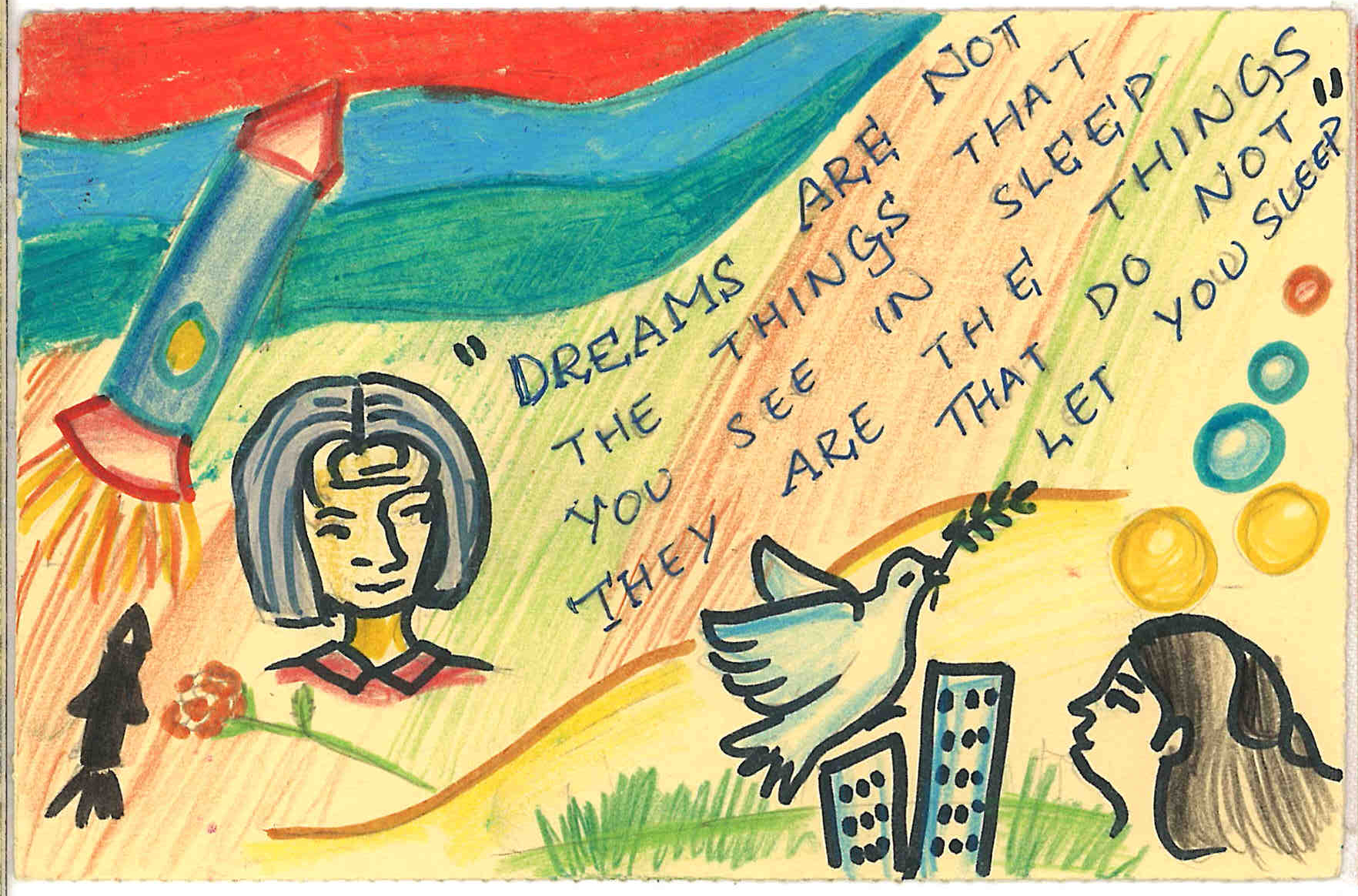
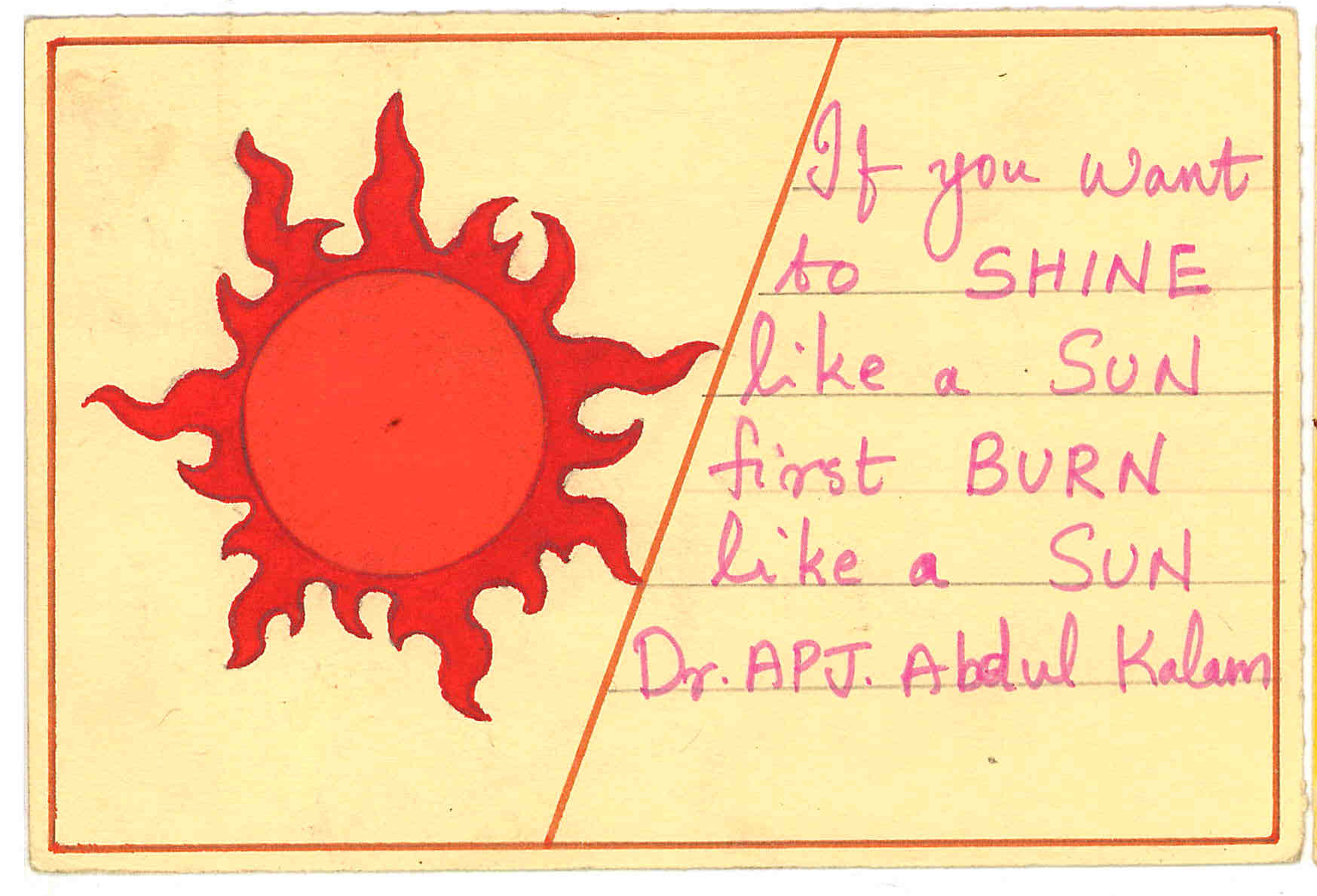
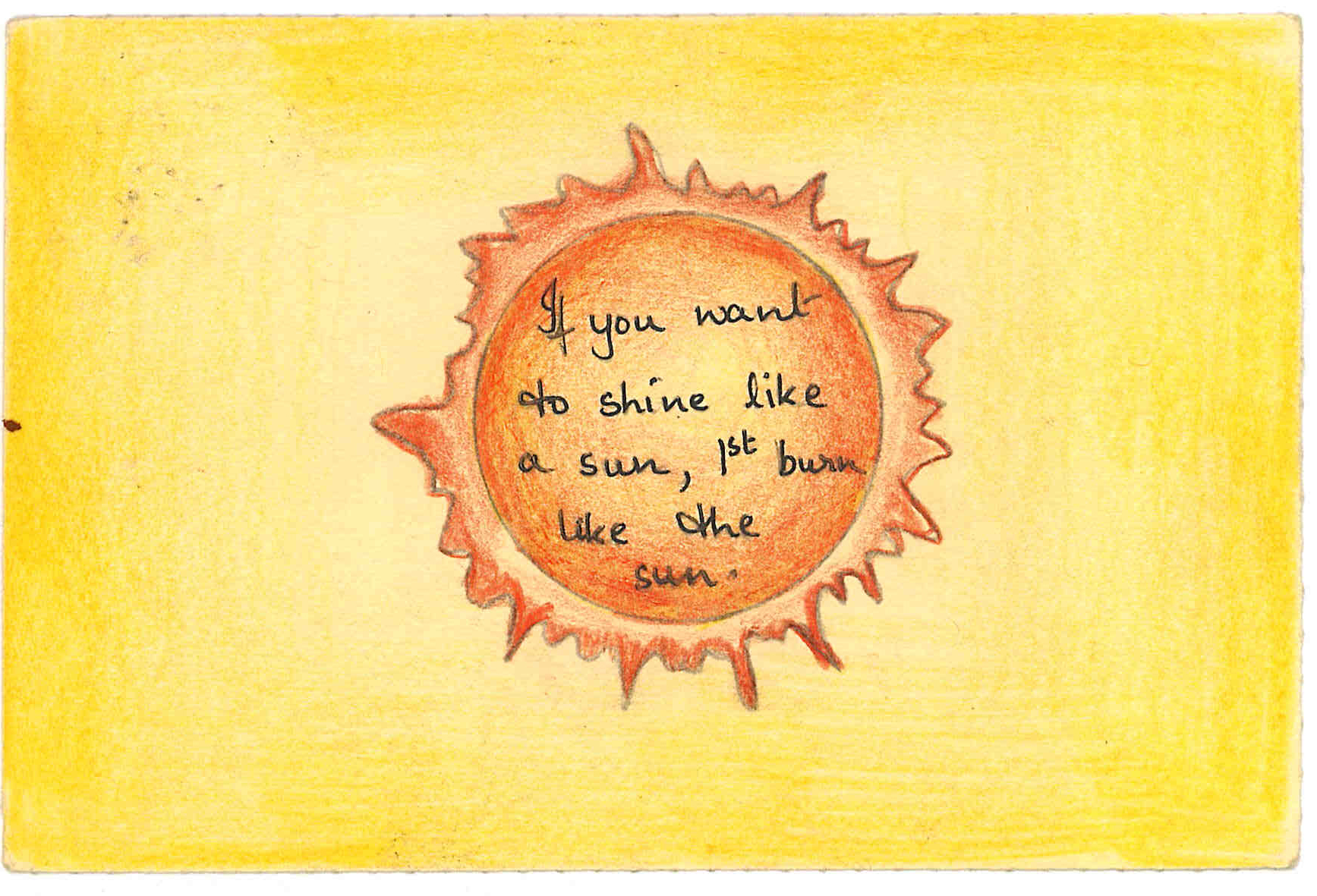



Spark - Resilience - Decision - Take Off
* This is a part of an online exhibition curated in collaborated with LetterFarms. To experience the exhibition, you can see the components linked above, or enter through the front door here. *

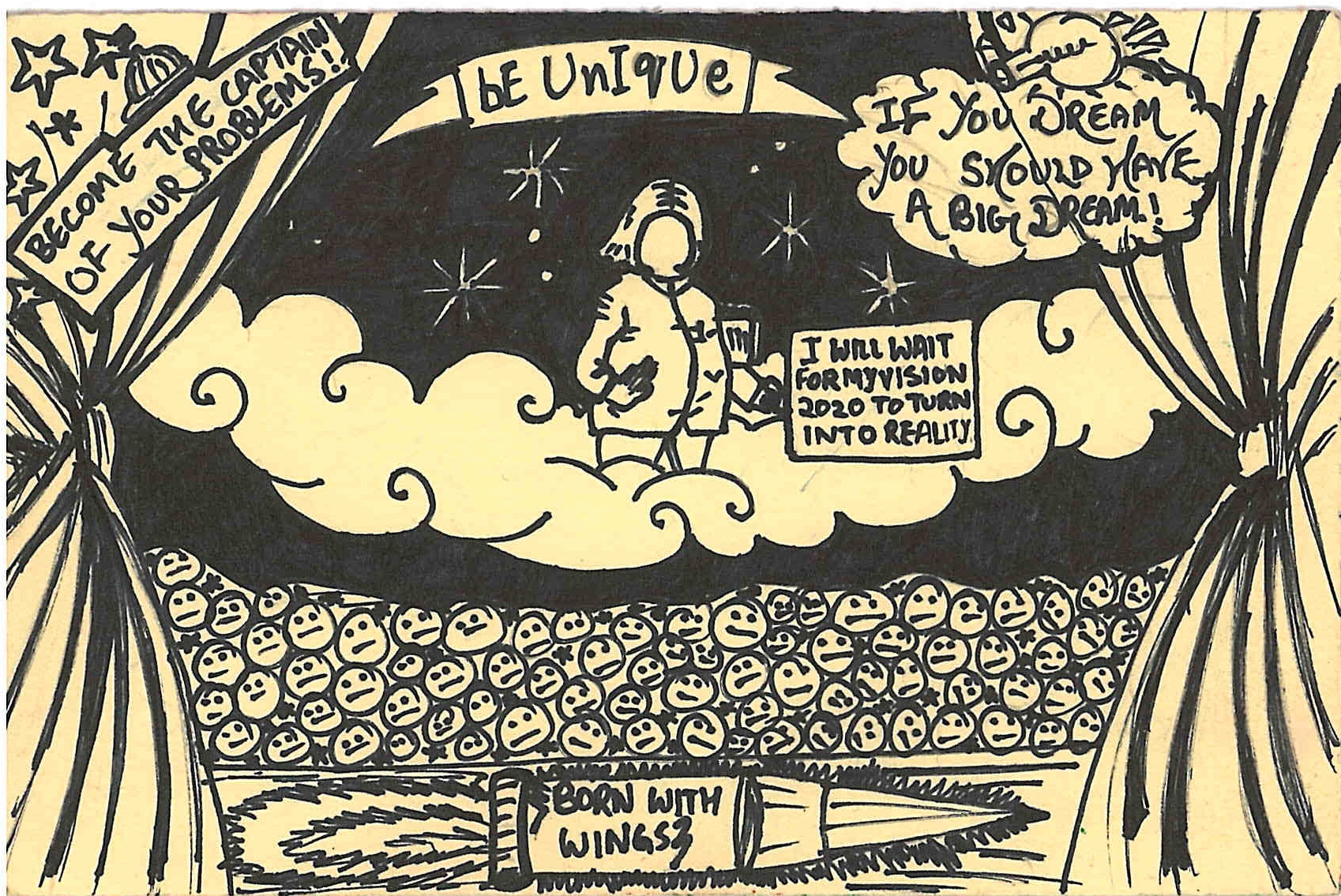
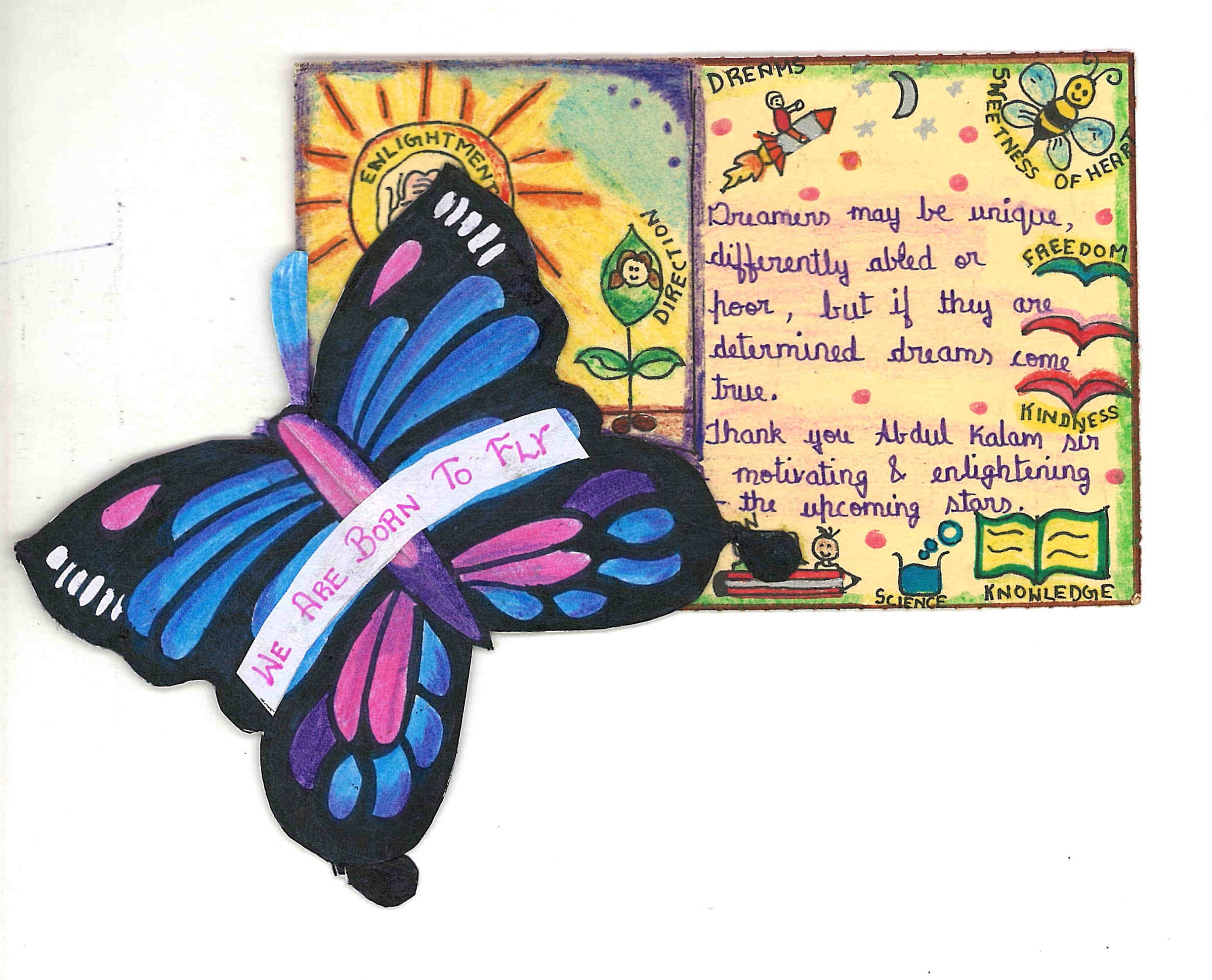
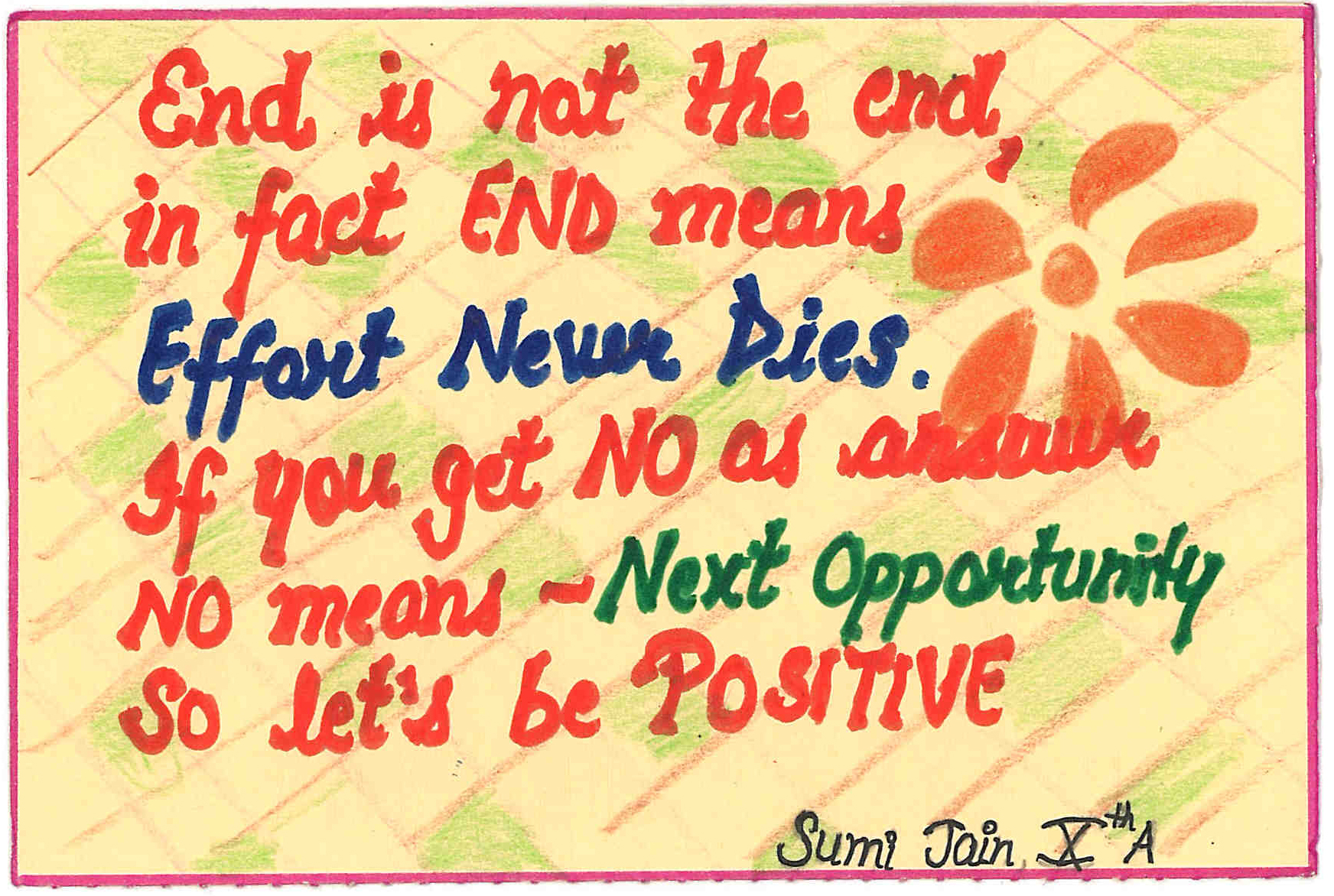
Decision

Definition of decision:
noun de·ci·sion \di-ˈsi-zhən\
1a: the act or process of deciding
b: a determination arrived at after consideration : conclusion <make a decision>
2: a report of a conclusion <a 5-page decision>
3: promptness and firmness in deciding : determination <acting with decision>
4a: win; specifically : a victory in boxing decided on points <a unanimous decision>
b: a win or loss officially credited to a pitcher in baseball <has five wins in eight decisions>


Spark - Resilience - Decision - Take Off
* This is a part of an online exhibition curated in collaborated with LetterFarms. To experience the exhibition, you can see the components linked above, or enter through the front door here. *

Take-Off

Definition of take-off:
noun take·off \ˈtāk-ˌȯf\
1: an imitation especially in the way of caricature
2a: a spot at which one takes off
b: a starting point : point of departure
3a: a rise or leap from a surface in making a jump or flight or an ascent in an aircraft or in the launching of a rocket
b: an action of starting out
c: a rapid rise in activity, growth, or popularity <an economic takeoff>
4: an action of removing something
5: a mechanism for transmission of the power of an engine or vehicle to operate some other mechanism
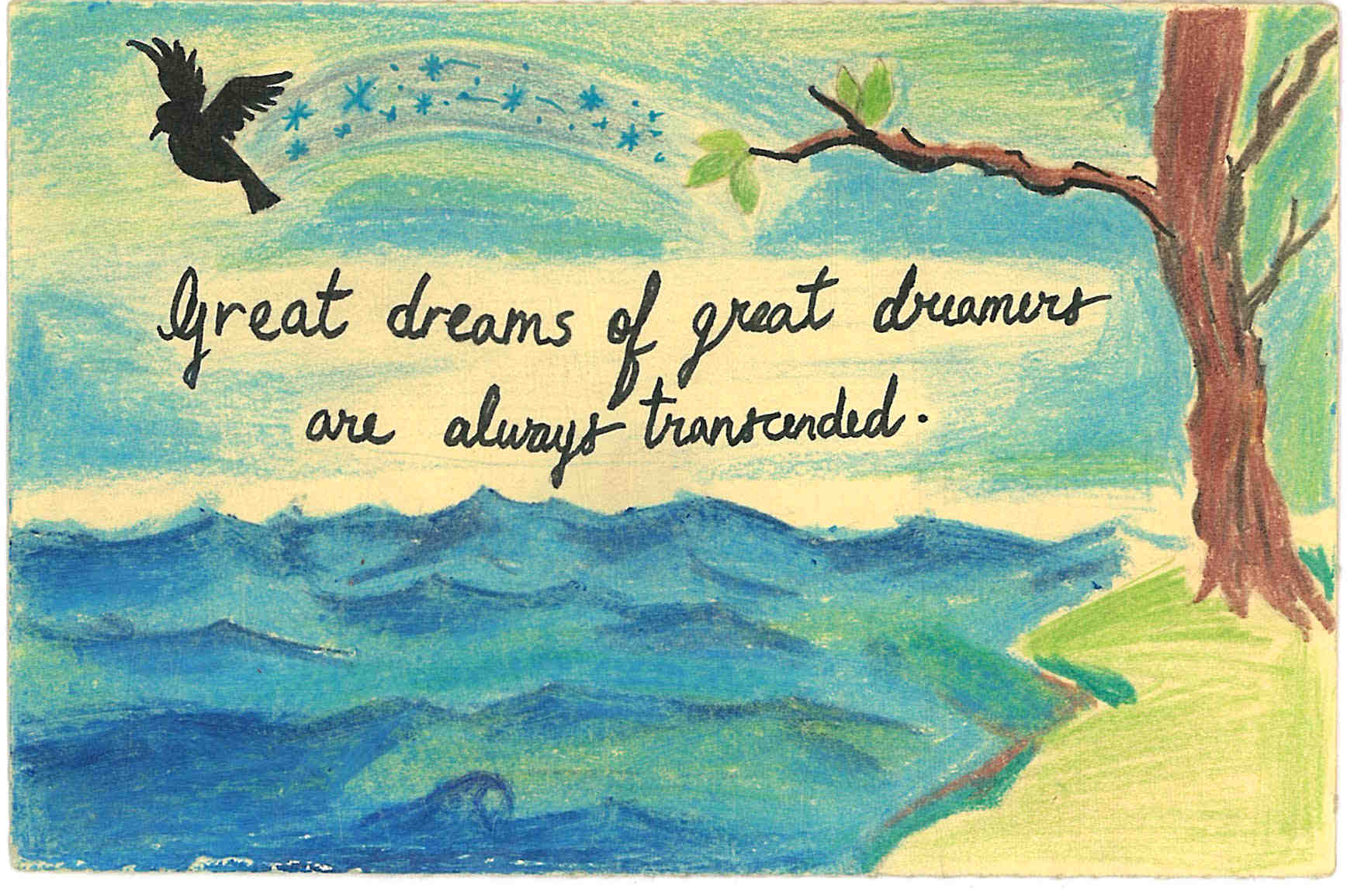
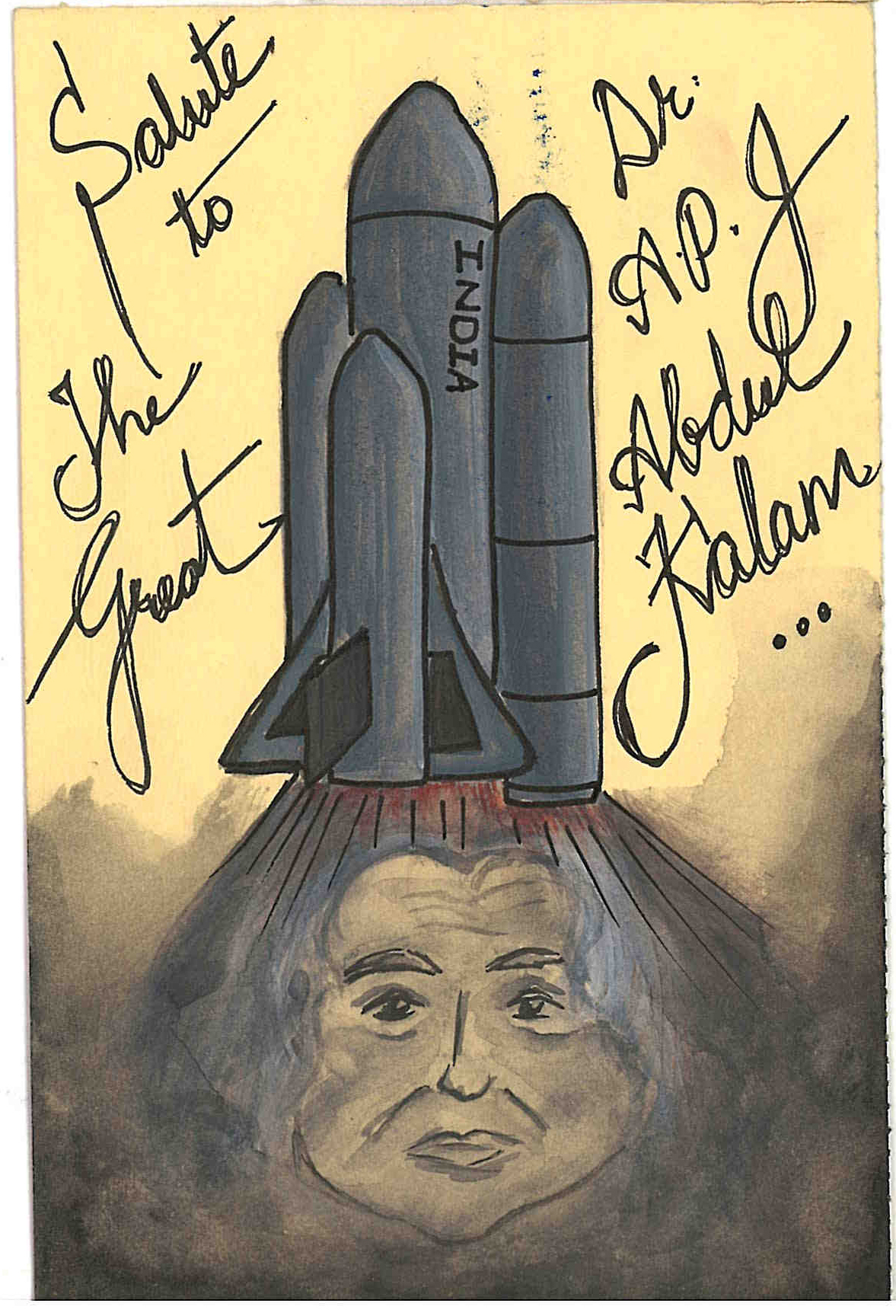


Spark - Resilience - Decision - Take Off
* This is a part of an online exhibition curated in collaborated with LetterFarms. To experience the exhibition, you can see the components linked above, or enter through the front door here. *
Stuffed Cabbage, Hungarian-Style • Jolie Mansky

Note from curator Rozanne Gold: Jolie Mansky’s memories of her grandmother’s stuffed cabbage are mouthwatering. The same can be said of the recipe I enjoyed making so much — knowing I would serve it sometime during this year’s Rosh Hashanah holiday (year 5777), and well into the wintery months. Appropriately seasoned with sweetness (apples, raisins, honey, brown sugar and onions) and quite in contrast to the sauerkraut-y flavors of my own Hungarian mother’s version, its dulcet notes are perfectly in tune. Jolie, an ebullient New Yorker, is the proprietor of Urban Concierge U.S., a company that enables others to “fulfill a desire or a dream — from the perfect meal or sold-out event ticket, to a unique getaway day trip or global vacation.” I would say she should add sharing treasured recipes to that list and I encourage her to turn her family memoir First, You Brown the Onions, into a cookbook for a wider audience. Thanks, too, to Allison Radecki for her editing prowess.

Stuffed Cabbage, Hungarian-style by Jolie Mansky
I have many memories of cabbage — from my Mom’s cabbage soup to the stuffed leaves featured here. But it is this recipe, unbelievably delicious, schmaltzy, tasting both sweet and tart, that brings back incredible memories of childhood: Family gatherings, holidays, the powerful aroma of onions and tomatoes slowly cooking, that first taste of sweet-and-sour flavors, and being at my grandparents’ home joined by many cousins.
All the women in my family (great-grandmother, maternal grandmother, great aunts, mother, and aunts) made this dish for the holidays. It particularly links me to the three generations of women that came before me: my mother, Sherry Stauber Roberts, my grandmother, Lillian Adler Stauber, and Mechlya Popovitz Adler-Weiss, my great grandmother.
Sherry was born at home in Brooklyn; Lillian in 1905 in Viseu de Sus, Romania (or Hungary, depending on who you ask and who was in power); Mechlya was born in Hungary-Romania in 1883.
Mechlya was a midwife and became a professional caterer in the U.S. I don’t know that she loved to do anything. She was just constantly busy doing what she had to do.
Lilly was an amazing balaboosta (the Yiddish term for the perfect housewife and someone who provides sustenance to the family); she cooked, she cleaned, she hosted. Besides having and maintaining a beautiful home, Lilly also loved to play cards.
Sherry, my mother, is also a fantastic balaboosta. At age 90, a retired buyer, she now loves to read, knit, play Lexulous online, watch HGTV (Bobby Flay and Cook or Con) and follow everyone on Facebook. My mother has written this recipe out for me for over thirty years. Not surprisingly, the recipe changes a bit each time.
When I compiled a family memoir called First, You Brown the Onions, I made sure to include a copy of this dish within its pages. I also have several copies of my mother’s handwritten “originals.”
I have always been fascinated how different cultures make similar dishes with what is available. I love stuffed grape leaves. The Iranian version, cooked in a pomegranate reduction, is divine. Then, there is the Levant, where every conceivable vegetable is stuffed, zucchini, peppers, tomatoes, and even onions.
My earliest recollections of my grandparents’ home involve food and ritual. I remember my grandfather, Izzie, getting up at the crack of dawn and faithfully laining his tefillin, putting on the black leather boxes which contain Hebrew parchment scrolls. He would mumble his prayers rapidly and say “shah” if anyone interrupted.
My grandmother, Lilly, was always cooking, even after a stroke rendered her partially paralyzed at age 58. She had to cut the vegetables perfectly even then. Lilly had set menus for every night of the week, which must have made life easier. Everything she made was delicious.
To this day, I can still lovingly detect a Jewish-Romanian accent. When I hear this accent, and see the sparkling gold teeth of immigrants, I close my eyes and remember the love I felt as a child.

STUFFED CABBAGE (Hungarian Style)
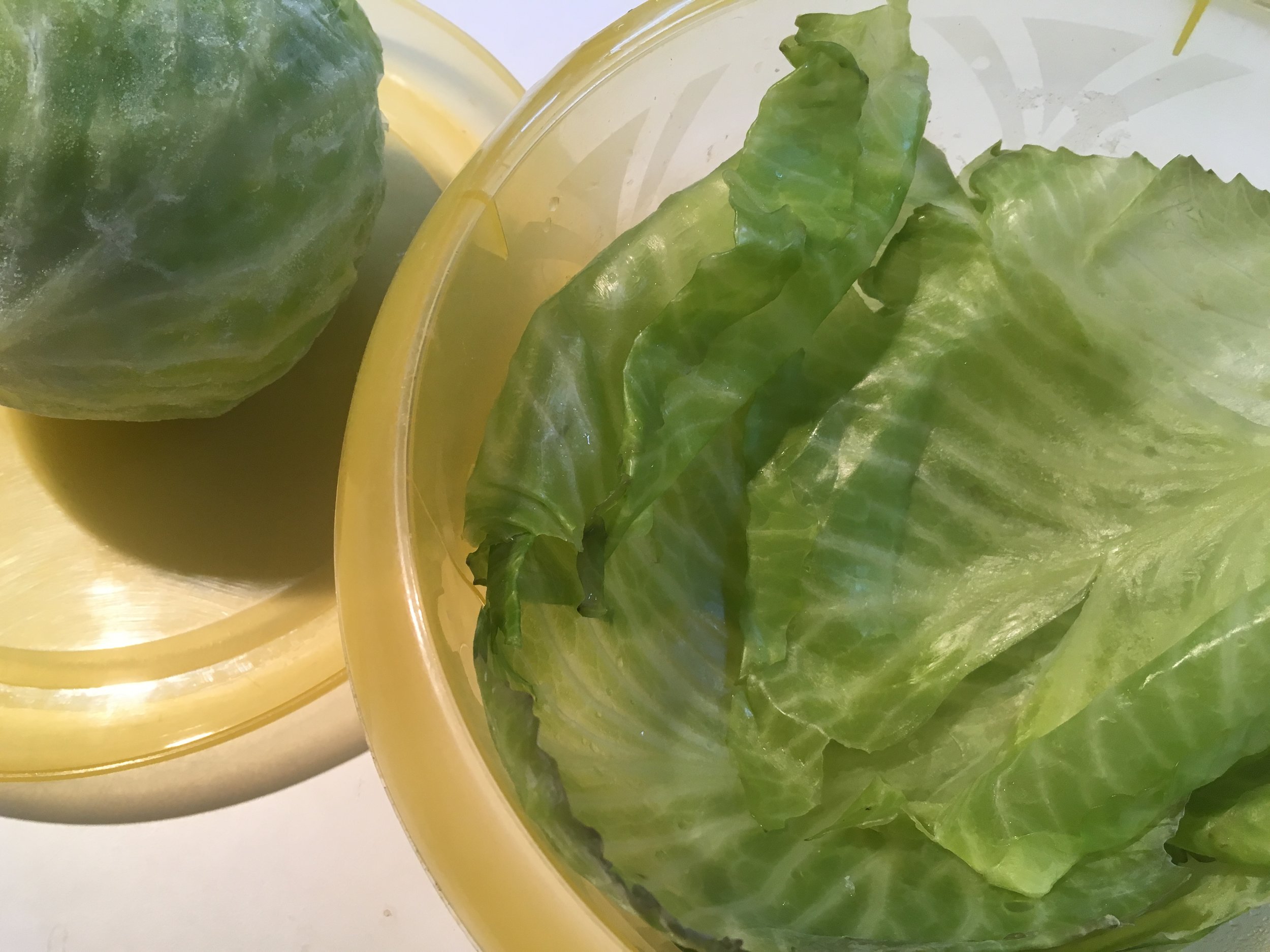
SOFTEN CABBAGE LEAVES (can be done in one of two ways):
1. Cut out, core and wash cabbage. Cover in plastic wrap and place in freezer overnight. When thawed, leaves are soft and ready to take off. –OR-
2. Cut out core and place cabbage in large pot of boiling water. Steam until soft enough to remove leaves. You may have to put it in boiling water a few times.
SAUCE: In bottom of large pot:
Shred cabbage (all leaves not used for filling)
2 Onions, chopped
1 large can crushed tomatoes
1 small can tomato paste
1-2 sliced apples
1/2 cup raisins
1/2 cup brown sugar & 3 Tbsp. sugar
Juice of 1 lemon
(Adjust seasoning during cooking)
Salt & pepper
2 Tbsp. honey
2 cups water - watch if more needed
FILLING:
1 1/2 lbs. ground beef
Salt & pepper
Bread crumbs (or Matzo meal)
3 Tbsp. of prepared sauce
1 grated onion
1/2 cup raw rice (rinsed)
COOKING:
- Place cabbage rolls - rolled with 2 ends tucked in (they hold closed) on top of sauce.
- Simmer to a slow boil. Cover and cook about 2 hours.
- During cooking, watch to make sure that the rolls are not sticking to the bottom of the pot. Gently shake pot to keep rolls from sticking.
- I separate the prepared sauce into two parts and pour the last half over the cabbage rolls.
- When cooled, place the cooked rolls in a baking pan, in rows. Dribble a little honey over the cabbage rolls and brown before serving.

Jackson Pollock's Calligraphy in Composition • A Reflection by Helen A. Harrison
Helen A. Harrison, the Eugene V. and Clare E. Thaw Director of the Pollock-Krasner House and Study Center weighs in on the intersection between Jackson Pollock's art and handwriting.
Starting in the early 1940s, Jackson Pollock’s abstract compositions include forms that look like letters and numbers. Paintings such as Male and Female (1942-43), Guardians of the Secret (1943), and especially Stenographic Figure (1942) contain many such elements. Less explicitly, in Pollock’s poured paintings the free-flowing linear shapes suggest cursive calligraphy. If we accept his assertion that “technique is just a means of arriving at a statement,” it’s not too far-fetched to imagine his art as a kind of communication akin to written language. Yet his actual handwriting—whether fragmentary jottings and drafts, which would naturally be informally written, or more carefully penned examples—bears no resemblance to the writing in his paintings.
Examples of Pollock’s handwriting are in his papers at the Archives of American Art. The script is halting, often with crossed-out passages, dashes, and other hesitations. His awkward penmanship contrasts sharply with the graceful rhythmic flow of his classic paintings. Indeed, he seems to have had more control over sweeping spontaneous gestures than over the intimate and deliberate motions of handwriting.
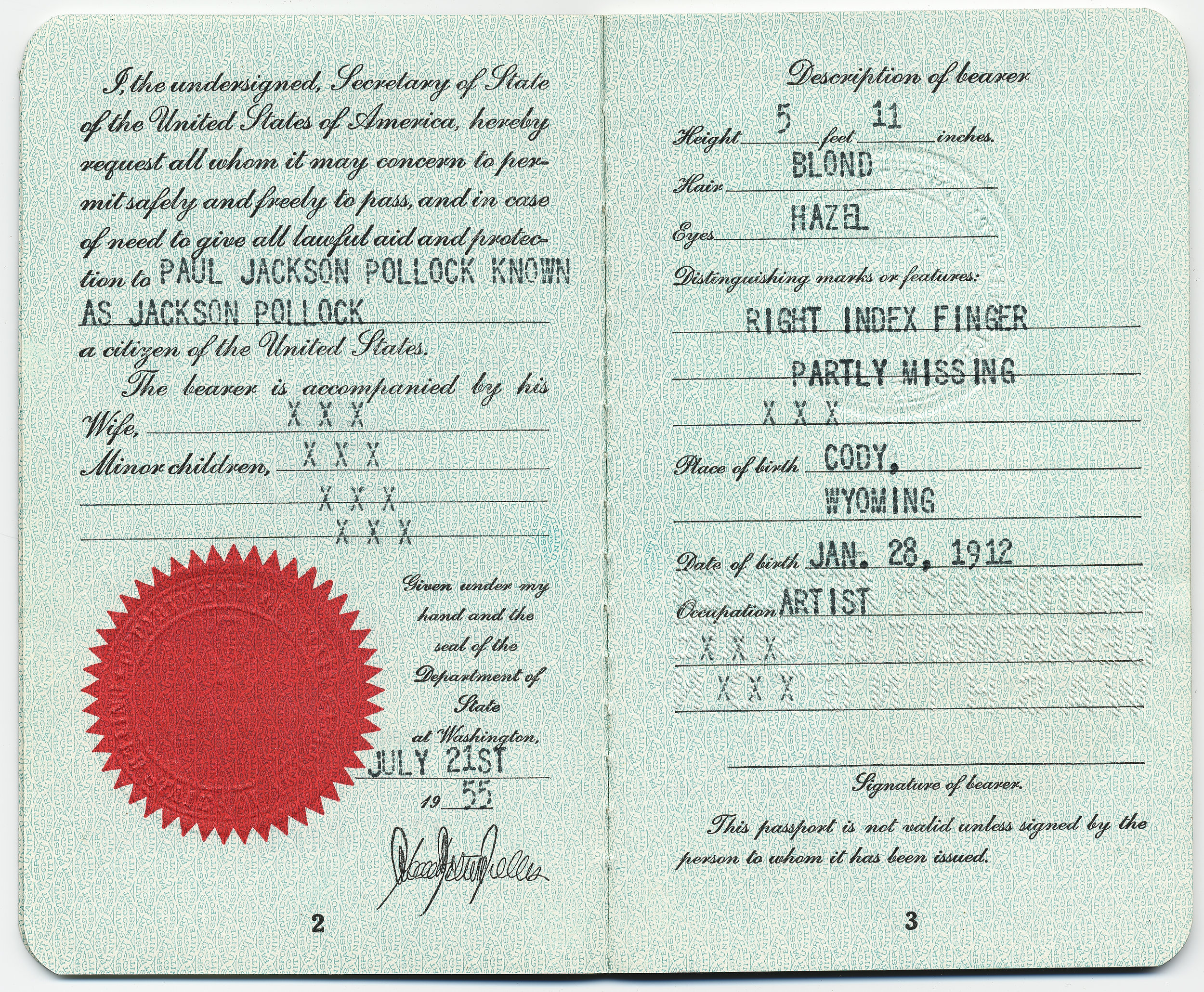
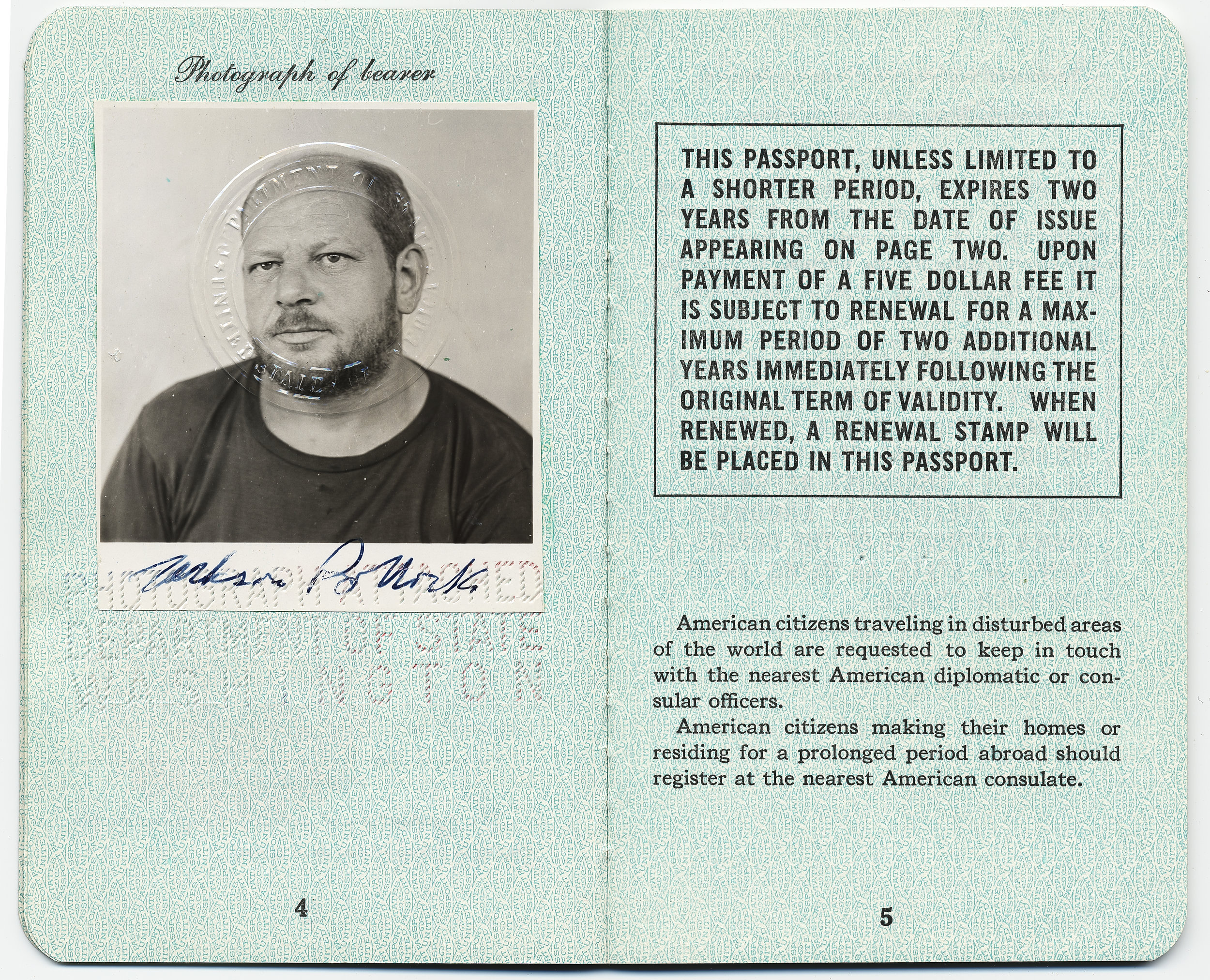
Jackson Pollock's passport, 1955 July 21. Jackson Pollock and Lee Krasner papers, circa 1905-1984. Archives of American Art, Smithsonian Institution.
But that impression is contradicted by many of his drawings, especially those of the mid 1940s, in which complex graphic patterns were created by finely calibrated marks. They show him to have been capable of handling a pen, pencil or crayon with great finesse. And in an untitled 1951 drawing that he gave to Clement Greenberg, the word “kiss” is repeated as a linear motif—another intriguing example of Pollock’s use of calligraphic imagery as an integral compositional element.

Helen A. Harrison, the Eugene V. and Clare E. Thaw Director of the Pollock-Krasner House and Study Center in East Hampton, New York, is an art historian, curator and journalist specializing in modern American Art. Her most recent books are a monograph on Jackson Pollock and a mystery novel, An Exquisite Corpse: Death in Surrealist New York.
Beatrice Nisenson’s Prune Cake • Evan Nisenson
"I noticed there were additional comments made in red, and a wine jelly stain, somewhat faded in the upper right-hand page corner, which came from a syrup that was poured over the cake. I also found a typed version that had been altered slightly, most likely by my grandmother, evolving with the taste buds of time."
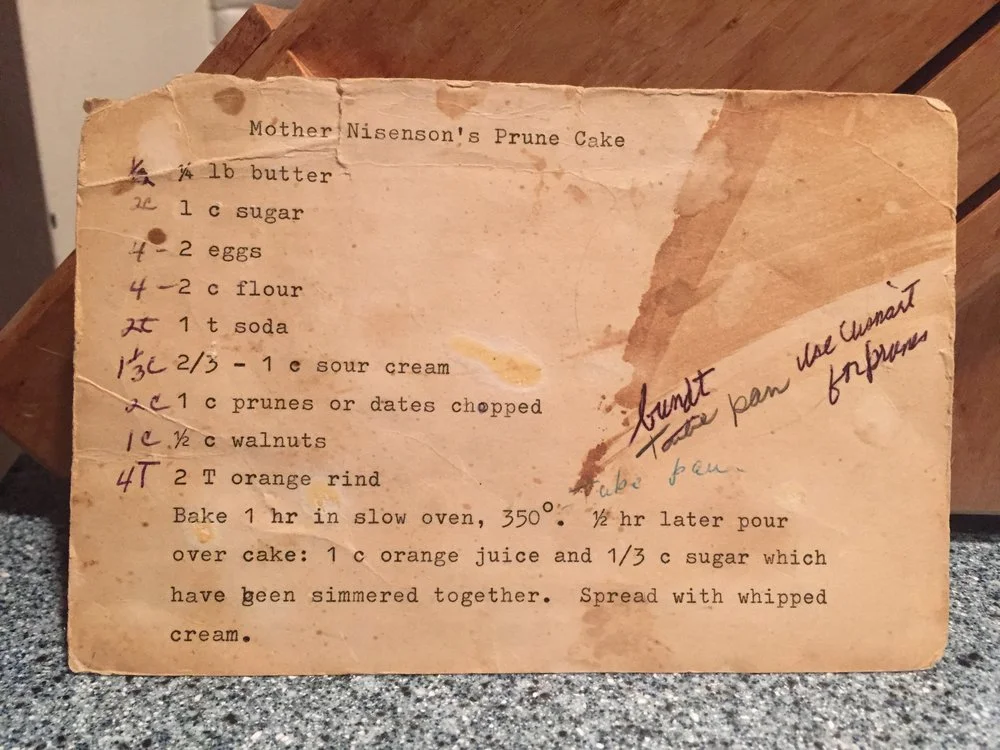
Note from curator Rozanne Gold: Evan Nisenson, a father, husband, and Director of Alumni Relations at Newark Academy, among many other virtues (he has even been featured on Martha Stewart), wrote his Master’s thesis on “The Characteristics of Collectors.” He, too, is a collector of things, including Nisenson Hats made by a distant relative in Newark. He especially respects this quality in others, and so was smitten by a collection of recipes belonging to his beloved grandmother. I am grateful to Evan for many things, including these wonderful remembrances punctuated by a delicious cake. But it is his wisdom and technological prowess that have allowed me to live my life more fully and with greater calm. He is one of my own life’s key ingredients.

Beatrice Nisenson's Prune Cake by Evan Nisenson
When I think of my life’s recipe thus far, my grandmother, Emilie Nisenson, is one of the key ingredients. She has shared her love of cooking and baking since I was a kid spending a week every summer in Spring Lake, New Jersey, with my grandparents.
Often tasked with snipping chives from the garden for morning scrambled eggs, prepping salads for dinner, and assisting in the production of wondrous desserts, I quickly became enamored with being in the kitchen, preparing family meals, and copying recipes from my grandmother’s collection onto recipe cards for my own keeping. Over the years, I began to understand where my father’s love of the kitchen came from. I attribute my love of cooking to him (a well-respected podiatrist) as well.
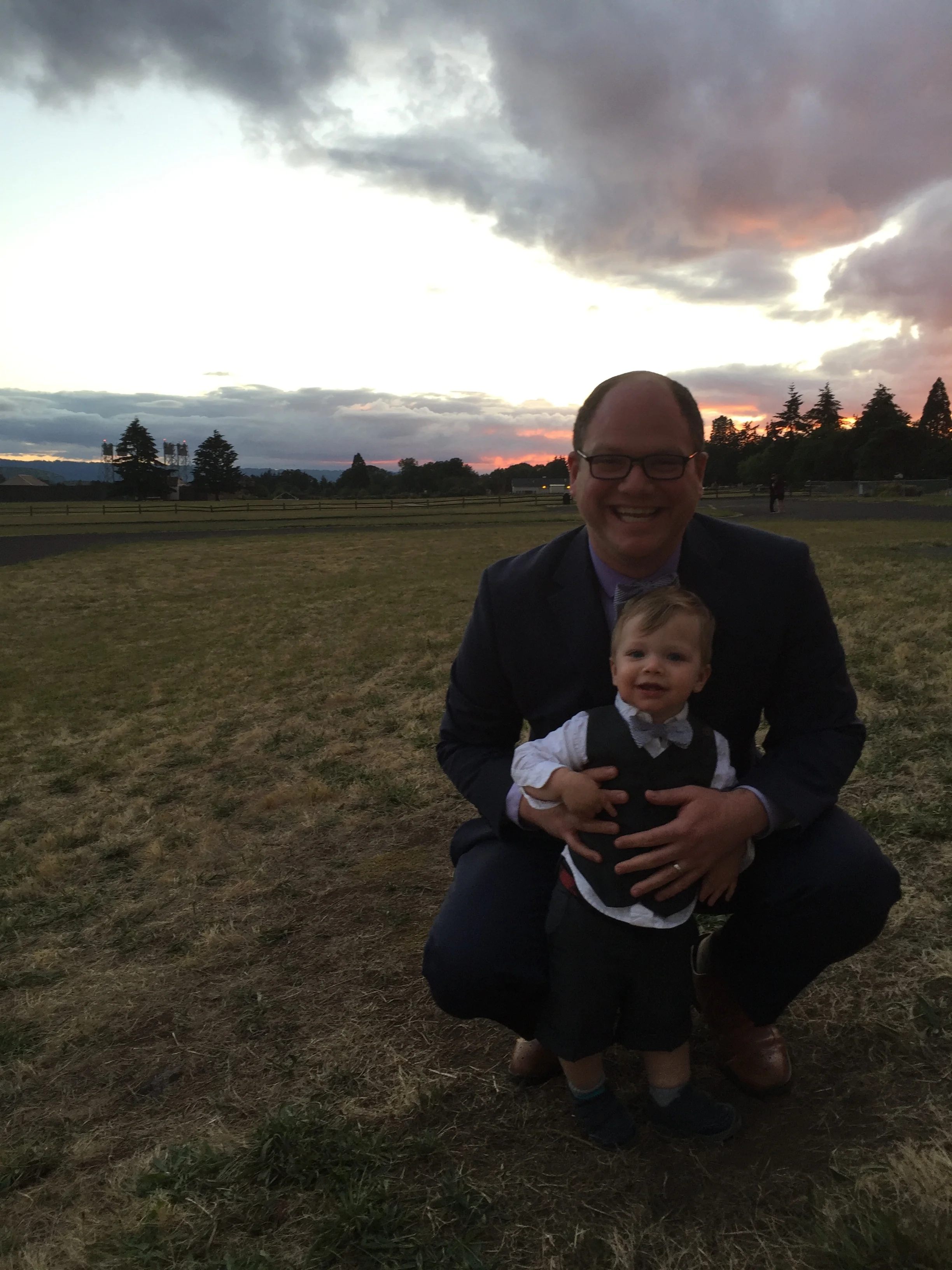
During a recent visit to the Jersey shore with my wife Lauren and 18-month-old son Harris, I spent some time thumbing through my grandmother’s silver tinned box of handwritten recipes, weathered by the salty and bittersweet years but still intact, legible, and organized by genre. I jumped to the cakes tab to see what I could find.
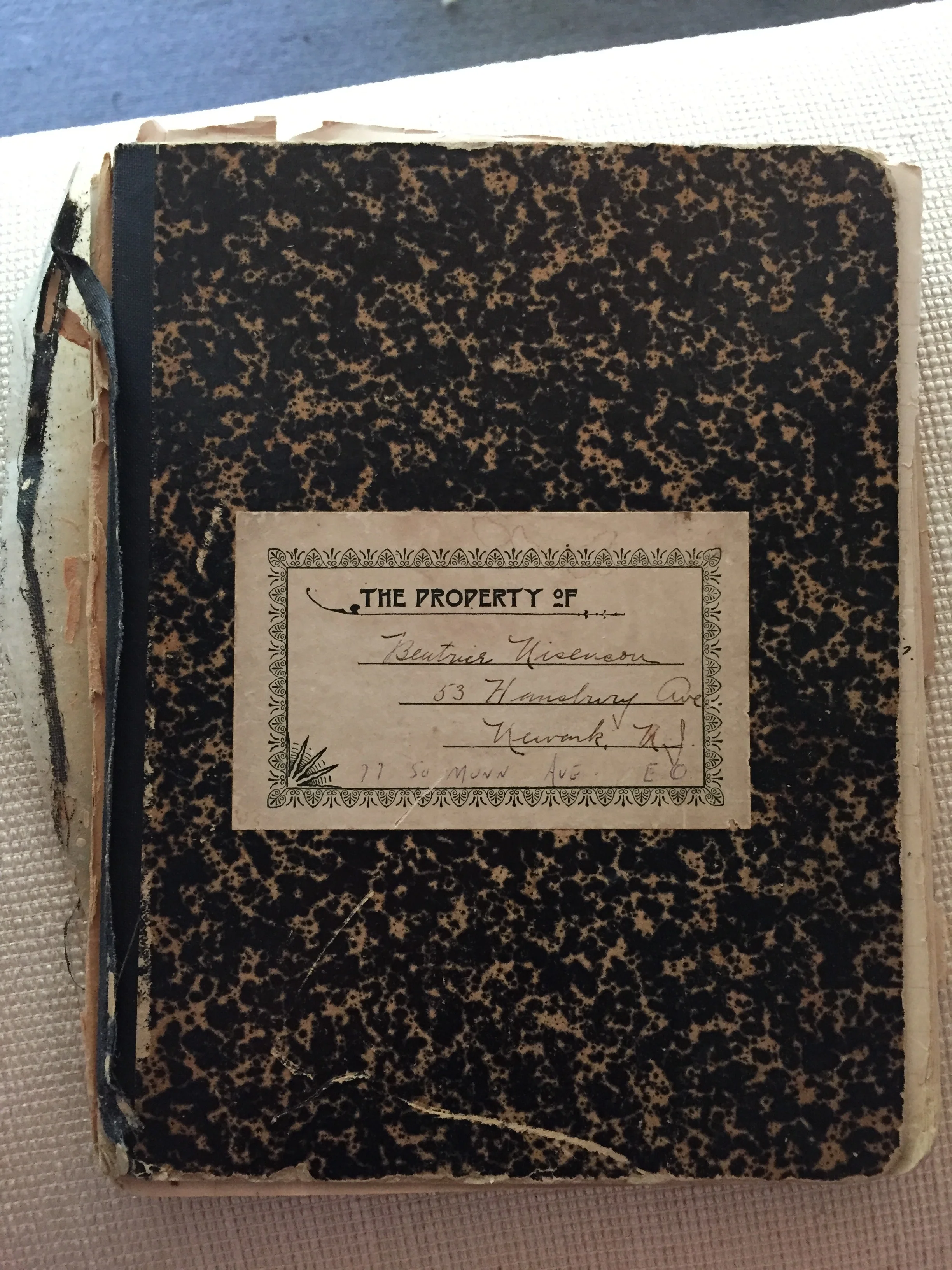
Simultaneously, my grandmother sauntered to her bookshelf trying to find a certain book. She carefully pulled out a composition book whose bindings were failing. Having never seen this book before, I was intrigued. Like Indiana Jones, I delicately opened the book, wondering if my handling of its frail pages would release a giant booby-trapped meatball from the rafters. My knife and fork were at the ready.
I was told that this manuscript belonged to Beatrice Nisenson, my great-grandmother, who had handwritten an entire book of recipes. Many were her own but some were those of her friends, their names included in the recipe titles. I had never met my great-grandmother, but felt an immediate connection to her. My grandmother then told me that one of great-grandma Bea’s favorite recipes was her prune cake.
Prunes are not the most glamorous dried fruit, yet I had the urge to bake this cake. But first, I had to find the recipe. I turned fragile page after fragile page until I saw it before for me: “Prune Cake.” I noticed there were additional comments made in red, and a wine jelly stain, somewhat faded in the upper right-hand page corner, which came from a syrup that was poured over the cake. I also found a typed version that had been altered slightly, most likely by my grandmother, evolving with the taste buds of time. The recipe I used when I returned to my kitchen was a combination of old and new, bridging together generations of Nisensons. The tradition continued as I watched my 18-month old son take a bite of the moist cake, which he very much enjoyed.

My wife and I recently devoured the third season of The Great British Baking Show, which is a delight for those of us fascinated by the art of baking. In each episode, the bakers are presented with a technical challenge, tasked with recreating a complicated recipe given to them with incomplete baking directions.
Upon noticing that the prune cake directions were incomplete, I realized this would be my own technical challenge. For the seasoned baker this would not be a problem, but for those of us who need step-by-step instructions, it poses a serious issue. Luckily, I successfully navigated the recipe, taking notes along the way and ended up with a very flavorful cake.
With every chop of prunes, with every stir, with every glorious scent, I was instantly reconnected with the past, transported to my great-grandmother’s kitchen, which I had never seen but could immediately envision. Such is the power of a handwritten recipe.
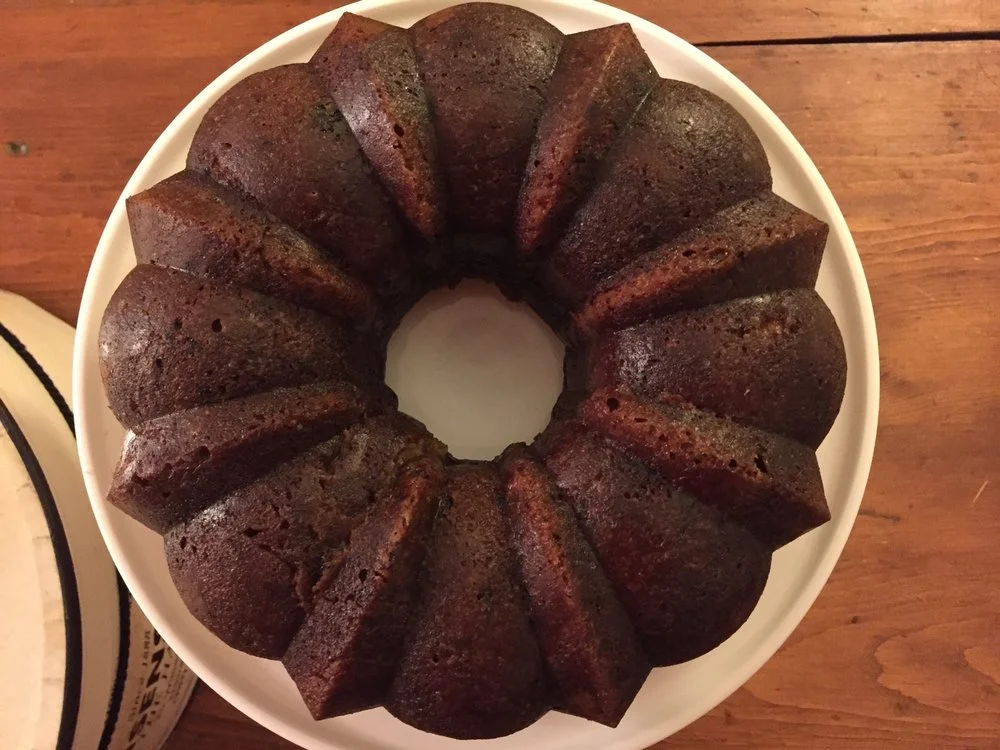


Beatrice Nisenson’s Prune Cake
Moist and flavor-packed, this version was inspired by my great-grandmother’s original recipe and adapted by me – her great grandson. Whereas this recipe does not mention salt, it is always good to add a pinch of it, along with the spices.
Directions.
Preheat oven to 350 degrees. In a mixing bowl, cream together the butter and sugar. Add the eggs and vanilla and beat until creamy. Add sour cream and chopped prunes and slowly mix until evenly distributed. In a separate bowl combine the flour, baking powder, cloves, cinnamon and nutmeg. Slowly add the flour to the butter and egg mixture and mix thoroughly. Stir in chopped nuts and orange zest. Pour batter into a bundt pan and bake for 55 minutes. For glaze, simmer orange juice and sugar until sugar dissolves. After the cake has cooled for 30 minutes, pour glaze over cake. Serves 10
Ingredients.
¼ lb unsalted butter
1 cup sugar
2 eggs
2 cups flour
1 teaspoon baking soda
1 cup sour cream
1 cup prunes or dates chopped
½ cup walnuts chopped
2 tablespoons orange rind
½ tsp baking powder
½ tsp cloves
½ tsp cinnamon
½ tsp nutmeg
1 tsp pure vanilla extract
Orange Glaze
1 cup orange juice
⅓ cup sugar

Handwriting Continues to Prove Its Nimble Nature • A Conversation Mary Savig, with Curator of Manuscripts
"Technologies of communication, from telegrams to texting, have long threatened the written word. And yet, handwriting continues to prove its nimble nature."
This conversation was a part of our collaboration with The Smithsonian's Archives of American Art, Pen to Panel. Here, we talk with Curator of Manuscripts Mary Savig about the creation of their latest anthology, which was the root of our collaboration, Pen to Paper.

SAY MADGES: I read in the review on the Smithsonian website that the idea for the exhibition and eventually this book came from a discussion amongst colleagues about how easily recognizable A.D. Reinhardt's handwriting is. Are there some other artists whose handwriting you can spot from across the room? Georgia O'Keefe's handwriting is so distinctive!
MARY SAVIG: Yes, Georgia O’Keeffe’s lyrical, bold handwriting shouts for attention and is impossible to forget. Hans Hofmann and Maxfield Parrish also boast distinct penmanship: Hofmann’s handwriting is twiggy but deliberate, and there is no confusing it for another artist’s hand. Parrish’s graceful penmanship doesn’t jump off the page like the others, but its inimitable elegance is as recognizable as his paintings.
SAY: What factored into your decision about which artists, and their letters, to feature?
MARY: The artist’s handwriting had to intrigue me. It was also important to represent the broad scope and scale of American art, from the nineteenth century through the present, as well as artists from different geographical regions who worked in various media, like sculpture, photography, graphic arts, abstract painting, landscape painting, and crafts. The book includes outsider artists and conceptual artists, feminists and immigrants, and more. As a whole, this selection reflects the depth of resources at the Archives of American Art.
SAY: In your introduction to the book you talk a lot about the historical development of handwriting in the U.S. Obviously you've researched this topic quite a bit — what was the most surprising or interesting thing you learned?
MARY: Much ink has been spilled on handwriting’s tenuous relationship with technology. “Once upon a time, before there were electronic typewriters, or tape records, or Xerox machines, boys and girls had to write by hand,” began a New York Times article lamenting the current state of penmanship in 1967. Technologies of communication, from telegrams to texting, have long threatened the written word. And yet, handwriting continues to prove its nimble nature. The craft of handwriting has flourished online, especially on social media. Artists, thinkers, and makers alike are experimenting with penmanship in innovative ways. Along these lines, the Archives continues to digitize and make our vast handwritten records available online for new generations to discover.
SAY: What's your favorite letter in the book?
MARY: Don’t make me choose! My answer really depends on the day and since it’s a sunny Friday morning, I’m thinking of a charming letter by the Reverend Howard Finster. Liza Kirwin, deputy director at the Archives of American Art, writes, “Reverend Howard Finster was a consummate entertainer and an old-timey Bible-belt evangelist. His handwriting, most often in block capitals, was like his preaching — purposeful, emphatic, and an integral part of his art, his “sermons in paint.” This description encapsulates the spirit of the book.
SAY: Who transcribed all of these letters? The book cites Transcription Center volunteers. How did people tackle the less legible ones?
MARY: Transcription Center volunteers helped with the bulk of transcriptions (a few of the letters had been previously transcribed). The volunteers are especially amazing at deciphering difficult hands. Many of them have compared translation to solving a puzzle: you have to be able to discern whether the faintest line might indicate a dash, a period, or a dotted i, while keeping in mind the bigger picture of the letter because it holds so many context clues.
SAY: You note that for this book the writers focused on visual content over verbal. Why was it important that they do that? What were you hoping would emerge in the contributors' essays as a result?
MARY: Many of the writers had spent months, often years, in the Archives of American Art scouring these letters for details like the locations of artworks, sale records, notable collaborations, and the like. The goal of this project was to get the writers to step back from the content and instead approach the letter as if it’s a painting or a sculpture. What might the curves, dashes, and density of line tell us about the artist? I was always fascinated and often surprised by the diversity of responses. What emerged from this project is that primary sources, and handwritten letters in particular, remain relevant and poised for interpretation. I hope this book prompts others to look at our materials with a fresh perspective.

Pen to Paper: Artists' Handwritten Letters • A Review by Say Madges
"Designed by Princeton Architectural Press, the book operates much like a gallery exhibition, privileging the visual over the verbal.”

BY SAY MADGES
Borne from an offhand observation between Smithsonian’s Archives of American Art colleagues about the instant recognizability of minimalist painter A.D. Reinhardt’s handwriting, Pen to Paper: Artists’ Handwritten Letters, inspires reverential curiosity. In this carefully considered book, Curator of Manuscripts Mary Savig regards letter-writing as an art, paying special attention to how each artist addresses formal properties of line and space, as well as what we can infer from these decisions about their creative processes and everyday lives.
Proceeding alphabetically from Bernice Abbott through Grant Wood, and spanning the decades from the 1830s to the 1970s, this thoughtful compendium tells the history of art in America in the words of the artists who shaped it: through correspondences both professional and personal, from negotiations with art collectors and curators to revelations about their art and attendant aspirations.


For this project, Savig sought out curators, professors, historians, artists, and archivists alike to read not just between the lines, but to read into each line, inviting 56 different minds to investigate the interplay between language and art in short essays included alongside each letter. As she explained in an interview with us: the goal was to get the writers (many of whom had previously pored over these manuscripts for citations in art catalogs and dissertations) “to step back from the content and instead approach the letter as if it’s a painting or a sculpture. What might the curves, dashes, and density of line tell us about the artist?”
She hoped that providing examples and interpretations of artists’ handwriting would offer new frameworks for understanding their work — and she was right. “What emerged from this project,” Savig summarized, “is that primary sources, and handwritten letters in particular, remain relevant and poised for interpretation.”

Designed by Princeton Architectural Press, the book operates much like a gallery exhibition, privileging the visual over the verbal so that we may take in the high quality images as art objects before reading the accompanying “wall text” that complements and situates them. While each entry deserves thoughtful consideration, their enigmatic, artistic value may be grasped in a glance, making the collection ripe for paging through at any pace and in any order. Full verbatim transcriptions are included in the back of the book so that readers may experience each letter’s gestalt before delving into character-based, historical, or cultural analysis.
In order to demonstrate just how closely intertwined the written word is with visual art, Savig selected a wide range of artists and traditions. Artists’ idiosyncrasies impress themselves on the page, leaving a tangible trace from which we may draw parallels between artist’s pen, personality, and practice. We see how, in a letter from Howard Finster, sketches of Mount Rushmore-ish busts of important figures punctuate the otherwise breathless string of blocky san serifs, recalling his emphatic speech as a Baptist preacher as well as what he termed his “sermons in paint.” Senior Curator at Smithsonian American Art Museum Eleanor Harvey notes how Frederic Edwin Church’s calligraphic pen strokes echo his brushwork, “in which the rapid back and forth of his brush delineates the contour of a landscape with lyrical flair.”
Seemingly trivial details such as the consistency of letterforms and their organization on the page, or the evident ease or burden with which each letter was composed communicate a surprising amount of personal information as well.
As Savig notes in the book’s introduction: “Artists often code their feelings through handwriting.” We can learn a great deal about the level of affection and familiarity between the letter writer and recipient, the writer’s emotional or professional investment in the contents, and even their current mood. Henry Ossawa Tanner’s anger radiates in his 1914 letter to Eunice Tietjens that responds to an article presuming Tanner’s racial identity and relating it to his success. “Now am I a Negro?” Tanner demands in determined script after a paragraph of underlined phrases, crossouts, and emphasized quotations that undermine that claim. In drafts of a condolence letter written between October 8 and 9, 1968 to Teeny Duchamp just one week after Marcel Duchamp’s death, Joseph Cornell’s handwriting chokes up with ineffable grief. Entire paragraphs are violently slashed out with vertical ink bars, and his script stutters through the recounting of a dream that marks the last time Cornell “saw” Marcel.


Pen to Paper's letters run the gamut from personal chronicles and affectionate notes to philosophical treatises and meditations on the intersection between race, gender, and class in the art world. Some comments are profound, such as Marcel Duchamp’s first utterance of “readymade” to explain his transformation of everyday objects into art to his sister, and others are more banal — “sending this by carrier moose,” Ivan Albright teasingly signs off a letter to Earle Ludgin. In some cases, the letters bear ignorance of their future significance.
When Grant Wood squiggled a frame around an ebullient, red-penciled “Hurray!” at the top of a letter to Zenobia Ness, he couldn’t have known he should be celebrating his imminent fame in addition to the fact that the Art Institute of Chicago decided to hang two of his paintings, including the iconic American Gothic. The parenthetical postscript “(How are you Jackson?)” in Lee Krasner’s aerogram to Jackson Pollock during their trial separation carries chillingly prophetic weight when considering it was likely their last communication before he died in a drunken car crash a few weeks later.
From the whimsical floral doodles surrounding the word “darling” in Rockwell Kent’s letter to his wife Sally to the Asian calligraphy-inspired characters of A.D. Reinhardt, these missives offer extensive proof of the expressive and aesthetic capabilities of handwriting, while engendering a unique familiarity with figures who previously loomed larger than life in our consciousnesses.
By preserving and presenting these ephemera, the book emphasizes process over product, with redactions and insertions of text betraying an artist working through ideas—evidence no longer available in a world dominated by digital modes of communication in which individuality is often obscured by the opacity of typed text. Additionally, the book’s smattering of penmanship styles reflect trends in handwriting, as the ornamental cursive of Thomas Eakins (above), son of a 19th century handwriting instructor, is replaced by the uniform efficiency of the Palmer Method, as seen in Andy Warhol’s comically curt biography offered to the managing editor of Harper’s.
This quiet collection poses a direct challenge to anyone who associates archival materials with must, dust, and irrelevance. The unmistakably human element of handwritten letters elevates what today may be merely cursory communication — an email or text message — to a kind of art that evokes the presence of the person who penned them, and leaves behind a physical relic of the relationship between letter writer, recipient, and the world at large. Appropriately in the book’s introduction, Savig encourages us not to ring the death knell of handwriting. Instead she invites us to “celebrate how imaginative correspondence now exists in material and digital forms,” providing new access and ways of thinking. Pen to Paper is a distillation of that celebration.

Let the Mind Rule the Eye • A Conversation with Tullis Johnson on Charles Burchfield
Working on Pen to Paper was interesting for me because it brought Burchfield’s handwriting into a larger context. While some artists took time and care in crafting letters to friends, Burchfield had little concern for the elegance and precision of the written word.


SAY MADGES: How did working on this project inform or change the way you think about handwriting?
TULLIS JOHNSON: Charles E. Burchfield wrote prolifically. He kept a journal for more than fifty years, which by the end of his life totaled more than ten thousand pages. He also wrote notes on his sketches for paintings and on loose sheets of paper that were kept in his studio. The letters he wrote to his friends and colleagues constitute a small fraction of the writing that he did throughout his life, and reveal only a small part of what we can learn by examining his handwriting.
Working on Pen to Paper was interesting for me because it brought Burchfield’s handwriting into a larger context. While some artists took time and care in crafting letters to friends, Burchfield had little concern for the elegance and precision of the written word. On August 19, 1914 he wrote in his journal about his feelings on the subject:
“Let the mind rule the writing not the eye! The mind should be so intent upon what it is saying, that it forgets the means of transferring it to paper. The artist does not see his brush. Be sure if what you are saying is worthwhile, someone will decipher your hieroglyphics. I do not mean that a man should adopt a crude handwriting to affect eccentricity. A man’s handwriting should be spontaneous. If we all wrote perfectly, there would be less variance of character. Of what avail is it, if a man perfect his handwriting, and [finds] that he has not perfected what he has to say? His only calling must be that of copyist.”
Burchfield was more interested in the content of his work, than on the methods of applying his medium. Reflecting on his experiences teaching, in 1959, he told interviewer John D. Morse at the Archives of American Art, “I couldn’t possibly tell anybody how to paint in watercolor….I told them: ‘Don’t think about the medium. What you’re trying to say is much more important than what you’re saying it with. And if you’re thinking about what you are trying to express, you may use watercolor like nobody else ever used it.”
SAY: Why do you think these letters are so important, and how did you choose which one to discuss? What were the other fan letter responses like?
TULLIS: The letters written by Burchfield, in the collection of the Archive of American Art, are important because they reveal much about the character of the man at various times in his career. The earliest letter, written to Paul Travis (1891-1975) in 1930, is more a letter to a friend than a response to a fan. Travis was a close friend to Burchfield during and after his time at the Cleveland School of Art, who would later accompany him on sketching trips along with other friends from his time in Cleveland.
Burchfield’s letters to Lawrence Fleischman (1925-1997) are even more revealing. Correspondences between these two men, in the collection of the Archives of American Art, span between the years of 1954 and 1964. 1954 was the same year that the Archives were founded, by Fleischman and others. In January and February of 1956, the Whitney Museum of American Art held a retrospective of Burchfield’s work. The letter I chose was written in March of the same year. The friendship that developed over those years, was an important one. Fleischman became an avid collector of Burchfield’s work, and eventually owned more than thirty of his paintings. Fleischman’s Kennedy Galleries would later represent Burchfield’s estate after the artist’s death.
SAY: Have you always suspected a link between an artist's handwriting and their art? If so, when did you first notice or consider this connection?
TULLIS: On October 8, 1913 Burchfield wrote in his journal:
“I often wonder what I am naturalist or artist, for the pursuit of one hinders the other - I seem always to be deciding which it shall be - Of course it must be an artist, for I must live, but I am hoping for a day when I can give myself entirely up to Nature.”
Burchfield’s handwriting has always been an important part of the study of his work. In an interview conducted at his home in 1959, John D. Morse inquired about whether the journals might eventually end up at the Archives of American Art. Burchfield declined, suggesting that they would end up with his estate. In 2000, more than ten thousands pages were donated, by the foundation set up in the artist’s name, to the Burchfield Penney Art Center in Buffalo, New York.
In 2006 an even larger collection of over 25,000 objects from the artist’s studio was donated as well. I took part in the inventory of a large part of that collection. Included are sketches and studies for paintings, but there are also a large number of notes, written in the artists hand on loose sheets of paper. The sketches themselves also include notes on changes that should be made to the final paintings.
Even Burchfield’s doodles contain handwriting, often revealing critical insights into the artist and his work. Some contain simple things, like a score for a card game played with his wife. One doodle includes the title of the book The Sense of Wonder by Rachel Carson. There has always been a link between Charles Burchfield’s handwriting and his art. He was aware of it early in his life, and scholars that study his work, during and after his lifetime, have been aware of it as well.
SAY: What do you think we can learn about Charles Burchfield from studying these letters that we couldn't from mere biographical record?
TULLIS: You can learn a lot about an artist by studying their writing, but different kinds of documents can reveal different things. Studio notes and notations on sketches are written as notes to one’s self. Journals and diaries are written with no particular audience in mind. They contain memories and musings on the activities of the day. They also present a great deal of autobiographical information about the writer. Correspondence however, are always written with a particular audience in mind, and each letter reveals something different about the character of the man.
SAY: You included Burchfield's quote about letting "the mind rule the writing, not the eye" in your essay in Pen to Paper, and again here. What do you think he meant by referring to his writing as "hieroglyphics"? Do you consider handwriting, in the sense that it is a drawn character system, to be visual art?
TULLIS: Handwriting surely can be visual art, and with certain artists it definitely is. In Charles Burchfield’s case, handwriting is a part of his art. It is most dramatically so with his monogram“CEB” which he used to sign his works starting in the 1920s. Handwriting is also an important part of many of his sketches, although the ideas that are communicated are more important than the handwriting itself. He wrote “Of what avail is it, if a man perfect his handwriting, and [finds] that he has not perfected what he has to say?” For Burchfield himself, handwriting itself was not visual art, but rather a means for communicating ideas. Viewers today however, often find his handwriting to be quite exciting and worthy of examination. In 2013 the Burchfield Penney Art Center commissioned Richard Kegler, co-founder of Buffalo based P22 Type Foundry to create a Burchfield font to honor the artist. Today the font is often used in exhibitions, to highlight many of the dramatic statements that Burchfield made in his journals, sketches or notes.
SAY: Where do you think we could find qualitatively similar information and insight about an artist and their work today now that people use snail mail for personal correspondence less frequently? Do you think there's a comparable medium or mode of communication in use?
TULLIS: Today the personal letter is quite rare, and the bulk of communication is done by digital means. This being the case, the best place to find qualitatively similar information on an artist and their ambitions is through social media. Many artists use Twitter and Instagram to share their work. In 2012 at the Burchfield Penney Art Center we launched a program on our website called “In His Own Words” where each day an entry from Burchfield’s journals is posted with an image of one of his paintings or drawings. In this way we are using contemporary communication tools to reach thousands and give them access to this otherwise inaccessible information from the past.


Tullis Johnson, curator and manager of archives at the Burchfield Penney Art Center, has organized multiple exhibitions of contemporary and historical significance, including the nationally touring exhibition, Charles Burchfield : Weather Event, which received the Award of Commendation at Museums in Conversation from the Museum Association of New York. Through his writing on Charles Burchfield, he is an emerging Burchfield Scholar. Respected for placing the work of Burchfield into a contemporary context, Johnson’s scholarship continues to break new ground in the understanding of the artist. His exhibition Blistering Vision: Charles E. Burchfield’s Sublime American Landscapes is currently on view at the Burchfield Penney Art Center in Buffalo, New York. Johnson received his B.F.A. from the Visual Studies Department at the University at Buffalo earning the Eugene Gaier Award for Excellence in Print Making.
James McNeill Whistler and Work-Effacing Work • A Conversation With Lee Glazer
“This project reminded me of the actual, physical connection between writing, writer, and words.”

James McNeill Whistler (153) letter to Charles Bowen Bigelow, October 5, 1891
BY SAY MADGES
American Impressionist and portraitist ex-pat James McNeill Whistler espoused that art should be "an effortless expression of aesthetic principles," and his loose scrawl seems to echo that claim. Lee Glazer, Associate Curator of American Art at the Freer Gallery of Art and Arthur M. Sackler Gallery, however, counters in Pen to Paper that these letters indicate a more controlling figure. Written in the early 1890s, the documents on display here formed part of Whistler's anti-piracy campaign that intended both to protect and promote his art and art criticism in The Gentle Art of Making Enemies.
This conversation was a part of our collaboration with The Smithsonian's Archives of American Art, Pen to Panel, which celebrated the launch of their latest anthology, Pen to Paper.

SAY MADGES: How did working on this project inform or change the way you think about handwriting?
LEE GLAZER: The entire Whistler correspondence—some 9000 documents—has been digitized, edited, and transcribed by the Whistler scholars at the University of Glasgow. I rely on that digital edition—so easy to search, to skim, to search! I rely on it in my day-to-day work as a curator of a collection (the Freer Gallery of Art) dominated by Whistler’s work. But this project reminded me of the actual, physical connection between writing, writer, and words. It’s especially telling in the context of someone like Whistler, who was such a clever writer and for whom words were his weapon of choice in his battles against the (to his mind, at least) unappreciative British public. His handwriting has this insouciant, off-the-cuff look that belies the careful thought and intense labor that preceded the final draft. Very similar, in fact, to his art, where, as he said, “work effaces work.”


MADGES: Why do you think these letters are so important, and how did you choose which to discuss?
GLAZER: These letters aren’t necessarily the most important in the Whistler corpus. They were more or less chosen for me, based on the holdings of the Archives of American Art. But, they are quite telling: written in the early 1890s, they were part of a concerted campaign that Whistler mounted to retain control over the publication and distribution of The Gentle Art of Making Enemies, a compendium of some of his pronouncements on art and art critics.
MADGES: What did you learn or what do you think others could learn about James McNeill Whistler from studying these letters that you couldn't from mere biographical record?
GLAZER: The handwriting in the letters is light and dashing, but beneath the surface is a determination to exert total control. They demonstrate Whistler’s idea that art should appear effortless, betraying no struggle or obvious strain of labor.
MADGES: Do you consider handwriting as visual art, writing, some combination, or something else entirely?
GLAZER: I don’t consider it visual art--but there is certainly a level or art and/or artifice about handwriting that makes it distinct from printed words. When we’re looking at printed words on a page, content and form exist as more or less at the conceptual level. The words themselves, as physical marks or presences recede--unless a lot of attention is paid to graphic design or there is a deliberately emotive use of typography. Handwriting certainly isn’t an unmediated form of personal expression – it conforms to certain conventions that change over time, it can be manipulated for effect, but I do think that it can tell us something about the writer that goes beyond the words themselves.
MADGES: Where do you think we could find qualitatively similar information and insight about an artist and their work today now that people use snail mail for personal correspondence less frequently? Do you think there's a comparable medium or mode of communication in use?
GLAZER: I think that we need look no farther than email and social media: the hand is absent, but there are lots of stylistic tics in “autograph” digital messages. Looking at patterns in these kinds of messages may well become the 21 st-century version of handwriting analysis.


Lee Glazer is curator of American art at the Smithsonian’s Freer Gallery of Art and Arthur M. Sackler Gallery where she has organized numerous exhibitions including, most recently, Chinamania and Peacock Room REMIX: Darren Waterston’s Filthy Lucre. She is the author of A Perfect Harmony: The American Collection in the Smithsonian’s Freer Gallery of Art and co-editor of James McNeill Whistler in Context, East West Interchanges in American Art, and Palaces of Art: Whistler and the Art Worlds of Aestheticism.
Dan Flavin's Art & Life • A Conversation with Tiffany Bell
"Flavin’s early text is so difficult to read, you almost feel shut out. He has all these flourishes, especially the way he ends a word. It’s very sad when this kind of information becomes inaccessible."
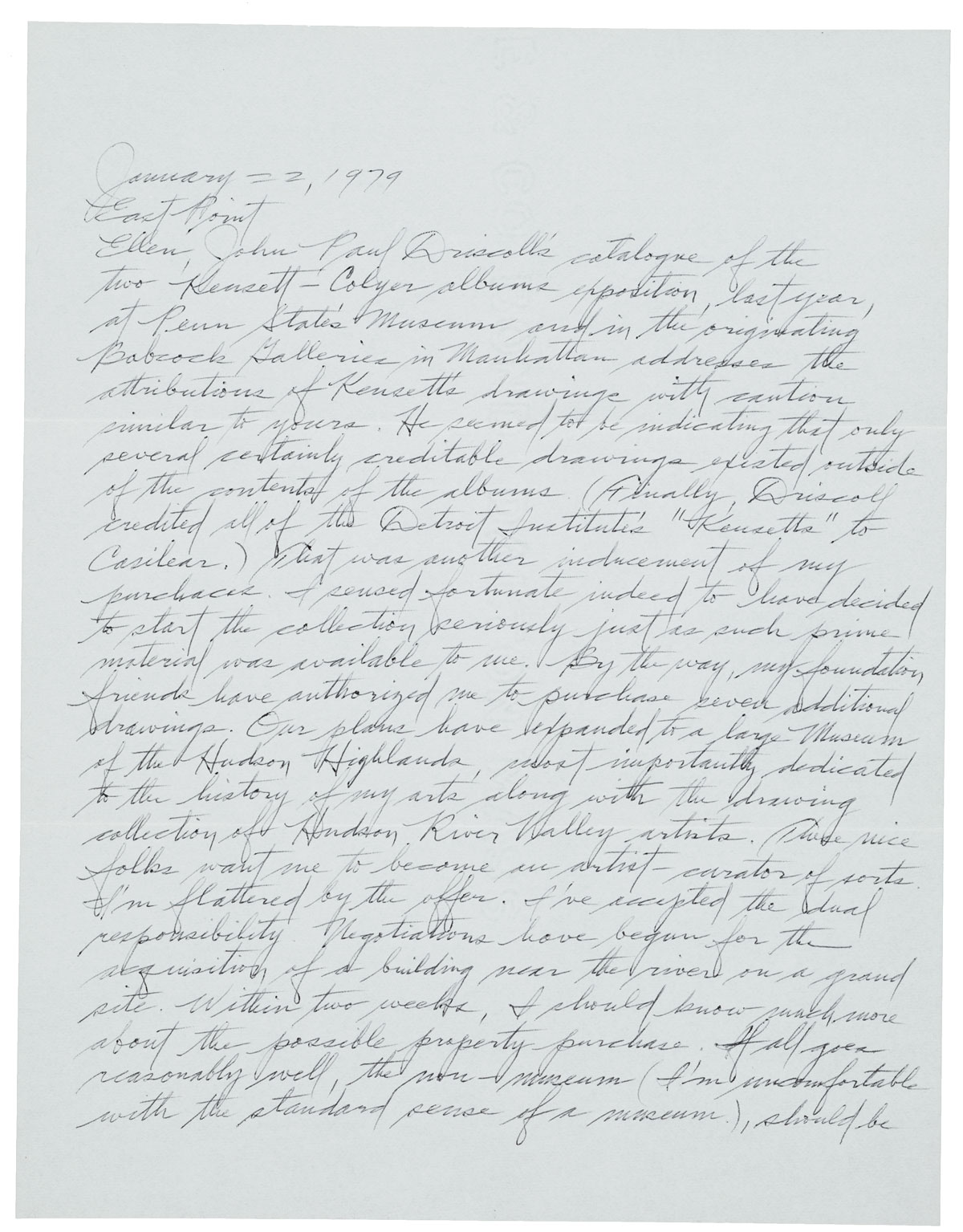

SARAH MADGES: How did you get involved with this project?
TIFFANY BELL: I got a call from Mary [Savig] because she noticed my work on the Dan Flavin catalogue raisonné. I make use of the archives on a regular basis and so she asked if I would write about one of Flavin's letters that they had because his writing is so unique.
MADGES: How did you decide which letter to talk about?
BELL: She [Savig] asked me to choose one and I was already familiar with this one because it was available online. I was also interested in it because the content of the letter reflected his handwriting. It describes his interest in 19th century drawings and landscape art, and Ellen [Ellen Johnson, the letter's recipient] had a collection of these John Frederick Kensett drawings.
His handwriting is quite formal considering how innovative his art is. It was interesting to me that it looked so perfect, exactly the way it had been taught to him.
I also knew the artist and knew he took writing seriously; he took serious care...I think he had some idea his letters would be studied at some point. He was interested in the collected writings of Cezanne and would use some of them in lectures. He was very interested in traditional writing like that, capturing the artist's life, and so I thought this letter projected that aspect of his personality.
MADGES: Why do you think archives should be public access? Why are these letters, these archival documents, important?
BELL: It’s invaluable for the kind of research I do. I think archives should absolutely be public access--and there is so much online now, which is so exciting. Even the postmarks on letters tell you where the artist was on a certain date. It’s invaluable for putting together someone’s biography.
But now, with all of these emails exchanged instead--I don't know if or how they will be saved. The quantity of material might be overwhelming to sift through. A lot was done through phone calls, so a lot has been lost there too. My work on Agnes Martin — although not entirely relevant to this conversation — her letters in the Archives of American Art are completely essential as far as learning who people in her circle were, what she thought about her art, and where she would show it. There's no other way to find this information out because she didn't keep a record of anything. Flavin kept his stuff as a record, knowing; he was prepared for people to access his writing.
MADGES: You noted in your essay that Flavin’s art resisted associations with the handmade, and yet he took such care with his penmanship. What were his journal entries like compared to his letters? You said that his letters were copied from what he wrote in his journal--did you notice any edits made between first and second draft?
BELL: His final page has no crossouts, and his letters were often typed. There are more crossouts and edits in his journals. You can really see him working through a thought.
MADGES: A kind of related question here, but what did you learn or what do you think others could learn about Dan Flavin from studying his letters that you couldn’t from biographical record?
BELL: Access to letters gives access and insight into thinking. You get to see how he presents himself to people.
MADGES: Did he write for the duration of his career?
BELL: He started in the 60s--the journals begin in 1961 or ‘62 and he kept them going through the 80s. As a young artist he was very interested in recording what he was doing as an artist. Early letters reach out to people who might be interested in buying or showing his work. I think he already knew Ellen Johnson when he wrote to her--when Flavin made his fluorescent light works they were always untitled, but were often dedicated to people. One of them was dedicated to Ellen Johnson.
MADGES: How do you feel about the fact that the U.S. Core Curriculum no longer requires handwriting instruction?
BELL: I was shocked. I even feel sorrow because I type so much now and I very much miss the way writing by hand connects you to your thought in a different way. When you actually write something down it enhances your ability to think through the idea. The fact that handwriting is slower means you stay with the thought longer.
It’s concerning that kids growing up today might not be able to read letters, read these manuscripts. Flavin’s early text is so difficult to read, you almost feel shut out. He has all these flourishes, especially the way he ends a word. It’s very sad when this kind of information becomes inaccessible.
MADGES: How did working on this project inform or change how you think about handwriting?
BELL: Well first of all, the book is really beautiful. I’m very pleased to be a part of it. It didn’t change how I think, but maybe it reinforced the idea of how wonderful handwritten letters are. Dan Flavin himself understood the beauty and great capacity of what you could convey in a handwritten letter. It’s interesting to look closely at them; you get more sense of personality, occasionally some humor. You can observe how he puts the date and place in each entry and fills the whole page, leaving no margins. He has this very meticulous handwriting that looks angular, even stylized, and always on unlined paper.
MADGES: Do you consider handwriting visual art, writing, or some combination?
BELL: For Flavin, I think it’s a lot like his drawings in some way. He used to carry a notebook around with him all the time and he would use the same pen to sketch. He collected drawings, like he mentioned in the letter: Kensett pieces. Kensett also did ink drawings on paper, often with little notes about where they were drawn and when. Flavin kind of took after him--he recorded the date and time. You can sense the connection to his past art, its influence on him.

Thomas Eakins's Precise Pen • Akela Reason
"To the nineteenth-century mind, good penmanship and draftsmanship were seen as interrelated skills that reflected clarity of thought."


BY AKELA REASON
As the son of a writing master and a graduate of Philadelphia’s Central High School, Thomas Eakins understood the link between writing and drawing. Eakins learned his elegant copperplate hand from his father, a skill that was reinforced at Central in his drawing classes. To the nineteenth-century mind, good penmanship and draftsmanship were seen as interrelated skills that reflected clarity of thought. In fact, writing masters like Eakins’s father, Benjamin, often completed complex drawings crafted from the written text as a demonstration of their skill and confident control of the pen.
Official writing in the days before typewriters and photocopiers required the work of a professional writing master who would plot out the text to the scale appropriate for the document. The work of such writing in many ways mirrored Eakins’s own preparatory process as he plotted out his compositions with the same care, making few changes to his designs once they were established.
In order to prepare for his paintings, Eakins made some pencil sketches, detailed perspective drawings, and oil sketches to work out color and composition. He also used photographs to plot specific figures in his paintings. None of this work was visible to the art-going public, who saw only his finished works. Similarly, Eakins carefully drafted official correspondence in his elegantly trained hand, with all of the mental work coming before the pen was set to the final draft. These letters were usually brief and mistake-free. For his family and friends, however, he was much more carefree in his writing. His hand is casual, and one can see him thinking through cross-outs and insertions of text.
There is a clear divide between Eakins's public and private writing, just as there is between his public and private artwork. Occasionally Eakins injected his art with his formal, artful penmanship by adding his carefully crafted signature. These signatures flow in an elegant cursive that resembles his signature on formal documents, and they are plotted in perspective so that they become part of the painting, which gives some idea of the labor that Eakins took such pains to hide.
While none of his works, written or painted, appear effortless, Eakins rarely revealed his thought process the outside eye, making his work appear uncannily precise.


Akela Reason holds a Ph.D. in Art History from the University of Maryland. She is Associate Professor of History at the University of Georgia and the author of Thomas Eakins and the Uses of History, University of Pennsylvania Press, 2010.
This essay was a part of our collaboration with The Smithsonian's Archives of American Art, Pen to Panel.
My Mom’s Bread Pudding • Rosie Nelson

Note from curator Rozanne Gold: What a charming story from Rosie Nelson, who shares with us not only a delicious recipe, but a delightful, warm, and unexpected peek into a family holiday. And what a family it is. Her mother, Dr. Judy Nelson is Chief of Palliative Care at Memorial Sloan-Kettering in NY, her dad Eric is a crackerjack lawyer, and Rosie, a recent college grad, is an advertising exec, with an exuberant passion for food and…bread pudding. You’ll find out why, here. Thank you, Rosie. (p.s. Rosie was one of the teen sous-chefs who helped test recipes and had a starring role in my book “Eat Fresh Food: Awesome Recipes for Teen Chefs, Bloomsbury, 2009.)

My Mom's Bread Pudding by Rosie Nelson
I was about ten years old, I came home the day before Passover (a holiday where one eats matzoh) only to find a gigantic homemade bread pudding sitting in the kitchen.
Having a few years of Hebrew school under my belt, if I had learned anything about Judaism, it was that we do not eat leavened bread during the eight day-period that Passover is celebrated. Why then had my mom, who had spent many more Passovers than my ten, listening to her father (my grandpa) retell the story of the Jews’ hasty exodus from Egypt, put together this soon-to-be forbidden pudding that we would no longer be able to enjoy?
My mother, a renowned doctor, had a logical response: She didn't want the three loaves of bread remaining in the kitchen to go to waste. So she made bread pudding; and the three of us enjoyed a warm delicious dessert that night. Naturally, the majority of the pudding was left in the dish, staring at me every time I walked into the kitchen. What could I do but take another bite? Was that a bit of Grand Marnier, I tasted? The texture was so creamy. The raisins were so plump and sweet. The holiday had begun, the pudding now off-limits, and I remained taunted by my mother’s great baking skills. Restraint is not one of my virtues. How sad to have that gorgeous pudding go to waste. But as the bread pudding sat-in-state as the holiday progressed, the only choice was to throw it away! My mom's seemingly logical plan to avoid being wasteful no longer seemed as logical — now that along with the bread, the milk, spices, sugar, eggs, and raisins now also had to be trashed, not to mention the hour of work she spent making it.
As a ten-year-old, little did I know that bread pudding would create lifelong memories of holidays past, family gatherings, thrifty meals and, unpredictably, of Buenos Aires, where I spent six months studying during a semester of college. To say that food and cuisine were central aspects of Argentine culture is an understatement. My wonderful host mother, Monica, made countless memorable meals over which we discussed everything — from politics to art to cooking. I loved the experience so much that, one year later, I returned with my friend Shanen and stayed for a month.
On our first night, Shanen and I walked the local streets to a steakhouse, where we found ourselves five more times during our stay. After a huge meal, the panqueques con dulce de leche (crepes filled with dulce de leche) caught Shanen’s eye while the Budín (bread pudding), caught mine. We polished off all of it, only to find out that the bread pudding was a portion meant for four! But we ordered it again, and again.
I think of bread pudding every Spring, the time of year when Jews all over the world share a traditional Seder meal. But I think of my mother every time I see bread pudding on a restaurant menu. It is now fifteen years since the Passover bread pudding story began but I know the memory of the forbidden dessert will make the holiday seem a little bit sweeter next year.
The recipe is written in my mother’s handwriting. Sometimes we make it with fresh blueberries, and sometimes we make it with chocolate chips. And sometimes we bake it as is (and not in a water bath).


My Mom’s Bread Pudding
Serves 8
Butter for greasing pan
4 - 5 cups stale white bread cubes
¾ cup raisins
4 large eggs
¾ cup sugar
1 teaspoon vanilla
1 teaspoon Grand Marnier
1 teaspoon ground cinnamon
½ teaspoon freshly-grated nutmeg
½ teaspoon salt
3 cups milk
Preheat oven to 350 degrees.
1. Spread the bread cubes in a buttered 2-quart baking dish. Scatter raisins (or blueberries or chocolate chips) over the bread.
2. Thoroughly whisk together: eggs, sugar, vanilla, Grand Marnier, cinnamon, nutmeg and salt. Whisk in milk.
3. Pour the liquid mxture over the bread and let stand 30 minutes, periodically pressing bread down with spatula for absorption. Please dish in a water bath (fill pan about ½ up sides of the dish – use scalding hot tap water.) Bake until puffy and firm in the center – about 1-1/4 hours. Serve warm, room temperature or cold.
Note by RG: Although Rosie’s story is related to Passover, the bread pudding recipe is wonderful all year long. Top with fresh blueberries or peaches in summer; ripe pears in the fall, or bittersweet chocolate, any time.
