Illustrating Expression: Standards of Contemporary Penmanship • Kadin Kostelic
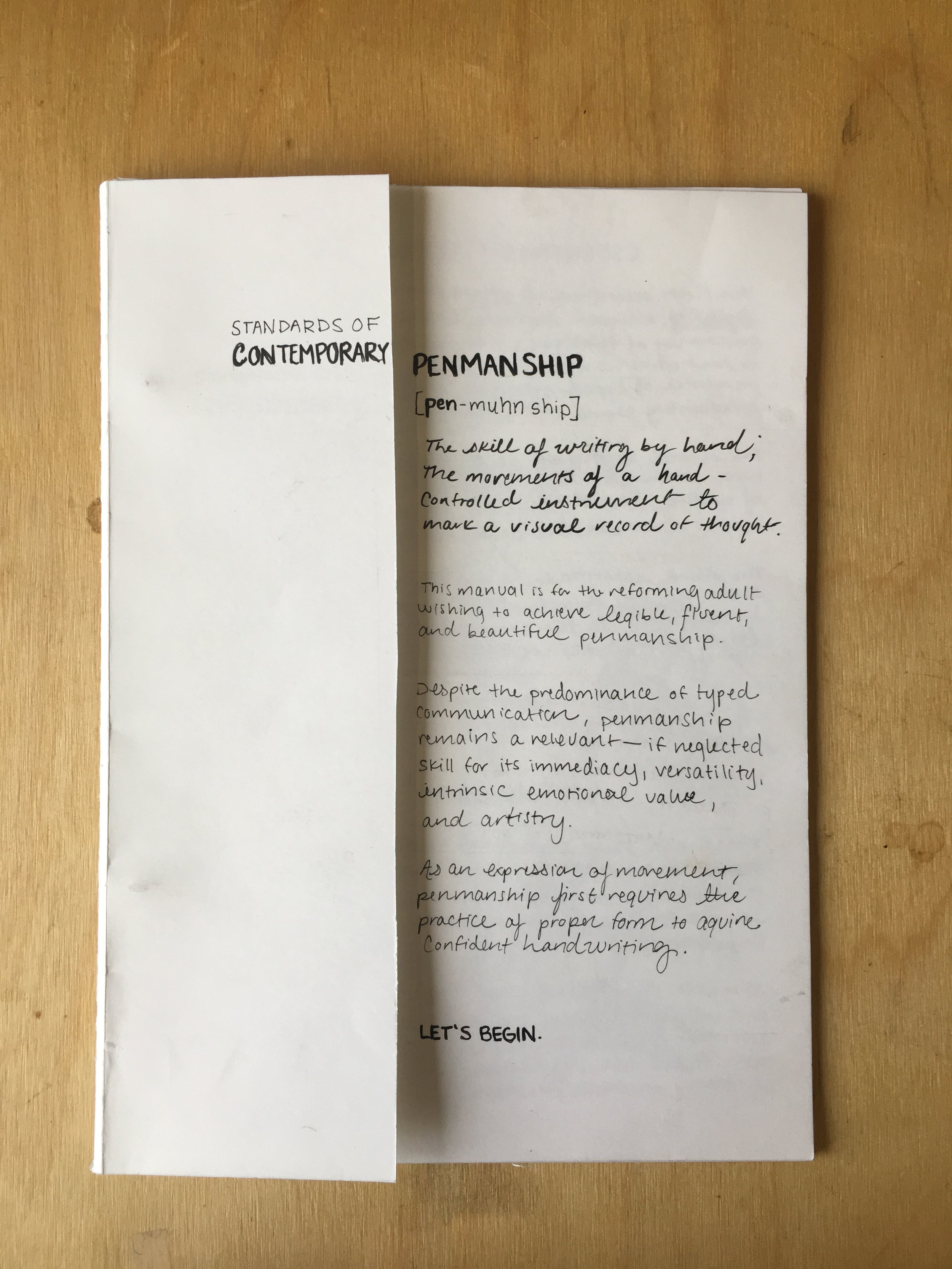
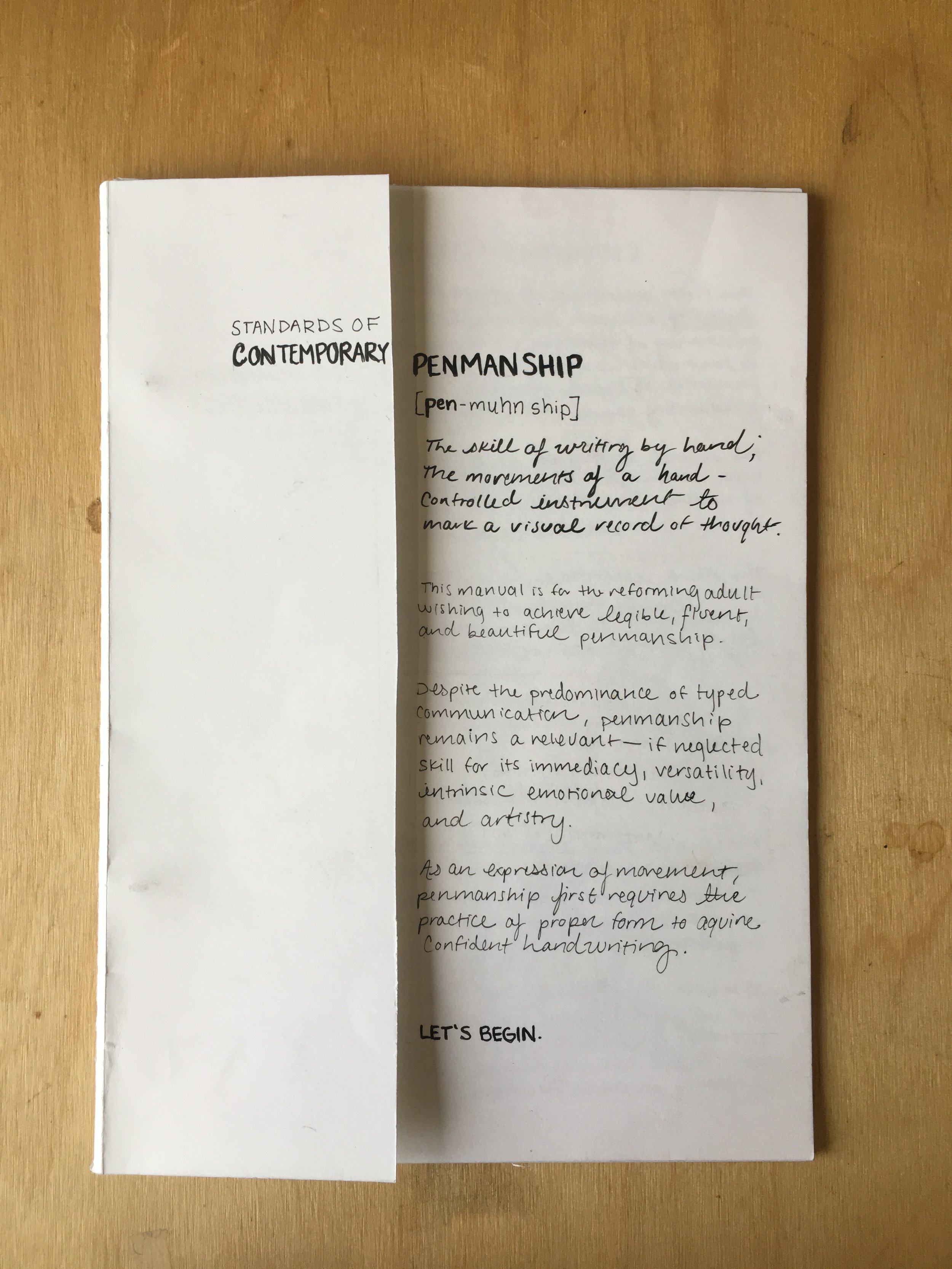
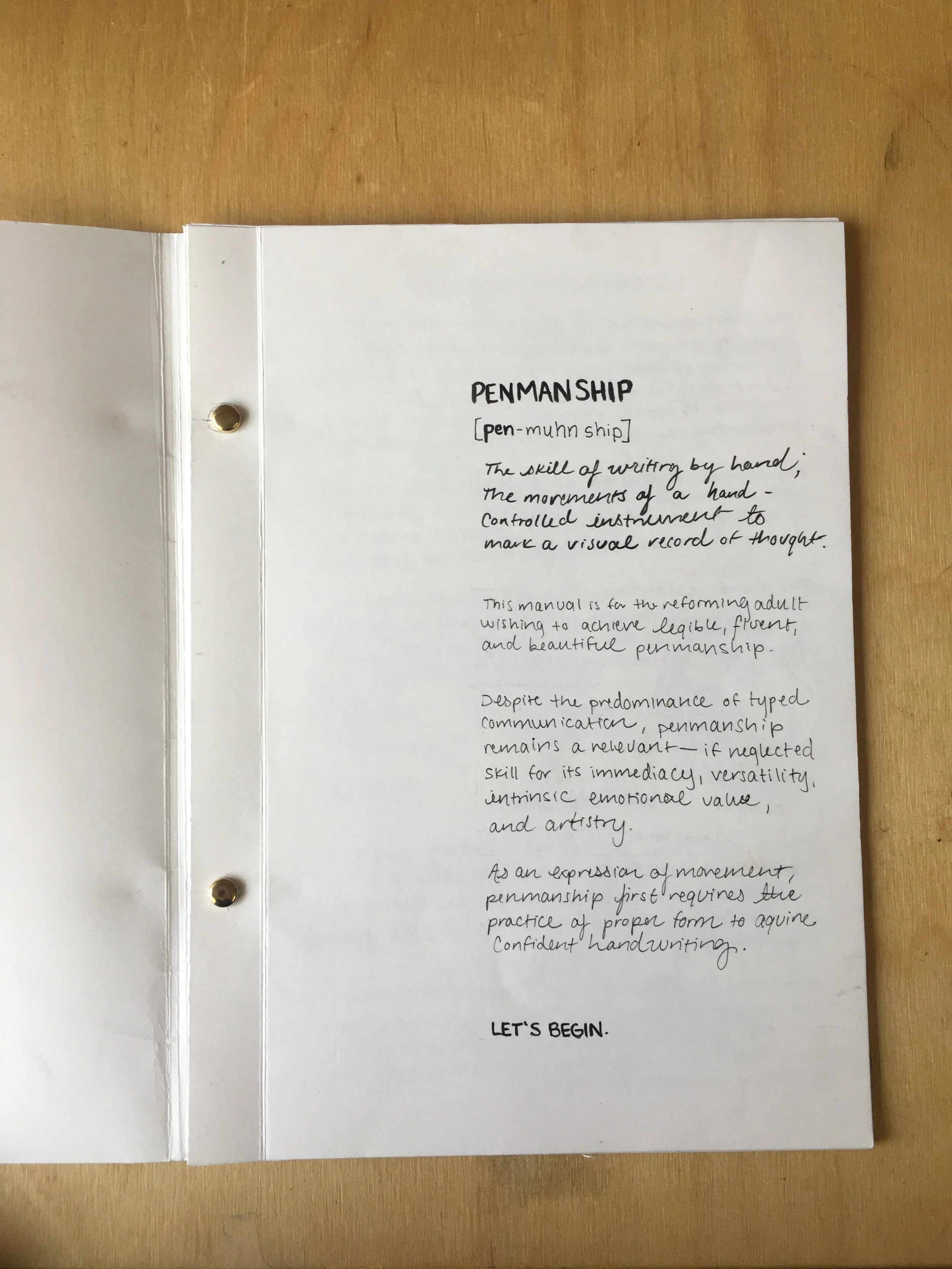
This pro-forma and map are results of an investigation into the standards of contemporary penmanship. Despite the predominance of digital and printed communication, penmanship remains a relevant skill for its immediacy, versatility, intrinsic emotional value, and artistry. By creating a pamphlet that details the somewhat neglected forms and rules of 'proper penmanship,' along with a map that delineates the many areas of influence surrounding the activity of handwriting, I've attempted to rediscover and champion — in an un-nostalgic way — the qualities that make penmanship vital to our everyday lives.
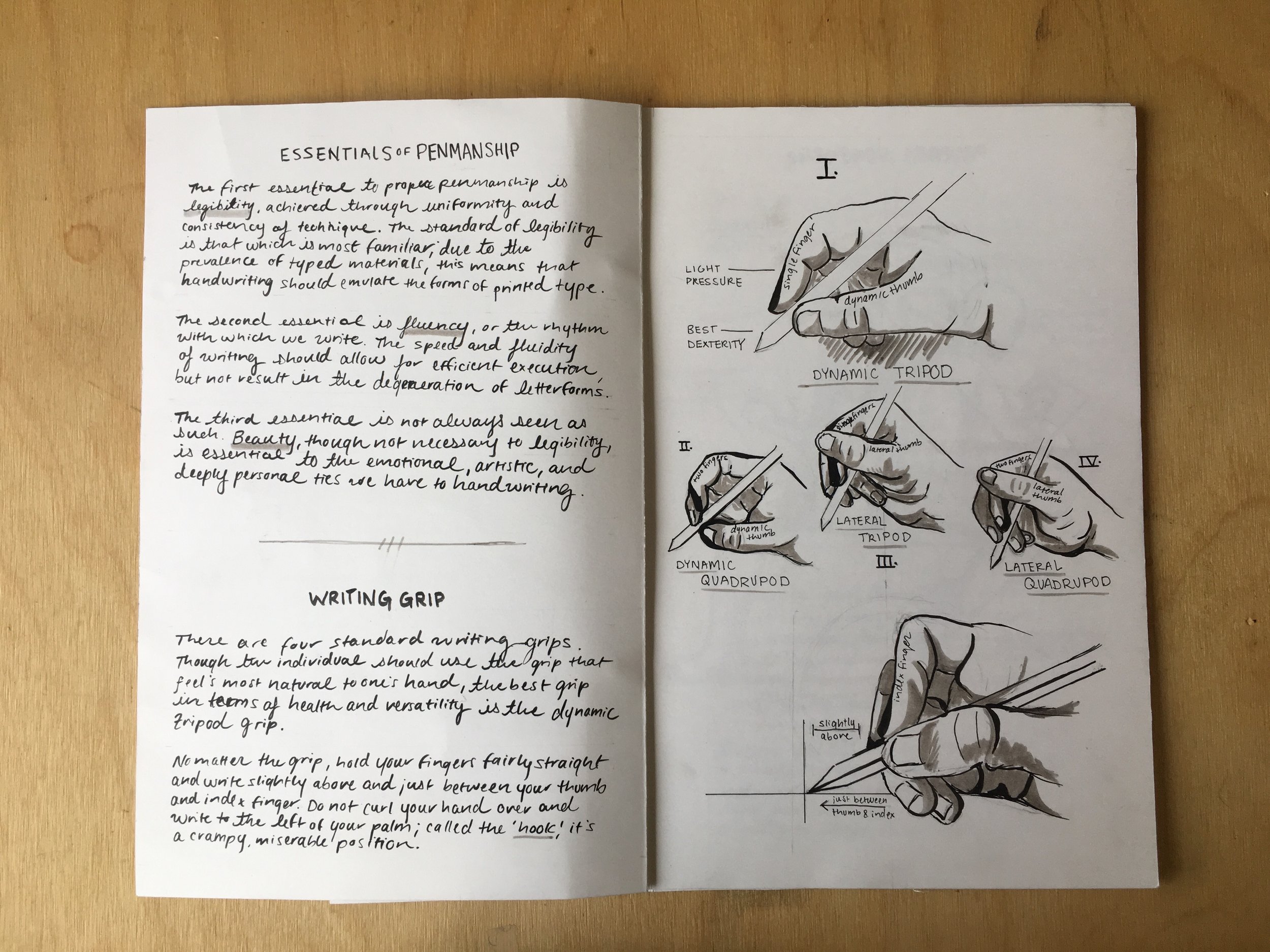
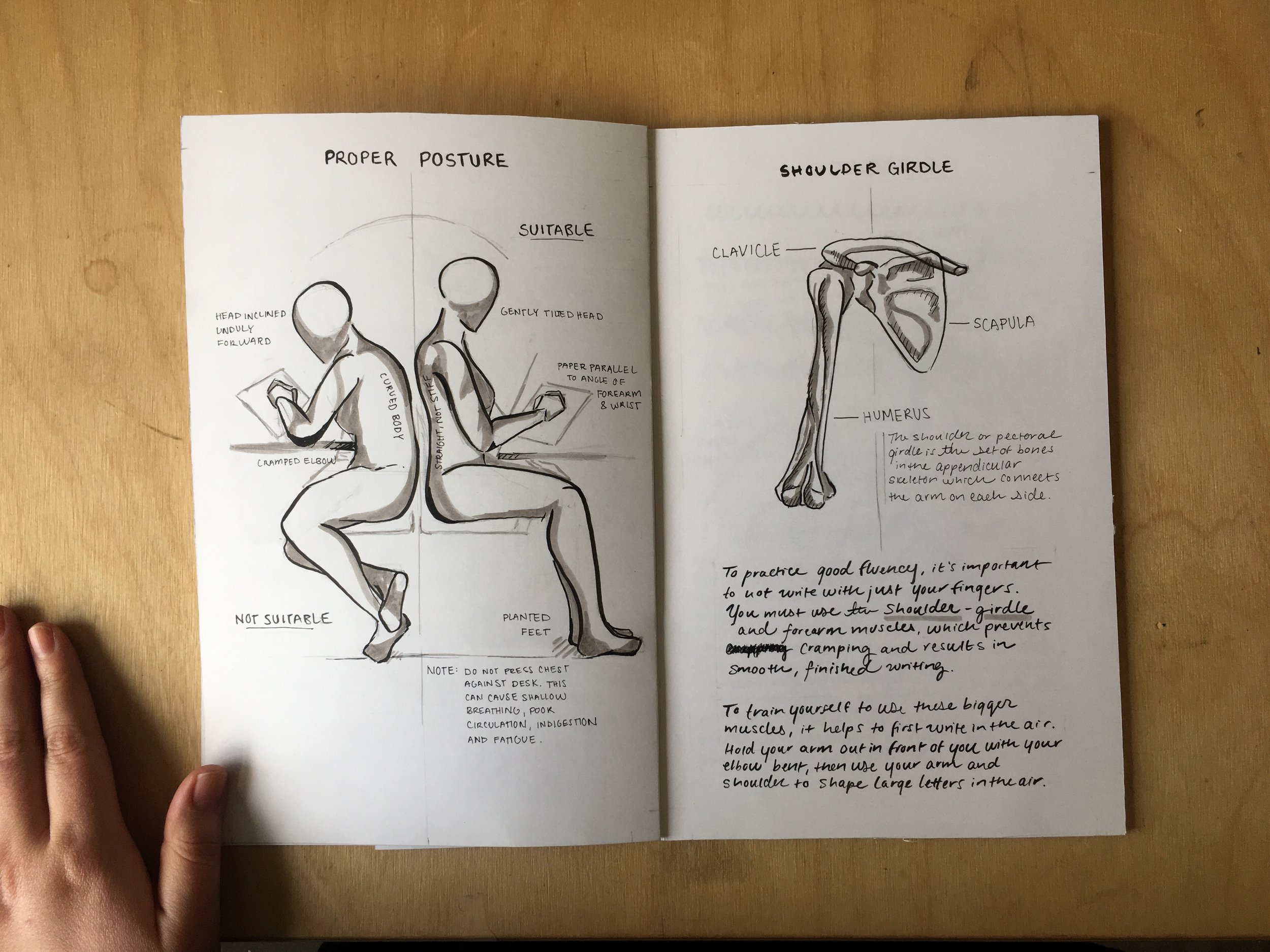
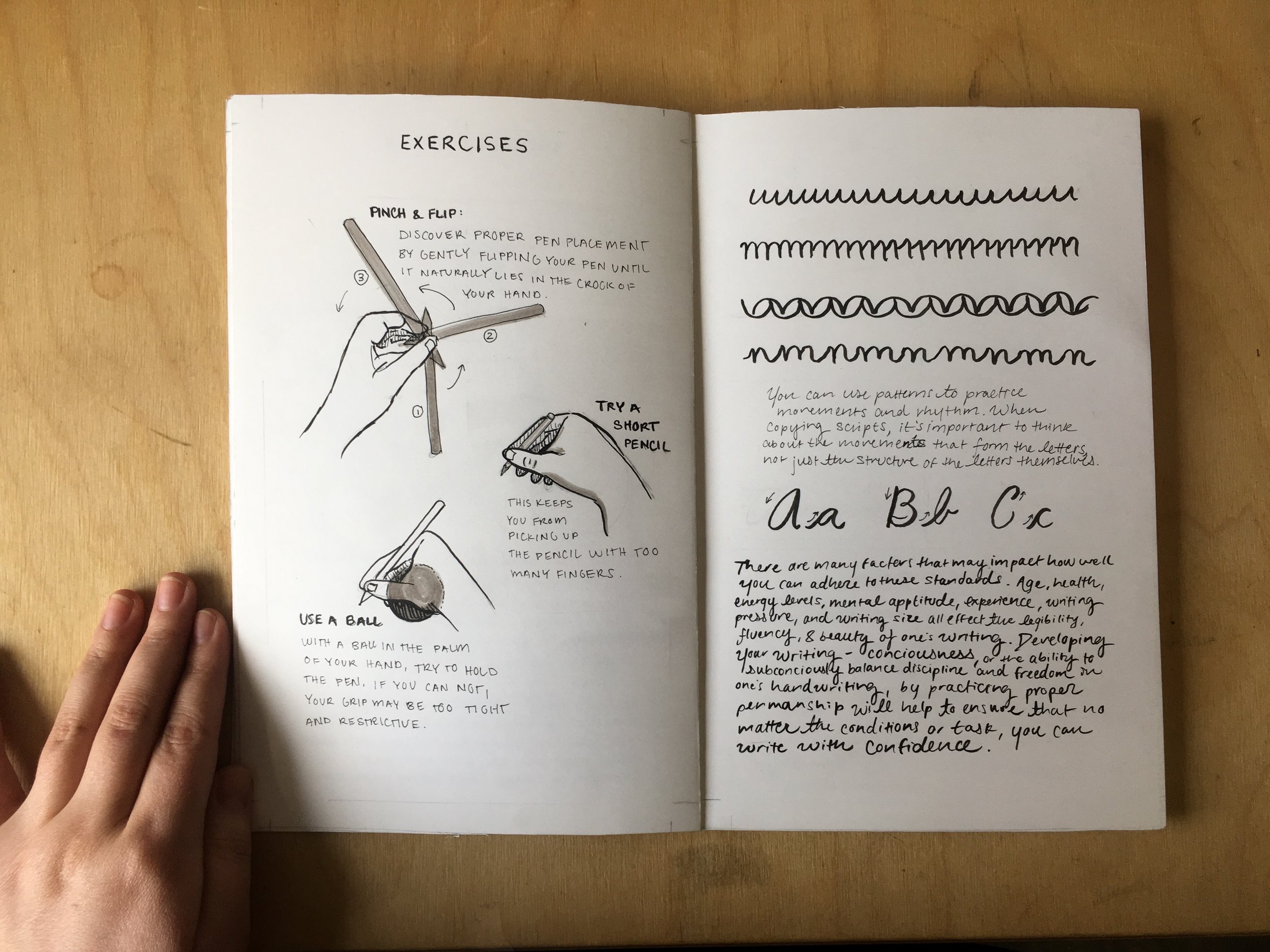
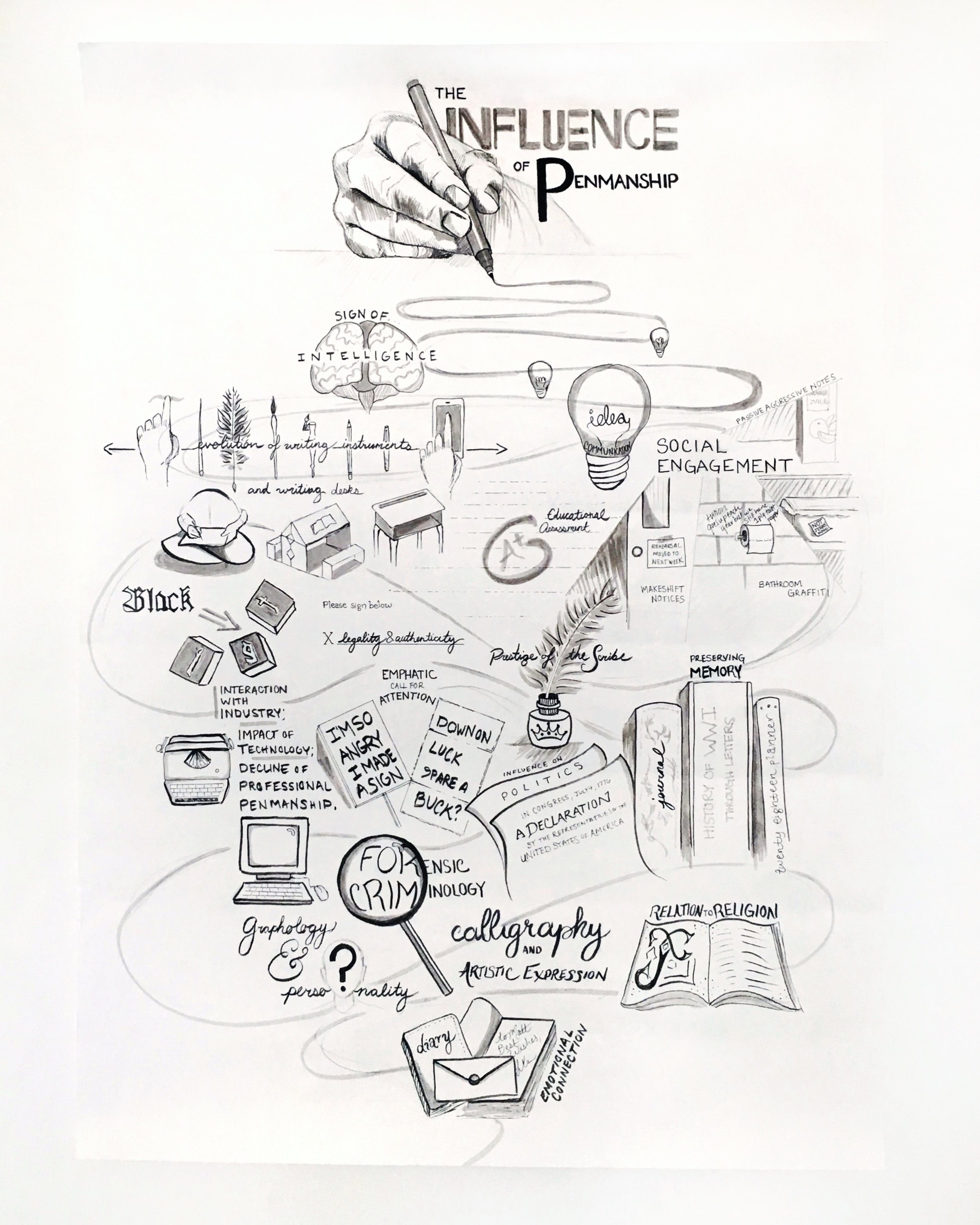
In continuing this project, I aim to highlight and expand upon the ways in which handwriting is still relevant to contemporary life, as well as equalize the imbalanced relationship/perception of the handwritten as opposed to digital communication. Some of the questions I am exploring are below:
In what ways and contexts do you still use handwriting in your daily life? How can the handwritten act as a subversion to our increasingly digital daily experience and existence? What can the act of handwriting add to our lives, and how does it affect/benefit our development as individuals and communities? To what extent does the skill of handwriting help us beyond the ability to communicate?
If you'd like to share your thoughts with me, you can see my site, Standards | Penmanship, here.

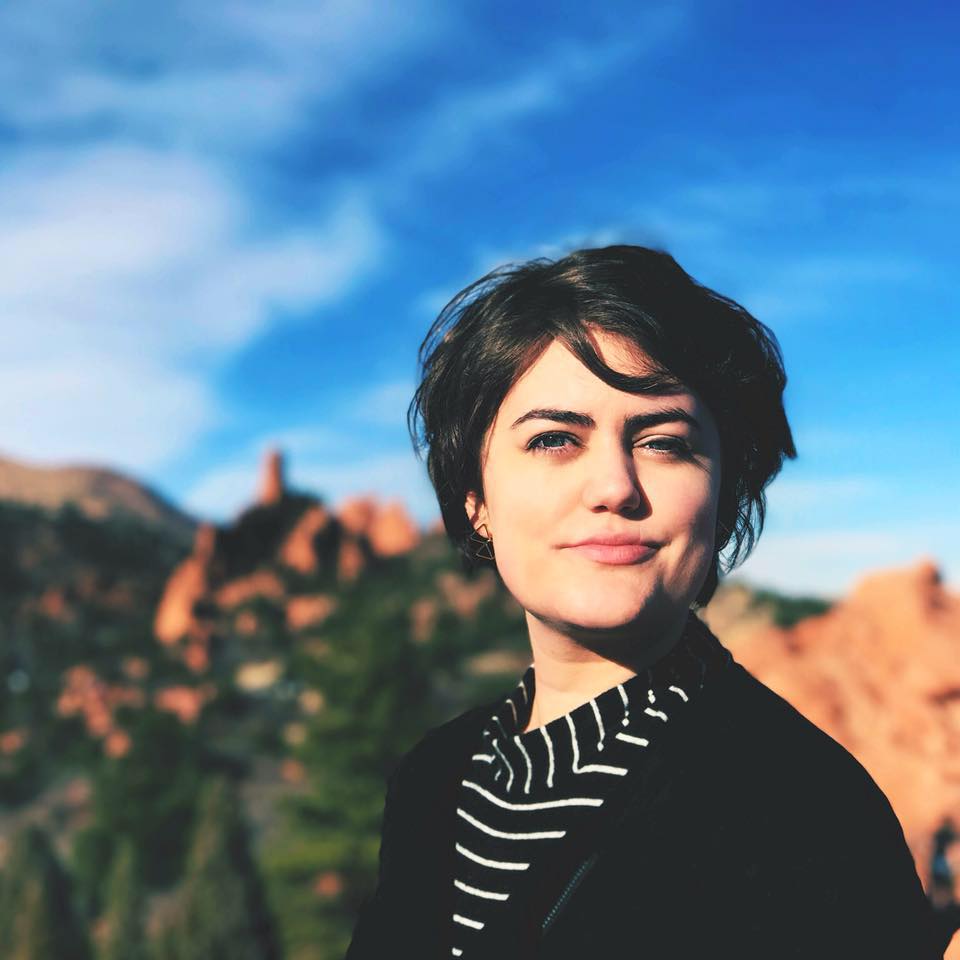
My name is Kadin Kostelic, I'm a designer from Colorado Springs. I earned a BFA in graphic design from Colorado State University, and am continuing this education at Goldsmiths, University of London pursuing a masters degree in communication and experience design. For me, being a designer means to be constantly curious and aware of the world, insightful about those observations, and determined to solve problems through that insight. More than that, I see design as a means of empathy. Understanding others’ thoughts, motivations, governing feelings, and individual perspectives is essential to my work, and it is why I find a profound sense of purpose in my profession. @kadinraedesign
A Surprise Wedding and the 52 Postcards That Followed • Carly Butler Verheyen

BY CARLY BUTLER VERHEYEN
Nothing about our wedding was ordinary. In fact, that morning I woke up thinking it was the day of our engagement party, but I got the surprise of a lifetime after reading a letter from my fiancé telling me that our engagement party that was planned for that day was actually our wedding day. While I was away for 6 months retracing the steps of my Grandmother's love letters in London, England, he was at home planning our big day. We had a date set the following year, so we were planning things together here and there, but little did I know that things we were planning were actually being moved to an earlier date: the date of our surprise wedding.
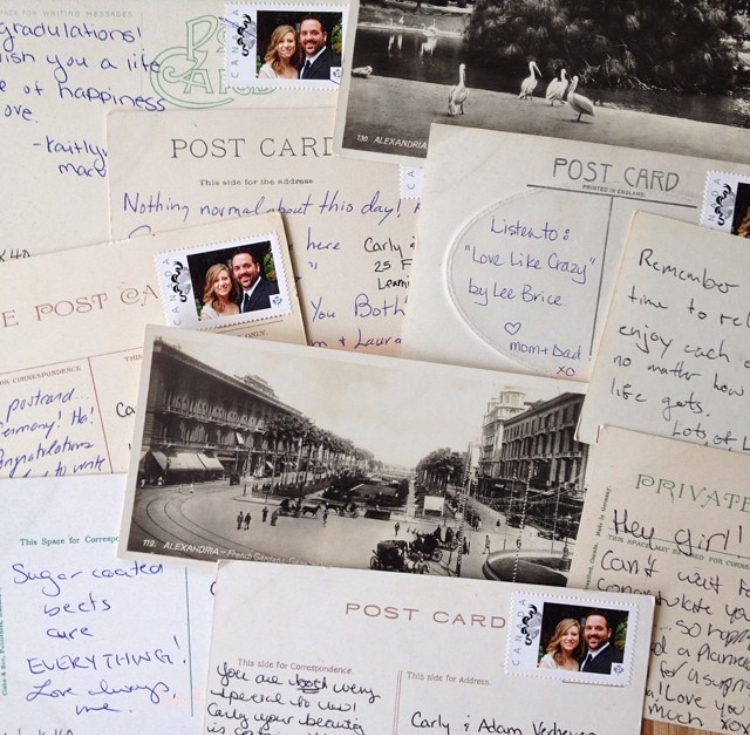
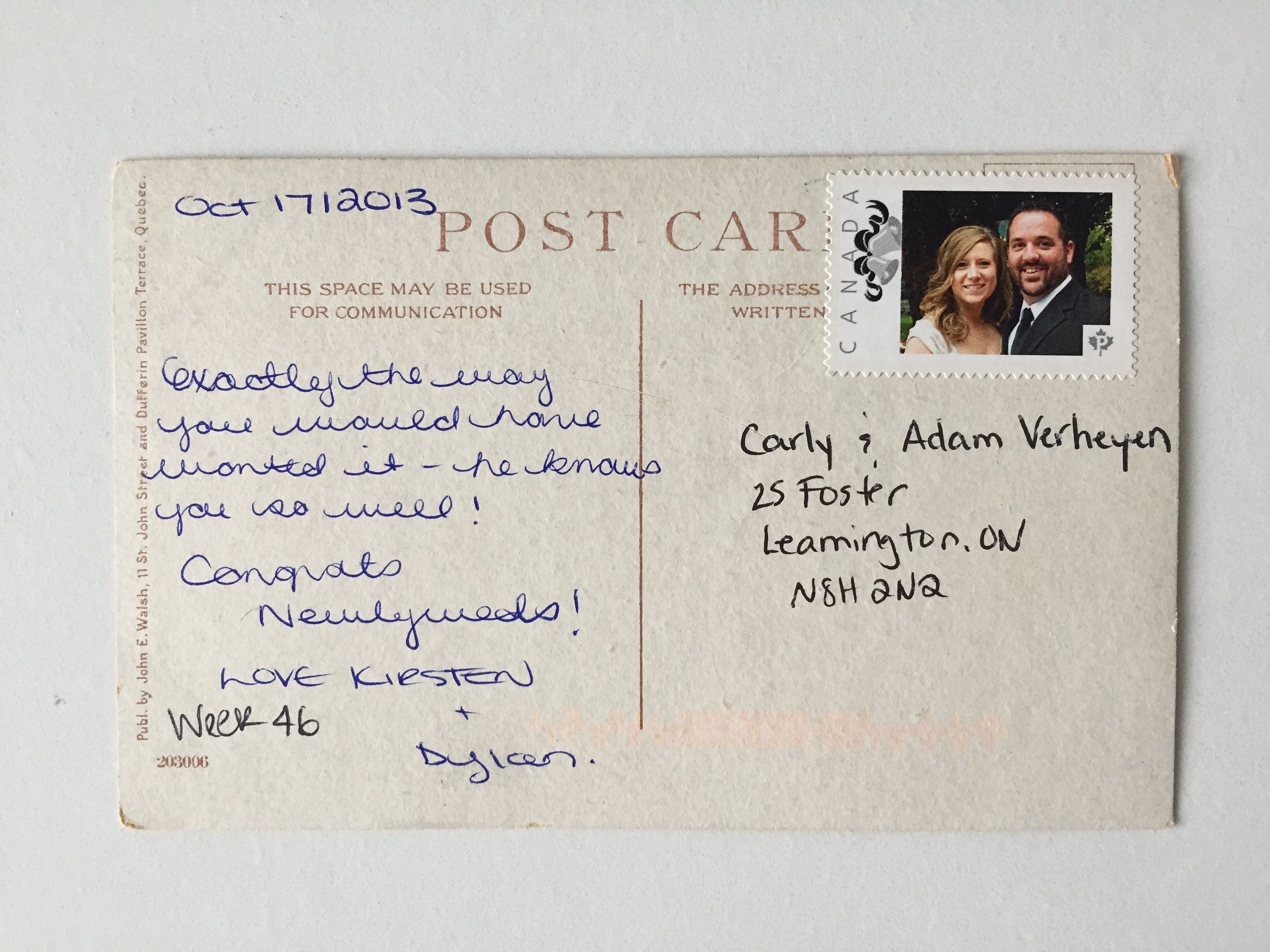
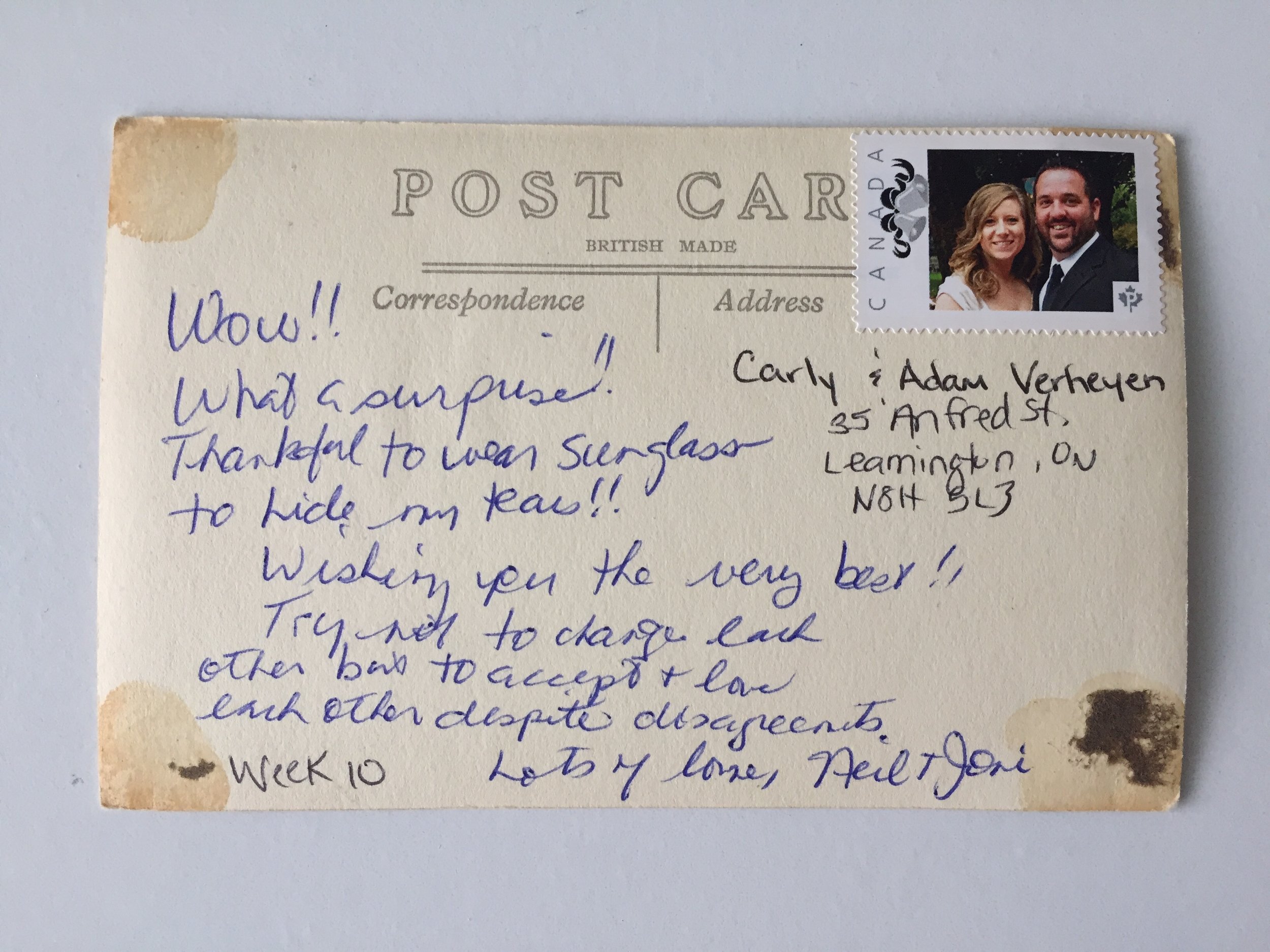
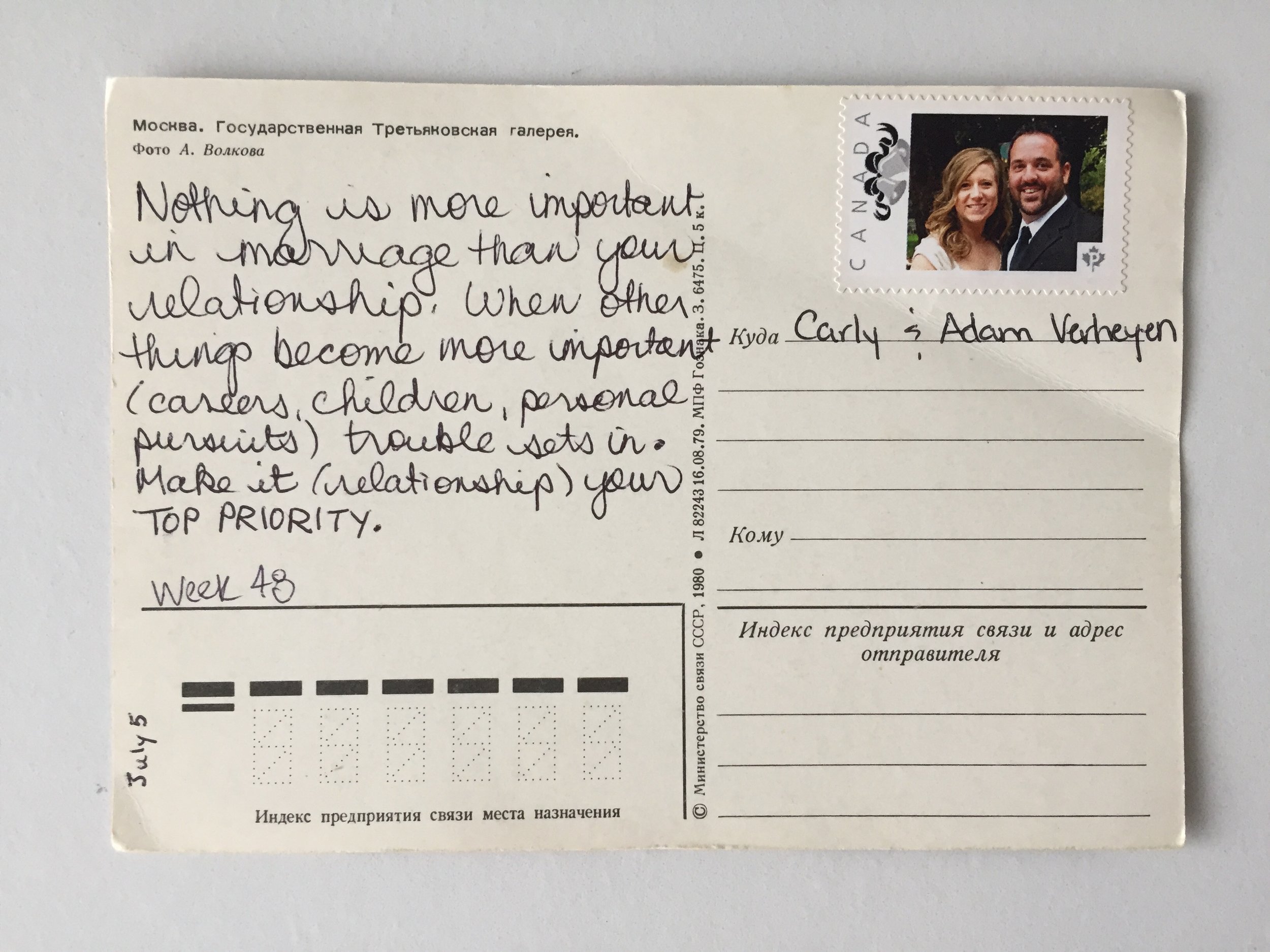
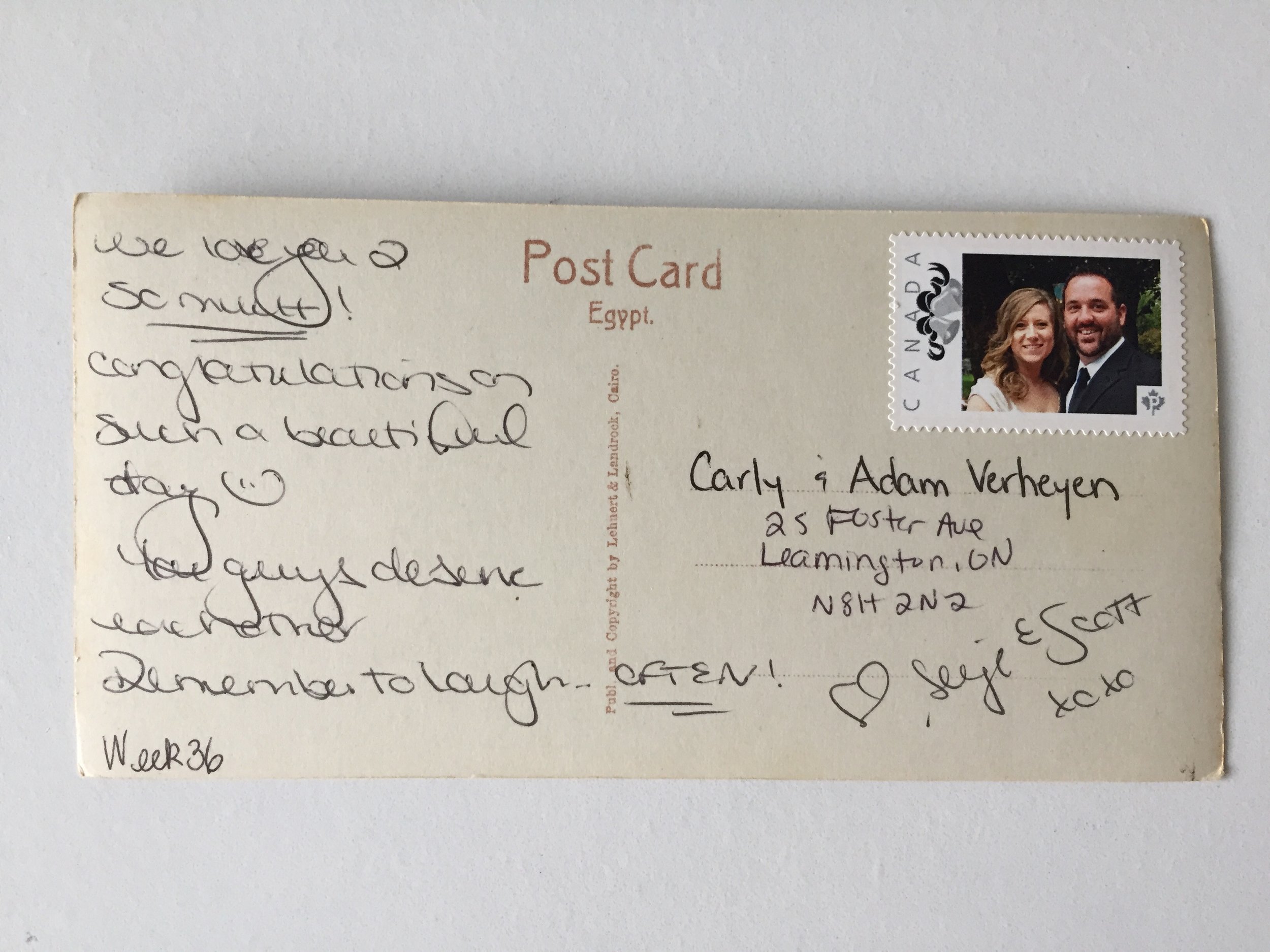
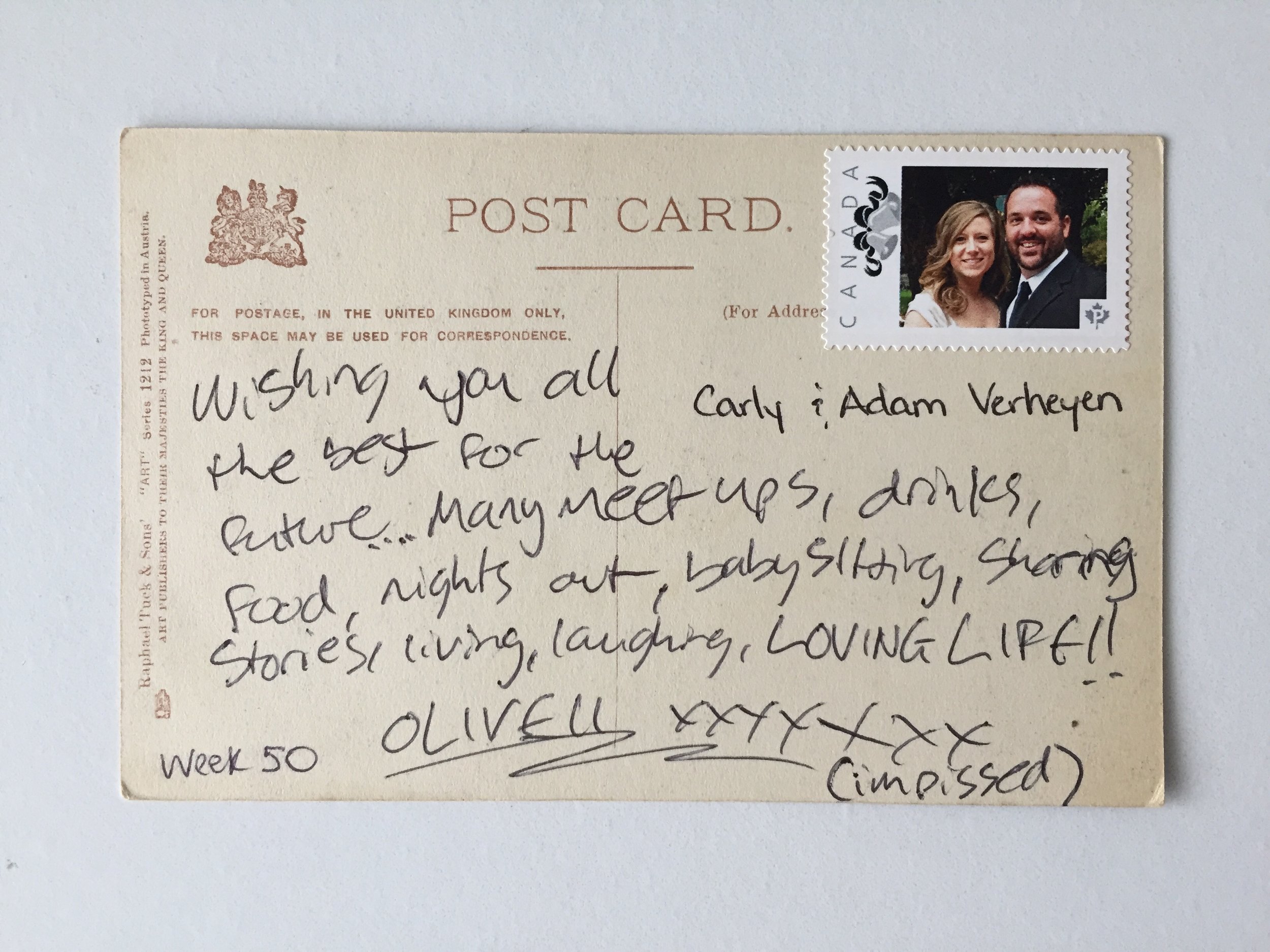
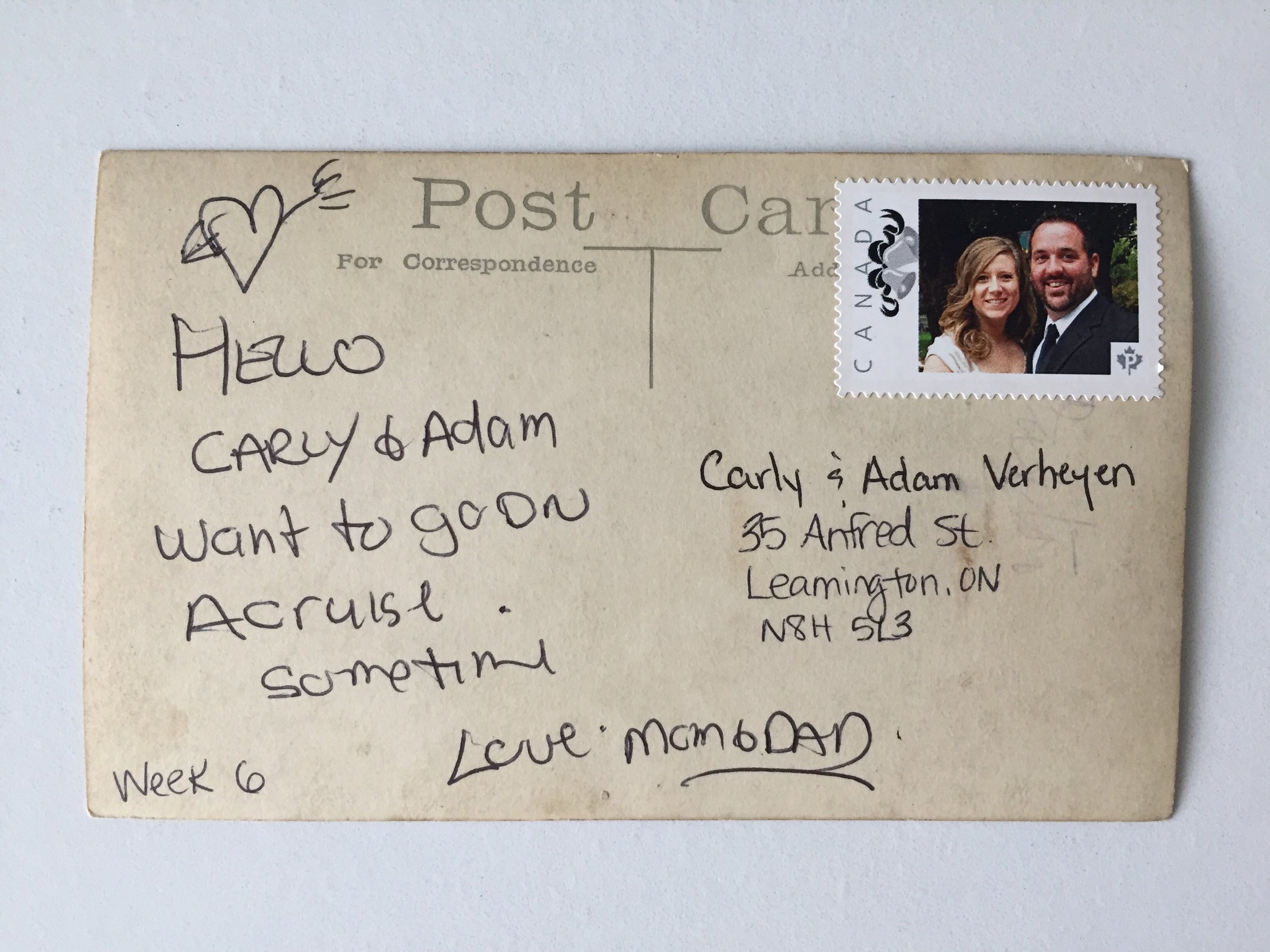
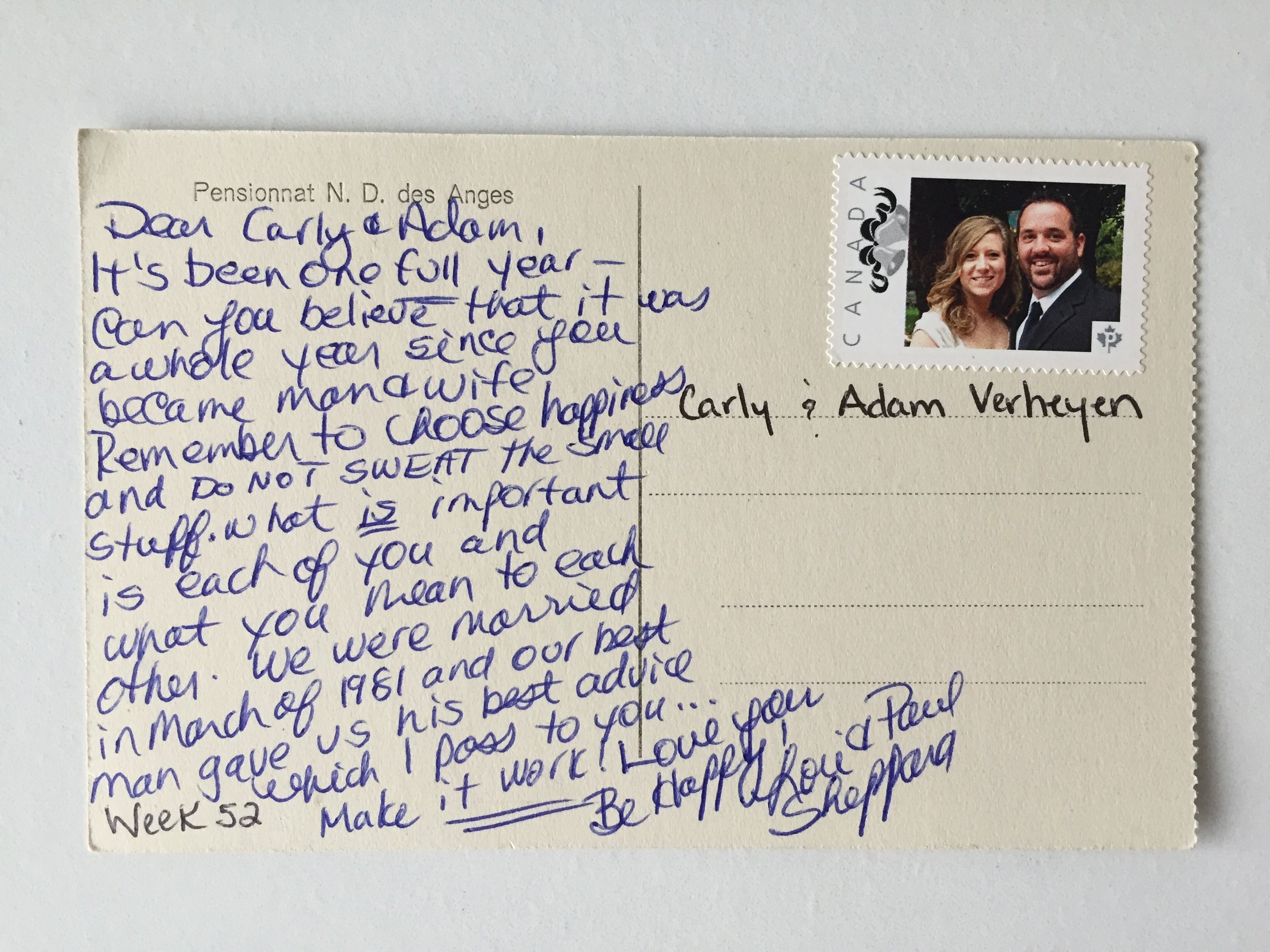
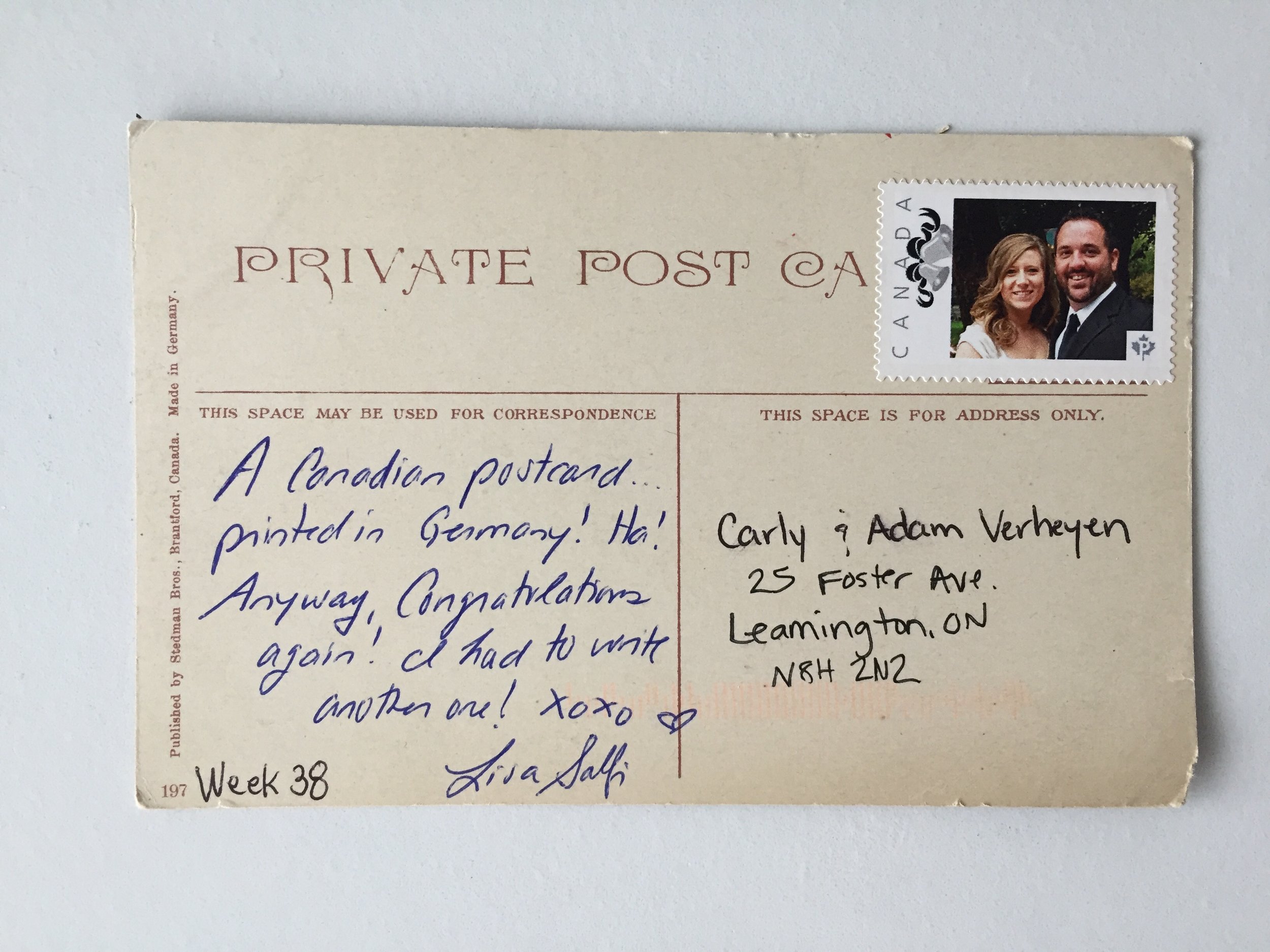
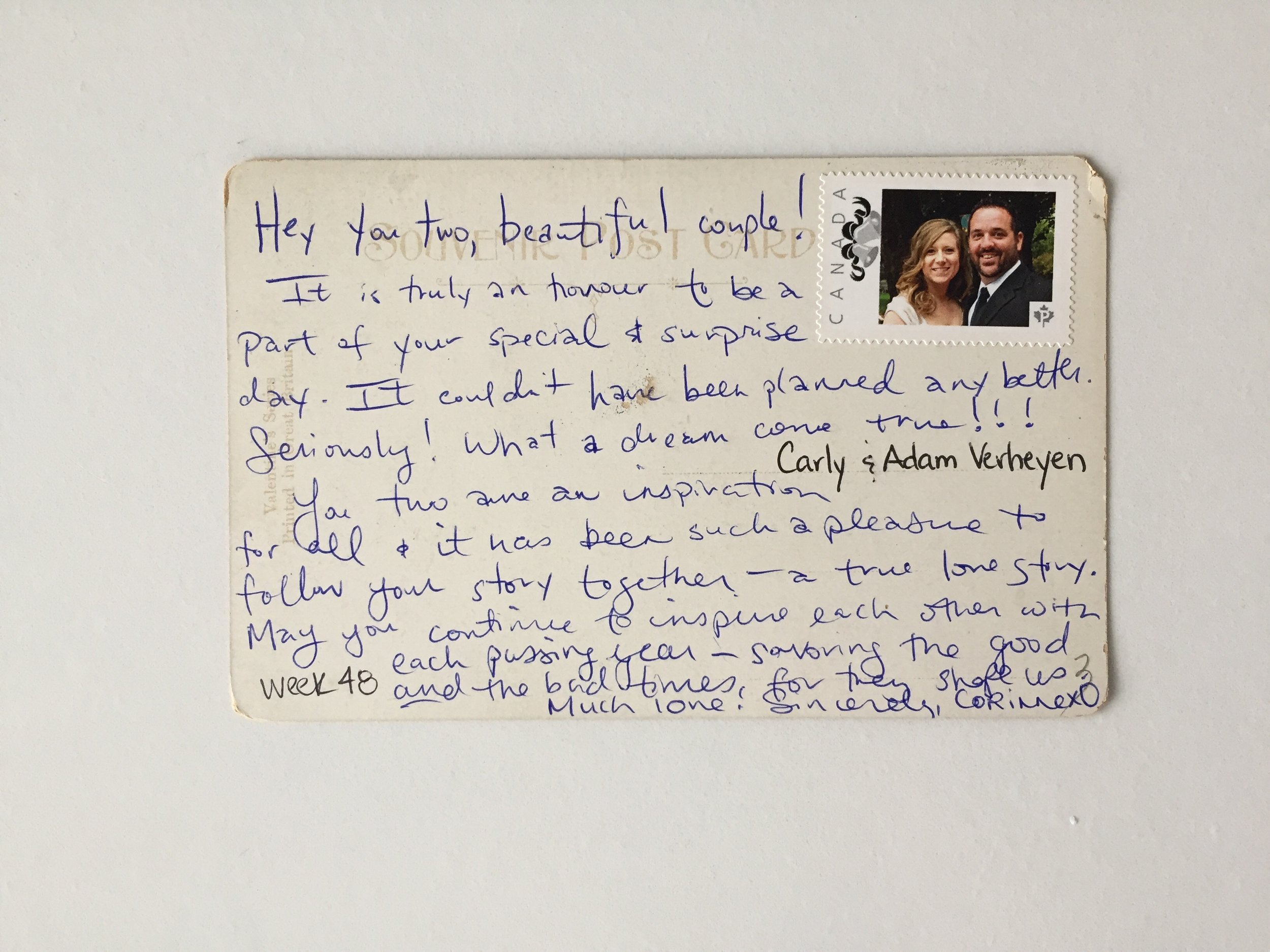
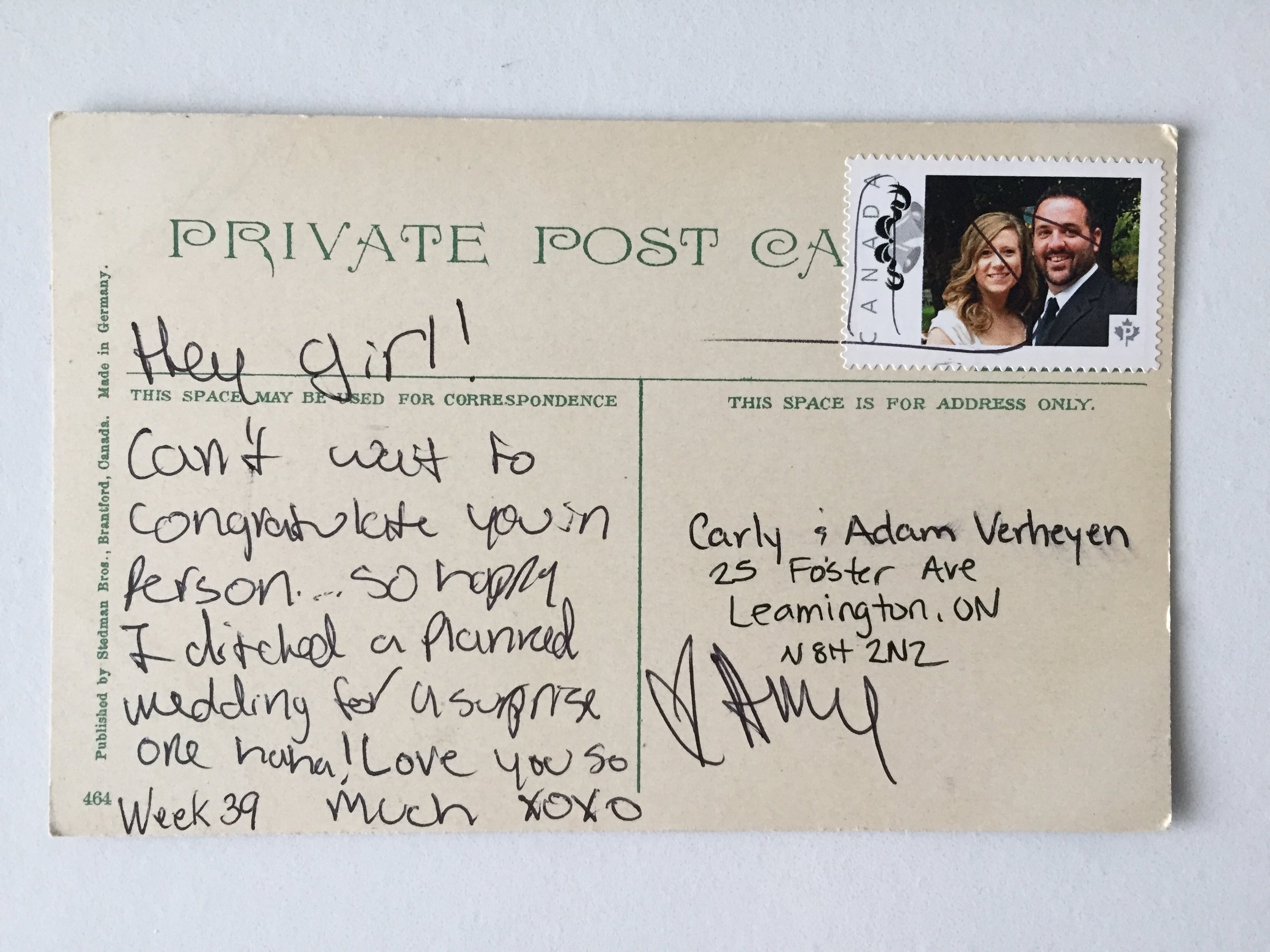
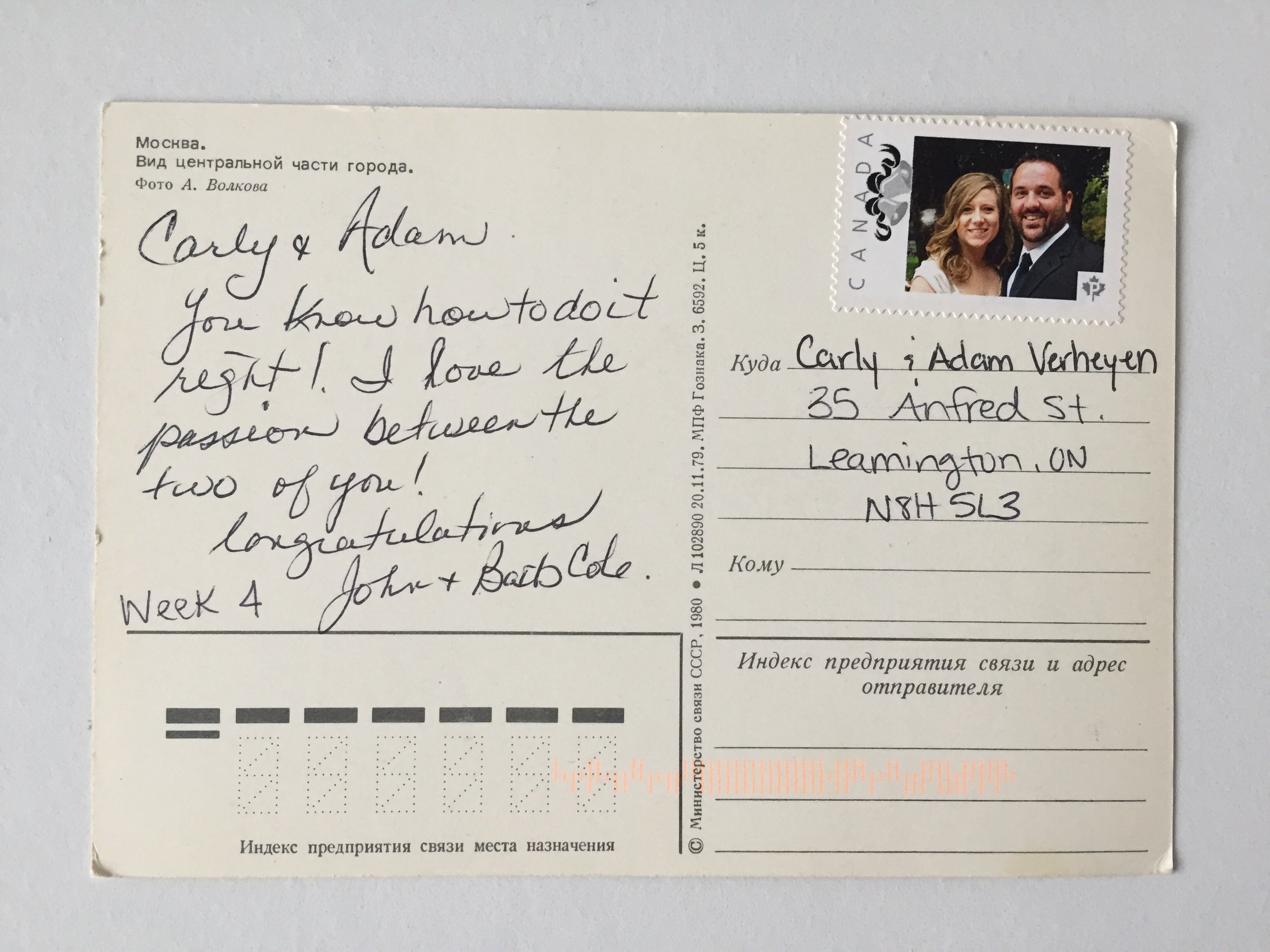
The surprise didn't end that night. The guests of our surprise wedding filled out postcards that had a number from 1 – 52 in the corner, and every week of our 1st year of marriage, a vintage postcard from one of our wedding guests came in the mail. Some of the guests took them home with them to fill out and send themselves, while others wrote a message that day or night and left it in a mailbox by the end of the night for our good friend to mail to us each week.
Some had marriage advice, some had memories of our wedding day, and others had drunken messages of love and well wishes. It was such a treat to feel the love from our wedding guests all year long.
A few of our faves are below.
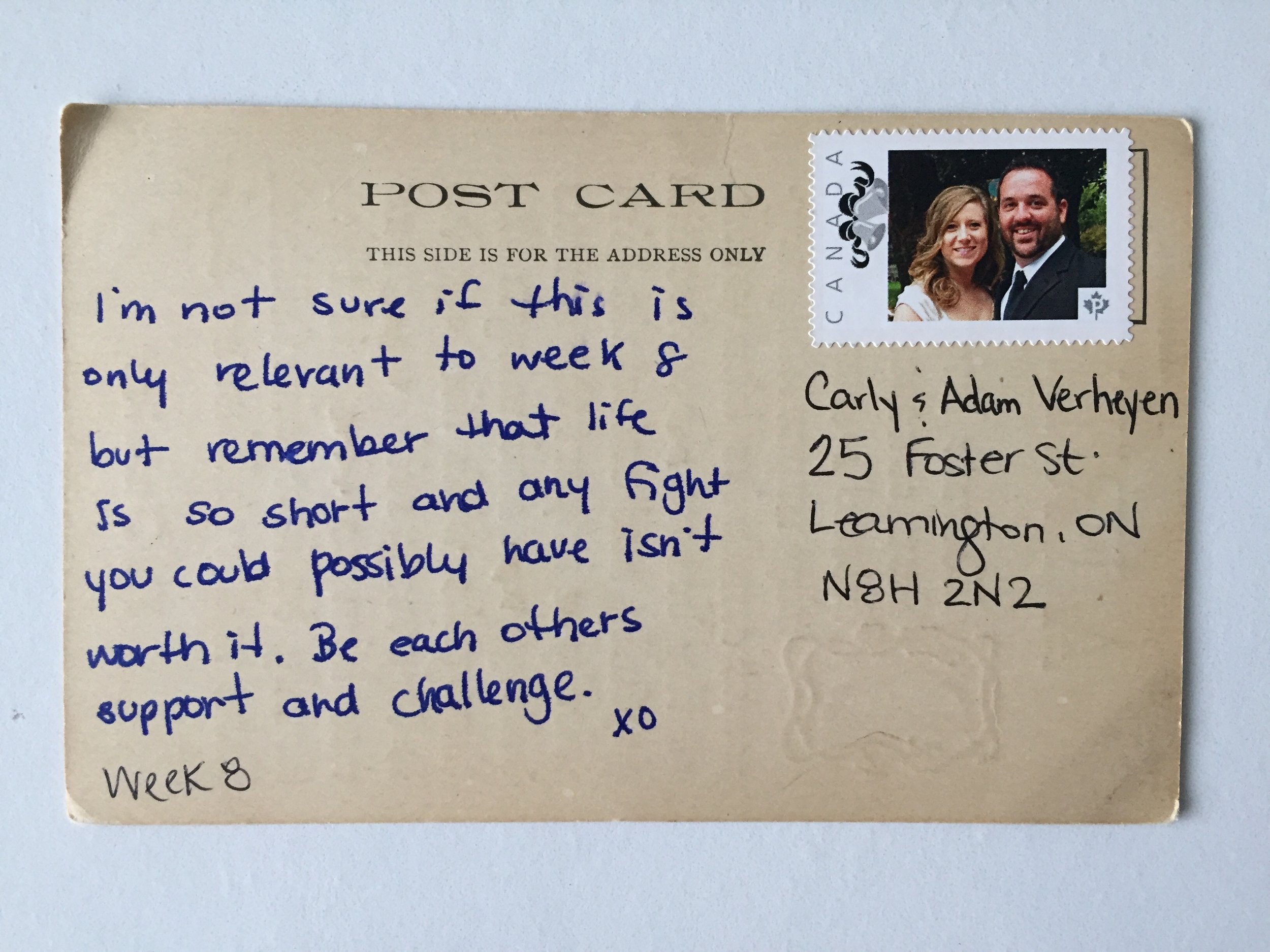
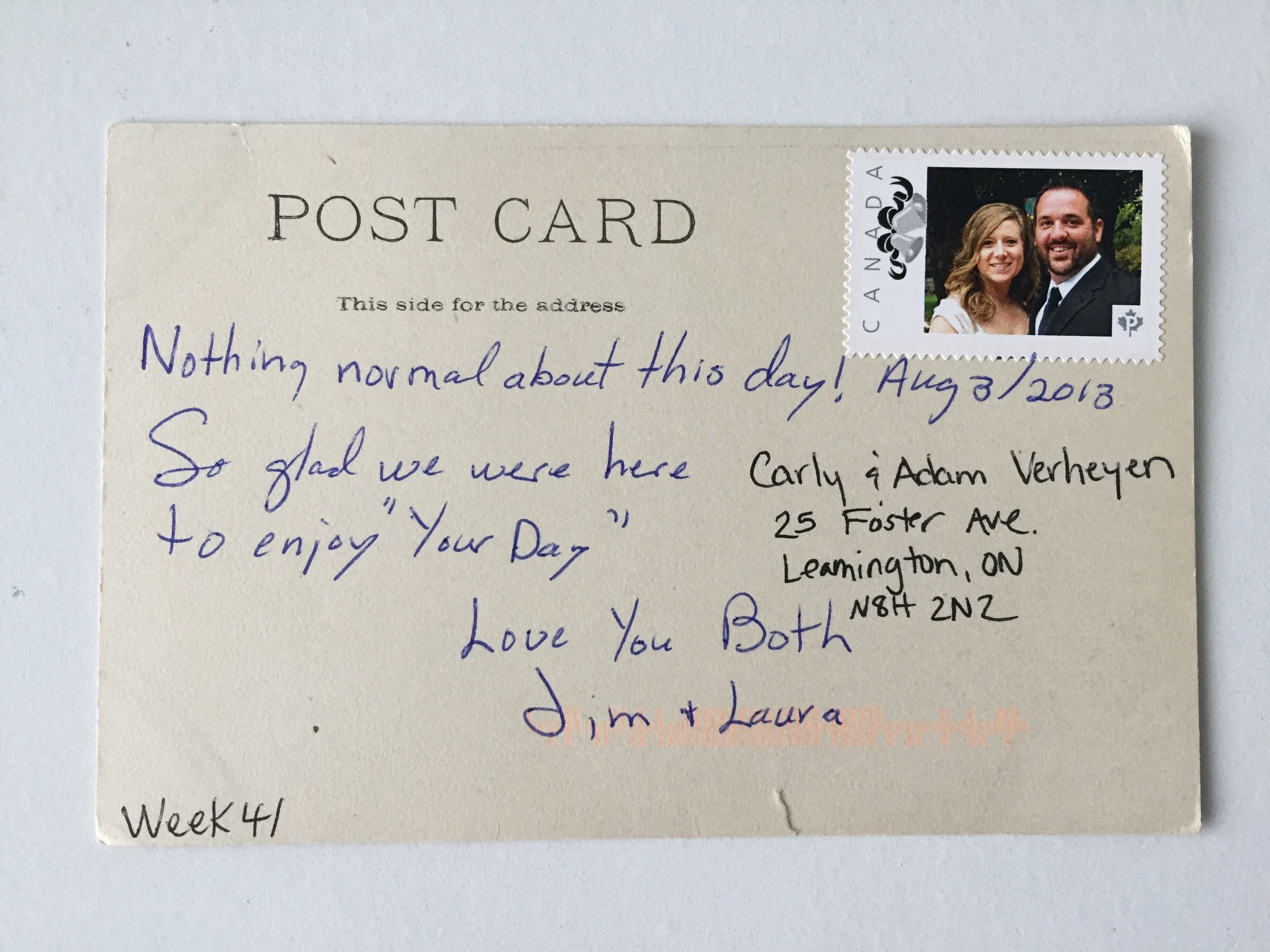
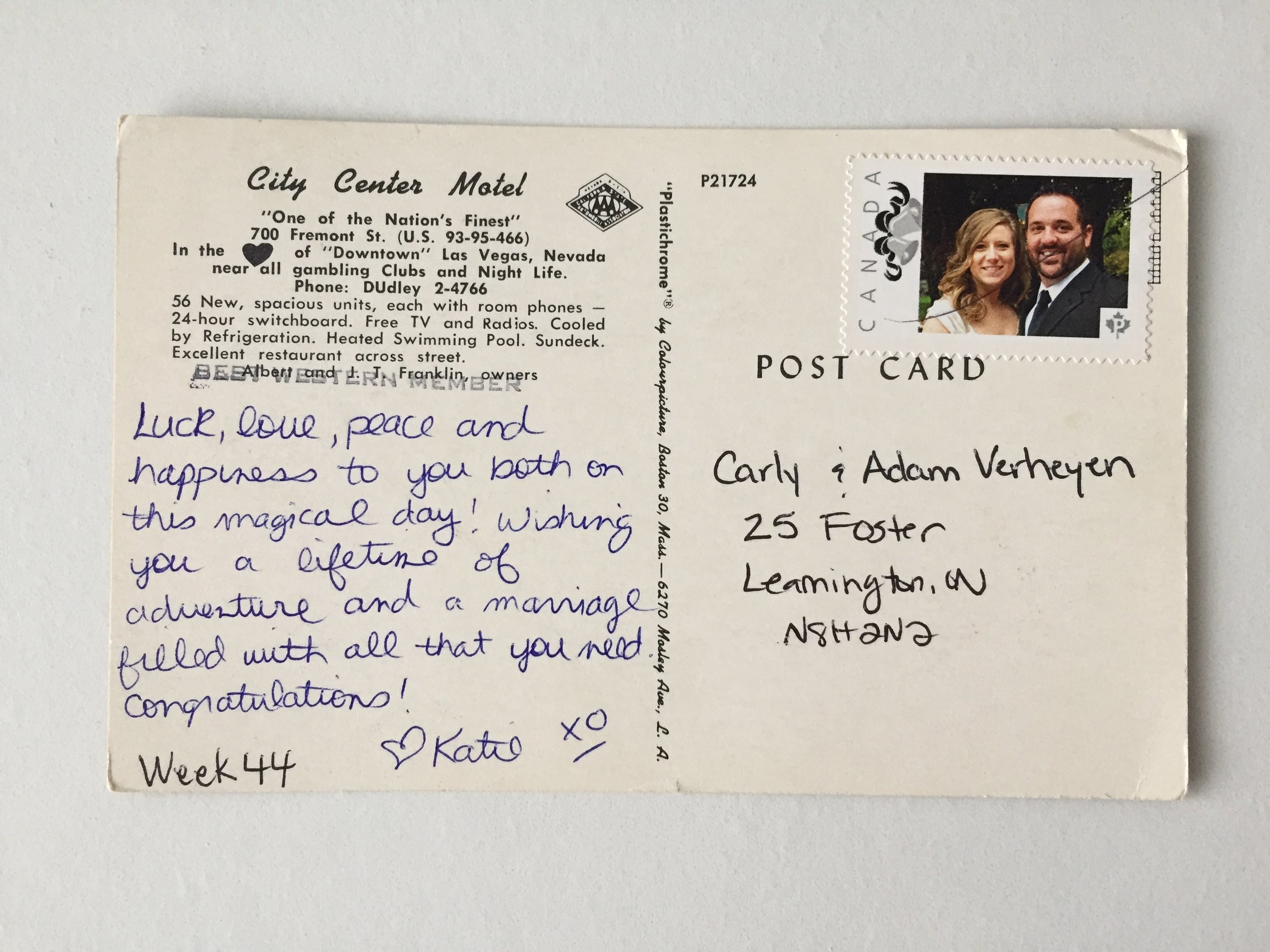
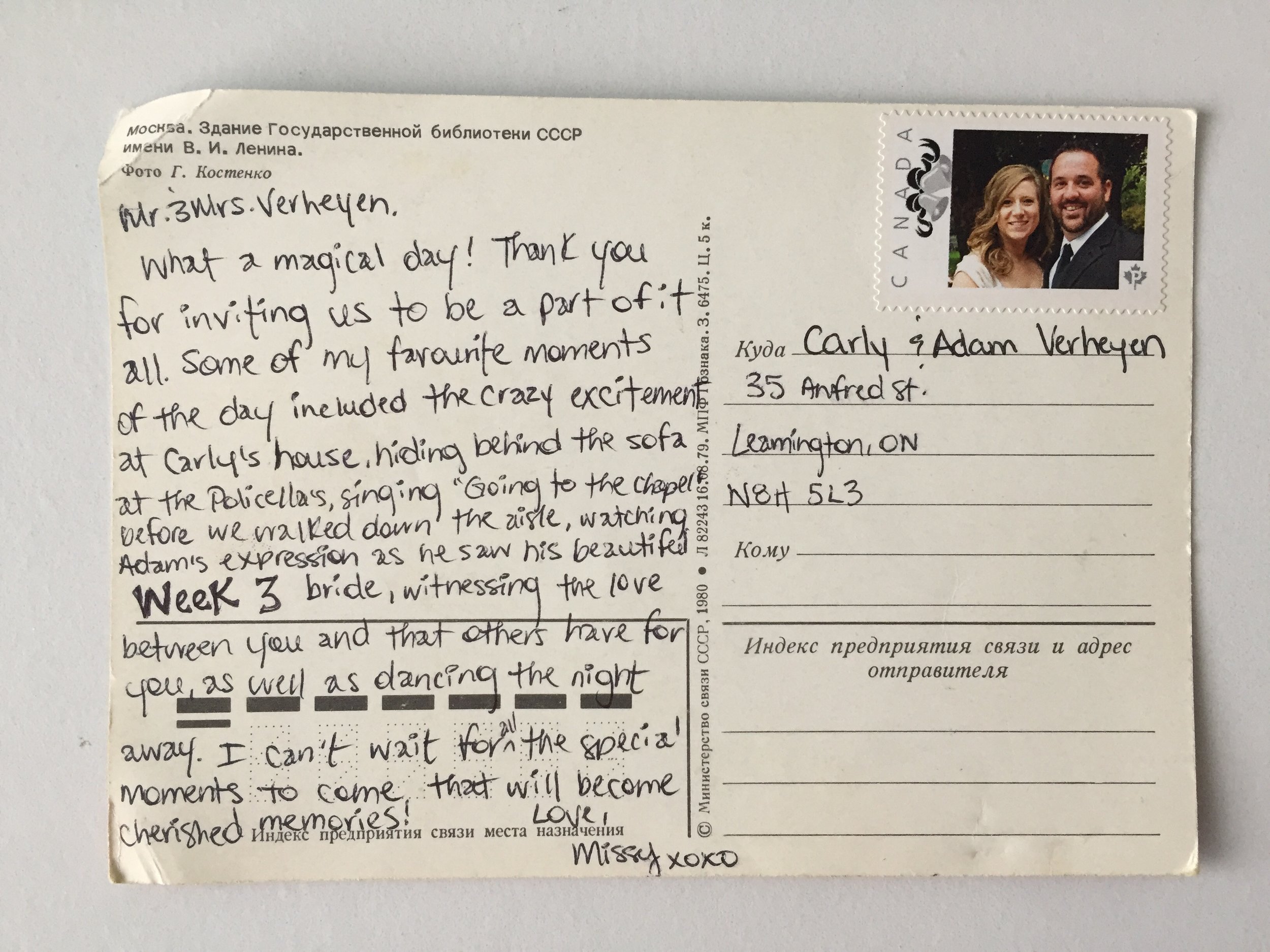
The Pen Thing • A.E. Osworth
BY A.E. OSWORTH
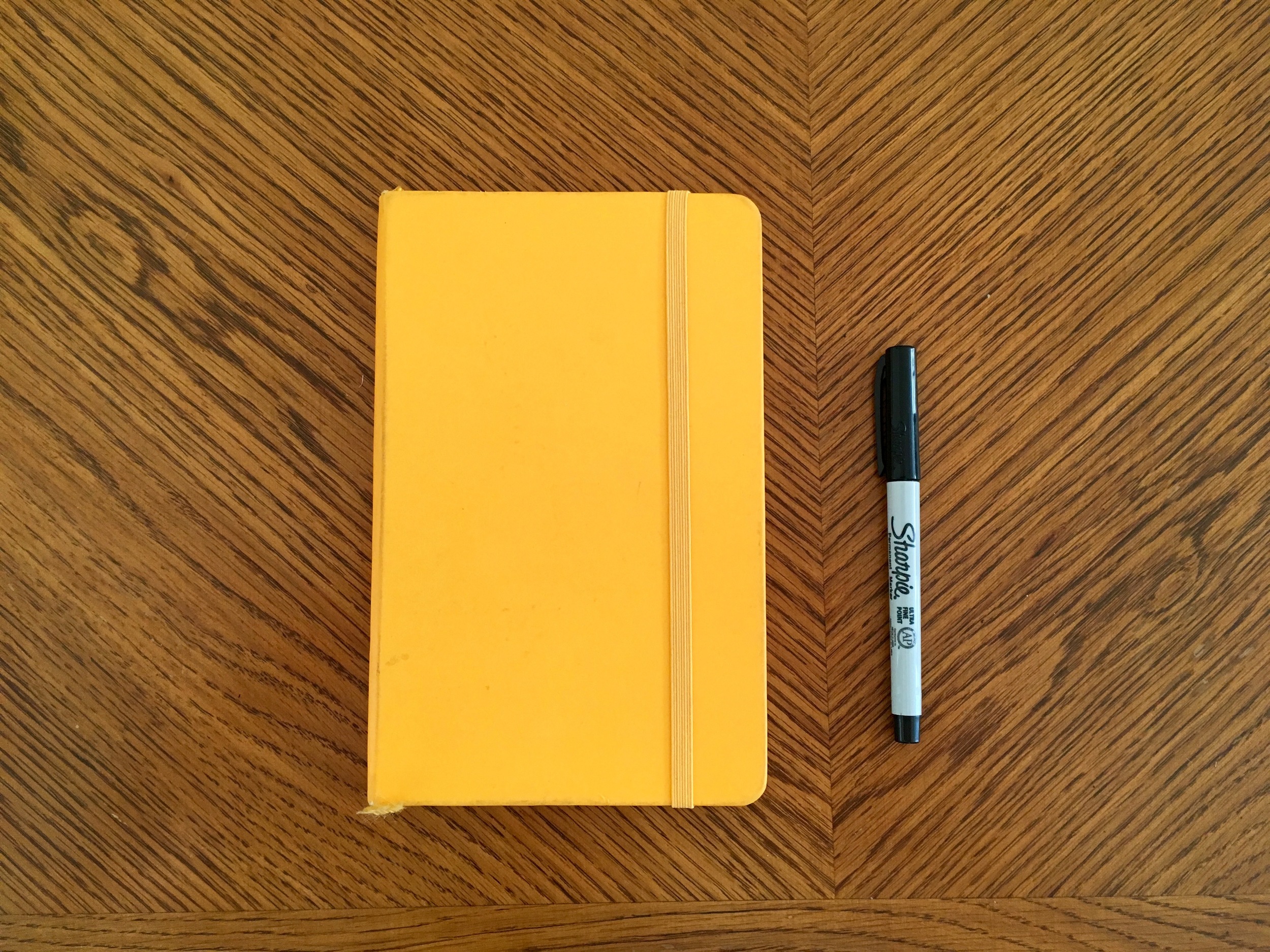
The Pen Thing started with my mother. She kept a small yellow notepad in the kitchen, and she would write on it with a blue felt tip pen—the edges of it smooth and round, curving a u-shape up to the tip. It had metallic flecks in it—the barrel of the pen, not the ink. She had other colors—red, green, and black—all kept in the junk drawer, scattered around with twine, two rulers with marker all over them, and my father’s construction-strength tape measure. She made lists and wrote notes to my brother and I with these pens, always only these pens. She’d start her letter B from the bottom, way below the soft straight line when she wrote her name, Berit. The first letter almost looked like a heart.
When I sought out one of her pens, standing on my tip-toes to reach into the junk drawer, my mother would warn me: don’t grab the permanent ones. Back then, I thought it was because if you wrote on your skin with permanent marker, it would never come off. I was convinced that’s how my grandfather got his Navy tattoo. And so I used Crayola for longer than was reasonable. But now I know: she didn't want anyone else using Her Pen.
The first sign of The Pen Thing came in college when I bought a pack of three extra-fine-tipped Sharpies. After first use, I ignored every other writing utensil I possessed. I think I was looking to make an indelible mark upon the world. They resembled my mother’s pens — the felt tip ones — but differed from them just enough that I felt like I was individuating. I kept long lists of verbs I could use in my acting training — “You can’t just feel — you have to get on stage and do.” — all written in Sharpie. I wrote on my scripts in Sharpie. After college, I started keeping a journal and I wrote that in Sharpie, too. It didn’t matter that it bled to the other pages. Sharpie was the most permanent, and I feared death. Sharpie was the most consistent, and I feared change.
Someone borrowed one of My Sharpies once and wrote on the rubber sole of their sneaker with it like a heathen — the tip was no longer the sleek, immortal ink delivery service that attracted me so to the Sharpie. It was frayed. I began to carry around My Sharpies and other Sharpies — a whole box that I could give away when someone asked if I could lend them a pen. "Keep it. Don't worry about it, I have a whole box." I won't want it after you've used it, were the words I did my best to keep to myself.
The Sharpie era lasted a good long time. My journals are proof: the smudges and spidery bleeds are telltale. It was my father who broke the spell. I was in South Carolina for Christmas, about to finish a journal and start a fresh one. Oh, what a holiday! New Journal Day! I usually had at least two of My Sharpies in my backpack, the one with all the patches from Europe. I scoured it and couldn’t find either one of them, nor the backup unchristened third Sharpie, which I swore I’d left in the front pocket in the same place as emergency tampons.
On that day, my father lent me a pen. It was the one he used to write with in his Franklin Covey planner before he retired — ink black with gold fountain tip and clip, a small Pelikan pelican embossed on it if you look closely. He led me into his library and showed me how to load ink into it. “You can keep it, if you like,” he said. "I'd never steal your pen," I replied. "But I will borrow it."

I took it to the table and wrote an entry in my journal: it wrote like a dream. I filled the yellow journal and sitting nearby was a new red one, and I saw an opportunity to be a continuous person for an entire Moleskin. I walked over to my father. He was watching television with my mother. I asked him if I could steal his pen, and he laughed — he put one hand on his chest and threw his head back like he always does. He never did replace his pen. Perhaps I should feel sad and return his pen. I will not return his pen.
Fountain nibs mold to a person’s hand, you know, just like felt tips. But they are so much more permanent. When a felt tip pen comes to the end of its life, it goes in the garbage. A fountain pen is like having a pet that knows your voice and lives forever. I thought there was something special in that — that the nib on that pen had gotten used to my father and was then getting used to me. Part of me feels like I betrayed my mother in this moment — I did not steal her pens.
I wrote with my father’s pen for seven months. During that time, I lived in the attic of the house my father and grandfather built in 1954. I made it through the whole red journal with that pen. Once, I thought I lost it. I started hyperventilating and my fiancée made me check all the closets. One of our cats pushed it through a crack under a door that looked like it was made for a gnome — it lead to the eaves. When I retrieved it from the dust and the cotton candy insulation, I remember crying a little. But I can’t find the journal entry to prove it.
That’s when I decided that not losing the pen was more important than being a continuous person. So I bought a ballpoint seven-year pen from the bookstore on the corner. It’s called a seven-year pen because it’s supposed to have enough ink to write meters and meters per day for seven years. That’s a lot of years for me to get attached to a pen! But ballpoint — what am I, a madwoman? I chose the one with a bicycle on the clip because I aspire to be a better person than I currently am, transportation- and fitness-wise. I took it with me on a trip to the Grand Canyon and Joshua Tree National Park; research for a novel I imagine I will resurrect someday. I wrote fast, drunk with ballpoint power, on the edge of a desert staring into the great bowl of the sky.
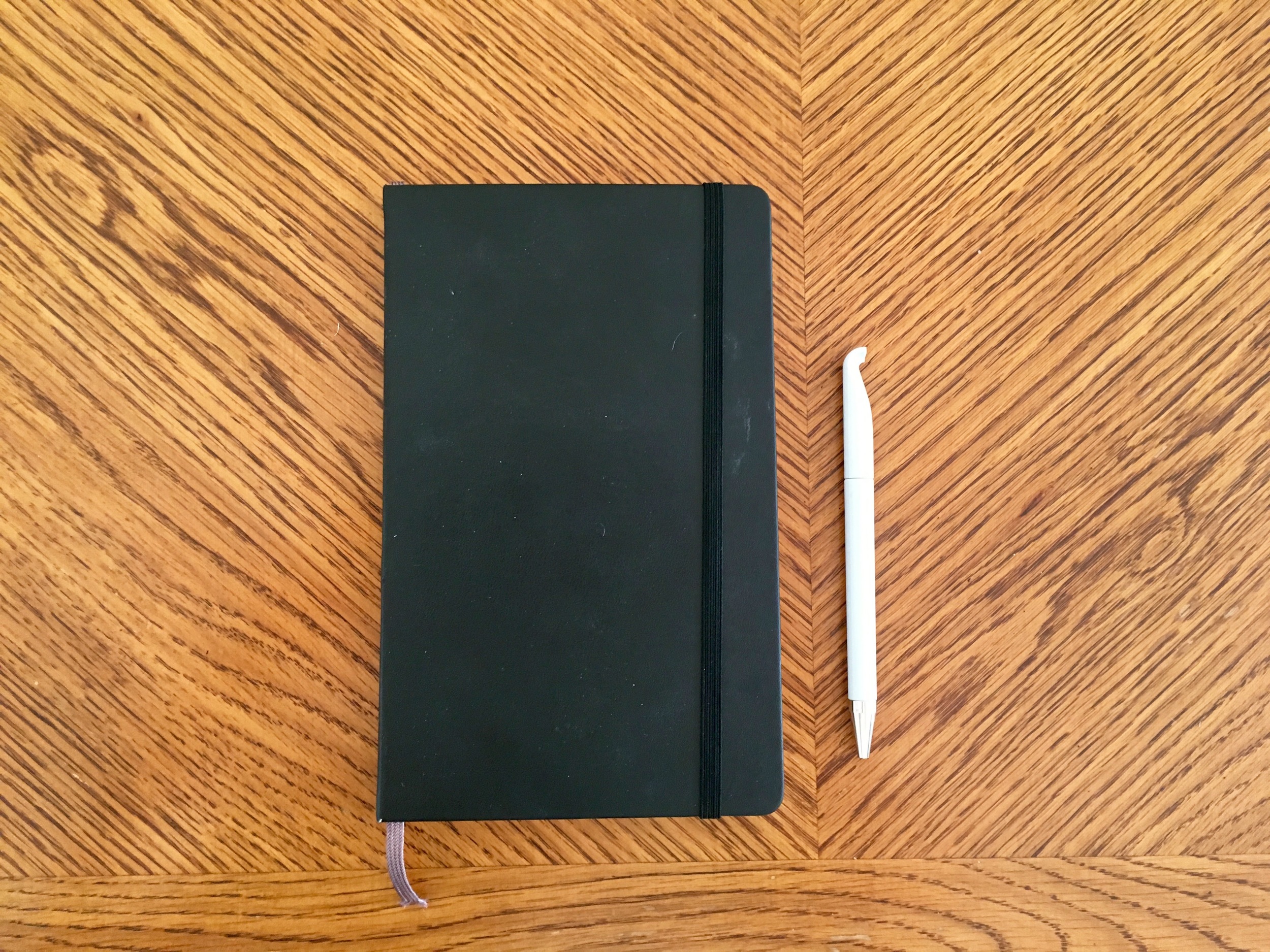
It broke recently, that pen. I could sense it happening. The clip came loose and I knew it would crack. It still writes, but it is no longer My Pen. Other people can use it now, if they want to use a broken, imperfect, mortal pen. Sensing it was about to break, I bought a set of Staedtlers triplus fineliners. There are ten of them, each a different color, and I tote them around in the clear case they came in. They’re called “porous point pens.” That means “felt tip pens,” in pen addict speak. My friend asked to borrow one recently, and I looked her in the face and said, “No.” Even though there are ten of them, they are all Mine — the “porous tips” have now bonded with me and I’m keeping them. She has since purchased her own set.
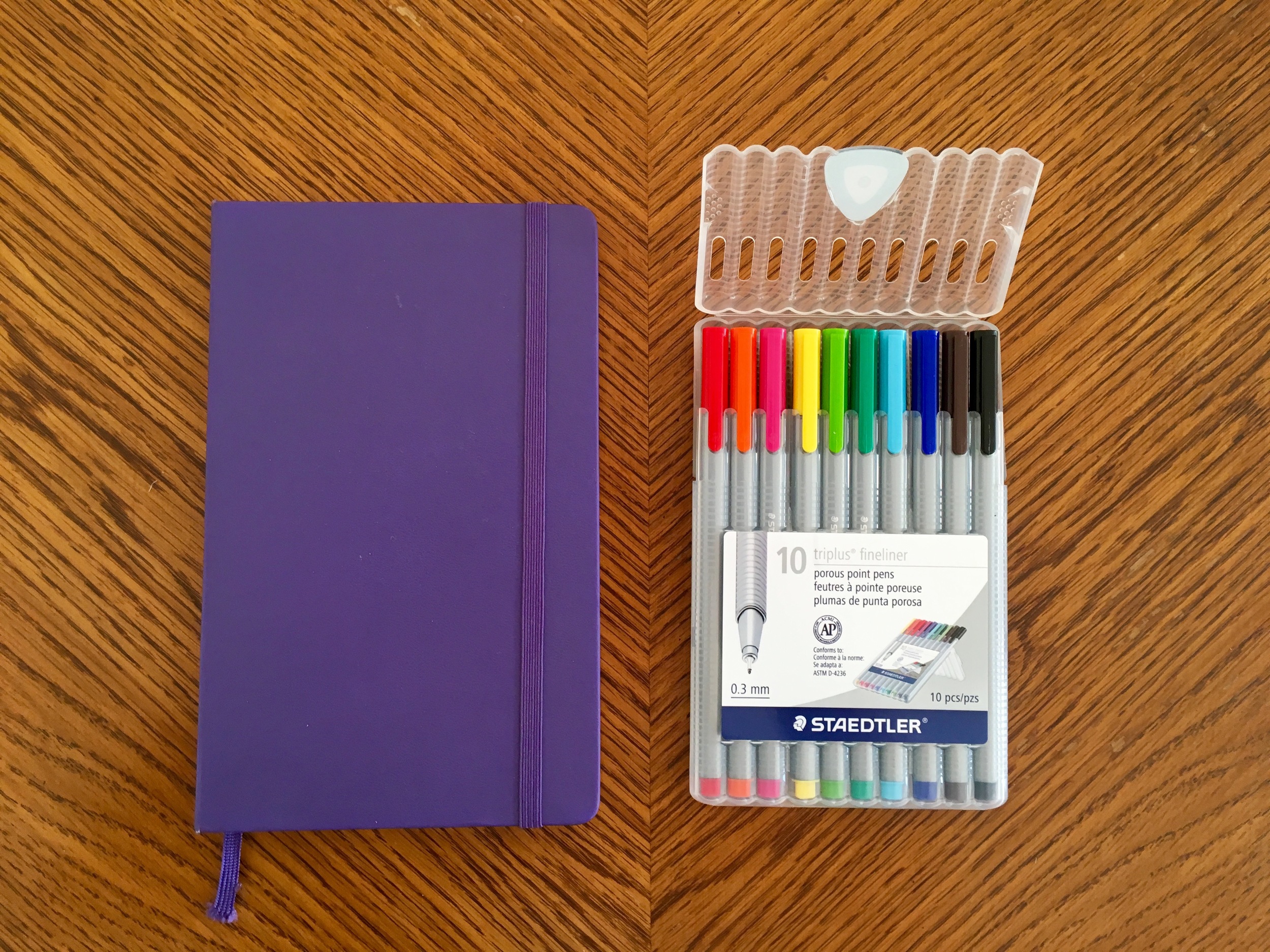
I tried to use the pens evenly so they wore out at the same rate. My journal, the one I just finished, is a veritable rainbow inside. And the clear, easel-prop storage case began to break. I devised a plan that consists of attractive Washi tape and ignoring the death of things.
Since beginning my latest journal, I am using only the black pen in the Staedtler set. It may seem like I’ve thrown caution to the wind, pentropy be damned. But no — it’s because I can get a million more black fineliners. When these pens break and break my heart, the black one, at least, can be replaced. The barrel is a metallic silver; it is triangular, but the corners are round. Smooth. That I am marching ever toward being my mother is not lost on me. Sometimes I write with the fountain pen in the safety of my own apartment, when I need to channel my father. My need to individuate is gone. I could do with a bit of permanence, a bit of history. I could stand to write with the pens and the preoccupations that got used to my family’s hands.

Whisper-Thin Cursive from the Musty Corners of Antique Stores • Carolyn Porter

BY CAROLYN PORTER
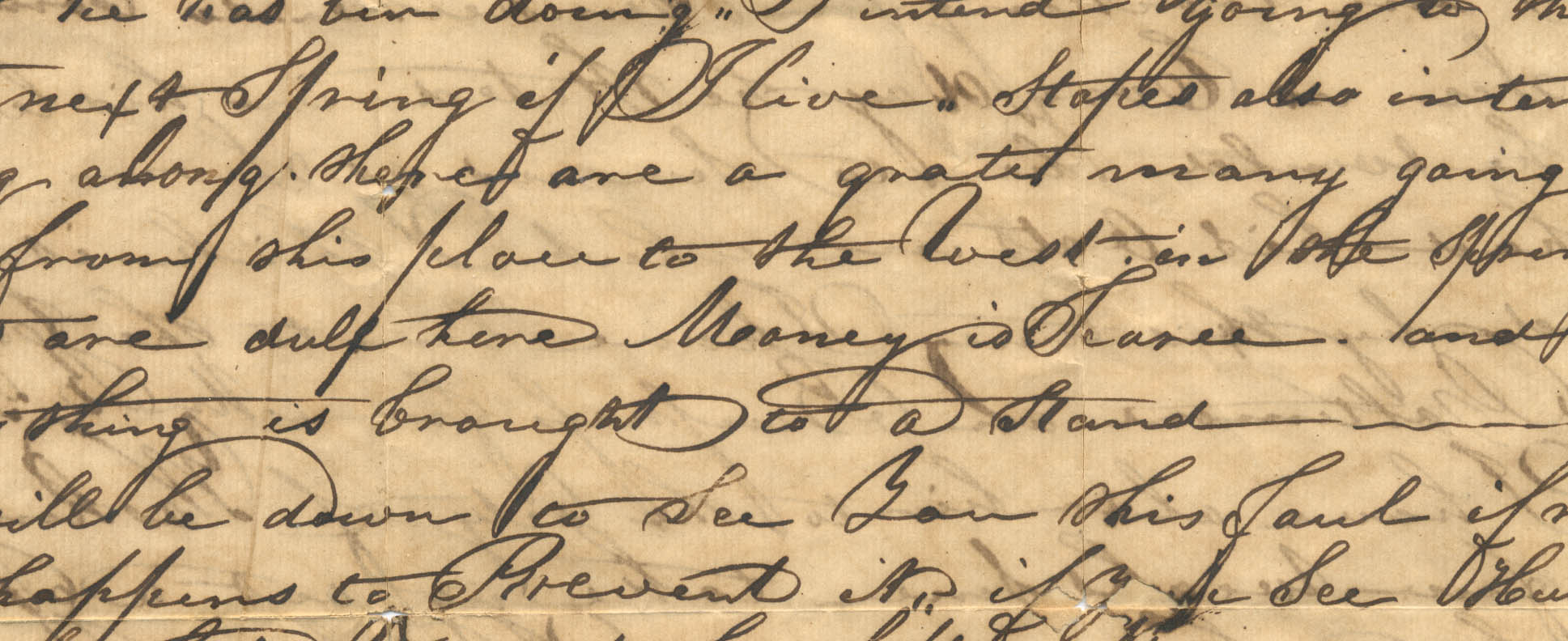
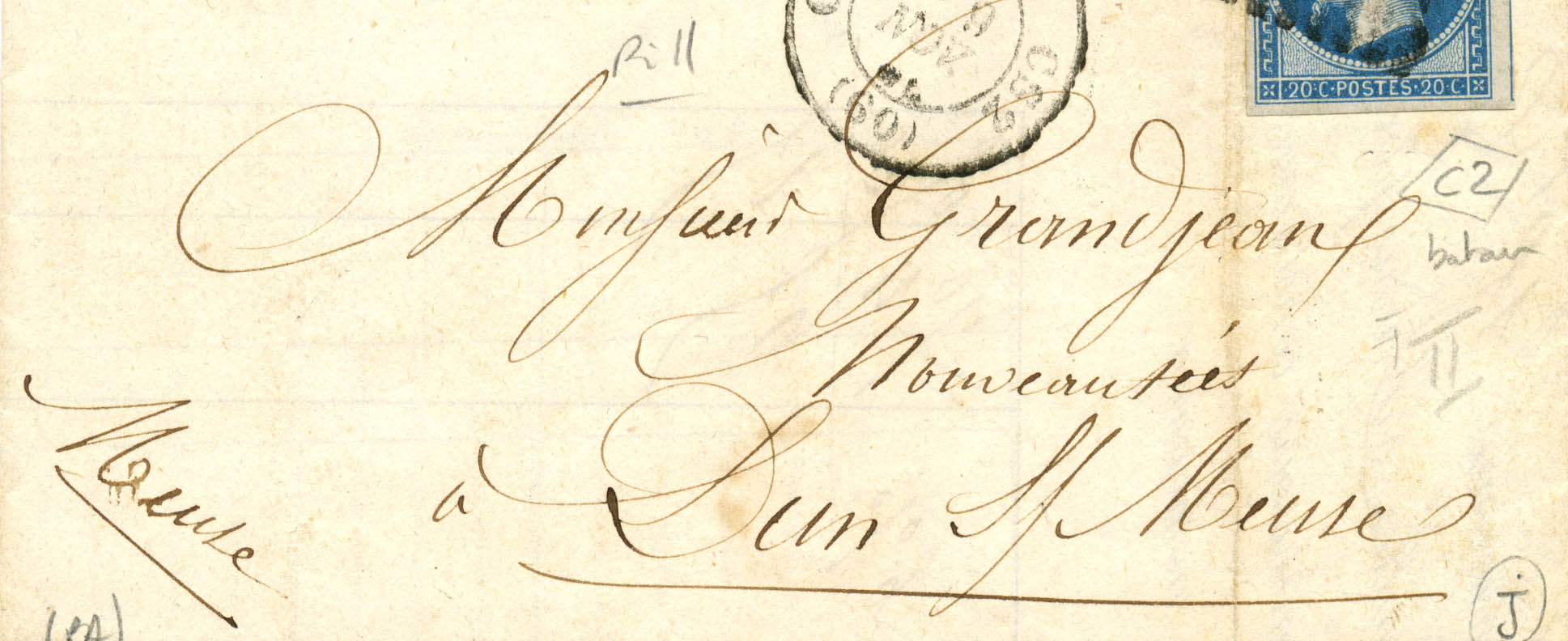
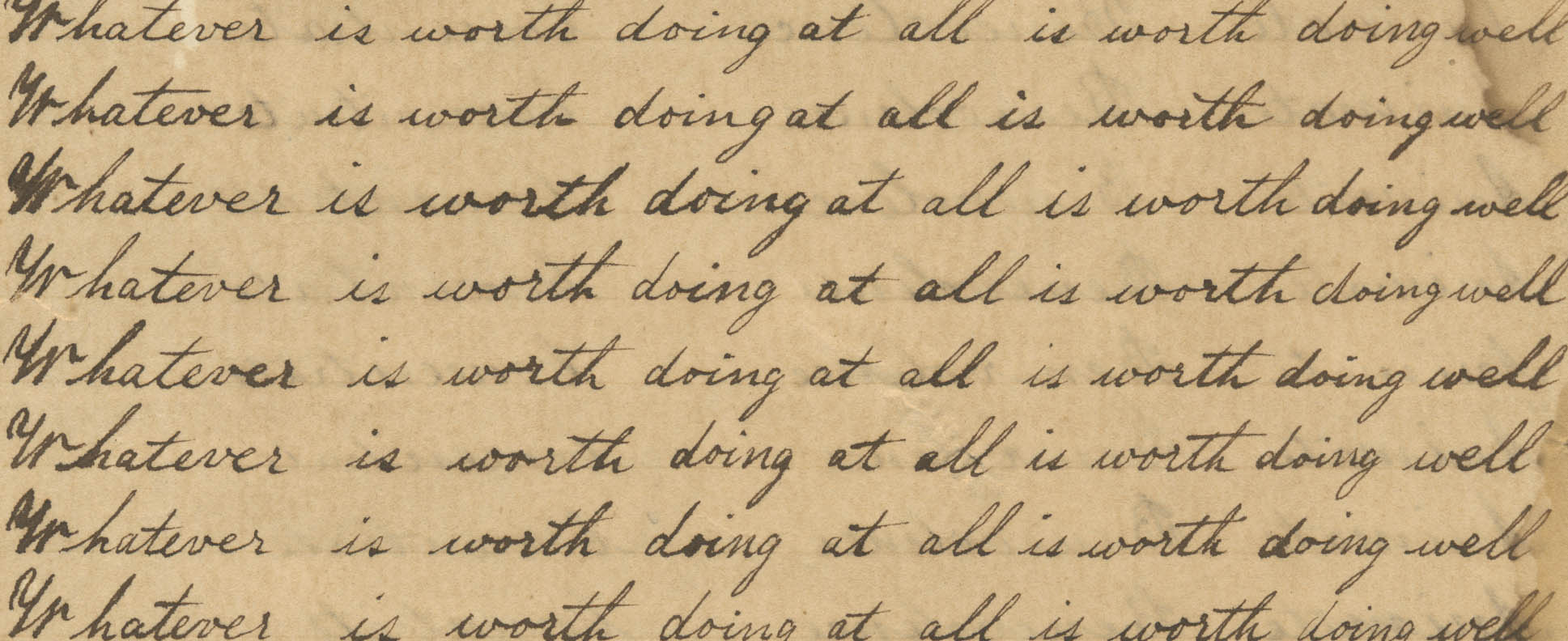
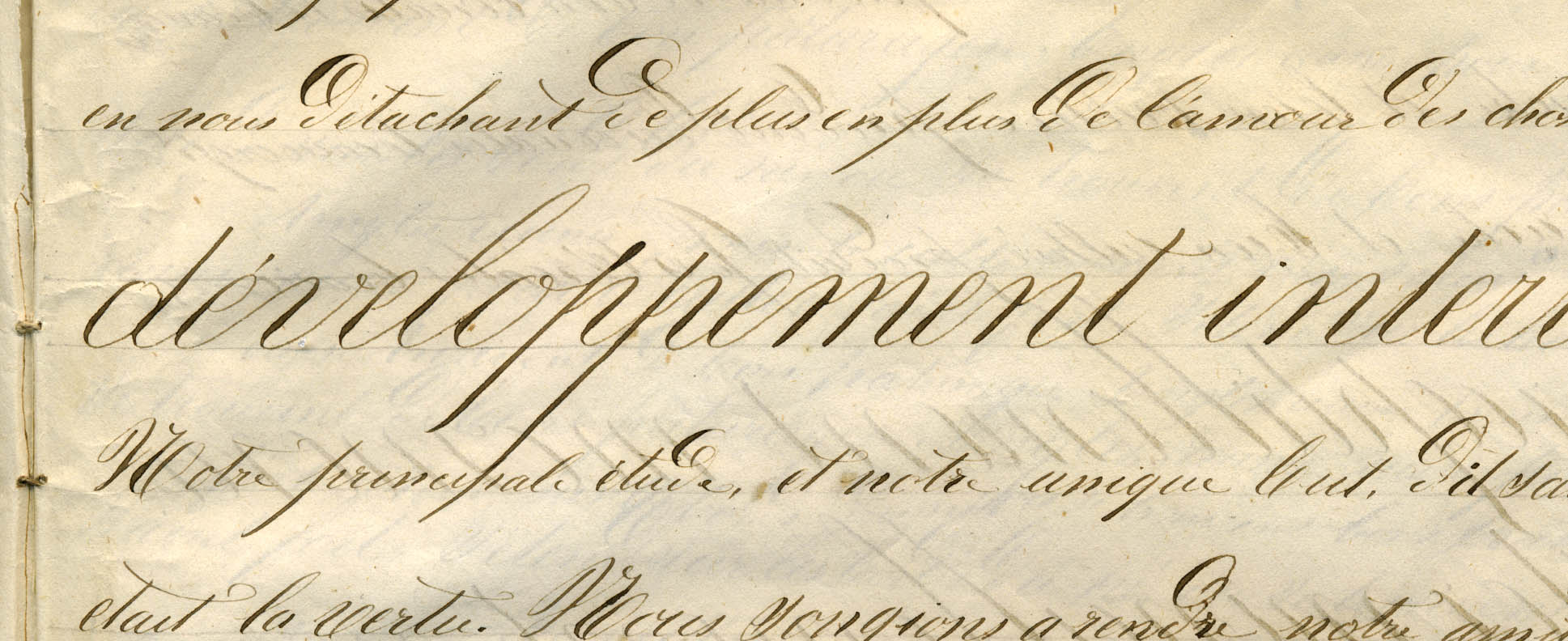
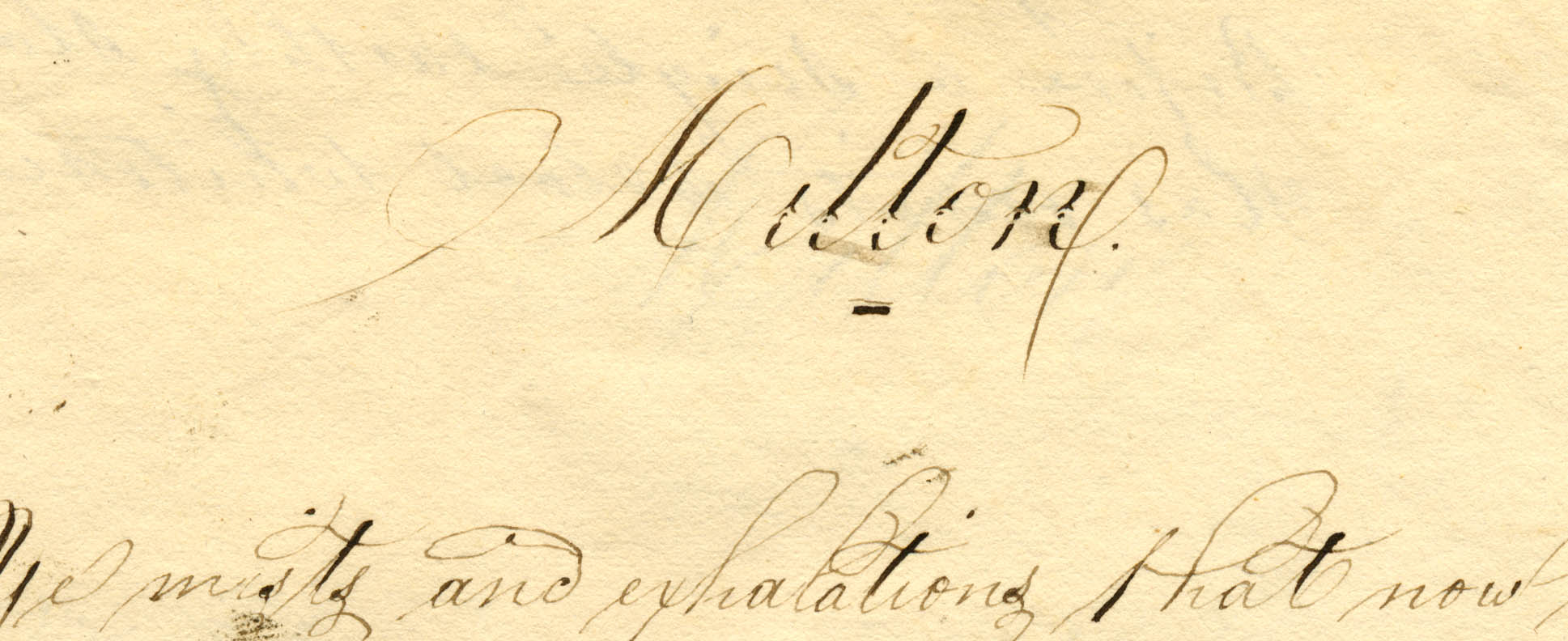
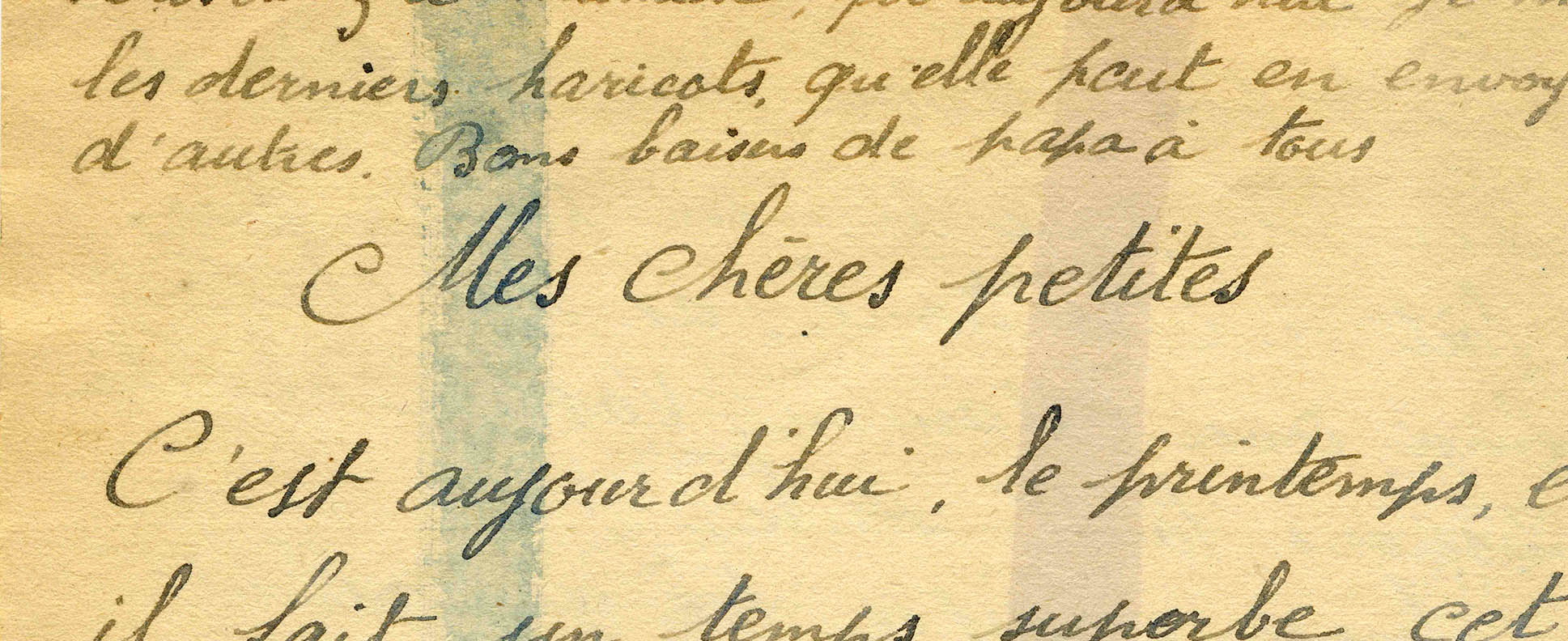
I collect old handwriting specimens. They are impractical things to buy, but I would rather acquire a whisper-thin piece of paper filled with distinct cursive than buy a new pair of shoes, a new handbag, a new anything else.
My collection isn’t limited to a specific kind of script. That is, I’m not exclusively drawn to Spencerian or Copperplate. The cards, letters, ledger pages, and envelopes I’ve rescued from musty corners of antique stores or found online aren’t tethered to a specific era either, though I often find myself drawn to handwriting from the late 1800s. The pages that catch my eye seem to hold hints of intriguing moments from lives long since passed.
Sometimes the content doesn’t turn out to be compelling; a few acquisitions, however, have contained surprisingly provocative and emotional content. Here are ten of my favorite handwriting specimens from my collection, with a little information on each one.

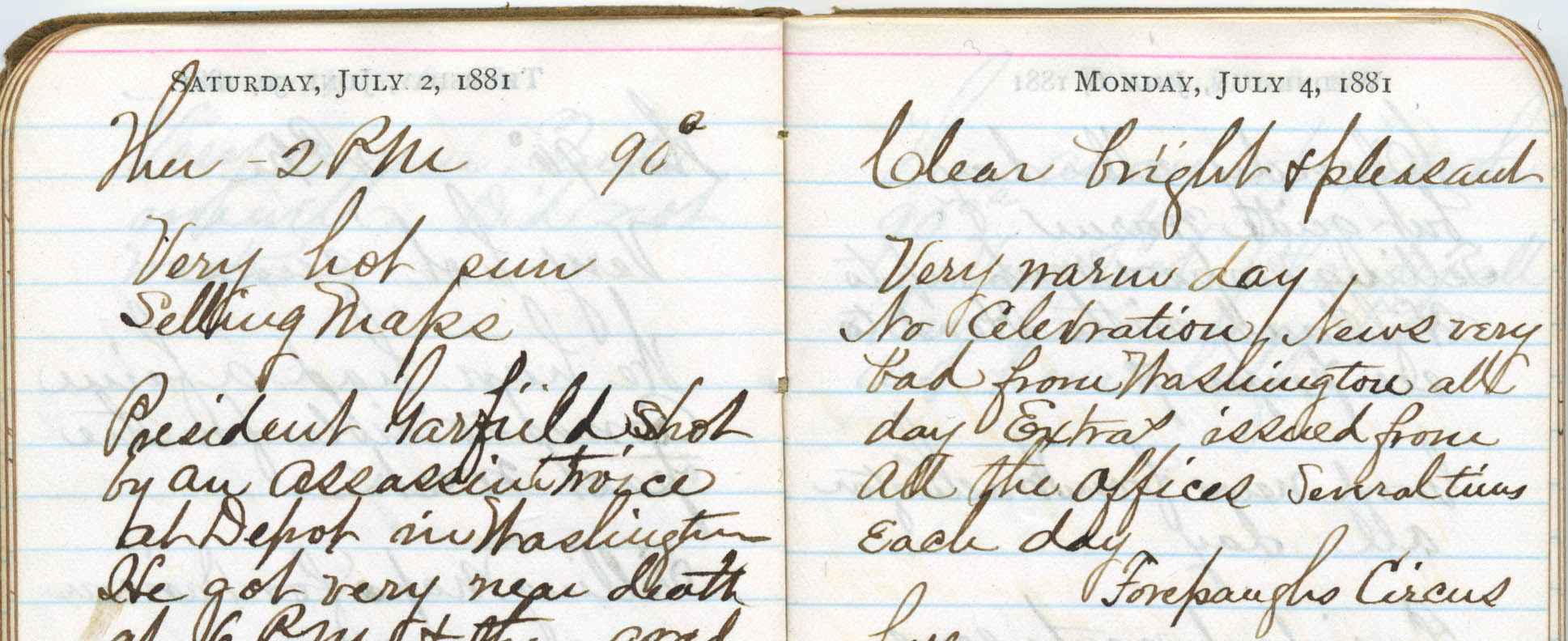
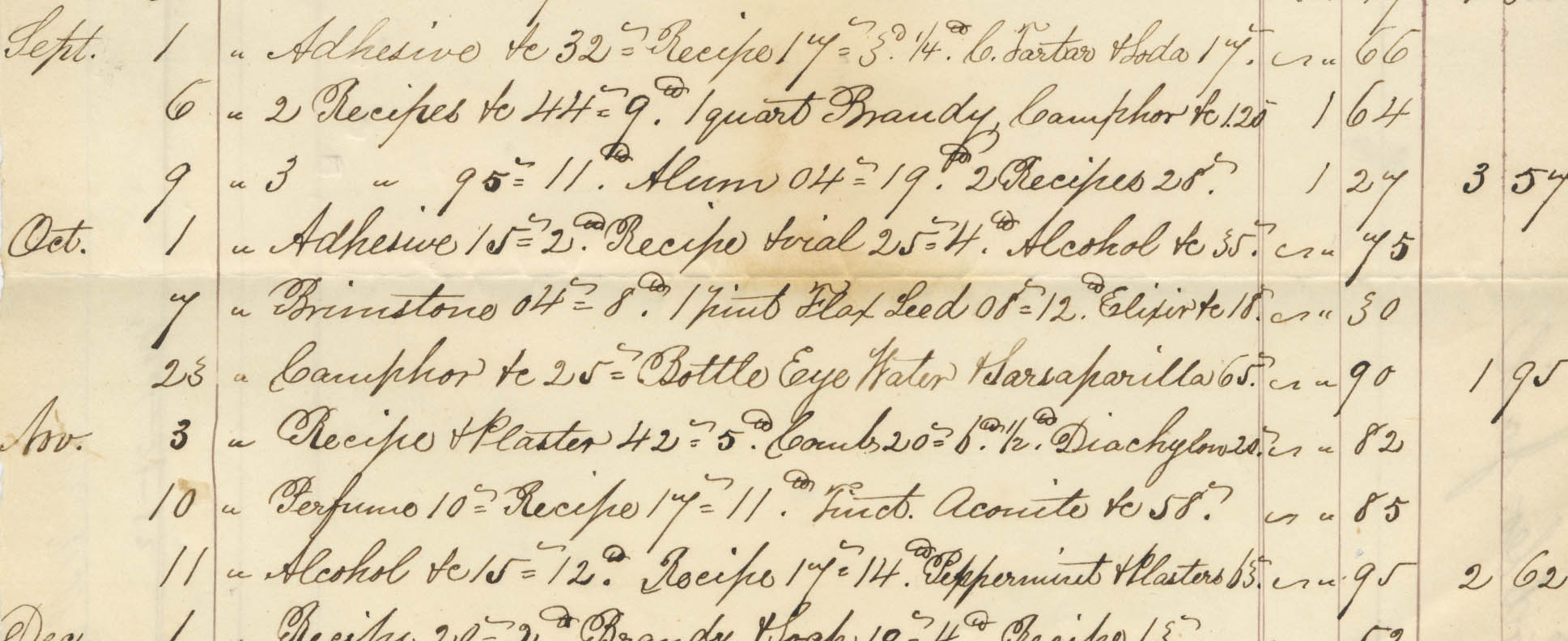
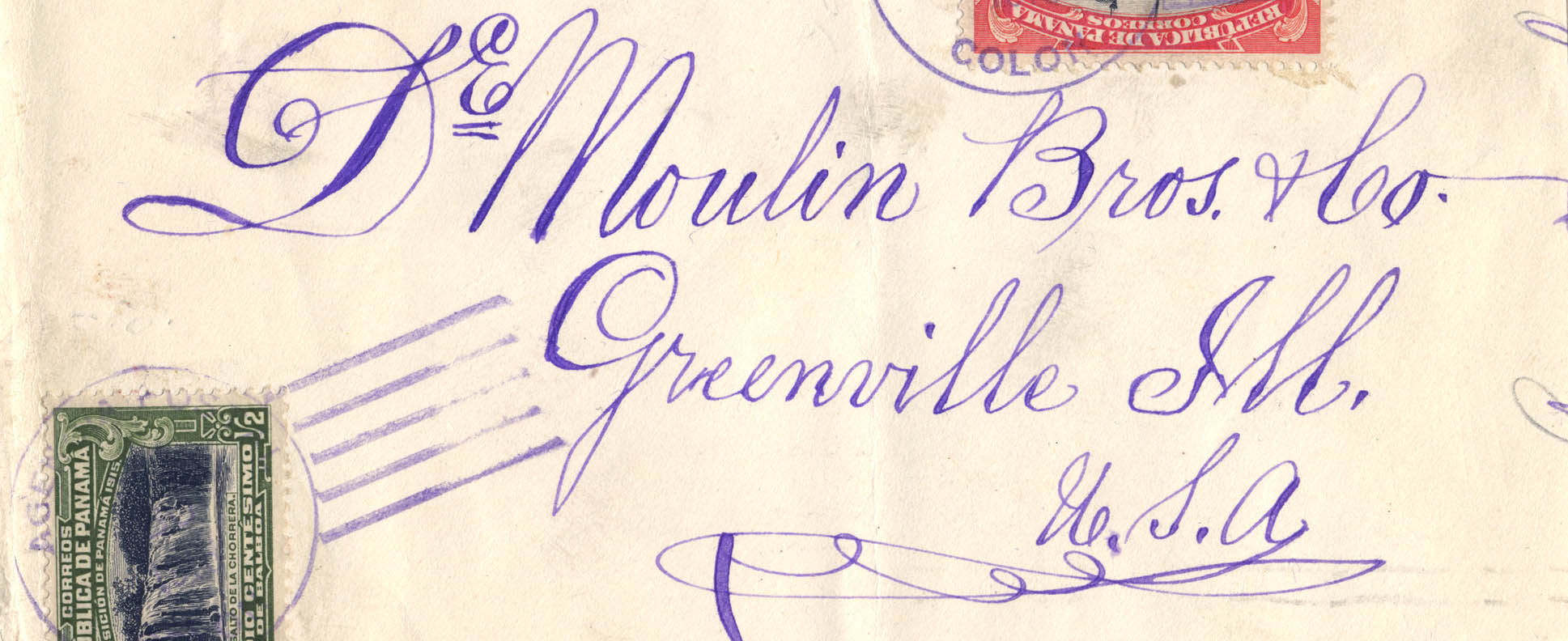
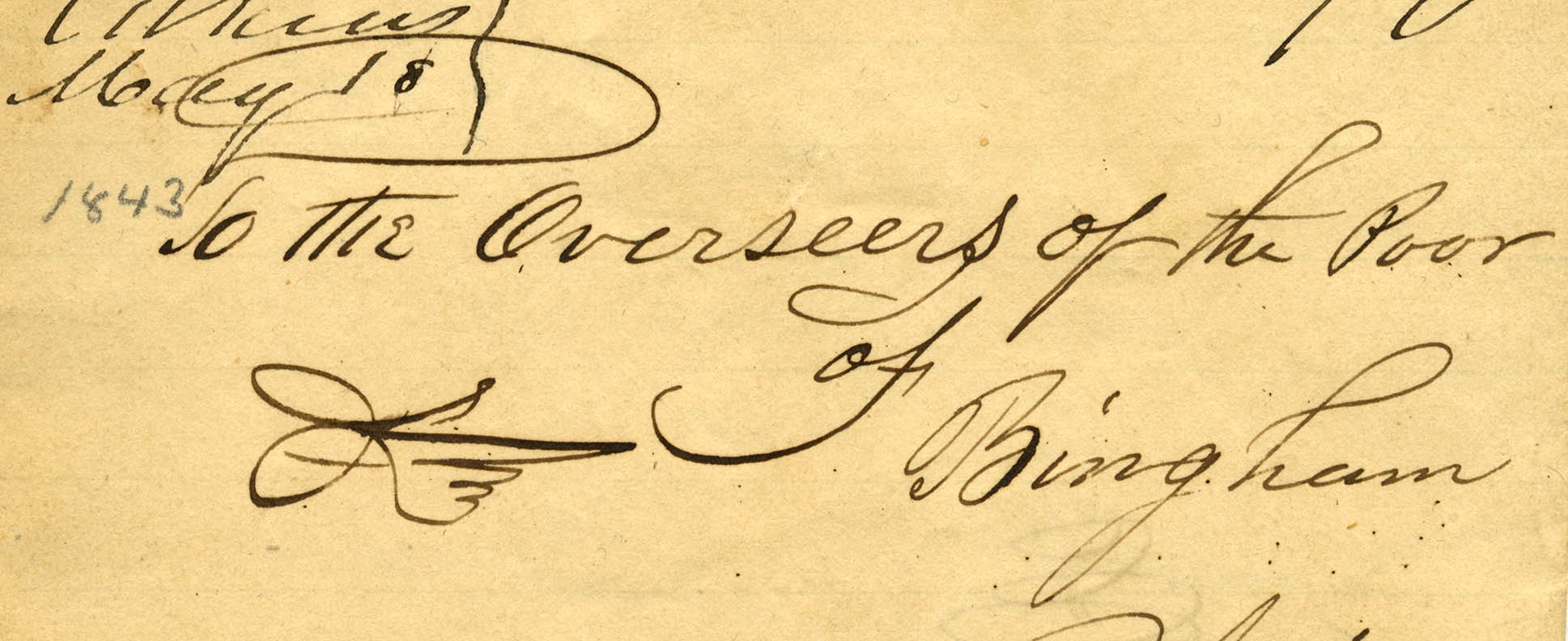


Carolyn Porter is a graphic designer and self-professed typography geek who designed P22 Marcel Script. Released in 2014, this font has garnered four international honors, including the prestigious Certificate for Typographic Excellence from the New York Type Director’s Club, typeface competitions by Communication Arts and Print magazines, and was a selection for the 2015 Project Passion exhibition. “Marcel’s Letters: A Font and the Search for One Man’s Fate” combines the story of the design of the font based on Marcel Heuzé’s beautiful handwriting with Porter’s obsessive search for answers. The book was released in June, 2017 by Skyhorse Publishing. Learn more at www.carolyn-porter.com.
Rumors Were True. I am Ill with Cancer • An Unpublished Letter from Anais Nin in 1975
A letter from Anais Nin while she was on her deathbed in 1975.

BY KIMBERLY EDWARDS
At the age of 22, right after graduation from a university in 1974, I embarked on a solo journey to Japan with only a backpack and a travel guide to my name. Not knowing a word of Japanese beforehand nor many of the customs for that matter, I had much to learn. How do you spell naïve?
Hoping to have positive interactions with the culture, I enrolled in a daily Japanese language class at a university. Often spending hours studying grammar & kanji, I needed a break from that cocoon. I spent many hours at the Kinokuniya bookstore in Tokyo after class.
On one of those outings, I discovered Anais Nin or maybe she discovered me because it seemed like one of her books reached out to me. I was drawn to a book called Collages (1964) & began reading it. Before long, I was sitting on the floor engrossed in the book. I had never read any literature before that was so powerfully surrealistic and poetic. There didn’t seem to be a plot line, but the words moved forward with their own lyricism and flow. After that, I started reading her diaries, and found that her words gave me a community to identify with. Her words seemed to give a voice to whomever read them. Her diaries were a voyage of self-discovery, the very journey that I was on.
Given the way she wrote, I felt that she would welcome words from her readers. I didn’t have an address for her, so I wrote to her publishers. Weeks later, I received a typewritten letter from Anna Balakian stating that Anais had been very ill from battling cancer. However she was recovering and Anna thought Anais would enjoy hearing from me, so she gave me her Los Angeles address.
I wrote Anais a letter to tell her how much her writing meant to me. Here was a voice openly expressing women’s issues through writing. Also, it was so poetic, lyrical and even surreal in some of the stories. I also told her of my love of Japan and my desire to remain in the country as long as possible. I was at the end of my year-long journey there which was actually only planned to be a 3 month stay.
Much to my surprise and utter delight, Anais Nin wrote me this letter. I was so touched that she would take the time to acknowledge my letter and beyond that to try to help me find a job in Japan. I bought her some Japanese writing paper as she too wrote of her affection for the country. She sent me a very sincere thank-you postcard.
A transcription of the letter is below.
May 9, 1975
Dear Kimberly: My friends did not give you my address because they know it makes me sad not to answer a letter. Rumors were true. I am ill with cancer since December and only recovering recently and am very weak. I have been forbidden lectures and correspondence. But as you wrote of wanting to stay in Japan (which I love and visited in 1966) I wanted to give you the address of my translator (of Novel of the Future and Diary 1) who teaches at a university and might be of help.
And American friends teaching me – Catherine Broderick, Kobe College, Graduate Division 4-1 OKAYADANA NISHINOMIYA KOBE. But do not be concerned. I am taking chemotherapy for several months and the Doctor believes I will get well. I work just a little, a few pages a day on Vol 6. I’m just beginning to be known in Japan. Will address of my publishers help?
I should not be writing but your letter touched me.
Anais
Creating a Visual of the Very Big Picture • Steph Jagger
When I look back at my life, a pretty clear pattern emerges: I like to go big.
It started with Egg and Spoon races and then turned into things like traveling to far-flung countries, smashing world records, and writing books. Well, to be fair, it’s just one book so far, but I know I’ve got some more in the chambers, so let’s just say books (plural).
In any case, when I dig deeper into all of those things, I see another pattern, one that’s buried one layer under going big. And when I think about it, perhaps its one of the ways I go big. The pattern is called writing, by hand, on paper. I scribble ideas, notes words, and phrases, I use them to create a visual of the very big picture. I scrawl paragraphs down in journals to “skim the fat” from my brain before writing things in a more solid form. I put ink to paper because it helps ideas come out of my head because what use are they in there anyway? I need them out. And once they’re out in some hand-written, half-formed way I can start playing with them and turning them into something big, something bigger than big.
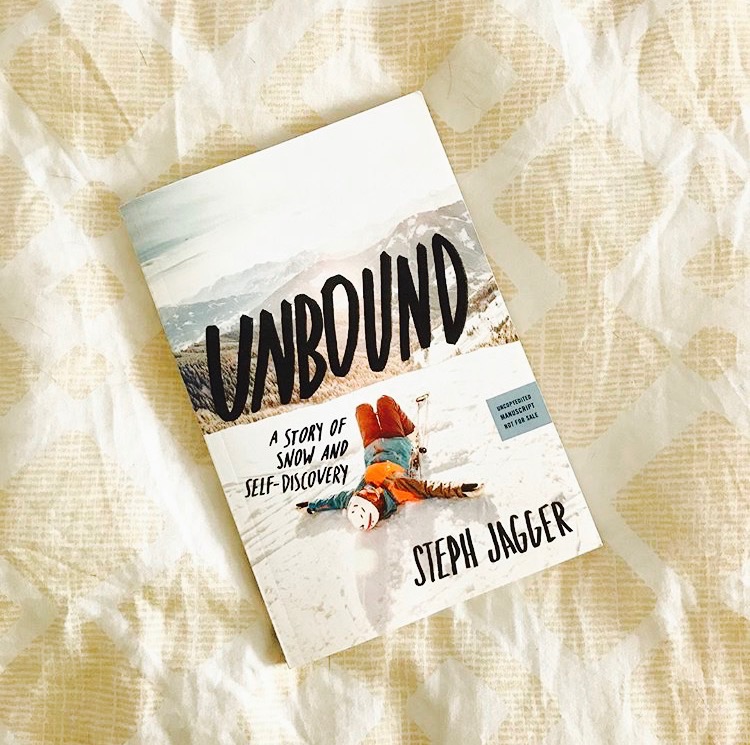
My first book is called Unbound: A Story of Snow and Self-Discovery, and because this is a place that celebrates the handwritten, I thought I’d show ya a little behind the scenes, sneak peak into the pen and paper part of my process.
From one writer to many others,
Steph

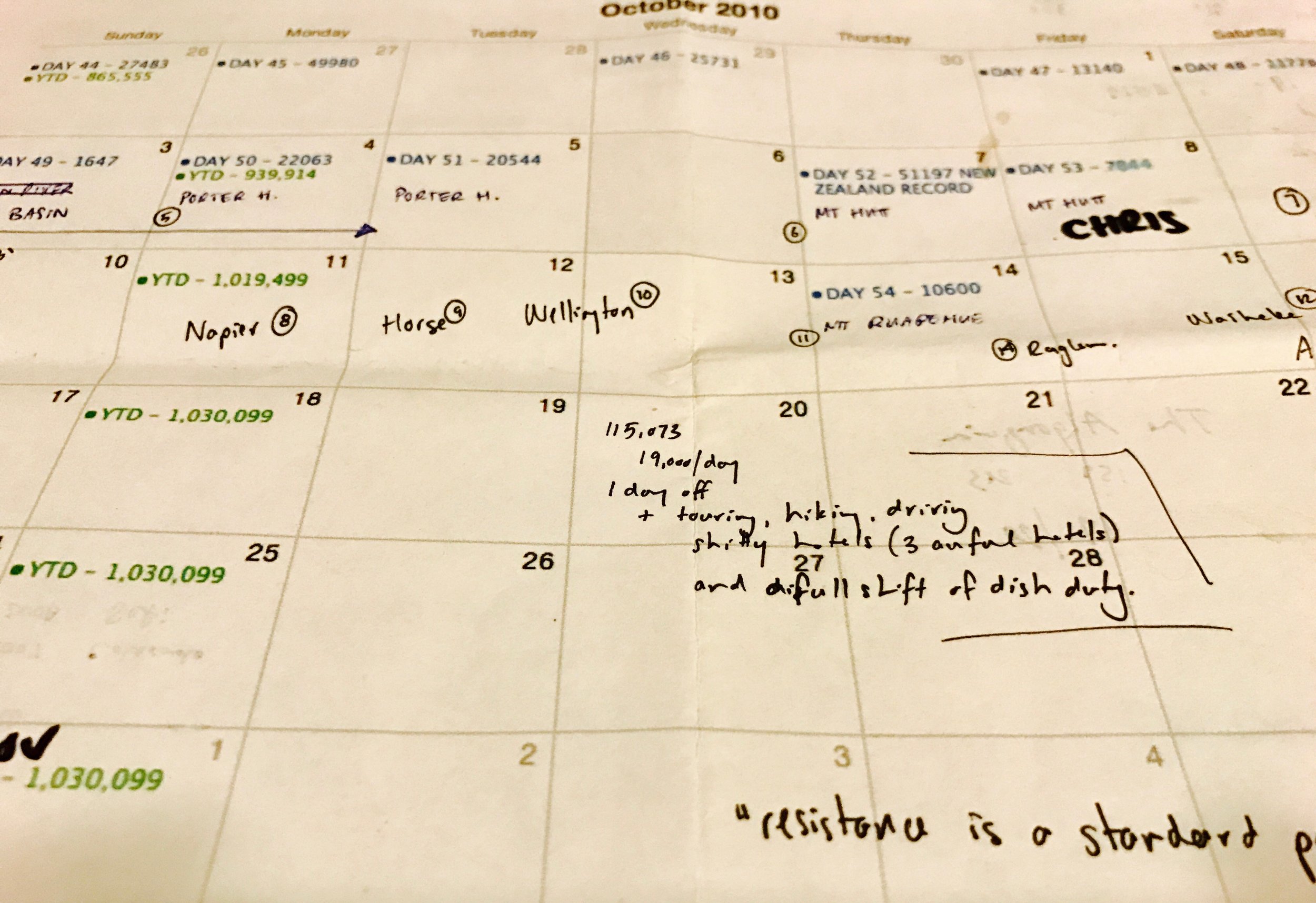
I printed off the calendars I kept from my ski trip. They served as a log for the vertical feet I skied on any particular place and when I was writing I used them to fact myself as well as jog my memory about particular places.
Handwritten notes I took while workshopping my very shitty first drafts with the wonderful Carly Butler and the unbelievable Patti M. Hall:

Cue cards developed at HarperCollins with my editor to help me understand the placement of each scene. The cards were changed, altered, and manhandled up until the very end:

A close up of one cue card:

People used to ask what it looked like to write a book, and about how I kept things straight when my brain and my heart were on fire. This is how: I booked a cabin in an isolated part of British Columbia, and filled one of it’s walls with my cue cards and post-it note additions:

This is what “skimming the fat” looks like — the journals I kept throughout the writing process. They had NOTHING to do with the content, just a practice that allowed me to get rid of the shit in my head before I started writing:

I started with the Hero’s Journey story arc. It was drawn onto paper and pasted on the wall behind my computer. This was the first thing I did before ANY of the writing began.

Notes from others: a note from my agent about my contract, and a note from my editor when the final book was mailed to my door. These are both hanging up in my office.

So what does all of that hand-writing get you — a lovely winter jacket. God I love puns.


Steph Jagger splits her time between Southern California and British Columbia where she dreams big dreams, writes her heart out, and runs an executive & life coaching practice. She holds a CEC (certified Executive Coach) degree from Royal Roads University and she believes courageous living doesn’t happen with one toe dangling in, but that we jump in, fully submerge, and sit in the juice. Think pickle, not cucumber.
Her first book, Unbound: A Story of Snow and Self-Discovery was published by HarperCollins in January 2017.
You can find more at www.stephjagger.com or on Instagram @stephjagger
Collecting Words • A Reflection on Lenore Tawney by Kathleen Mangan
Kathleen Mangan, the Executive Director of the Lenore G. Tawney Foundation discusses the role of handwriting in Lenore Tawney’s daily life and in her artistic practice.

Lenore Tawney (141), postcard to Maryette Charlton, February 15, 1969
This essay was originally a part of collaboration with The Smithsonian's Archives of American Art, Pen to Panel.

BY KATHLEEN MANGAN
The handwritten word played an important role in Lenore Tawney’s daily life and in her artistic practice. Tawney was a regular correspondent and diarist who filled dozens of tiny journals with fine script. These writings only rarely referenced her artwork or reflected events in her life. More typically, Tawney ‘s notebooks were filled with quotations from her extensive readings. “Collecting” passages in this way provided the opportunity for meditation on their deeper meanings.
![Lenore Tawney (142-3), letter to Maryette Charlton, Jan. 27, 1970 [cont'd below]](https://images.squarespace-cdn.com/content/v1/54de6652e4b05fac69e8f2b2/1476480009833-F6A2ZBJM02E7FBEOGL70/image-asset.jpeg)
Lenore Tawney (142-3), letter to Maryette Charlton, Jan. 27, 1970 [cont'd below]
In 1964, she began sending postcards to friends. In her own words, “the postcards came from wishing to communicate…but not knowing what to say. You know—you don’t want to say anything but you want to be a friend. So I began making these postcards with messages that looked like writing but they were just signs. There was a message but it was [an] invisible, unreadable message.”
Almost immediately, she began to incorporate her handwriting in collages and constructions. The meaning of these written words was also fugitive, intended to communicate, but in a mysterious, elusive way. Fine, thread-like script was superimposed upon lines of text from old manuscripts; written lines were piled atop one another so they could not be deciphered; and at other times delicate lines on translucent paper were turned upside-down. Tawney’s goal was to make “visionary” experiences “visible.”

In this 1970 letter to Maryette Charlton, Tawney alludes to a deep, unconscious form of communication. She describes a visit with Nanrei Kobori, the chief abbot of Ryoko-in in Kyoto, a Zen master and a highly regarded calligrapher. Reflecting on Kobori’s teaching, Tawney notes that “When we are drawing a line, it is a part of our being.” And as such, she believed in the power of art to convey “unreadable messages” from deep within.

Kathleen Nugent Mangan is the Executive Director of the Lenore G. Tawney Foundation. A former curator at the American Craft Museum, Mangan was guest curator of the Museum’s 1990 traveling exhibition, Lenore Tawney: A Retrospective. Following the retrospective, she continued to work with Tawney on numerous exhibitions and projects. Mangan joined the board of the Lenore G. Tawney Foundation in 1995 and became its director following the artist’s death in 2007.
Jackson Pollock's Calligraphy in Composition • A Reflection by Helen A. Harrison
Helen A. Harrison, the Eugene V. and Clare E. Thaw Director of the Pollock-Krasner House and Study Center weighs in on the intersection between Jackson Pollock's art and handwriting.
Starting in the early 1940s, Jackson Pollock’s abstract compositions include forms that look like letters and numbers. Paintings such as Male and Female (1942-43), Guardians of the Secret (1943), and especially Stenographic Figure (1942) contain many such elements. Less explicitly, in Pollock’s poured paintings the free-flowing linear shapes suggest cursive calligraphy. If we accept his assertion that “technique is just a means of arriving at a statement,” it’s not too far-fetched to imagine his art as a kind of communication akin to written language. Yet his actual handwriting—whether fragmentary jottings and drafts, which would naturally be informally written, or more carefully penned examples—bears no resemblance to the writing in his paintings.
Examples of Pollock’s handwriting are in his papers at the Archives of American Art. The script is halting, often with crossed-out passages, dashes, and other hesitations. His awkward penmanship contrasts sharply with the graceful rhythmic flow of his classic paintings. Indeed, he seems to have had more control over sweeping spontaneous gestures than over the intimate and deliberate motions of handwriting.
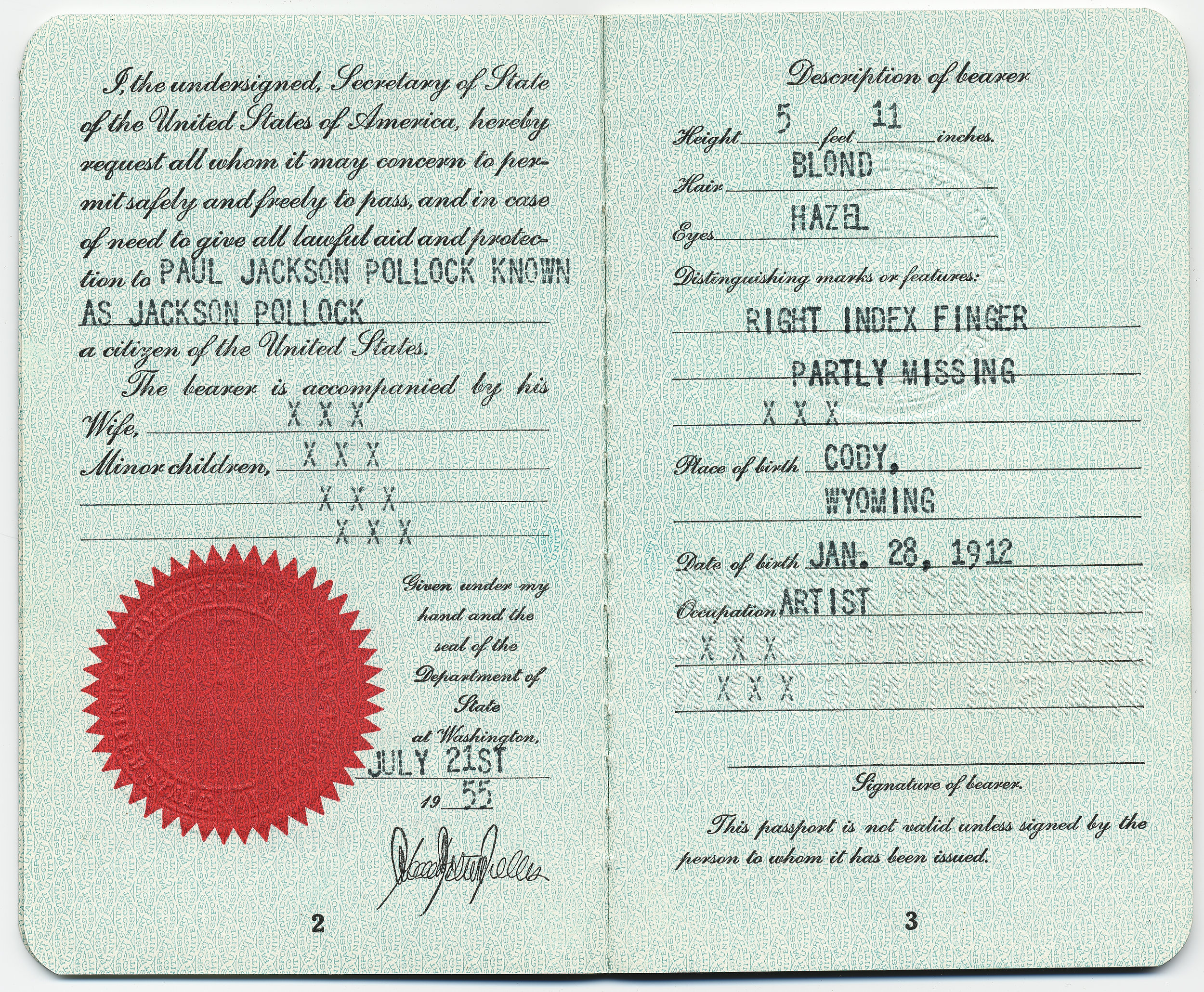
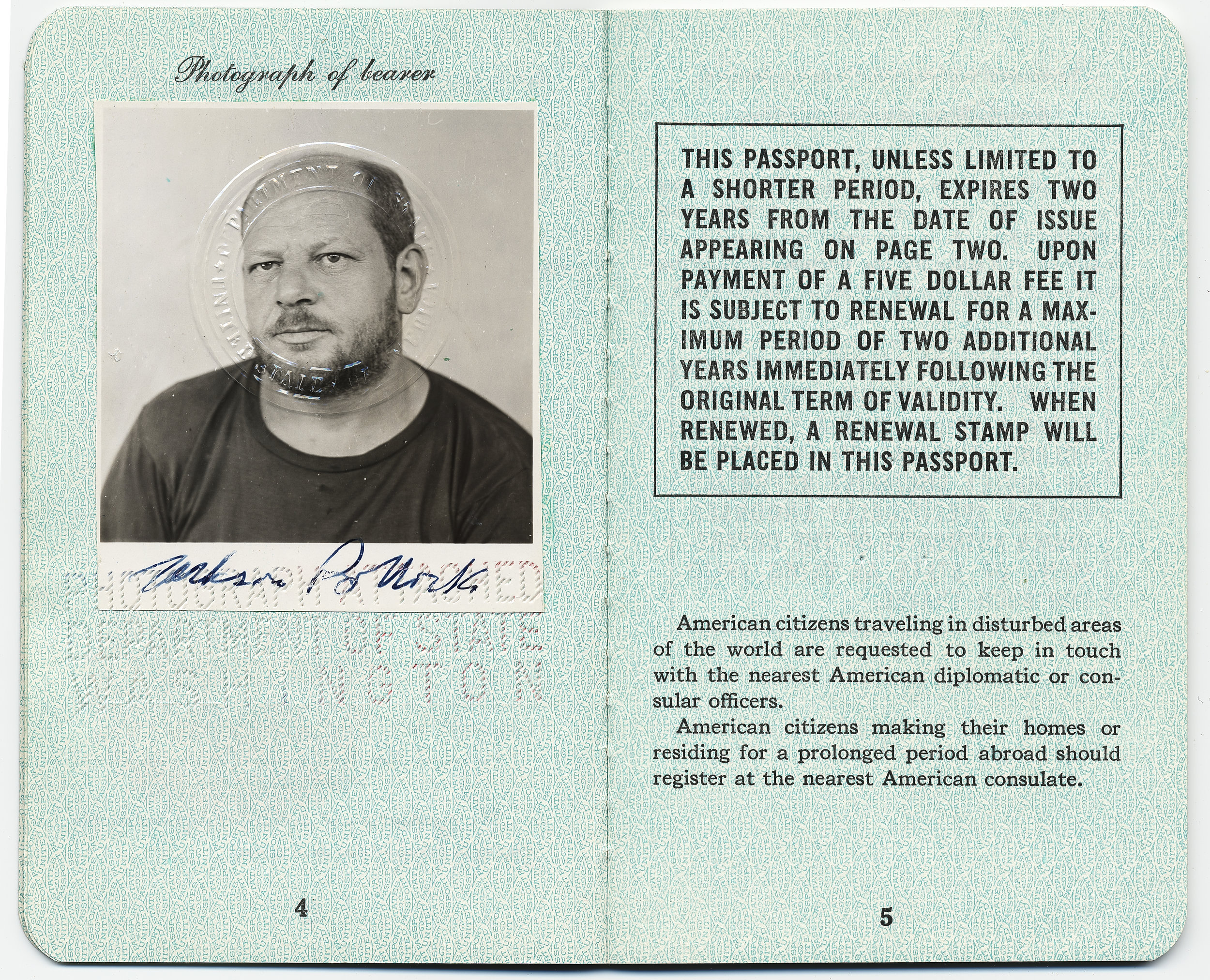
Jackson Pollock's passport, 1955 July 21. Jackson Pollock and Lee Krasner papers, circa 1905-1984. Archives of American Art, Smithsonian Institution.
But that impression is contradicted by many of his drawings, especially those of the mid 1940s, in which complex graphic patterns were created by finely calibrated marks. They show him to have been capable of handling a pen, pencil or crayon with great finesse. And in an untitled 1951 drawing that he gave to Clement Greenberg, the word “kiss” is repeated as a linear motif—another intriguing example of Pollock’s use of calligraphic imagery as an integral compositional element.

Helen A. Harrison, the Eugene V. and Clare E. Thaw Director of the Pollock-Krasner House and Study Center in East Hampton, New York, is an art historian, curator and journalist specializing in modern American Art. Her most recent books are a monograph on Jackson Pollock and a mystery novel, An Exquisite Corpse: Death in Surrealist New York.
Thomas Eakins's Precise Pen • Akela Reason
"To the nineteenth-century mind, good penmanship and draftsmanship were seen as interrelated skills that reflected clarity of thought."


BY AKELA REASON
As the son of a writing master and a graduate of Philadelphia’s Central High School, Thomas Eakins understood the link between writing and drawing. Eakins learned his elegant copperplate hand from his father, a skill that was reinforced at Central in his drawing classes. To the nineteenth-century mind, good penmanship and draftsmanship were seen as interrelated skills that reflected clarity of thought. In fact, writing masters like Eakins’s father, Benjamin, often completed complex drawings crafted from the written text as a demonstration of their skill and confident control of the pen.
Official writing in the days before typewriters and photocopiers required the work of a professional writing master who would plot out the text to the scale appropriate for the document. The work of such writing in many ways mirrored Eakins’s own preparatory process as he plotted out his compositions with the same care, making few changes to his designs once they were established.
In order to prepare for his paintings, Eakins made some pencil sketches, detailed perspective drawings, and oil sketches to work out color and composition. He also used photographs to plot specific figures in his paintings. None of this work was visible to the art-going public, who saw only his finished works. Similarly, Eakins carefully drafted official correspondence in his elegantly trained hand, with all of the mental work coming before the pen was set to the final draft. These letters were usually brief and mistake-free. For his family and friends, however, he was much more carefree in his writing. His hand is casual, and one can see him thinking through cross-outs and insertions of text.
There is a clear divide between Eakins's public and private writing, just as there is between his public and private artwork. Occasionally Eakins injected his art with his formal, artful penmanship by adding his carefully crafted signature. These signatures flow in an elegant cursive that resembles his signature on formal documents, and they are plotted in perspective so that they become part of the painting, which gives some idea of the labor that Eakins took such pains to hide.
While none of his works, written or painted, appear effortless, Eakins rarely revealed his thought process the outside eye, making his work appear uncannily precise.


Akela Reason holds a Ph.D. in Art History from the University of Maryland. She is Associate Professor of History at the University of Georgia and the author of Thomas Eakins and the Uses of History, University of Pennsylvania Press, 2010.
This essay was a part of our collaboration with The Smithsonian's Archives of American Art, Pen to Panel.
An Informal Memoir • Joselyn Smith-Greene

BY JOSELYN SMITH-GREENE
A short time ago at an estate sale, I saw a woman excited at the sight of a bunch of handwritten letters. Quickly, she grabbed them. I didn’t get it. How could these unrelated letters be of any significance to anyone other than the sender and the sendee?
This experience prompted me to revisit a box of letters that I had saved. Many of them were written by my childhood friend, Patricia, and my college friend, Loretta. The exchange between Patricia and I began when I went away to college and she was in her senior year of high school. Loretta and I attended Rhode Island College together. Our letter exchange occurred during school breaks and summers. After I transferred to a different school in my junior year, our letter writing escalated. Long distance calling was cost prohibitive in the late 70’s while a stamp cost a mere 13 cents; writing letters was the affordable way to keep in touch with distant friends and family.
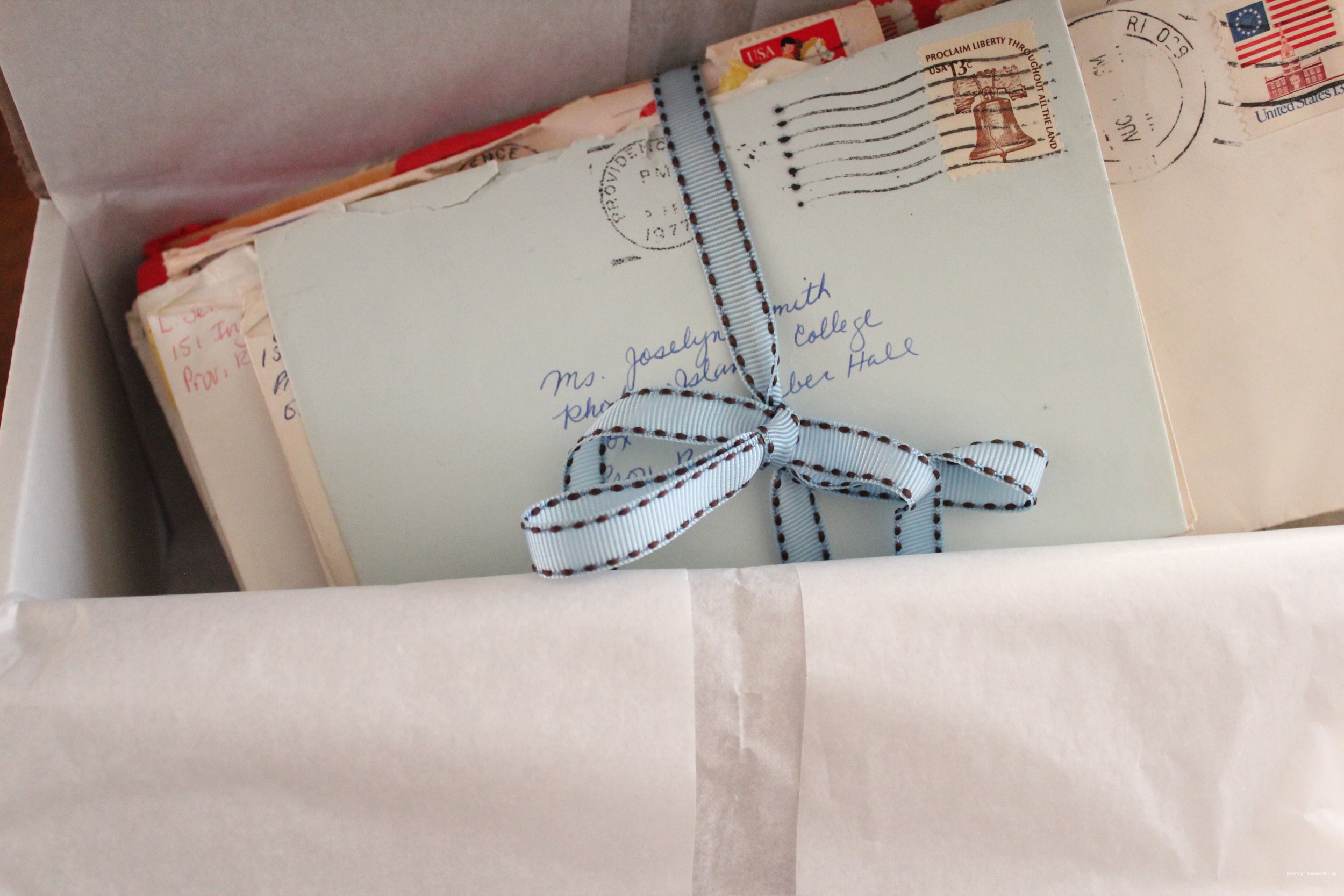
Each letter was a continuation of their life’s story. As I read them, they were an immediate relief, and a short distraction from the frenzied college life. Some were quite lengthy, some were written over multiple days, and some required a second read to make sure I didn’t miss a thing. All, however, warranted a return letter, with the hope that a letter waiting in their mailboxes would uplift their day as well.
I had a blast rereading their letters, laughing and shaking my head with more feeling and genuineness than any present day LOL’s and SMH’s. So when Patricia recently mentioned that she had little recollection of her college years, I immediately thought to myself, “I can fix that!” And so I did. I returned the letters she had written me, thereby gifting her, her younger self.
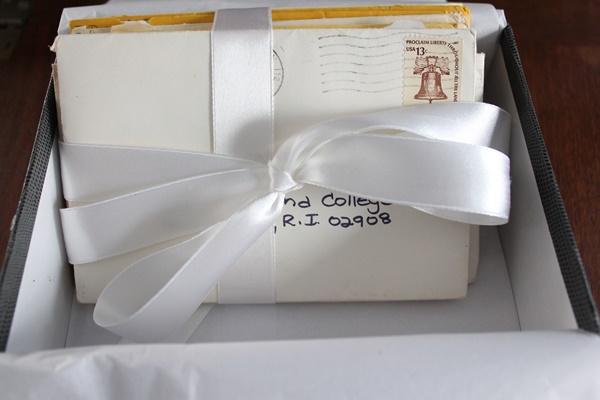
I had the pleasure of gifting both Patricia and Loretta the letters they had written me all those years ago. They are the most special gifts that I have ever given anyone. Since they cannot be duplicated or monetized, their value is beyond measure. I’m glad I kept their letters, a handwritten, informal memoir about everything they were thinking, feeling, and doing in their own words, documented by them.
With a simple touch of a key today, we send digital communications off to linger in the abyss of cyberspace. It is difficult to re-experience an email. But tangible letters can so quickly bring back a distant joy. They are precious evidence of the lives we live.


You can find more from Joselyn on her site: http://meaningfulremnants.com.
Sweetly Unadorned Bits of Proof • Lexi Wangler

BY LEXI WANGLER
“What are you writing?”
Sadie, my best friend’s fifteen-year-old sister, paused on the porch. On her way to the hair salon, she surveyed me over her sunglasses, the bridge slipping down her nose.
“The ceremony,” I told her, and ripped another page out of my notebook.
“Oh, God.” Underneath the layers of heavy-handed wedding makeup, she paled in horror. “I’ll, uh, let you finish then.”
I could have called after her, defended myself and explained to her the nonlinear experience of expectation, the impossibly rapid speed of time devoured by just existing, let alone creative expression. But with forty-five, no, forty-four minutes to go, I just decided to keep writing.

Last September, my best friend asked me to officiate his wedding. He’s been my best friend for going on seven years now, and at first, I thought it was a sop for not asking me to be his best (wo)man. I remember asking him, clearly, repeatedly, “Are you sure?”
But he and his fiancée were. They didn’t find it surprising when the wheels of my plane touched down in the city I used to call home without a single ceremonial word written. Well, to be fair, I filled out the paperwork, joined the American Ministers of Marriage, and mailed the affidavit to the court house. I took a risk and didn’t buy the officiating kit with an embossed certificate, but I did buy a dress — floor-length, fire-engine red with mesh cut-outs. That’s as far as I went until about forty-eight hours before the ceremony. Between cocktails at the rehearsal dinner, I typed out the first half of the ceremony on my phone, riding that familiar edge between writerly hubris and an absolute terror of failure. This was before I realized I probably shouldn’t be reading from an iPhone screen at the wedding.

I borrowed a bit from the Corinthians, and a little from a speech that Roxane Gay gave at St. Louis University about Catholicism and feminism — ironically, since the happy couple asked me, the atheist, the fallen Catholic with a vengeance, to presumably perform a secular ceremony at a refurbished airport decimated during Hurricane Katrina.
The word “millennial” gets tossed around a lot to describe our generation, commonly linked with, jeopardy-style, “What is the worst?” Sometimes our elders have problems processing how we can ever mature, how we can contribute, how we can function, having been raised not only attached to increasingly smaller screens, but in a world that keeps getting increasingly darker: politically, environmentally, globally. The answer, of course, is hope. By coming here today, you have shown incredibly deep reservoirs of hope, in each other and in the joint future you began to build the day you met. You show the world the difference between growing up, and growing older.
*
Before and after the wedding, I explained several times that no, I do not do this all the time, that I am not a minister, but simply a girl who happens to be friends with the groom, a friend who has been known to occasionally write things down.
*
“Love suffers long and is kind. It is not proud. It bears all things, believes all things. Hopes all things, endures all things. Love never fails. [After all else], these three remain: faith, hope and love. But the greatest of these is love.” (1 Corinthians, 13:4)
*
I’m told it’s a rising trend nowadays, having a friend do for free what you used to have to pay a churchman to do. For a millennial couple with no particular religious leanings, it was a cost-effective choice, though vastly more personal and intimate. In the South, however, it still raised a couple of eyebrows. Despite mandatory compliments and platitudes from attendants following the ceremony, I wasn’t actually sure how it went. I cried through most of it, the maid of honor patiently passing me tissue after tissue. I only cry when I’m happy — weddings and other moments of intense joy are something of an emotional minefield for me. More so when you watch friend after friend find what looks like incalculable joy in the arms of someone new, someone you haven’t grown up with, but someone you nevertheless would like to know. It’s a joy tinged with fear, envy, sadness, wondering, sure, but it’s still the kind of joy that leaks out of you.
*
You met by chance. You fell in love by chance. You are here today because you are making a choice. You have chosen hope. You have chosen faith. You have chosen each other. By being here, you promise to both provide the best version of yourself and to also accept nothing less than the best version of each other. These promises are ones you intend to keep. You vow to take care of each other, to stand up for one another, to find happiness in the other. Each vow shares the same, simple premise; you promise to experience, to share, to be there. You promise.
*
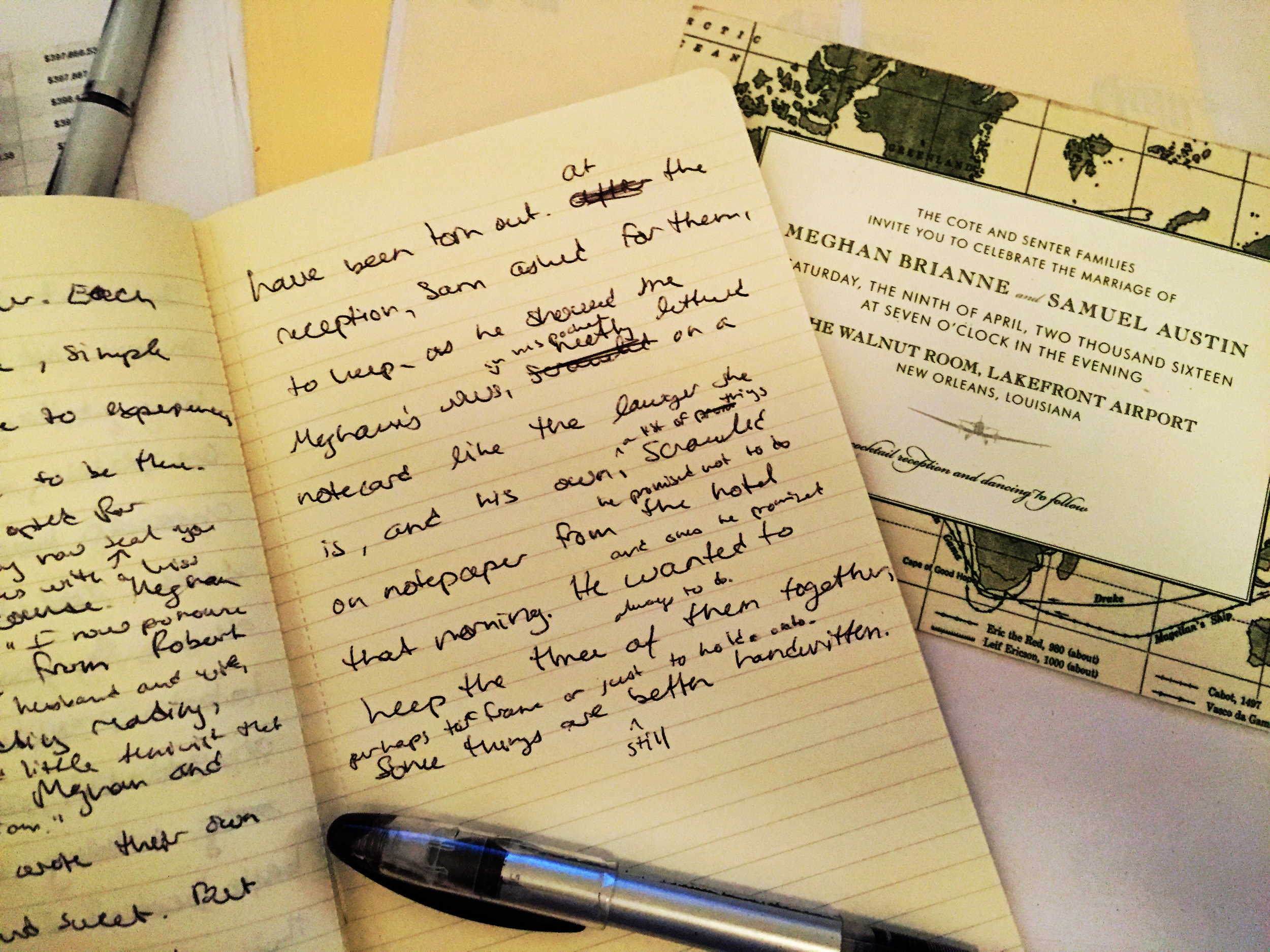
There is more, of course. I opted at the end for “You may now seal your vows with a kiss,” as opposed to “You may now kiss the bride,” and I switched out “I now pronounce you man and wife,” for “I now pronounce you husband and wife,” fervent little feminist that I am. They wrote their own vows, sweetly unadorned bits of proof. But these are not mine to share. Writing down my speech for the ceremony, my hand cramped over the teeth of the pages that have been torn out of my notebook. At the reception, Sam asked for them to keep. He showed me Meghan’s vows in his pocket, lettered neatly, firmly on a notecard like the lawyer she is, and his own, scrawled on notepaper with the letterhead from the hotel that morning, a list of things he promises never to do, followed by a list of promises he’ll always try to keep.
He wanted the three of them together, maybe to frame, or maybe just to hold onto. In this moment, I am glad to have something tangible, firmer than memory, to give them. Something handwritten.

Lexi Wangler holds an MFA from The New School in Fiction, soon to be joined by a dual concentration in Writing for Children. She works as an assistant at a literary agency and has so many books she has begun stacking them in her kitchen.
This is Where I Battle My Writing Demons • Sheila Lamb

BY SHEILA LAMB
The first draft always begins on paper with ink. Sometimes, the first handwritten words are a line, a sentence, a phrase. Sometimes, a scene. Usually, these words will not be in the final story. But they mark the magical moment where the story began.
I find ideas flow better from paper to pen. When I handwrite, I write fast. Inspiration can be elusive and I want to get the words on paper without disruption. There is a smooth connection from pen to hand, something that, for me, pencils don’t give. Computers certainly don’t. The pen is, literally, a fluid implement. I favor gel pens (a Pilot G-2). It’s part of the whole flow of words, from thought to paper. I’ll use pencils in a pinch, but graphite tends to smudge and fade. There’s also a rub as the pencil hits the page, a dryness, a physical sensation, that gives me the shivers – like fingernails on the chalkboard. Occasionally, there is the issue of broken lead and the search for a pencil sharpener. Pencils, despite their simplicity, have too many complications and they are not my utensil of choice.
Ballpoint pens are another option. They are easy to find, ten to a pack. However, they are my second choice. Words don’t glide from a ballpoint as they do from a gel pen. Like the pencil, the ballpoint ink to paper has a palpable feel that is off-putting to me. Ballpoint ink can be thick and gloopy, and sometimes leaves thick globules at the end of sentences. Although ballpoints are certainly preferable to computer keyboards, they don’t have the smoothness of a gel pen.
*
Writing by hand is second nature to me. Perhaps because I’ve handwritten stories since elementary school, when they gave us green penmanship paper with fat, chunky pencils. I’ve kept paper and pen journals since high school. It’s easier for me to reach for pen and paper than trudge to the laptop, wait for it to start, find the folder, open the file, and pray the program doesn’t freeze or mysteriously return me to last week’s temp file draft. All those layers of technology slow the inspiration, that spark of a new story or pivot within a plot.
For short stories, I write the entire first draft — or what I think is the entire draft at the time — on paper. Most of it begins in my bedside journals. My recent story, “Hunger, Not Tame,” began after a camping trip to Assateague. I journaled about our trip and the feral horses. I was infuriated with the tourists, who petted and fed potato chips to the horses on the beach.
That incident was the scene that stuck, and the one that gave way to story. I began to play on paper, shifting from my journal to a spiral notebook — last-day-of-school perks of the teaching trade — expanding the scene into a story, in longhand. I witnessed Kate, the main character, grow from this exploration: a park employee who confronted the people tossing Doritos at the horses. I write until I come to what feels like a stopping point — the end of a scene or section of dialogue. If I’m lucky, I’ll discover the final sentence here. Something in the shape of the words lets me know that this is it — this phrase where the story will end.
*
In writing by hand, I’ve discovered that this is where I battle my writing demons. For me, past defines the present, so as a writer, I struggle with back-story. Actually, I revel in it. I spend a lot of time figuring out how my character made her way to the start of the story. I tend to develop psychology before I develop plot. Why is the character there? What makes her do what she is doing? Writing those back-story details by hand is necessary for me to create the character. I’m fine knowing many of those initial, raw words won’t make it into the next draft. The process paints a picture, so I know who I’m dealing with as I place her in situations she’d rather not be in. The potato-chip tourists barely made it into the final draft. Even though they were the beginning, in the end, they were a brief, two-sentence presence. They were simply a starting point for Kate to explain why she was at Assateague and what motivated her work. The longhand process, I’ve discovered, is a sort of third-person, in-character, journaling.
*
My conflicts with electronic writing are three fold: First, my creative energy, that burst that inspires a new story, vanishes when I start writing on an electric document. All of the green and red warnings that highlight misspellings and incorrect punctuation are like blaring sirens, taking me out of the story. Instead of writing, I go back and correct. That delete key is dangerous. It can very quickly disappear a phrase that might not fit in that sentence, but a phrase I may want to use later. Second, as I develop and revise the story, I prefer the kinesthetic, hands-on process of physically writing (educational researchers are looking at the correlations between student success and handwriting but I’ll save that tangent for another time). Instead of scrolling through track changes, highlights, and text colors, I make side notes on paper with the pen, underline an idea I want to develop, remind myself to go back and find a synonym, with a circle and the abbreviation: syn. The handwritten notes make the ideas and revisions stick. Finally, I’m incredibly distracted by the Internet. Turn off the Wi-Fi, a lot of people say. Yet the Internet is a necessary evil because many stories require research. I researched the feral — not wild — horses of Assateague, their history, and the park regulations, but the pull of social media is powerful. It is so easy to go from the National Park Service site to Facebook, to Twitter, and pass another hour without actually finding anything of substance, just scrolling from one site to the next.
Eventually, the story needs to go electronic. For me, this is where revision takes place. I find digital typing is great for the editing phase. I transcribe the paper page word for word into Scrivener. Then, I’ll take a look at chronology, scenes, and plot development. I love the way I can add a new text page or section, and stay organized as I work. With this, I’m able to move scenes around and bridge the story together. In “Hunger, Not Tame,” I played a lot with Kate’s past and how much to include in the story, the back-story burden. It took several revisions to refine the central scene, where her past and present collide.
But after the digital jump, I’m back to paper and pen. I print out the revised draft and I read through the story on paper. I edit, make notes, read it aloud. I mark it up. There, it develops shape and structure. Those changes are made again on the typed draft. Then, there is another printed version for a final read-through. Last minute changes are made, with pen on the paper, and corrected again on the laptop.
Handwritten work takes time. My electronically-inclined friends claim I’m doubling my time on a story. You could have been done by now. But good storytelling shouldn’t be fast or easy, no matter the method. Writing stories is, for me, a hands-on process, an artistic process of creating a world, of creating a person, of creating a story. Writing by hand allows my creative magic to have its space.

A Legacy of Travel • A Conversation with Christian Corollo, Past Present Project

BY CARLY BUTLER
After crossing paths with Christian on Instagram, I could tell that Christian and I had a lot in common. Not only was he recreating photos that his grandfather had taken 30 years earlier, but there were also ties to the grandmother's handwritten journals that made his journey so fascinating. Photographer and travel blogger, Christian created the Past Present Project and I had the chance to ask him a few questions about what kind of an impact these family heirlooms have had on his life.
CARLY: How did you come across this heirloom?
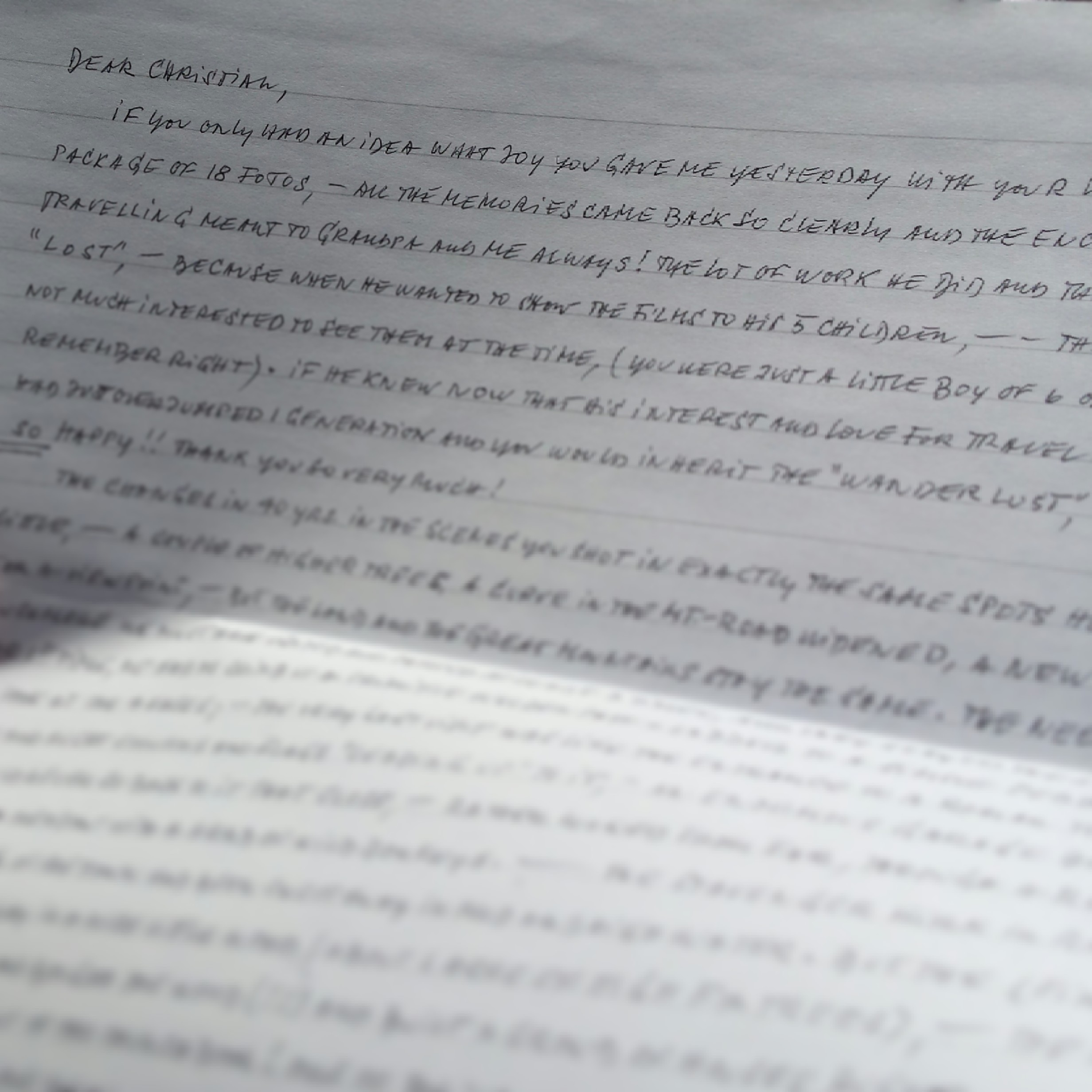
CHRISTIAN: It all started in August of 2012 during a visit with my 99-year-old grandmother in Florida. After telling her about my relatively new love of travel, she showed me the travel journals from all of the trips she and my grandfather had taken between 1973 and 2003. I was fascinated by her detailed accounts of their journeys, including names of people they met and exact locations of places they stayed, and eventually had the courage to ask if I could keep such a treasured possession. Knowing that her journals would not be of interest to anyone after she passed away, she was delighted to hand them over to someone who would treasure them beyond her. I left Florida with over 20 of her thirty journals.


CARLY: What does it mean to you to have this piece of handwritten work?
CHRISTIAN: I could sense how important these journals are to my grandmother — filled with memories of moments shared with my grandfather, experiences that come flooding back when she reads the words contained inside, and a legacy of travel. She has expressed this legacy of travel to me on many occasions and how proud my grandfather would be that I’m carrying it on in our family. She has also told me that their trips together are when they were the happiest. This is why I’ve felt the conviction to not only continue the legacy of travel they began, but share the words and moments of the most treasured times of their life.
CARLY: What has it inspired in you?
CHRISTIAN: Little did I know in 2012 that with the combination of her journals and my grandfather’s travel photographs, I would embark on my own journey of retracing their steps and stand in the same places they did so long ago. If not for her travel journals, I never would have discovered the exact locations of so many of my grandfather’s photographs or known the names and met for myself the people in his images.

Valhalla Pier in South Lake Tahoe, California | June 1981 & May 2015
Excerpt from my grandmother’s travel journal on June 9th, 1981: “Walked down to the lake – a vast expanse of quietly lapping water, brilliant sun, and a small sand beach before the ‘Jeffrey’ pine woods.”

Golden Gate Bridge in San Francisco, California | April 1979 & May 2011
Excerpt from my grandmother’s travel journal on April 27th, 1979: “There was an earthquake at that time in the middle of San Francisco! We didn’t feel it – were much too busy finding our way through town to the Presidio, a big military reservation. The scenic route lead right through it, to Fort Point, directly under the Golden Gate Bridge. Going on along the shore-drive, high above the blinding shimmering-white sea against the sun, along funny colorful small houses.

To see more of the Past Present Project, visit Christian's lovely website: www.pastpresentproject.com.
The Keepers • Sharon W. Huget

BY SHARON W. HUGET
As I go through three months worth of papers that have accumulated in piles trying to put the keepers into files, I find the letter my Auntie Mary Ann wrote in early January. It was a response to our annual family Christmas card. It immediately catches me and I bring it to the table so I can re-read it over my Sunday tea. Ah Sunday—a day for quiet, un-hurried, sit down tea, sipped slowly while still hot.
The delicate handwriting with it's curves and fancy loops echoes the scalloped edged stationary, eggshell blue with pink roses framing the page. A what's happening letter—about life and change and questions about the happenings in our lives as my own kids grow up and we grow older.
It has been years since all my cousins were at her place searching for coloured hard-boiled Easter eggs hidden in corners of the basement, around storage boxes and in my uncle's work boots. Christmas memories of cousins relegated to playing in the basement and giggle fits as the pack of us are ordered to sleep, squished wonderfully side by side, sleeping bag to sleeping bag. I remember the sounds from the downstairs guest room and hearing the late night footsteps of clean up in the kitchen, lingering laughter of adult siblings and in-laws visiting upstairs and the early morning hurried stomps of getting breakfast out and the roast in before dressing in Sunday clothes and heading for church. So long ago—and yet, the familiar script has brought her close again for a moment of cherished remembering.
It’s a keeper—a piece of caring and love from my dear Aunt Mary Ann.

The Story of My Signature Tattoos Started on a Night Punctuated with a Bottle of Irish Whisky • Nick Landwehr

BY NICK LANDWEHR
The story of my signature tattoos started on a night with my college roommate punctuated with a bottle of Irish whisky.
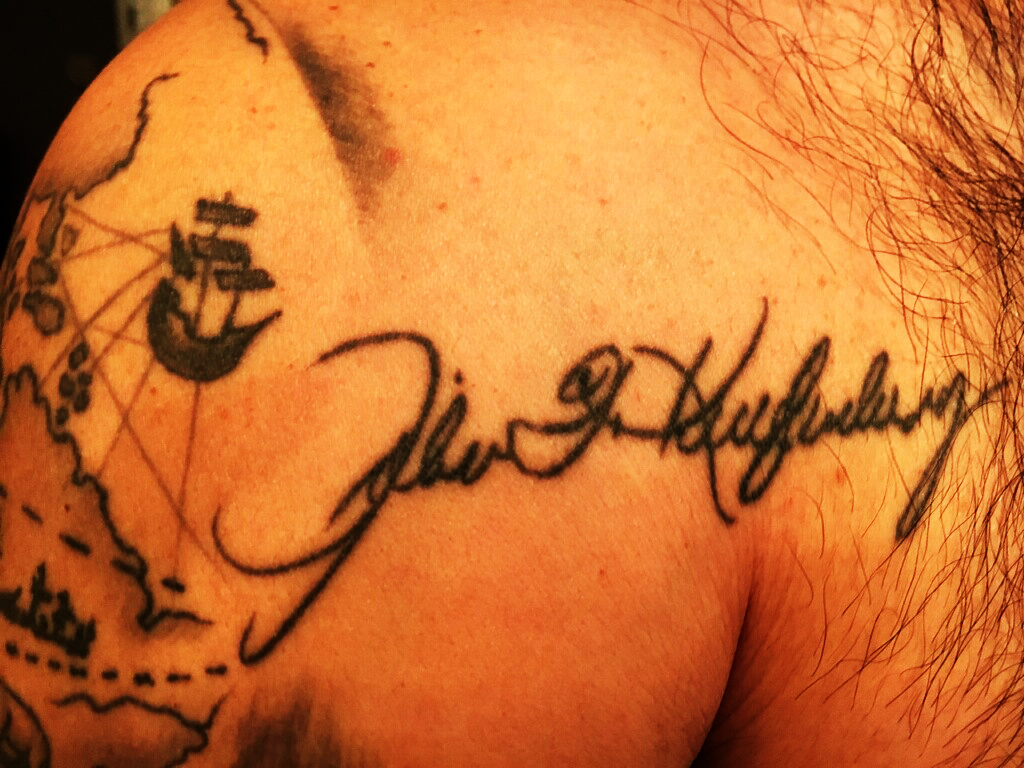
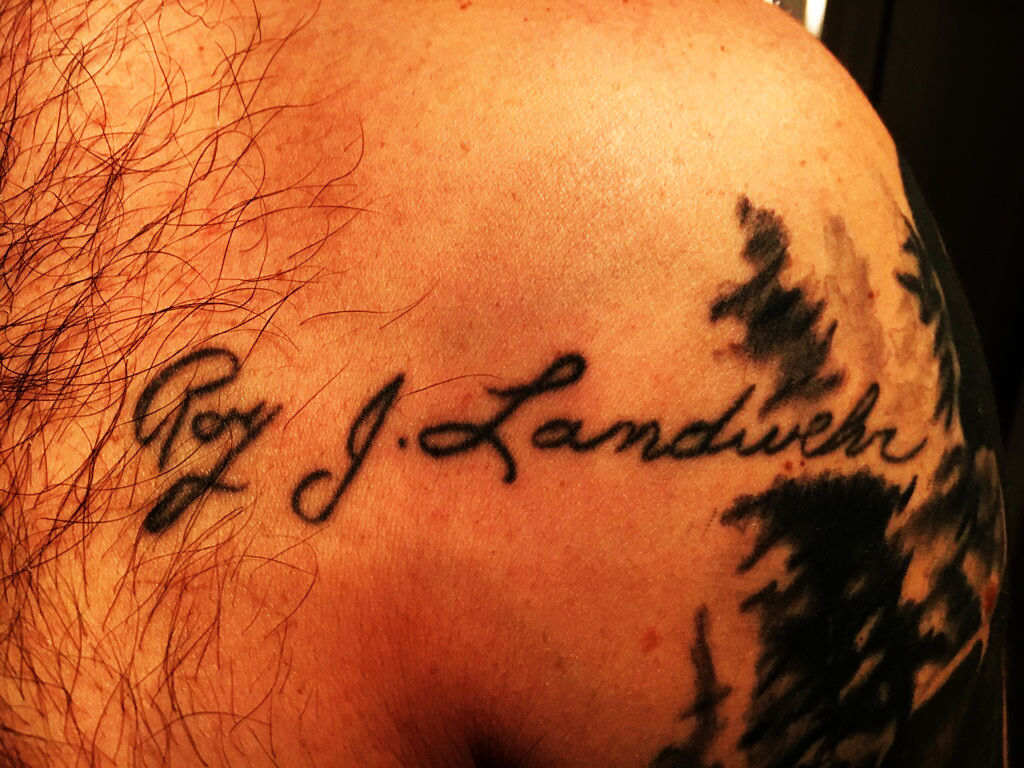
The justification for such a night was the recent passing of my father. We stayed up until the wee hours of the morning discussing life, music, girls, and many other places our liquor-induced conversations took us. Finally, we came to the topic of tattoos and what kind we would get if we were to ever get one. Together, we came up with the idea of having our parents’ signatures from our birth certificates tattooed onto our arms. Our rationale being that it was the signatures they used to "sign" us into their possession.
Anyway, after I had those tattoos inked on my inner arms, I felt the need to also pay tribute to my grandparents who had done so much for me. I tried to think of an important document which they would have signed which held significance in their own lives. My best idea was that I would use my grandfather's signature from his military discharge papers after the conclusion of WWII, and my grandmother's signature from their wedding certificates. Both to me seem to be two of the most important times they autographed their lives.


BY JIM LANDWEHR
Being a writer, when I first saw the call for images for National Handwriting Day, I immediately submitted a couple of my handwritten poem drafts, both of which made it into the exhibition.
Then, after thinking for a bit, I thought of my nephew Nick and his handwriting signature tattoos. He is a huge tattoo fan and has eight total signature tattoos amongst the many other beautiful works that adorn his arms. I remember when I first saw the tattoo of my mother and father's signatures on him. I instantly recognized my mother’s with her signature Stonehenge ‘M’ at the beginning of Mary. But seeing my father’s was a little haunting for me, probably because I’d never seen his handwriting before. He was beaten and killed in a bar at the age of 42, when I was just five years old. So seeing his signature on Nick, was a bit like discovering an old letter in the attic from the war. I guess it just shows how someone's signature can evoke an emotional response. So it goes with all handwriting, I think.
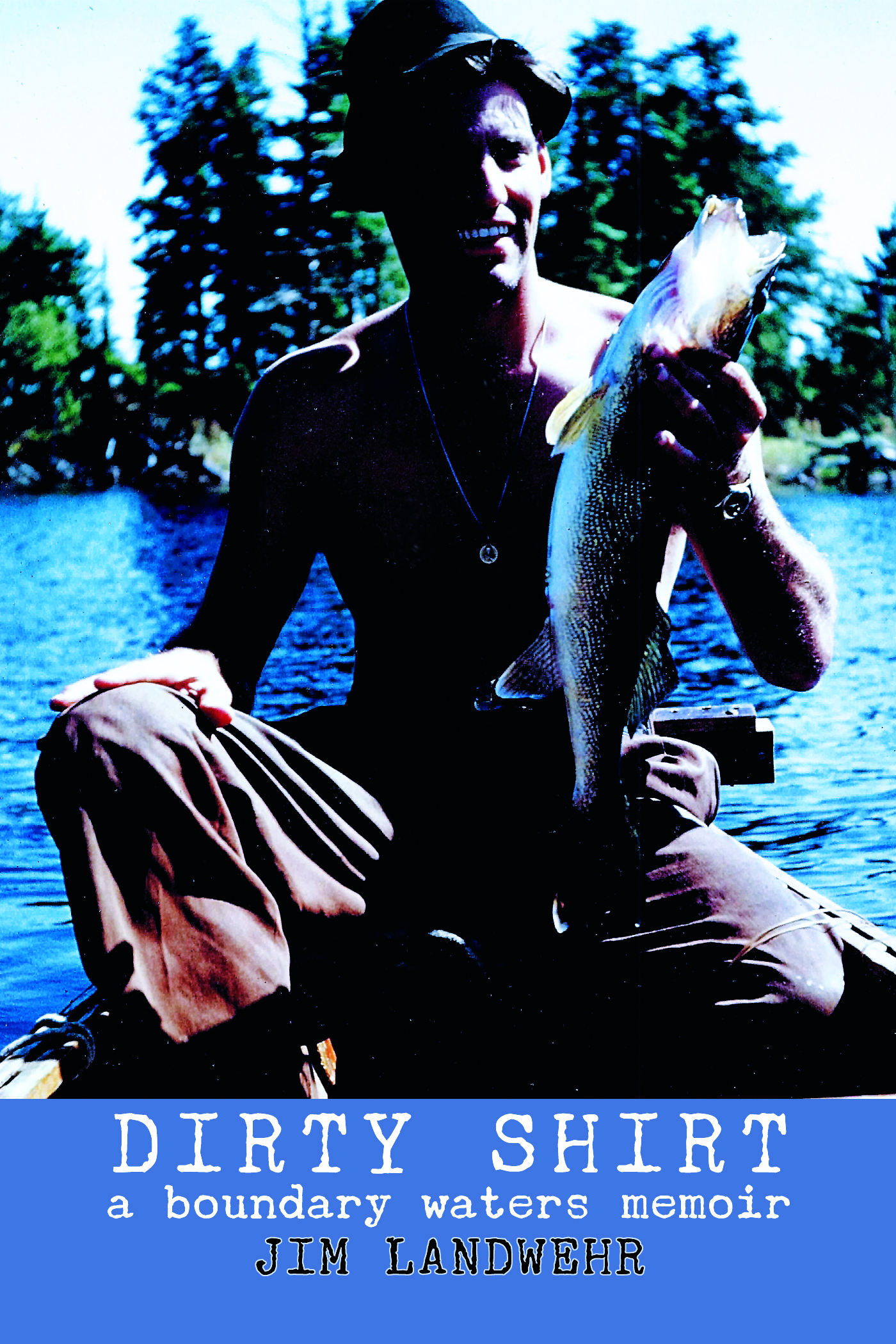
Being Nick’s godfather, the two of us have always been very close. Despite my moving away to Wisconsin in 1986, he and I still got together whenever I made it back to town to visit. In 2014, I wrote a book titled Dirty Shirt: A Boundary Waters Memoir. The book details trips I took to the Boundary Waters Canoe Area Wilderness with my brothers nearly thirty years ago and, more recently, with our kids. In 2012 we brought Nick with us to fill in for my brother Rob who passed away from cancer in 2011. Nick shared a canoe with Rob’s daughter, Alison, and it became known as the orphan canoe, (Nick’s father had passed away suddenly in 2005). On Father’s Day of that trip, we sprinkled some of Rob’s ashes over the waters of the BWCA, a place he loved much like Roy had. This event plus being around his uncles and cousins in such a remote region, impacted Nick in ways he never expected.
As a tribute to myself, his grandfather Roy and the Boundary Waters area, he got a tattoo of the picture that was used for the book’s cover of Roy holding a walleye in a canoe while on a BWCA trip in the 60’s. When Nick surprised me with a picture of the tattoo I was both flattered and deeply moved.

I Have No Choice But to Revise • Keith Baldwin

WRITTEN BY KEITH BALDWIN
My handwriting is fucked. The penmanship is not as illegible as some, but in terms of how I physically write by hand, it’s all messed up. I hold a pen against my ring finger, like the wrong half of a pair of chopsticks, and form a lot of my letters from the bottom up, rather than the top down.
When I was eleven, my dad finally noticed the issue and approached it with all the vigor and care he’d applied to the insufficient knots in my shoes a few years earlier — just enough to make me feel shitty about it, without solving anything.
He spent a few frustrated hours with me at the kitchen table, correcting the way I formed a handful of letters and the number nine. There was no progress at all toward fixing my wonky grip, which was already too ingrained to be altered so easily.
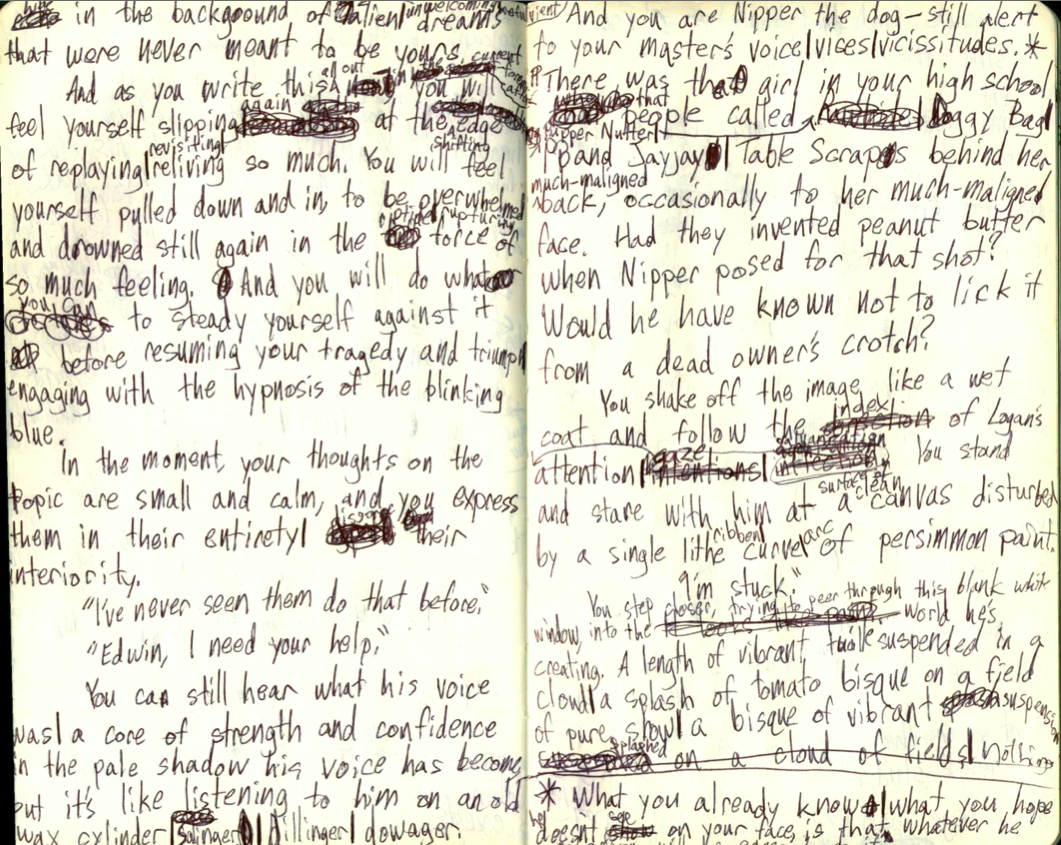
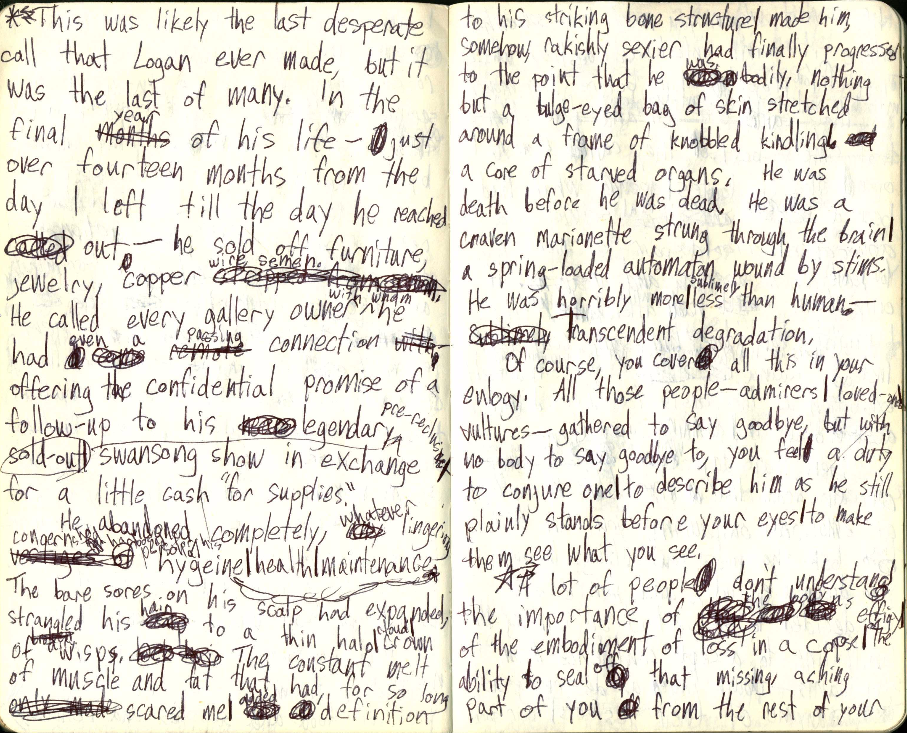
The upshot is that I don’t have the natural flow with a pen that other handwriting advocates rhapsodize. It’s always a slog for me. If I try to write too quickly, my hand and wrist start to cramp up, so my thoughts always remains three steps ahead of my pen. And while I work to close the gap, my mind is free to become distracted by flaws and omissions in what I’ve already written, leading to aggressive cross-outs and a morass of cramped footnotes that nest and crawl across margins — to be inserted in the main text later.


This would be enough to make a mess of my notebook, but on top of all that — rather than keeping everything in sequence — I have a bad habit of opening to a random blank page whenever I want to make a note, or a list, or play a game of hangman. In the middle of writing an extended scene of fiction, I will often turn the page to find story notes, shopping lists, and broken sentences for my ESL students to practice correcting. Typing up my work becomes a tedious chore of deciphering and reconstructing, tracking down where the story picks up when it’s suddenly interrupted by a sketch of my cat as an astronaut. It is almost as big a pain in the ass to work through it as it is for me to scrawl it out in the first place. So why do I even bother? Why do I keep returning to pen and ink whenever I’m writing something I care about? (You should see the rough draft of this essay…)


I know there are a lot of answers involving the way the brain works in different contexts, and how I formed these writing habits when all I could do on a keyboard was hunt and peck — and blah blah blah, a hundred other reasons why this website exists and longhand is the best. But I think the biggest factor for me is the same one that made me so much less anxious about sharing this mess of pages than I would have been about submitting something more polished. Because no one could ever confuse the contents of my notebook for a finished product — not even me.

On the one hand, this means that I can’t be held accountable for the contents, which frees me to be a little wilder in my first stab at a project. But it also means that I can’t avoid the work that still needs to be done. I have no choice but to revise.
My feelings about revision are pretty much the same as my feelings about flossing — I know I should do it, but it makes my gums bleed. And when my words are neatly typed and double-spaced, with numbered pages and no evidence of the disordered mind that composed them, I have to work to remind myself that it’s still a work in progress — that I can and should question every decision those collected words represent.

The process of transferring from the page to the screen forces me to consider every sentence with a critical eye while I retrace the whole erratic path. And I can’t even procrastinate for too long because, while a few days’ distance can bring fresh insights, a few weeks is liable to leave me incapable of piecing the whole mess together again. (It’s happened. It’s infuriating.)
I know that, for other people, writing by hand makes the whole process smoother. For me, it’s about making myself work harder, and getting better results for the effort.


Keith Baldwin is a writer and tutor living in subterranean Brooklyn while paying exorbitant tuition in Manhattan. He is sometimes worried that he might be one of those lizard people you hear about.
Externally Obvious, Internally Mysterious • Minakshi Choudhary

BY MINAKSHI CHOUDHARY
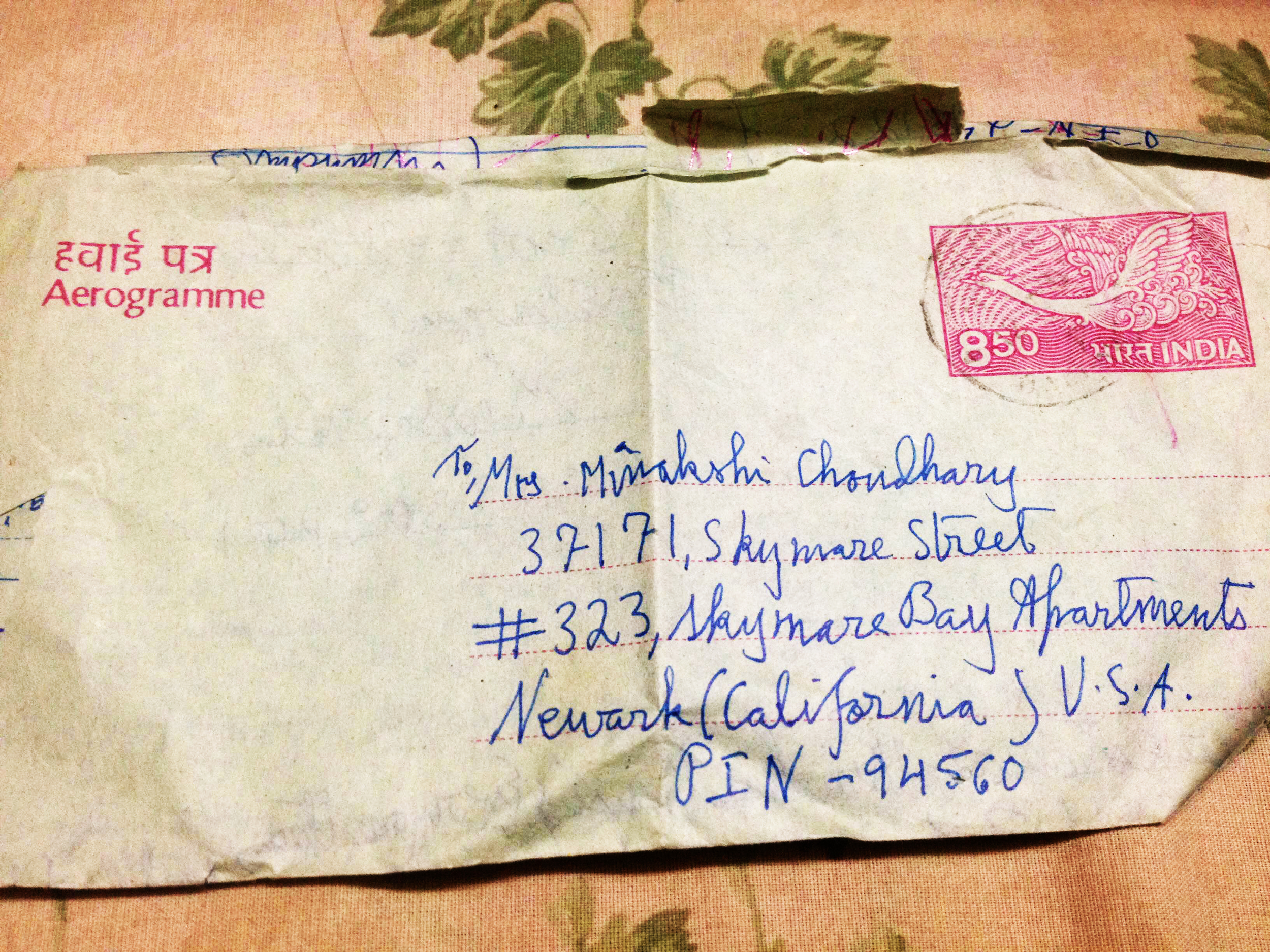
When my phone rang and I heard the voice of my community manager on the other side, I was shocked. There was an inland letter waiting to be received by me: that three-fold piece of paper, externally obvious, internally mysterious.
While I dressed up and on the way to post office, all the neurons of my brain were ringing bells to deafen me with thoughts pouring in and pouring out. Mostly thinking, what might have provoked someone to write a letter to me in this world of emails and phones? Turning the form section of that envelope made me more nervous. My hands were frozen with sweat, unable to unglue the piece of paper.
The letter was from my nephew studying in fourth grade in a fully residential school. Between reading the from address and ungluing the letter, I came to know how fast our brain processes and how far it can travel within seconds.
As soon as I opened it, I was all tears seeing this sweet little sender just wanting me to know his address as he left to boarding school. He was under impression that I hadn't written to him because I didn't know his address. This innocence touched me to the core, and at that moment, I wished to hug my sweet little nephew and tell him how we elders are so busy solving the pain of ourselves created by ourselves.
Now, when that sweet little boy is grown up and busy finishing his degrees, I believe he might have forgotten about this episode of his life. We all fall into this trap of forgetting, though our best friend in the form of black and white text always makes our lives colourful with varied emotion rewinded and reversed on timelines.


He Just Smiled, Said Hello, and Went On His Way • Lora Ackermann

BY LORA ACKERMANN
While searching for any of the many examples of handwritten cards and notes from my family, I came across a journal of mine. This is an incredibly special journal, entirely handwritten, spanning from my first of what would eventually be four ovarian surgeries (over the course of many years) in August of 1992, through the death of my maternal grandmother in March of 1995, her husband, my grandfather in May of 1995, and ending with my soon-to-be wedding in October of 1995. These pages hold such a roller coaster of euphoria and pain. So many entries that touch my heart, soul, and spirit, drawing memories from places long forgotten to the routines of daily life. So many memories bringing new pains of loss and journeyed paths now closed.
There truly is something to say about the handwritten page. There’s a certain comfort, a warmth, as though the lines are reaching forward, surrounding me in a hug, and drawing me in. As I re-read some of these entries, I can detect, in the formation of the letters, the slant of the words, the stains on the pages, changes in mood, emotion, stress level, time management, and so many other delicate strands that make up these layered memories; delicacies that would be but lost in simplified print. The handwriting, like the musical score of a movie, tells its very own story; separate from the worded memories they so eagerly record.


Even after reading these pieces of my life from those years, pieces that now seem centuries away from reality, the entry on those first pages still strikes me the most. I had only been home from my first major surgery at age 20 for a day or two. Having received the good news that what was thought to be ovarian cancer wasn’t, I was free to heal and live my life in gratitude. I had a renewed sense of awe and appreciation for the little things life tended to toss haphazardly in my path and it showed in this entry.
August 29, 1992
…..I just returned from a walk around the block—oh what memories lie in some of the houses around here—not just my own. I can look at Elizabeth’s house, or Suzy’s house, or LouAnne’s, and still see inside, 12-13 years ago….’youngins’ they’d call us. I see Liz and myself in her room, making stickers w/ double-sided tape—we made them out of just about anything—wrapping paper, pictures, things we’d colored, etc.
I see Suzy and I in her room—so pink—pink carpet, bedspread, walls, bright pink, light pink—if ever there was a pink room it was Suzy’s. I see the laundry chute and the poster of ‘Frank Poncherello’ from the TV show, “CHIPS” above her bed. (We had a crush on him, though I liked his partner better.) I see Suzy & I sitting on the floor in her ‘play room’ eating Fruitloops from the box and watching “Emergency 911” (or something like that)—she always said that one of the men was her daddy—They did look alike and for a while I believed her, too!
I see LouAnne & I in her room playing w/Barbie dolls—she had a loft bed with a yellow carpet underneath.
I also see inside another house down the street; a brown house next to the Woolsey’s and an elderly woman who used to live there alone. Unfortunately, I don’t remember her name—I wish I did. She used to read to me and she helped teach me to read so that when I was old enough—so to speak, I often read books to her. She was a very kind woman. I wonder how she faired after she moved. I was too young to remember why she moved—family reasons I suppose. I missed her for quite some time. I think sometimes I still do. Perhaps.
I find that at times I even miss ‘Joe.’ ‘Joe’ was a man who ever since I could remember walked every day. Twice a day he passed our house. ‘Joe’ wasn’t his real name. I don’t know what it is actually. ‘Joe’ was a friendly man who always had a wonderful smile to give any passerby—anyone at all. I think he had a stroke or heart attack. I think he may still be alive, but he doesn’t walk around here anymore. Perhaps he moved; perhaps he just doesn’t walk anymore. ‘Joe’ never corrected us in regard to his name—he just smiled, said hello, & went on his way—leaving smiles on our faces for a long time after. I really did think his name was ‘Joe’ until I was about 15 or 16 when Mom told us differently. She told us his real name, but I still call him ‘Joe.’ Perhaps it’s ‘Joe’ that I owe, in part, my smiling fetish to. Perhaps.
Even typing up these words—such layered memories; memories of people who touched my life, beneath memories of writing the entry itself, beneath those of healing, speaking volumes in the spaces between the letters, the lines between the lines; you know the ones—the ones that speak to our hearts, pulling in our soul’s deepest comforts, the ones that can dry a dampened spirit or bring light to the darkest corners. Yes, so many layers that can only be fully appreciated to the depths they desire in their original, handwritten form.
Today, I journal, too. Sometimes I type. Other times I dictate. But many a time, I pick up my pen, one of the many paper journals my amazing friends have gifted me recently, find a quiet space all my own, and, even for just a few blessed moments, I disappear into the notes of the score, the layers of the letters, the spaces between the words and lines, and the hidden pleasures and soul-soothing rhythms found only when pen, from hand to page, journeys forth.


The Everyday Mind • Chad Frisk
BY CHAD FRISK
I’d never before considered handwriting to be an art form.
For me, handwriting was always a tool. I used it to build thoughts on a page, or just to fill out forms. It was slow. It was blunt. It was annoying. That’s how I had always thought of handwriting in English, and for a long time I thought of handwriting in Japanese in the same way. That is, until I met Takemoto Sensei.
“Make sure you use an extra soft pencil,” Takemoto said.
I went to the college bookstore and bought one. Slouching in a hard wooden chair, I pressed the gray tip to the off-white page of the worksheet he had given me. I could hear his voice. "Trace the lines," he said. It came with a smile that was mildly irritating.
The work was both boring and a little bit humiliating. I had written those characters for four years as a high school student, but there I was, tracing lines like a fourth-grader. The connection was appropriate, however, because I actually spent the first week of fourth grade crying over my handwriting. Ms. Ramcke had given me back a writing assignment covered with red pen. “This isn’t fourth grade writing,” the comment read. My letters still used the kindergarten stencil, filling three lines. Ms. Ramcke wanted me to shrink them down to fourth-grade size. That night I told my mom I didn't want to go to school anymore. I was curled into a lump in the corner of my bed. She did what most parents would do. She said she was sorry and rubbed my back. But then she did something else. "Maybe Ms. Ramcke is right," she said. And before I could wipe my nose, she was poking me in the back with a notebook. "Let's practice."
*
English letters aren’t very complicated. There are twenty-six of them (a few more if you include capitals). They don’t require you to make very many strokes. You don’t even have to take your pencil off the paper most of the time.
Japanese letters aren’t like that. There are three writing systems: hiragana, katakana, and kanji. Two of them – hiragana and katakana - are relatively compact, with about 46 characters each. There are thousands of kanji characters, however. And neither hiragana, katakana, nor kanji are easy to write – at least, not if you want to write them well. In high school, I didn’t stand a chance. But in college, Takemoto gave me one.
I heard voices as I tried to control my soft pencil: "Trace the lines," Takemoto said. "Let's practice," my mom added.
I sighed and continued to trace. Slowly, something strange started to happen. As I sat there, moving the pencil from top to bottom and right to left across the page, I found myself enjoying it. I stopped to look at my handiwork.
“That’s not bad,” I thought.
I kept writing. Before long, all of my notebooks were covered with Japanese. Hiragana, katakana, progressively less misshaped kanji. I was hooked.
*
Takemoto Sensei's approach to handwriting was totally new to me. For me, handwriting had always been an annoyance; for him, it was a craft. There were ways to apply pressure to the pencil. There were proper paths to follow, angles to be aware of, particular compositions that looked better than others. I came to love writing because there were ways to do it better.
That was almost ten years ago. Since those days, I’ve occasionally exchanged the pencil for a brush. The game changes entirely. Kanji are fun to write with a pencil. Writing them with ink, however, is a trial. If you stop the brush, you will end up with blobs. If you press too softly, your lines will be weak. If you press too hard, your lines will blend into black mush. If art is about degree of difficulty, then the brush is the tool of a master.
I am not a master. In a normal calligraphy session, I write the same kanji character fifteen to twenty times before I feel satisfied. It’s hard! With a brush, every mistake compounds. One small mistake gets me thinking about what I’ll do better the next time which causes me to make another mistake which causes me to drown the rice-paper in ink.
For me, it’s about maintaining focus from the beginning of the first stroke to the end of the last one. If I do fifteen to twenty attempts, I’m usually able to maintain that level of focus one time. I used to think that there was nothing I could do about it. But now I’m not so sure. Obsessive reading in cognitive science and a semi-regular meditation routine have made me think that focus is something I can train. I thought maybe I could use kanji to do so.
So I decided to try an experiment. I chose to write one kanji compound every morning, selecting a word that I thought would put me in a constructive frame of mind for the day. Furthermore, I only gave myself one shot.

Fumei, Uncertainty
Sitting at the table, the stars still shining in a dark, winter sky, I stared at the blank piece of paper. I tried to map the coming kanji onto it. 不明. Fumei. “Uncertainty.” I looked at the brush, sitting in the black inkwell. “You only get one shot,” I thought. Then I picked up the brush and started to write.
Ideally, the lines would have flowed out of me. Ideally, the brush would have regulated itself, increasing and decreasing pressure on its own, flicking between strokes, pausing, trailing away as I held it. Unfortunately, that’s not what happened. I caught myself thinking of something else when I would have liked to be thinking of nothing but the tip of the brush. “Too bad,” I told myself, and, after scribbling some English in the margins, went to the sink to clean out the inkwell.
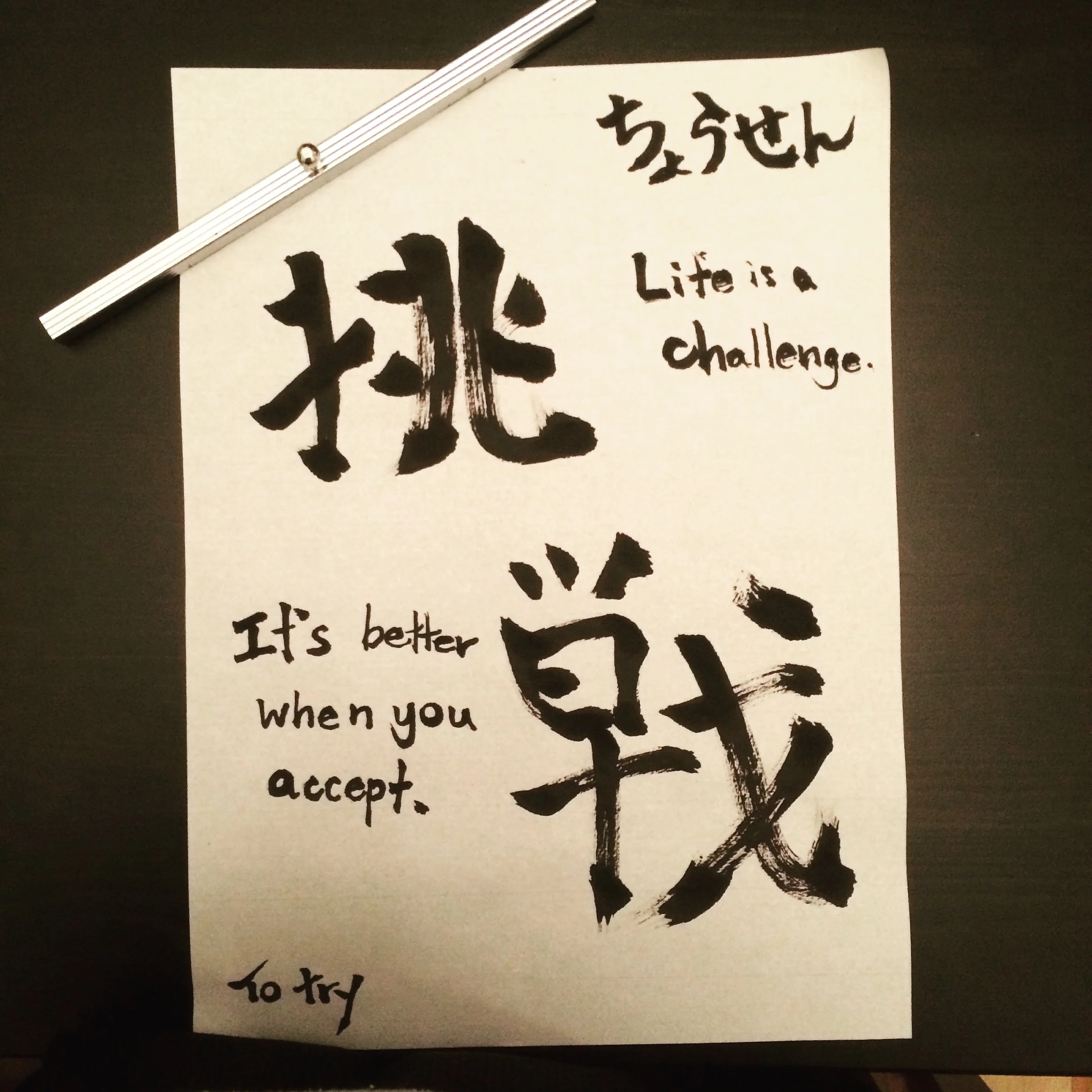
I came back the next day. “What word do I want today?” I asked myself, and waited for a response. I didn’t have to wait for long. 挑戦. Chōsen. A hard word to translate, but one that is often rendered as “to try”, or “to challenge”. I wrote it quickly, hoping that speed would equal elegance. It turned out alright.
Again, the white space at the corners of the page caught my eye. “Life is a challenge,” I felt myself writing. “It’s better when you accept.”

The word echoed in my mind throughout the morning. Chōsen. Did it make me act differently than I otherwise would have? It’s hard to say for sure. But even months later, the word still pops into my mind. I think it gives me a jolt of strength.
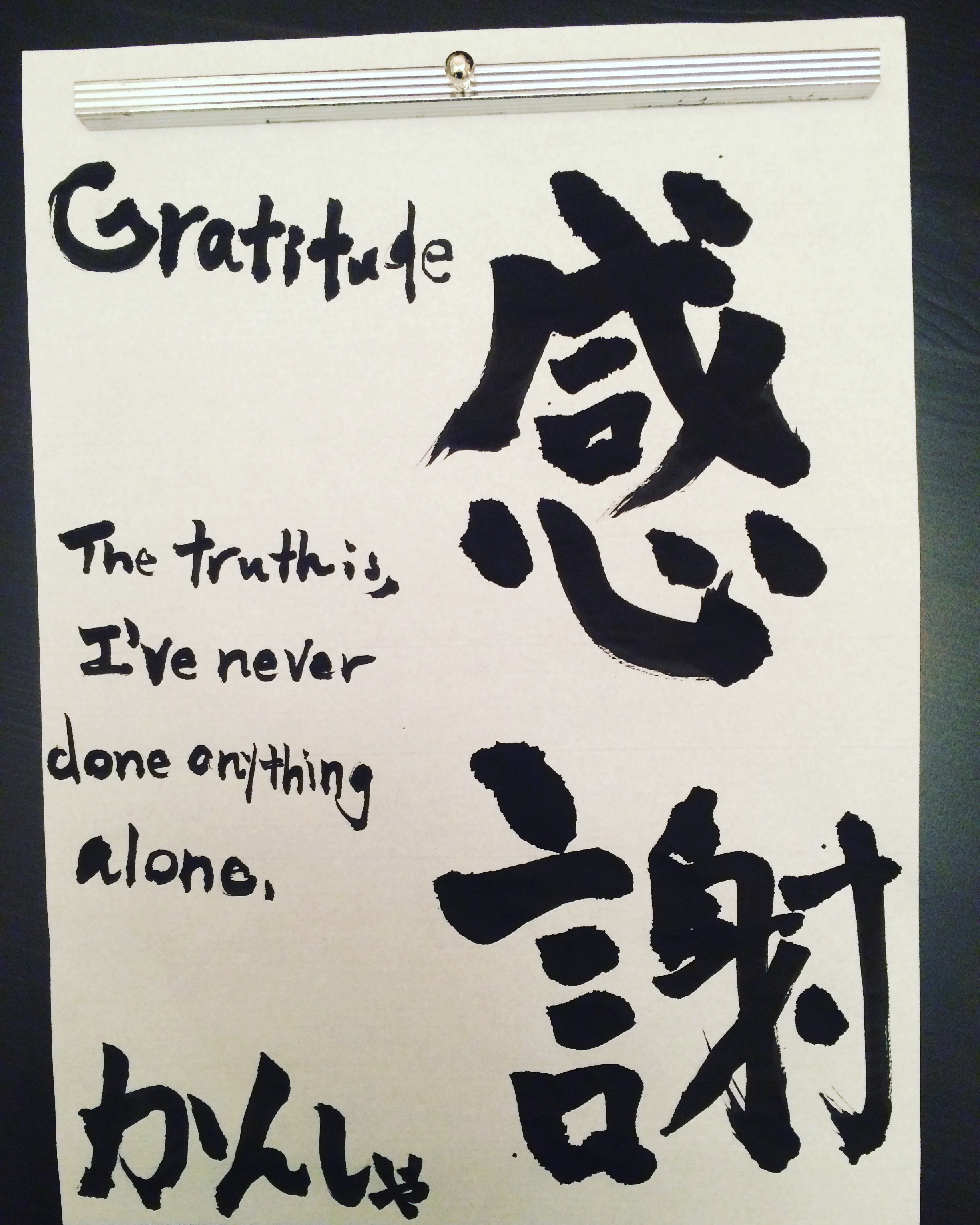
The next day I chose – again – the first thing that came to mind. Kansha. “Gratitude”. I felt a little bit nervous because I had been posting the calligraphy to Instagram. “Will people think I’m posting this just to look good?” I worried. The next thought was even more worrisome: “Am I actually posting this just to look good?”
I thought about it for a second. "Maybe not just to look good,” I reasoned. Then I paused. “But at least a little."
Then I posted it.
For three weeks, I didn’t run out of words. I found that every day I had something in my life to work on, and I was eventually able to find a word to express it. Here are some of the words that came to mind as I thought about what I wanted to bring to the day.
Nobiru. To grow. I’ve found that holding the intention to grow is enough to transform what would otherwise be the meaningless detritus of the everyday into (what at least feel like) important lessons.

Shuchu. Focus. Sometimes focus happens naturally, but usually I have to maintain it in the face of distraction. Intending to do so (and continually reaffirming that intention) is the first step.

Junan: flexible. Hansei: reflection. Norikiru: to get by.
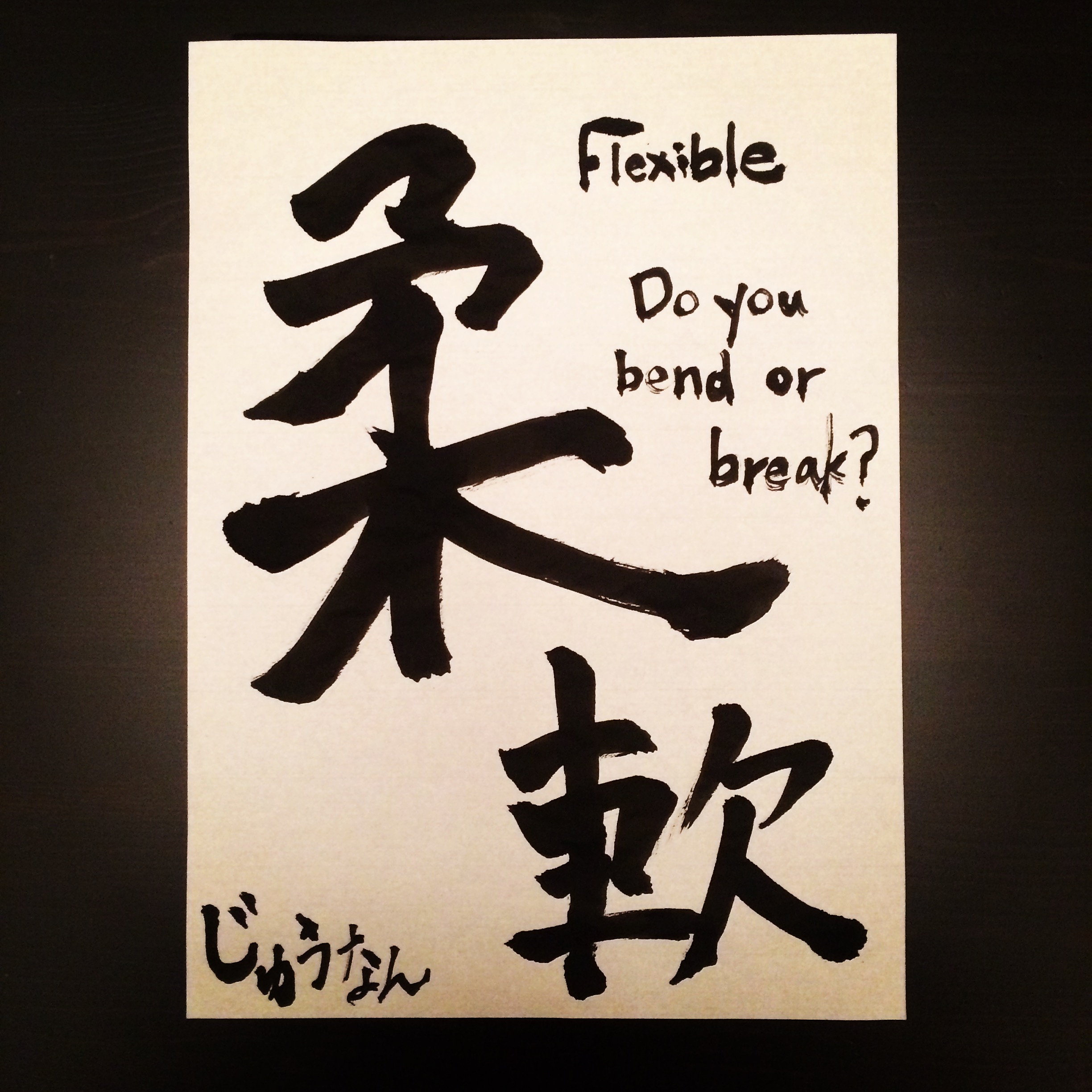
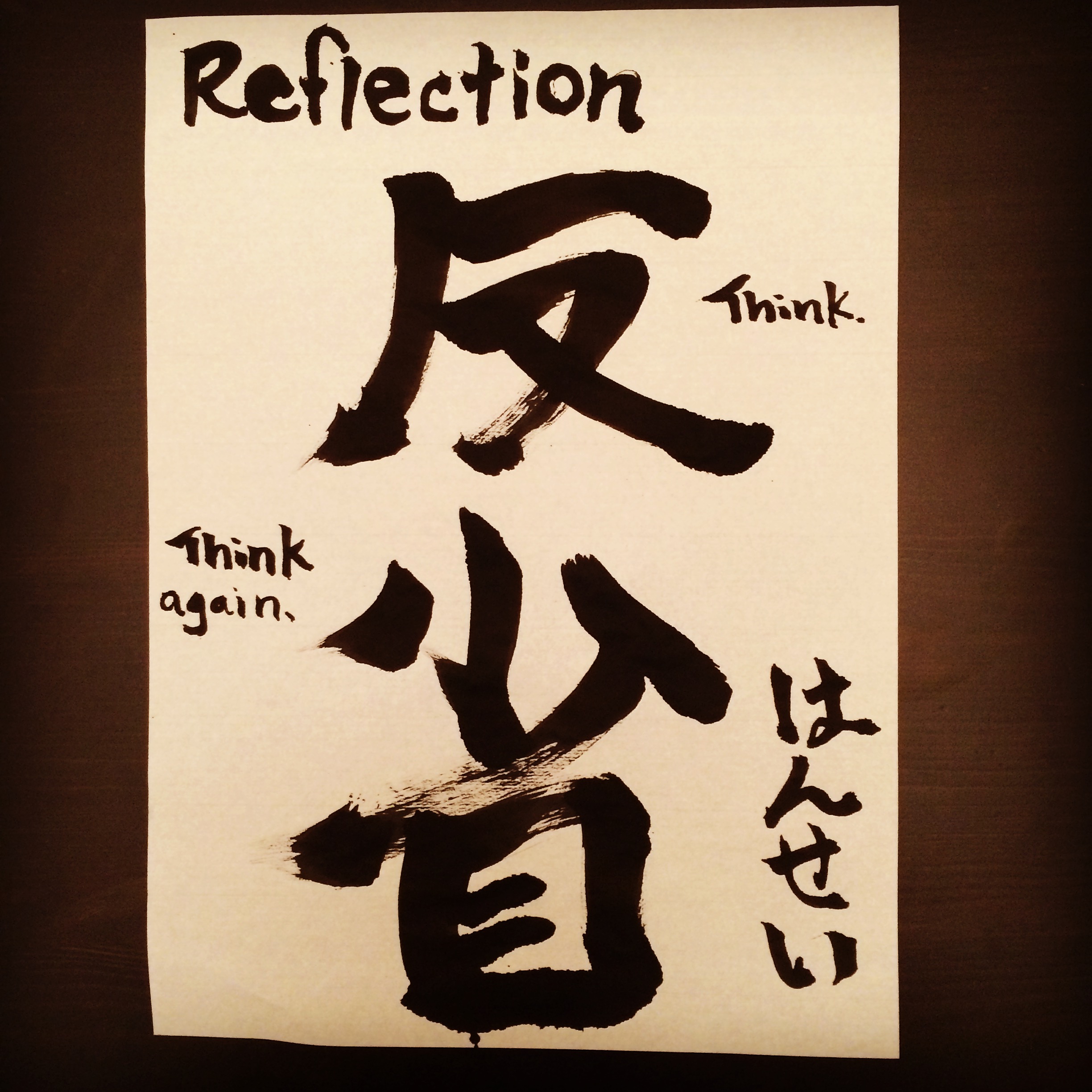
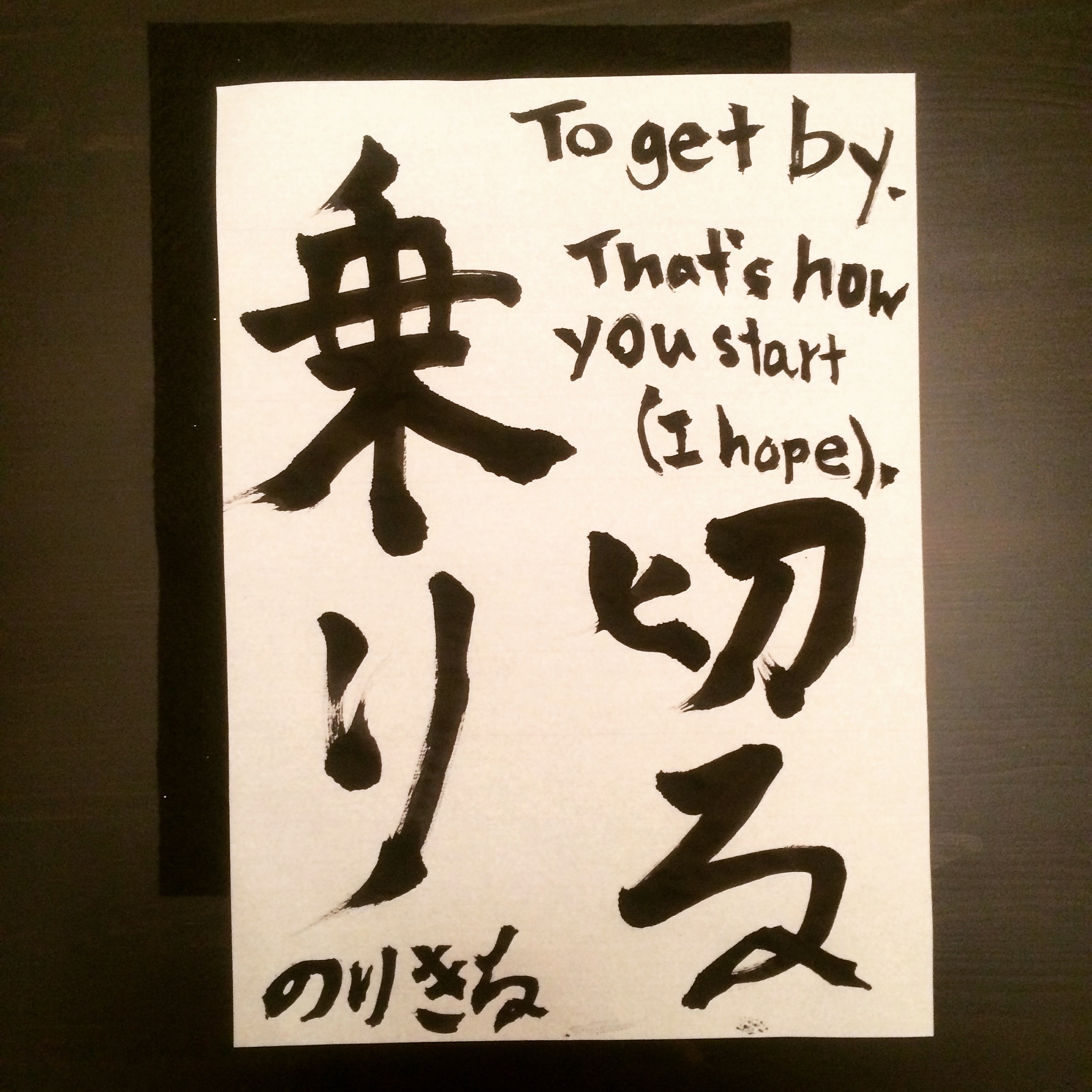
It was an interesting experiment. It lasted three weeks. It changed from a morning ritual to an evening one. It ended not because I ran out ink, but eventually, the drive. I also ran out of words. Once or twice, my first attempt was so bad that I had to allow myself a second. But more often than not I waited out the impulse.
What made one day better than another? What conditions allowed the brush take over one day, and prevented it from doing so on another? It’s hard to say. Sleep quality, maybe. My mood, definitely. To tell the truth, there were some, or maybe many, days that I really didn’t want to write anything.
“Let’s skip it today,” a voice often said. "Do you really want to take all that gear out just to write on kanji?"
“I know,” I always forced myself to reply. “It’s kind of annoying.
“But we’re doing it anyway.”
*
Handwriting has taught me that I don’t always want to do what is good for me. It started in fourth-grade. I didn't want to shrink my letters to fit in one line. My letters fit perfectly fine into three lines. But I needed to grow up; I would be in trouble today if my letters were still six-inches high. Ten years later, I didn’t want to change my Japanese handwriting either; however, if I hadn’t, I would have missed out on a chance to participate in what I now consider to be a very meaningful art form.
The lesson I took from the calligraphy experiment is the same: writing the characters took effort. I had to expend the energy to set up the equipment; I had to think of a word, either to jump-start my day or to encapsulate it; I had to submit myself to the pressure of having only one shot; and I had to live with whatever I came up with, though sometimes I failed at that.
But the effort was worth it. Takemoto gave me a seemingly remedial homework assignment that lead to a craft. In a lot of ways, life is also a craft – one that I’d like to master. Sadly, without conscious effort I tend to produce a scrawl, both in handwriting and life.
Happily, I think I know what to do about that. Now the challenge is to actually do it.
The One Who Wrote Back • Jim Landwehr

BY JIM LANDWEHR
It was writing that brought us together.
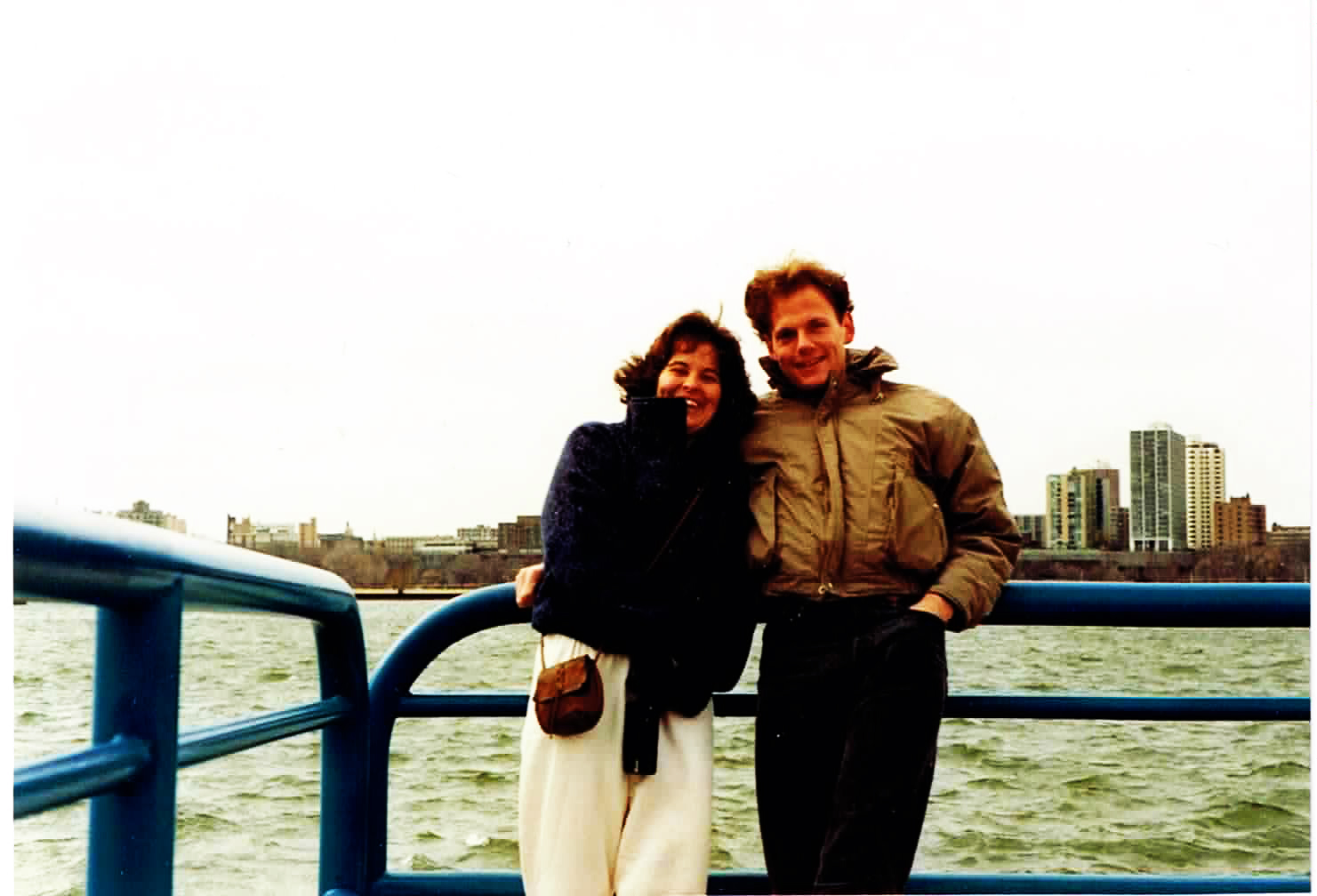
In 1986, I moved from my hometown of St. Paul Minnesota to Waukesha, Wisconsin just outside of Milwaukee for a new job. My brother Rob was also living away from home as a student in upstate New York. He and I wrote for a period of time and in one of his letters to me, he included letters from three of his female friends on his dorm floor. He’d told them I had just moved to Waukesha and didn’t really know anyone and that he thought it would brighten my spirits to receive some letters from them.
I don't remember exactly what each of the three had to say. Most of the letters were introductory in nature and seemed like honest attempts to be nice and cure me of my homesick loneliness. They were all away from their families as well, and we were all close in age, so had music, books and college life in common to talk about.
I was, of course, flattered that 3 women would take the time to write, so I wrote each of them individual letters back. Only one wrote back.
For a year and a half.
Donna and I became 20th century pen pals of sorts. This was before the age of e-mail, faxes, texting and Skype. Long distance calls were expensive. Postage for a letter was about a quarter.
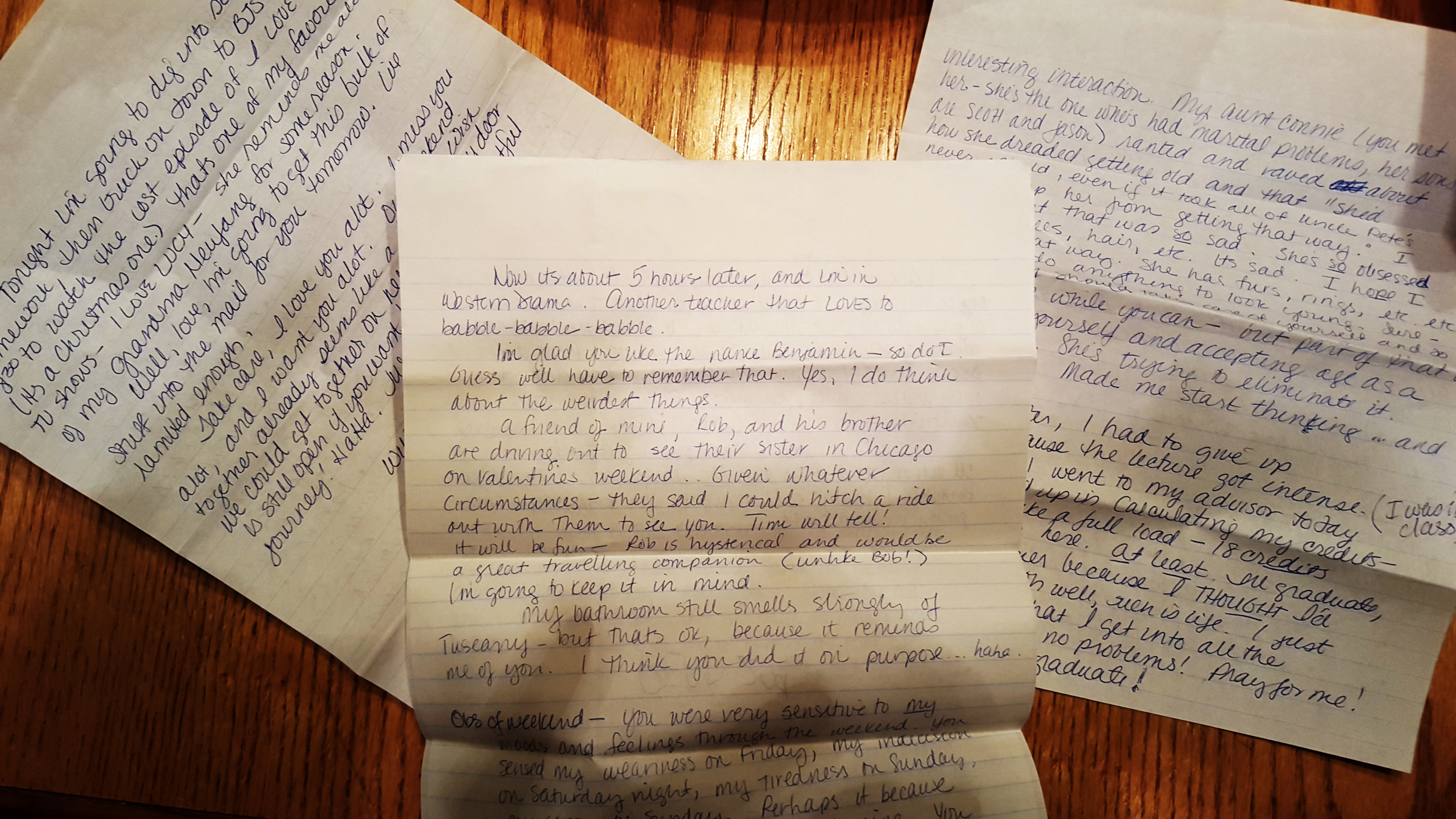
So we wrote, and we wrote, and we wrote. Short letters, long letters, letters about the trials of college and a new job, and roommates, and philosophy and religion, family, music, and books. We shared joys, concerns, doubts, beliefs and bad jokes. I sometimes took my writing to silly mediums like writing on napkins or the back of maps, just to keep it interesting. One of the things I recall her liking was my "Random Observations" which covered most subjects under the sun. Near the end of our writing things got a little spicier and flirtatious, neither of us knowing what the other would think, but daring to "go there" nonetheless.
Someone once said that writing is not a bad way to get to know someone – to become friends through writing before pursuing a relationship. I know it was true for me as it was sometimes easier to write things from the heart than it was to say them to someone I hardly knew.
Then one day she called. She said she was thinking about paying a visit and wondered what I'd think? I, of course, said I would love to see her. Both of us knew it would likely change our relationship forever.
And, man, did it ever.
I greeted her at the airport with a single red rose. We went to dinner at the Chancery and out to see the movie "Light Years" at the coolest theatre in Milwaukee, the Oriental. On the way home, "our song" came on the radio in the car, oddly enough, because it wasn't a big top 40 hit. When we got home we stayed up late and talked, and talked.

During the summer of 1989 she did an internship in Brookfield Wisconsin, which enabled us to try dating without five states between us. We were engaged that summer and married on June 16th, 1990. This past year we celebrated our twenty-fifth anniversary.

Looking back, it’s hard to say how this courtship would have played out in these modern times. Email, Skype and texting seem so impersonal compared to the anticipation of a letter from across the country. My wife saved every letter I sent her. In a fit of cleaning I threw most of hers out just before we were married. I managed to find a number from her that are post-engagement, but everything else is lost in the physical sense. What remains, are the memories and feelings of that time. I still cherish a handwritten letter from anyone. It is a lost art, one that we pursued with a passion so long ago. It’s my feeling that the emotional outpouring that goes into a letter is felt on the other end in a mystical way that is lost in an electronic medium.
I do know that it worked something special for us. To this day she says that my words were what attracted her to me. There must have been something in hers that drew me to her, as well.
It’s amazing what one simple letter can become.


