A Fortress of Order Within Chaos • Ingrina Shieh
BY INGRINA SHIEH
Urban landscapes have always enticed to me. I love how lines intersect with other lines and the way shapes within, through, on top of other shapes create the towering skyscrapers we recognise so well. At a distance, city skylines emanate a beautiful stillness and unflinching majesty while within them pulses the movement and sounds of millions of lives. People, machines, and people on machines, darting around at a frenetic pace; opportunities opening and shutting before me. It exhausts and excites me. And though I’m constantly surrounded by people, I can sometimes feel the loneliest I’ve ever felt. Such contrasts hold me captive between repulsion and absolute adoration, so I‘ve come to simply accept the city as it is: a fortress of order within chaos.
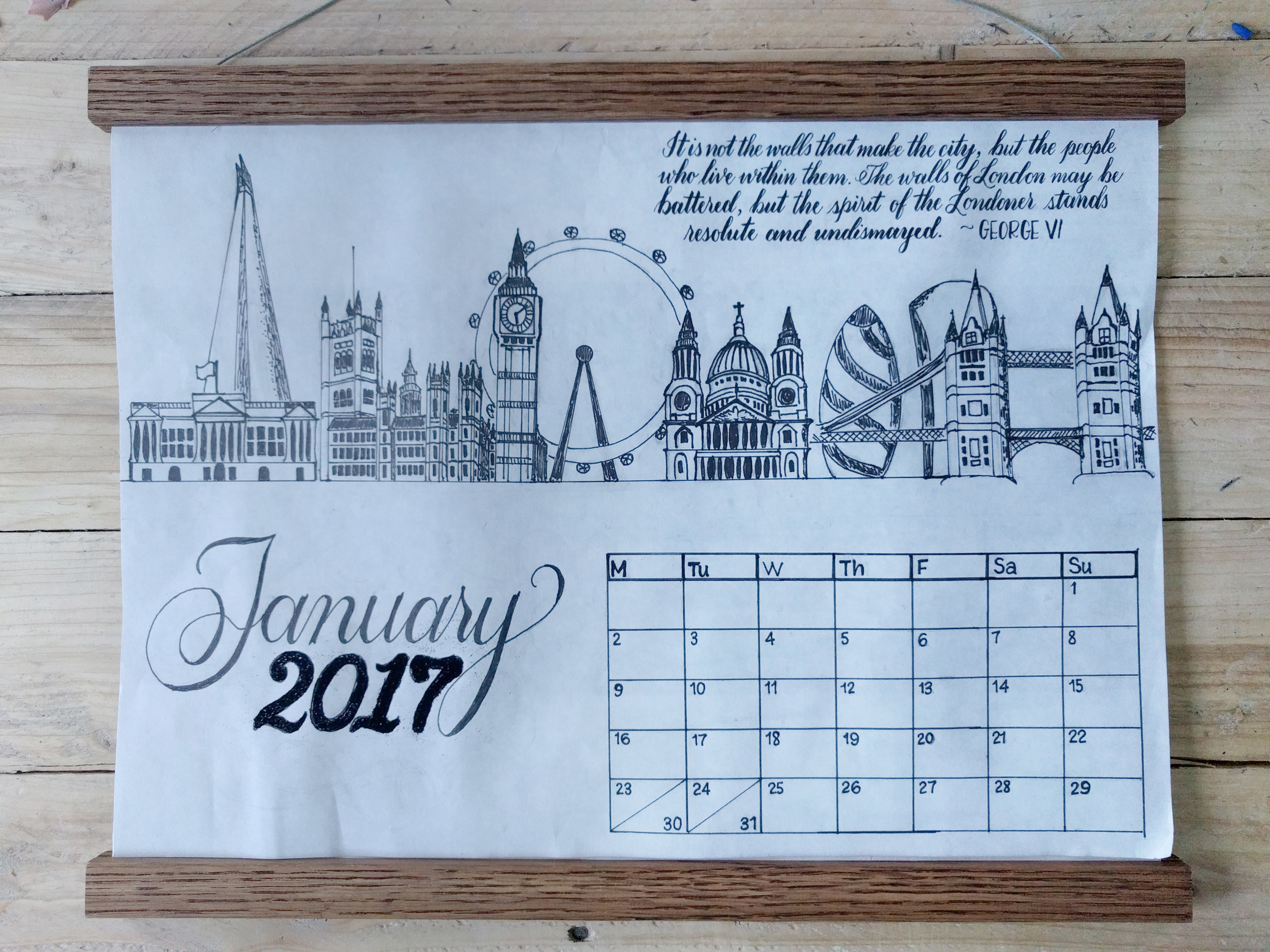
It thus seemed fitting that I design my first hand drawn 2017 calendar based on cities of the world. I don’t know what possessed me to draw it rather than design it with software, but once I got the idea, it stuck. I also thought working with cityscapes by hand might help me learn the basics of design and drawing: how to put lines and shapes together and how light hits objects at certain angles.
Naturally, I started off with the city I call home — London — though I had already done practise sketches with Venice and Boston. This sketch took a good deal longer and involved more ruler-ing and erasing than I’d anticipated, but two days before 1 January 2017, my shaky hands committed the sketch to ink, and I even embossed ‘2017’ for the hell of it.
As a tribute to Londoners, I added a quote by George VI: It’s not the walls that make the city, but the people who live within them. The walls of London may be battered, but the spirit of the Londoner stands resolute and undismayed. The end result is not completely what I had envisioned — a little flat, lacking in character and depth, a little boxy — and I realise that I need to upgrade my drawing pens. But this first step has provided a foundation for the coming months’ designs and further ideas to zoom into cities on a micro level.
I’m excited about interacting differently with the iconic buildings I see so regularly in person and online. In drawing London, an unexpected intimacy came from having to examine details — ornate and simple — and deciding how to transfer them to paper. When I passed Big Ben and the Palace of Westminster during my early morning run, I noticed how many elements I missed or couldn’t fit onto the page. But, by studying it as I had, I was able to appreciate its grandeur and craftsmanship more deeply and to admire the fact that, long ago, this icon was borne out of someone’s careful etchings on paper.


Ingrina Shieh lives and works in London, where she is learning design and lettering in her small loft. When her hands are hurting, she takes her legs out to run, walk, or cycle around London's windy streets. Or she goes to buy more paper and pens.
I Live Everyday With the Fear of My Observer's Shame • Ty Douglas
A conversation with Ty Douglas, founder of Maybe U R Like Me, which connects people across borders of identification.

This interview capped off our month-long exhibition, Maybe U R Like Me, which featured a new image every single day. We were so excited when we first heard about this ongoing project by Ty Douglas. There is something magnetic about the images, but also the essence of the experiment: creating an exchange between two total strangers through a single sentence, and sentiment. Maybe U R Like Me connects people across borders of identification by establishing the possibility of a sameness, and similarity, that was otherwise unexpected. On each strip of paper is a confession of Ty's that he asks a passerby to draw from a bag. They vary in intimacy and seriousness, but are all relentlessly true. As Ty mentioned at the outset of the project, "We can dissolve fear by understanding that the things we don't commonly say are the things we have the most in common." To conclude the exhibition, we asked Ty a couple questions about the project, but also his sentiments about the then-recent events that took communities by the heart.

Handwritten: Your project is rooted in anonymity, and yet, it is deeply personal. You bring the private to the public, and this creates a powerful message. How did this pairing come about, and why is it important to you?
Ty Douglas: Honestly the idea came from the dark ether of last minute panic. I was signed up to be in a street art performance during Armory Week and I was planning on doing a live painting where I would make a poster that said "I am not afraid of you" whilst wearing a hot pink leotard and makeup. In my typical style I waited until the last minute to prepare and found myself without materials so I improvised something I thought would be fun and interesting. I had never had a single thought relating to Maybe U R Like Me specifically until the day of the show. It's funny how the pressure of time and procrastination is responsible for what I personally consider to be one of my best ideas yet.
Handwritten: In the wake of Orlando, the heart sinks. But as a society, we seem stuck in a continuous loop. How do you continue to rise after these incidents, and what can we do to interrupt this cycle of fear?
Douglas: It being so close to the incident, I'm not sure I have yet risen. The people lost in Orlando and the people who struggled with injuries were not just family members in my mind, they were/are me in a very direct way. The campaign slogan is "We are Orlando" and it's the first time one of those slogans has really hit a fundamental truth. We didn't lose 49 separate people that day, we lost 49 pieces of our own selves and I think I will be mourning them for a very long time and celebrating the medical victories of the survivors for just as long. Maybe U R Like Me, maybe u were killed by a broken person full of rage, maybe u survived. Maybe u will live more boldly and proudly in response.
Handwritten: It can be terrifying to put oneself in the public limelight. The internet can make easy targets of the visible. How comfortable are you in being seen, and have there been things that have changed how you approach your appearance, and appearing on stages or screens?
Douglass: This is a funny question because my online presence is very exposed and borderline obnoxious so people often get the impression that that's who I am, and even more, they get the impression that I'm free from fear. The truth really is that I live everyday with the fear of my observer's shame for me. I am ashamed of the shame other people hold for me for being who I am. Now of course the weight of this varies day to day but what I'd love for people to understand (maybe via this project) is that overcoming fear and shame isn't a matter of conquering, it's a matter of diligence, practice, and relating to the people around you. I don't believe in freedom of fear I just believe in consciousness.
Handwritten: Have there been any other recent events that have either inspired, or reminded, you to keep creating and connecting?
Douglas: I lived in Bed Stuy for maybe 3 months at the beginning of this year and was verbally harassed on the street quite a lot. I definitely don't have it as bad as others, but the fact that I couldn't feel safe once I walked out my door sparked the train of thought that I think led me to this idea. It's difficult to say that it wasn't personal because as a person...it feels personal, but I think ultimately the people who shouted things at me were harboring more pain in themselves than they were projecting at me so I forgive them and wish them well. But I did move.
Handwritten: What is one thing you hope Maybe U R Like makes people feel, think, or do?
Douglas: I'm not really sure to be honest. I think what I'm always looking for as an artist is just to connect with the people in front of me. There's a whole aspect that I haven't really revealed to anyone yet and that is the satisfaction of the hand to hand exchange of this. There is such a power in sharing confessions with strangers and having them recognize you by it. It's extremely vulnerable and it makes me nervous, but it's as intimate as real and true romance. So I suppose in a lot of ways it's a very selfish project.
Handwritten: At the end of this month-long exhibition, how will Maybe U R Like me continue?
Douglas: I'd love to continue it in it's very raw form. Appearing in public places and interacting with strangers. There has been a performative aspect of it on the Say Yes stage (find Say Yes Electric Collective on facebook) where I laid out big papers with the prompts "Living in New York is..." and "Being Queer is..." at the top and all the guests were invited to write their answers on the page. Other similar iterations of it will emerge I'm sure, but it's not a project that I feel needs a lot more to be effective so I will just give it my time and continue to put it on Instagram until the next wave comes. I will say though I am looking for a partner who is maybe interested in doing the photo and video documentation in a long term way so if any of you beauties out there are interested please email me at tydouglasart@gmail.com.
A special thanks as well to all of the strangers out there who's eyes met mine with understanding after picking their confession. That brief moment of real human intimacy means more to me that I would have ever predicted.
The Distance Between our Public and Private Selves • Aine Greaney
In this essay on deleted pasts and new beginnings, Aine Greaney takes us around the world in an old composition notebook: the only one she brought with her when she emigrated to America. With the start of the new year just behind us, we find this piece more timely than ever, as we revisit filled pages from the past, and look toward the blank ones of the future.

BY AINE GREANEY
December 21, 2015
This morning, I ate some oatmeal, drank some coffee and penned the last page of my personal journal. I flip back to the first page: June 30, 2015. Inside this bound book are almost eight months' worth of thoughts, uncertainties, musings and arguments.

I don't write in my journal every day, but on those weekday mornings when I do, when I set the alarm to get up extra early, reflective writing makes the rest of my working day happier. On the weekends, journaling acts as my transition from working me to creative me—and believe me when I tell you that the latter is the more authentic version. In fact, journaling has taught me this: The shorter the distance between our public and private selves, the happier we are. Stephen King may have been referring to an entirely different type or genre of writing, but he was really on to something when he declared that writing is about “getting happy.”
I started keeping a journal in my teenage years while I was attending a small-town convent day school in my native Ireland. Some days, I can still shut my eyes and see myself back there, still dressed in my navy-blue school uniform, sitting inside my bedroom window, my geography and math texts pushed aside as I scribbled in an old composition notebook.
We were the first generation to benefit from a 1967 law that granted free, secondary-level (high school) education to every child in the Irish nation. So I was supposed to be grateful for that school uniform and those textbooks that had been denied my mother and my grandmother. I was grateful. Still, I recall those school days and nights as being full of square-peg-round-hole malaise and anxiety. In public, I sang with the choir in the school assembly room. In private, I wanted, desperately, to raise my own, individual voice. Journaling was the only place where this was possible.
However, when I emigrated to America at age twenty-four, I abandoned all but one of those notebooks. I think I believed that, in my bright, new country, in a nation founded on the notion of deleted pasts and new beginnings, that that melancholy, soul-searching me was best left behind, left where it belonged.
I did bring one hard-cover notebook into which I had transcribed some of those writings from my late teens and early 20s. In the flyleaf of this little red notebook, I grandly wrote, “Collected poems, rhymes and thoughts.” Now, when I re-read those hand-written pages, I see just how wrong I was to believe that our past has ever really passed. I am shocked at how well those “assorted rhymes” still describe the middle-aged me.
For example, here’s one of those entries that I remember writing as I sat propped against the pillows in my twin bed in my parents' house:
My books stand orderly on the shelf
Masks for that hidden self
Hoping they can quench the flame
Of numberless passions with no name.
I talk and talk; I make my stance
‘You’re such good company,’ he said.
But what would he say if, perchance
He saw me sobbing in my bed?
I find it comforting to read this unchanged part of me, this struggle between the private and public self. I like that we have certain personality traits that are in-born or immutable, and that there is, at all of our cores, a perpetual and lifelong mystery.

In the basement of my house in Massachusetts, I keep boxes of my completed journals, each one chronicling six to twelve months over the course of my twenty-nine years living here. My arrival day at JFK Airport, New York. That hot, AugustSunday when my American husband and I said, “I do” before a town judge. The day an editor wrote to say she was going to publish my first short story. I remember these. But, if it weren't for those journals, many or most of the less auspicious occasions, the ordinary mornings or afternoons, would be gone from memory recall. For example, in the journal I just completed, on August 18, 2015, I wrote that “I am here alone, finally, and the internet has made me vain and distracted, and these two things (vain and distracted) are very connected.” I cannot remember feeling that—not without re-reading my own handwriting on that page.
Without all of these hand-written journal pages, how much of the past two seasons would I actually remember? How well could I evoke the sounds or feelings or atmosphere of one ordinary hour or afternoon in July or August or September? What summertime walks did I take? When did the cherry blossoms drop their pink? When did the marsh grasses near my house turn dry and brown with summer heat? Now that our garden is under snow, I find it hard to close my eyes and re-see that garden when it was lush and colorful with summer perennials.
Some days, I feel as if I am on a Japanese bullet train ride through a fast-disappearing landscape, where, by the time I sit up and look out the window, everything is already gliding out of eye view.
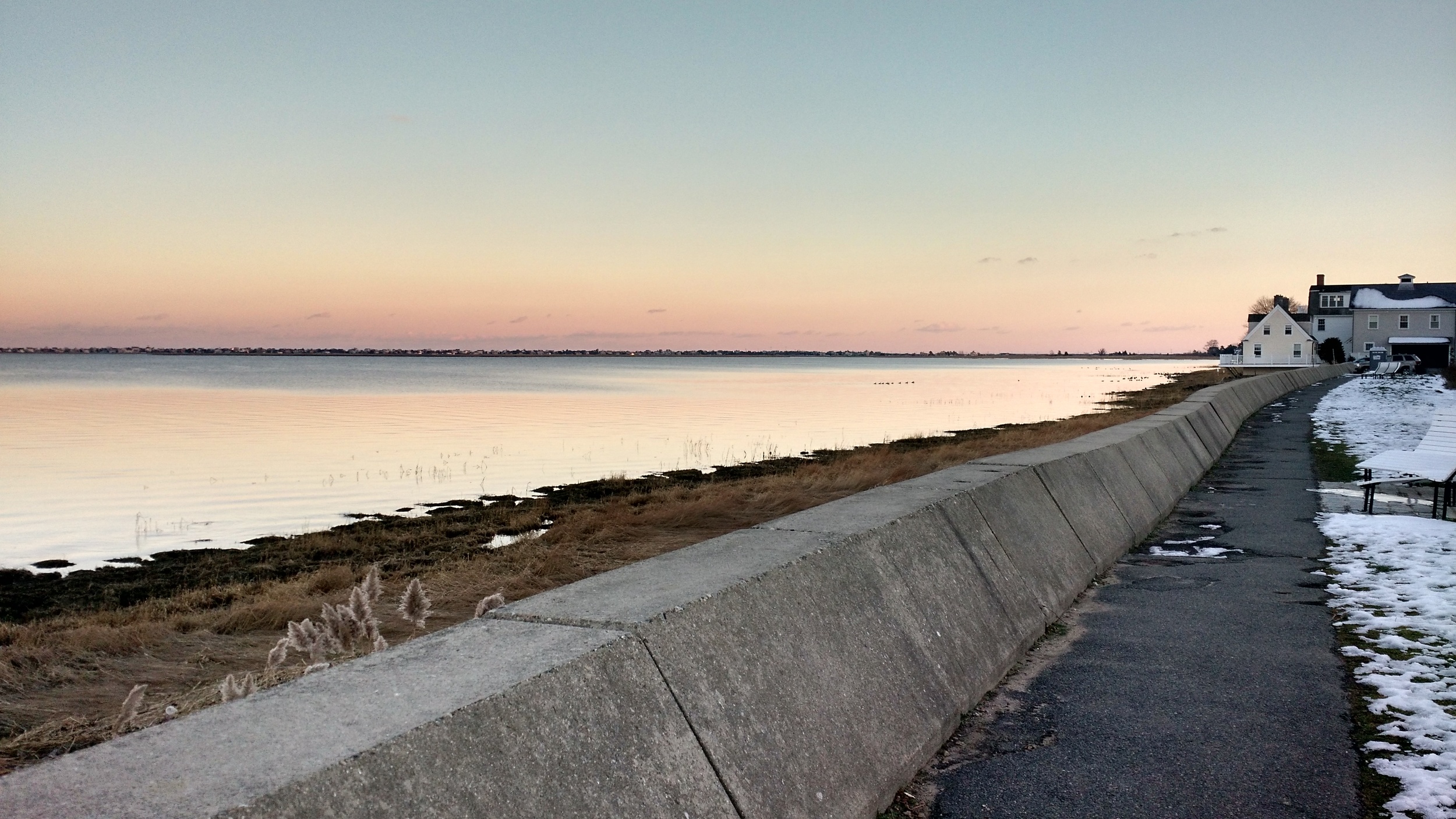
Then there are those days when I’m driving home from work, my head still buzzing with deadlines or with snippets of workplace conversations, and I look out my car windshield at the roadside pine trees, a flock of geese flying south through the paling sky and I think, This evening, this moment in time will never come again. So I’d better shush my mind to look---really look--around me. How many of these afternoons are left in my life? I don’t know. None of us do. Morbid? I don’t think so. These moments of mindfulness are how we hit the pause button, how we behold our own joy. When we write down those moments, when we record them in a journal, we are creating the narrative—the only half-way reliable narrative—of our precious and finite days.
Henry David Thoreau said that he traded his comfortable town home for a rustic woodland cabin because he wished to live deliberately.

At least in the abstract, some of us covet this concept of unplugging and retreating from our hectic and digitized lives. Who wouldn't like to slow down time so we can feel the heft and length of each passing hour?
But nowadays, how many of us would adapt this as a permanent and year-round lifestyle choice? The woodland WiFi and cell phone connections would be spotty at best. And, as someone who grew up in a thatch-roof farmhouse without indoor plumbing or central heating, the discomforts and inconveniences of that bare-bones cabin life would, sooner or later, override the joy or mindfulness.
So in my cozy and well-heated writing studio I keep a set of ballpoint pens and write in my notebooks to record the ephemera of my life. Without these journals, without this writing, most of the past seven months would be gone.
This morning I closed my completed journal and crossed to my studio bookshelves to stash it there until, during one of my sudden and always overdue clean-outs, it will end up with all the others in those basement boxes.
I know there will come a future day when I will go to the basement to search through the shelves for an old photo or a lost gadget and the journal box will call to me, as it has before. I will open today’s completed journal at a random page and sit there under the basement’s Florescent strip light in the company of my previous self, reliving a day from 2015. In all my past journals, I see recurring themes: the yearning for solitude; the immigrant’s search for an existential home; and my almost lifelong struggle and vacillation between my public and private personae (as in the 1983 piece above).
When I read them, I’m also struck by how prophetic some of my past writings turn out to be. It seems, in retrospect, that the writing knew much more than I did. Too often, I see that I should have listened to or acted upon my own observations.
Today, I select a new book to set on my desk underneath the east-facing window of my writer’s studio. The new blank journal sits here, empty and waiting for tomorrow.
Artistic Expression is as Essential as Breathing • Mary Fratesi
In this micro-reflection, Mary Fratesi finds delicate words for the most difficult of experiences: watching a loved one in pain. While this piece began as a pairing of two images, which has a fluency of its own, Mary takes us beneath the tree, and between the lines.
BY MARY FRATESI
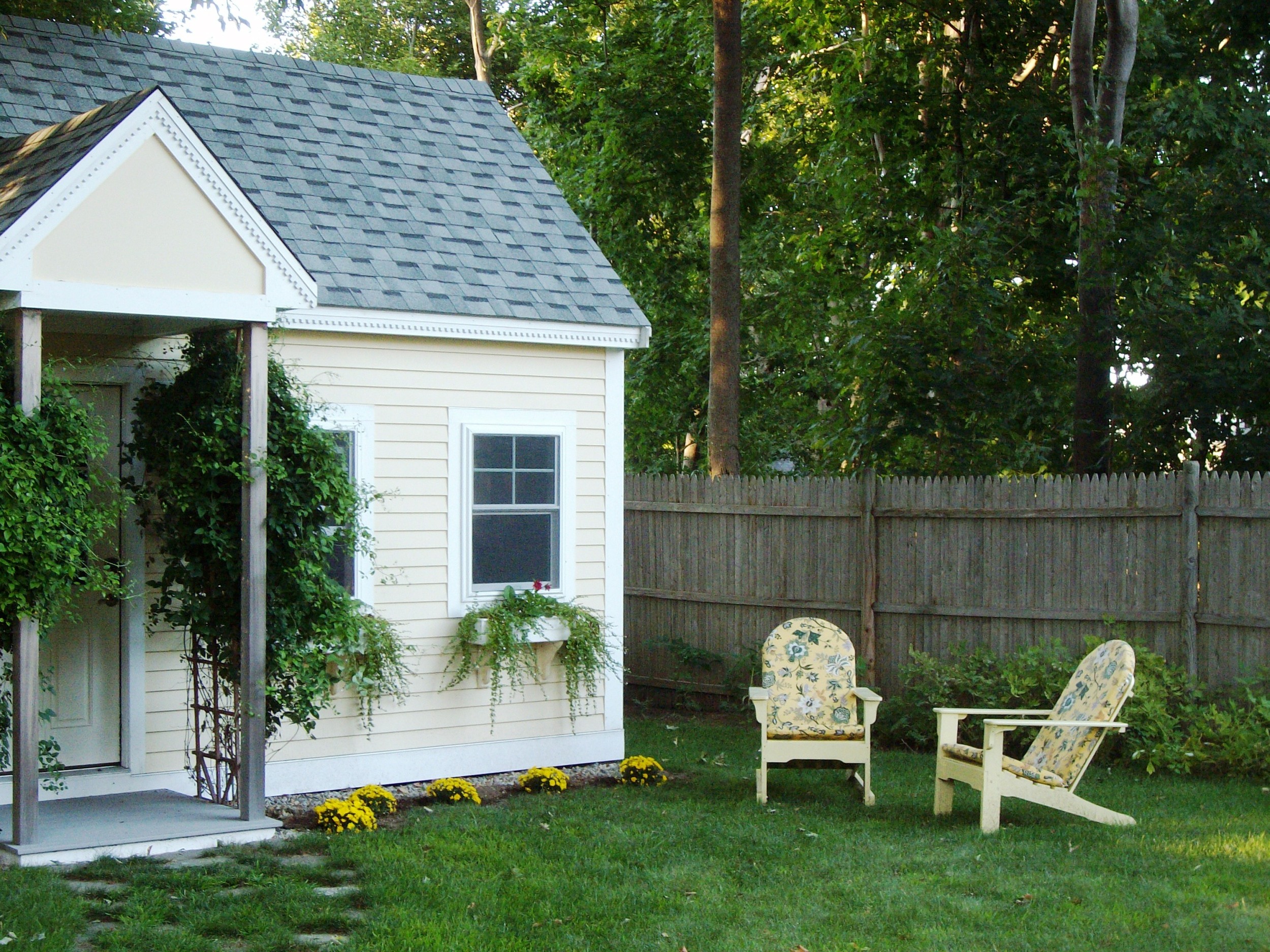
Expressing my own thoughts pushes me outside my comfort zone. This is a good thing. Looking at these two pictures, you might understand something of the essence, but the context would be necessary to connect the thread for the lived experience.
The building is Northwestern Memorial Hospital, where my daughter is in ICU. I have watched epilepsy nearly rob her of her entire life. The emotions are raw and consuming. I have difficulty pulling cohesive thought together and onto paper.
But I was drawn to their togetherness—the image and these words—as I love the act of writing, for lack of better words. These words are my normal every day writing. I studied calligraphy when in High School. I tremendously enjoyed it and practiced daily for hours. I am often told I am a good writer and seem to produce written bodies of work that often surprise myself. Without question, and speaking for myself, writing and photography are a passion through which I share myself. I tend to keep everything inside, preferring to focus on the needs of others, to help others realize their own gifts and to be their best.
When it comes to expressing the great deal of sadness I have come to accept, I'm flooded with so many thoughts, that I find it tremendously difficult to find the words, in any semblance of cohesiveness. Artistic expression is as essential as breathing.

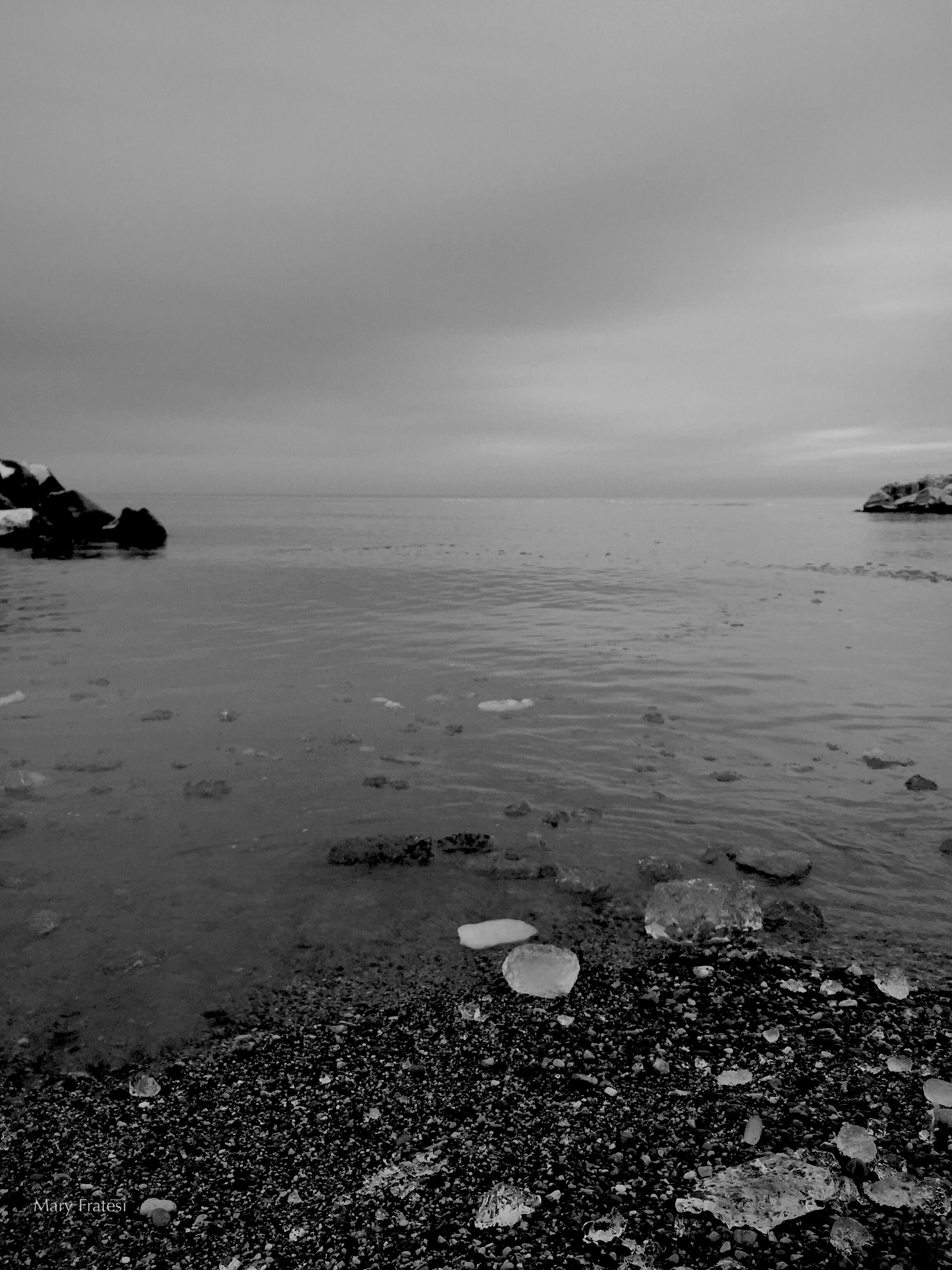

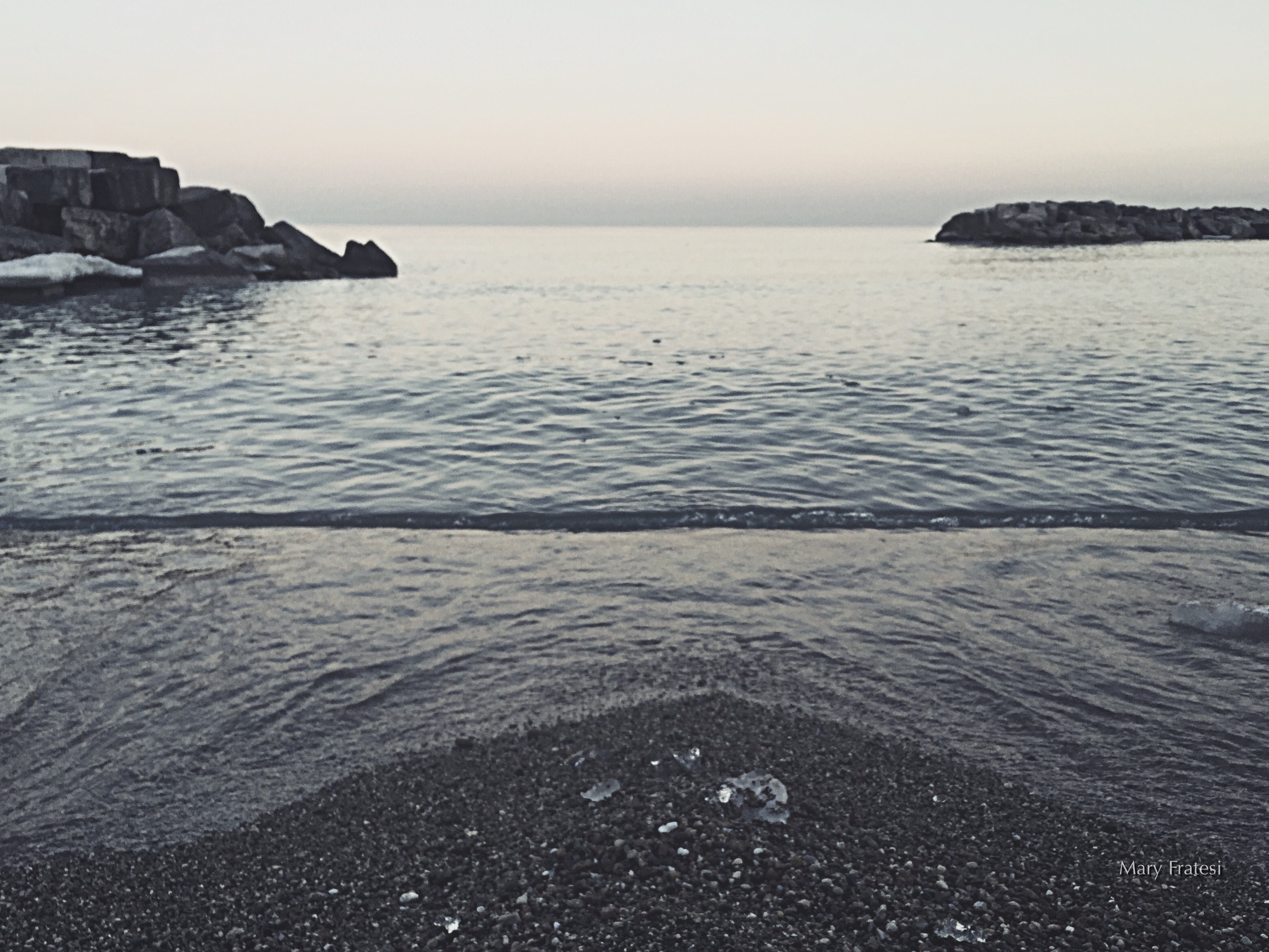


Mary Fratesi recently uncovered this photograph the other day, which is a picture of her practicing calligraphy when she was near 15-16 years of age. In the image, she is in her high school art classroom.
I Don't Create With Any Intention of Meaning • Tatiana Roumelioti
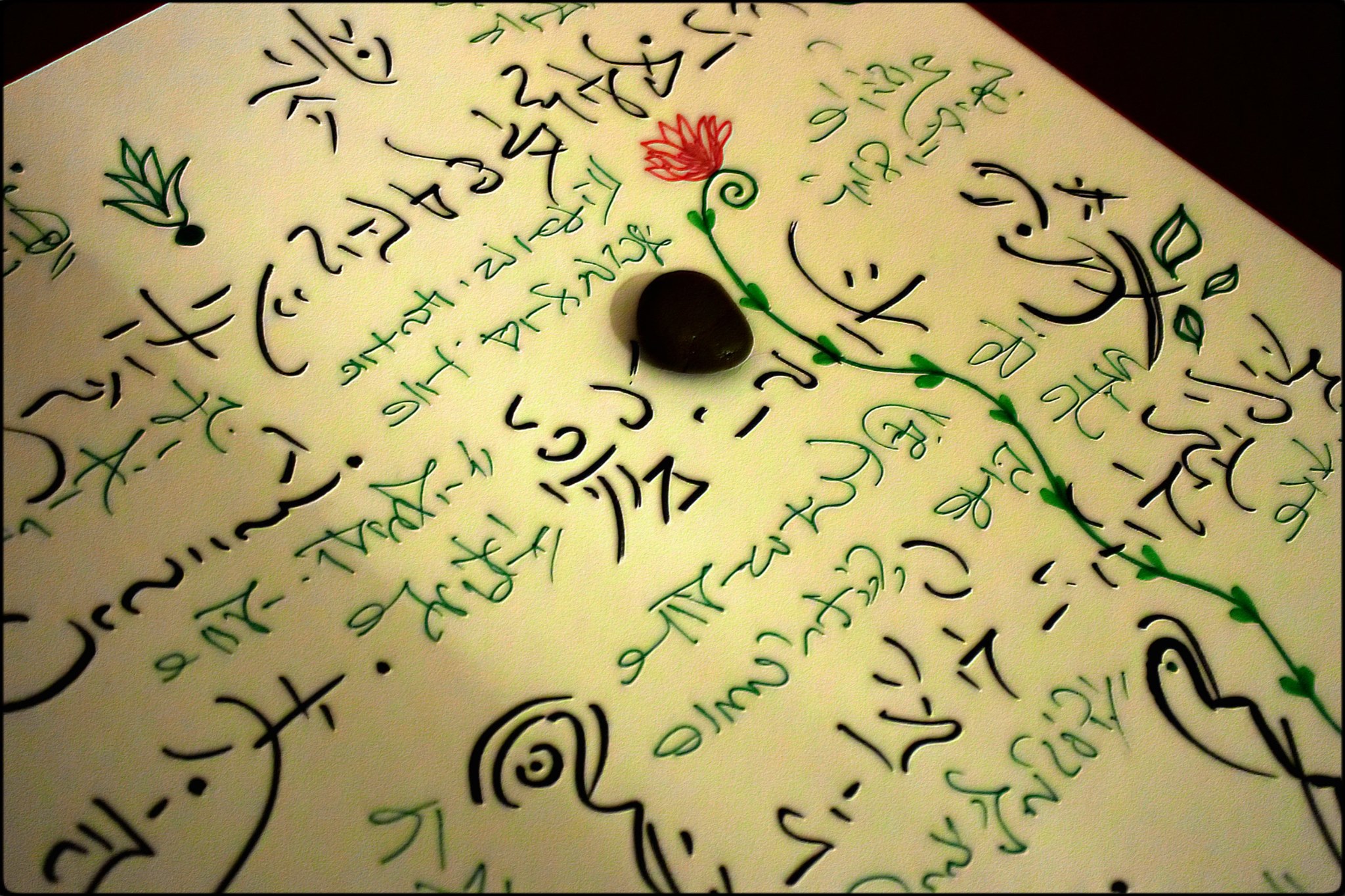
It'd odd how the simple coordination of individual strokes leads to the immediate recognition of meaning. But what happens when those strokes are combined new lines? Artist Tatiana Roumelioti has been exploring the bridge between art and words. You could say she's invented an alphabet, but that would be putting meaning where there is none. And so, we leave her words as they are, and their meaning up to you.

By Tatiana Roumelioti
Born on November 9th, 1988, in Athens, Greece,
I am a self taught artist,
and I am fascinated by both art and writing.
I love to bridge the two by using my imagination
to invent letters, glyphs, symbols, scripts.
I don't create with any intention of meaning about them,
so I cannot give
translation of my work.
However, it can speak by itself
on a personal level,
like any other form of Art.



I Saw in My Mind a Vision of them Sparkling with Joy • Adrienne Harvitz
This micro-insight from Adrienne Harvitz reminds us of an important tradition: to create brand new ones. Ignoring the standard "To" and "From," Adrienne created gifts out of the paper wrapped around the presents for her children. Did most end up in the recycling bin? Sure, but one didn't.

By Adrienne Harvitz
This Hannukah, when I got to wrapping gifts for my kids, a sort of sinking feeling settled into chest when I reflected on what I was teaching and feeding them through the process of honoring a sacred ceremony of gratitude and reverence with consumerism, AKA "presents."
The receiving of objects feeds an egoic entity — a little green-eyed gremlin — that lives deep within the belly of every child. The gremlin has with an insatiable appetite for ownership, stuff and covetousness, and grows hungrier and more snarly, shouting words like "mine!" and "don't touch my stuff!" and "mom, can't I open another one?" to family members and siblings with more vigor and chutzpah per every present opened.
This is the process whereby the giving of presents takes precedence over the act of being present and defeats the true goal of holiday season: to share love, gratitude, joy, story, and meaning with our families. So this year, when I got that feeling that I was feeding the green-eyed gremlin, I stopped, took a breath, and asked myself what I really wanted to feed and how to do so. I realized I wanted to feed my children positive beliefs about themselves, and the intention of love and appreciation for life that was behind each gift I bought for them. When I imagined them playing with or using each gift I bought them, I saw in my mind a vision of them sparkling with joy, or shining the light of their unique talents, abilities, and delights out into the world. So I decided to give my children the gift of meaning and conscious words with their gifts, writing on the plain foil and recycled newspaper wrapping paper messages to them about just how I love them, wishes, and dreams I have for them, how I hoped they would enjoy their gift or use it to share their inner gifts and joy with the world, or some positive affirmation about them each as an individual.
In the end, most of my words ended up in the recycling, but my son did pin up one of the wrapping paper messages on his wall, and I know that they heard the words from their mama's heart, and not just the sound of shredding gift-wrap echoing in their minds after the candles burned down each night of Hannukah.
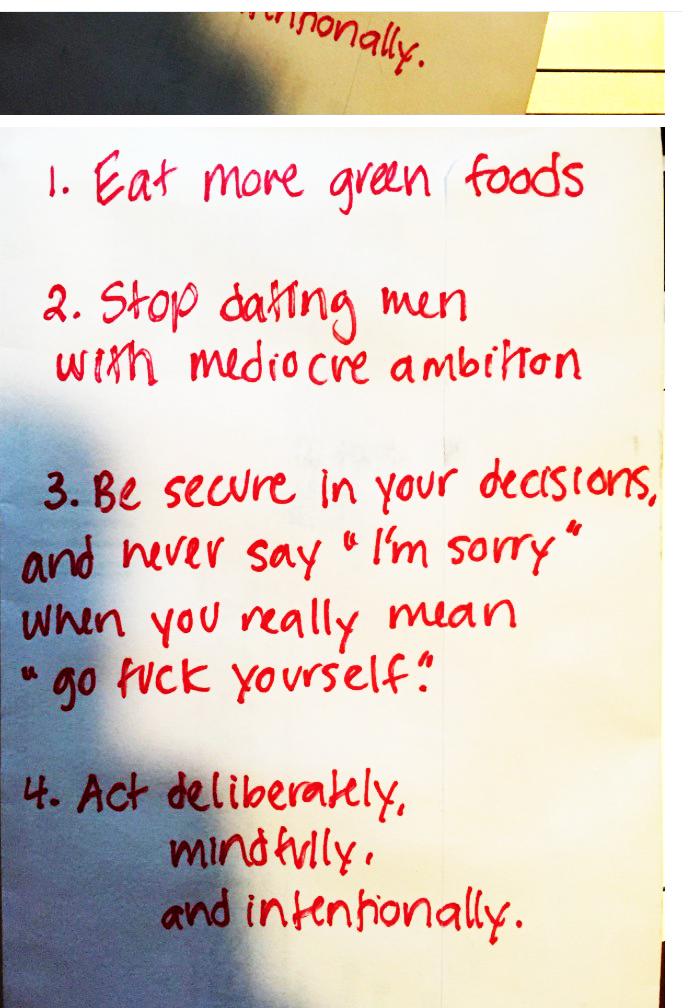
Resolution #2: Stop Dating Men with Mediocre Ambition • Kaitlin Kominski
If you haven't made any resolutions this year, here are four great places to start. May your resolutions be short, sweet, and sharp.
I Wanted to Build a Universe • Tonianne Bellomo
What happens when it's not just you, the writer, who struggles with the screen, but your characters? In this lyric essay, Tonianne Bellomo walks us through the negotiations she makes with her characters. What does she do to bring them to life? She builds them paper homes.

By Tonianne Bellomo
I wanted to build a universe.
I wanted to write stories like the ones that made me forget reality. I wanted to build worlds from letters. I wanted to draw in the margins and give readers a glimpse of the realms that rested behind my eyes.
I can’t do that on a computer, at least not at first. There’s no highlighting, scribbling, pasting, scratching out, ripping. There are just clean white backgrounds, perfect font, and the tapping of keys.

That is not world-building; that is a job.
The novel I’m editing is rough, probably in every sense of the word. It sometimes gets so dark that I forget which way is the way home, and I find myself suffocating.
It makes it hard to write.
The computer makes it worse. I feel like I’m cheating. My characters hate it, too. It’s like they refuse to be slighted, refuse to be clinically typed in perfect Times New Roman onto my computer rather than scrawled in a bastardization of Catholic school cursive. They’ll just stand at my mind’s door, arms crossed, heads turned away like I’ve insulted their mothers.
So, I give the characters what they want.
I give them paper homes.
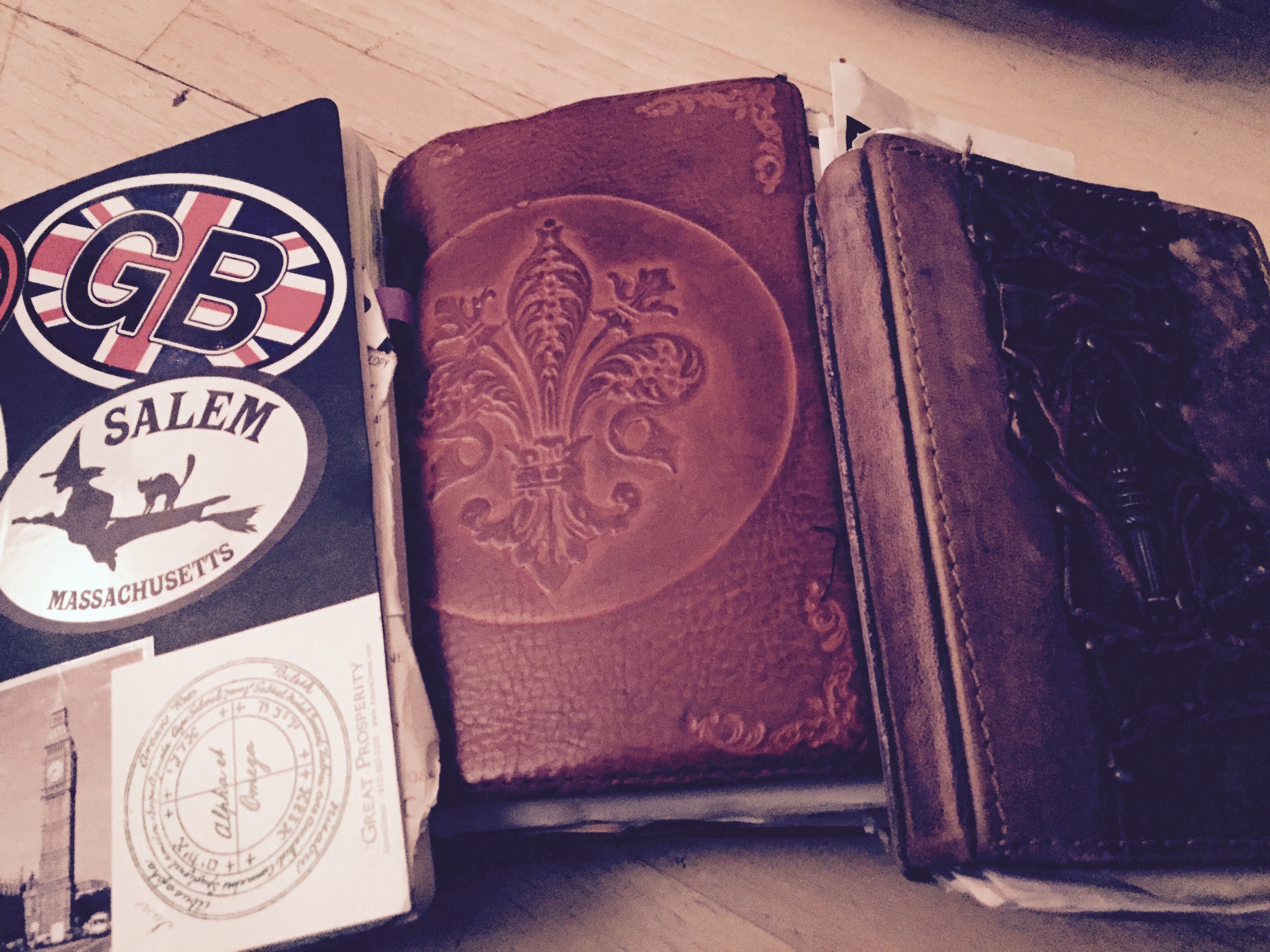
The characters grow in those spaces, whether I realize they’re characters or not. They are lines from a poem, a feeling evoked from a song, lyrics, ticket stubs, a Polaroid. The characters are a lot of things that would have never come together if I didn’t handwrite first.
Handwriting makes it feel like art.

I know by definition writing is an art. I just never feel like I’m making art. Handwriting my stories, though, and putting in all those extras makes me feel like I’m creating worlds for them, like the little girl with a dollhouse that she’s putting together.
Tristan, the protagonist of my novel, even has a journal that is featured on his blog. It originally just started out as a Tumblr blog, but I couldn’t “feel” him in that blue screen. I went out, bought a Moleskin (because he would totally have one) and started drawing and writing in his voice.
It made me feel like I could breathe again. Like the darkness wasn’t so suffocating because I could understand his thought process — I could follow his thoughts home.

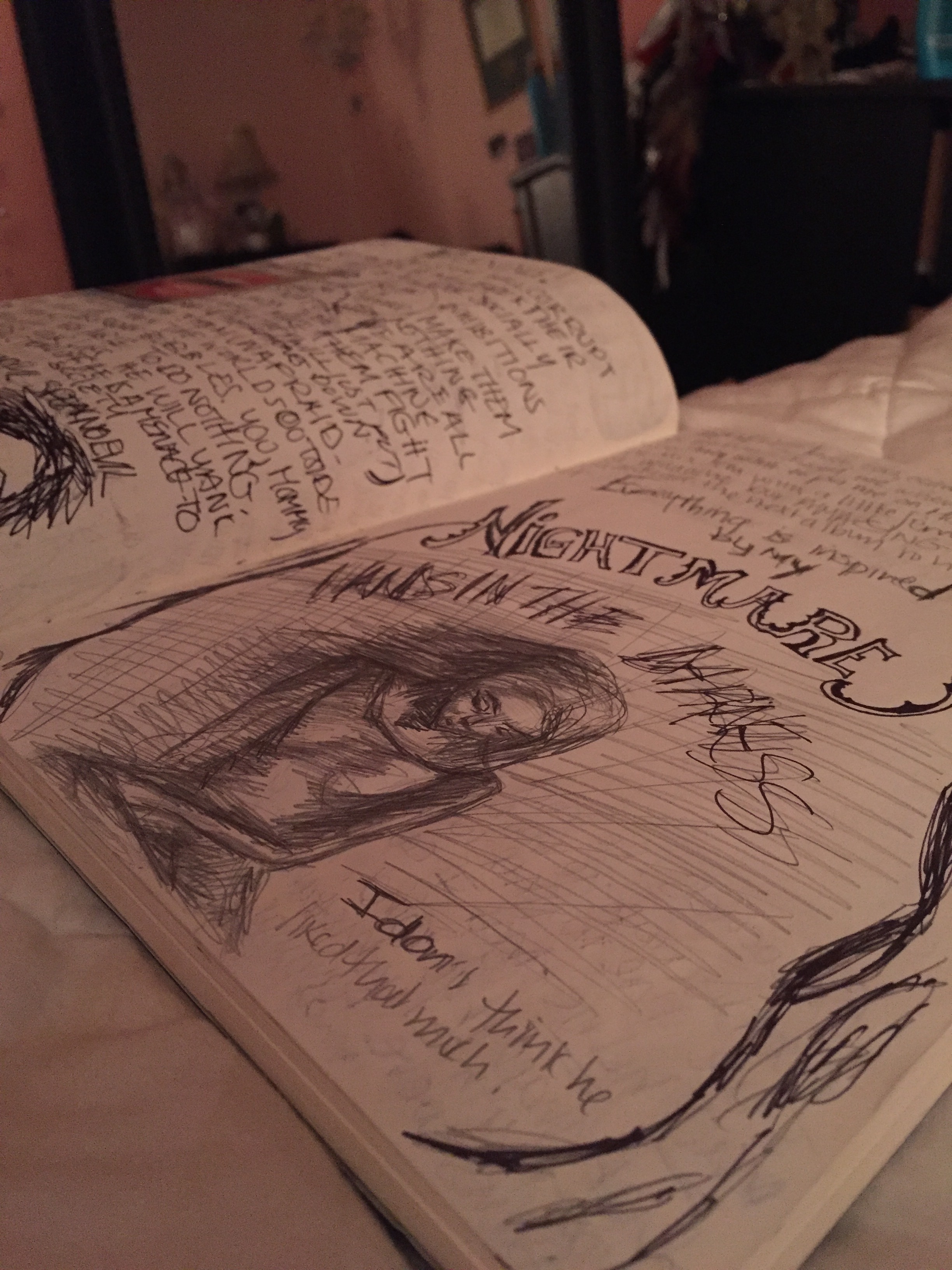
He’s real now. The moment I handwrote his first entry, he became real. The fourth wall broke, and he fell into reality. I can see him sitting in O Café sipping his Americano while sketching in his journal or pasting photos of Richey Edwards or Ian McCulloch onto the pages.
Handwriting and plotting my stories in my journal — it all helps me make worlds. It helps me create the universes that I want my readers to inhabit. And it helps me remember that before all the workshops and degrees and frustrations, there was just me, my journal, and the universes I wanted to build.


Tonianne Bellomo is a graduate of The New School MFA program and an adjunct lecturer at Baruch College where she teaches writing. She is currently editing a novel and blogging from her protagonist's POV at http://wax-and-wings.tumblr.com.
All of Us, Once Angels, Who Finally Finished Falling • John Reed
Poet and playwright John Reed takes us inside his head, where his sonnets start, but also on a bus, where his sonnets form, and finally, where they end up, scribbled onto a napkin. It's how he escapes doubt, and discovers form.

BY JOHN REED
I usually work on sonnets for a long time in my head, then write them out by hand. Two out of three times I'm not feeling it, so I toss it, and think again for a while. I had to take a bus somewhere on a school trip, so I wrote this one down then. If I can get to the end without doubting, I usually am fairly satisfied.

Sonnet Typed Below:
80
I knew we'd be seeing each other again.
It looks like everyone else is here, too.
All of us, once angels, who finally finished falling.
We were so crazy about here and there,
when the little difference was "always,"
or the other eternity, "never."
Just listen to all of this childless laughter.
Now we are gone, and here we can stay,
you and I, who are you and I no more,
who tore apart our daughters for the bears,
who offered our sons to God, LOL,
who are, we know, we've forgotten who,
who are now outside of ourselves, without when.
You can read John Reed's bio on his website here, as well as praise for his sonnet-making abilities, which go something like this: "John Reed exploded my concept of a sonnet." Erika Anderson, Electric Literature.
I Have Come to a Conclusion • Ali Osworth
In this micro-ritual, Ali Osworth lays out the key ingredients to safeguarding ink's elegance, and her daily quest for grace. For those of you looking to slow down your mornings, taking a look at what's on your desk is a good place to start.
BY ALI OSWORTH
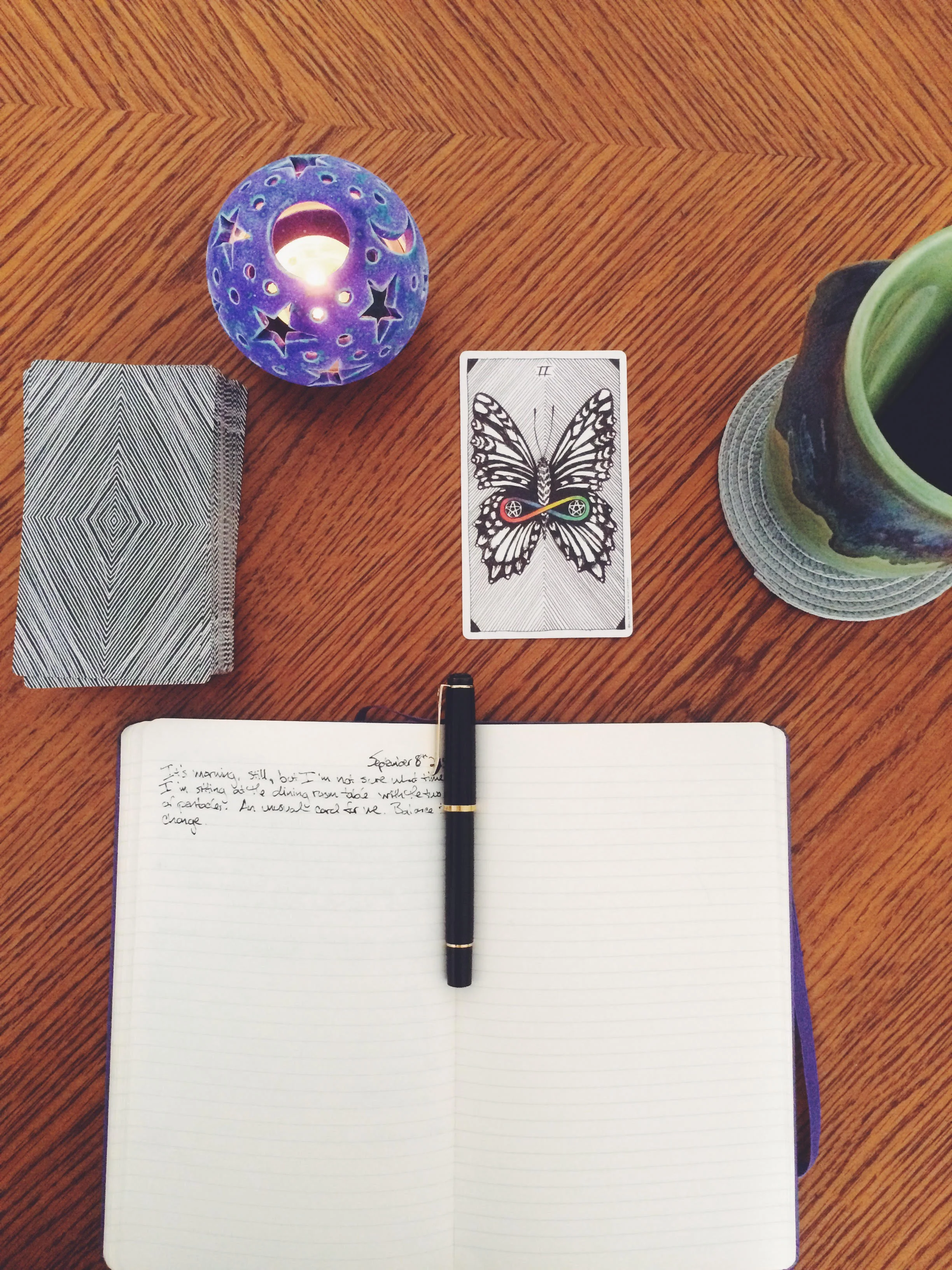
I have come to the conclusion that I'm a better, saner person when I slow down in the morning. I light a candle (the holder for which a dear friend gave me long ago), brew some tea (Lady Grey) and get out my tarot cards. The card in this photo is the two of pentacles — taking on new roles and balancing them, all with grace. It's the quest for grace that brings me to handwriting in my journal (most of the time, with a fountain pen that used to be my father's). Without the half-hour of journaling, of connecting my thoughts to my body as I use my fingers to move the pen across the page, I lose the grace. My movements become less refined. I lose ink's elegance. I become as fragmented as Tweets — 140 character, byte-sized.
The Screen Test • Joyce Chen
Is the notebook half-empty or half-full? In this essay, Joyce Chen sets out to test and trust her hand, a routine tethered to time, with the hopes of avoiding the pitfalls of resolutions by resolving to reflect. Are you up for the screen test?
BY JOYCE CHEN
I’ve never been one for New Year’s resolutions.
Not because I don’t believe in the psychology behind them – God only knows how much I am an advocate for self-reflection and self-improvement – but because I’ve always had a sneaking suspicion that New Year’s resolutions are actually made to be broken. The way they’re worded and thought about almost always sets the resolution-maker up for failure: “This year, I resolve to work out more” (meaning, what? Buy a new pair of running shoes and use them thrice instead of once?); “This year, I resolve to be a better friend” (read: respond to emails in two months rather than four); “This year, I resolve to spend more time with family” (but more time with family doesn’t mean a thing if you’re still plugged into a device while sitting in the same room, right?).
This may sound a tad bitter, sure, but to be perfectly honest, I only feel okay making these jabs because I’ve made these resolutions before, and by that same token, I’ve also failed at these resolutions before. There’s something exciting about starting a new calendar year that nudges our inner navel gazers awake to notice our shortcomings and attempt to remedy them with a promise to “be better.” But what I’ve come to discover over the years is that while New Year’s resolutions are always well-intentioned, they are often more about finding a temporary, band-aid solution to problems than actually digging deeper to get to the core of the issue.
A desire to work out more, for instance, might stem from guilt over poor lifestyle choices (ie. late nights, fried foods, overindulgence of all kinds), not an actual desire to exercise more. The resolution is less about running and lifting, and perhaps more about thinking about and taking control over our daily routines.
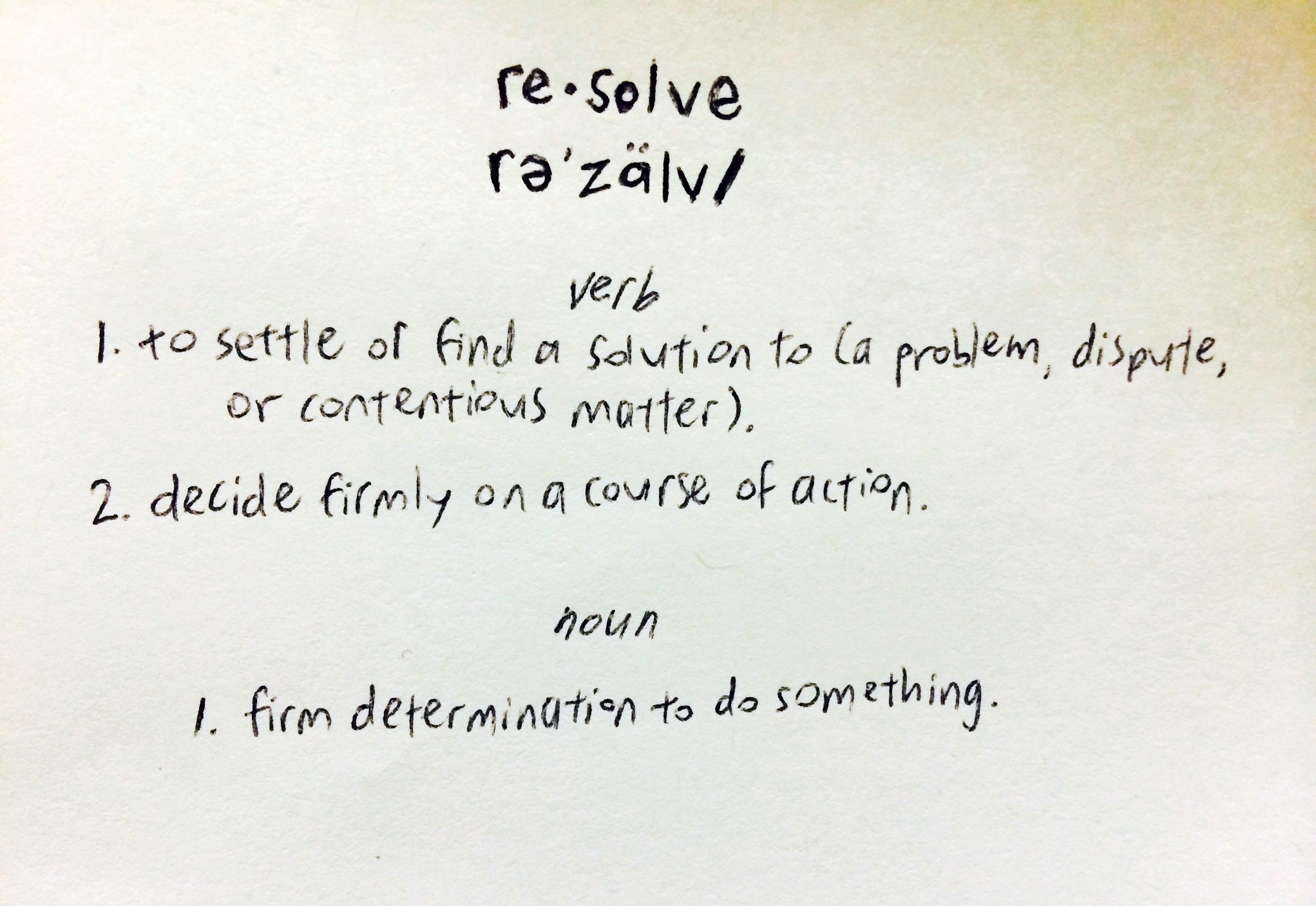
To that end, then, I would rather have resolve (n.) than to resolve (v.), because my goal isn’t to reach a conclusion right away; no, I want to understand my own process as it is unfolding. I would rather have the noun in my back pocket as a reminder than the verb in my front pocket, at the ready for a quick-fix solution. So this year, instead of a New Year’s resolution, I decided to have an anti-resolution. A plan to test my own willpower by opting not to do something that has become dangerously habitual to the point of dependency: stare at a screen all day.
I realize that as I am writing this, and as you are reading this, we are both staring at a screen – and that’s just fine. So to clarify, my decision to not stare at a screen is less a dramatic political statement and more a modified lifestyle choice, an experiment: Between the hours of 10:30 a.m. and 10:30 p.m., I allow myself to carry on as I always have – answering emails, scrolling through headlines, and laughing at silly GIFs. In those 12 hours, I feel connected to the greater community of the Interwebz, corresponding with friends halfway around the globe, pitching ideas to editors in other states, and engaging with a community beyond my immediate line of vision; I am in a digital portal and can free-float through both time and space.
And beyond the computer screen, I also allow myself to get lost in my iPhone, in the TV screen, in a number of other electronic means of communication; I express myself in words and emojis, and absorb new thoughts and ideas in the form of the news, news feeds, TV shows, Instagram, Facebook, Tumblr, Twitter. The sea of garbage, as a professor of mine once called this vast ocean of information, is alive and pulsing during those 12 hours.
This is what screens have given us, after all: a means to access other people, places, thoughts and head spaces, from wherever we happen to be at a given moment. And I am grateful for the distractions, as we all likely are, because that means that we can sometimes push aside the more immediate tasks at hand in favor of temporary escapes. But there is a threshold; there must be.
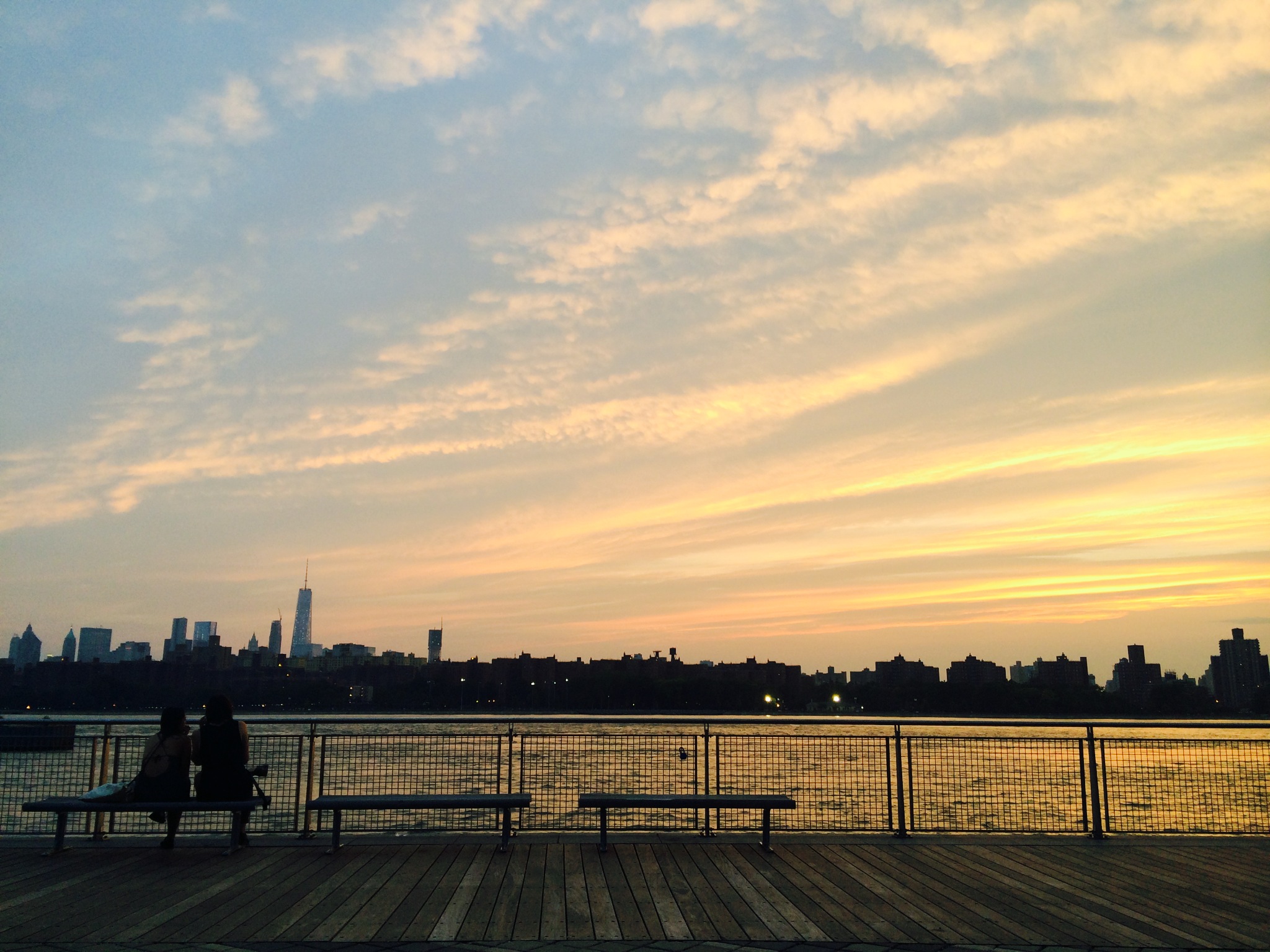
For me, that was last year, when I realized I was checking my email first thing in the morning and watching shows and films until I fell asleep at night. There was this feeling of dependency, of addiction, a light-bulb moment realization that I was literally spending all my waking hours as a slave to my many screens. I wasn’t getting good sleep, and I wondered sometimes if it was because my brain was going through withdrawal from not having a backlit device pointed straight at it during the hours I slept.
I realized that part of the problem with always being plugged into a device was that I was hop-scotching from distraction to distraction and was therefore not always quite here, the physical space I was occupying. And this meant, as a result, that hours and days and weeks and entire years were flying by without my ever having really experienced what was happening in the moment at the moment. I was living life in retrospect.
And that was a problem.
So though I still take part in the digital sphere between the hours of 10:30 a.m. and 10:30 p.m., these days, I’m opting to spend the hours prior to and after that off the grid a bit, focusing more on the who and the what of where I am during that time. Unplugging is the how. To experience life more vividly and fully is the why.
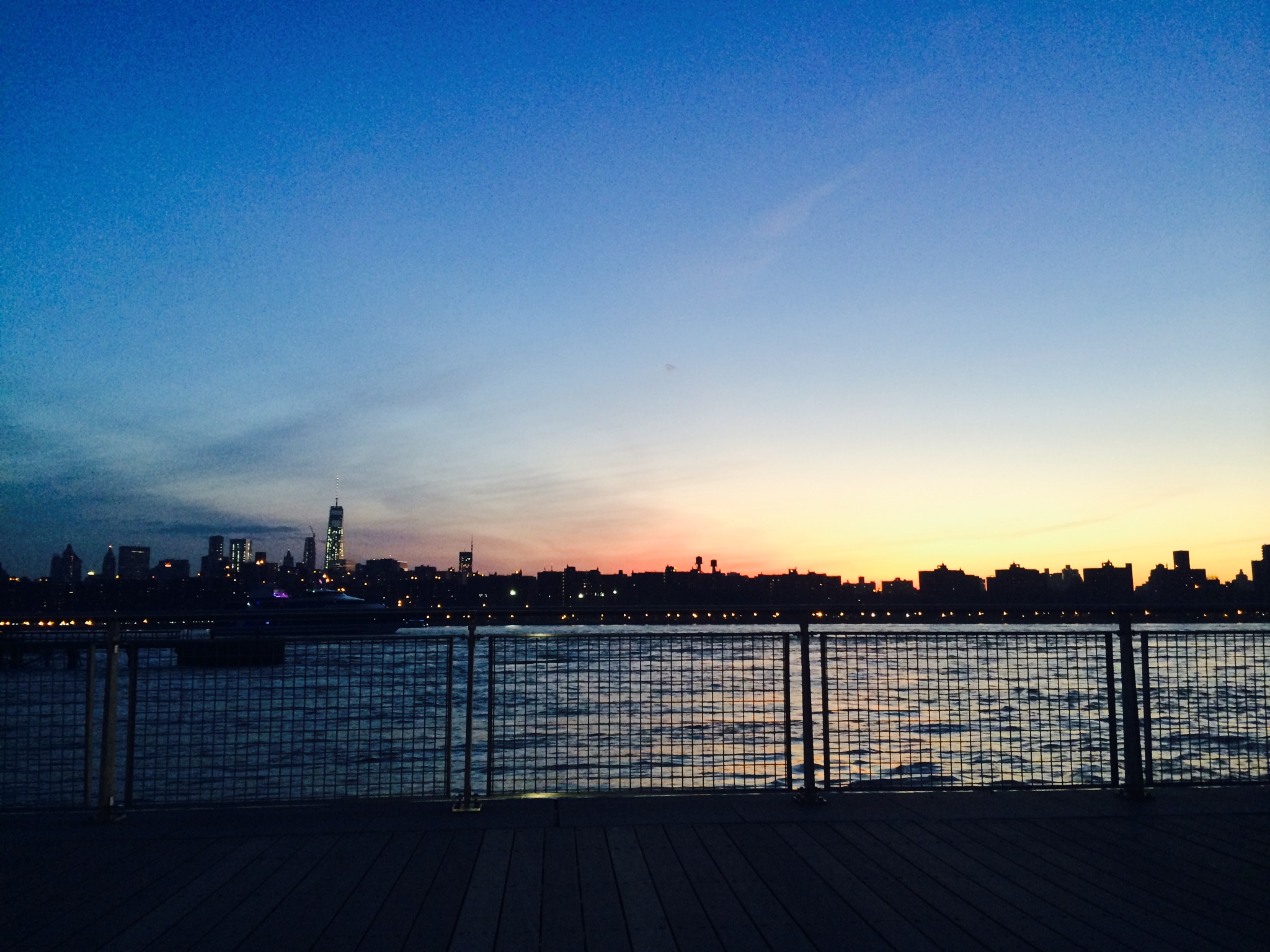
During those hours, I meditate and I think and I read and I write a lot (by hand, of course). There is a kind of stillness and peace I find in not being in front of or dictated by the influx of information found on a screen. It’s a feeling that I had long forgotten, and would most likely have continued to forget, if I hadn’t taken a step back and realized how my days had become inundated by thoughts and demands not my own. Being separate from the screen is giving me the luxury to do something I never thought I’d be able to do in this digital age: really hear myself think.
In the beginning, it was always tempting to cheat and take a quick peek through my phone in the morning just to see if there were any pressing emails or Facebook notifications or Instagram likes that took place overnight. But because I had given myself these rules and parameters, I felt a duty to keep myself in check, lest I disappoint myself with my own lack of willpower. I started to analyze that temptation, observe myself in third person during those morning handwriting sessions, and realized that much like Pavlov’s dogs, my instinct to check my inbox was more about the reward of attention (“so-and-so has replied to your email!”) and importance (“inbox: 52 from just one night? People really need to reach me”) than from an actual need to know information.
I am now finding that in those hours away from the screen, I am able to engage more fully not only with the present moment but also with myself, so that I know how to better navigate through the treacherous technological waters (and, to a certain extent, through social situations at large).

Now I write waterside, in cafes, in my room, in outdoor spaces that aren’t constrained by lack of wifi, outlets, or table-space. All I need is a pen, a notebook, and my fully focused mind. It is freeing.
Call it a reintroduction.
I feel more in touch with and honest with how I’m feeling because my thoughts are not as cloudy at the beginning and the end of each day, and I am starting to be able to translate some of that clarity into my daily living as well.
Call it a recalibration.
I sense myself being more selfish with my time and more careful in how and with whom I spend it.
Call it a reassessment.
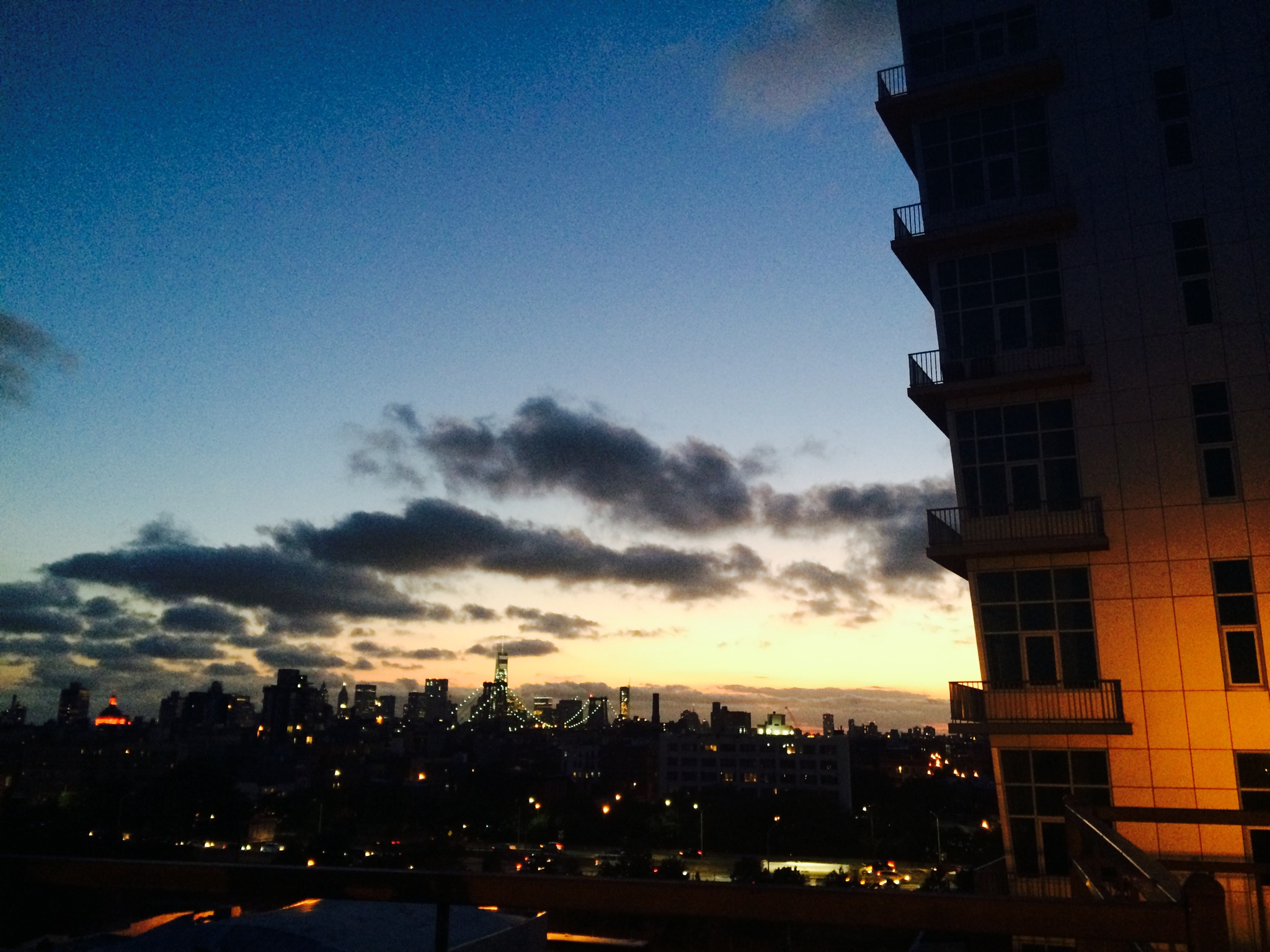
The way I see it, we already segment our lives into so many distinct compartments based on how we spend our time anyway: family time, work time, free time, leisure time, personal time, social time, food time, sleep time, and on and on and on. So why not look for new ways to section off hours of the day, to break down previous habits and routines and build something new and perhaps, hopefully, more sustainable?
I’ve never been one for New Year’s resolutions because making them is, I think, a way to feel the thrill of a personal promise without any real commitment. Being more physically active, communicating more with loved ones, and reprioritizing our actions and activities are all noble pursuits, but what all three require above all else is a space and place to really explore the reasons why we want those things. And for me, I’ve found that space and place in my hard-won now, and I want to hold onto that feeling.
Every year, in place of a New Year’s resolution, I like to think of a single word to hold in my mind for those times throughout the year when I start to lose focus. In 2013, it was Create. In 2014, it was Trust. This year, 2015, I decided that my word would be neither verb nor noun, but a state of being.
In 2015, I have resolve: I am Awake
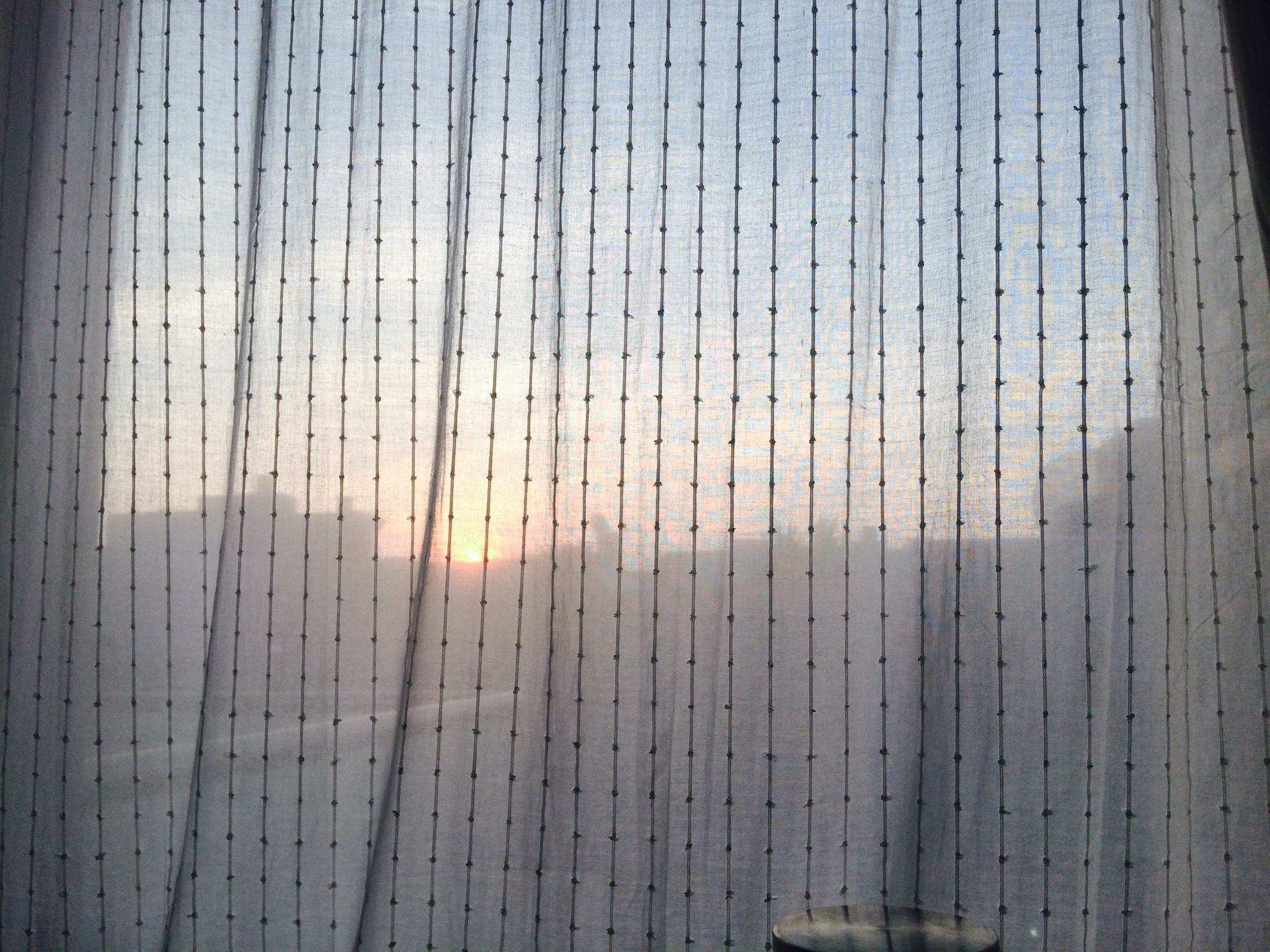

Joyce Chen is a handwriter in Brooklyn. She is also a journalist who thinks she spends too much of her time staring at screens - writing for print and the web, watching and reviewing films, and sending strings of emojis to family and friends. When she's not plugged into the World Wide Wonder, she can often be found out on unplanned runs throughout New York City, taking long walks along the waterside, or otherwise stretching her legs and getting out from the great indoors.