Sweetly Unadorned Bits of Proof • Lexi Wangler

BY LEXI WANGLER
“What are you writing?”
Sadie, my best friend’s fifteen-year-old sister, paused on the porch. On her way to the hair salon, she surveyed me over her sunglasses, the bridge slipping down her nose.
“The ceremony,” I told her, and ripped another page out of my notebook.
“Oh, God.” Underneath the layers of heavy-handed wedding makeup, she paled in horror. “I’ll, uh, let you finish then.”
I could have called after her, defended myself and explained to her the nonlinear experience of expectation, the impossibly rapid speed of time devoured by just existing, let alone creative expression. But with forty-five, no, forty-four minutes to go, I just decided to keep writing.

Last September, my best friend asked me to officiate his wedding. He’s been my best friend for going on seven years now, and at first, I thought it was a sop for not asking me to be his best (wo)man. I remember asking him, clearly, repeatedly, “Are you sure?”
But he and his fiancée were. They didn’t find it surprising when the wheels of my plane touched down in the city I used to call home without a single ceremonial word written. Well, to be fair, I filled out the paperwork, joined the American Ministers of Marriage, and mailed the affidavit to the court house. I took a risk and didn’t buy the officiating kit with an embossed certificate, but I did buy a dress — floor-length, fire-engine red with mesh cut-outs. That’s as far as I went until about forty-eight hours before the ceremony. Between cocktails at the rehearsal dinner, I typed out the first half of the ceremony on my phone, riding that familiar edge between writerly hubris and an absolute terror of failure. This was before I realized I probably shouldn’t be reading from an iPhone screen at the wedding.

I borrowed a bit from the Corinthians, and a little from a speech that Roxane Gay gave at St. Louis University about Catholicism and feminism — ironically, since the happy couple asked me, the atheist, the fallen Catholic with a vengeance, to presumably perform a secular ceremony at a refurbished airport decimated during Hurricane Katrina.
The word “millennial” gets tossed around a lot to describe our generation, commonly linked with, jeopardy-style, “What is the worst?” Sometimes our elders have problems processing how we can ever mature, how we can contribute, how we can function, having been raised not only attached to increasingly smaller screens, but in a world that keeps getting increasingly darker: politically, environmentally, globally. The answer, of course, is hope. By coming here today, you have shown incredibly deep reservoirs of hope, in each other and in the joint future you began to build the day you met. You show the world the difference between growing up, and growing older.
*
Before and after the wedding, I explained several times that no, I do not do this all the time, that I am not a minister, but simply a girl who happens to be friends with the groom, a friend who has been known to occasionally write things down.
*
“Love suffers long and is kind. It is not proud. It bears all things, believes all things. Hopes all things, endures all things. Love never fails. [After all else], these three remain: faith, hope and love. But the greatest of these is love.” (1 Corinthians, 13:4)
*
I’m told it’s a rising trend nowadays, having a friend do for free what you used to have to pay a churchman to do. For a millennial couple with no particular religious leanings, it was a cost-effective choice, though vastly more personal and intimate. In the South, however, it still raised a couple of eyebrows. Despite mandatory compliments and platitudes from attendants following the ceremony, I wasn’t actually sure how it went. I cried through most of it, the maid of honor patiently passing me tissue after tissue. I only cry when I’m happy — weddings and other moments of intense joy are something of an emotional minefield for me. More so when you watch friend after friend find what looks like incalculable joy in the arms of someone new, someone you haven’t grown up with, but someone you nevertheless would like to know. It’s a joy tinged with fear, envy, sadness, wondering, sure, but it’s still the kind of joy that leaks out of you.
*
You met by chance. You fell in love by chance. You are here today because you are making a choice. You have chosen hope. You have chosen faith. You have chosen each other. By being here, you promise to both provide the best version of yourself and to also accept nothing less than the best version of each other. These promises are ones you intend to keep. You vow to take care of each other, to stand up for one another, to find happiness in the other. Each vow shares the same, simple premise; you promise to experience, to share, to be there. You promise.
*
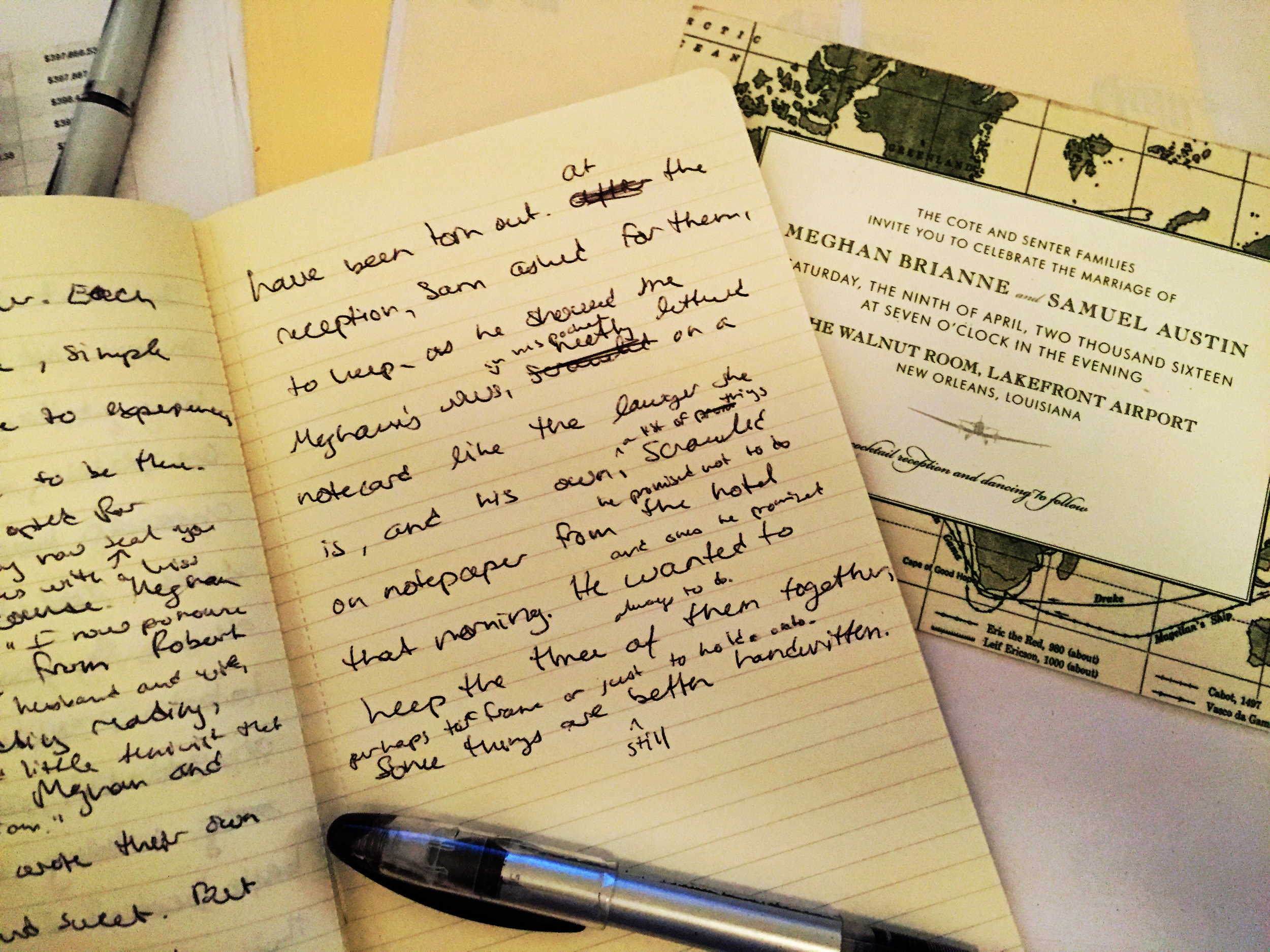
There is more, of course. I opted at the end for “You may now seal your vows with a kiss,” as opposed to “You may now kiss the bride,” and I switched out “I now pronounce you man and wife,” for “I now pronounce you husband and wife,” fervent little feminist that I am. They wrote their own vows, sweetly unadorned bits of proof. But these are not mine to share. Writing down my speech for the ceremony, my hand cramped over the teeth of the pages that have been torn out of my notebook. At the reception, Sam asked for them to keep. He showed me Meghan’s vows in his pocket, lettered neatly, firmly on a notecard like the lawyer she is, and his own, scrawled on notepaper with the letterhead from the hotel that morning, a list of things he promises never to do, followed by a list of promises he’ll always try to keep.
He wanted the three of them together, maybe to frame, or maybe just to hold onto. In this moment, I am glad to have something tangible, firmer than memory, to give them. Something handwritten.

Lexi Wangler holds an MFA from The New School in Fiction, soon to be joined by a dual concentration in Writing for Children. She works as an assistant at a literary agency and has so many books she has begun stacking them in her kitchen.
I Have No Choice But to Revise • Keith Baldwin

WRITTEN BY KEITH BALDWIN
My handwriting is fucked. The penmanship is not as illegible as some, but in terms of how I physically write by hand, it’s all messed up. I hold a pen against my ring finger, like the wrong half of a pair of chopsticks, and form a lot of my letters from the bottom up, rather than the top down.
When I was eleven, my dad finally noticed the issue and approached it with all the vigor and care he’d applied to the insufficient knots in my shoes a few years earlier — just enough to make me feel shitty about it, without solving anything.
He spent a few frustrated hours with me at the kitchen table, correcting the way I formed a handful of letters and the number nine. There was no progress at all toward fixing my wonky grip, which was already too ingrained to be altered so easily.
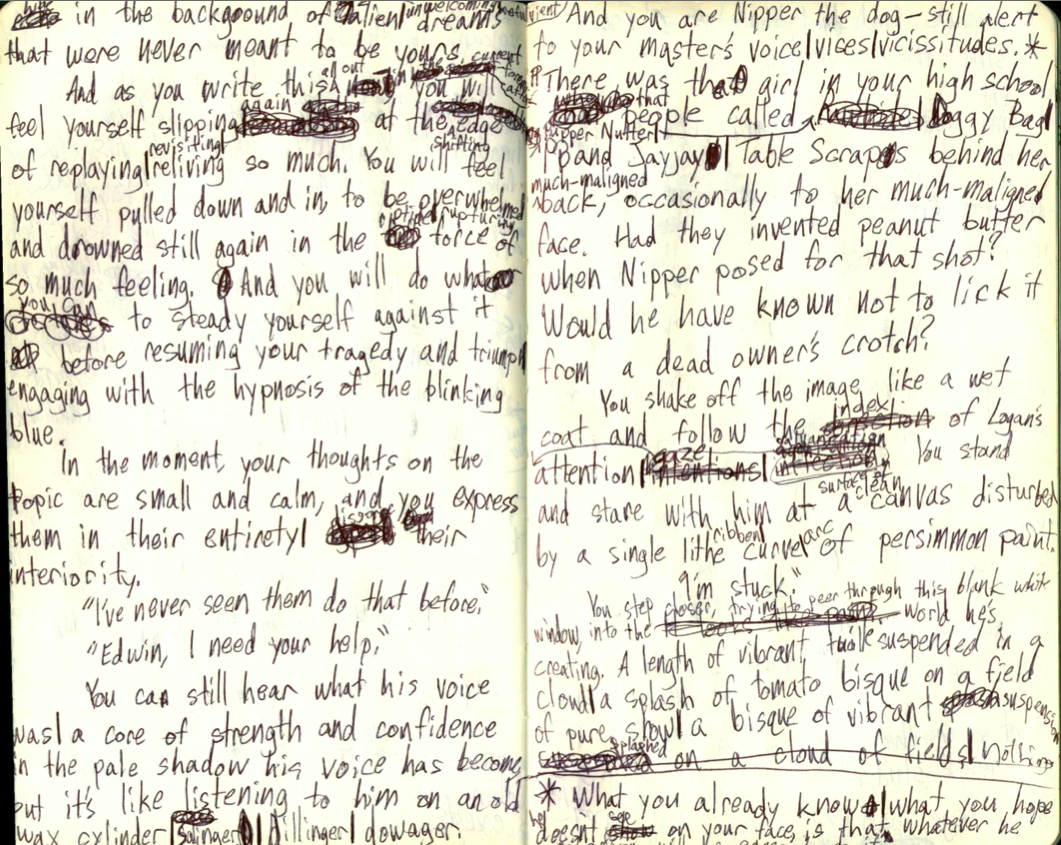
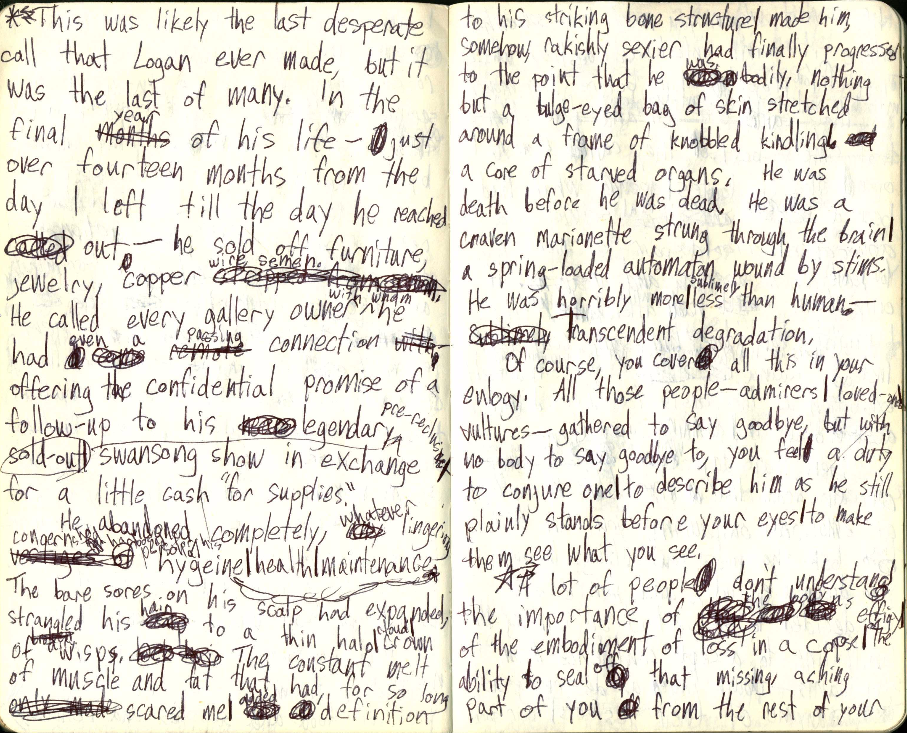
The upshot is that I don’t have the natural flow with a pen that other handwriting advocates rhapsodize. It’s always a slog for me. If I try to write too quickly, my hand and wrist start to cramp up, so my thoughts always remains three steps ahead of my pen. And while I work to close the gap, my mind is free to become distracted by flaws and omissions in what I’ve already written, leading to aggressive cross-outs and a morass of cramped footnotes that nest and crawl across margins — to be inserted in the main text later.


This would be enough to make a mess of my notebook, but on top of all that — rather than keeping everything in sequence — I have a bad habit of opening to a random blank page whenever I want to make a note, or a list, or play a game of hangman. In the middle of writing an extended scene of fiction, I will often turn the page to find story notes, shopping lists, and broken sentences for my ESL students to practice correcting. Typing up my work becomes a tedious chore of deciphering and reconstructing, tracking down where the story picks up when it’s suddenly interrupted by a sketch of my cat as an astronaut. It is almost as big a pain in the ass to work through it as it is for me to scrawl it out in the first place. So why do I even bother? Why do I keep returning to pen and ink whenever I’m writing something I care about? (You should see the rough draft of this essay…)


I know there are a lot of answers involving the way the brain works in different contexts, and how I formed these writing habits when all I could do on a keyboard was hunt and peck — and blah blah blah, a hundred other reasons why this website exists and longhand is the best. But I think the biggest factor for me is the same one that made me so much less anxious about sharing this mess of pages than I would have been about submitting something more polished. Because no one could ever confuse the contents of my notebook for a finished product — not even me.

On the one hand, this means that I can’t be held accountable for the contents, which frees me to be a little wilder in my first stab at a project. But it also means that I can’t avoid the work that still needs to be done. I have no choice but to revise.
My feelings about revision are pretty much the same as my feelings about flossing — I know I should do it, but it makes my gums bleed. And when my words are neatly typed and double-spaced, with numbered pages and no evidence of the disordered mind that composed them, I have to work to remind myself that it’s still a work in progress — that I can and should question every decision those collected words represent.

The process of transferring from the page to the screen forces me to consider every sentence with a critical eye while I retrace the whole erratic path. And I can’t even procrastinate for too long because, while a few days’ distance can bring fresh insights, a few weeks is liable to leave me incapable of piecing the whole mess together again. (It’s happened. It’s infuriating.)
I know that, for other people, writing by hand makes the whole process smoother. For me, it’s about making myself work harder, and getting better results for the effort.


Keith Baldwin is a writer and tutor living in subterranean Brooklyn while paying exorbitant tuition in Manhattan. He is sometimes worried that he might be one of those lizard people you hear about.
The Everyday Mind • Chad Frisk
BY CHAD FRISK
I’d never before considered handwriting to be an art form.
For me, handwriting was always a tool. I used it to build thoughts on a page, or just to fill out forms. It was slow. It was blunt. It was annoying. That’s how I had always thought of handwriting in English, and for a long time I thought of handwriting in Japanese in the same way. That is, until I met Takemoto Sensei.
“Make sure you use an extra soft pencil,” Takemoto said.
I went to the college bookstore and bought one. Slouching in a hard wooden chair, I pressed the gray tip to the off-white page of the worksheet he had given me. I could hear his voice. "Trace the lines," he said. It came with a smile that was mildly irritating.
The work was both boring and a little bit humiliating. I had written those characters for four years as a high school student, but there I was, tracing lines like a fourth-grader. The connection was appropriate, however, because I actually spent the first week of fourth grade crying over my handwriting. Ms. Ramcke had given me back a writing assignment covered with red pen. “This isn’t fourth grade writing,” the comment read. My letters still used the kindergarten stencil, filling three lines. Ms. Ramcke wanted me to shrink them down to fourth-grade size. That night I told my mom I didn't want to go to school anymore. I was curled into a lump in the corner of my bed. She did what most parents would do. She said she was sorry and rubbed my back. But then she did something else. "Maybe Ms. Ramcke is right," she said. And before I could wipe my nose, she was poking me in the back with a notebook. "Let's practice."
*
English letters aren’t very complicated. There are twenty-six of them (a few more if you include capitals). They don’t require you to make very many strokes. You don’t even have to take your pencil off the paper most of the time.
Japanese letters aren’t like that. There are three writing systems: hiragana, katakana, and kanji. Two of them – hiragana and katakana - are relatively compact, with about 46 characters each. There are thousands of kanji characters, however. And neither hiragana, katakana, nor kanji are easy to write – at least, not if you want to write them well. In high school, I didn’t stand a chance. But in college, Takemoto gave me one.
I heard voices as I tried to control my soft pencil: "Trace the lines," Takemoto said. "Let's practice," my mom added.
I sighed and continued to trace. Slowly, something strange started to happen. As I sat there, moving the pencil from top to bottom and right to left across the page, I found myself enjoying it. I stopped to look at my handiwork.
“That’s not bad,” I thought.
I kept writing. Before long, all of my notebooks were covered with Japanese. Hiragana, katakana, progressively less misshaped kanji. I was hooked.
*
Takemoto Sensei's approach to handwriting was totally new to me. For me, handwriting had always been an annoyance; for him, it was a craft. There were ways to apply pressure to the pencil. There were proper paths to follow, angles to be aware of, particular compositions that looked better than others. I came to love writing because there were ways to do it better.
That was almost ten years ago. Since those days, I’ve occasionally exchanged the pencil for a brush. The game changes entirely. Kanji are fun to write with a pencil. Writing them with ink, however, is a trial. If you stop the brush, you will end up with blobs. If you press too softly, your lines will be weak. If you press too hard, your lines will blend into black mush. If art is about degree of difficulty, then the brush is the tool of a master.
I am not a master. In a normal calligraphy session, I write the same kanji character fifteen to twenty times before I feel satisfied. It’s hard! With a brush, every mistake compounds. One small mistake gets me thinking about what I’ll do better the next time which causes me to make another mistake which causes me to drown the rice-paper in ink.
For me, it’s about maintaining focus from the beginning of the first stroke to the end of the last one. If I do fifteen to twenty attempts, I’m usually able to maintain that level of focus one time. I used to think that there was nothing I could do about it. But now I’m not so sure. Obsessive reading in cognitive science and a semi-regular meditation routine have made me think that focus is something I can train. I thought maybe I could use kanji to do so.
So I decided to try an experiment. I chose to write one kanji compound every morning, selecting a word that I thought would put me in a constructive frame of mind for the day. Furthermore, I only gave myself one shot.

Fumei, Uncertainty
Sitting at the table, the stars still shining in a dark, winter sky, I stared at the blank piece of paper. I tried to map the coming kanji onto it. 不明. Fumei. “Uncertainty.” I looked at the brush, sitting in the black inkwell. “You only get one shot,” I thought. Then I picked up the brush and started to write.
Ideally, the lines would have flowed out of me. Ideally, the brush would have regulated itself, increasing and decreasing pressure on its own, flicking between strokes, pausing, trailing away as I held it. Unfortunately, that’s not what happened. I caught myself thinking of something else when I would have liked to be thinking of nothing but the tip of the brush. “Too bad,” I told myself, and, after scribbling some English in the margins, went to the sink to clean out the inkwell.
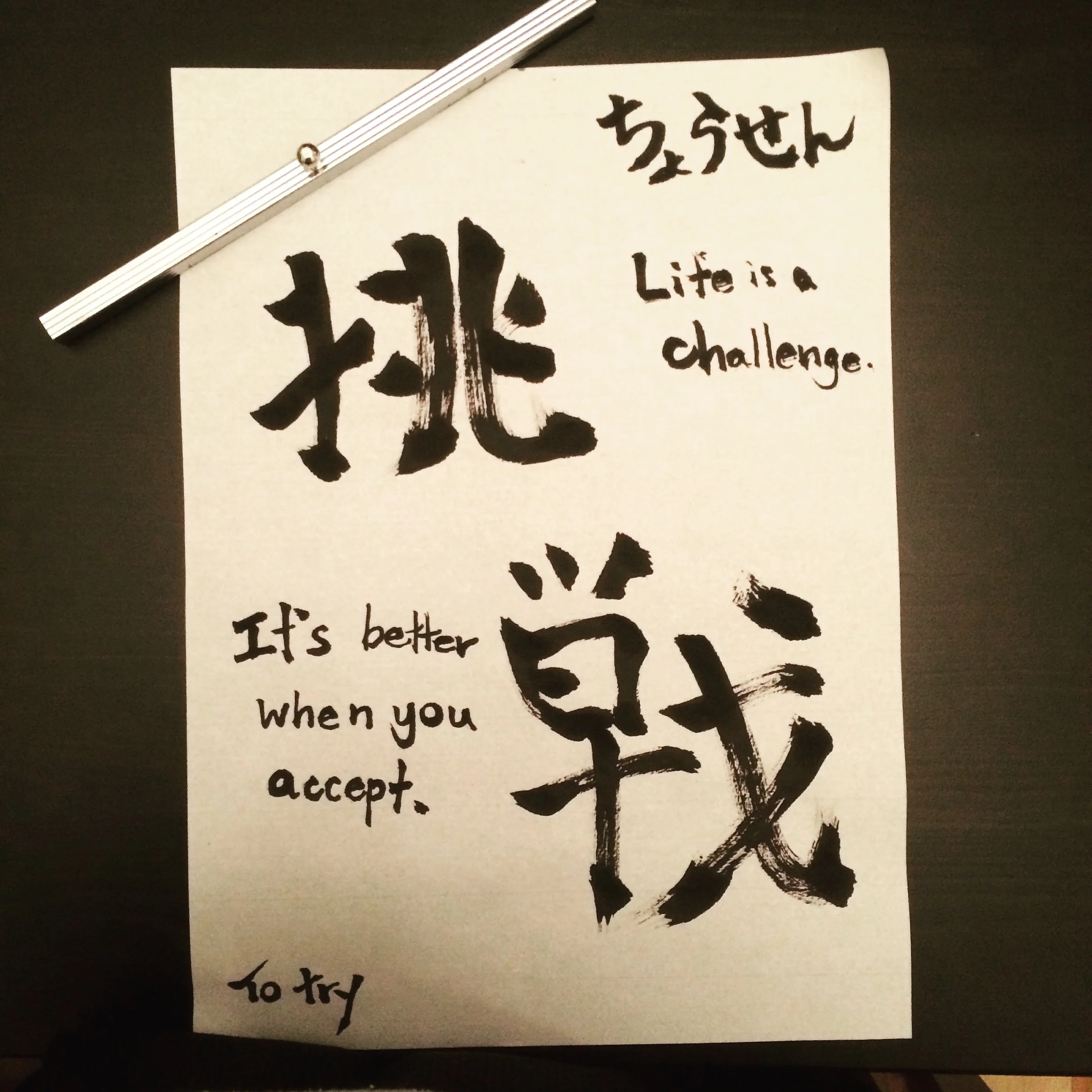
I came back the next day. “What word do I want today?” I asked myself, and waited for a response. I didn’t have to wait for long. 挑戦. Chōsen. A hard word to translate, but one that is often rendered as “to try”, or “to challenge”. I wrote it quickly, hoping that speed would equal elegance. It turned out alright.
Again, the white space at the corners of the page caught my eye. “Life is a challenge,” I felt myself writing. “It’s better when you accept.”

The word echoed in my mind throughout the morning. Chōsen. Did it make me act differently than I otherwise would have? It’s hard to say for sure. But even months later, the word still pops into my mind. I think it gives me a jolt of strength.
The next day I chose – again – the first thing that came to mind. Kansha. “Gratitude”. I felt a little bit nervous because I had been posting the calligraphy to Instagram. “Will people think I’m posting this just to look good?” I worried. The next thought was even more worrisome: “Am I actually posting this just to look good?”
I thought about it for a second. "Maybe not just to look good,” I reasoned. Then I paused. “But at least a little."
Then I posted it.
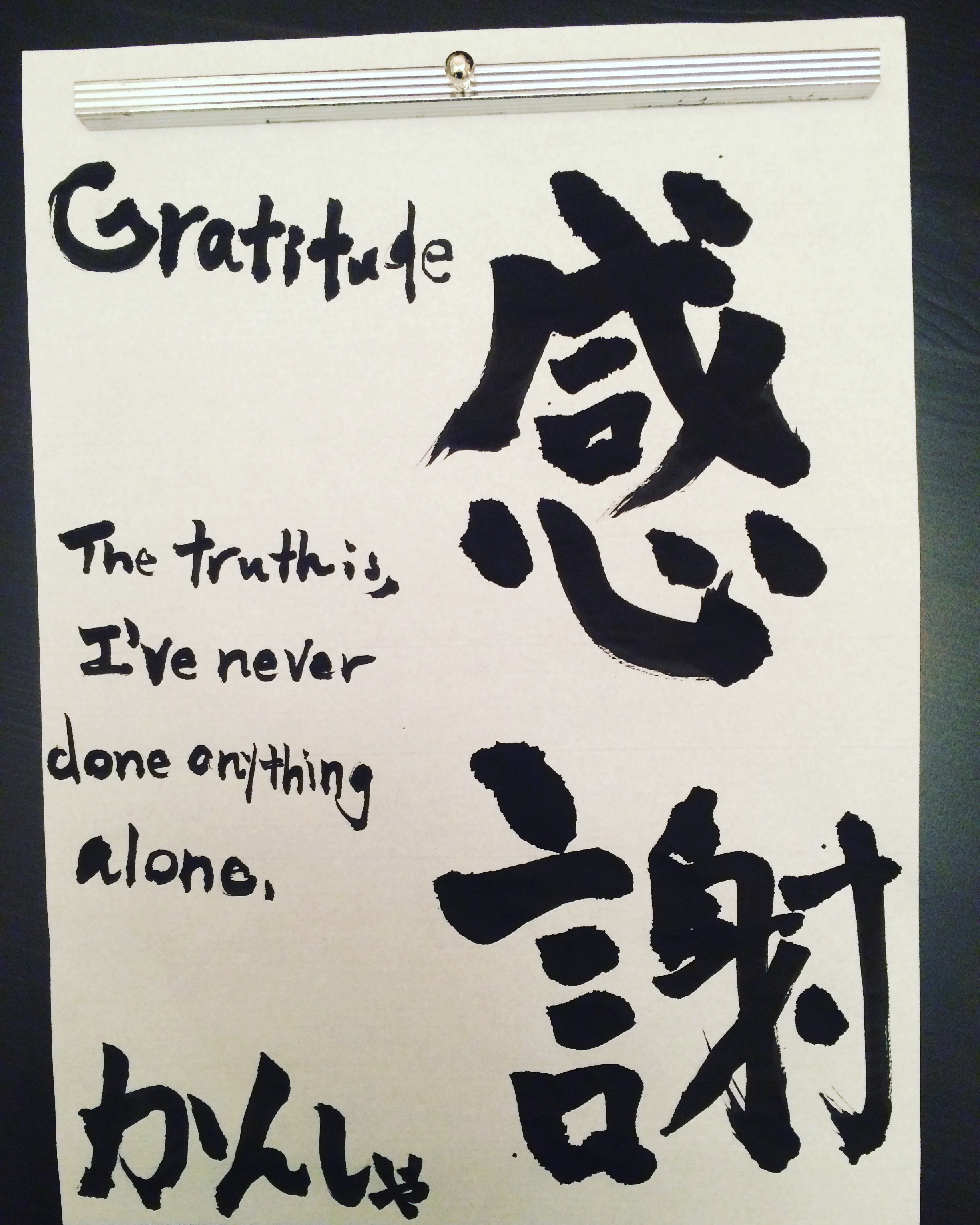
For three weeks, I didn’t run out of words. I found that every day I had something in my life to work on, and I was eventually able to find a word to express it. Here are some of the words that came to mind as I thought about what I wanted to bring to the day.
Nobiru. To grow. I’ve found that holding the intention to grow is enough to transform what would otherwise be the meaningless detritus of the everyday into (what at least feel like) important lessons.

Shuchu. Focus. Sometimes focus happens naturally, but usually I have to maintain it in the face of distraction. Intending to do so (and continually reaffirming that intention) is the first step.

Junan: flexible. Hansei: reflection. Norikiru: to get by.
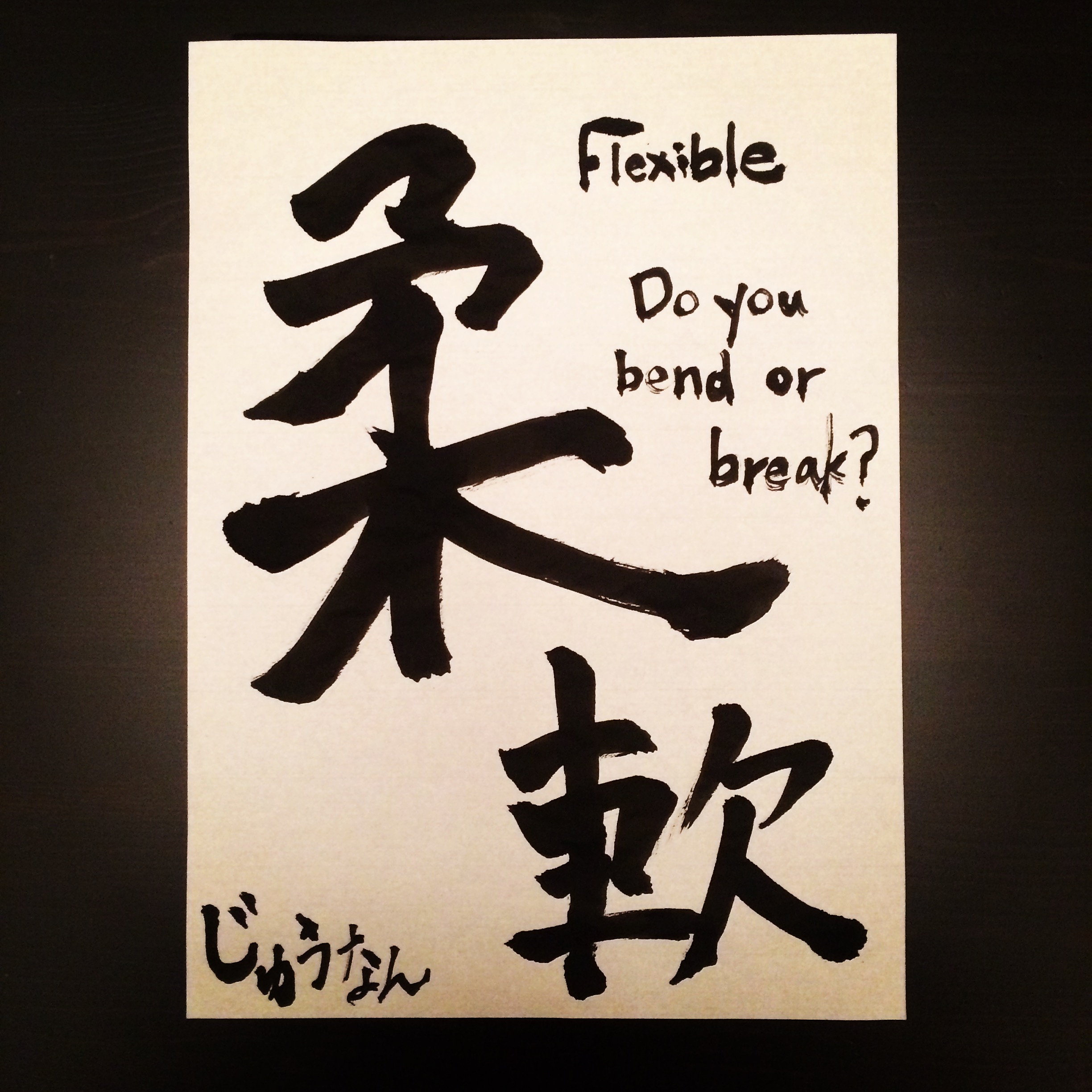
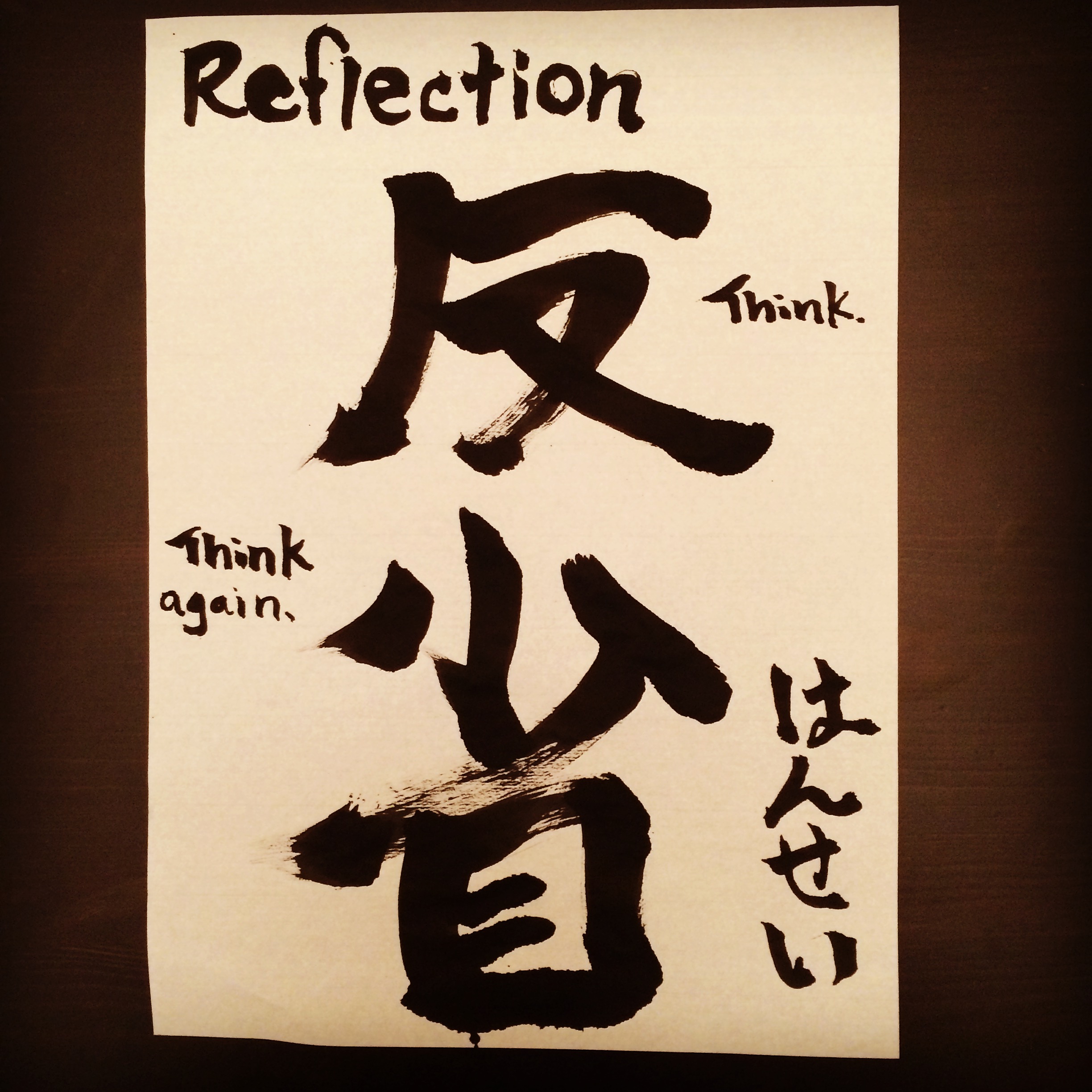
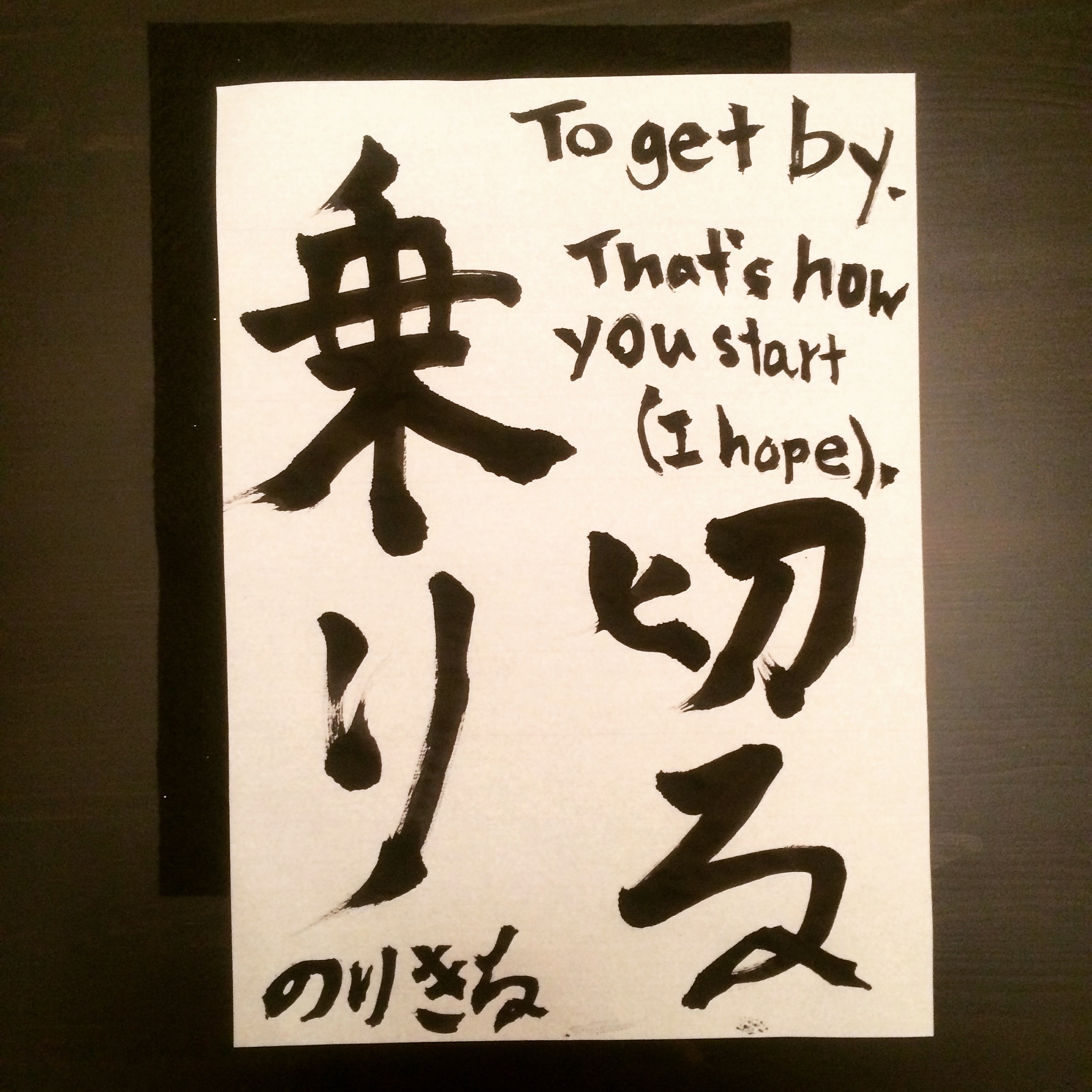
It was an interesting experiment. It lasted three weeks. It changed from a morning ritual to an evening one. It ended not because I ran out ink, but eventually, the drive. I also ran out of words. Once or twice, my first attempt was so bad that I had to allow myself a second. But more often than not I waited out the impulse.
What made one day better than another? What conditions allowed the brush take over one day, and prevented it from doing so on another? It’s hard to say. Sleep quality, maybe. My mood, definitely. To tell the truth, there were some, or maybe many, days that I really didn’t want to write anything.
“Let’s skip it today,” a voice often said. "Do you really want to take all that gear out just to write on kanji?"
“I know,” I always forced myself to reply. “It’s kind of annoying.
“But we’re doing it anyway.”
*
Handwriting has taught me that I don’t always want to do what is good for me. It started in fourth-grade. I didn't want to shrink my letters to fit in one line. My letters fit perfectly fine into three lines. But I needed to grow up; I would be in trouble today if my letters were still six-inches high. Ten years later, I didn’t want to change my Japanese handwriting either; however, if I hadn’t, I would have missed out on a chance to participate in what I now consider to be a very meaningful art form.
The lesson I took from the calligraphy experiment is the same: writing the characters took effort. I had to expend the energy to set up the equipment; I had to think of a word, either to jump-start my day or to encapsulate it; I had to submit myself to the pressure of having only one shot; and I had to live with whatever I came up with, though sometimes I failed at that.
But the effort was worth it. Takemoto gave me a seemingly remedial homework assignment that lead to a craft. In a lot of ways, life is also a craft – one that I’d like to master. Sadly, without conscious effort I tend to produce a scrawl, both in handwriting and life.
Happily, I think I know what to do about that. Now the challenge is to actually do it.
The Distance Between our Public and Private Selves • Aine Greaney
In this essay on deleted pasts and new beginnings, Aine Greaney takes us around the world in an old composition notebook: the only one she brought with her when she emigrated to America. With the start of the new year just behind us, we find this piece more timely than ever, as we revisit filled pages from the past, and look toward the blank ones of the future.

BY AINE GREANEY
December 21, 2015
This morning, I ate some oatmeal, drank some coffee and penned the last page of my personal journal. I flip back to the first page: June 30, 2015. Inside this bound book are almost eight months' worth of thoughts, uncertainties, musings and arguments.

I don't write in my journal every day, but on those weekday mornings when I do, when I set the alarm to get up extra early, reflective writing makes the rest of my working day happier. On the weekends, journaling acts as my transition from working me to creative me—and believe me when I tell you that the latter is the more authentic version. In fact, journaling has taught me this: The shorter the distance between our public and private selves, the happier we are. Stephen King may have been referring to an entirely different type or genre of writing, but he was really on to something when he declared that writing is about “getting happy.”
I started keeping a journal in my teenage years while I was attending a small-town convent day school in my native Ireland. Some days, I can still shut my eyes and see myself back there, still dressed in my navy-blue school uniform, sitting inside my bedroom window, my geography and math texts pushed aside as I scribbled in an old composition notebook.
We were the first generation to benefit from a 1967 law that granted free, secondary-level (high school) education to every child in the Irish nation. So I was supposed to be grateful for that school uniform and those textbooks that had been denied my mother and my grandmother. I was grateful. Still, I recall those school days and nights as being full of square-peg-round-hole malaise and anxiety. In public, I sang with the choir in the school assembly room. In private, I wanted, desperately, to raise my own, individual voice. Journaling was the only place where this was possible.
However, when I emigrated to America at age twenty-four, I abandoned all but one of those notebooks. I think I believed that, in my bright, new country, in a nation founded on the notion of deleted pasts and new beginnings, that that melancholy, soul-searching me was best left behind, left where it belonged.
I did bring one hard-cover notebook into which I had transcribed some of those writings from my late teens and early 20s. In the flyleaf of this little red notebook, I grandly wrote, “Collected poems, rhymes and thoughts.” Now, when I re-read those hand-written pages, I see just how wrong I was to believe that our past has ever really passed. I am shocked at how well those “assorted rhymes” still describe the middle-aged me.
For example, here’s one of those entries that I remember writing as I sat propped against the pillows in my twin bed in my parents' house:
My books stand orderly on the shelf
Masks for that hidden self
Hoping they can quench the flame
Of numberless passions with no name.
I talk and talk; I make my stance
‘You’re such good company,’ he said.
But what would he say if, perchance
He saw me sobbing in my bed?
I find it comforting to read this unchanged part of me, this struggle between the private and public self. I like that we have certain personality traits that are in-born or immutable, and that there is, at all of our cores, a perpetual and lifelong mystery.

In the basement of my house in Massachusetts, I keep boxes of my completed journals, each one chronicling six to twelve months over the course of my twenty-nine years living here. My arrival day at JFK Airport, New York. That hot, AugustSunday when my American husband and I said, “I do” before a town judge. The day an editor wrote to say she was going to publish my first short story. I remember these. But, if it weren't for those journals, many or most of the less auspicious occasions, the ordinary mornings or afternoons, would be gone from memory recall. For example, in the journal I just completed, on August 18, 2015, I wrote that “I am here alone, finally, and the internet has made me vain and distracted, and these two things (vain and distracted) are very connected.” I cannot remember feeling that—not without re-reading my own handwriting on that page.
Without all of these hand-written journal pages, how much of the past two seasons would I actually remember? How well could I evoke the sounds or feelings or atmosphere of one ordinary hour or afternoon in July or August or September? What summertime walks did I take? When did the cherry blossoms drop their pink? When did the marsh grasses near my house turn dry and brown with summer heat? Now that our garden is under snow, I find it hard to close my eyes and re-see that garden when it was lush and colorful with summer perennials.
Some days, I feel as if I am on a Japanese bullet train ride through a fast-disappearing landscape, where, by the time I sit up and look out the window, everything is already gliding out of eye view.
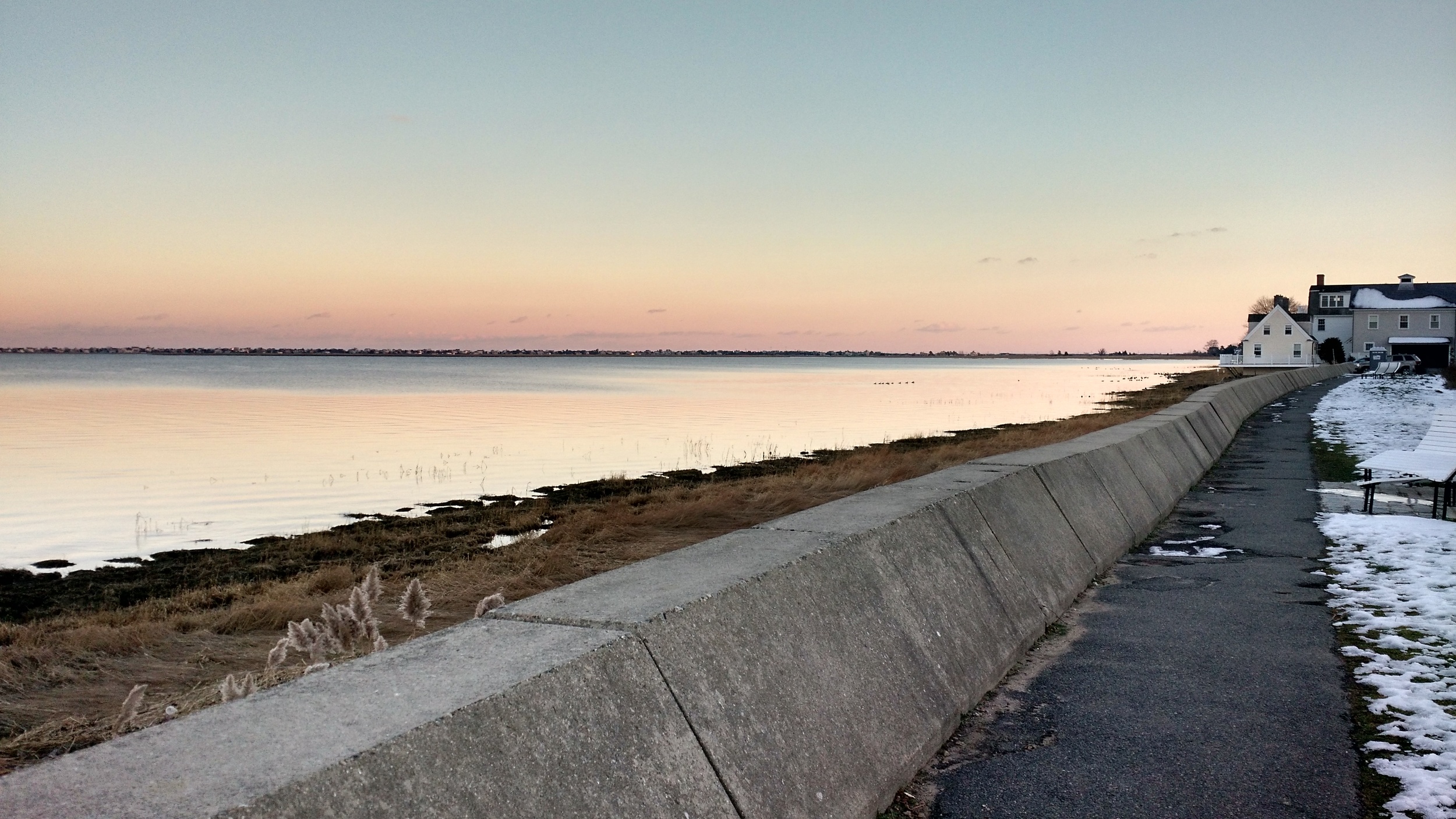
Then there are those days when I’m driving home from work, my head still buzzing with deadlines or with snippets of workplace conversations, and I look out my car windshield at the roadside pine trees, a flock of geese flying south through the paling sky and I think, This evening, this moment in time will never come again. So I’d better shush my mind to look---really look--around me. How many of these afternoons are left in my life? I don’t know. None of us do. Morbid? I don’t think so. These moments of mindfulness are how we hit the pause button, how we behold our own joy. When we write down those moments, when we record them in a journal, we are creating the narrative—the only half-way reliable narrative—of our precious and finite days.
Henry David Thoreau said that he traded his comfortable town home for a rustic woodland cabin because he wished to live deliberately.

At least in the abstract, some of us covet this concept of unplugging and retreating from our hectic and digitized lives. Who wouldn't like to slow down time so we can feel the heft and length of each passing hour?
But nowadays, how many of us would adapt this as a permanent and year-round lifestyle choice? The woodland WiFi and cell phone connections would be spotty at best. And, as someone who grew up in a thatch-roof farmhouse without indoor plumbing or central heating, the discomforts and inconveniences of that bare-bones cabin life would, sooner or later, override the joy or mindfulness.
So in my cozy and well-heated writing studio I keep a set of ballpoint pens and write in my notebooks to record the ephemera of my life. Without these journals, without this writing, most of the past seven months would be gone.
This morning I closed my completed journal and crossed to my studio bookshelves to stash it there until, during one of my sudden and always overdue clean-outs, it will end up with all the others in those basement boxes.
I know there will come a future day when I will go to the basement to search through the shelves for an old photo or a lost gadget and the journal box will call to me, as it has before. I will open today’s completed journal at a random page and sit there under the basement’s Florescent strip light in the company of my previous self, reliving a day from 2015. In all my past journals, I see recurring themes: the yearning for solitude; the immigrant’s search for an existential home; and my almost lifelong struggle and vacillation between my public and private personae (as in the 1983 piece above).
When I read them, I’m also struck by how prophetic some of my past writings turn out to be. It seems, in retrospect, that the writing knew much more than I did. Too often, I see that I should have listened to or acted upon my own observations.
Today, I select a new book to set on my desk underneath the east-facing window of my writer’s studio. The new blank journal sits here, empty and waiting for tomorrow.
Artistic Expression is as Essential as Breathing • Mary Fratesi
In this micro-reflection, Mary Fratesi finds delicate words for the most difficult of experiences: watching a loved one in pain. While this piece began as a pairing of two images, which has a fluency of its own, Mary takes us beneath the tree, and between the lines.
BY MARY FRATESI
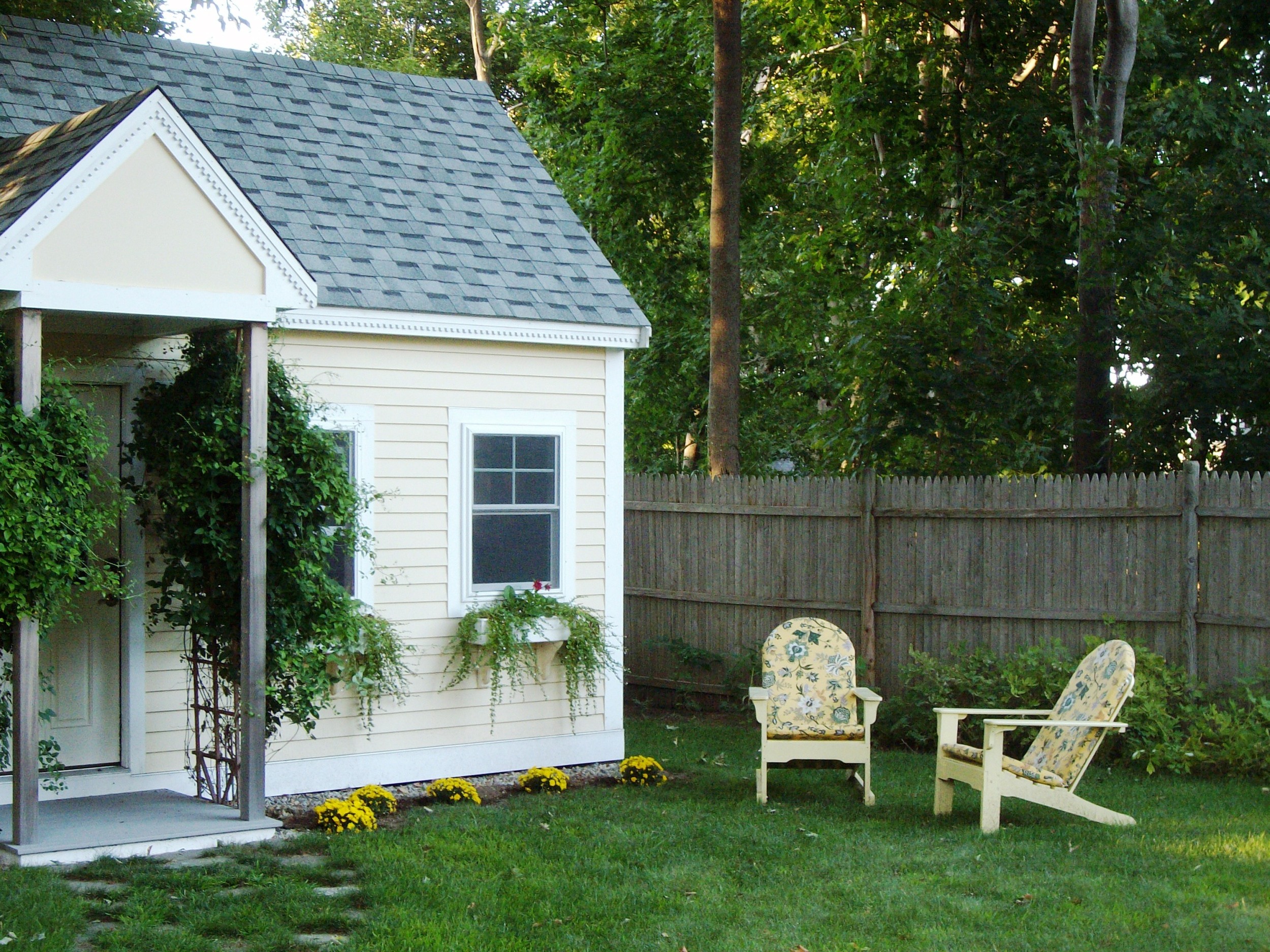
Expressing my own thoughts pushes me outside my comfort zone. This is a good thing. Looking at these two pictures, you might understand something of the essence, but the context would be necessary to connect the thread for the lived experience.
The building is Northwestern Memorial Hospital, where my daughter is in ICU. I have watched epilepsy nearly rob her of her entire life. The emotions are raw and consuming. I have difficulty pulling cohesive thought together and onto paper.
But I was drawn to their togetherness—the image and these words—as I love the act of writing, for lack of better words. These words are my normal every day writing. I studied calligraphy when in High School. I tremendously enjoyed it and practiced daily for hours. I am often told I am a good writer and seem to produce written bodies of work that often surprise myself. Without question, and speaking for myself, writing and photography are a passion through which I share myself. I tend to keep everything inside, preferring to focus on the needs of others, to help others realize their own gifts and to be their best.
When it comes to expressing the great deal of sadness I have come to accept, I'm flooded with so many thoughts, that I find it tremendously difficult to find the words, in any semblance of cohesiveness. Artistic expression is as essential as breathing.

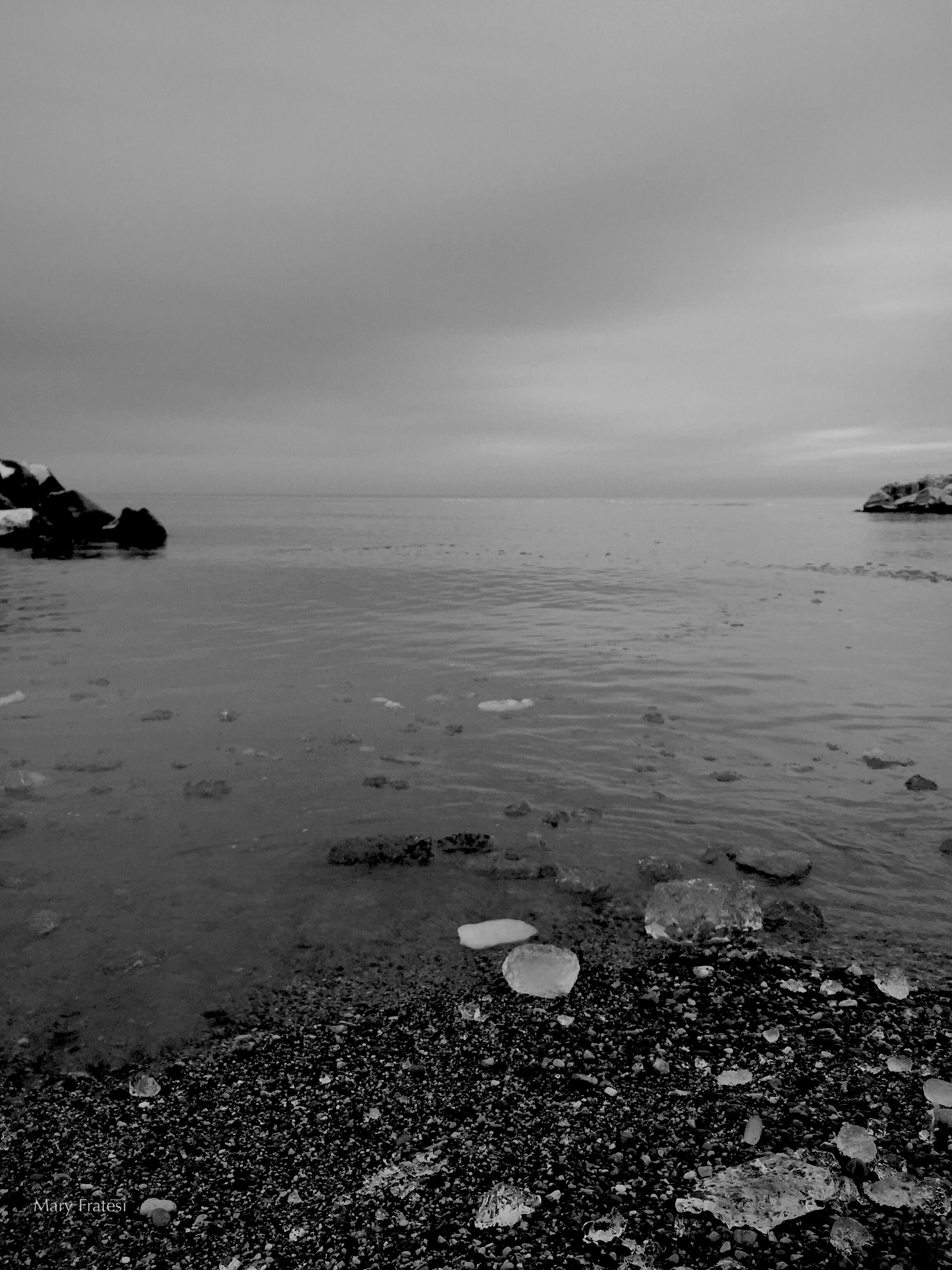

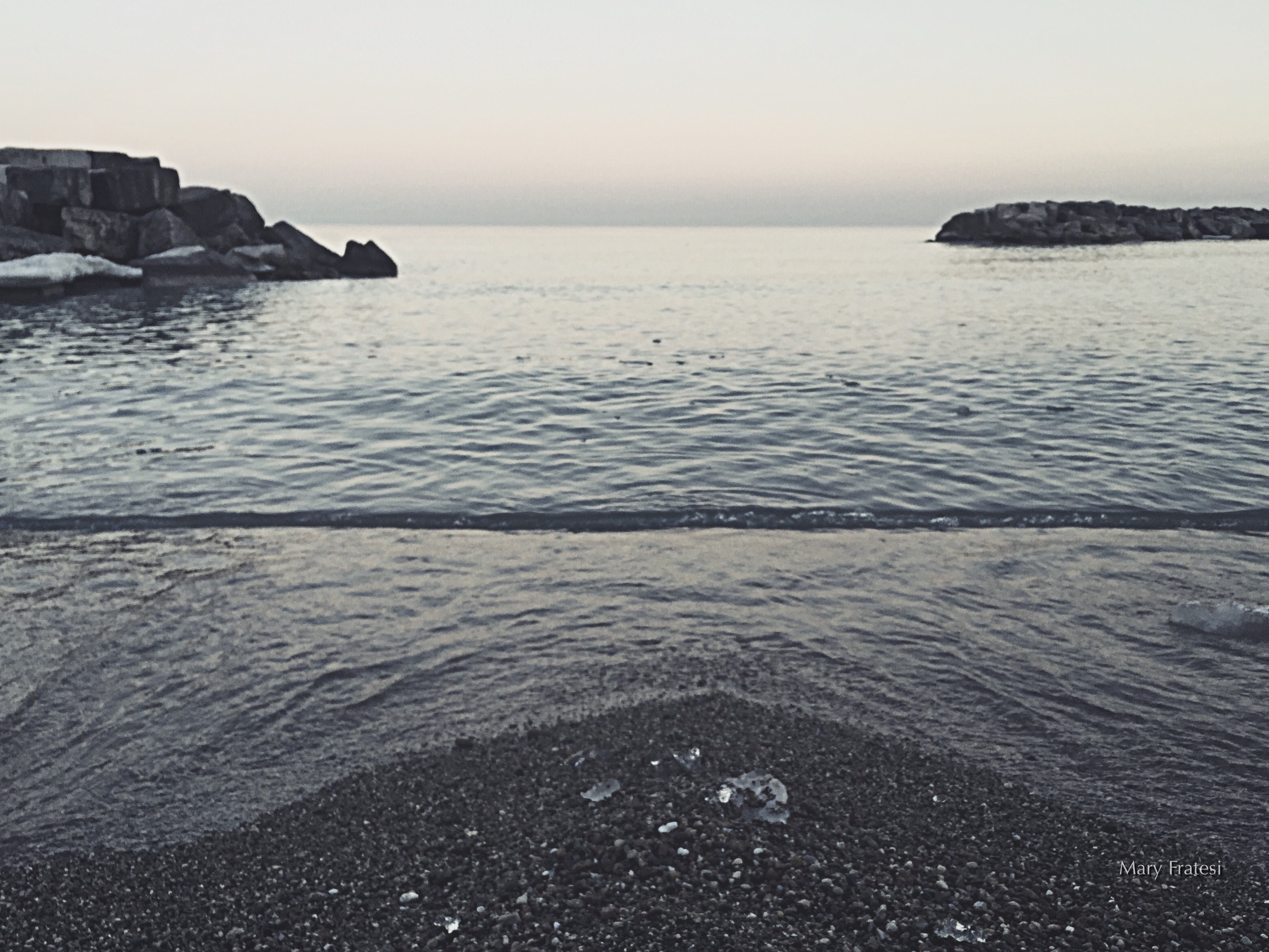


Mary Fratesi recently uncovered this photograph the other day, which is a picture of her practicing calligraphy when she was near 15-16 years of age. In the image, she is in her high school art classroom.
The United States Postal Service Squares off with a Squirrel, and Loses Hard.
BY BRETT RAWSON
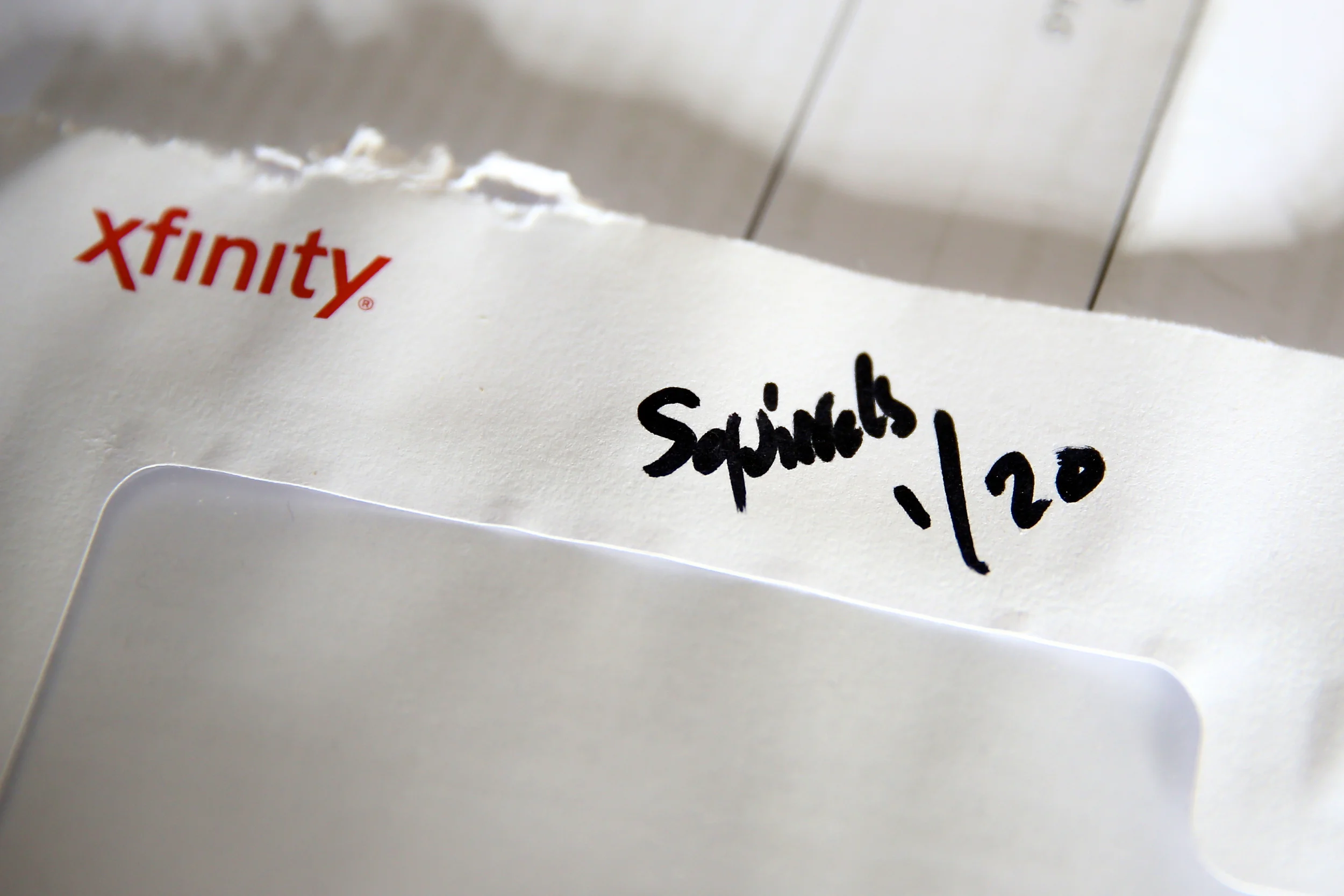
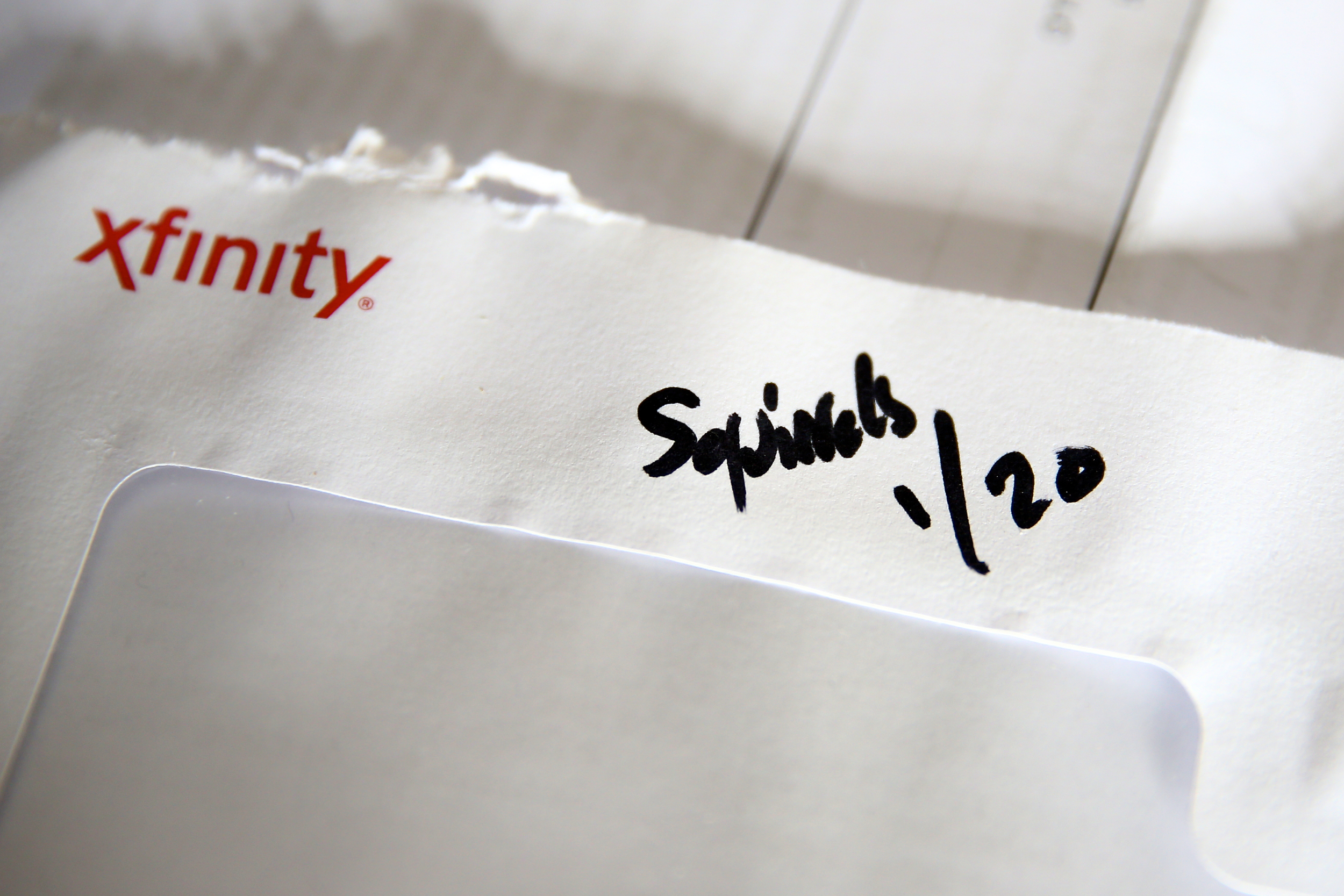
On January 20th, a mailman tried to deliver a piece of mail to an ordinary home. It was the XFINITY envelope you see above. Urgent, we can only imagine. But when the mailman reached the property, he approached a problem: the house was guarded by squirrels. How many, we'll never know, but there were enough. That much is clear. The mailman left the premises promptly, likely by sprint, and much later, he penned the reason for, and date of, undelivery: Squirrels, 1/20. Days later, the mailman returned, the squirrels were gone, and the bill was delivered.
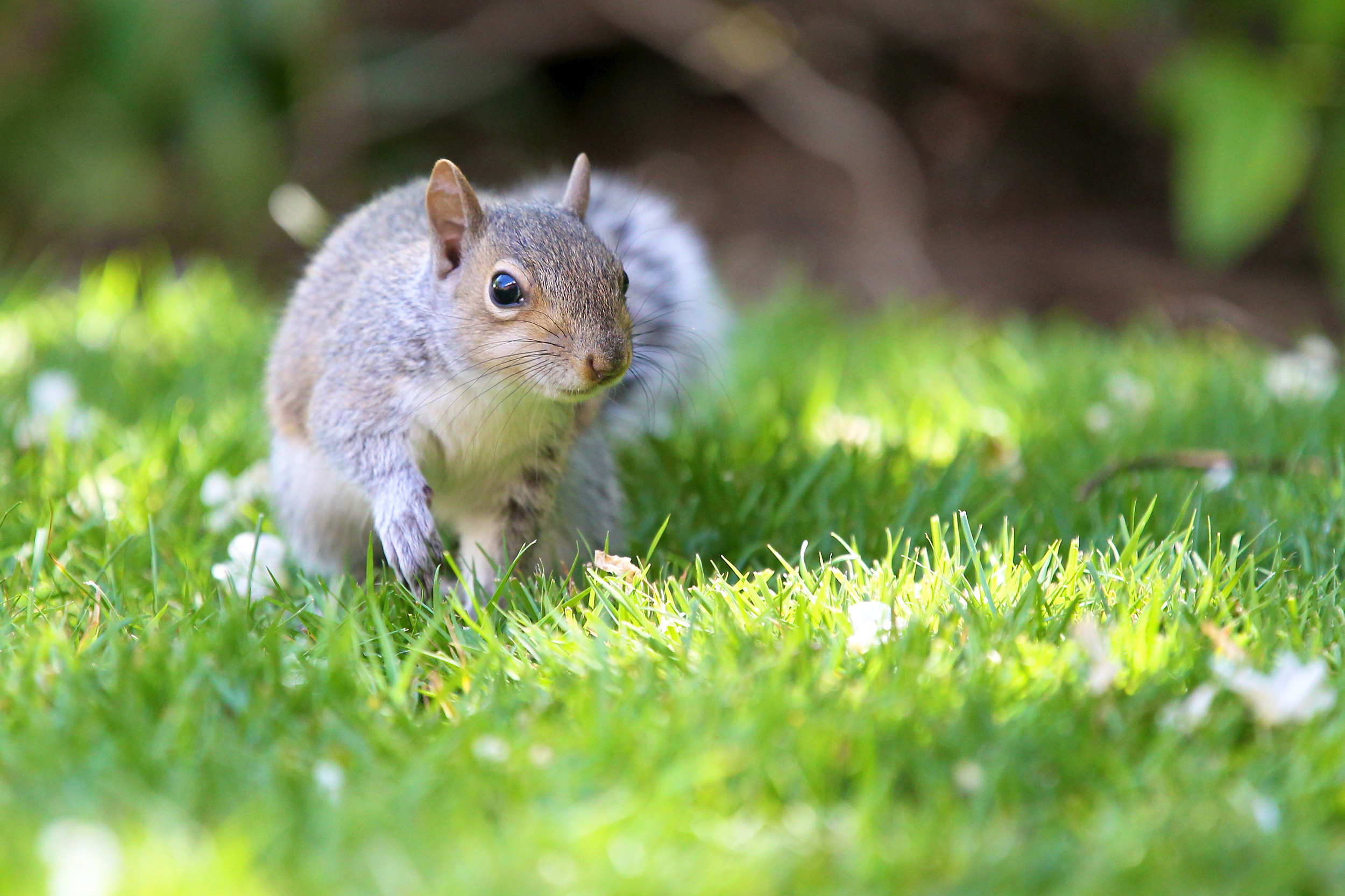
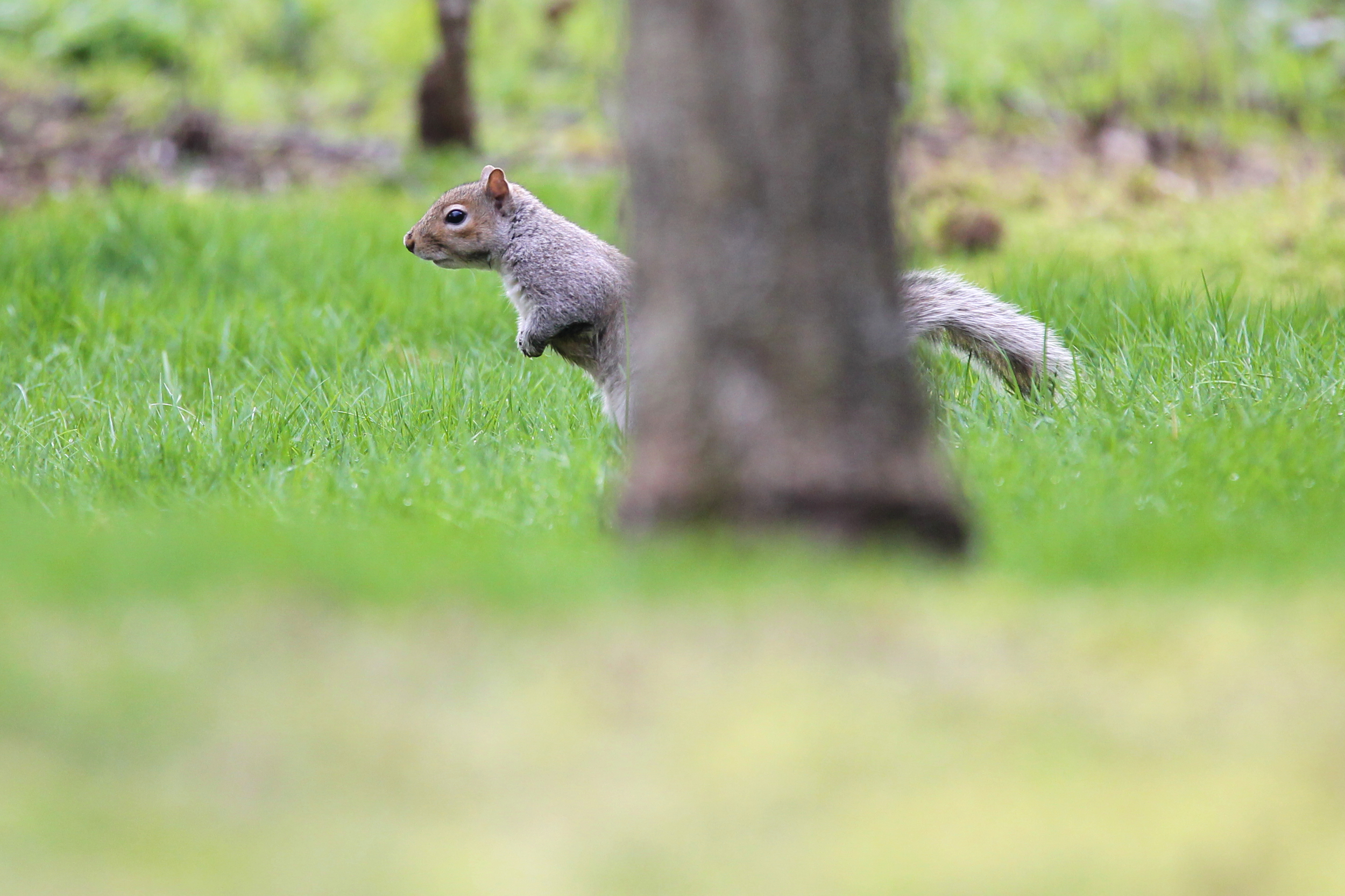
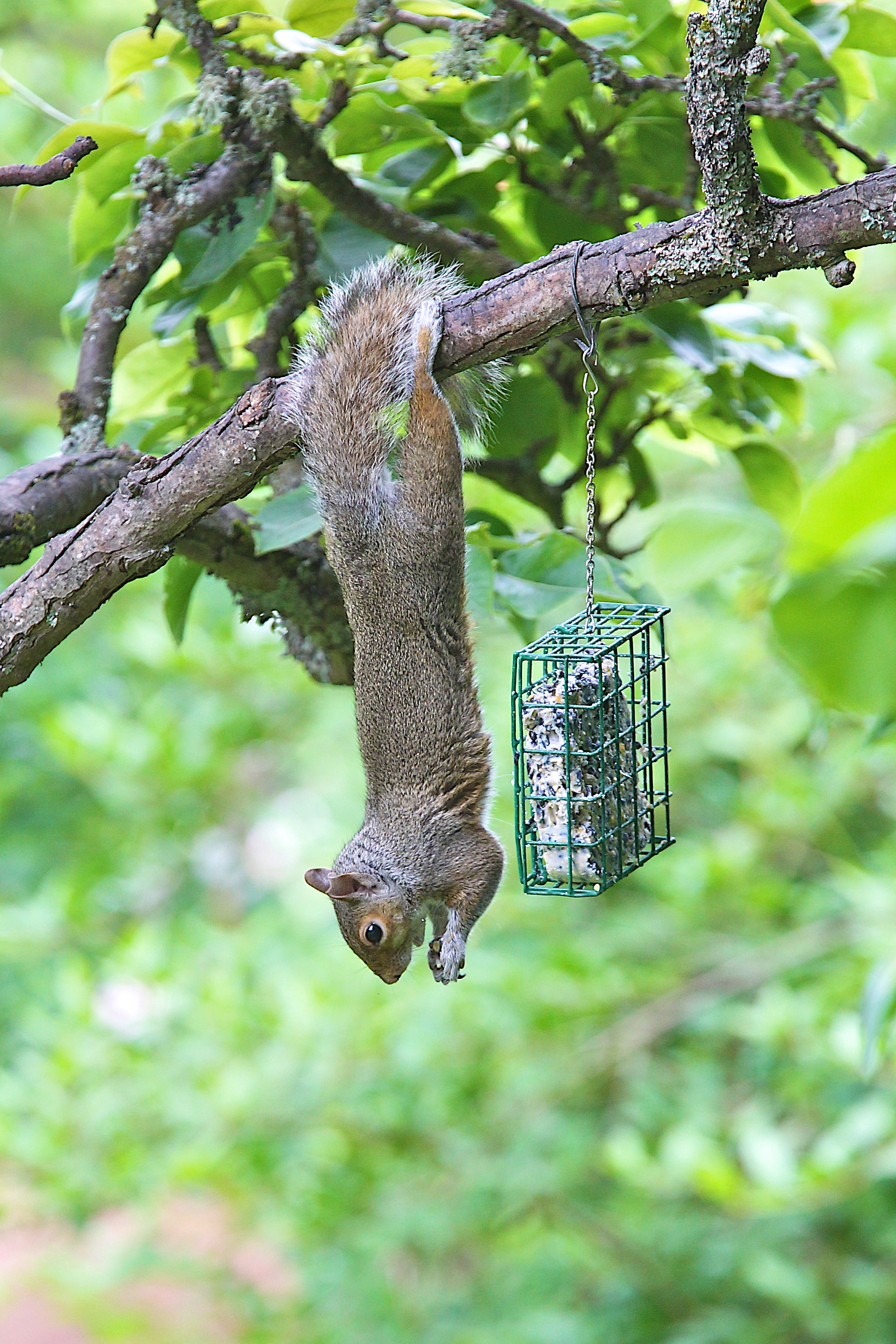
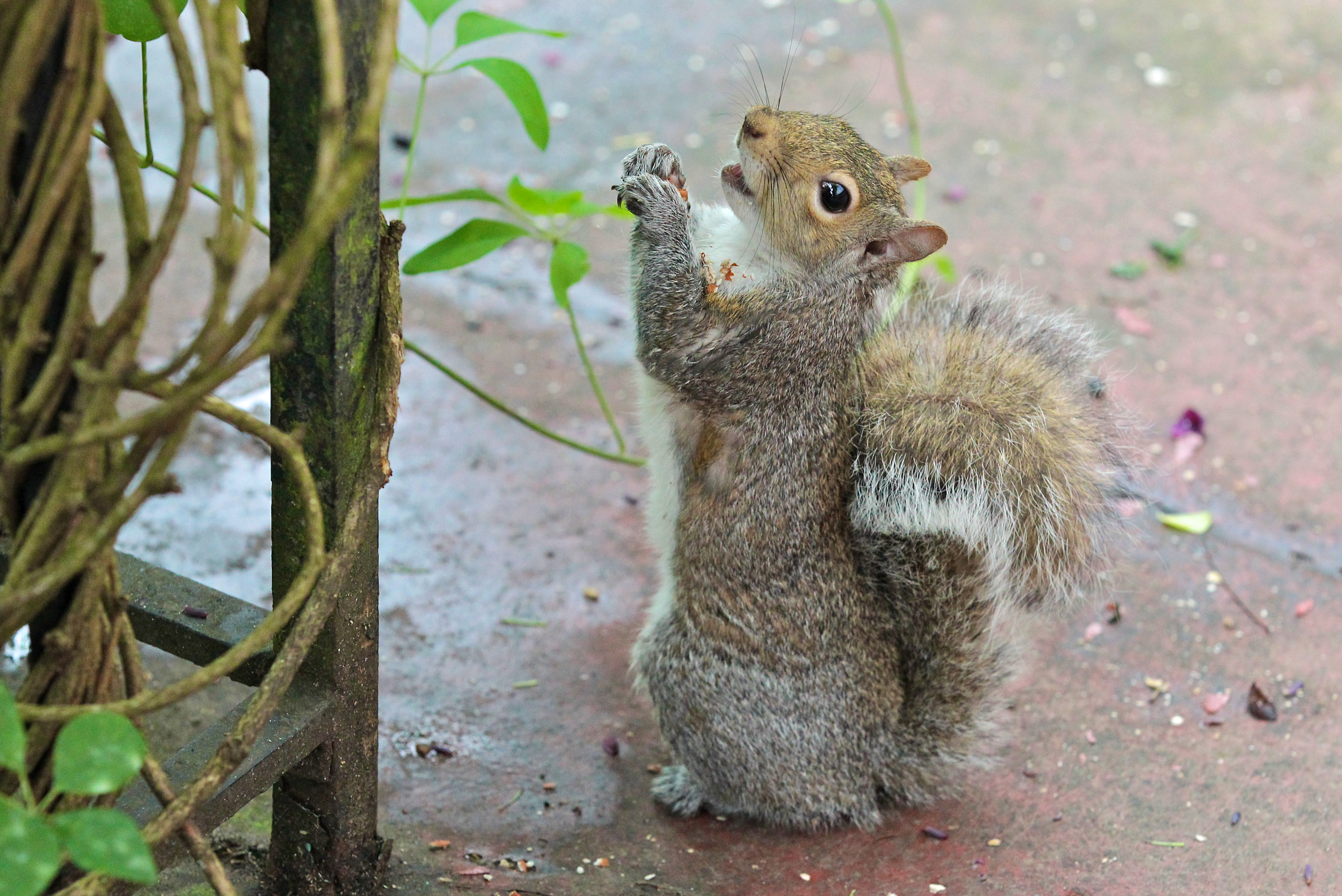
The story could end there, but thankfully, it doesn't. The envelope was addressed to Glenn Tachiyama, an (ultra marathon) trail runner and (adventure) photographer. Glenn's images combine these passions with symmetry, capturing bodies in motion. But he also takes tons of pictures of squirrels.
It's a hobby of his: snapping photos of these shadow-seeking, nut-lovers. We've liked every single one we've seen on Instagram: those little concrete-colored cuties frolicking through meadows, the quasi-confused fuzzy rats nibbling on round shards of asphalt, and the small puff-balls plumping up before winter. You could be thinking that all of this was just some freak accident: that a mailman who just happened to be afraid of small furry things arrived to a residence with more than a normal amount of them. But plot-twist: January 21st just so happened to be Squirrel Appreciation Day. So now, like The Usual Suspects, your mind is going back through the clues.
It was all there: the day the mail was delivered, hundreds of squirrels darting around the lawn, unable to contain their appreciation for each other, gathered together for the annual celebration around none other than the home of Glenn Tachiyama, famous photographer and lover, or should we say leader, of squirrels. Is it that far-fetched to wonder whether the squirrels were just prepping for the photo-shoot of their lifetime?
Obviously, we here at Handwritten lost our marbles. We reached out to Glenn. "Glenn, that squirrel picture is hilarious," we wrote. "What if," we said cutting to the chase, "you sent us 4 - 5 of your fave squirrel images, and we put that in the context of this story?" Glenn replied. "As long as I don't have to write much," he wrote. "Not at all," we responded, "it'll be a visual story."
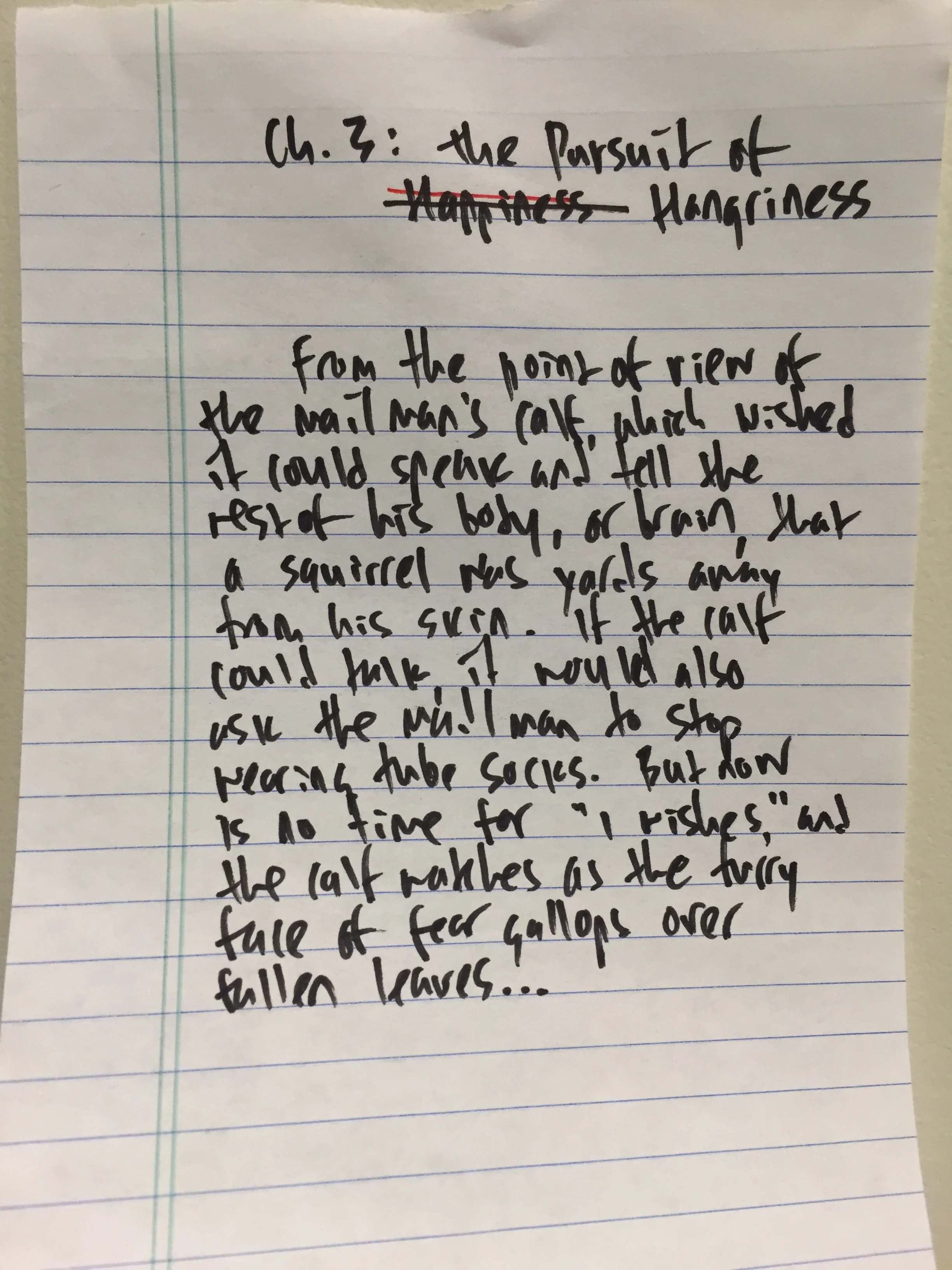
And so, with permission to use Glenn's images, but without his permission to tell a completely fictional tale, we present to you, on this pseudo-gloomy Monday, the untrue story of the mailman and the squirrel, handwritten by us, of course.
THE HANGRY SQUIRREL
handwritten by Handwritten
illustrations by Glenn Tachiyama





I Saw in My Mind a Vision of them Sparkling with Joy • Adrienne Harvitz
This micro-insight from Adrienne Harvitz reminds us of an important tradition: to create brand new ones. Ignoring the standard "To" and "From," Adrienne created gifts out of the paper wrapped around the presents for her children. Did most end up in the recycling bin? Sure, but one didn't.

By Adrienne Harvitz
This Hannukah, when I got to wrapping gifts for my kids, a sort of sinking feeling settled into chest when I reflected on what I was teaching and feeding them through the process of honoring a sacred ceremony of gratitude and reverence with consumerism, AKA "presents."
The receiving of objects feeds an egoic entity — a little green-eyed gremlin — that lives deep within the belly of every child. The gremlin has with an insatiable appetite for ownership, stuff and covetousness, and grows hungrier and more snarly, shouting words like "mine!" and "don't touch my stuff!" and "mom, can't I open another one?" to family members and siblings with more vigor and chutzpah per every present opened.
This is the process whereby the giving of presents takes precedence over the act of being present and defeats the true goal of holiday season: to share love, gratitude, joy, story, and meaning with our families. So this year, when I got that feeling that I was feeding the green-eyed gremlin, I stopped, took a breath, and asked myself what I really wanted to feed and how to do so. I realized I wanted to feed my children positive beliefs about themselves, and the intention of love and appreciation for life that was behind each gift I bought for them. When I imagined them playing with or using each gift I bought them, I saw in my mind a vision of them sparkling with joy, or shining the light of their unique talents, abilities, and delights out into the world. So I decided to give my children the gift of meaning and conscious words with their gifts, writing on the plain foil and recycled newspaper wrapping paper messages to them about just how I love them, wishes, and dreams I have for them, how I hoped they would enjoy their gift or use it to share their inner gifts and joy with the world, or some positive affirmation about them each as an individual.
In the end, most of my words ended up in the recycling, but my son did pin up one of the wrapping paper messages on his wall, and I know that they heard the words from their mama's heart, and not just the sound of shredding gift-wrap echoing in their minds after the candles burned down each night of Hannukah.
Permanent Ink For Self-Love’s Sake • Mickie Meinhardt
BY MICKIE MEINHARDT
“So what do your tattoos mean?”
I get this a lot. Anyone with ink does. People love to ascribe meaning to tattoos; as if to say that to make such a decision, to put permanent markings on your skin, has to have gravitas. But often it does not. Some even seem offended when I answer that, well, most of them don’t “mean” anything. The anchor on my left bicep? Just really wanted one. The mermaid on my right? A beautiful work of art from an artist I admire. It’s a lot like buying a painting, except instead of hanging it on a wall, it’s on my body. Forever.
But some do have symbolism. Like the smattering of line drawing on my wrists: the Deathly Hallows, an octagon for my math-teacher grandma, and wave for my beach hometown dappling my wrists. Of these small but significant ones, there are two I’m particularly fond of, both hand-drawn by me: A heart on my upper right thigh, and the words “NO TIME” on the inside of my right ring finger. Both represent the culminations of periods of extreme personal, emotional, and mental turmoil, and have become symbolic mantras to a better self. In the absence of religion — I’ve been agnostic since I learned what the term meant, though hold beliefs in various universal phenomena that one could, I suppose, call spiritual — they and the feelings they represent have become like small visible prayers to myself, without which I would certainly have been OK, but perhaps not so quickly.

The heart was my first tattoo. I got it in tandem with the small bicycle on my ribs, never seen, the summer before my senior year of college, to celebrate the end of what was and remains one of the worst period of my life.
I was living in the Bronx, commuting nearly an hour to Manhattan to intern at a fashion news website for no money and waitress after at a midtown beer bar for barely-decent money; days frequently began at 8am and ended around 2am with maybe $150 bucks in my pocket, if I was lucky. After rent and bills, there wasn’t much left over, and I was often unable to feed myself anything other than cheap college staples — bananas, beans, booze — or whatever I could scrounge from the restaurant. My apartment life was in turmoil; one of my roommates was experiencing a terrible, life-altering personal situation that, for no fault of hers, oozed into everyone’s life around her and caused a rift in our friendship. Home was not a safe or happy place for me when I very much needed it to be.
That summer, I was in the throes of battling my way out of years-long eating disorders. Three years of on-and-off anorexia and bulimia had caused deep personal revulsion and body image issues. And at that point, whatever reasons the disorders began and were perpetuated were long gone. I felt terrible all the time. Constantly tired, sore, sick of looking at myself in bathroom mirrors with hatred-filled, watery eyes. I was repulsed by what I was doing to myself. So, as low a point this was for me — over-worked, under-paid, stressed, and feeling completely alone — there was a twisted silver lining: Under the pressure of those months, I finally cracked. I resented myself for what I was doing to my body, and my mind, so much that I vowed to kick it all for good.
In hindsight, I wish I had told someone, anyone. But admitting how incredibly fucked up I was to another person was impossible, unfathomable, at the time. It would mean admitting what a serious problem I had. I was embarrassed. I didn’t want anyone watching me when I ate, looking for signs of deep-seated issues. So I told no one. I was isolated, depressed, and a mess. I drank a lot to forget my anxieties, or try to quiet them. If school hadn’t started when it did, giving me a distraction and getting me out of my own head, I probably would have lost it. Years later, a doctor would ask me, incredulous, how I managed to get over the disorders without therapy or serious treatment.
In truth, it would be years more before the aftershocks of those psychological earthquakes would finally die down, but at the time I was determined to quell the actions of the disorders as best I could on my own. I remember this decisive moment of “You will learn to get better” mostly because of an unconsciously-drawn doodle. It was on the late train ride home after a long shift at the bar. As a writer, I was always scribbling, even when bone-tired. With one of the black pens I always carried, I drew a tiny heart on my right inner thigh just below the hem of my denim miniskirt. I stared at it for a bit, willing myself to love my body more.
“This would make a good tattoo,” I thought.
A week before classes began, I took a few days to visit my hometown, Ocean City, Maryland, for beach relaxation and decompression. On the last day, I accompanied my brother to get a tattoo and decided I would, too.
I sketched the heart over and over in my journal. I’d doodled absentminded hearts into margins my whole life, but this wasn’t a college-ruled notebook. It was important that it was imperfect; not symmetrical, not too clean. I drew quickly, rapidly, trying to conjure “the one” with literal stokes of brilliance. Some came out longer, swoopy, with a flick to the point. Some were plump and short, like Sweetheart candies. The ideal was something in the middle: Curvy and cute but not comically plump.
It finally materialized, and I triumphantly circled the nickel-sized symbol and handed the notebook to the tattoo artist to scan. I sat down on the padded chair, jean shorts hiked and leg splayed, and watched. I remember how the ink welled up and sank into my skin, how I did not bleed, how surprised I was at easily enduring the pain, having always been afraid of needles. When it was over, I had a permanent reminder to be a better person to myself that would be seen, as I once told a friend, every time I sat down to pee. This was important — as any recovered disordered eater knows, the bathroom is where your indiscretions manifest. So several times a day, there it was: Love me. Love yourself. Love.
I can’t pretend it was an instant elixir, but it helped a lot. When I became an avid yoga practitioner, it took on a new form.
“Look how strong you are! You’re amazing! I love you!” It seemed to say, as it warrior-ed and stretched and danced through the poses. I came to think of it as a friend who never leaves, and always has the same good advice.

The second meaningful tattoo is relatively recent, inked impromptu on my 25th birthday this past summer, though I’d been contemplating it for some time. I swore I’d never get a words tattoo — I felt out-of-context quotes were cliché, and I’d seen some bad ones — but finding my own handmade mantras changed my mind.
As a creative, self-doubt is a constant companion. Internal body image issues aside, I've always been a confident, outgoing, and capable person, especially in my work as a writer. And, fortunately, depression has never been a clinical or recurring battle for me, like it is for many creatives. But your early twenties are a tumultuous time, and in them the melancholy demon can creep and make itself at home, often to paralyzing effect.
In the later part of 2014, I went through a messy breakup. It felt easy to actually do at the time, to say “we’re done” and walk away, but there were devastating aftereffects in the following months. The relatively short relationship was my first legitimate one as an adult, and, unprepared for the feelings that follow after you lose a love, its dissolution rocked me in unexpected ways. A lot of my body dysmorphia issues came rearing back, and while I was long past the actual disorders themselves, my image of myself was shattered. The breakup had also occurred right before Thanksgiving, meaning I had to trudge through the holidays as if they weren’t making me feel worse about being alone. And finally, I was in the terrible purgatory of waiting to hear back from graduate schools, having finished applications to various MFA programs at the end of the year. I had nothing to do except wait, wait to get better, wait to be accepted—and nothing good comes from an idle mind. Not usually one to wallow, I found myself unwilling to leave my apartment, pathetically curling up in bed with a laptop most nights, or getting wine-drunk and watching the ceiling fan while listening to sad girl music. I knew I was not OK. I saw it, and didn’t like it. But even then, I wasn’t sure how to fix myself. A go-getter who rarely sat still, I’d never been in this situation before. I’d never felt so deflated, like my will to be a person had leaked out of my pores and evaporated. There was a lot of denial, a lot of “I’m fine,” until my roommate finally sat me down and said, “No, you’re not.”
It took a while. But by spring, I’d eased out of the hole. I got into my top school, took on new projects, and started to feel like myself again, in part from the cheesy recitation of several mantras. Say what you will about “quotes” (I did), but they can help more than expected.
One is a poem, “The Laughing Heart” by Charles Bukowski, which begins: “Your life is your life. Don’t let it be clubbed into dank submission.” I printed it and hung on my bedroom wall, and on moments when the gray cloud loomed I would remind myself: This is your life, and it is bright and full and amazing, if you let it be. It ends “You are marvelous. The Gods wait to delight in you.” That is true. For everyone.
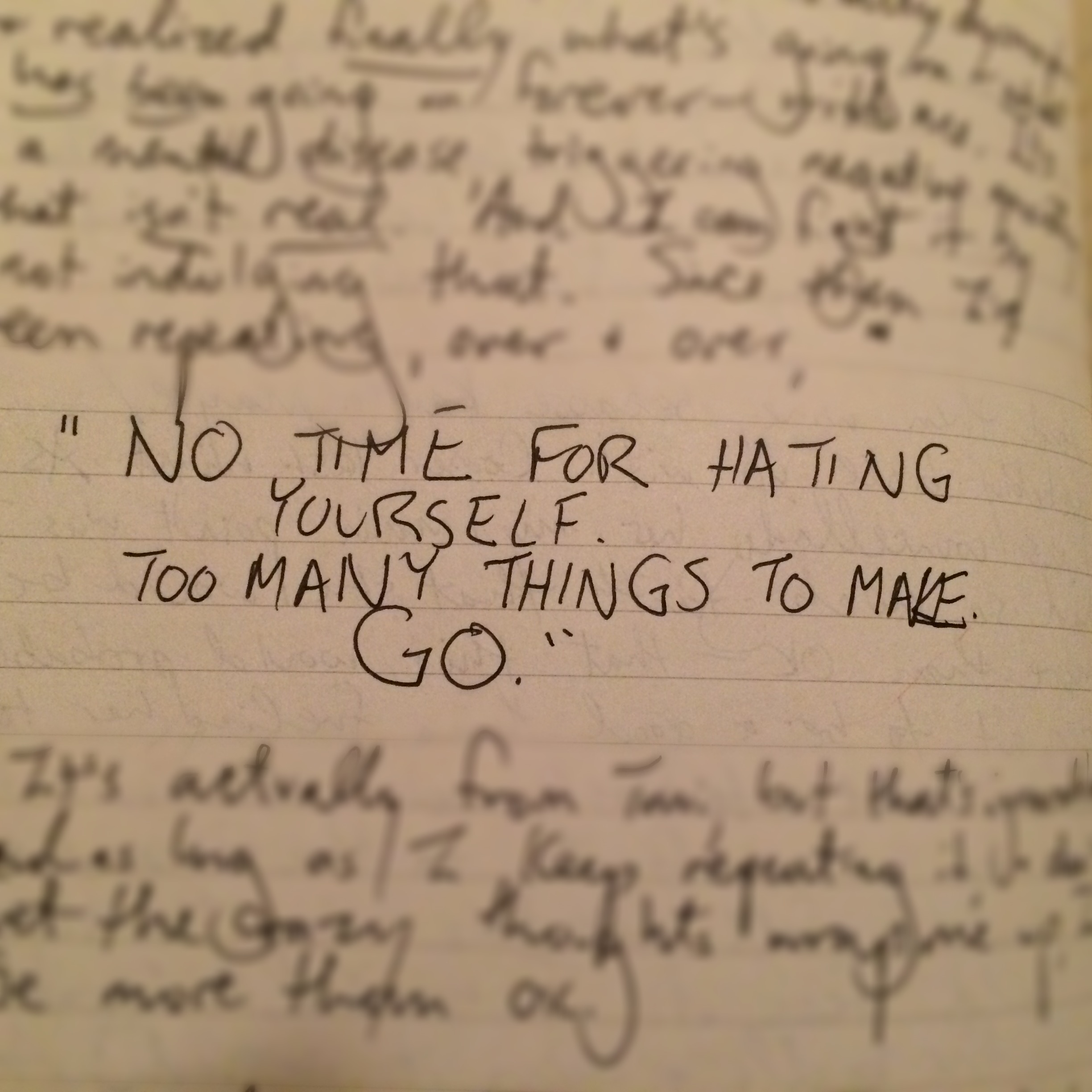
Another is an aphorism that I found on the source for all aphorisms, Tumblr. It is a photo of a piece of paper that the feminist teen blogger Tavi Gevinson had taped to the back of her door. It read: “There is not enough time for hating yourself. Too many things to make. Go.”
I remember seeing it and feeling like someone had just clubbed me with a reality stick. I can’t tell you how many times I repeated those lines to myself through this past year.
“No time for hating yourself,” in front of my mirror on my way out for the night, when perhaps I didn’t feel like I looked my best. “Too many things to make,” on the mat after weekend yoga, getting psyched to go write something. “Go.” On good days, on bad days. Almost every day. I also liked the way it synced with the meme phrase, “Ain’t nobody got time for that,” which had become something of a tagline for my “no fucks given” attitude — adopted as a way to keep my positive, yes-to-life perspective high and distracting negativity low.
These three combined served as driving forces to betterment. If I wanted to be a successful writer with a great life, if I wanted to pursue more creative projects, if I wanted to be the best version of myself, if I wanted to be GREAT and MARVELOUS, then I did not have time for things that could hold me back: sitting and being sad, worrying about what anyone else thought of me or my choices or my work, stressing about how I looked underneath my clothes, thinking about insignificant, small-minded men — or anyone, really — who did not appreciate me. It all went out the window.
Thus, the “NO TIME” tattoo was on my mind for a few months by the time I got it; I had been waiting for something, but I didn’t know what. A little buzzed in a taxi on my way home from birthday day drinks, I decided that was the moment. I redirected the cab, walked into a trusted shop, and scribbled the words a few times in crooked uppercase chicken scratch. I’d never liked my uppercase handwriting — it’s a block-y, barely-held-together sans serif. My lowercase is loopy, a half-print half-cursive hybrid that I’ve always found interesting and pretty. But uppercase it had to be, a stressed point, a shout, a directive.
It hurt worse than any tattoo I’d gotten — fuck the foot or ribs, FINGERS are some serious pain, right on the bone, close to millions of nerve endings. But it was the best one yet, and so worth it. I walked out as the sun was setting over North Brooklyn in that spectacular summer pink-orange array, head clear, feeling maybe one year older but definitely years wiser thanks to those changes in life and attitude in recent months.
Now, the black ink has softened — fading slightly, as finger tattoo tend to do — and it feels more like a firm but gentle reminder, rather than an “or else” angry shout.
Despite not ever believing in mantras or prayer, or at least not the ones I’d seen so far, I unknowingly unwittingly created my own in times when I needed them the most. Two little shout-outs to the universe, establishing my voice in it as one that often wavered but came back stronger, wiser, each time. And written in my own hand, they feel immensely powerful. Like I composed an unbreakable contract to my body to be a better person and signed it to, and on, myself. I don’t think I would feel the same if they were in a pretty font or pre-packaged shape.
I see both these tattoos quite a lot — when I type, when I pee, when I put on rings, when I change my jeans — and when I remember to look at them, I smile.
Because I know, now: I got no time for anything, except a lot of love.


Mickie Meinhardt is a multidiscplinary writer of fiction, essays, and (for her Brooklyn rent) copy, currently working towards an MFA in fiction at The New School. She has a weekly cultural longform newsletter, The Interwebs Weekly. She tweets sometimes but Instragrams often.
No Writer Should Live in Fear • Justin Sherwood

The instagram does not exist. In it, a patch of white-gray sidewalk frames a loose circle of dead leaves. In the top left corner, the curb of the road. At the center, yellow graffiti. The graffiti is a crooked arrow pointing into open space, and next to it the words FAG PARKING. You can tell from the way that FAG is scrawled the graffiti first marked something else, that when the text was painted it wasn’t graffiti at all. There are other signs nearby: a pink flag, some white tubing. But there it is, revised: FAG PARKING.
I came across the parking space on a run. On shorter runs, anywhere from 30 minutes to an hour, I perform the same loop. I run from my apartment on Ditmars Boulevard to the northernmost avenue in Astoria, then west to Astoria Park, around the park, back to the avenue, and home. I’ve run the avenue hundreds of times. And then this drab, fall day, as I near the top of the hill that marks its middle, I find the inscription. I must have been sensitive that day. The sky was clear and pale, the wind was calm; I’m full of pride, I’m well adjusted. And yet. FAG PARKING. I feel that hot and unmistakable pang: shame.
And then I think, let this be funny. I’ll capture the image and say, “If you’ve ever tried to find parking in Astoria, you know how considerate this is.” The day passes and I go for another run. As I crest the hill, I keep my eyes peeled for the graffiti. I must have missed it—I’ve passed the place I know it to be. I’m nearly in the park and there’s no sign. I make a small circle, run back up the hill, nothing. I stop at the top to catch my breath. Another sideways glance, then down.


Justin Sherwood's poems and essays have appeared in Women's Studies Quarterly (WSQ), New Criticals, H_NGM_N, and The Poetry Project Newsletter, among other places. He's also a contributor to Scout: Poetry in Review. He teaches at The New School, where he received his MFA in Creative Writing. Find him on Twitter @JustinSherwood.
I Wanted to Build a Universe • Tonianne Bellomo
What happens when it's not just you, the writer, who struggles with the screen, but your characters? In this lyric essay, Tonianne Bellomo walks us through the negotiations she makes with her characters. What does she do to bring them to life? She builds them paper homes.

By Tonianne Bellomo
I wanted to build a universe.
I wanted to write stories like the ones that made me forget reality. I wanted to build worlds from letters. I wanted to draw in the margins and give readers a glimpse of the realms that rested behind my eyes.
I can’t do that on a computer, at least not at first. There’s no highlighting, scribbling, pasting, scratching out, ripping. There are just clean white backgrounds, perfect font, and the tapping of keys.

That is not world-building; that is a job.
The novel I’m editing is rough, probably in every sense of the word. It sometimes gets so dark that I forget which way is the way home, and I find myself suffocating.
It makes it hard to write.
The computer makes it worse. I feel like I’m cheating. My characters hate it, too. It’s like they refuse to be slighted, refuse to be clinically typed in perfect Times New Roman onto my computer rather than scrawled in a bastardization of Catholic school cursive. They’ll just stand at my mind’s door, arms crossed, heads turned away like I’ve insulted their mothers.
So, I give the characters what they want.
I give them paper homes.
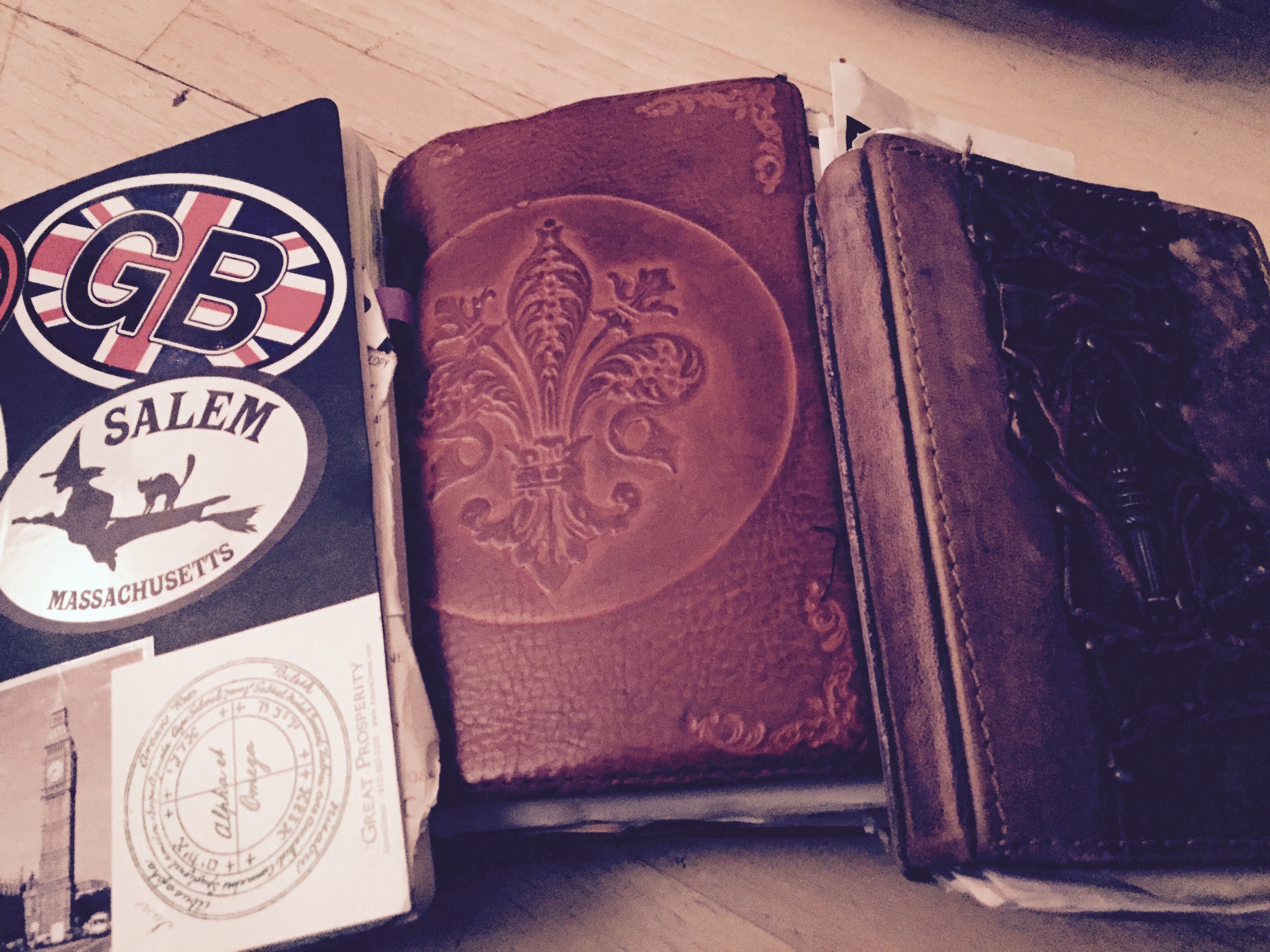
The characters grow in those spaces, whether I realize they’re characters or not. They are lines from a poem, a feeling evoked from a song, lyrics, ticket stubs, a Polaroid. The characters are a lot of things that would have never come together if I didn’t handwrite first.
Handwriting makes it feel like art.

I know by definition writing is an art. I just never feel like I’m making art. Handwriting my stories, though, and putting in all those extras makes me feel like I’m creating worlds for them, like the little girl with a dollhouse that she’s putting together.
Tristan, the protagonist of my novel, even has a journal that is featured on his blog. It originally just started out as a Tumblr blog, but I couldn’t “feel” him in that blue screen. I went out, bought a Moleskin (because he would totally have one) and started drawing and writing in his voice.
It made me feel like I could breathe again. Like the darkness wasn’t so suffocating because I could understand his thought process — I could follow his thoughts home.

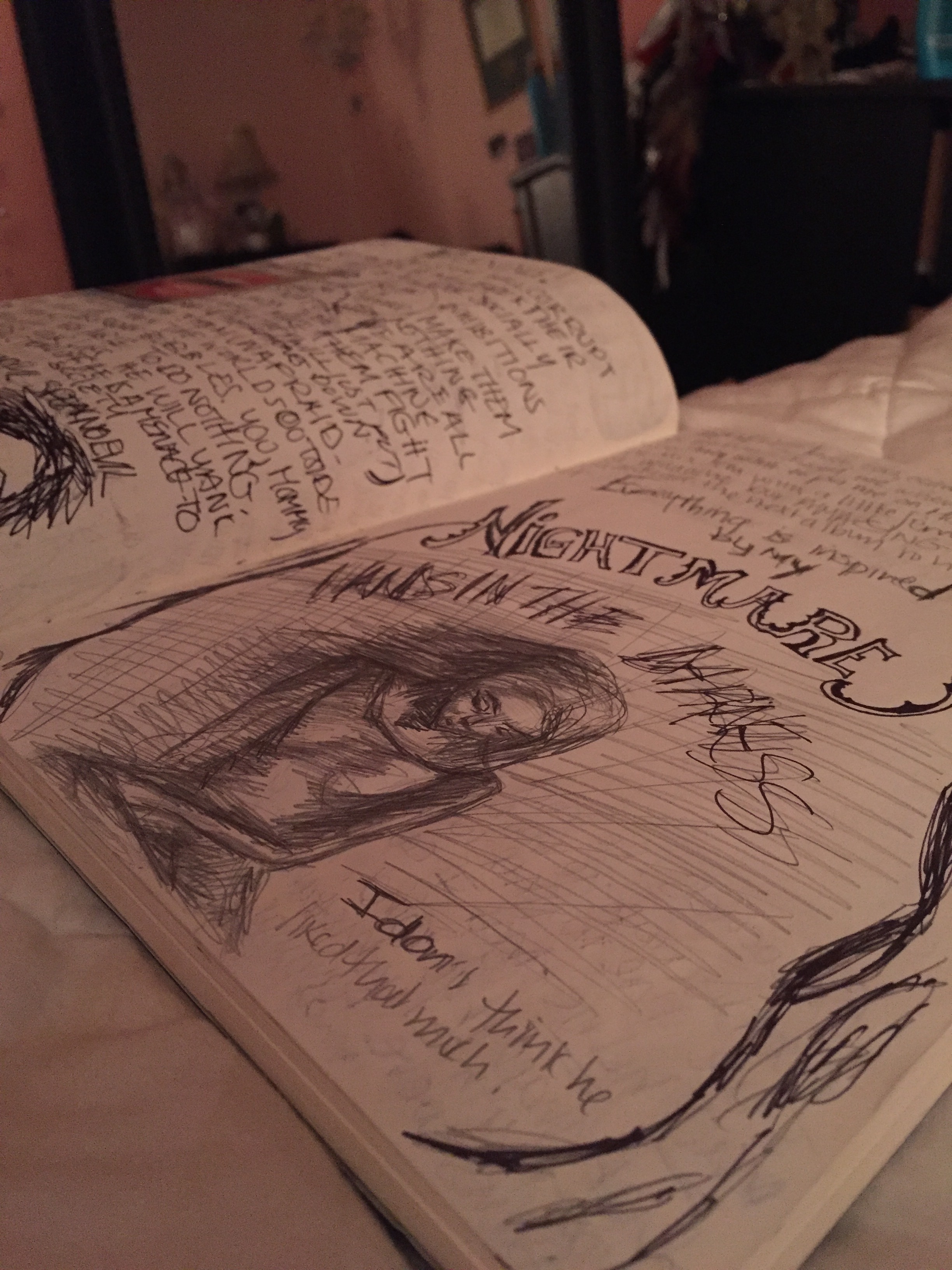
He’s real now. The moment I handwrote his first entry, he became real. The fourth wall broke, and he fell into reality. I can see him sitting in O Café sipping his Americano while sketching in his journal or pasting photos of Richey Edwards or Ian McCulloch onto the pages.
Handwriting and plotting my stories in my journal — it all helps me make worlds. It helps me create the universes that I want my readers to inhabit. And it helps me remember that before all the workshops and degrees and frustrations, there was just me, my journal, and the universes I wanted to build.


Tonianne Bellomo is a graduate of The New School MFA program and an adjunct lecturer at Baruch College where she teaches writing. She is currently editing a novel and blogging from her protagonist's POV at http://wax-and-wings.tumblr.com.
Better Smut by Hand • Wednesday Black
Publishing under a nom de plume, this rising novelist reflects on how writing the first draft of her erotic novella by hand led to all kinds of unforgettable feelings.

BY WEDNESDAY BLACK
I wrote the smutty little novella, How to Train Your Virgin, in the fall of 2014. Badlands Unlimited, a publishing company founded by artist and activist Paul Chan, had put out a call for erotic fiction the spring before, and I took a chance and entered a chapter. I thought there might be a little money in anonymous smut-making. The result was a somewhat bittersweet novella of feminist, fabulist fiction — oh, yeah, and fucking.
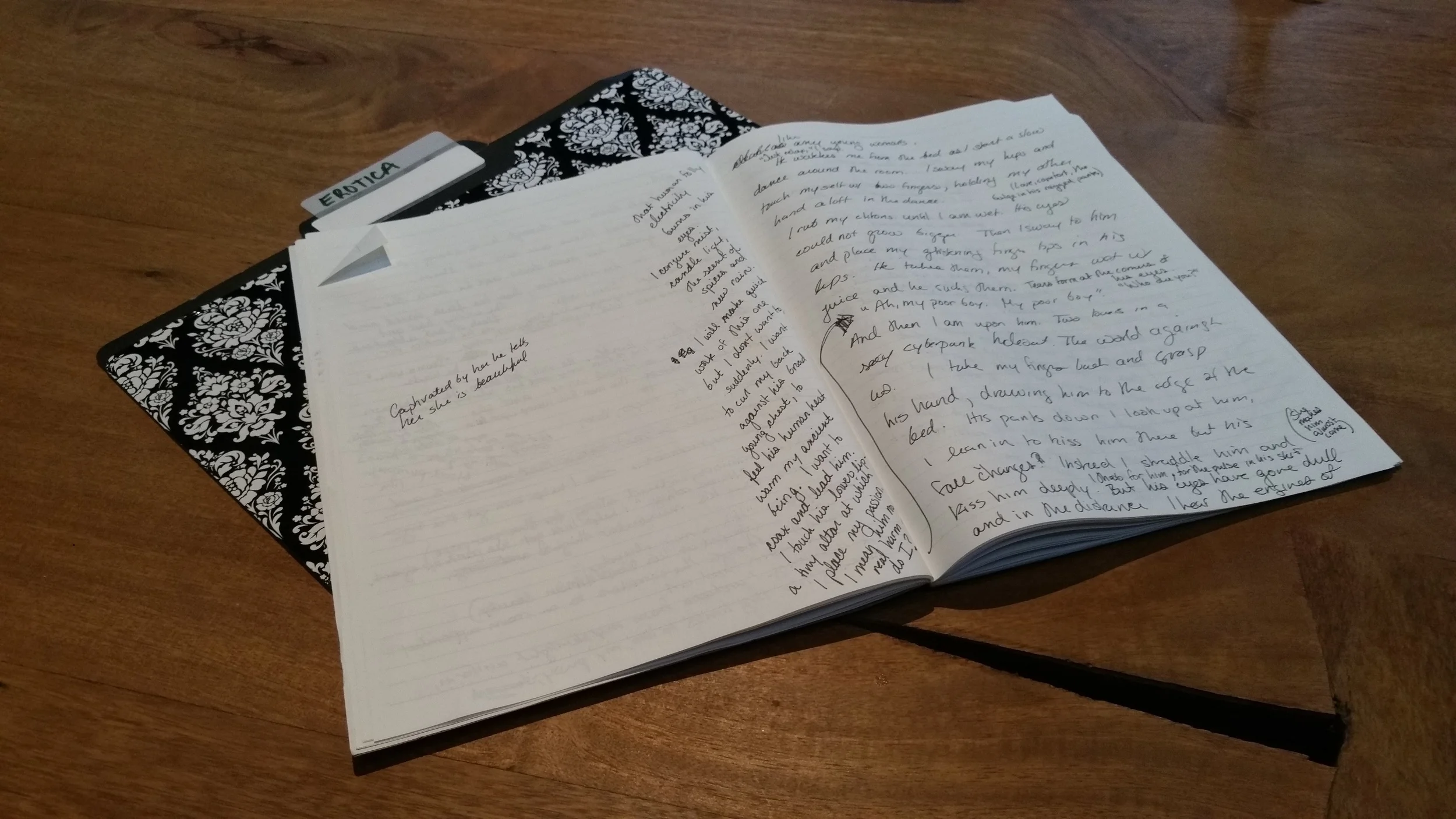
The real surprise for me was the enormous flow I experienced while writing it. I’d never written anything like it before, and it felt…good. It was as if my Inner Critic was so mortified she had no choice but to take a vacation. After all, I was working in cliché, striving to boost every scene over the top, and doing it all in a fantasy playground populated by evil bog women and clockwork sex carousels. Let’s not even get into the title! I mean, what could Inner Critic say that I didn’t know already? So I ran with the story — or maybe it ran with me.
I wrote most of HTTYV by hand — in bed, on the subway, hunched over in any number of coffee shops throughout Amagansett and Manhattan. I scrawled over multiple notebooks, post-its, scraps of napkin, the backs of receipts, and along the way I lost as much as I wrote.

Sometimes I like to imagine someone picking up one of those lost scraps of prose. What might they make of the scribbled words about Minotaur fellatio, great, tiered foundries for sexual smelting (okay, that one didn’t make into the book), or numbered directions for seducing hipsters? This is one of the dangers and pleasures of writing with pen and paper. Such words have a way of fluttering away on mysterious wings and leading lives independent of those we imagined for them.

Looking back at these first-draft jottings more than a year later, I can see a childish exuberance in my pen strokes and slashes. In many cases the finished product was very different, of course, and I’ve included examples here and there where it is relevant.
What is it about writing by hand? I like seeing what I scribbled out, having it still there even though I’ve consigned it to ballpoint obscurity. I love the act of scrawling ideas, scenes, shreds of dialogue — when I do, it seems to come from my hand and not my brain.
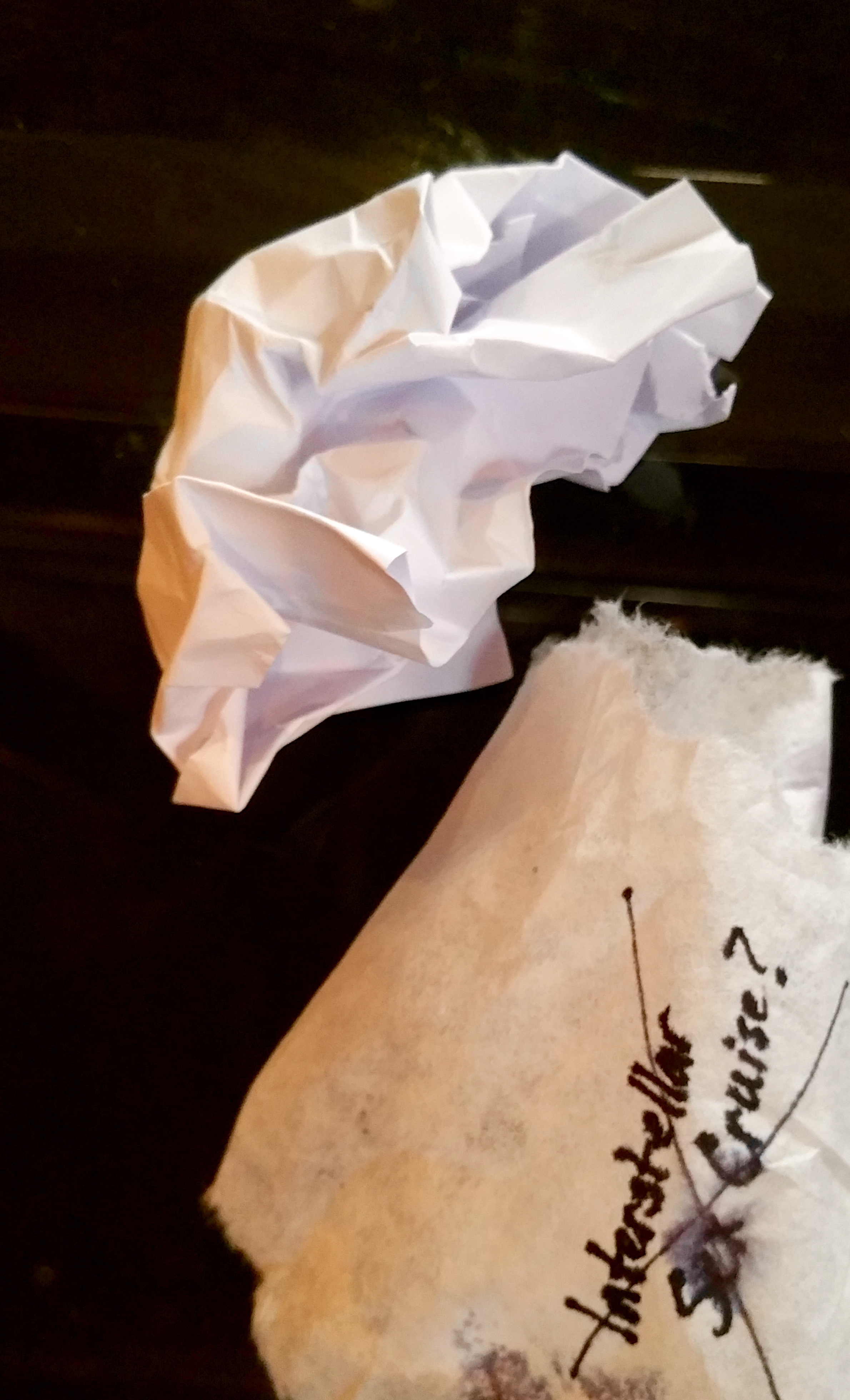

Looking at it now, I can see by the physical state of my writing how I was feeling then: frustrated, ashamed, enthusiastic, bored. I can relive my process as it developed, see where my creativity tripped and fell, and the moment it brushed itself off to allow the show to go on. Here is the raw version of The Ruin Carnival scene and the published version:


Sure, the paragraph that made it into the published novella is clearer, contains more — but would not have existed at all without the notes. One was the organic, physical product of handwriting. The raw material. The other was processed until it became more effective and organized. That it was processed and finished with the rather sterile act of tapping away on a plastic and metal contraption is significant. A keyboard and a screen have a disciplining effect. Remember my Inner Critic? She was allowed to come home again during this part. Another example:


Often I didn’t feel certain necessary content deserved to be written by hand—why waste the ink and finger joints? Instead, I wrote a note to my future self to get on with it as in this note. Love scene is a euphemism for SEXSEXSEX. In fact, I wrote most of the actual sex scenes on the prudent keys of my Mac.
As for the passion, the obsession, the pain and heartache—all of those things I found were best rendered by hand. There is something about writing these human intrigues that required, for me at least, a body-word collaboration best engaged by planting elbows on table and pressing down with pen.
In the end, after all that scribbling and wild fun, it was a trip to get the published version. Rigid margins, clearly printed large-type, a cover…wow. That’s classy smut, I thought. But the most human part, the communication between individuals — that was handwritten.


Leia Menlove is Wednesday Black is Leia Menlove. Her writing has been published in Monkey Bicycle, Joyland, Joyland Retro Volume 2, The Artificial Selection Project and more. Her novella, How to Train Your Virgin, was released by arts publisher Badlands Unlimited in March 2015, and was featured at the The Solomon R. Guggenheim Museum Series, "Conversations with Artists and Writers.” She is a graduate of The New School MFA program for creative writing, and splits her time living and working in New Orleans and New York City. If anyone finds a notebook containing scribbled notes for a dirty novel about women who are attracted to deconstructivist architecture, please email her immediately: mswednesdayblack@gmail.com.
Once A Writer, Now A Handwriter • Demetri Raftopoulos
A writer reflects on his first experience with a journal, which happened to coincide with living away for the first time as well, at the age of 26.

BY DEMETRI RAFTOPOULOS
I forgot my notebook.
It’s 5:30 in the morning and most of Thassos is still sleeping. The sun is hidden behind a couple moon colored clouds, just like the rest of the writing cohort behind their closed bedroom doors at Archodissa. I walk back past the kitchen and up the stairs towards the courtyard where the basil and oregano that is sprinkled into our dishes grows. A group of off-white stray cats lay spread out next to the garden. Their eyes are closed too.
I walk up to the balcony and reach my room. Clothes hanging to dry snap softly on a line extending the length of the balcony. I barge in and retrieve the small beige felt journal resting on my nightstand. My feet crunch against the sand I drag in from the beach every day, and close the door behind me, now ready to open my notebook on a boat that will sail through the Aegean.
Spending a month in Greece, that same notebook was next to me as much as bread was with tzatziki. With me at all times like uncertainty throughout the Greek government. Simple chance brought us together. A good friend gave it to me before leaving and if it wasn’t for him, I would have never clicked down on a pen. I would have never built another relationship alongside all the others formed around me with the clanking of glasses that month.
The notebook became my traveling companion. In a new environment, with new people, I felt safe with it. But I was also in constant need to protect it. So much so that instead of spending my last morning in Thassos on the beach, I sat at the restaurant and transcribed everything I had filled it with onto my laptop, in case something unfortunate occurred. I needed to know where it was always, the few times it wasn’t tucked into my back pocket or open in my hands. It was a friend that always gave, no matter how much I took and took and took.
I wasn’t a hand-writer. But in Greece, I became one.

The water looks dark, like the tip of a sharpened pencil. I grip the blue siding of the boat the way I grip my notebook. We move slowly, a pattern of tiny ripples follow us to the fishing trap Stamatis set last night, but the boat still rocks with the unsteadiness of the water. Stamatis is a fisherman, captain of the Evanthoula, and owner of Archodissa. He stands behind me clutching onto a small metallic wheel that sticks out from above the compartment like his worn-out overalls do over his blue polo. Greek music plays from a speaker next to the wheel and we pick up speed.
“S’Agapo pou eisai oreia,” Stamatis shouts, adjusting a strap falling off his shoulder. “I love you because you’re beautiful,” I repeat to myself, taking a seat on the ledge in front of him.
I wonder if he is singing to the sea, I write in my notebook. The swaying of the boat darts my pen upward and downward. Or if he is singing to his wife, Eva. The word ‘singing’ comes out the sloppiest but I can still read it. I use my thigh as a desk and rest the notebook right above my knee AKIMBO. It’s chilly this morning and the Aegean breeze whispers across my exposed head. I pull my hood up and continue writing.
This is his life: setting traps at night to pick them up in the morning. Sleep irrelevant. And whatever the sea offers him this morning, he will still be singing. Whatever the headlines say about his home’s economy, he will still be fishing.
I flip back to earlier pages in my notebook and admire how much I have already written only into the second week of this month-long writing residency. The pages are filled with sloppily written words as if I wrote them descending King Da Ka at Six Flags but my words are there, nonetheless, engraved into each sheet.
Light begins to creep out from behind the mountain to our left, as if rising like beer poured slowly into a mug.

Stamatis is still singing. His words hit me like the morning wind but stay and land on my page instead.
The captain continues to serenade his home, his sea. He knows these waters better than the fish that swim in them. The boat moves with ease and the music blasts louder. Stamatis is Thassos’ alarm clock. The snake charmer for the sun. The dry entertainment above for those living below. He could be trying to mask the harsh sound of the Evanthoula’s engine. Provide the sea with comfort instead of impending potential capture. Or he could just love the music his favorite singers produce. It could be his constant cheery nature. That he wishes to celebrate his life instead of worry about it.
I click the end of the pen and place it in my notebook’s crease so I can stand for the sunrise. I leave the notebook closed on the ledge and face the mountain, watching it give birth to the sun. The curved arc appears first and the morning already begins to warm. I remove my hood and look back toward the notebook, tempted, but keep my eyes focused on the slowly rising sun.
This will sound a bit silly but my notebook isn’t demanding or needy. Yes, I may write in it constantly but the notebook has also allowed me to live my life separately, away from it’s pages and soft jacket cover. To admire what’s around me alone, and then share the moment with it afterward. To truly capture a moment before putting my head down. Don’t get me wrong, I enjoy sharing. But I enjoy being able to experience something on my own first and then sharing it with others. With my notebook.
The sun is halfway through its entrance and I return to my ledge. I watch the day brighten a little more before opening the notebook again.

“Ti graphis?” Stamatis asks loudly, touching the brim of his blue hat, and then resumes his song. "What are you writing?"
I turn to face him. “Kati yia sena,” I tell him. He smiles and his graying goatie does too. "Something about you."
An orange buoy appears, softly twirling in the water like the final spins of a quarter. The engine and speaker both soften and the boat inches towards its marker.
Stamatis’ beard resembles my father’s, as does his work ethic. I’ve been to Greece before but it’s been seven years since I’ve experienced that sunrise from the blue of the Aegean. With someone like Stamatis, a patriotic man, doing all he can to keep his business and world afloat. The water doesn’t have a rank smell attached to it, like the beaches on Long Island. If anything, it smells like promise. Greece is constantly on display, shackled in the courtyard of Europe for everyone to poke at. It isn’t hidden like that which swims beneath us. Hopefully Stamati will reveal some of his hard work when he pulls up the trap.
In the past, I don’t know how I would have recorded all this. With my phone? Hope to remember as much of it with my fleeting memory? Fleeting, like my presence in Greece. It’s impossible to remember every detail but with this notebook at my side, I’ve been attempting to. Whatever I don’t remember or don’t see, I’ll write into my notebook the next time I’m here. And whatever I forget will be kept alive.
The orange buoy is now at arms reach and the boat slows even more. A couple of seagulls are awake now too, circling the boat for whatever we throw back, if anything. The sun is now completely over the mountain and shines on the rest of the waking Thassos. This is when Stamati will begin to reel in his trap and wait to see what he has caught.
“Re Demetri,” Stamatis says, turning the wheel slightly, “pigene na to piasis para kalo pedaki mou.”
The captain asks me to go pick up the buoy. An honor. He is asking me for assistance, someone who is simply learning in the presence of a master. Stamatis could do all this with one hand covering his eyes and the other flicking worry beads over his fingers. My assistance isn’t paramount to his trip because surely he does this alone. However, he has entrusted me in carrying out a duty that affects the well-being of his family.
I’m still tempted to stay seated and write. To witness something invaluable I could never see elsewhere and fill more pages. Write this scene of him picking up the traps. Write with detail the way each fish looks, how they move, and sound. Describe the definition of Stamatis' aging yet tone muscles flexing with each pull of the trap. How his blue shirt matches the water he’s pulling fish out of. How the mechanized pulley reeling in the trap sounds alongside the rest of the emptiness we are surrounded by.
Instead, I leave the next page blank. I close my notebook, stand, walk to the front of the boat, and reach for the buoy.
The Screen Test • Joyce Chen
Is the notebook half-empty or half-full? In this essay, Joyce Chen sets out to test and trust her hand, a routine tethered to time, with the hopes of avoiding the pitfalls of resolutions by resolving to reflect. Are you up for the screen test?
BY JOYCE CHEN
I’ve never been one for New Year’s resolutions.
Not because I don’t believe in the psychology behind them – God only knows how much I am an advocate for self-reflection and self-improvement – but because I’ve always had a sneaking suspicion that New Year’s resolutions are actually made to be broken. The way they’re worded and thought about almost always sets the resolution-maker up for failure: “This year, I resolve to work out more” (meaning, what? Buy a new pair of running shoes and use them thrice instead of once?); “This year, I resolve to be a better friend” (read: respond to emails in two months rather than four); “This year, I resolve to spend more time with family” (but more time with family doesn’t mean a thing if you’re still plugged into a device while sitting in the same room, right?).
This may sound a tad bitter, sure, but to be perfectly honest, I only feel okay making these jabs because I’ve made these resolutions before, and by that same token, I’ve also failed at these resolutions before. There’s something exciting about starting a new calendar year that nudges our inner navel gazers awake to notice our shortcomings and attempt to remedy them with a promise to “be better.” But what I’ve come to discover over the years is that while New Year’s resolutions are always well-intentioned, they are often more about finding a temporary, band-aid solution to problems than actually digging deeper to get to the core of the issue.
A desire to work out more, for instance, might stem from guilt over poor lifestyle choices (ie. late nights, fried foods, overindulgence of all kinds), not an actual desire to exercise more. The resolution is less about running and lifting, and perhaps more about thinking about and taking control over our daily routines.
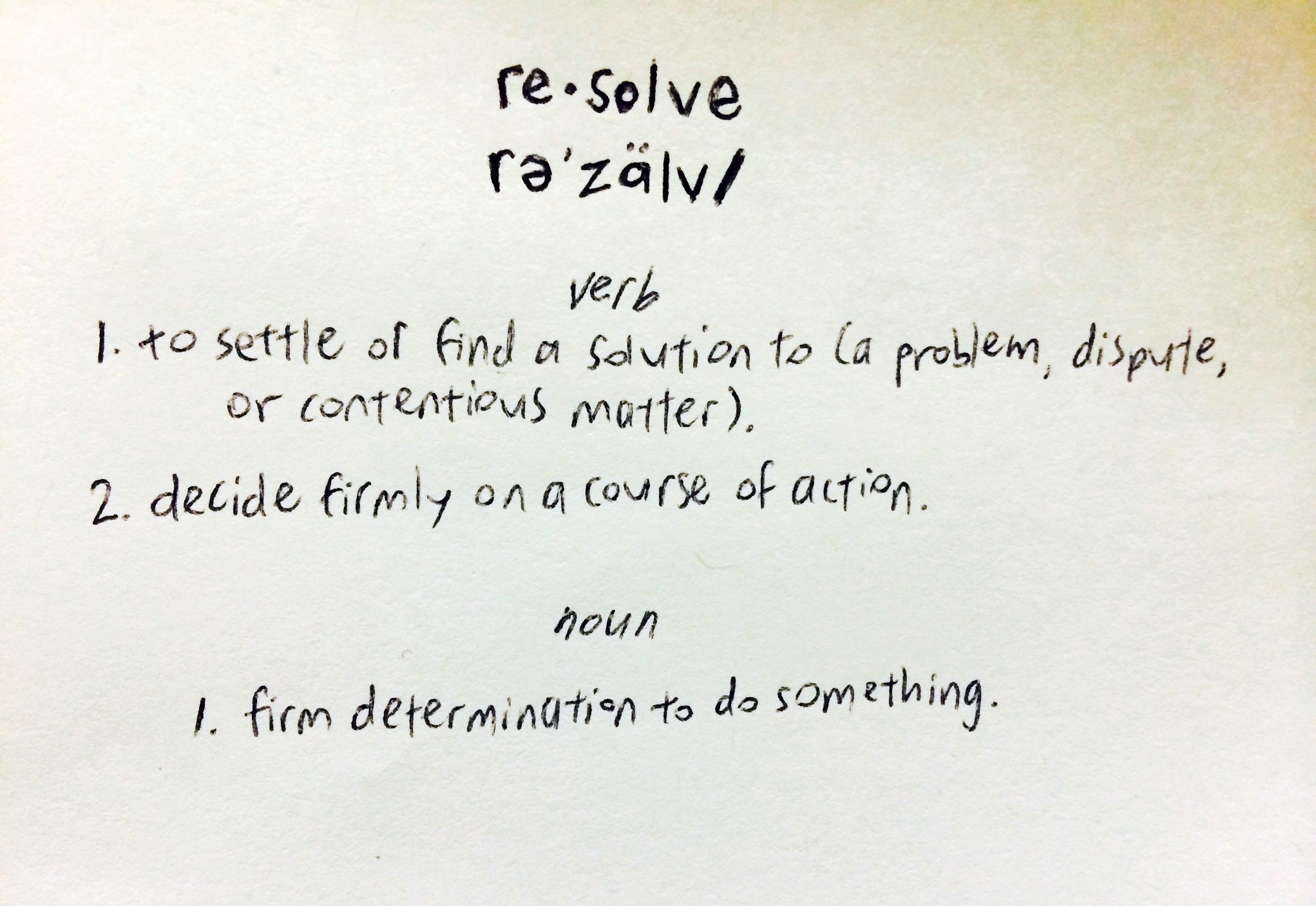
To that end, then, I would rather have resolve (n.) than to resolve (v.), because my goal isn’t to reach a conclusion right away; no, I want to understand my own process as it is unfolding. I would rather have the noun in my back pocket as a reminder than the verb in my front pocket, at the ready for a quick-fix solution. So this year, instead of a New Year’s resolution, I decided to have an anti-resolution. A plan to test my own willpower by opting not to do something that has become dangerously habitual to the point of dependency: stare at a screen all day.
I realize that as I am writing this, and as you are reading this, we are both staring at a screen – and that’s just fine. So to clarify, my decision to not stare at a screen is less a dramatic political statement and more a modified lifestyle choice, an experiment: Between the hours of 10:30 a.m. and 10:30 p.m., I allow myself to carry on as I always have – answering emails, scrolling through headlines, and laughing at silly GIFs. In those 12 hours, I feel connected to the greater community of the Interwebz, corresponding with friends halfway around the globe, pitching ideas to editors in other states, and engaging with a community beyond my immediate line of vision; I am in a digital portal and can free-float through both time and space.
And beyond the computer screen, I also allow myself to get lost in my iPhone, in the TV screen, in a number of other electronic means of communication; I express myself in words and emojis, and absorb new thoughts and ideas in the form of the news, news feeds, TV shows, Instagram, Facebook, Tumblr, Twitter. The sea of garbage, as a professor of mine once called this vast ocean of information, is alive and pulsing during those 12 hours.
This is what screens have given us, after all: a means to access other people, places, thoughts and head spaces, from wherever we happen to be at a given moment. And I am grateful for the distractions, as we all likely are, because that means that we can sometimes push aside the more immediate tasks at hand in favor of temporary escapes. But there is a threshold; there must be.
For me, that was last year, when I realized I was checking my email first thing in the morning and watching shows and films until I fell asleep at night. There was this feeling of dependency, of addiction, a light-bulb moment realization that I was literally spending all my waking hours as a slave to my many screens. I wasn’t getting good sleep, and I wondered sometimes if it was because my brain was going through withdrawal from not having a backlit device pointed straight at it during the hours I slept.
I realized that part of the problem with always being plugged into a device was that I was hop-scotching from distraction to distraction and was therefore not always quite here, the physical space I was occupying. And this meant, as a result, that hours and days and weeks and entire years were flying by without my ever having really experienced what was happening in the moment at the moment. I was living life in retrospect.
And that was a problem.
So though I still take part in the digital sphere between the hours of 10:30 a.m. and 10:30 p.m., these days, I’m opting to spend the hours prior to and after that off the grid a bit, focusing more on the who and the what of where I am during that time. Unplugging is the how. To experience life more vividly and fully is the why.
During those hours, I meditate and I think and I read and I write a lot (by hand, of course). There is a kind of stillness and peace I find in not being in front of or dictated by the influx of information found on a screen. It’s a feeling that I had long forgotten, and would most likely have continued to forget, if I hadn’t taken a step back and realized how my days had become inundated by thoughts and demands not my own. Being separate from the screen is giving me the luxury to do something I never thought I’d be able to do in this digital age: really hear myself think.
In the beginning, it was always tempting to cheat and take a quick peek through my phone in the morning just to see if there were any pressing emails or Facebook notifications or Instagram likes that took place overnight. But because I had given myself these rules and parameters, I felt a duty to keep myself in check, lest I disappoint myself with my own lack of willpower. I started to analyze that temptation, observe myself in third person during those morning handwriting sessions, and realized that much like Pavlov’s dogs, my instinct to check my inbox was more about the reward of attention (“so-and-so has replied to your email!”) and importance (“inbox: 52 from just one night? People really need to reach me”) than from an actual need to know information.
I am now finding that in those hours away from the screen, I am able to engage more fully not only with the present moment but also with myself, so that I know how to better navigate through the treacherous technological waters (and, to a certain extent, through social situations at large).

Now I write waterside, in cafes, in my room, in outdoor spaces that aren’t constrained by lack of wifi, outlets, or table-space. All I need is a pen, a notebook, and my fully focused mind. It is freeing.
Call it a reintroduction.
I feel more in touch with and honest with how I’m feeling because my thoughts are not as cloudy at the beginning and the end of each day, and I am starting to be able to translate some of that clarity into my daily living as well.
Call it a recalibration.
I sense myself being more selfish with my time and more careful in how and with whom I spend it.
Call it a reassessment.
The way I see it, we already segment our lives into so many distinct compartments based on how we spend our time anyway: family time, work time, free time, leisure time, personal time, social time, food time, sleep time, and on and on and on. So why not look for new ways to section off hours of the day, to break down previous habits and routines and build something new and perhaps, hopefully, more sustainable?
I’ve never been one for New Year’s resolutions because making them is, I think, a way to feel the thrill of a personal promise without any real commitment. Being more physically active, communicating more with loved ones, and reprioritizing our actions and activities are all noble pursuits, but what all three require above all else is a space and place to really explore the reasons why we want those things. And for me, I’ve found that space and place in my hard-won now, and I want to hold onto that feeling.
Every year, in place of a New Year’s resolution, I like to think of a single word to hold in my mind for those times throughout the year when I start to lose focus. In 2013, it was Create. In 2014, it was Trust. This year, 2015, I decided that my word would be neither verb nor noun, but a state of being.
In 2015, I have resolve: I am Awake

Joyce Chen is a handwriter in Brooklyn. She is also a journalist who thinks she spends too much of her time staring at screens - writing for print and the web, watching and reviewing films, and sending strings of emojis to family and friends. When she's not plugged into the World Wide Wonder, she can often be found out on unplanned runs throughout New York City, taking long walks along the waterside, or otherwise stretching her legs and getting out from the great indoors.
From Mess to Less • Chad Frisk

BY CHAD FRISK
I don’t know about you, but my mind is a disaster. Things are constantly whizzing through and then clogging it up. Things proliferate and congregate, ideally like constellations in the sky but typically like commuters during rush-hour. It’s a mess. Writing is, as I see it, the process of making that mess suitable for display. I learned the hard way that there is an appropriate tool for each step. I wrote the draft of my first novel by hand. I thought it would be cool. It was actually very dumb.
I filled fifteen notebooks. I went through a dozen erasers. Oftentimes I chose not to revise because it would be too much of a pain to cross things out and scribble in the margins. When I finished, I typed the whole thing into a Word document anyway, one indecipherable page at a time from tiny, gold-tooled notebooks that refused to stay open on their own.
I didn't know what it was about when I started writing. One day, I walked past an old, abandoned clock shop and thought it would be interesting to write a book about time travel. That was my only idea. I bought a notebook, scoured my apartment for a pencil, and started writing.
I was living in Japan at the time, working at a junior high school as an assistant teacher. That year, I didn't have anything to do. It was my job to go to four hours of class a day and read from a textbook. The other four hours were my own.
I decided to write a book. When it was finished, it had nothing to do with time travel. In fact, it had very little to do with anything. It was four or five stories posing unconvincingly as one, scrawled across 100 Yen notebooks I purchased at convenience stores.
There was a psychiatrist. He was frustrated by his patients' lack of progress, and decided to pursue alternative therapy - which included breaking and entering, kidnapping, stalking, and mild psychological assault. There was a burned-out business man. He was so deep in self-help that he had lost sight of how good he already was. There was a server at a nightclub for the uber rich. She was tired of getting hit on by three-piece suits, but was making so much money that she had convinced herself it didn't matter. There was a ten-year old boy. His grandpa had died, leaving a hole in his after-school routine that he didn't know how to fill.
There were others. There was a detective possessed by the ghost of Dick Tracy, an old illusionist whose understanding and lifelong exploitation of cognitive biases had poisoned his view of humanity, and a girl who lived in a castle with a mother and father who didn't pay attention to her. There was also a beanstalk, a ruined city, and a sleeping giant.
It needed an almost complete overhaul. To do that, I abandoned my pencil for a keyboard. Computers are amazing because they make editing incredibly easy. Point, click, drag, delete. Done. It’s infinitely easier to revise already written words on a computer than on a pad of paper.
It took me about eight months to handwrite the first draft. I spent nearly an additional year revising it. I cringed while rereading my notebooks. The story didn't make any sense. Who were the characters? What did they want? How were they connected? What was the point?
From the flurry of keystrokes, slowly, something that could be called a narrative emerged. I knew that it wasn't good enough, but I tried to get it published anyway. After a half dozen rejection letters (and at least as many unreturned emails) I gave up.
But I had something. It was all thanks to the computer. Revising the original text by hand would have been impossible.
But I'm glad I started with pencil and paper.
Handwriting is good because it can go all over the place. Impulse is where my writing starts, and it’s easier to transcribe impulse with a pen than a keyboard. I can scribble, doodle, draw lines, cross things out, and generally be very messy. Out of this mess emerges something coherent enough to take to a laptop.
The process of refining continues digitally, because that’s what bits are good for. I find that the first step in mining my mind, however, is often best performed by hand.

Chad Frisk is a graduate student at the University of Washington working towards a Masters in Teaching English to Students of Other Languages. His books include Direct Translation Impossible: Tales from the Land of the Rising Sun, which was published in October of 2014; a Japanese version of the same to be published in March of this year; and and he's working on his next book - this time entirely on a computer. His website is nobodyelsewillpublishme.com.
An Unsayable Inscription
Inside the weathered covers of Rainer Maria Rilke's 1954 The Way of Love and Death of Cornet Christoph Rilke, lies a very human note.

BY SARAH MADGES
I can't remember the occasion, but one day my then-boyfriend Chris gave me this copy of Rainer Maria Rilke's Die Weise von Liebe und Tod des Cornets Christoph Rilke. (The Way of Love and Death of Cornet Christoph Rilke). I'm a huge germanophone, not to mention a lover of Rilke's poetry, so the present would've wowed me without it being a weathered copy from 1954. Correction: without it being a weathered copy from 1954 typeset in German "Kurrentschrift" — the term for the beautiful script that was still standard in 20th century — along with handwritten annotations from previous owners.
At least two people owned this book before it reached my hands--on the inside cover there is an address sticker and small inscription from a Dr. Spiros Valentinus with an address in Frankurt Am Mein in Germany. The page just before the title page also includes a handwritten dedication in looser and larger felt penmanship that says "Eine kleine Erinnerung an unsern Abscheid am 4. November 1954. Möge Dir dieses Buch scheid bedeuten, wie es mir gibt. Deine, Inge." (Translation: "A small memory from our departure on November 4, 1954. May this book mean as much to you as it does to me. Sincerely, Inge")

I'm not sure which former owner pasted in the film review from an old German newspaper, but it required careful craftmanship, with columns clipped and formatted to fold out of the book in printed order, accordion-style. Apparently the clipping comes from "Main Post", Saturday December 7, 1955, and discusses the film adaptation of this book.
Should anyone else get a hold of this book after me, they'll notice a third owner by virtue of Chris's slight alteration of the dedication page. He crossed out the "e" in "Deine" to indicate the masculine possessive: yours, and wrote in his name over poor Inge's, to indicate the gift was now for me.