The Story of My Signature Tattoos Started on a Night Punctuated with a Bottle of Irish Whisky • Nick Landwehr

BY NICK LANDWEHR
The story of my signature tattoos started on a night with my college roommate punctuated with a bottle of Irish whisky.
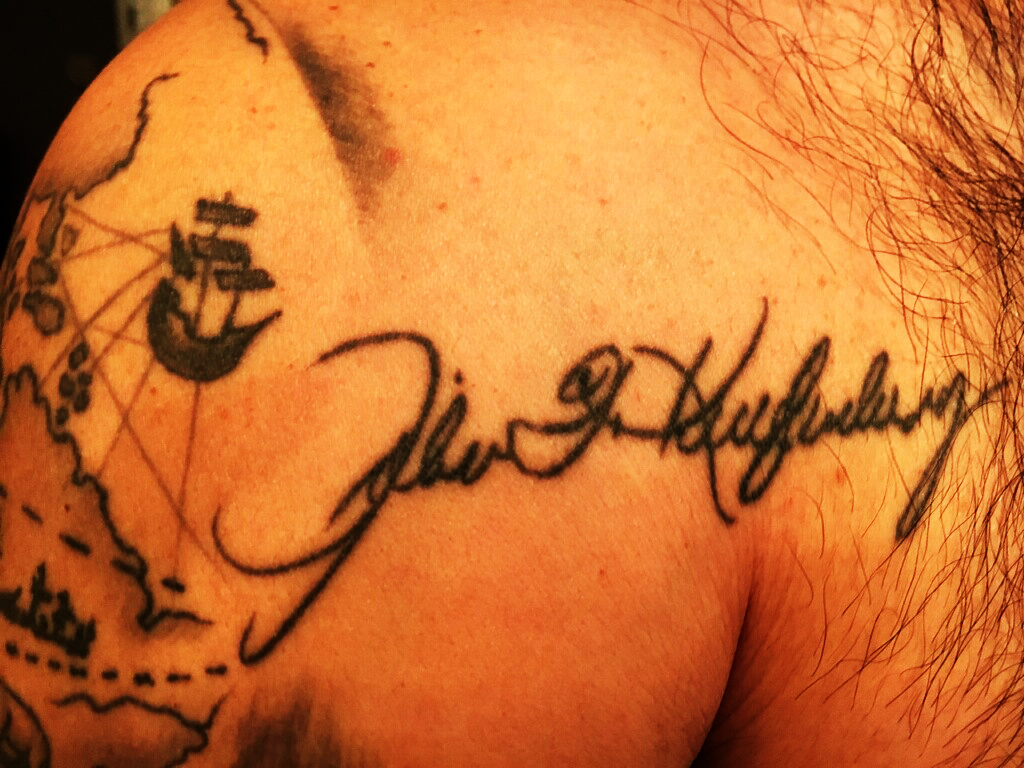
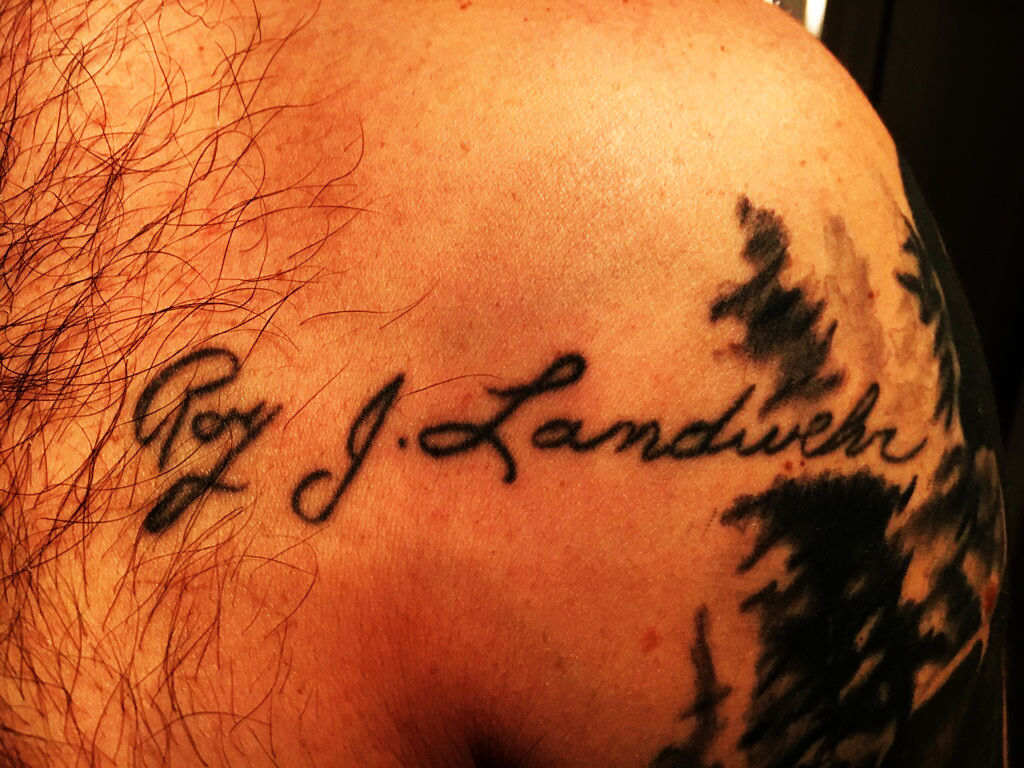
The justification for such a night was the recent passing of my father. We stayed up until the wee hours of the morning discussing life, music, girls, and many other places our liquor-induced conversations took us. Finally, we came to the topic of tattoos and what kind we would get if we were to ever get one. Together, we came up with the idea of having our parents’ signatures from our birth certificates tattooed onto our arms. Our rationale being that it was the signatures they used to "sign" us into their possession.
Anyway, after I had those tattoos inked on my inner arms, I felt the need to also pay tribute to my grandparents who had done so much for me. I tried to think of an important document which they would have signed which held significance in their own lives. My best idea was that I would use my grandfather's signature from his military discharge papers after the conclusion of WWII, and my grandmother's signature from their wedding certificates. Both to me seem to be two of the most important times they autographed their lives.


BY JIM LANDWEHR
Being a writer, when I first saw the call for images for National Handwriting Day, I immediately submitted a couple of my handwritten poem drafts, both of which made it into the exhibition.
Then, after thinking for a bit, I thought of my nephew Nick and his handwriting signature tattoos. He is a huge tattoo fan and has eight total signature tattoos amongst the many other beautiful works that adorn his arms. I remember when I first saw the tattoo of my mother and father's signatures on him. I instantly recognized my mother’s with her signature Stonehenge ‘M’ at the beginning of Mary. But seeing my father’s was a little haunting for me, probably because I’d never seen his handwriting before. He was beaten and killed in a bar at the age of 42, when I was just five years old. So seeing his signature on Nick, was a bit like discovering an old letter in the attic from the war. I guess it just shows how someone's signature can evoke an emotional response. So it goes with all handwriting, I think.
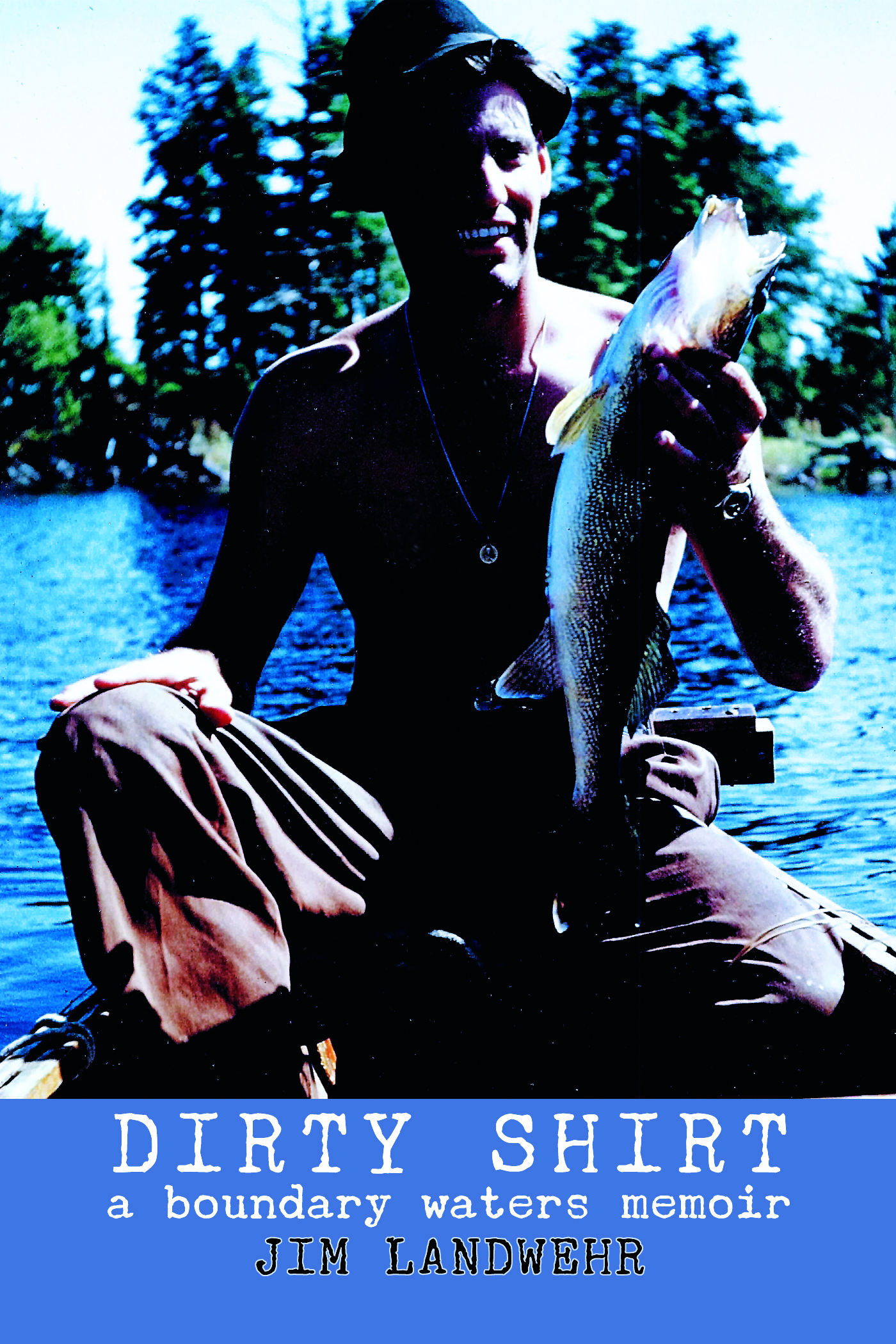
Being Nick’s godfather, the two of us have always been very close. Despite my moving away to Wisconsin in 1986, he and I still got together whenever I made it back to town to visit. In 2014, I wrote a book titled Dirty Shirt: A Boundary Waters Memoir. The book details trips I took to the Boundary Waters Canoe Area Wilderness with my brothers nearly thirty years ago and, more recently, with our kids. In 2012 we brought Nick with us to fill in for my brother Rob who passed away from cancer in 2011. Nick shared a canoe with Rob’s daughter, Alison, and it became known as the orphan canoe, (Nick’s father had passed away suddenly in 2005). On Father’s Day of that trip, we sprinkled some of Rob’s ashes over the waters of the BWCA, a place he loved much like Roy had. This event plus being around his uncles and cousins in such a remote region, impacted Nick in ways he never expected.
As a tribute to myself, his grandfather Roy and the Boundary Waters area, he got a tattoo of the picture that was used for the book’s cover of Roy holding a walleye in a canoe while on a BWCA trip in the 60’s. When Nick surprised me with a picture of the tattoo I was both flattered and deeply moved.

Cabbage Rolls • Allison Goodings

From Curator Rozanne Gold: My assistant, Allison Radecki, was kind enough to share this wonderful handwritten story from her friend Allison Goodings. (Coincidentally, they have the same first name and spell it the same way, too.) They met each other in 2004 at Slow Food's first Terra Madre world conference of farmers and food communities in Turin, where 5,000 delegates from over 130 nations gathered. Allison R. was a first year student at Slow Food’s University of Gastronomic Sciences, which had just opened in the Piedmont region. Goodings was traveling around Europe and volunteered with the Canadian delegation at the Slow Food conference. Her recipe is authentically incomplete; it makes no mention of cabbage except in the title and is bereft of methodology. It is so succinct, it almost reads like a tweet! Here is where instinct and experience come into play. Thank you to both Allisons.

Cabbage Rolls by Allison Goodings
I never planned to be a migrant. In early spring 2006, I packed my bags and headed to London "for six months," I told myself, my friends, my family, especially my mom. "I'll be back." I really believed that.
It'll be 10 years this April that I bid farewell to my beloved Canada. Now I am a Londoner, and I suppose, an immigrant. Historically, the story of immigrants was based on political unrest, poverty, and a chance for a better life. I could list none of these reasons as my own. My story is a privileged one. Unlike many others, I was able to return to my homeland, to visit often, and to bring, over the years, the things I missed - a favorite book, a framed photograph, Grandma's crocheted cream blanket, a family recipe - to enjoy in my London home.
On my mother's side, our family immigrated to Canada from Ukraine four or five generations before me — which made us pretty darn Canadian. I wonder, what must my ancestors thought to bring on this journey. Very little I imagine. Of course there were memories, hopes, faith, traditions, and recipes to pack.
I have a little yellow spiral notebook that I have filled over the years with recipes, mostly copied from my own mother's notebooks, although not as neatly. As a teacher, her words were written precisely on lined pages, while mine are scrawled haphazardly, probably done in minutes before rushing to catch a flight back to London, or over the phone during one of our marathon mother-daughter conversations. These handwritten recipes would have been collected by my mother over the years, before the days of emails, iPad cooking apps and the Food Network. Likely, many of them copied from her own mother or one of my talented great aunts.
The first third of my notebook is wildly optimistic and shows my youth, filled with carefully cut out recipes that I would never cook, from magazines and lifestyles I aspired to embrace. I flip through the book and recognize the early periods of cooking and eating in my life — trials of vegetarianism and veganism, an early interest in dim sum and sushi, and myriad protein-rich recipes cut from fitness magazines.
The latter pages are far less prescriptive, filled with my own handwriting; recipes I grew to miss the longer I lived away from Canada, family recipes I never knew I wanted to make. Many of them are Ukrainian dishes, made from ingredients I didn't see regularly in my new country. These foods were still very foreign and strange to England, and I felt how my ancestors must have felt when they came to their new land.
The recipes are mostly just lists of ingredients, with little explanation or instruction. The cabbage roll recipe makes no mention of cabbage except in the title, too obvious to be written down I suppose. These family classics, perohy, headcheese, dill pickles, kutia, borscht and cabbage rolls, are likely the same recipes that my Baba, three aunties and mother prepared for us at Christmas and Easter. I hope that others in my family, like me, have these recipes written down and kept somewhere safe, on pages filled not only with handwritten words but with stains of vinegar, smears of tomato juice, and dusty with flour from years of use.


Cabbage Rolls
1.5 c. rice (arborio)
2 c water 1 tsp salt
Cook 7-8 mins then add 1/2 c tomato juice & fried onions & bacon & pepper & paprika (1/2 thyme). Cook another 7-8 mins
Pack in casserole with 1/2 tin tomato soup.
Use extra leaves under & on top. Add a bit of water, cover with foil for 1.5 - 2 hrs 325F.

The One Who Wrote Back • Jim Landwehr

BY JIM LANDWEHR
It was writing that brought us together.
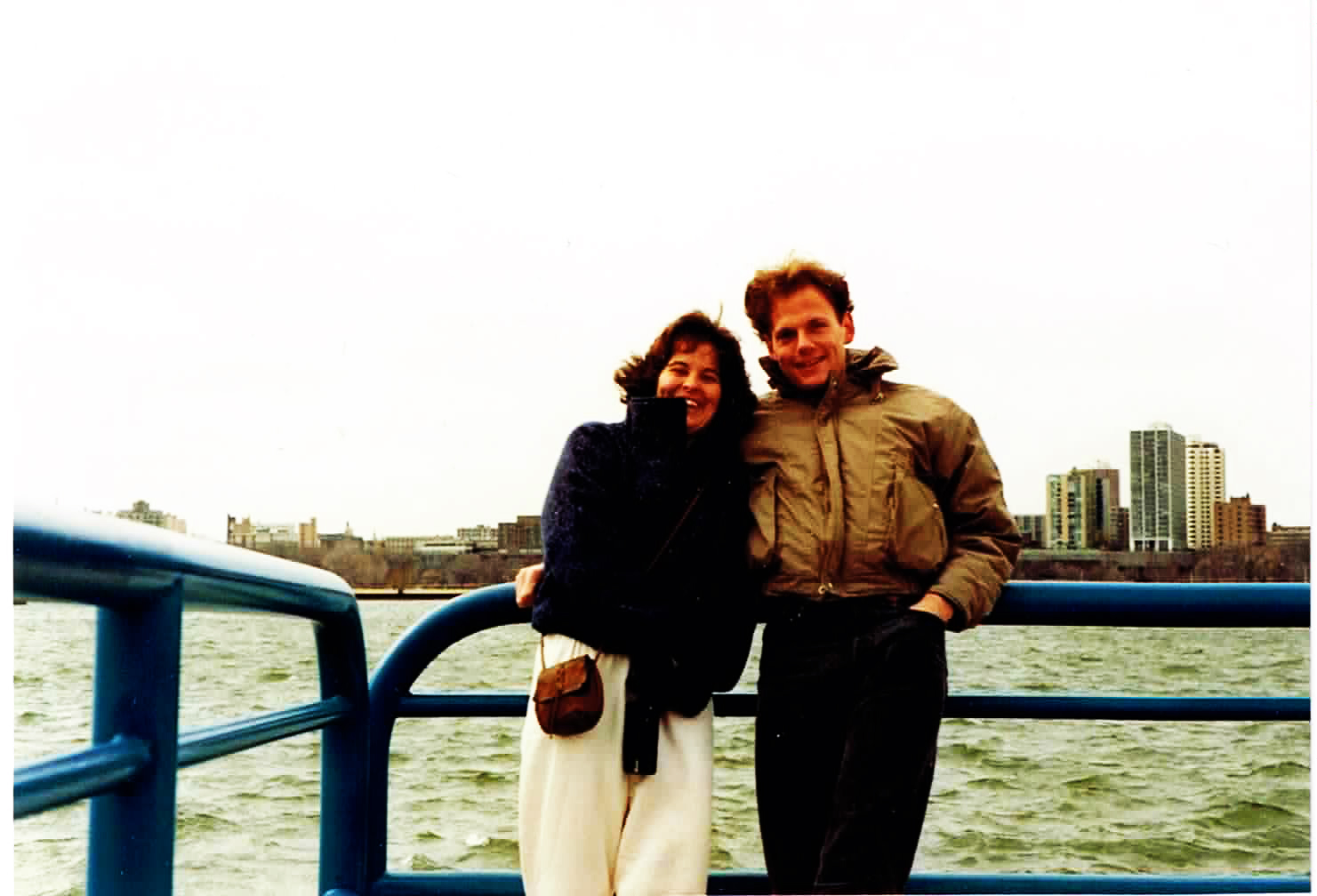
In 1986, I moved from my hometown of St. Paul Minnesota to Waukesha, Wisconsin just outside of Milwaukee for a new job. My brother Rob was also living away from home as a student in upstate New York. He and I wrote for a period of time and in one of his letters to me, he included letters from three of his female friends on his dorm floor. He’d told them I had just moved to Waukesha and didn’t really know anyone and that he thought it would brighten my spirits to receive some letters from them.
I don't remember exactly what each of the three had to say. Most of the letters were introductory in nature and seemed like honest attempts to be nice and cure me of my homesick loneliness. They were all away from their families as well, and we were all close in age, so had music, books and college life in common to talk about.
I was, of course, flattered that 3 women would take the time to write, so I wrote each of them individual letters back. Only one wrote back.
For a year and a half.
Donna and I became 20th century pen pals of sorts. This was before the age of e-mail, faxes, texting and Skype. Long distance calls were expensive. Postage for a letter was about a quarter.
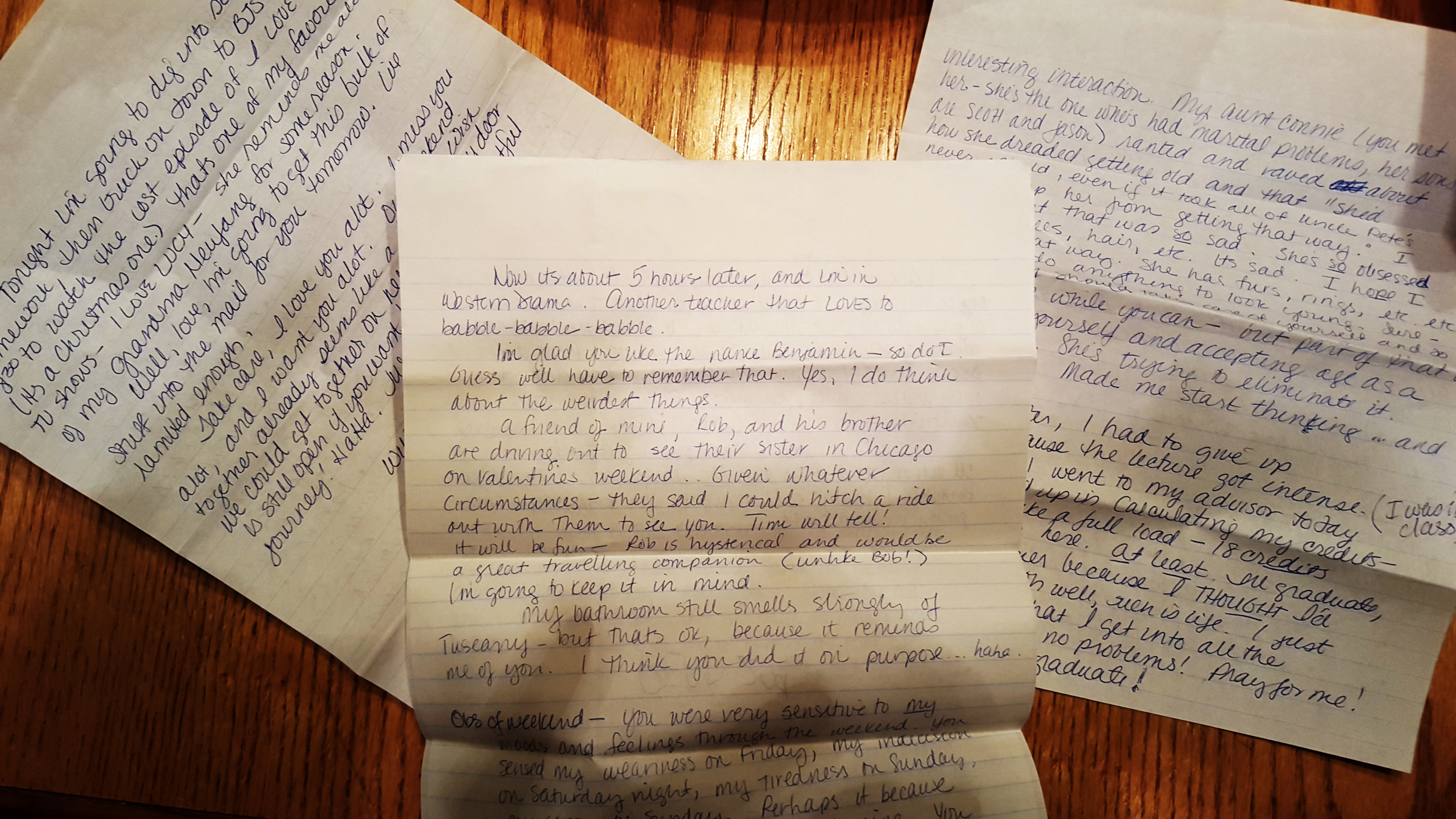
So we wrote, and we wrote, and we wrote. Short letters, long letters, letters about the trials of college and a new job, and roommates, and philosophy and religion, family, music, and books. We shared joys, concerns, doubts, beliefs and bad jokes. I sometimes took my writing to silly mediums like writing on napkins or the back of maps, just to keep it interesting. One of the things I recall her liking was my "Random Observations" which covered most subjects under the sun. Near the end of our writing things got a little spicier and flirtatious, neither of us knowing what the other would think, but daring to "go there" nonetheless.
Someone once said that writing is not a bad way to get to know someone – to become friends through writing before pursuing a relationship. I know it was true for me as it was sometimes easier to write things from the heart than it was to say them to someone I hardly knew.
Then one day she called. She said she was thinking about paying a visit and wondered what I'd think? I, of course, said I would love to see her. Both of us knew it would likely change our relationship forever.
And, man, did it ever.
I greeted her at the airport with a single red rose. We went to dinner at the Chancery and out to see the movie "Light Years" at the coolest theatre in Milwaukee, the Oriental. On the way home, "our song" came on the radio in the car, oddly enough, because it wasn't a big top 40 hit. When we got home we stayed up late and talked, and talked.

During the summer of 1989 she did an internship in Brookfield Wisconsin, which enabled us to try dating without five states between us. We were engaged that summer and married on June 16th, 1990. This past year we celebrated our twenty-fifth anniversary.

Looking back, it’s hard to say how this courtship would have played out in these modern times. Email, Skype and texting seem so impersonal compared to the anticipation of a letter from across the country. My wife saved every letter I sent her. In a fit of cleaning I threw most of hers out just before we were married. I managed to find a number from her that are post-engagement, but everything else is lost in the physical sense. What remains, are the memories and feelings of that time. I still cherish a handwritten letter from anyone. It is a lost art, one that we pursued with a passion so long ago. It’s my feeling that the emotional outpouring that goes into a letter is felt on the other end in a mystical way that is lost in an electronic medium.
I do know that it worked something special for us. To this day she says that my words were what attracted her to me. There must have been something in hers that drew me to her, as well.
It’s amazing what one simple letter can become.


I Ate a Stick, Lord Help My Colon

HAND-DONE BY ABBY TROTT
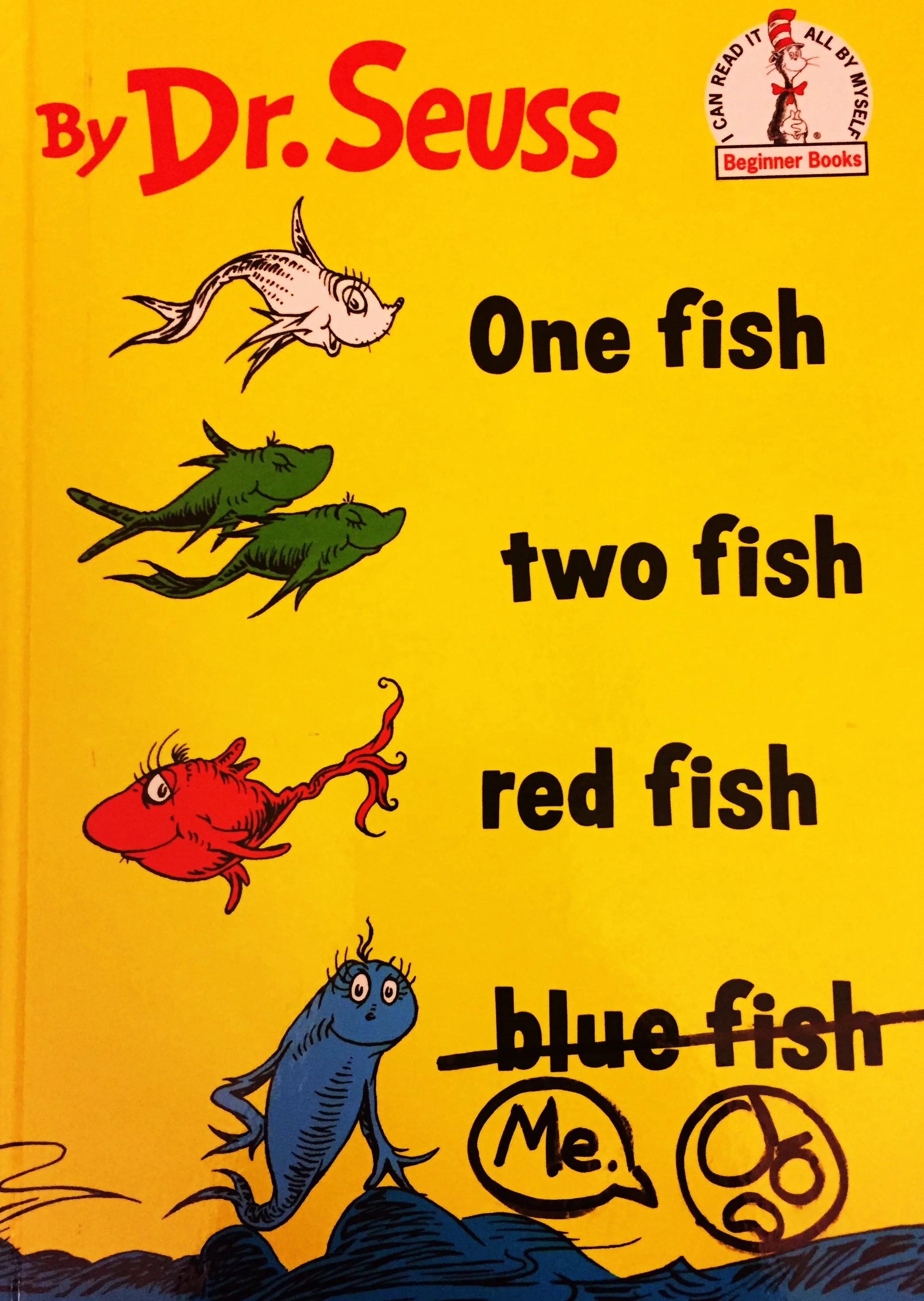
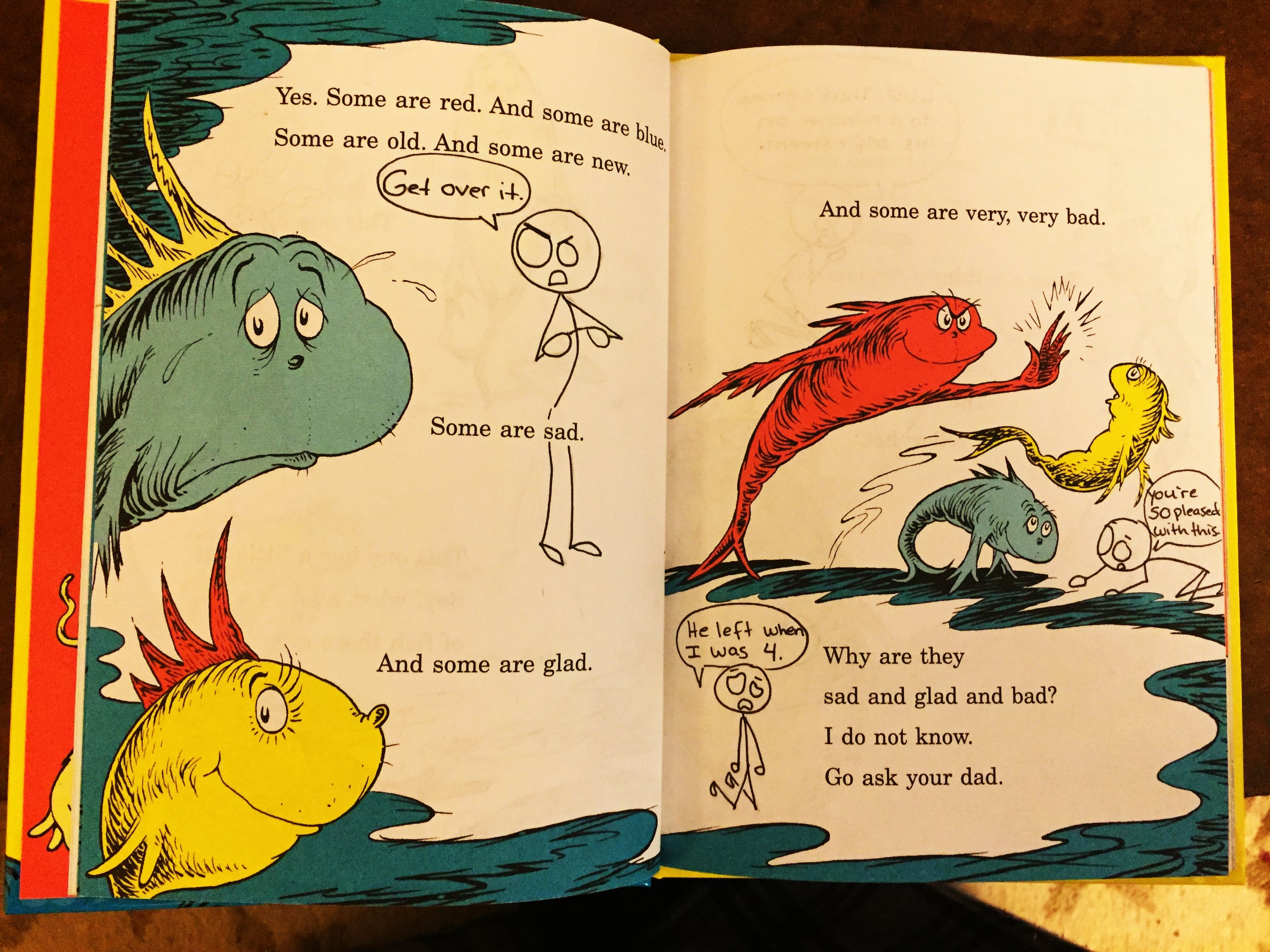
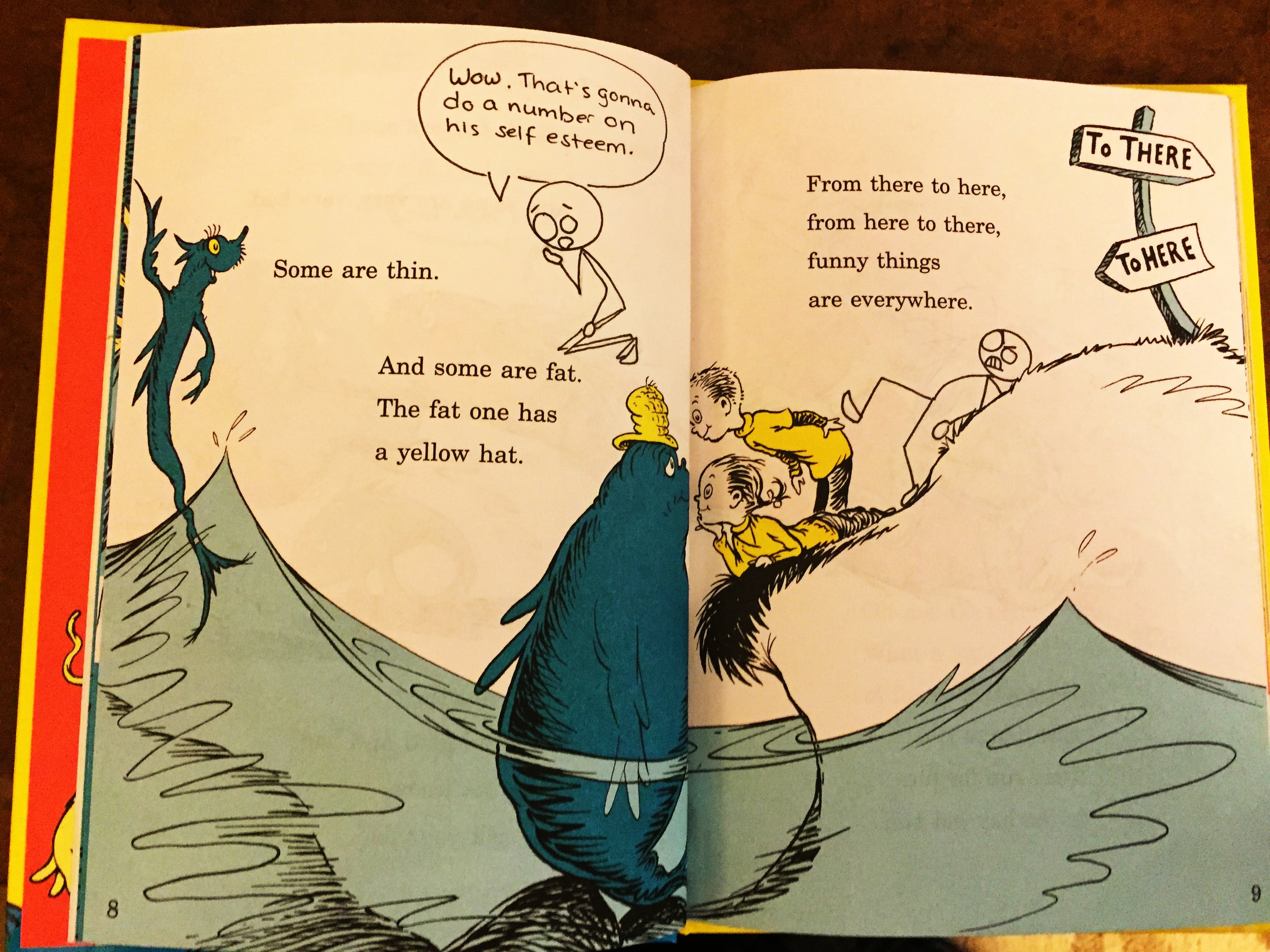
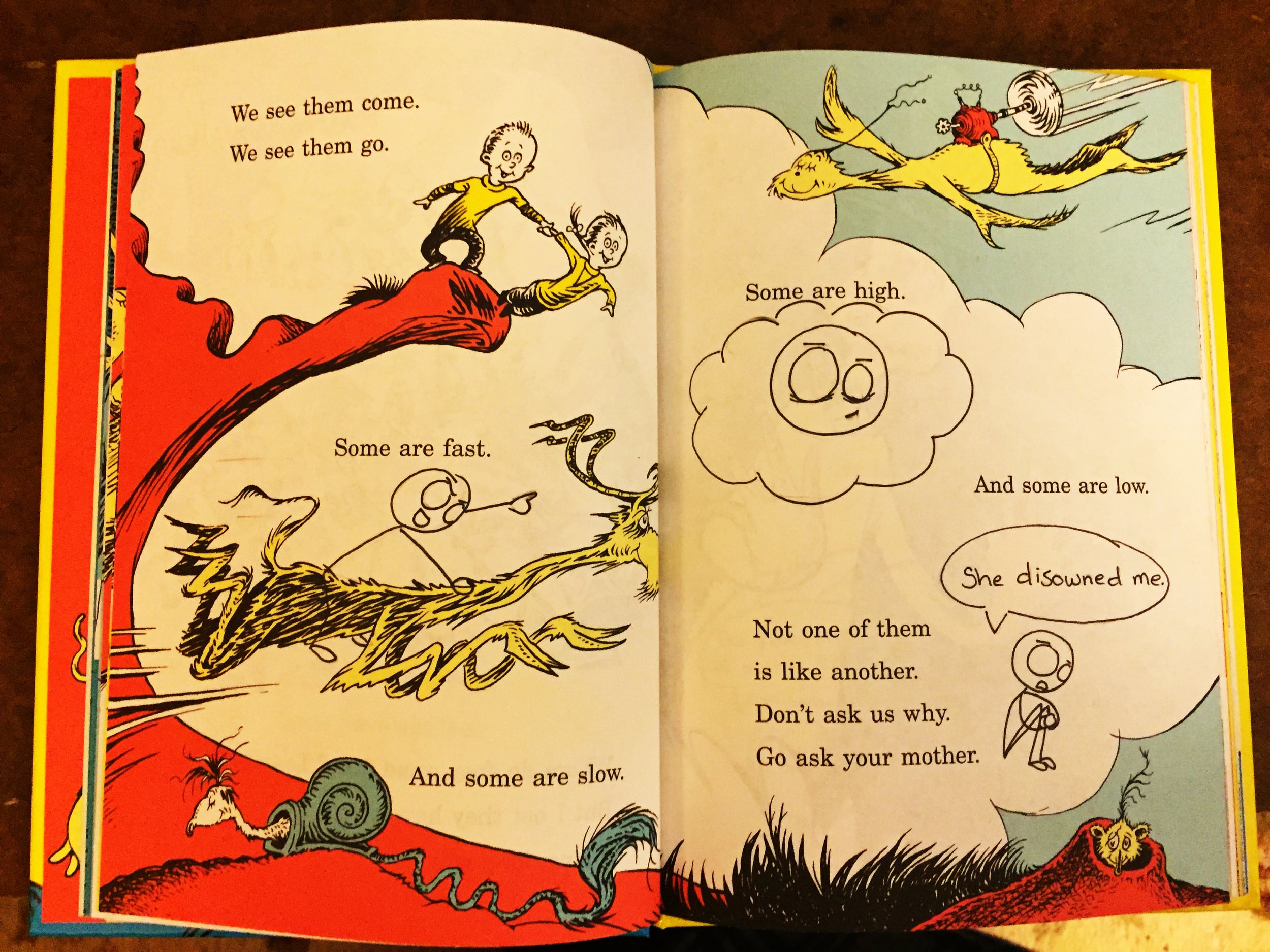
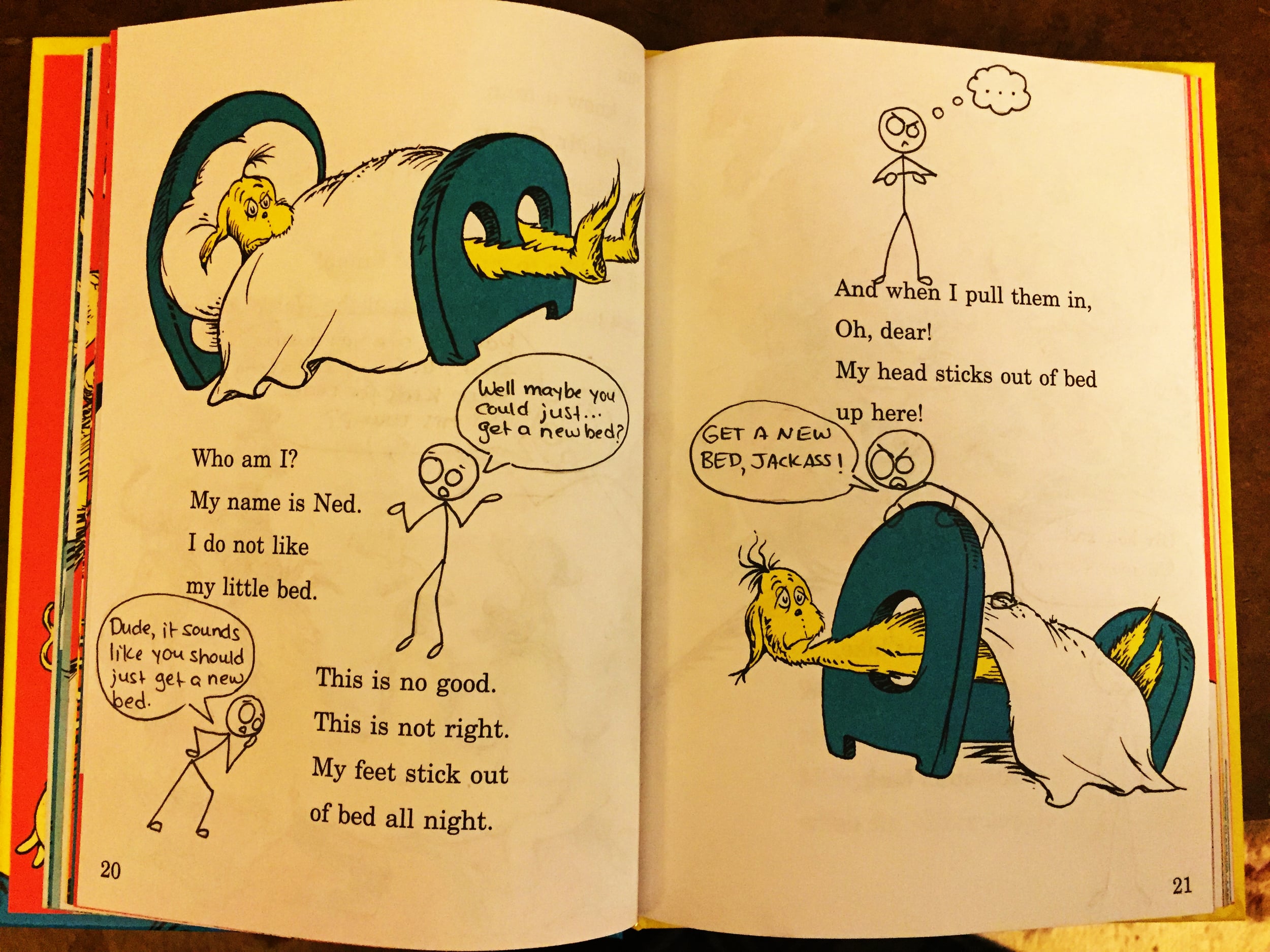
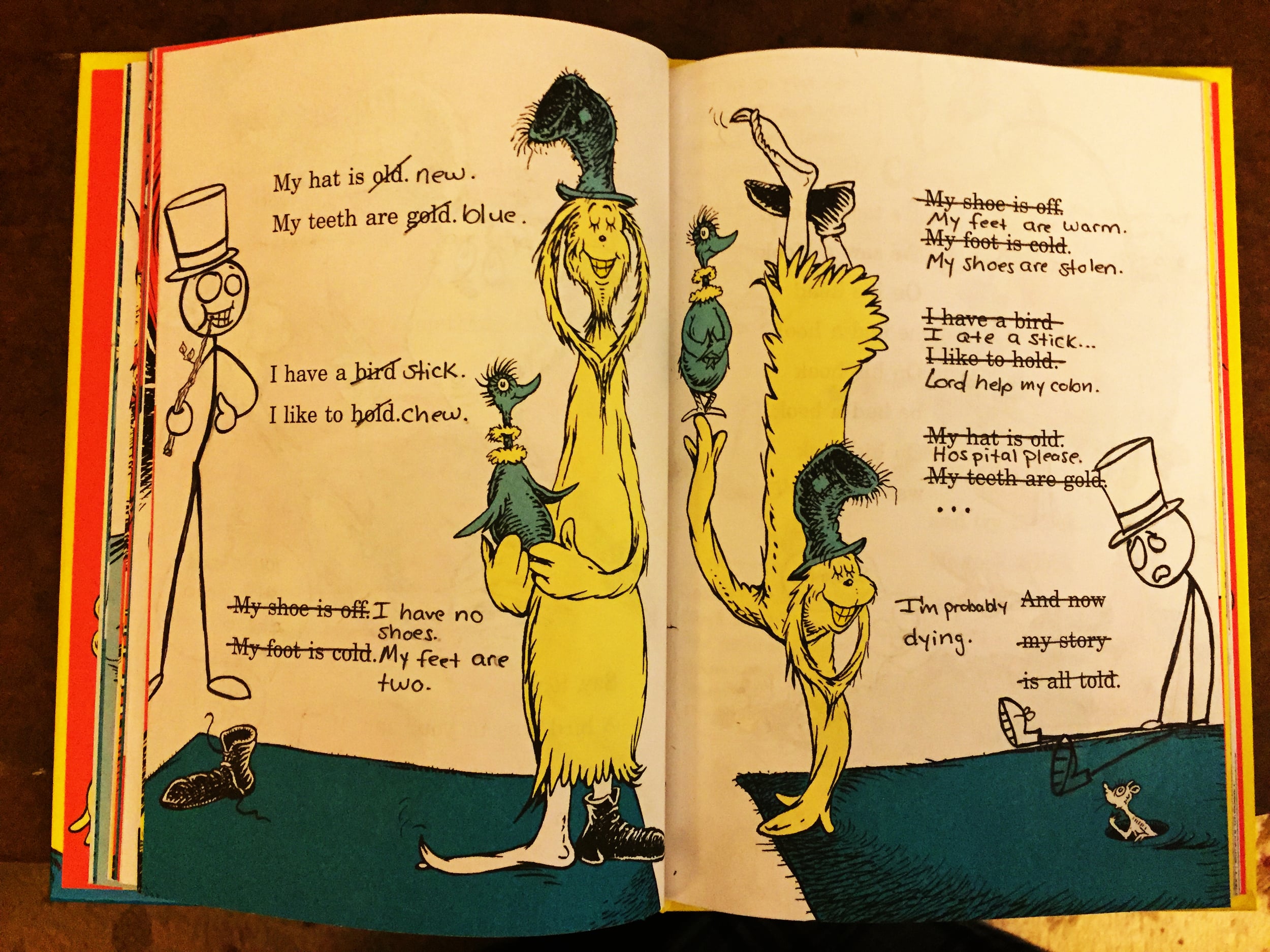
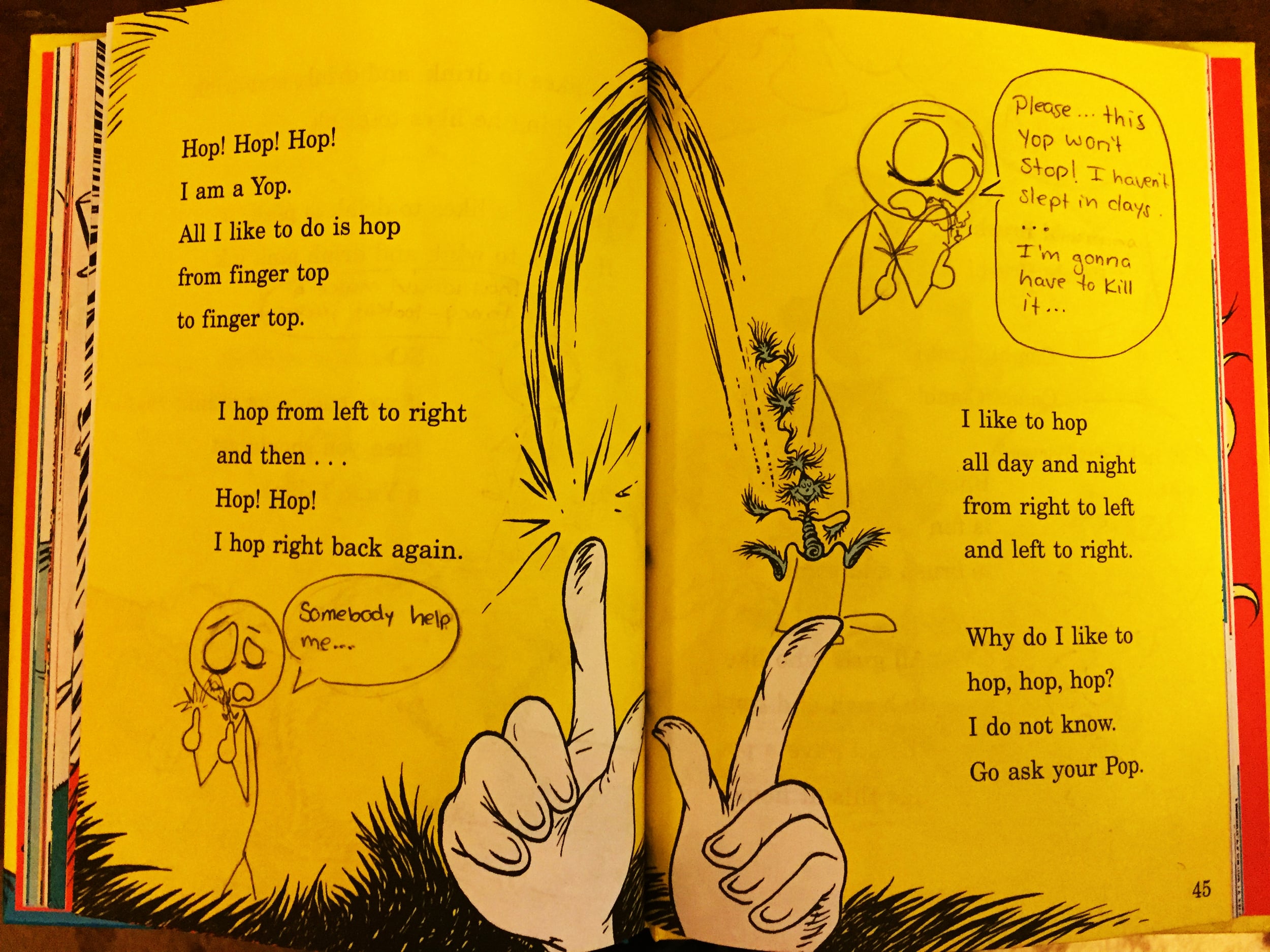
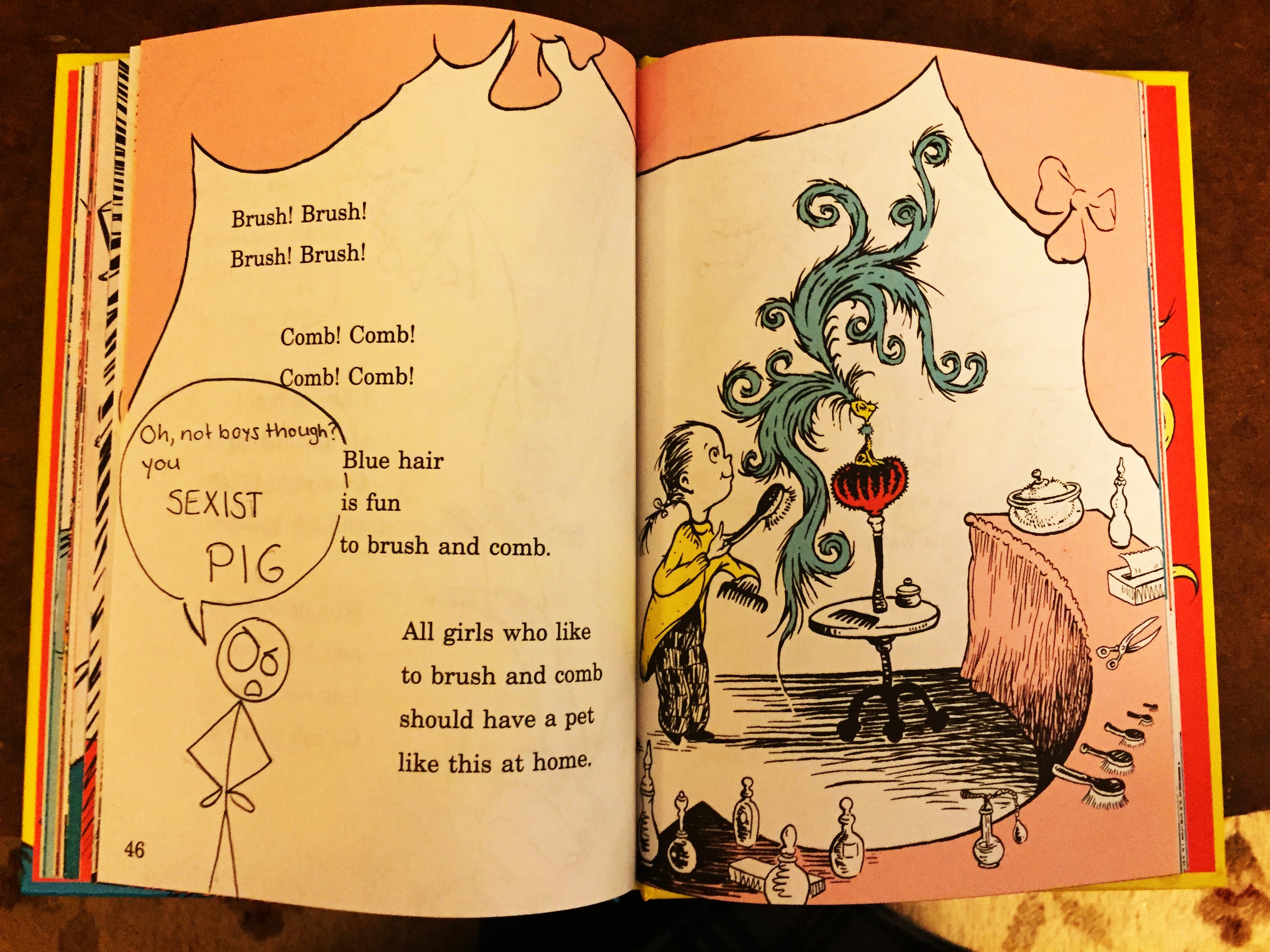
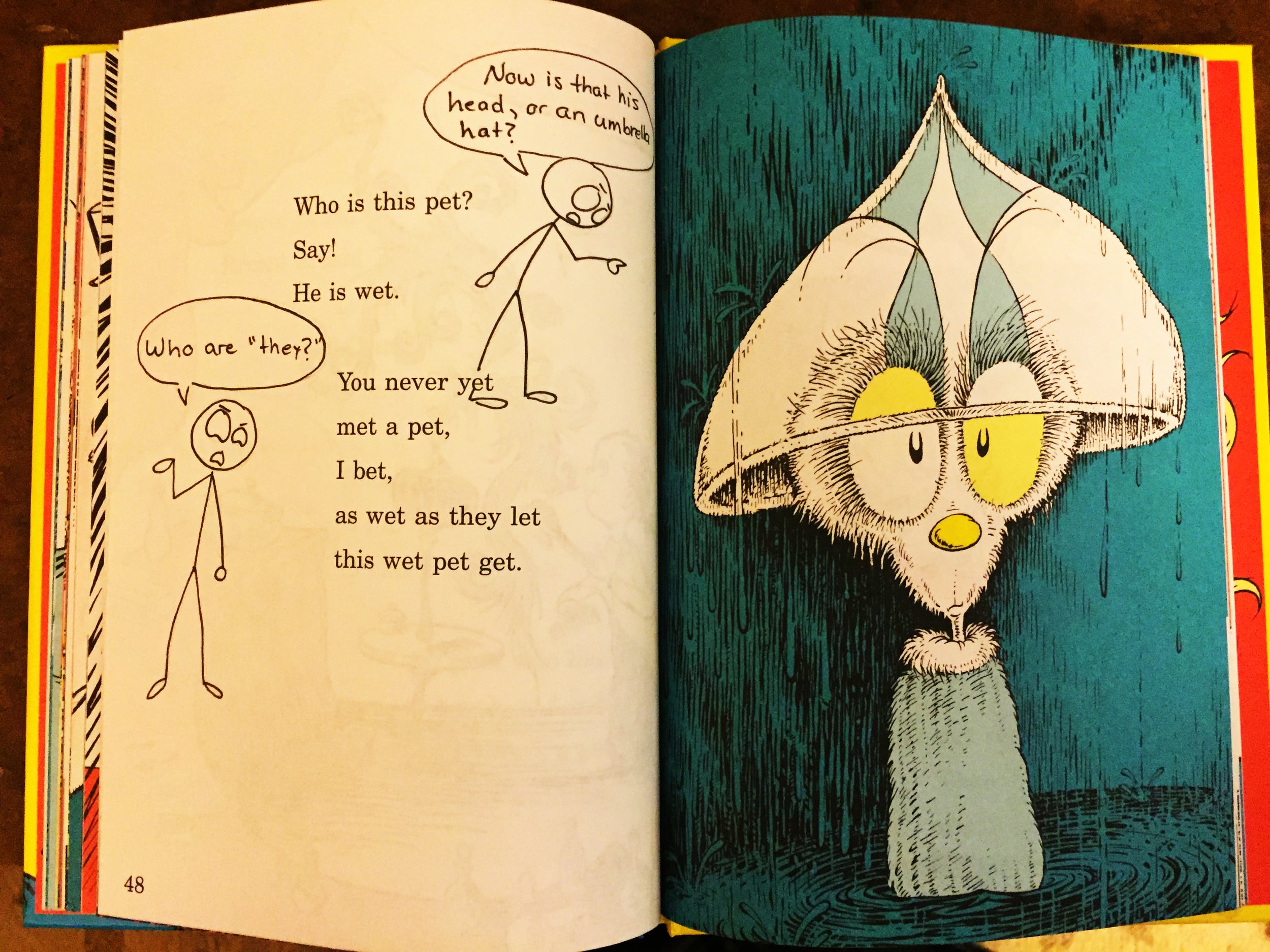
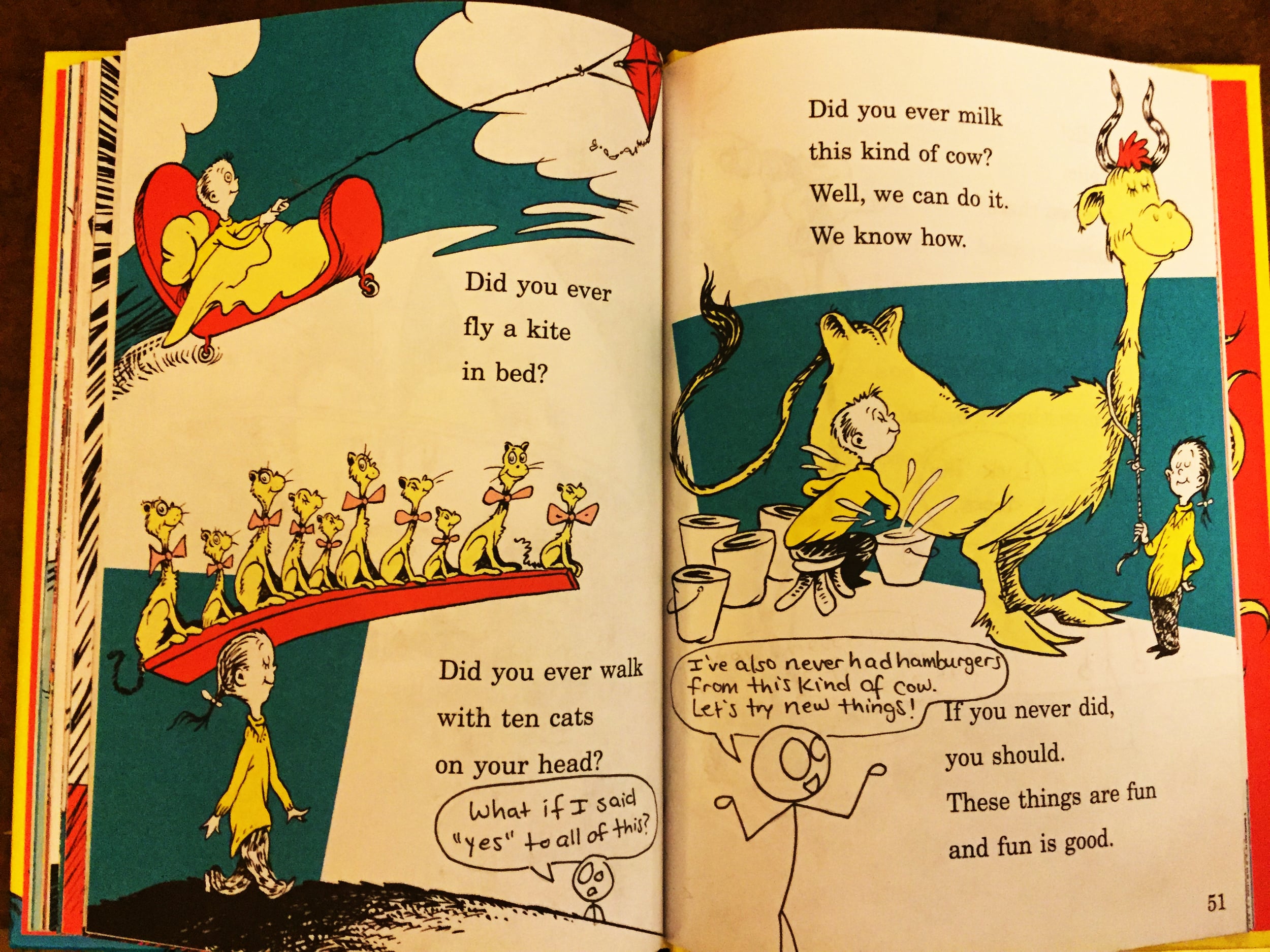
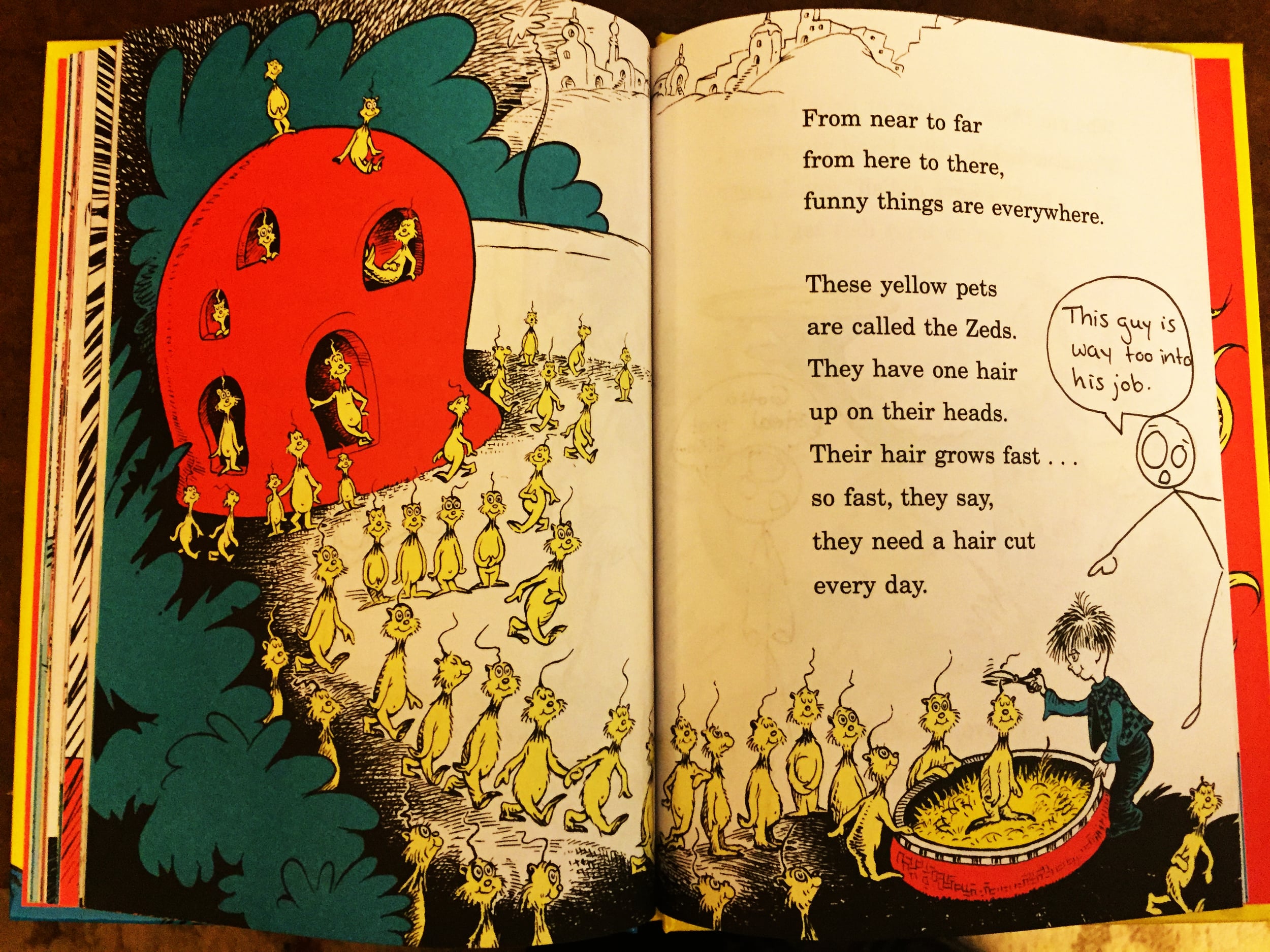
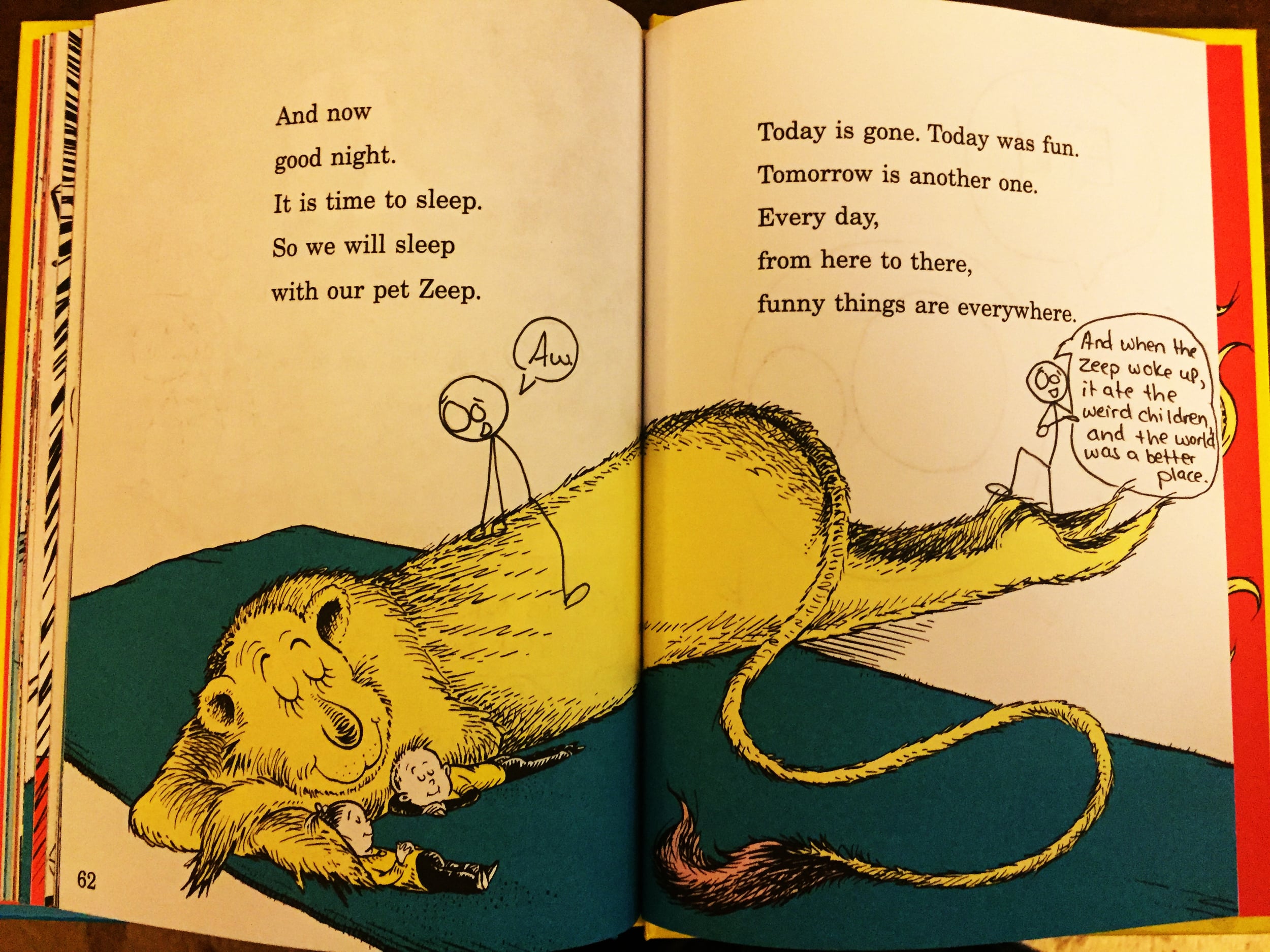
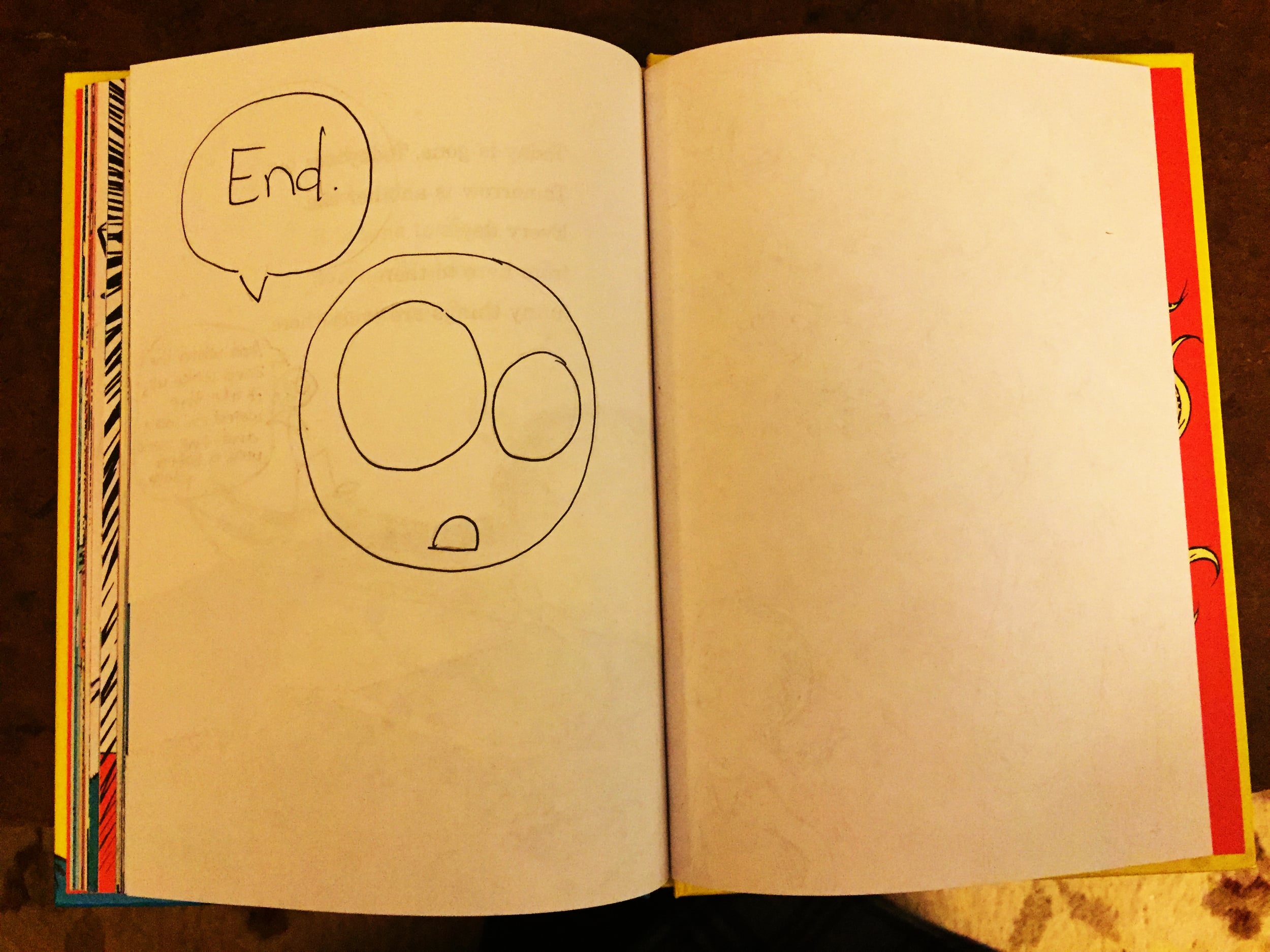
Warpo Man, as this misshapen stick-hero is called, was the result of a bored teenager (me) and an old school 90’s version of Microsoft Paint. He was designed to be a character who is as warped in personality as he is physically; Warpo Man unapologetically (and often unfortunately) speaks his mind without filter.


After being forgotten for a number of years, Warpo Man resurfaced in my college notes. He served as a sort of visual outlet to enhance lectures and help me focus, but would often end up taking over my notes entirely.


I moved to Japan after graduating, and my parents ensured that I didn’t forget about Warpo Man by sending me photos of my childhood drawings. I hung them to remind me of his two biggest fans. Warpo Man has made appearances in books, birthday cards, and various gifts over the years. “One Fish, Two Fish, Red Fish, Blue Fish Me!” was specially edited for me dear ole muddah this year.

To find and follow Abby's performative appearances, you can find her on Instragram and twitter at @abbyleetrott.
The Tears We Refuse Touch Bone • Four Poems by Karen Benke

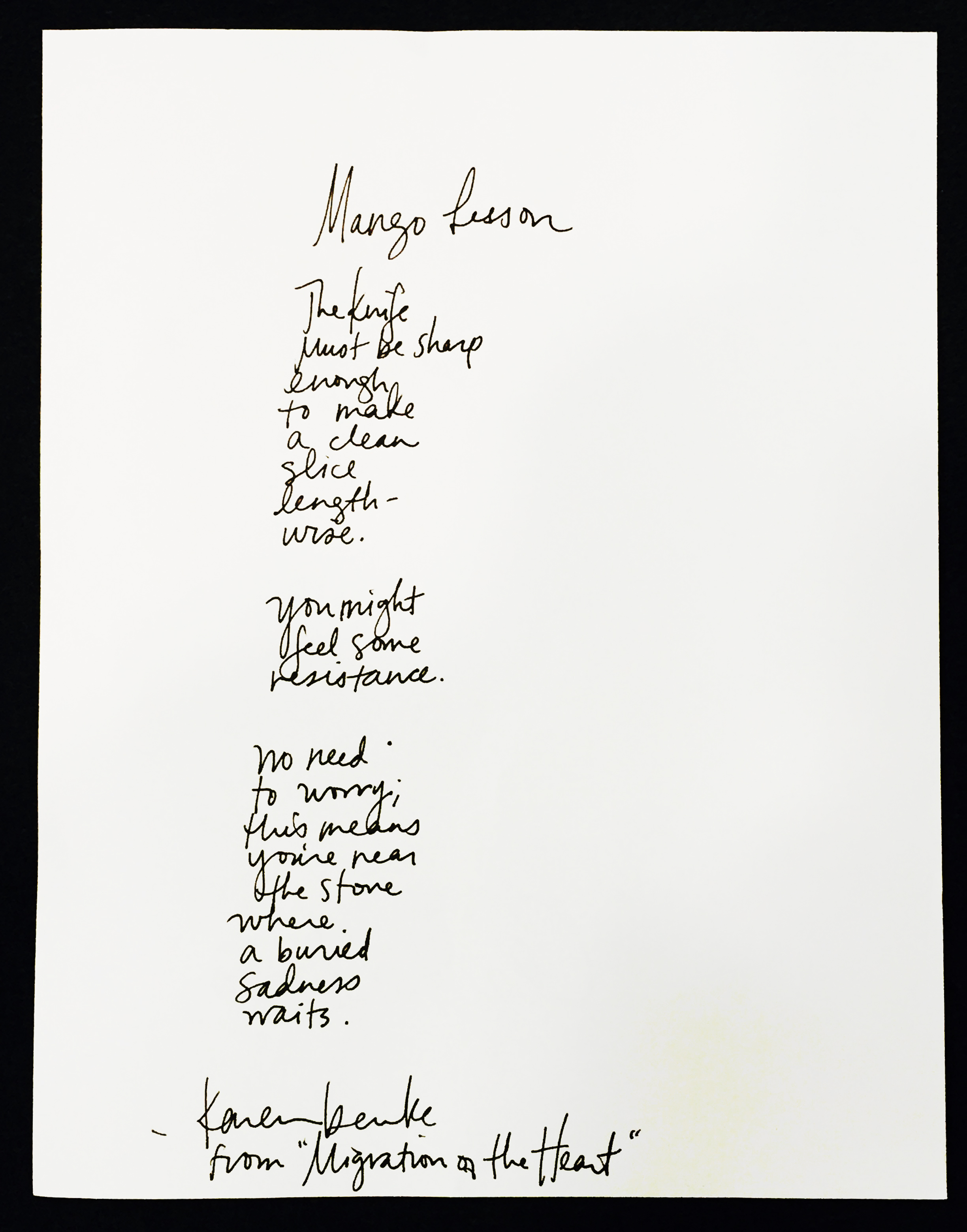


Karen Benke is a creative writer, adventurer of pen and paper, and long time poem-maker. She is the author of the chapbook, Sister (Conflux Press, 2014), and three popular books on playing on the page, Rip the Page! (Roost Books/Shambhala, 2010); Leap Write In! (Roost Books/Shambhala, 2013); and Write Back Soon! Adventures in Letter Writing (Roost Books/Shambhala, 2015). She lives north of the Golden Gate Bridge with her teenage son, a magic cat, and a rescue dog. Though she prefers receiving letters via snail mail, she can be reached via her website: www.karenbenke.com.
I Wanted to Build a Universe • Tonianne Bellomo
What happens when it's not just you, the writer, who struggles with the screen, but your characters? In this lyric essay, Tonianne Bellomo walks us through the negotiations she makes with her characters. What does she do to bring them to life? She builds them paper homes.

By Tonianne Bellomo
I wanted to build a universe.
I wanted to write stories like the ones that made me forget reality. I wanted to build worlds from letters. I wanted to draw in the margins and give readers a glimpse of the realms that rested behind my eyes.
I can’t do that on a computer, at least not at first. There’s no highlighting, scribbling, pasting, scratching out, ripping. There are just clean white backgrounds, perfect font, and the tapping of keys.

That is not world-building; that is a job.
The novel I’m editing is rough, probably in every sense of the word. It sometimes gets so dark that I forget which way is the way home, and I find myself suffocating.
It makes it hard to write.
The computer makes it worse. I feel like I’m cheating. My characters hate it, too. It’s like they refuse to be slighted, refuse to be clinically typed in perfect Times New Roman onto my computer rather than scrawled in a bastardization of Catholic school cursive. They’ll just stand at my mind’s door, arms crossed, heads turned away like I’ve insulted their mothers.
So, I give the characters what they want.
I give them paper homes.
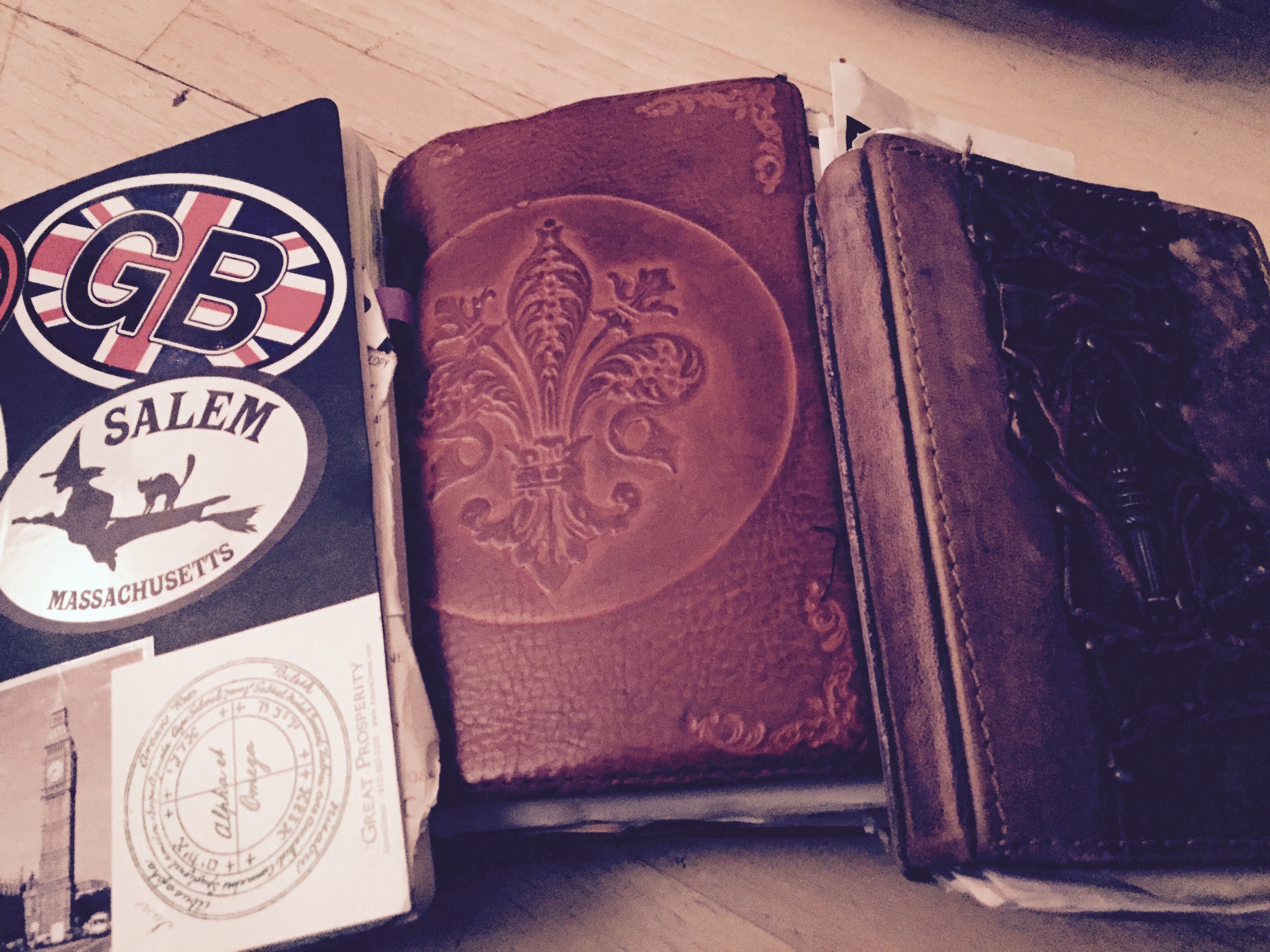
The characters grow in those spaces, whether I realize they’re characters or not. They are lines from a poem, a feeling evoked from a song, lyrics, ticket stubs, a Polaroid. The characters are a lot of things that would have never come together if I didn’t handwrite first.
Handwriting makes it feel like art.

I know by definition writing is an art. I just never feel like I’m making art. Handwriting my stories, though, and putting in all those extras makes me feel like I’m creating worlds for them, like the little girl with a dollhouse that she’s putting together.
Tristan, the protagonist of my novel, even has a journal that is featured on his blog. It originally just started out as a Tumblr blog, but I couldn’t “feel” him in that blue screen. I went out, bought a Moleskin (because he would totally have one) and started drawing and writing in his voice.
It made me feel like I could breathe again. Like the darkness wasn’t so suffocating because I could understand his thought process — I could follow his thoughts home.

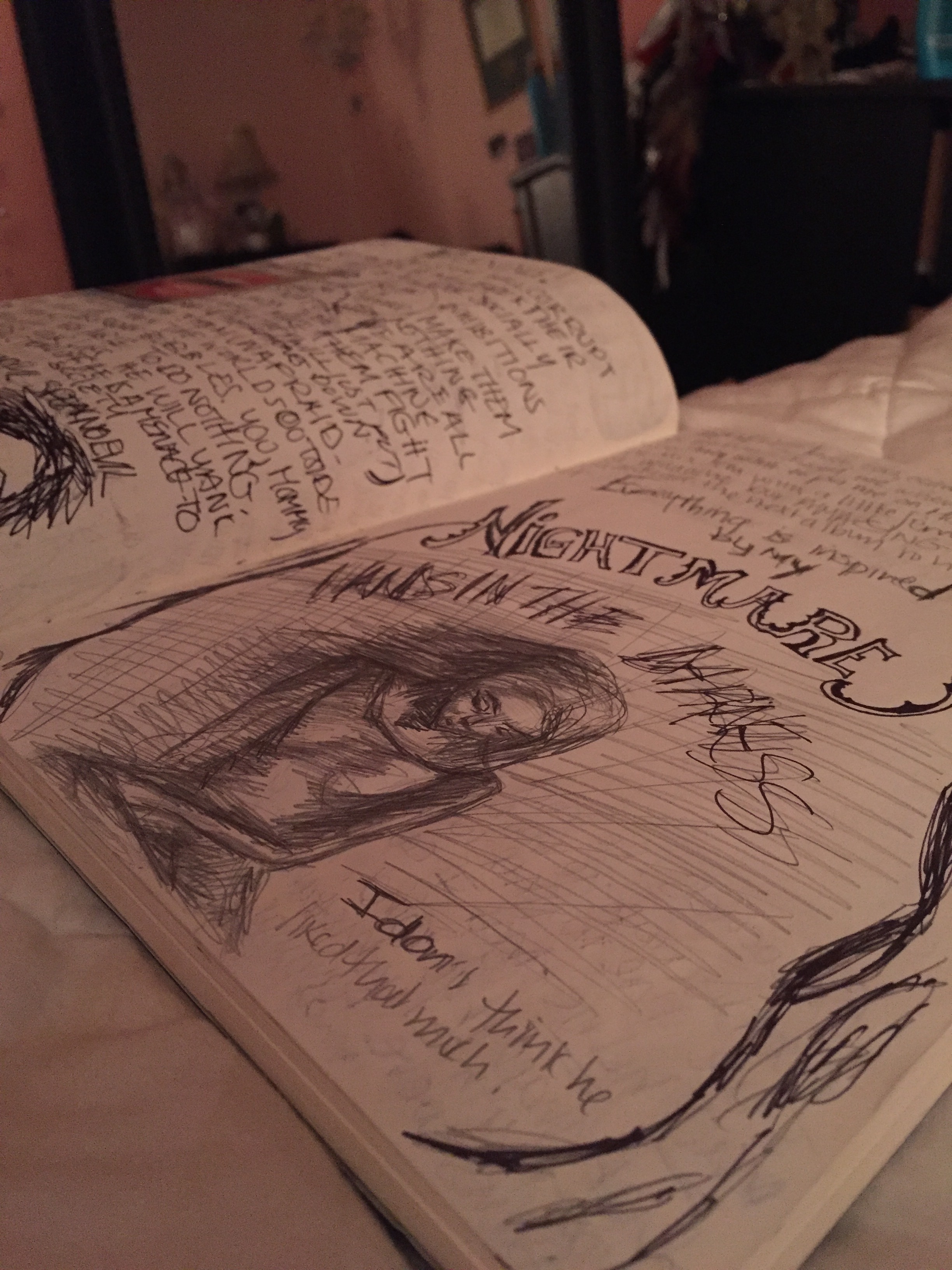
He’s real now. The moment I handwrote his first entry, he became real. The fourth wall broke, and he fell into reality. I can see him sitting in O Café sipping his Americano while sketching in his journal or pasting photos of Richey Edwards or Ian McCulloch onto the pages.
Handwriting and plotting my stories in my journal — it all helps me make worlds. It helps me create the universes that I want my readers to inhabit. And it helps me remember that before all the workshops and degrees and frustrations, there was just me, my journal, and the universes I wanted to build.


Tonianne Bellomo is a graduate of The New School MFA program and an adjunct lecturer at Baruch College where she teaches writing. She is currently editing a novel and blogging from her protagonist's POV at http://wax-and-wings.tumblr.com.
Better Smut by Hand • Wednesday Black
Publishing under a nom de plume, this rising novelist reflects on how writing the first draft of her erotic novella by hand led to all kinds of unforgettable feelings.

BY WEDNESDAY BLACK
I wrote the smutty little novella, How to Train Your Virgin, in the fall of 2014. Badlands Unlimited, a publishing company founded by artist and activist Paul Chan, had put out a call for erotic fiction the spring before, and I took a chance and entered a chapter. I thought there might be a little money in anonymous smut-making. The result was a somewhat bittersweet novella of feminist, fabulist fiction — oh, yeah, and fucking.
The real surprise for me was the enormous flow I experienced while writing it. I’d never written anything like it before, and it felt…good. It was as if my Inner Critic was so mortified she had no choice but to take a vacation. After all, I was working in cliché, striving to boost every scene over the top, and doing it all in a fantasy playground populated by evil bog women and clockwork sex carousels. Let’s not even get into the title! I mean, what could Inner Critic say that I didn’t know already? So I ran with the story — or maybe it ran with me.
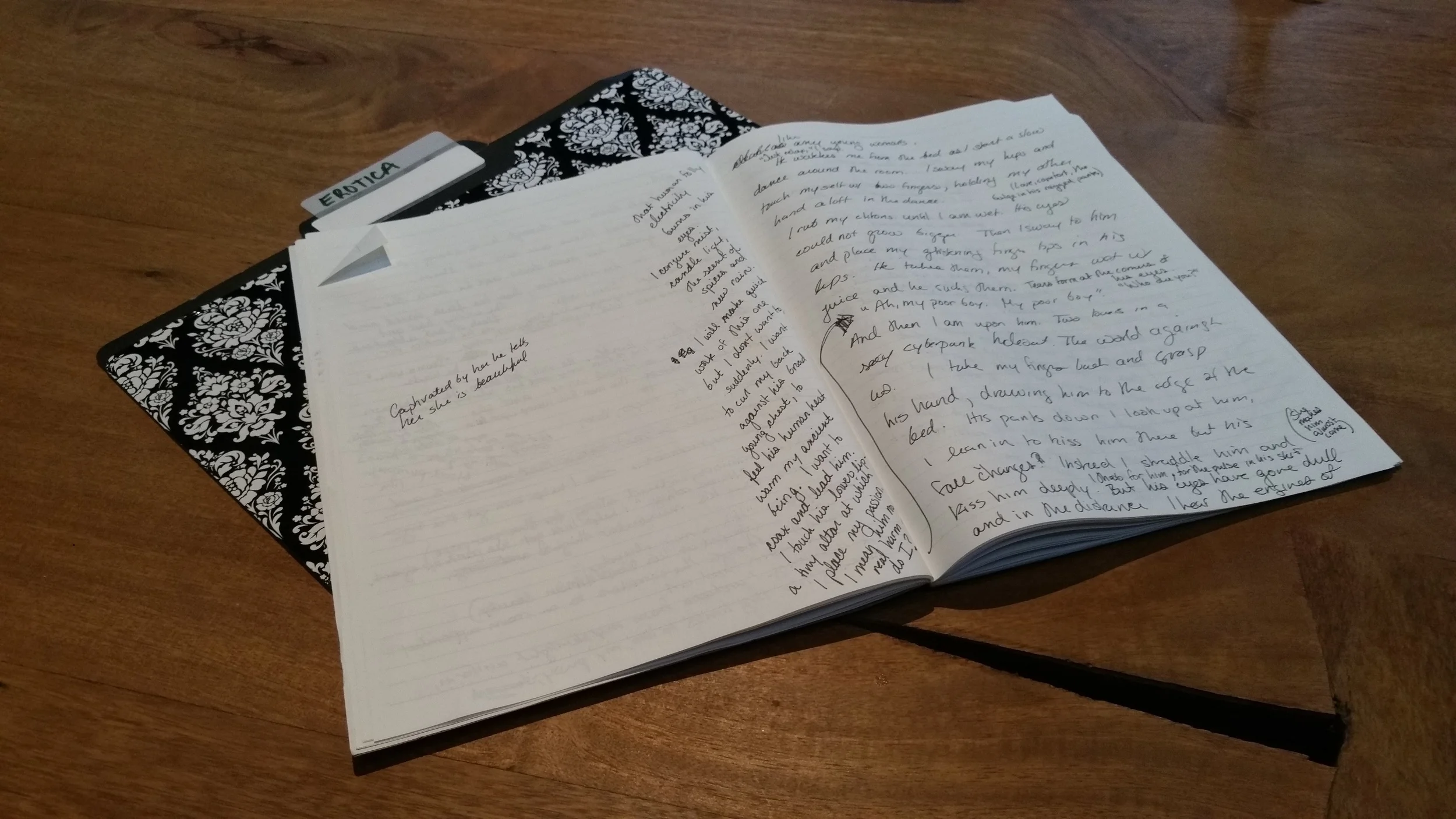
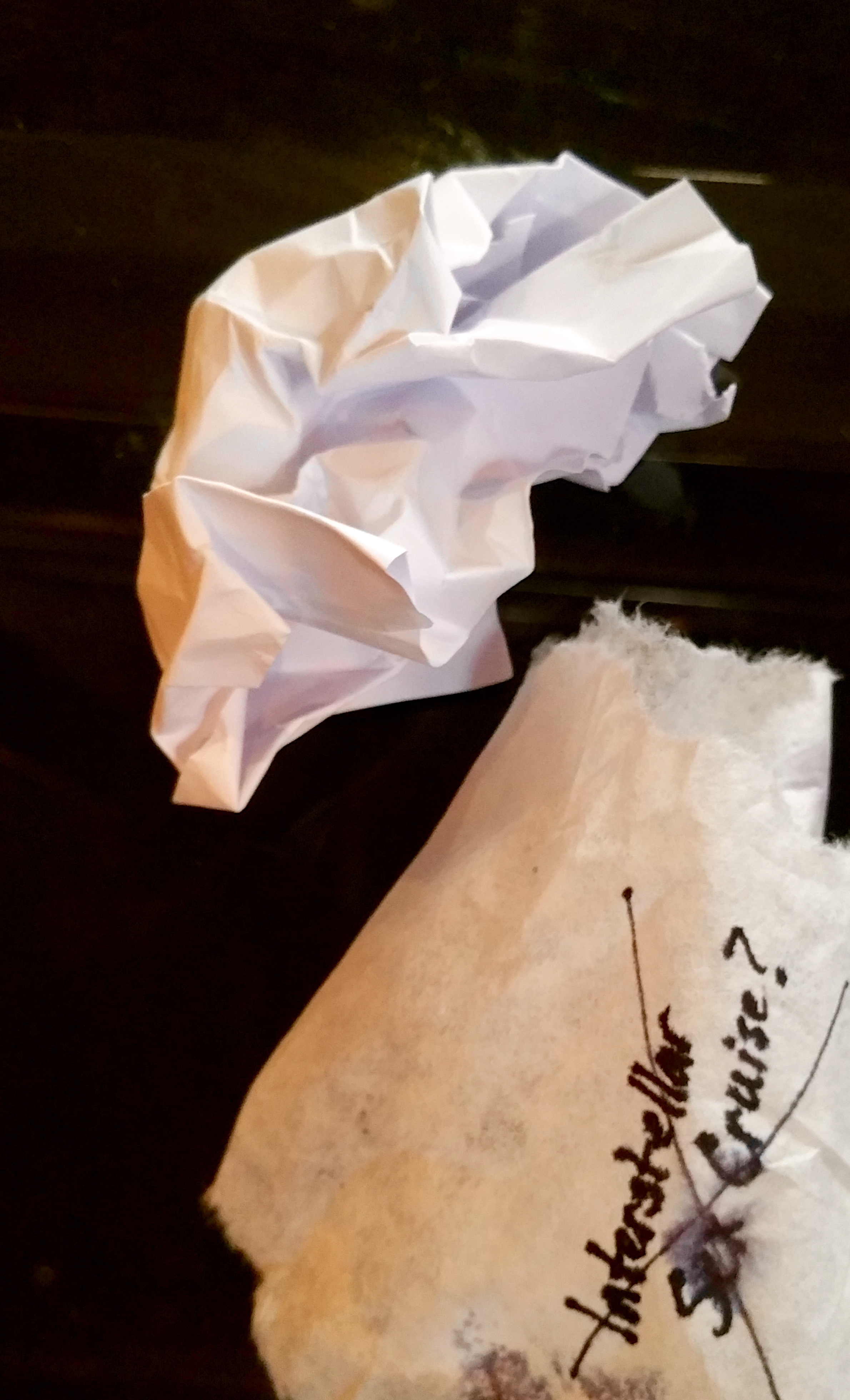
I wrote most of HTTYV by hand — in bed, on the subway, hunched over in any number of coffee shops throughout Amagansett and Manhattan. I scrawled over multiple notebooks, post-its, scraps of napkin, the backs of receipts, and along the way I lost as much as I wrote.

Sometimes I like to imagine someone picking up one of those lost scraps of prose. What might they make of the scribbled words about Minotaur fellatio, great, tiered foundries for sexual smelting (okay, that one didn’t make into the book), or numbered directions for seducing hipsters? This is one of the dangers and pleasures of writing with pen and paper. Such words have a way of fluttering away on mysterious wings and leading lives independent of those we imagined for them.

Looking back at these first-draft jottings more than a year later, I can see a childish exuberance in my pen strokes and slashes. In many cases the finished product was very different, of course, and I’ve included examples here and there where it is relevant.
What is it about writing by hand? I like seeing what I scribbled out, having it still there even though I’ve consigned it to ballpoint obscurity. I love the act of scrawling ideas, scenes, shreds of dialogue — when I do, it seems to come from my hand and not my brain.

Looking at it now, I can see by the physical state of my writing how I was feeling then: frustrated, ashamed, enthusiastic, bored. I can relive my process as it developed, see where my creativity tripped and fell, and the moment it brushed itself off to allow the show to go on. Here is the raw version of The Ruin Carnival scene and the published version:


Sure, the paragraph that made it into the published novella is clearer, contains more — but would not have existed at all without the notes. One was the organic, physical product of handwriting. The raw material. The other was processed until it became more effective and organized. That it was processed and finished with the rather sterile act of tapping away on a plastic and metal contraption is significant. A keyboard and a screen have a disciplining effect. Remember my Inner Critic? She was allowed to come home again during this part. Another example:


Often I didn’t feel certain necessary content deserved to be written by hand—why waste the ink and finger joints? Instead, I wrote a note to my future self to get on with it as in this note. Love scene is a euphemism for SEXSEXSEX. In fact, I wrote most of the actual sex scenes on the prudent keys of my Mac.
As for the passion, the obsession, the pain and heartache—all of those things I found were best rendered by hand. There is something about writing these human intrigues that required, for me at least, a body-word collaboration best engaged by planting elbows on table and pressing down with pen.
In the end, after all that scribbling and wild fun, it was a trip to get the published version. Rigid margins, clearly printed large-type, a cover…wow. That’s classy smut, I thought. But the most human part, the communication between individuals — that was handwritten.


Leia Menlove is Wednesday Black is Leia Menlove. Her writing has been published in Monkey Bicycle, Joyland, Joyland Retro Volume 2, The Artificial Selection Project and more. Her novella, How to Train Your Virgin, was released by arts publisher Badlands Unlimited in March 2015, and was featured at the The Solomon R. Guggenheim Museum Series, "Conversations with Artists and Writers.” She is a graduate of The New School MFA program for creative writing, and splits her time living and working in New Orleans and New York City. If anyone finds a notebook containing scribbled notes for a dirty novel about women who are attracted to deconstructivist architecture, please email her immediately: mswednesdayblack@gmail.com.
Week 1: The Images and The Inspiration
THE IMAGES.




AND THE INSPIRATION.
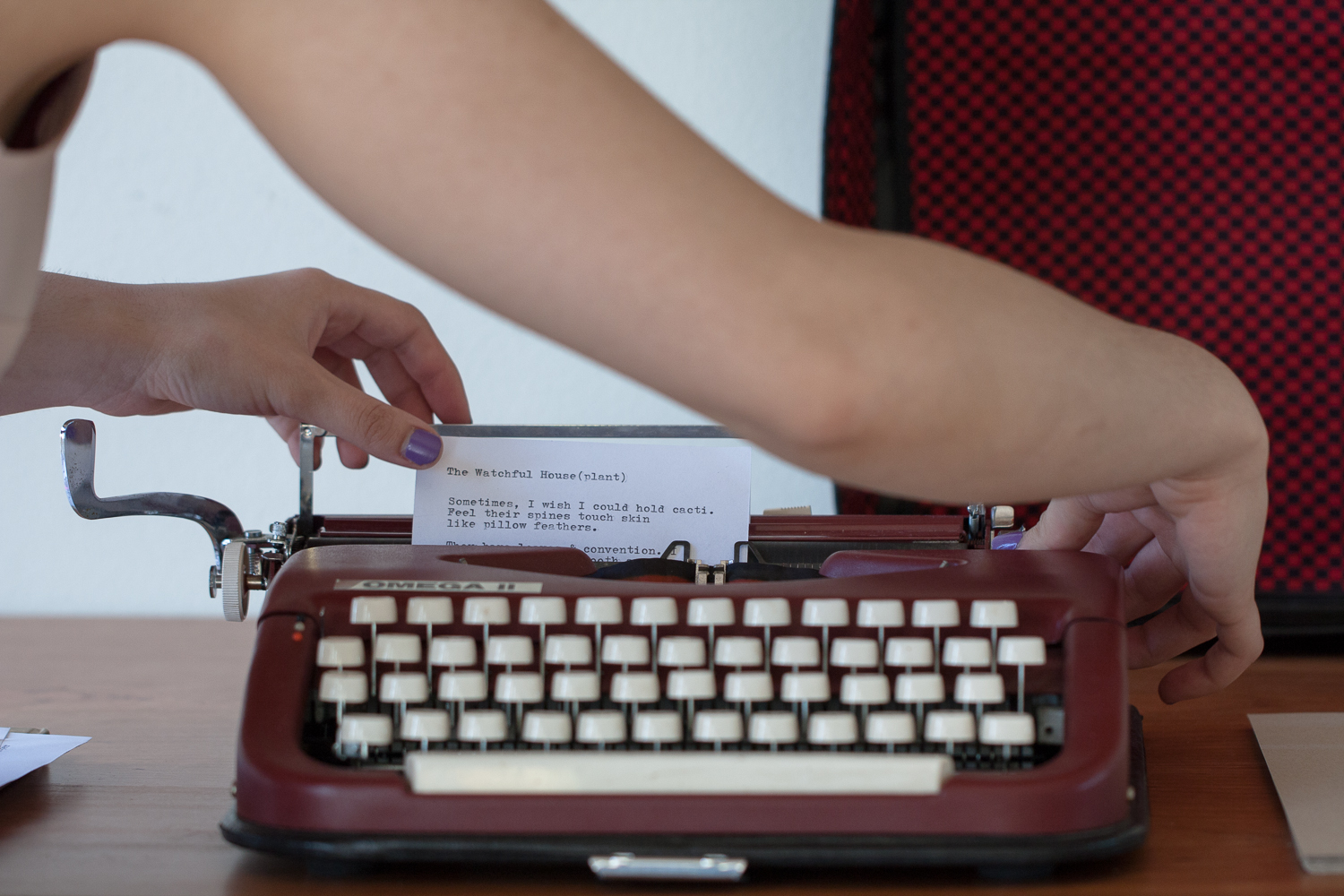
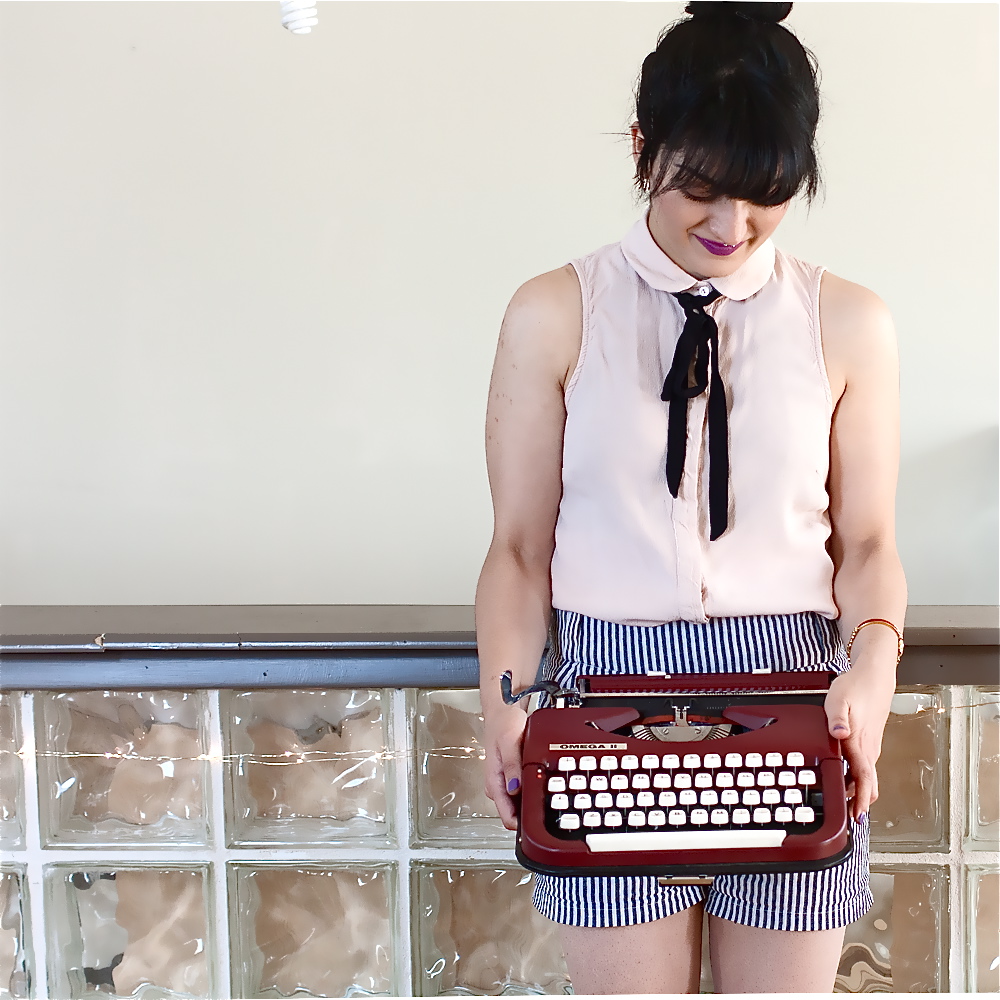
When we asked Rehani about the inspiration for Words for Wallpaper, she was quick to mention Poems While You Wait, which is a group of Chicago poets who write poetry on demand (think: The Haiku Guys in NYC, only, they're not stuck to seventeen syllables). Founded by Dave Landsberger and Kathleen Rooney, you can find the traveling poets at events, street festivals, weddings, parties, or random locations around the city. For those on the receiving end, there is little to it: you see them sitting somethere, you think, I wish someone would write me a poem today, so you approach them, engage in friendly fire, fork over $5, pick a topic, and whoever is up next (they rotate), they write you a poem within 15-20 blinks. Don't a lot of people do these kinds of things? You see some individuals doing this, but rare are established groups of published poets. How will I know if it's them? Says Rehani, "They are the ones with the vintage typewriters." And she is one of "the ones." Oh, and all the proceeds go to Rose Metal Press.
One obvious connection between Poems While You Wait and Rehani's Words for Wallpaper is the typwriter. "The approach to writing on typewriter is so different than a computer," Rehani said. "There isn’t a delete button. You need to have a certain kind of confidence when you use a typewriter." What about mistakes? They are everywhere. "Sometimes, I make mistakes and then I try to make the mistake part of the poem." And how could they not be? Standing before them is their reader, audience, and judge. When that kind of presence is present, it can increase the sound of time.
"It's interesting to see where writing can go in such a short time. We, writers and poets, manipulate memories and images, but it's a little challenging when put on time constraints. It's almost like time is manipulating the poem, too."
Words for Wallpaper - Poems While You Wait