
An Informal Memoir • Joselyn Smith-Greene

BY JOSELYN SMITH-GREENE
A short time ago at an estate sale, I saw a woman excited at the sight of a bunch of handwritten letters. Quickly, she grabbed them. I didn’t get it. How could these unrelated letters be of any significance to anyone other than the sender and the sendee?
This experience prompted me to revisit a box of letters that I had saved. Many of them were written by my childhood friend, Patricia, and my college friend, Loretta. The exchange between Patricia and I began when I went away to college and she was in her senior year of high school. Loretta and I attended Rhode Island College together. Our letter exchange occurred during school breaks and summers. After I transferred to a different school in my junior year, our letter writing escalated. Long distance calling was cost prohibitive in the late 70’s while a stamp cost a mere 13 cents; writing letters was the affordable way to keep in touch with distant friends and family.
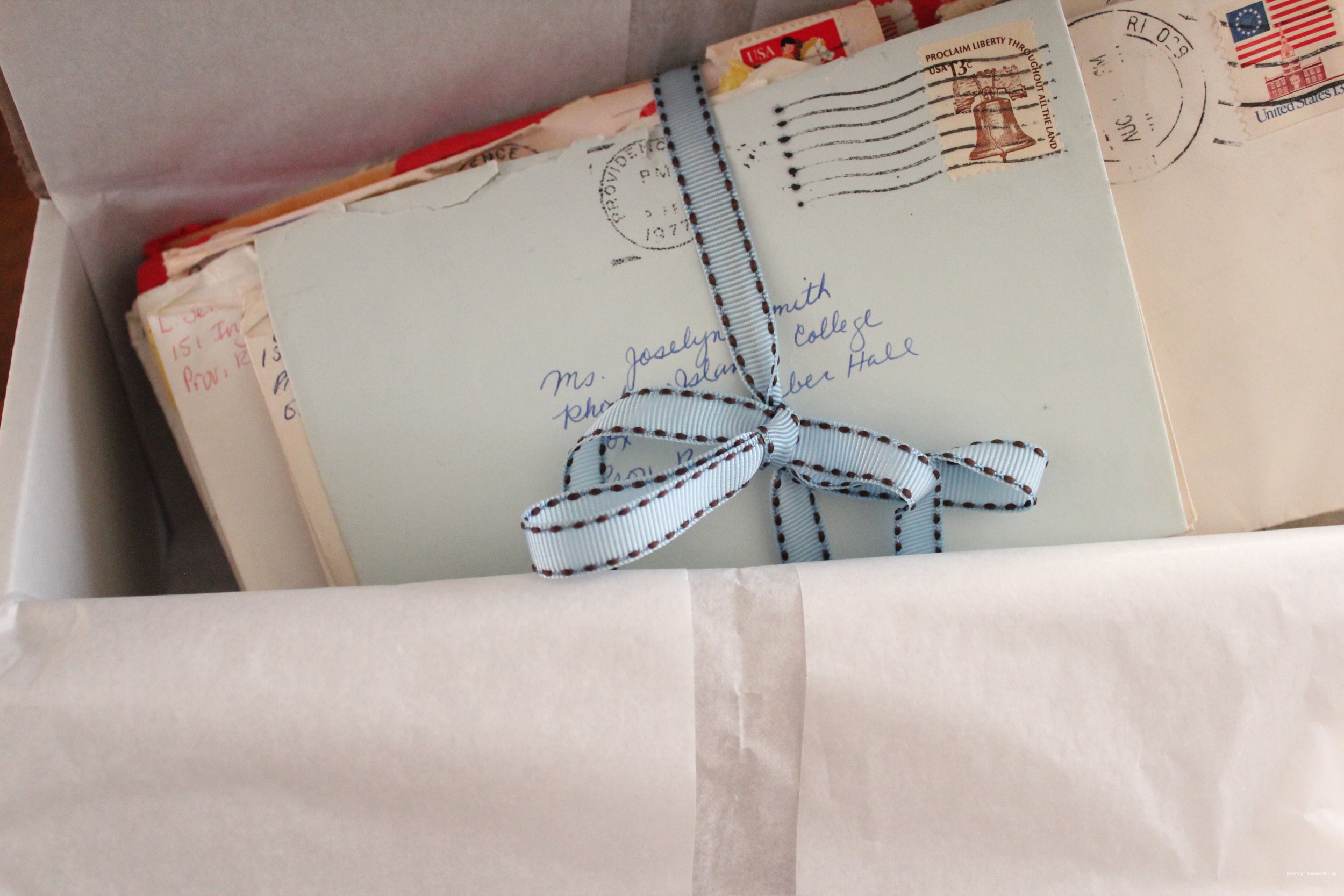
Each letter was a continuation of their life’s story. As I read them, they were an immediate relief, and a short distraction from the frenzied college life. Some were quite lengthy, some were written over multiple days, and some required a second read to make sure I didn’t miss a thing. All, however, warranted a return letter, with the hope that a letter waiting in their mailboxes would uplift their day as well.
I had a blast rereading their letters, laughing and shaking my head with more feeling and genuineness than any present day LOL’s and SMH’s. So when Patricia recently mentioned that she had little recollection of her college years, I immediately thought to myself, “I can fix that!” And so I did. I returned the letters she had written me, thereby gifting her, her younger self.
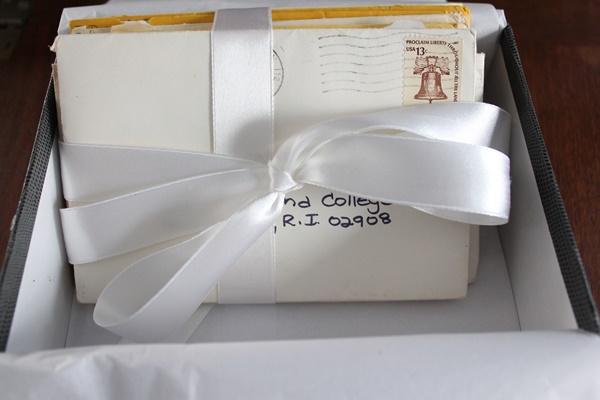
I had the pleasure of gifting both Patricia and Loretta the letters they had written me all those years ago. They are the most special gifts that I have ever given anyone. Since they cannot be duplicated or monetized, their value is beyond measure. I’m glad I kept their letters, a handwritten, informal memoir about everything they were thinking, feeling, and doing in their own words, documented by them.
With a simple touch of a key today, we send digital communications off to linger in the abyss of cyberspace. It is difficult to re-experience an email. But tangible letters can so quickly bring back a distant joy. They are precious evidence of the lives we live.


You can find more from Joselyn on her site: http://meaningfulremnants.com.
Some People Live a Whole Lifetime, and They Never Learn to Love the Rain • Adrienne Pieroth

BY ADRIENNE PIEROTH
I received this letter towards the end of my freshman year in college. I was away from my hometown of Denver, Colorado, attending Drake University in Des Moines, Iowa. It had been a year of adjustments for me — some good, some challenging — like most 18 year-olds spending their first long period of time away from home. My mother had always been the center of my life, the touchstone I would return to over and over again for comfort, love, a hug, a laugh, or a cup of tea and a much-needed chat. My mother was British and had me late in life the at 39 years old.
Perhaps it was her older, wiser years that made her such a solid and grounded figure in my life. If you asked me what defined the word “home” for me, I would say without hesitation, my Mum. While being away from the comforting home and life she had created for me was difficult at first — her care packages and letters she sent each week made all the difference. Most of the letters were about daily stuff — what was happening at home, with my Dad, or how the cats were doing. But towards the end of the year, this letter arrived. I knew it was special from the minute I opened it. I had no way of knowing that less than five years later, I would be sharing the words in this letter as part of the eulogy I gave at her funeral.
Throughout my high school years my mother battled a rare form of cancer. During those years, I lost track of the number of surgeries, and the radiation and chemotherapy treatments. But all the while, I never once remember her complaining, or asking “why me?” Perhaps the fact that my mother grew up in England during World War II, where nights spent in bomb shelters, rations and stories of sacrifice and bravery defined her youth. All I knew was that my mother had incredible strength, optimism, and not for one minute did she ever believe she wouldn’t survive her battle with cancer.
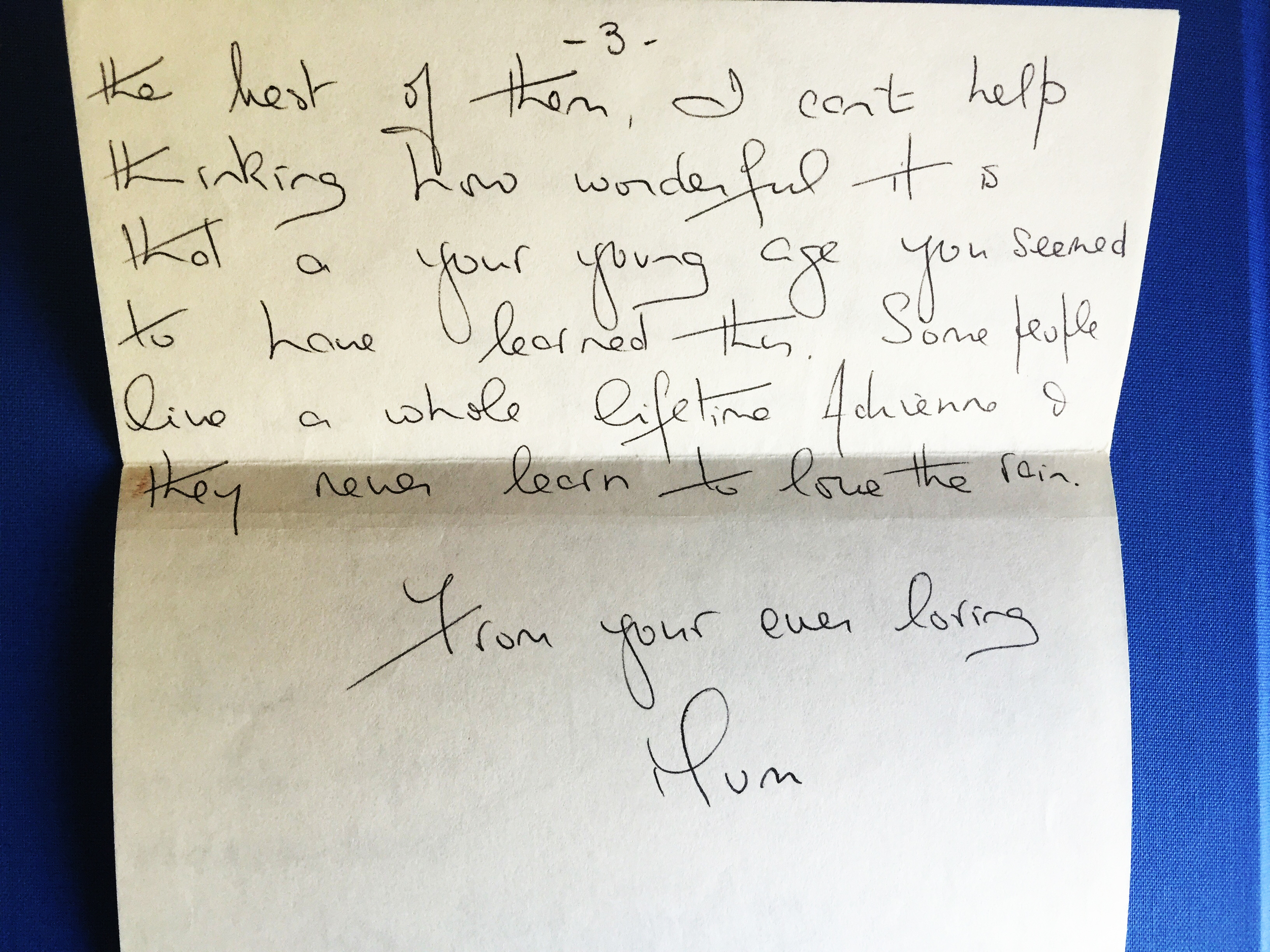
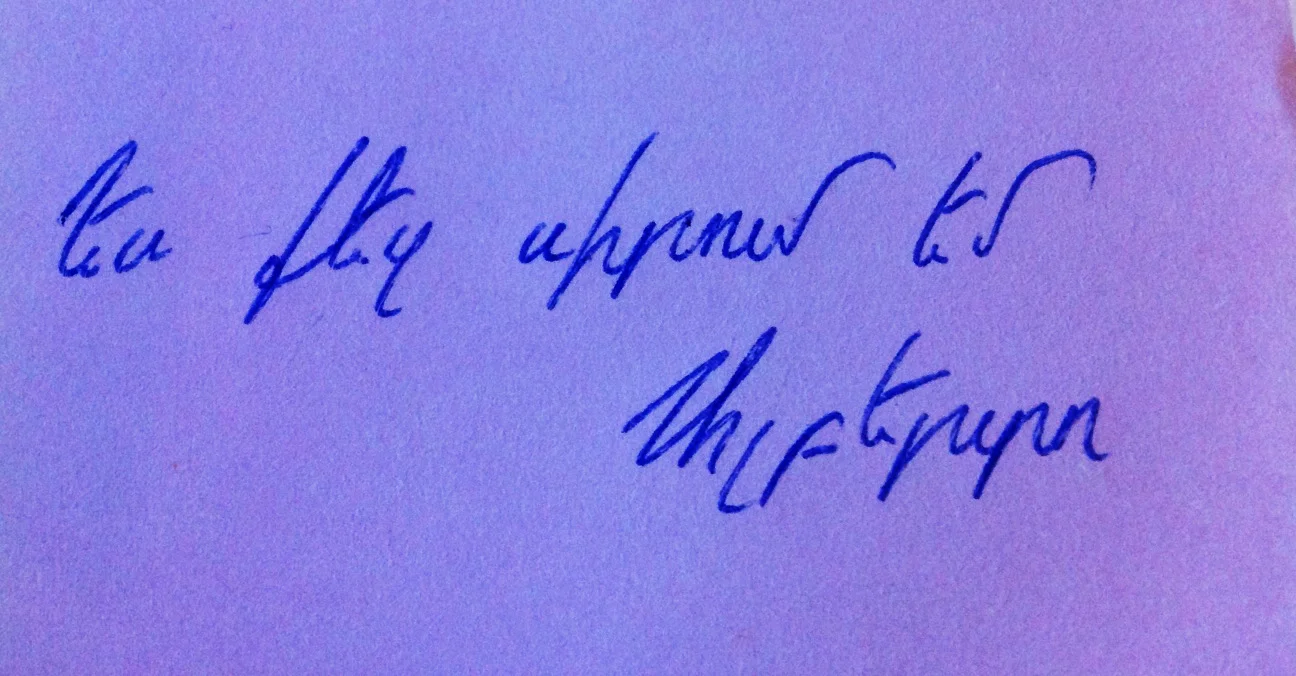
When I first read it, the part of the letter that struck me most was that she was proud of me. My mother always told me she loved me and how proud she was of me, but it was something different to see it in words, written on a page, in her beautiful handwriting — handwriting, by the way, I couldn’t read until I was nearly ten. My mother had been a secretary and knew shorthand, so her writing was a combination of cursive and shorthand in a style all it’s own.
Years later, at her funeral, it was her last words that spoke to me most, and the ones I shared with family and friends gathered to say goodbye. They were:
...we have to have some grey days in our lives in order to appreciate the bright sunny ones, and we have to make the best of them. I can’t help thinking how wonderful it is that at your young age you seemed to have learned this. Some people live a whole lifetime, Adrienne, and they never learn to love the rain.
If I learned to love the rain, I learned from my mother’s example. Looking back, I wonder which of her grey days she was remembering as she wrote those words. The day I read those words as part of her eulogy was the greyest day of my life to date, even 26 years later, but the brightness of her love and the memories of my time with her outshine the rain. Whenever I want to remember this, I need only to open the envelope that contains my mother’s beautiful words of love and support to be reminded.


April 29th, 1985
My Dear Adrienne,
I am looking forward so much to having you home for the summer. To hear the front door open & to hear you say, “Hi it’s me.” Your dad & I have missed your very much since you went off to college but we know this is the first stage of our daughter’s independence. We love you very much & we are so very proud of you. We know you have worked long & hard in all of your classes & it’s been a struggle, so many times wanting to go out & have fun, or go to a party, but knowing that you have homework to do and that the studies come first.
You have always been able to appreciate the small things in life, Adrienne – a diamond ring – a new 28oz – a trip around the world! So just kidding, I really mean the small & important things in life. When we talked on the phone last week I remember your comment on the weather. It was raining & you said when you were passing a couple of students they were complaining about the rain; how wet & miserable it was. You told me you were smiling inside because it brought back memories of England back to you & the air smelt so sweet & fresh.
Life is a little like that – we have to have some grey days in our lives in order to appreciate the bright sunny ones, & we have to make the best of them. I can’t help thinking how wonderful it is that at your young age you seemed to have learned that. Some people live a whole lifetime Adrienne & they never learn to love the rain.
From your ever loving,
Mum
A photo of Adrienne and Mum





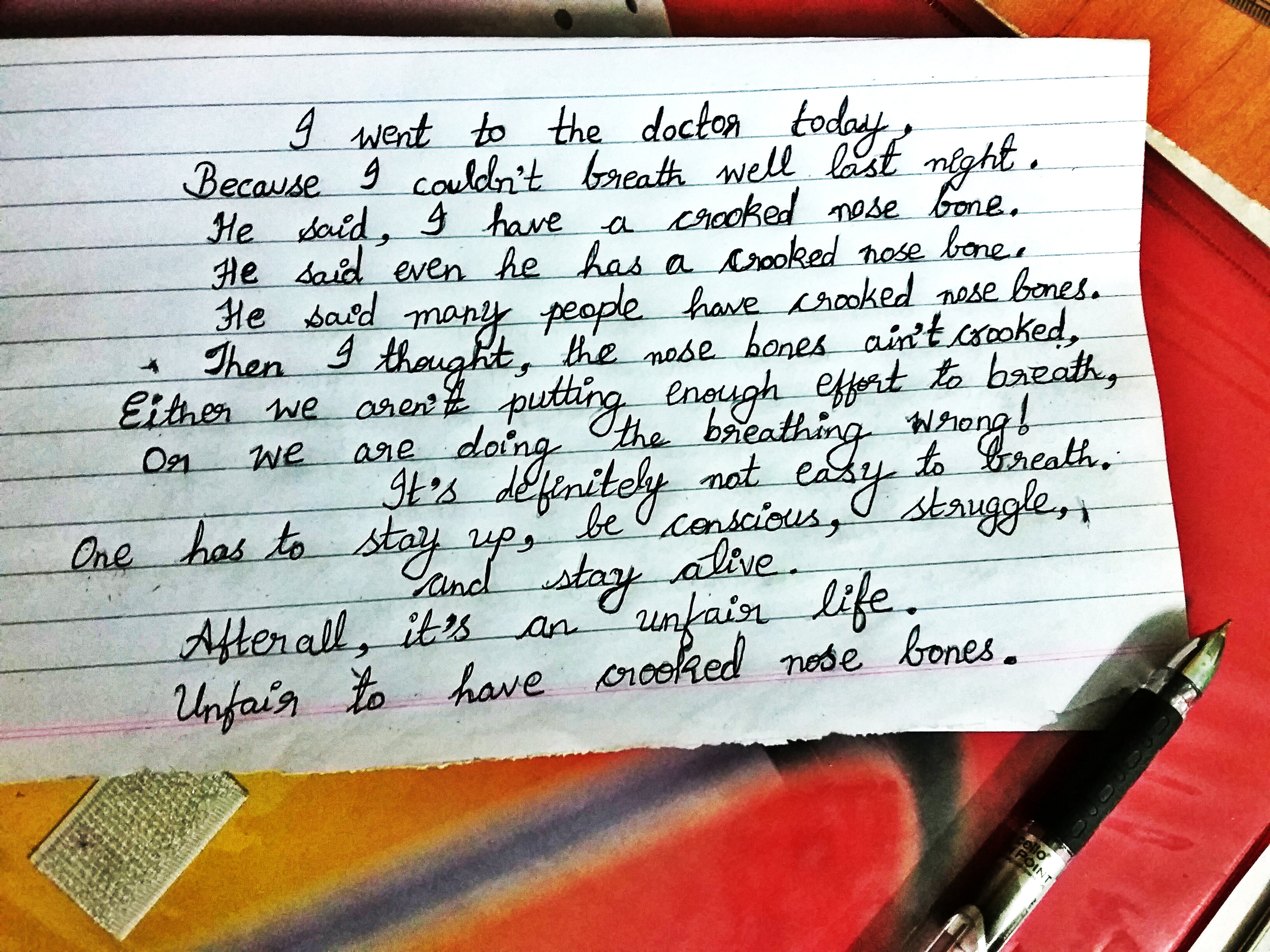
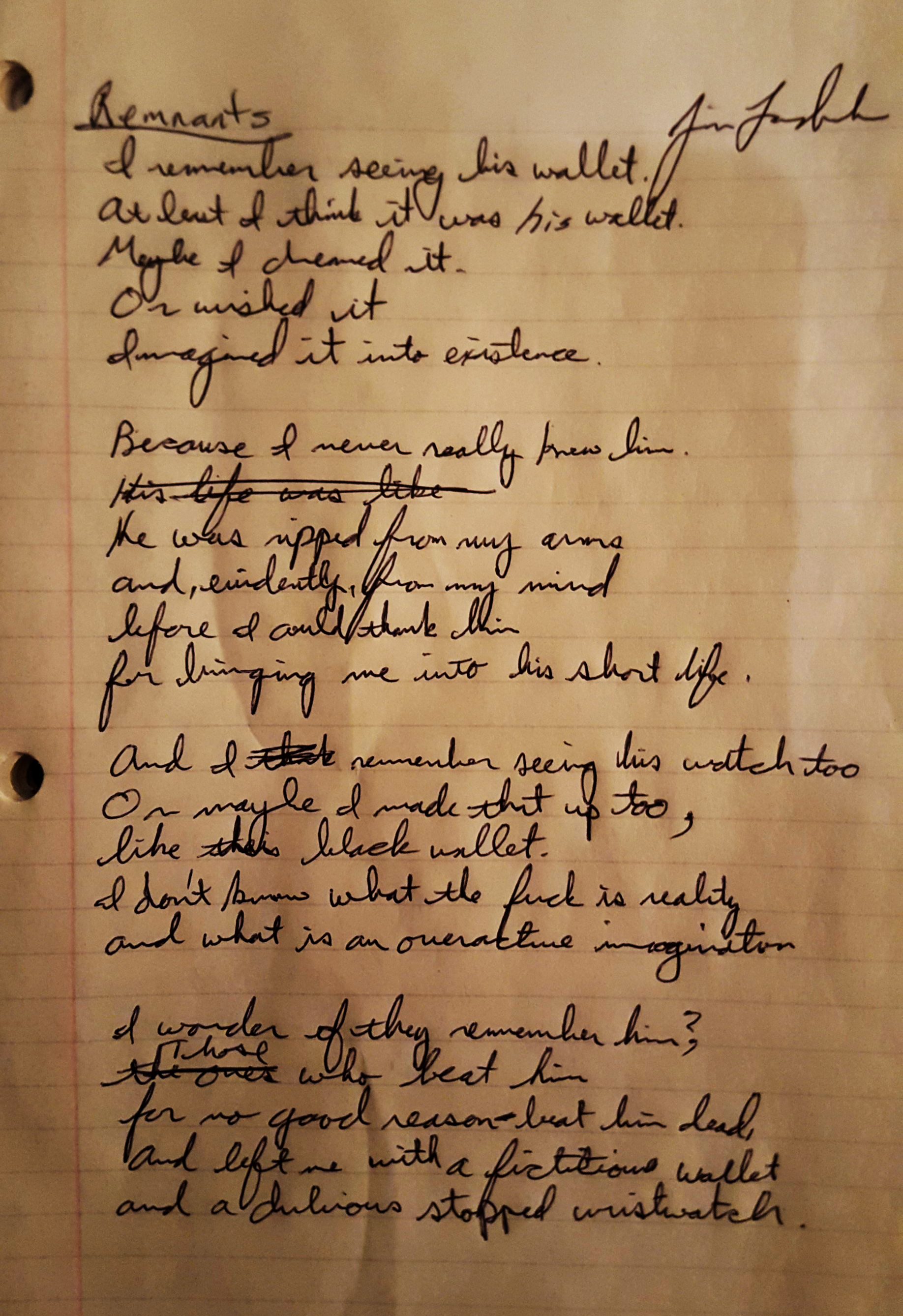
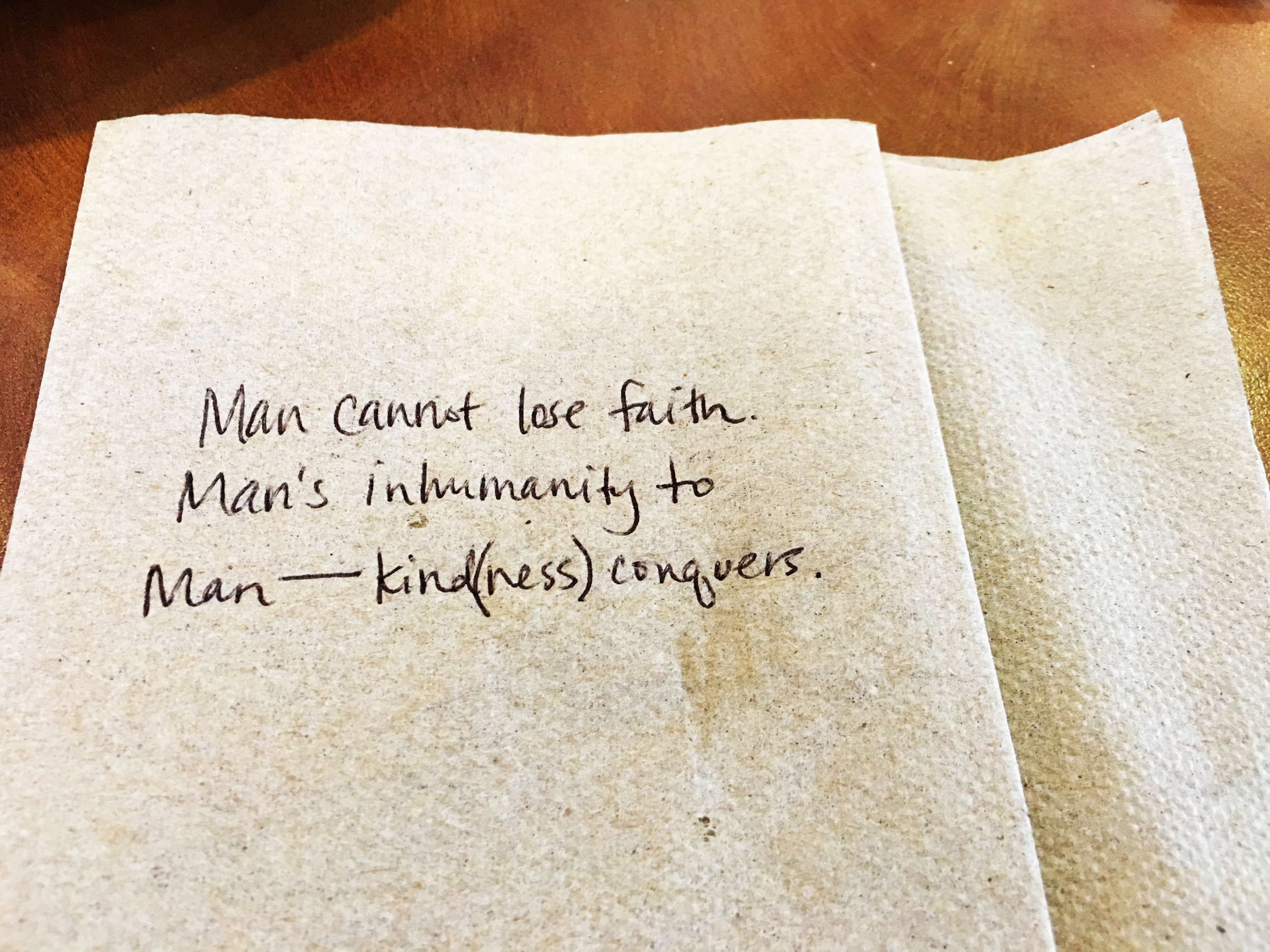
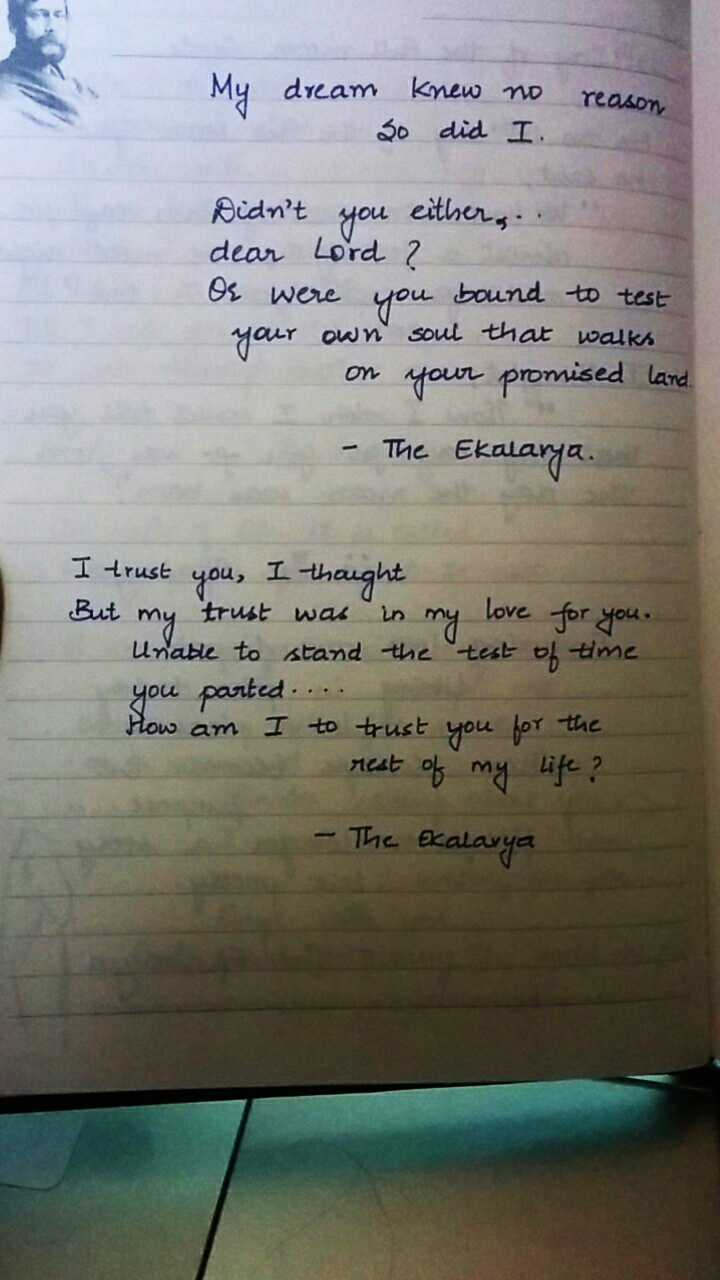
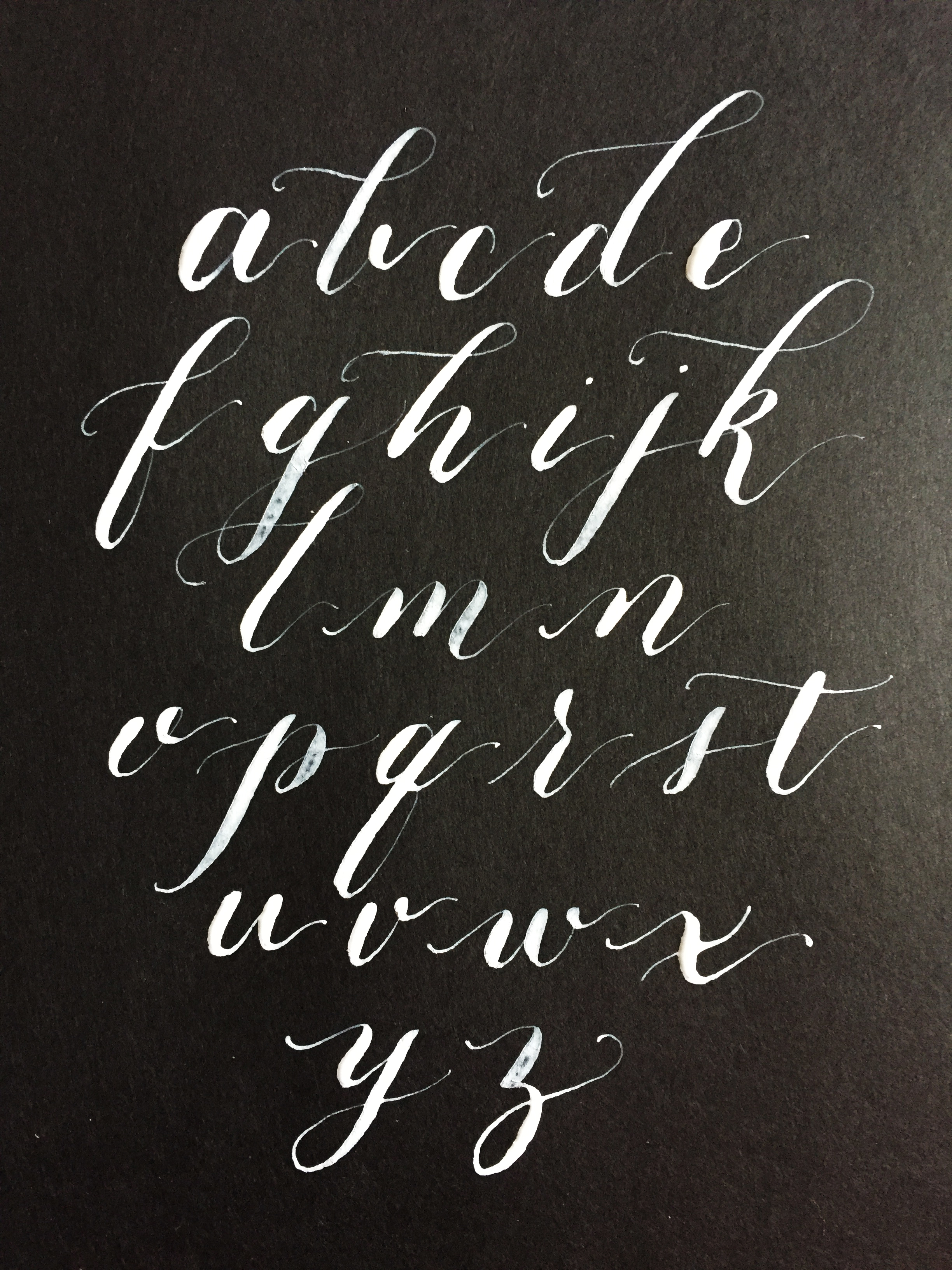
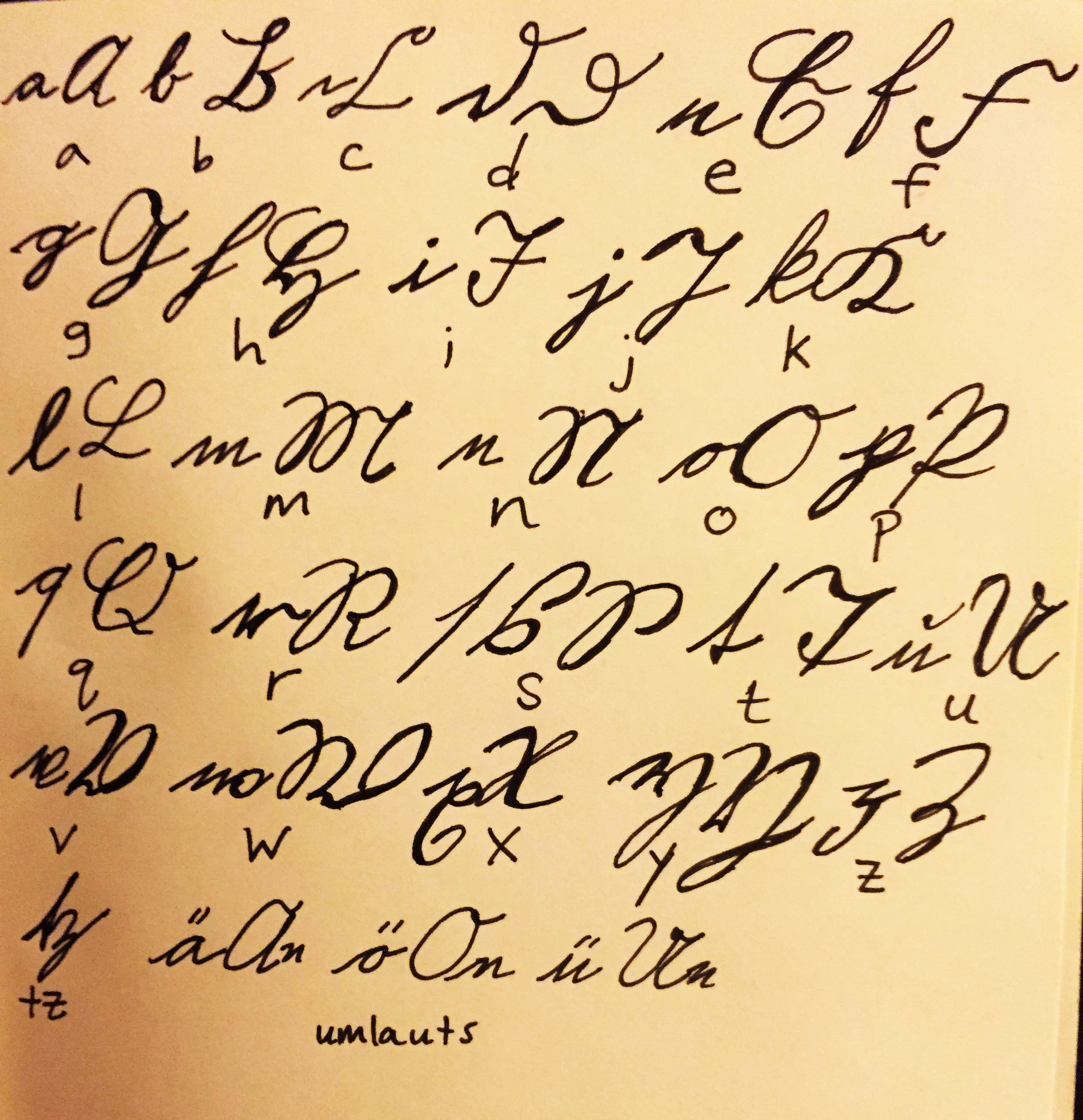

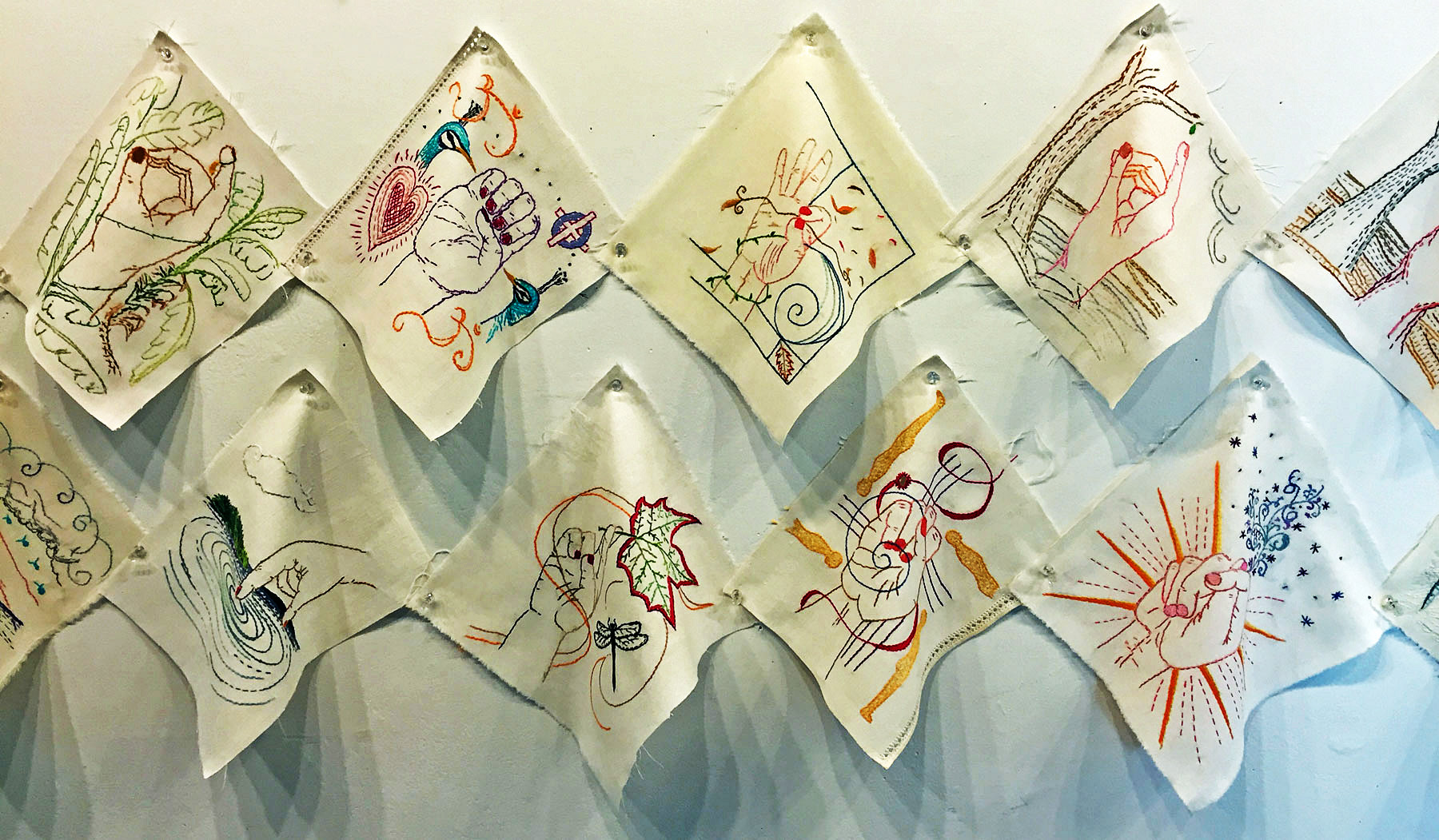






We Might be the Last Generation of Letter Writers • A Conversation with Sociologist Michelle Janning

Sociologist and Professor, Michelle Janning
I never really know why I do it, but there I will be on various afternoons throughout the year, sitting on the wooden floor in front of my closet, peeling tape off a slightly battered box. On the top flap of this box is two words in uppercase letters and permanent pen: DEEP STORAGE.
I've come across a lot of people who have the same — a box or ten of memories sitting on closet shelves — and people who do the same: thumb through this deep storage from time to time. The effects are not always the same, as the very reason for the impulse to sift through the past can vary, but there can often be a combination of emotions —nostalgia mixed with regret, or warmth mixed with emptiness. Albeit peripherally, I think it might have something to do with what Adam Phillips explores in Missing Out: In Praise of the Unlived Life, where there can be a strong sense of constant reflection: wondering what was, what could have been, and what could be. But I also think quickly to Joan Didion's "On Keeping a Notebook," which speaks to the importance of recording life and keeping a close proximity to the past.
One item that many seem to hold onto are letters of past love. But why do we keep a hold of these romantic reminders, especially of ones long gone? We found an inkling of an answer in an article recently, "Why Love Letters Matter, Even After You Break Up." It features words by sociologist Michelle Janning, who happens to be a professor at the college I attended, Whitman College. A lot of her research has looked at concepts of "betweenness," and romantic correspondence surely qualifies as that. But she has also looked at another intersection: the differences between digital vs. handwritten romantic correspondence. When asked why we hold onto these records of our romantic past, Janning replies: "They represent who we were, which is part of who we are. They become our relationship counselors, reminding us of what to avoid in future relationships and what to rekindle."
We recently spoke with Janning about her research and work, but also about her own experience and relationship to her deep storages and handwriting.

BRETT RAWSON: What led you to studying the divide between handwritten vs. digital correspondence in romantic relationships?
MICHELLE JANNING: I was cleaning out a closet and found the box of letters I'd stored from high school and college. After reading through them I talked with my husband, and we (college grads in the mid-90s just after email started and just before the internet) figured we might be the last generation of letter writers. Then lunch with friends of different generations (one who had a folder in her phone labeled "texts from cute boys") made me wonder further. Full story in the publication attached.
RAWSON: What did you find from your study that you didn't expect? Did anything surprise you, did new patterns emerge, did you find any contradictions between what people say and what they do? If you were to extend this research, what would be next?
JANNING: The most surprising thing I found was that, while women are more likely to save letters and mementos from relationships than men (and to save more of them), men tend to look at or "visit" their saved love letters more frequently than women. And men tend to store them in more accessible places (as opposed to closets, under the bed, or in storage).
Some of this may be because women tend to be tasked with household organization more, and spend more time than men on creating a storage location that is decorated or made special in some way. Right now I'm trying to figure out if it'd be worth studying the data to look at generational difference. The hard task here is that technologies change so fast that I'm not sure I can capture both age differences and technological change simultaneously (because change in one can falsely suggest change in the other).
My big project now is writing a book that uncovers how the objects and spaces in our homes tell us something about family relationships. Love letter storage will be part of the chapter on dating, sex, and paths to family formation.
RAWSON: Between-ness seems central to your focus. Aside from technology, what else comes in between us and handwriting?
JANNING: Good question. For me, between-ness is about internal conversation when I find myself unable to agree with polarized claims. Relating this to handwriting means that I am neither a huge fan nor critic of handwriting. I can see the importance of keeping it in order to foster all the good things that can stem from it (like the aesthetic, the handcrafted, the thoughtfulness, the non-reliance on non-human technologies).
But I also shy away from romanticizing anything that hearkens back to a fictitious past when our present (privileged) perception is that it was somehow better then than now. This is true when I think of gender roles, intergenerational relations, religion, or even medicine.
RAWSON: What is your own experience with handwriting?
JANNING: My dad had a brain tumor after college but before I was born that rendered him physically disabled such that he lost hearing in one ear, had partial paralysis in his face, and had to switch hands for writing. He had grown up ambidextrous. I have vivid memories of watching him sign his name with the most bizarre pen strokes, which took an inordinately long time, but which never seemed to make me feel impatient.
This matters because I am an impatient person. I also have looked at his musical compositions from college (he was a music major), which were all handwritten. Since the pre-tumor writing was different from what I saw him do, I always thought about his life as having two segments. Only now do I think that maybe the visual representation of his handwriting may have had something to do with that perception. Add to this the fact that my mother has handwriting that is like a flawless art piece, and no wonder I'm intrigued.
I learned calligraphy as a 10-year-old, and taught my son to do it when he was younger. I love examining how the aesthetic world can tell us something about human relations. I have always spent time shopping for interesting pens, inks, and papers, especially when we'd stay with cousins in Germany as a child. In high school and college, I would pride myself on the clever use of colored ink to help with anything from chemical compounds to calculus formulas, and from maps to poems. I recently was asked to write a book review for an academic journal, and I decided to hand-write both the notes and initial draft. I did this because I bought a new fountain pen in Germany this summer. The final draft (which was then crafted on the computer) went more quickly than anything I've ever written, and it was accepted without a single revision (complete with both a formal and informal note from the editors telling me how amazing it was).
RAWSON: Are you concerned that handwriting / cursive lessons are being eclipsed by keyboard proficiency lessons in the U.S. school system?
JANNING: Yes and no. I see the use of keyboarding as necessary for the work that my students do in college, and that it is most certainly an efficient way for me to do my own writing. (Again, I'm impatient). But because I find myself grateful that my son was on the cusp of cursive instruction (he received some in Denmark when we lived there, he did a little in 3rd grade just before the school moved to a greater focus on Chromebook instruction), I must think it's a good thing.
My bigger concern with the Chromebooks has more to do with the increase in standardized testing, which I presume may be exacerbated by virtue of the fact that students are getting quicker at keyboarding. This makes testing more efficient. What I liked about my son's teachers last year was that, especially in writing (Hooray for Mrs. Hartford!), the kids would draft things by hand, learn to navigate and edit on a computer, and be allowed lots of time for crafting stories. So, as far as the creative writing process goes, I think his teacher struck a good balance.
Other than the aesthetic coolness of nice handwriting, I am concerned that students will not be able to READ handwriting, which limits our ability to learn things from historical texts.
RAWSON: When you think of your own handwritten correspondences, what comes to mind?
JANNING: How little I do this. I am not a letter writer. I think of little notes to my son, or drafting my writing by hand. That's funny I suppose.
RAWSON: Phenomenologists have argued that the self falls away when we are engaged in an intense activity, usually one that collapses the sense of the mind-body split by activating both elements. Do you think the writing implement of choice could act as a bodily extension, and that writing by hand helps combine subject and object in ways that promote intimacy with a text, whereas typing into a word document promotes separateness of subject and object?
JANNING: I am not sure, because I have felt precisely this way while crafting my writing on a computer screen. For my aging body, the times when I am most likely to feel the mind-body split is when I am in pain. For typing, it's in my shoulder and my eyes. For handwriting, it's in my wrist.
Time is Our Wealth, Time is Our Slave • Nivedita Nivasini
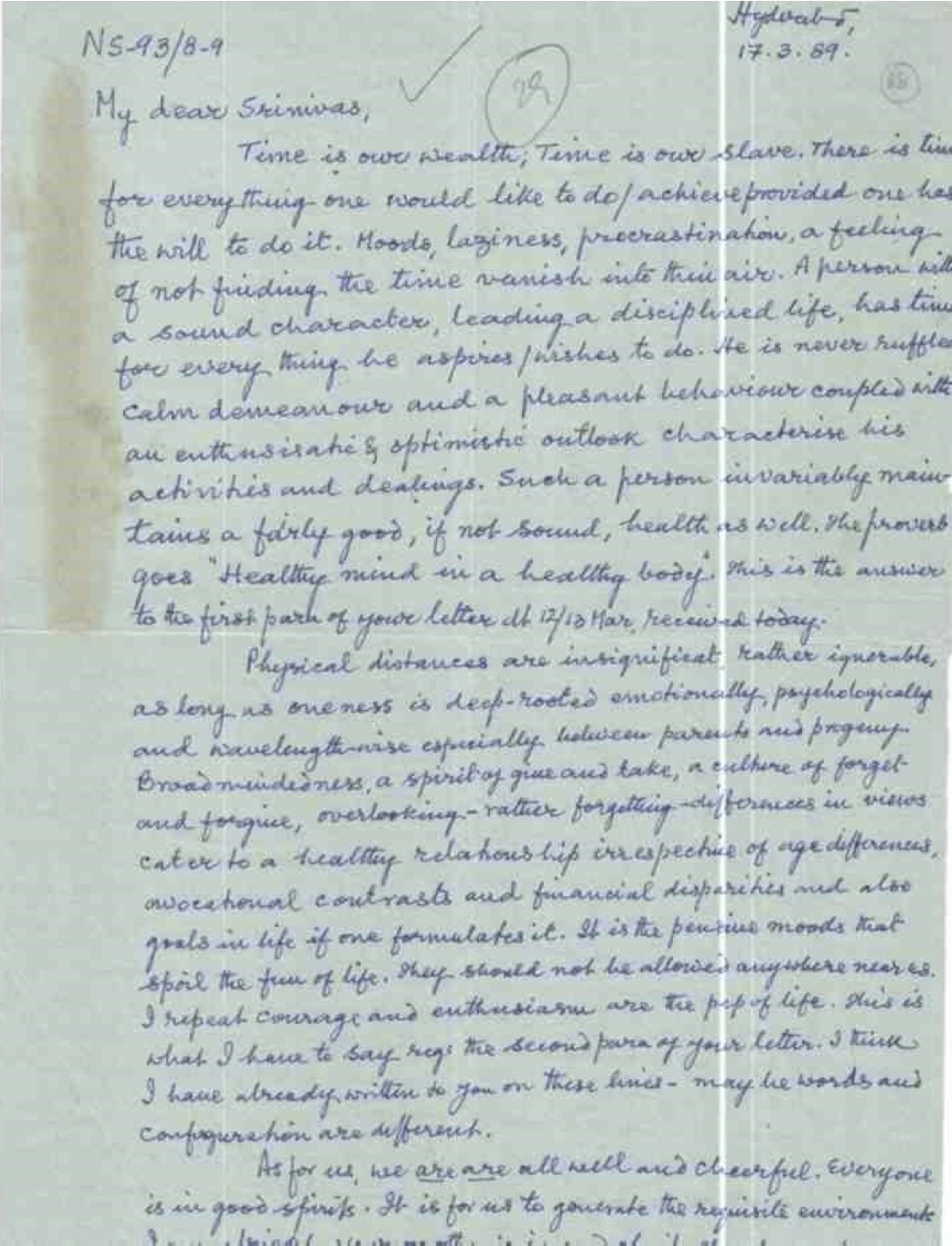
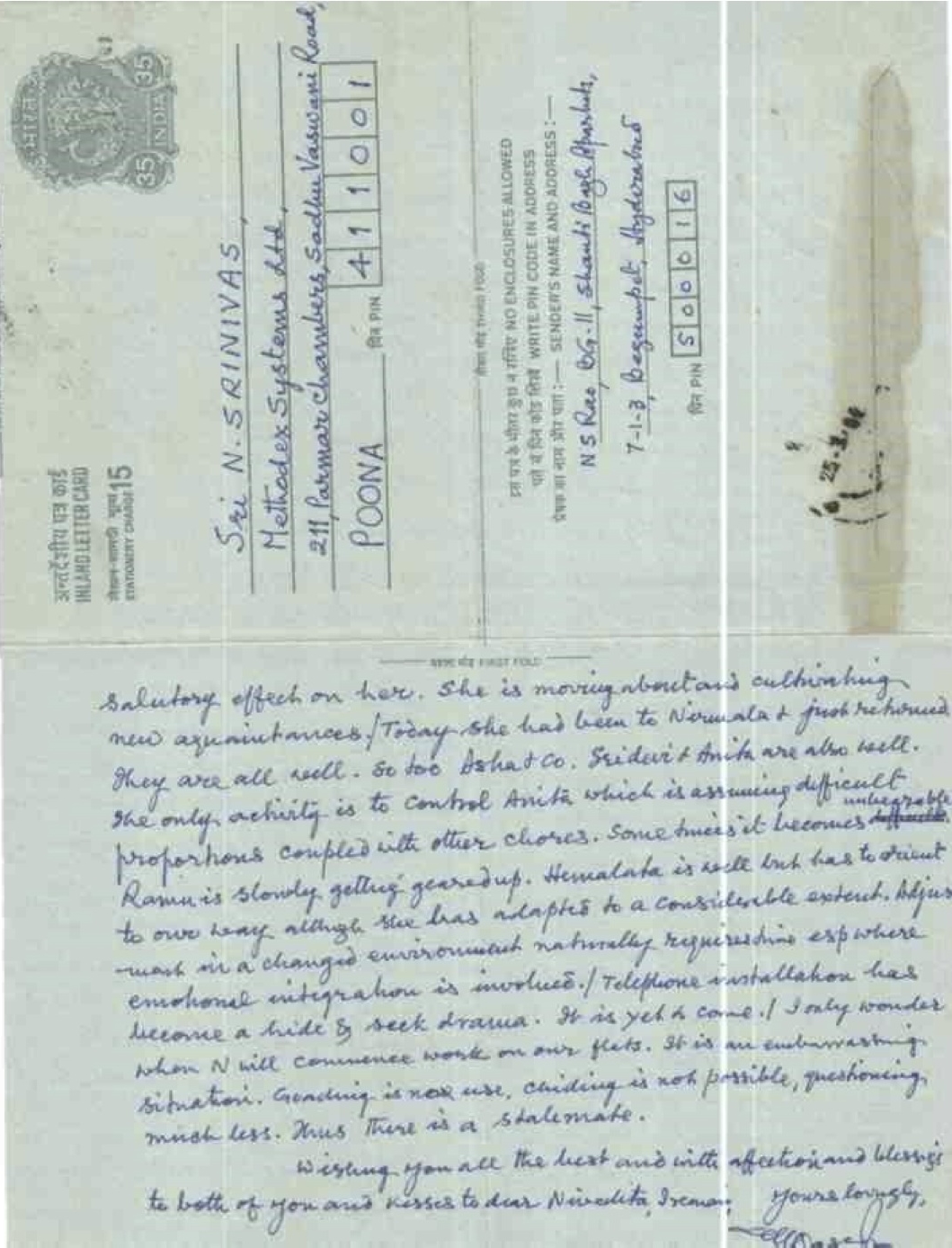
An inland letter that speaks of a generation when emotions, family values, morals and ethics were placed before the concept of individualism.

BY NIVEDITA NIVASINI
This letter, as dated, was written in the late 80s from my grandfather in Hyderabad to my father in Pune (India). In the late 80s, telephone connections took months to be installed, travel in the flights was still exorbitantly expensive and travel by train or a bus from one city to another took at least a day. The intercity telephone call or the STD phone call had to be planned when everybody was at home and the local telephone booth attendant had to be informed in advance to arrange for a telephone call. The arrangement would usually be done when every member of the joint family (i.e. at least two generations of the family living together in the same house) was present. The call would be only to ask about the well-being and each member would talk for 30 seconds to 1 minutes depending on their relation with the person.
As such, the emotions were lost in the technicalities of reaching to the members living out of the city or state or country. Hence, letters were the most comfortable option for a middle class person where he or she could pen their thoughts and emotions. The interesting aspect of writing a letter was patiently waiting for the reply of the letter. And, this letter is one such response.
Due to his profession’s demand, my father, along with me and my mother, left the city of Hyderabad to Pune. Having lived in a joint family, my father obviously missed his parents and the guidance that my grandfather provided. Since letters were the best way of communication, my grandfather and my father communicated often through the same.
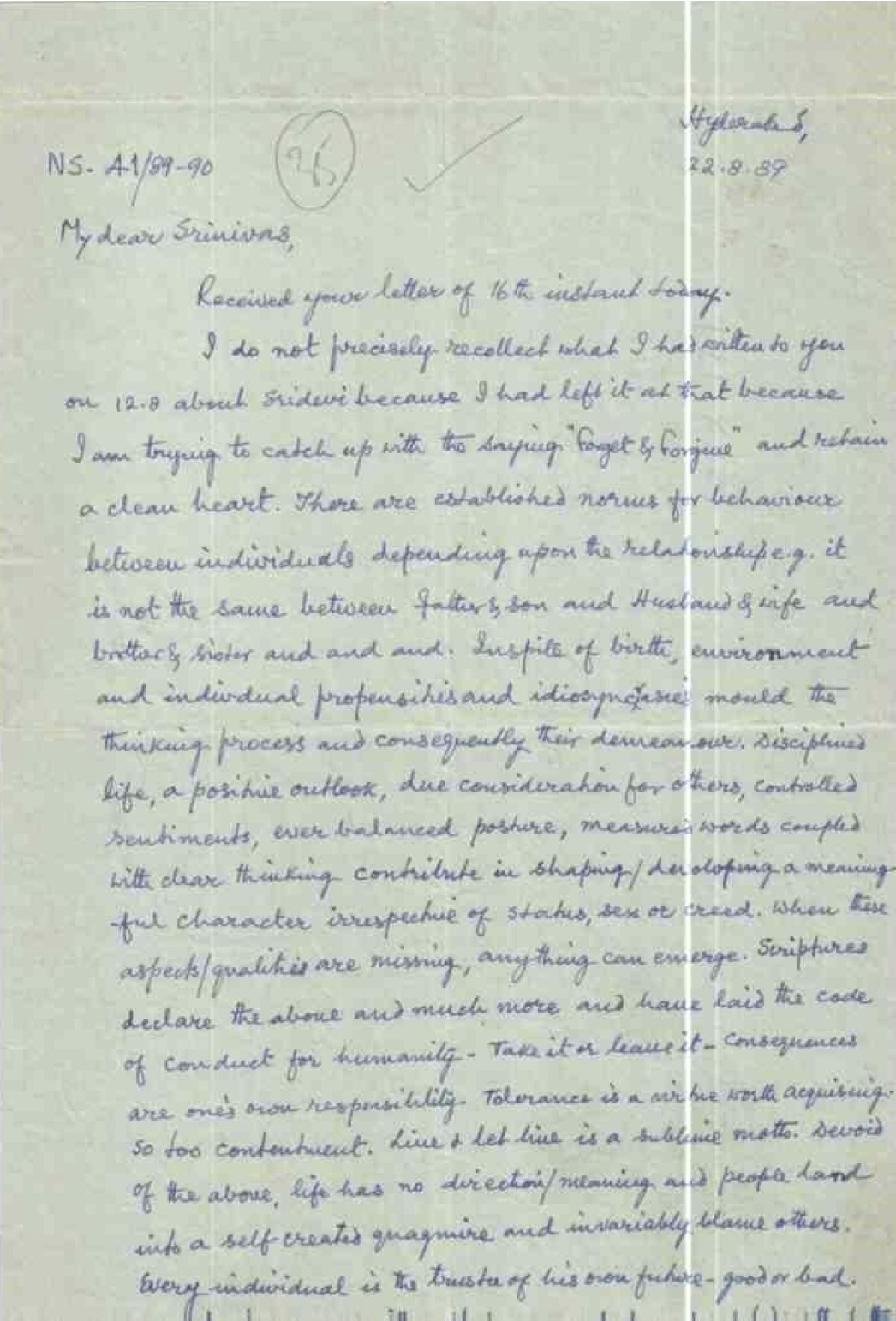
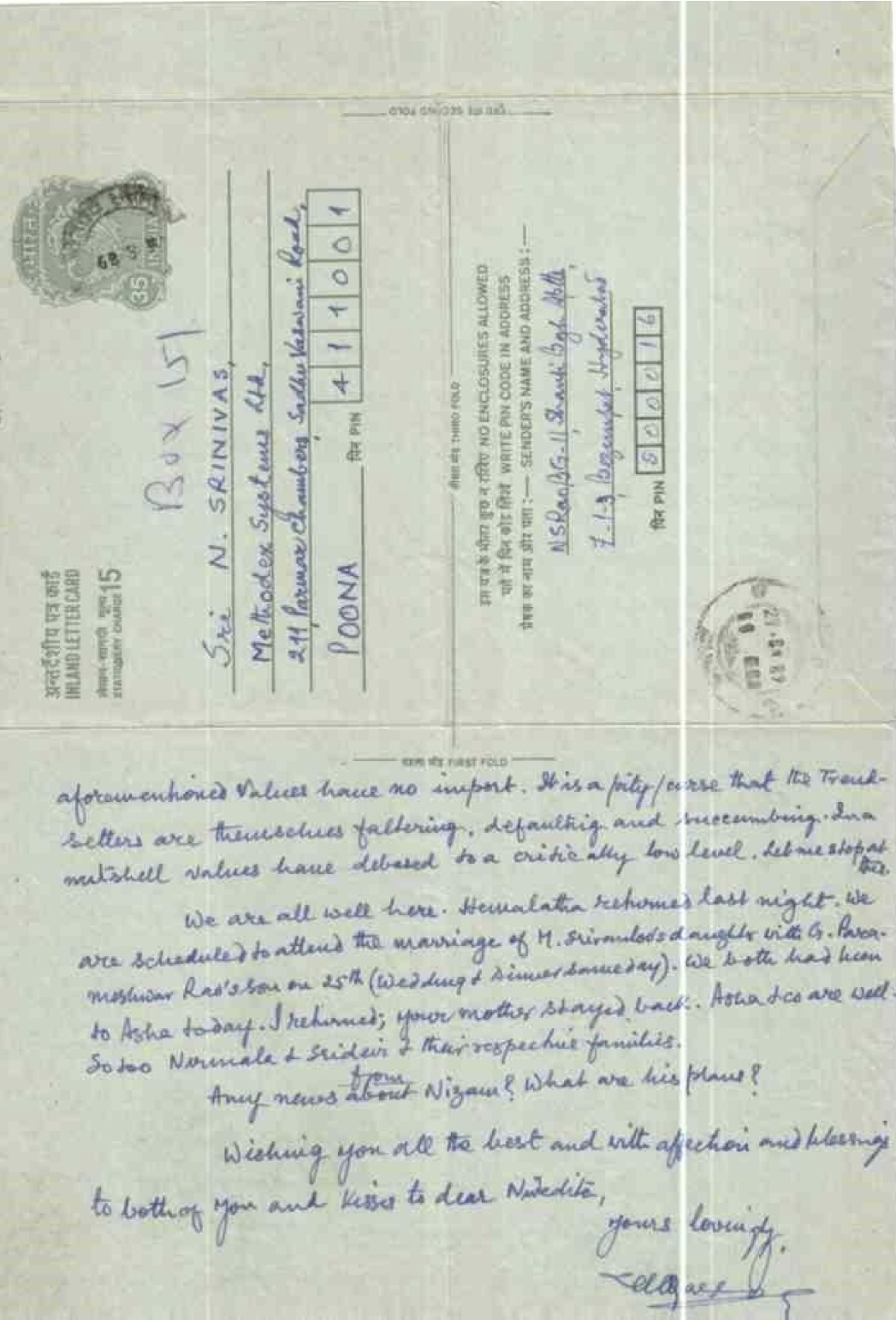
My grandfather was (yes, he passed away in September, 2011) way ahead of his times. He believed in women empowerment, secularism, education, and most importantly, freedom of thought. He never bound any one with his chain of thoughts. He also played a pivotal role in my cousins’ and my life ensuring about our well-being and reprimanding us on our mistakes. His letters reflected his thoughts and responses to my father’s concerns while commencing a new life. He always ensured that the letters addressed everything that was asked. He thus carbon copied each letter. It was a practice he observed till the last letter he wrote in early 2011.
My grandfather wrote letters to most of my relatives who lived in other cities. When we collected the letters he wrote to my father and presented to each member of our extended family, they mentioned it to us how our grandfather was always concerned about their well-being too.
I think this inland letter speaks of a generation when emotions, family values, morals and ethics were placed before the concept of individualism. My grandfather always proudly spoke about his many brothers and sisters and the hard ships involved in completing his education. The letter is not only a reminder to us to keep the team or a family above an individualistic goal but also a biography of my grandfather’s generation.
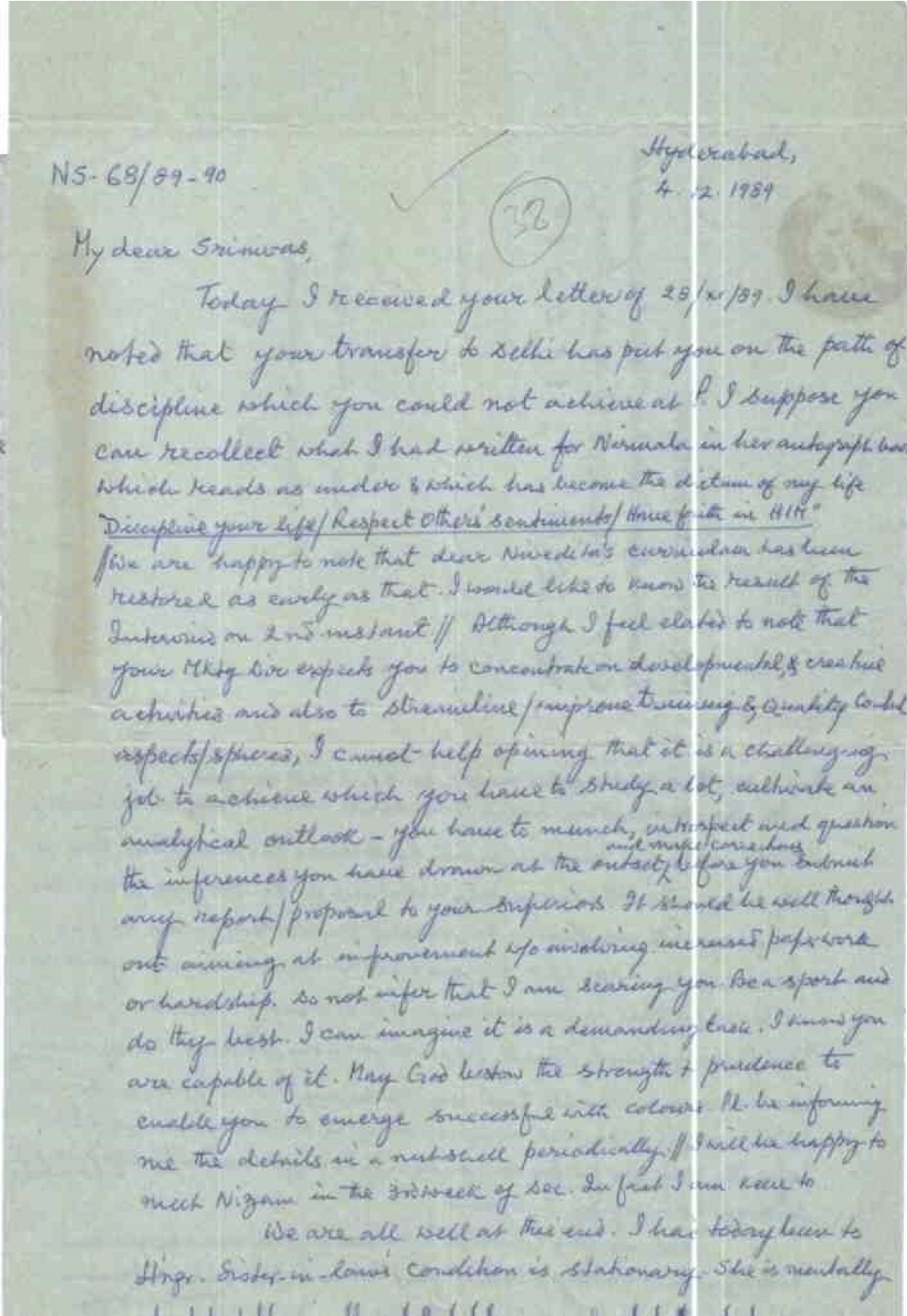
Hyderabad,
17-March-1989
My dear Srinivas,
Time is our wealth; Time is our slave. There is time for everything we would like to do/achieve provided one has the will to do it. Moods, laziness, procrastination, a feeling of not finding time vanish into thin air. A person with a sound character, leading a disciplined life has time for everything he aspired/wishes to do. He is never ruffled. Calm demeanor and a pleasant behaviour coupled with an enthusiastic and optimistic outlook characterise his activities and dealings. Such a person invariably maintains a fairly good, if not sound, health as well. The proverb, “Healthy mind is a healthy body.” This is the answer to the first part of your letter dated 12/13 March, received today.
Physical distances are insignificant, rather ignorable, as long as oneness is deep-rooted emotionally, psychologically, and wavelength-wise especially between parents and progeny. Broad mindedness, a spirit of give and take, a culture of forget and forgive, overlooking-rather forgetting — differences in views cater to a healthy relationship irrespective of age differences, avocational contrasts and financial disparities and also goals in life if one formulates it. It is the pensive moods that spoil the fun of life. They should not be allowed anywhere near us. I repeat courage and enthusiasm are the pep of life. This is what I have to say reg. the second para of your letter. I have already written to you on these lines – maybe the words and configuration are different.
All of us, we are are all well and cheerful. Everyone is in good spirits. It is for us to generate the requisite environments.
|
…. salutory effect on her. She is moving about and cultivating new acquaintances/Today she had been to Nirmala and just returned. They are all well. So too Asha & co. Sridevi & Amita are also well. The only activity is to control Amita which is assuming difficult portions couples with other chores. Sometimes it becomes unbearable. Ramu is slowly getting geared up. Hemalata is well but has to orient to our way although she has adapted to a considerable extent. Adjustment in a new environment naturally requires time esp. where emotional ingredient is involved/Telephone installation has become a hide & seek drama. It is yet to come/I only wonder when N will commence work on our flats. It is an embarrassing situation. Goading is no use, chiding is not possible, questioning much less. Thus there is a stalemate.
Wishing you all the best and wish affection and blessings to both of you and kisses to dear Nivedita.
Yours lovingly,
Satynarayana Rao (signed)
A Hyderabadi at heart, Nivedita N dwells in nostalgia. When not editing, reading or writing, she daydreams and watches the squirrels from the balcony of her house in Wisconsin and hopes to meet the rabbit imprisoned in the moon, someday.
You can find her work at Nivasini Publishers, follow her on twitter @DivenitaEr, and forthcoming is their new site, The Blue Stencil.