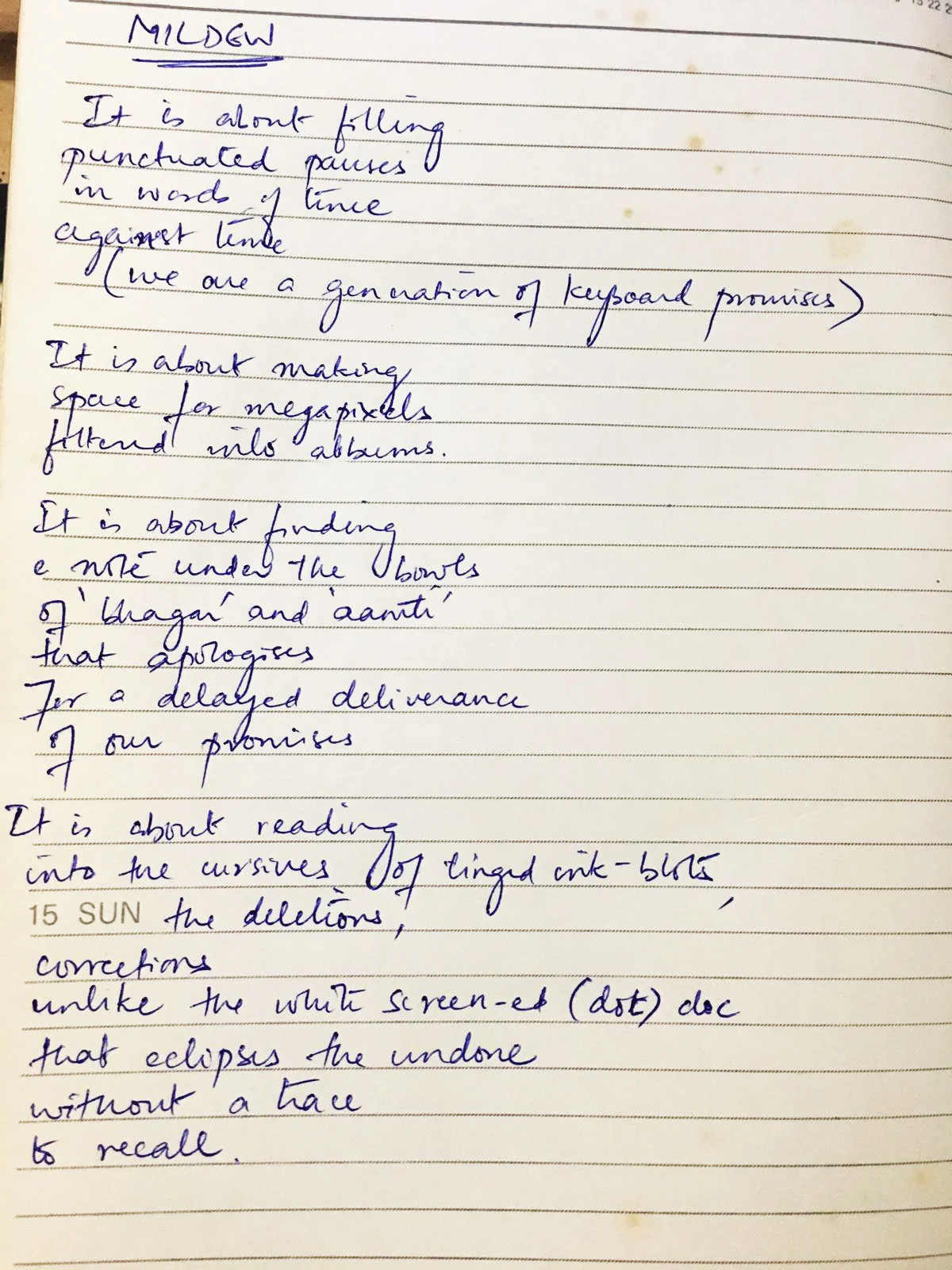








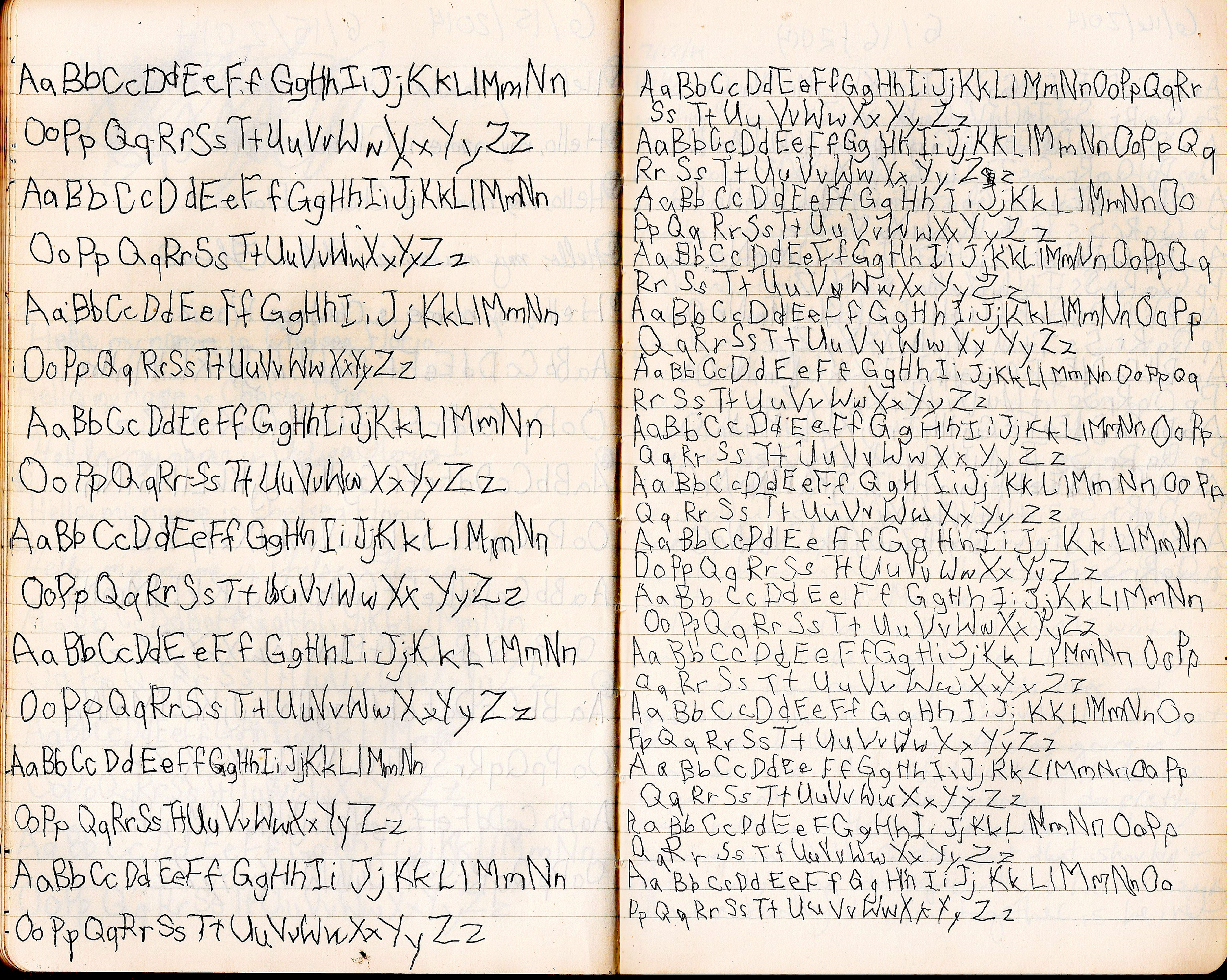
In this essay on deleted pasts and new beginnings, Aine Greaney takes us around the world in an old composition notebook: the only one she brought with her when she emigrated to America. With the start of the new year just behind us, we find this piece more timely than ever, as we revisit filled pages from the past, and look toward the blank ones of the future.

In this micro-reflection, Mary Fratesi finds delicate words for the most difficult of experiences: watching a loved one in pain. While this piece began as a pairing of two images, which has a fluency of its own, Mary takes us beneath the tree, and between the lines.

For author Karan Mahajan, handwriting is a necessity, a fact almost. He writes every first draft by hand, and while he encourages everyone to as well, he doesn't care if you do. But we do, so read this interview and hear his fearless take on how handwriting cancels self-criticism, as well as helps you avoid getting needlessly attached to language and doubling backward into revision before a story is complete.


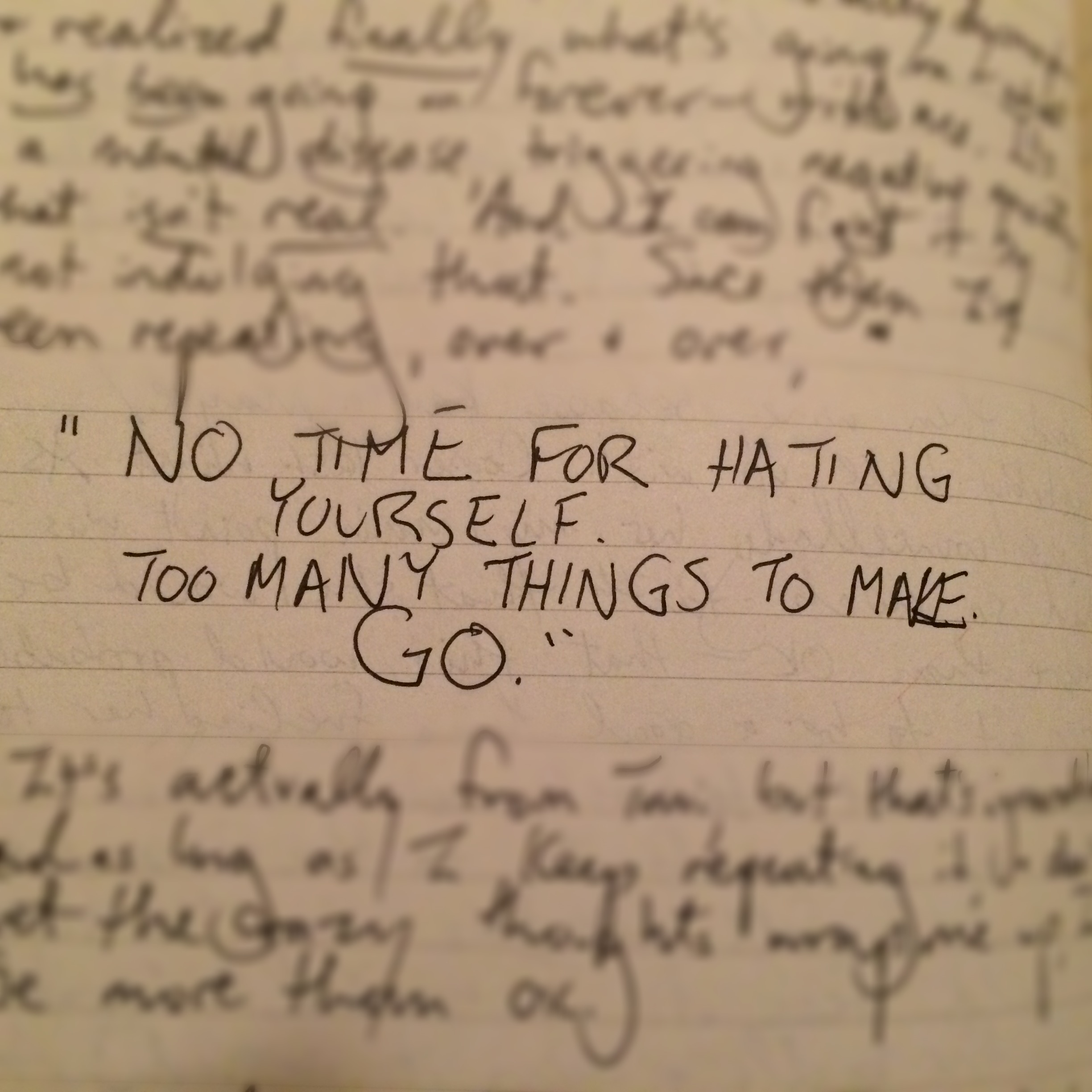


What happens when it's not just you, the writer, who struggles with the screen, but your characters? In this lyric essay, Tonianne Bellomo walks us through the negotiations she makes with her characters. What does she do to bring them to life? She builds them paper homes.


Poet and playwright John Reed takes us inside his head, where his sonnets start, but also on a bus, where his sonnets form, and finally, where they end up, scribbled onto a napkin. It's how he escapes doubt, and discovers form.


Publishing under a nom de plume, this rising novelist reflects on how writing the first draft of her erotic novella by hand led to all kinds of unforgettable feelings.
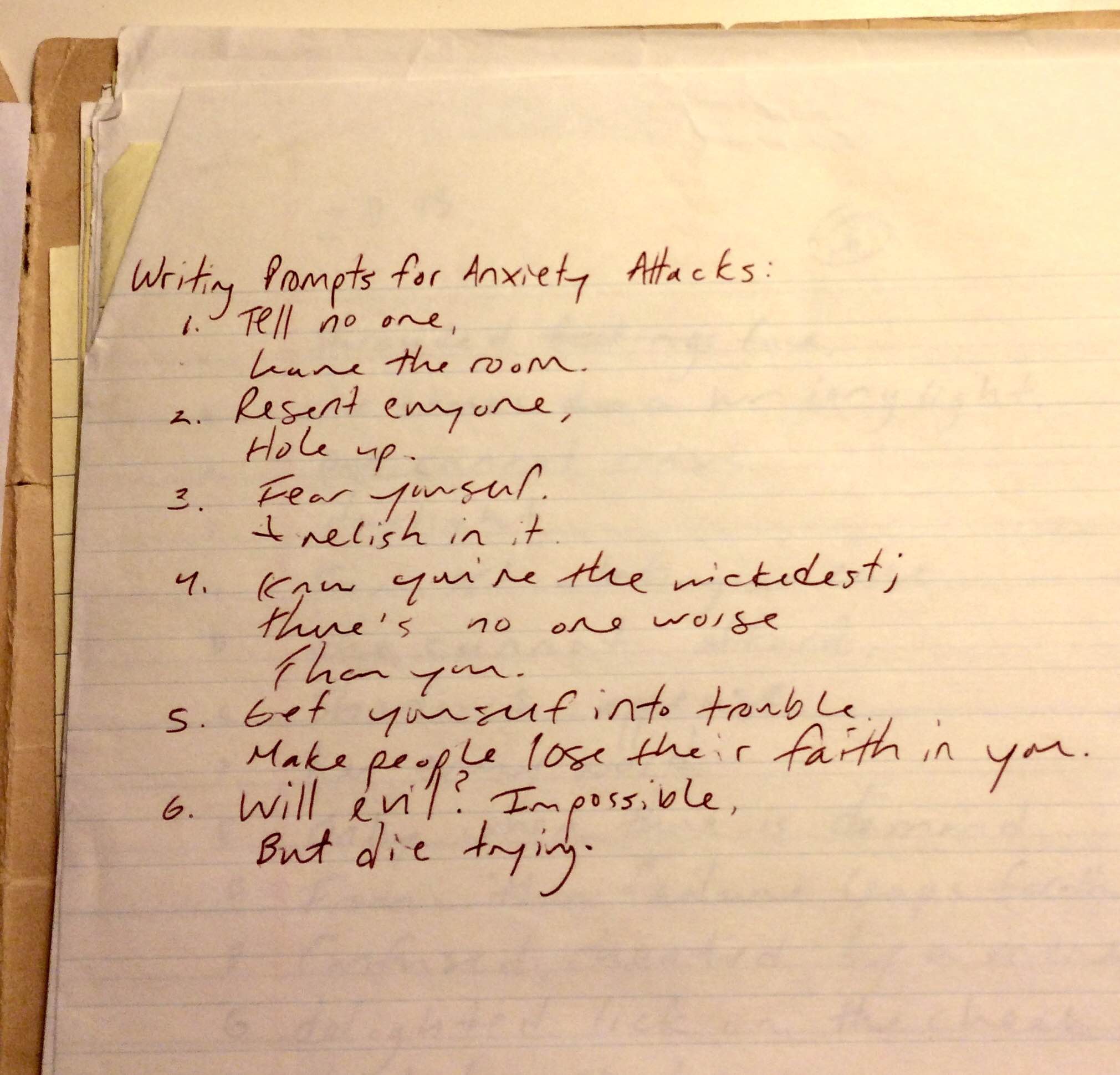

A letter from mother to son during World War II illustrates the tense and tender sides of war, and long-distance correspondence.

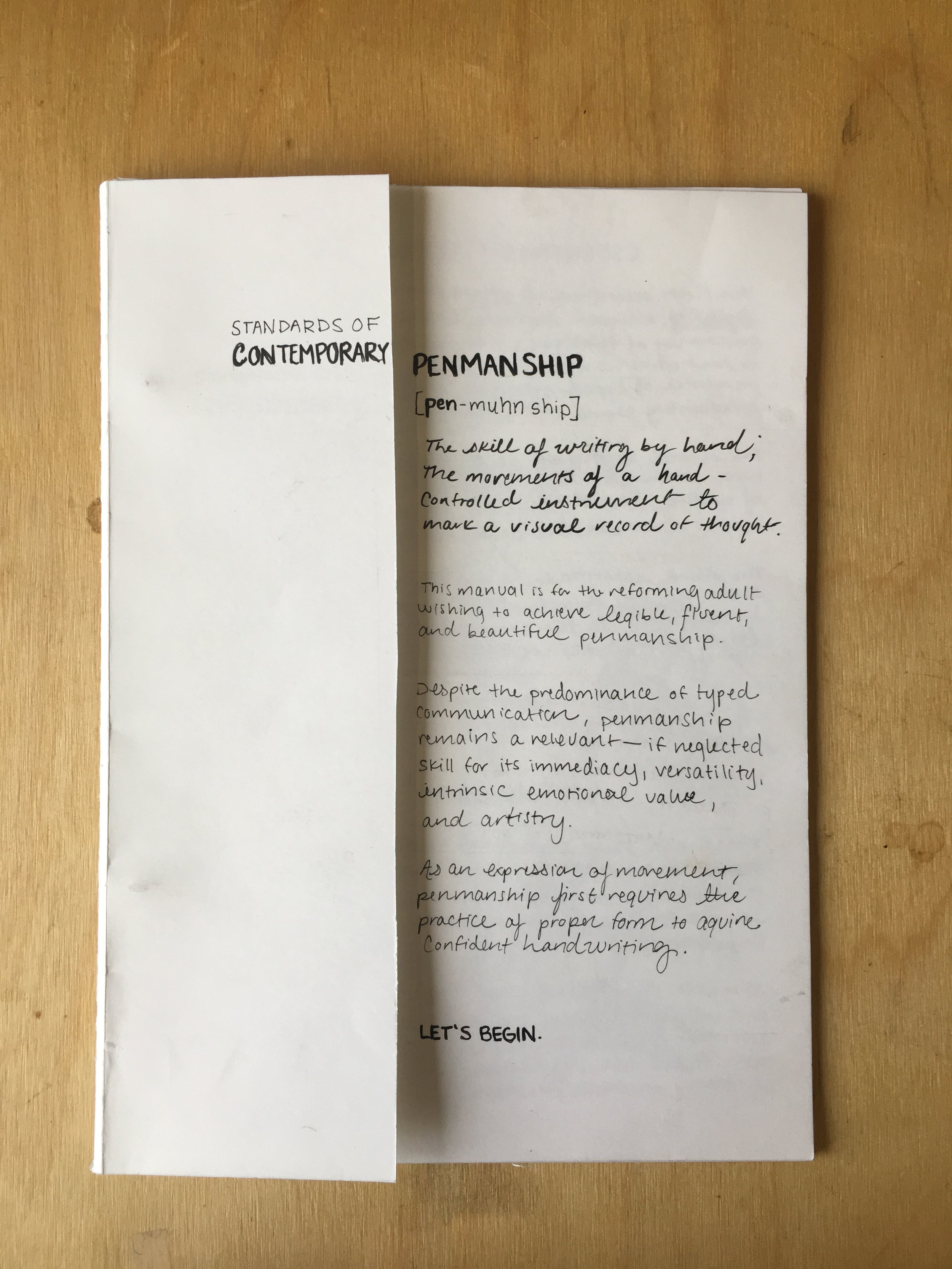

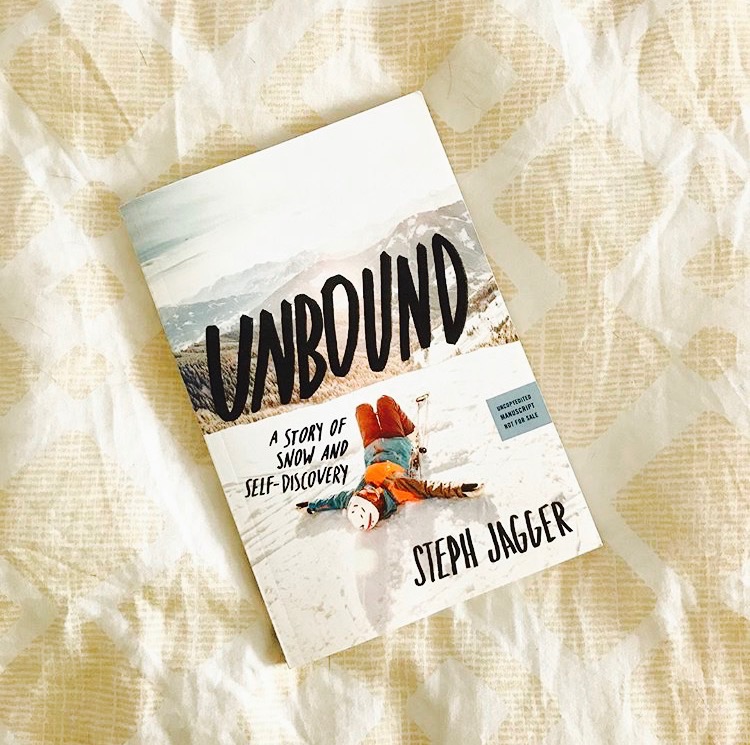

Kathleen Mangan, the Executive Director of the Lenore G. Tawney Foundation discusses the role of handwriting in Lenore Tawney’s daily life and in her artistic practice.

Helen A. Harrison, the Eugene V. and Clare E. Thaw Director of the Pollock-Krasner House and Study Center weighs in on the intersection between Jackson Pollock's art and handwriting.

"To the nineteenth-century mind, good penmanship and draftsmanship were seen as interrelated skills that reflected clarity of thought."


In this essay on deleted pasts and new beginnings, Aine Greaney takes us around the world in an old composition notebook: the only one she brought with her when she emigrated to America. With the start of the new year just behind us, we find this piece more timely than ever, as we revisit filled pages from the past, and look toward the blank ones of the future.

In this micro-reflection, Mary Fratesi finds delicate words for the most difficult of experiences: watching a loved one in pain. While this piece began as a pairing of two images, which has a fluency of its own, Mary takes us beneath the tree, and between the lines.

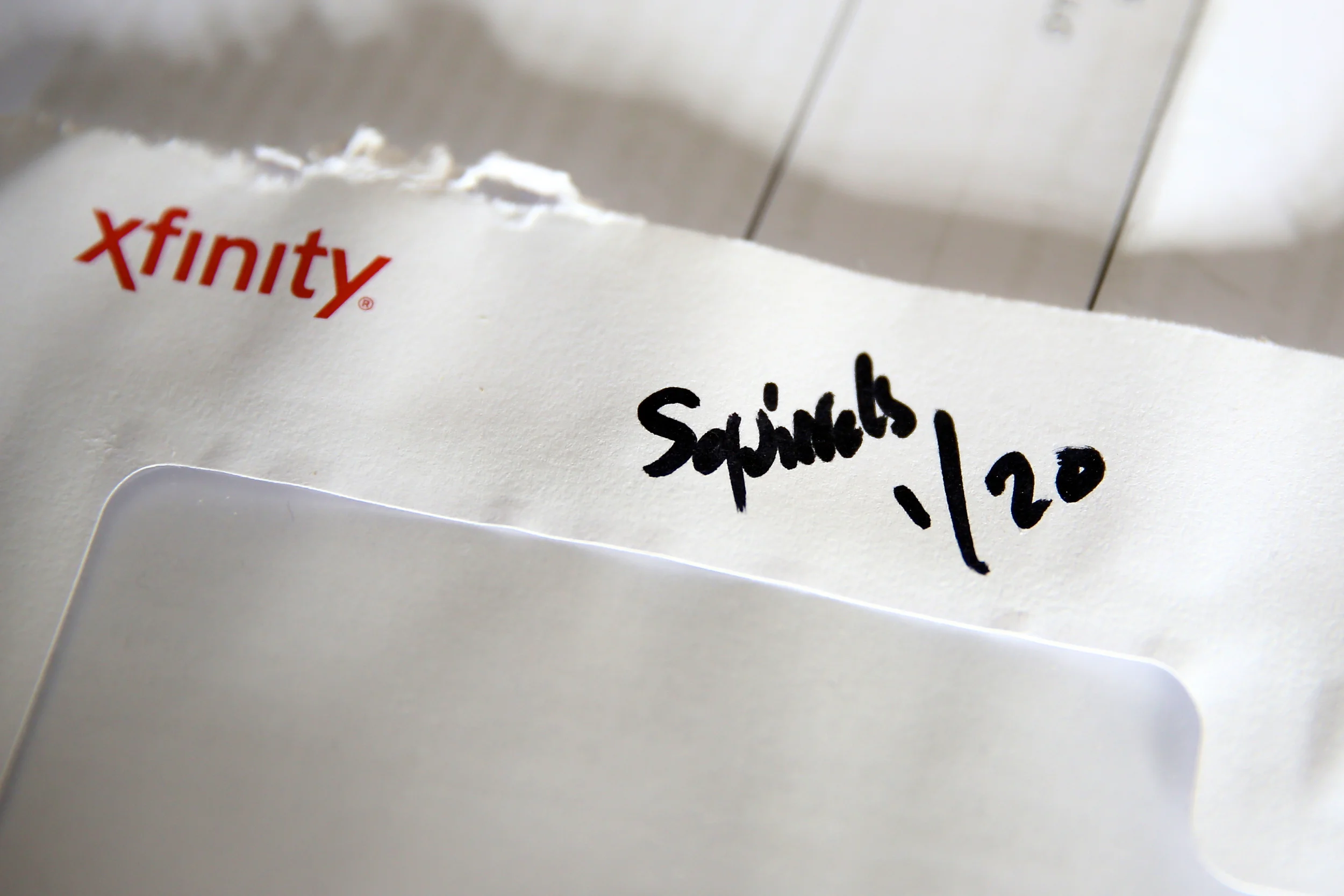

This micro-insight from Adrienne Harvitz reminds us of an important tradition: to create brand new ones. Ignoring the standard "To" and "From," Adrienne created gifts out of the paper wrapped around the presents for her children. Did most end up in the recycling bin? Sure, but one didn't.