Notes from My Soul in the Morning • Kate Hoyle
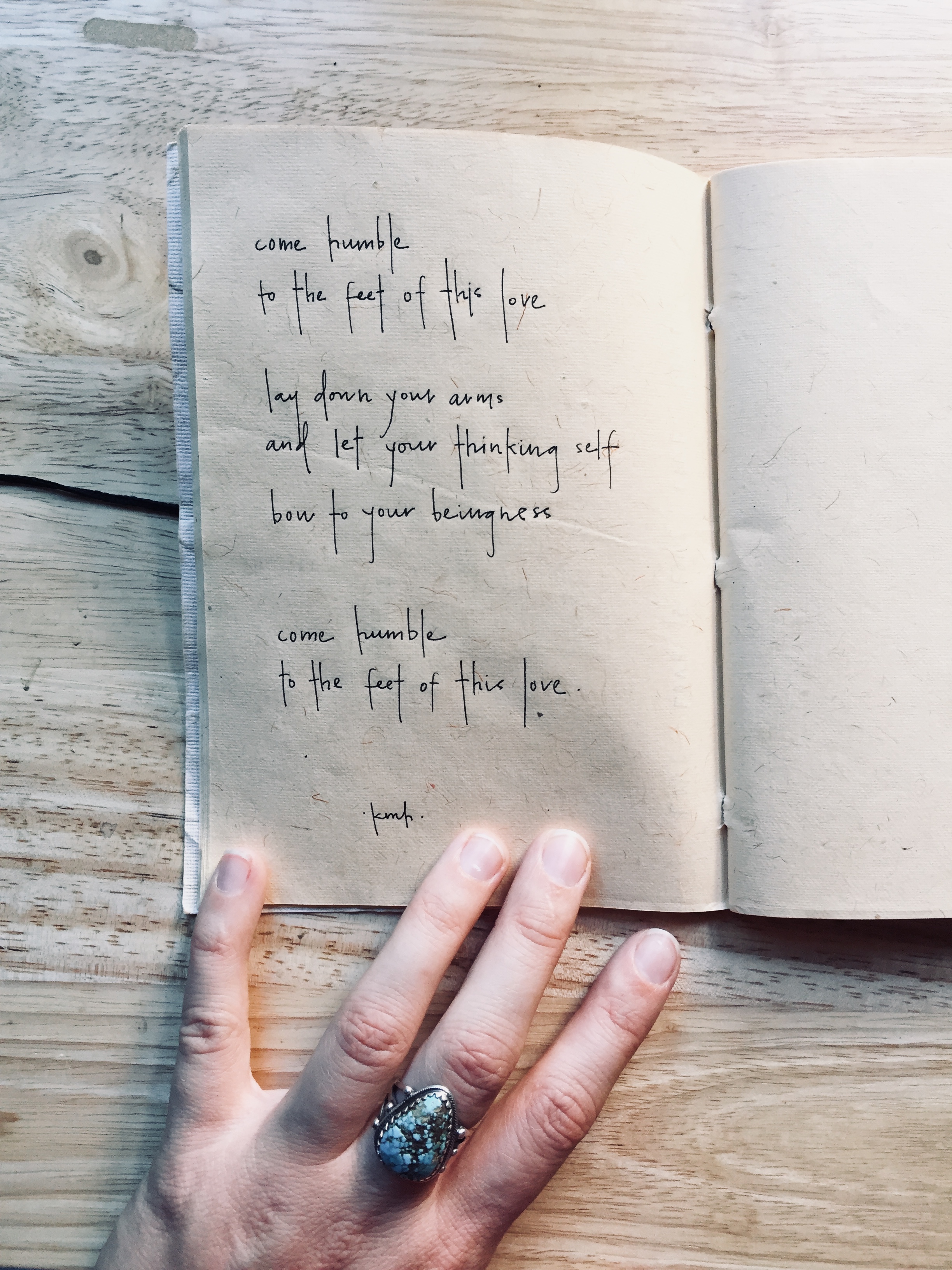


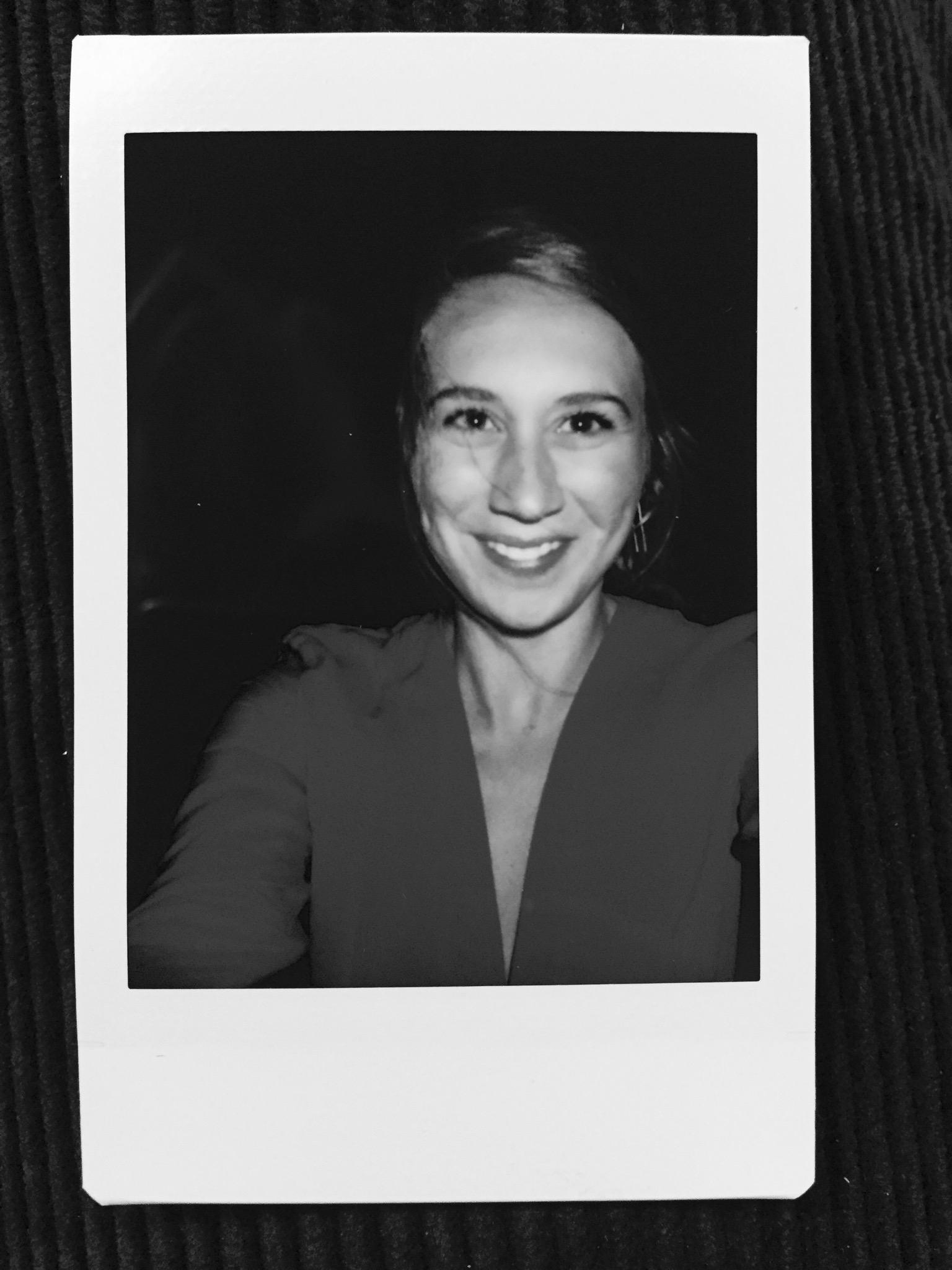
Kate Hoyle is a poet and visual artist from Moraga, California. Her work has been published in Tupelo Press 30/30 Project, The AUDACITY and Smokelong Quarterly. Her five poem series, On America, is currently touring the US and South America on exhibit in U2’s Joshua Tree World Tour. You can see more of her work at katehoyle.com
This is Where I Battle My Writing Demons • Sheila Lamb

BY SHEILA LAMB
The first draft always begins on paper with ink. Sometimes, the first handwritten words are a line, a sentence, a phrase. Sometimes, a scene. Usually, these words will not be in the final story. But they mark the magical moment where the story began.
I find ideas flow better from paper to pen. When I handwrite, I write fast. Inspiration can be elusive and I want to get the words on paper without disruption. There is a smooth connection from pen to hand, something that, for me, pencils don’t give. Computers certainly don’t. The pen is, literally, a fluid implement. I favor gel pens (a Pilot G-2). It’s part of the whole flow of words, from thought to paper. I’ll use pencils in a pinch, but graphite tends to smudge and fade. There’s also a rub as the pencil hits the page, a dryness, a physical sensation, that gives me the shivers – like fingernails on the chalkboard. Occasionally, there is the issue of broken lead and the search for a pencil sharpener. Pencils, despite their simplicity, have too many complications and they are not my utensil of choice.
Ballpoint pens are another option. They are easy to find, ten to a pack. However, they are my second choice. Words don’t glide from a ballpoint as they do from a gel pen. Like the pencil, the ballpoint ink to paper has a palpable feel that is off-putting to me. Ballpoint ink can be thick and gloopy, and sometimes leaves thick globules at the end of sentences. Although ballpoints are certainly preferable to computer keyboards, they don’t have the smoothness of a gel pen.
*
Writing by hand is second nature to me. Perhaps because I’ve handwritten stories since elementary school, when they gave us green penmanship paper with fat, chunky pencils. I’ve kept paper and pen journals since high school. It’s easier for me to reach for pen and paper than trudge to the laptop, wait for it to start, find the folder, open the file, and pray the program doesn’t freeze or mysteriously return me to last week’s temp file draft. All those layers of technology slow the inspiration, that spark of a new story or pivot within a plot.
For short stories, I write the entire first draft — or what I think is the entire draft at the time — on paper. Most of it begins in my bedside journals. My recent story, “Hunger, Not Tame,” began after a camping trip to Assateague. I journaled about our trip and the feral horses. I was infuriated with the tourists, who petted and fed potato chips to the horses on the beach.
That incident was the scene that stuck, and the one that gave way to story. I began to play on paper, shifting from my journal to a spiral notebook — last-day-of-school perks of the teaching trade — expanding the scene into a story, in longhand. I witnessed Kate, the main character, grow from this exploration: a park employee who confronted the people tossing Doritos at the horses. I write until I come to what feels like a stopping point — the end of a scene or section of dialogue. If I’m lucky, I’ll discover the final sentence here. Something in the shape of the words lets me know that this is it — this phrase where the story will end.
*
In writing by hand, I’ve discovered that this is where I battle my writing demons. For me, past defines the present, so as a writer, I struggle with back-story. Actually, I revel in it. I spend a lot of time figuring out how my character made her way to the start of the story. I tend to develop psychology before I develop plot. Why is the character there? What makes her do what she is doing? Writing those back-story details by hand is necessary for me to create the character. I’m fine knowing many of those initial, raw words won’t make it into the next draft. The process paints a picture, so I know who I’m dealing with as I place her in situations she’d rather not be in. The potato-chip tourists barely made it into the final draft. Even though they were the beginning, in the end, they were a brief, two-sentence presence. They were simply a starting point for Kate to explain why she was at Assateague and what motivated her work. The longhand process, I’ve discovered, is a sort of third-person, in-character, journaling.
*
My conflicts with electronic writing are three fold: First, my creative energy, that burst that inspires a new story, vanishes when I start writing on an electric document. All of the green and red warnings that highlight misspellings and incorrect punctuation are like blaring sirens, taking me out of the story. Instead of writing, I go back and correct. That delete key is dangerous. It can very quickly disappear a phrase that might not fit in that sentence, but a phrase I may want to use later. Second, as I develop and revise the story, I prefer the kinesthetic, hands-on process of physically writing (educational researchers are looking at the correlations between student success and handwriting but I’ll save that tangent for another time). Instead of scrolling through track changes, highlights, and text colors, I make side notes on paper with the pen, underline an idea I want to develop, remind myself to go back and find a synonym, with a circle and the abbreviation: syn. The handwritten notes make the ideas and revisions stick. Finally, I’m incredibly distracted by the Internet. Turn off the Wi-Fi, a lot of people say. Yet the Internet is a necessary evil because many stories require research. I researched the feral — not wild — horses of Assateague, their history, and the park regulations, but the pull of social media is powerful. It is so easy to go from the National Park Service site to Facebook, to Twitter, and pass another hour without actually finding anything of substance, just scrolling from one site to the next.
Eventually, the story needs to go electronic. For me, this is where revision takes place. I find digital typing is great for the editing phase. I transcribe the paper page word for word into Scrivener. Then, I’ll take a look at chronology, scenes, and plot development. I love the way I can add a new text page or section, and stay organized as I work. With this, I’m able to move scenes around and bridge the story together. In “Hunger, Not Tame,” I played a lot with Kate’s past and how much to include in the story, the back-story burden. It took several revisions to refine the central scene, where her past and present collide.
But after the digital jump, I’m back to paper and pen. I print out the revised draft and I read through the story on paper. I edit, make notes, read it aloud. I mark it up. There, it develops shape and structure. Those changes are made again on the typed draft. Then, there is another printed version for a final read-through. Last minute changes are made, with pen on the paper, and corrected again on the laptop.
Handwritten work takes time. My electronically-inclined friends claim I’m doubling my time on a story. You could have been done by now. But good storytelling shouldn’t be fast or easy, no matter the method. Writing stories is, for me, a hands-on process, an artistic process of creating a world, of creating a person, of creating a story. Writing by hand allows my creative magic to have its space.

The One Who Wrote Back • Jim Landwehr

BY JIM LANDWEHR
It was writing that brought us together.
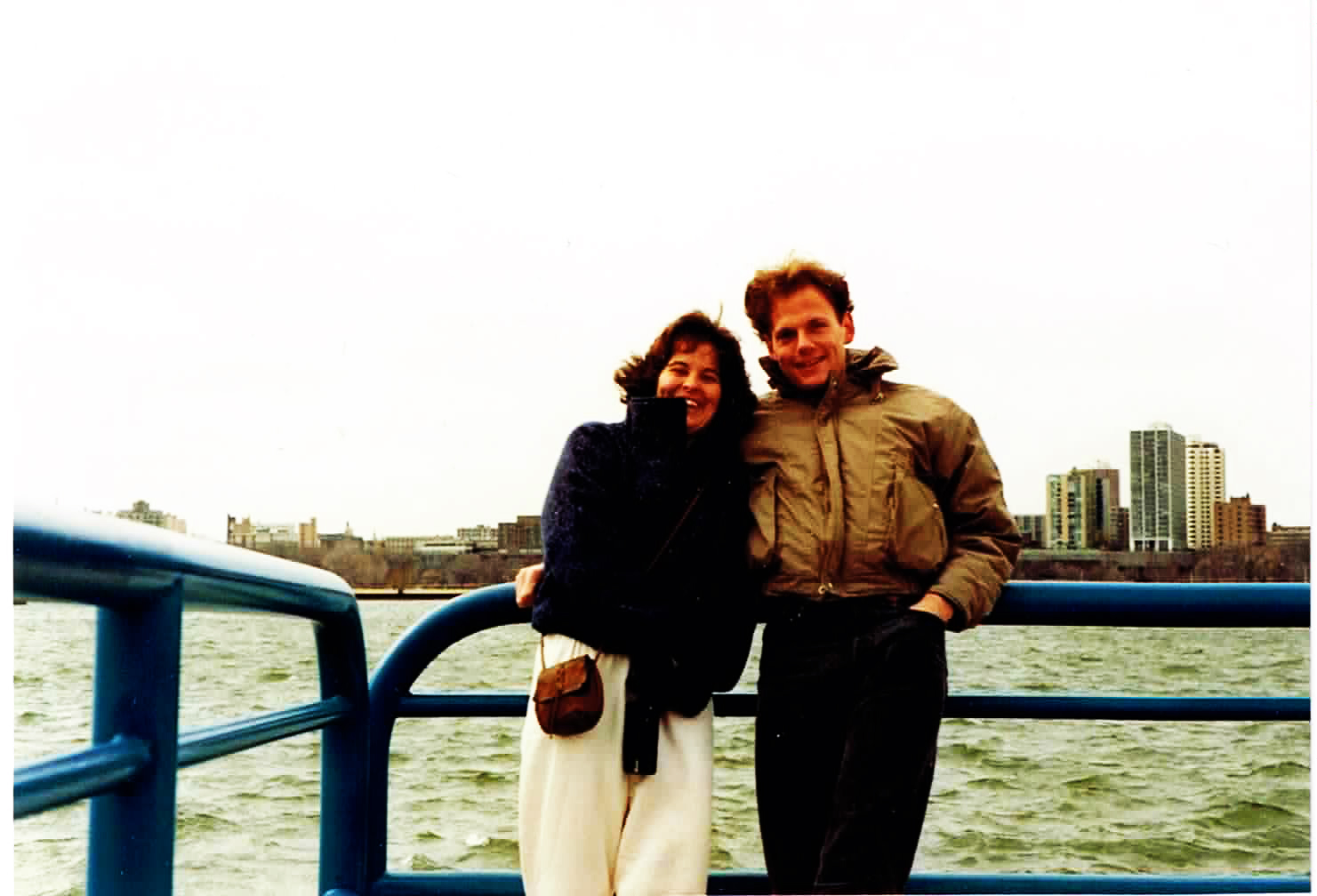
In 1986, I moved from my hometown of St. Paul Minnesota to Waukesha, Wisconsin just outside of Milwaukee for a new job. My brother Rob was also living away from home as a student in upstate New York. He and I wrote for a period of time and in one of his letters to me, he included letters from three of his female friends on his dorm floor. He’d told them I had just moved to Waukesha and didn’t really know anyone and that he thought it would brighten my spirits to receive some letters from them.
I don't remember exactly what each of the three had to say. Most of the letters were introductory in nature and seemed like honest attempts to be nice and cure me of my homesick loneliness. They were all away from their families as well, and we were all close in age, so had music, books and college life in common to talk about.
I was, of course, flattered that 3 women would take the time to write, so I wrote each of them individual letters back. Only one wrote back.
For a year and a half.
Donna and I became 20th century pen pals of sorts. This was before the age of e-mail, faxes, texting and Skype. Long distance calls were expensive. Postage for a letter was about a quarter.
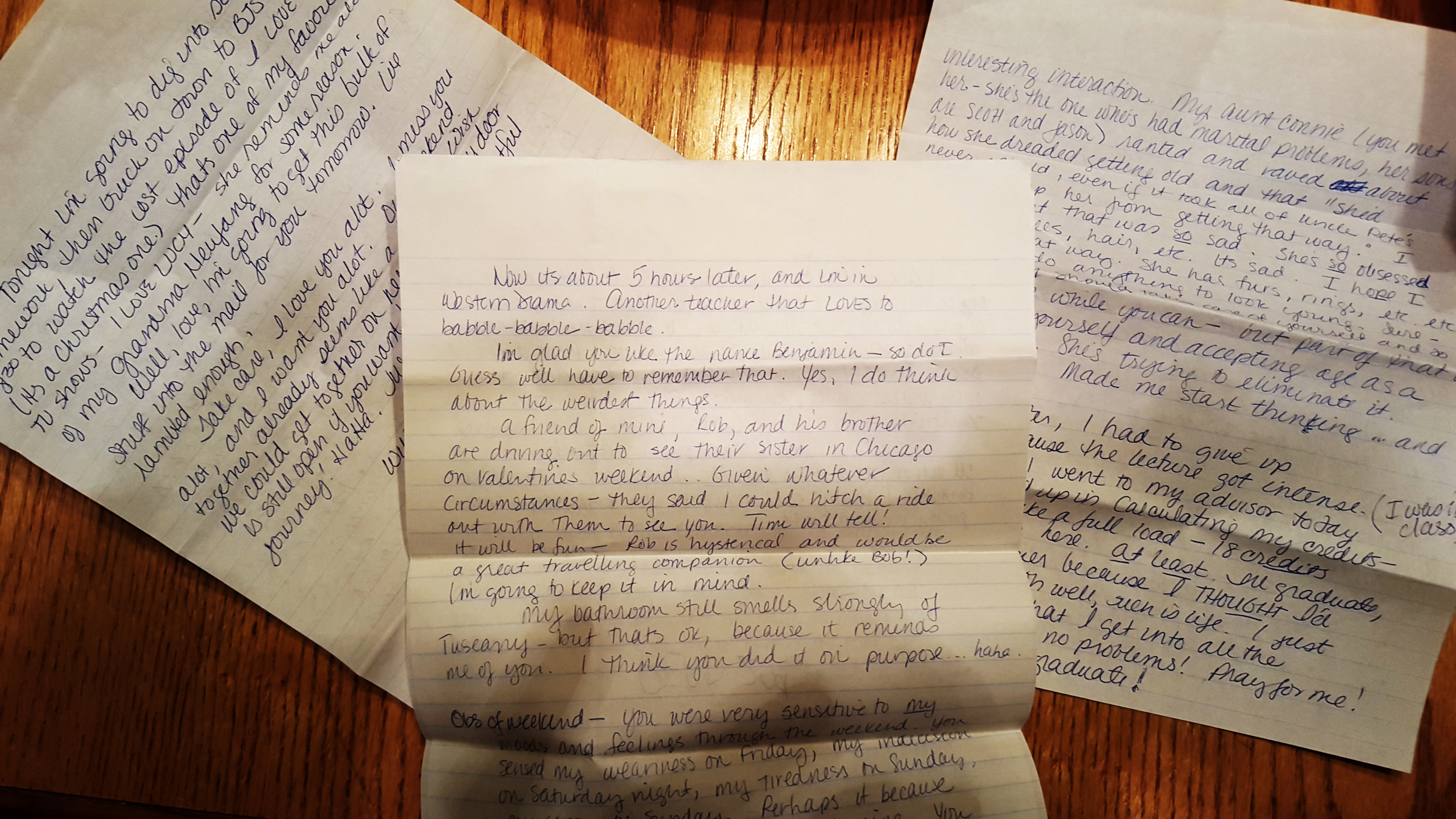
So we wrote, and we wrote, and we wrote. Short letters, long letters, letters about the trials of college and a new job, and roommates, and philosophy and religion, family, music, and books. We shared joys, concerns, doubts, beliefs and bad jokes. I sometimes took my writing to silly mediums like writing on napkins or the back of maps, just to keep it interesting. One of the things I recall her liking was my "Random Observations" which covered most subjects under the sun. Near the end of our writing things got a little spicier and flirtatious, neither of us knowing what the other would think, but daring to "go there" nonetheless.
Someone once said that writing is not a bad way to get to know someone – to become friends through writing before pursuing a relationship. I know it was true for me as it was sometimes easier to write things from the heart than it was to say them to someone I hardly knew.
Then one day she called. She said she was thinking about paying a visit and wondered what I'd think? I, of course, said I would love to see her. Both of us knew it would likely change our relationship forever.
And, man, did it ever.
I greeted her at the airport with a single red rose. We went to dinner at the Chancery and out to see the movie "Light Years" at the coolest theatre in Milwaukee, the Oriental. On the way home, "our song" came on the radio in the car, oddly enough, because it wasn't a big top 40 hit. When we got home we stayed up late and talked, and talked.

During the summer of 1989 she did an internship in Brookfield Wisconsin, which enabled us to try dating without five states between us. We were engaged that summer and married on June 16th, 1990. This past year we celebrated our twenty-fifth anniversary.

Looking back, it’s hard to say how this courtship would have played out in these modern times. Email, Skype and texting seem so impersonal compared to the anticipation of a letter from across the country. My wife saved every letter I sent her. In a fit of cleaning I threw most of hers out just before we were married. I managed to find a number from her that are post-engagement, but everything else is lost in the physical sense. What remains, are the memories and feelings of that time. I still cherish a handwritten letter from anyone. It is a lost art, one that we pursued with a passion so long ago. It’s my feeling that the emotional outpouring that goes into a letter is felt on the other end in a mystical way that is lost in an electronic medium.
I do know that it worked something special for us. To this day she says that my words were what attracted her to me. There must have been something in hers that drew me to her, as well.
It’s amazing what one simple letter can become.


Once A Writer, Now A Handwriter • Demetri Raftopoulos
A writer reflects on his first experience with a journal, which happened to coincide with living away for the first time as well, at the age of 26.

BY DEMETRI RAFTOPOULOS
I forgot my notebook.
It’s 5:30 in the morning and most of Thassos is still sleeping. The sun is hidden behind a couple moon colored clouds, just like the rest of the writing cohort behind their closed bedroom doors at Archodissa. I walk back past the kitchen and up the stairs towards the courtyard where the basil and oregano that is sprinkled into our dishes grows. A group of off-white stray cats lay spread out next to the garden. Their eyes are closed too.
I walk up to the balcony and reach my room. Clothes hanging to dry snap softly on a line extending the length of the balcony. I barge in and retrieve the small beige felt journal resting on my nightstand. My feet crunch against the sand I drag in from the beach every day, and close the door behind me, now ready to open my notebook on a boat that will sail through the Aegean.
Spending a month in Greece, that same notebook was next to me as much as bread was with tzatziki. With me at all times like uncertainty throughout the Greek government. Simple chance brought us together. A good friend gave it to me before leaving and if it wasn’t for him, I would have never clicked down on a pen. I would have never built another relationship alongside all the others formed around me with the clanking of glasses that month.
The notebook became my traveling companion. In a new environment, with new people, I felt safe with it. But I was also in constant need to protect it. So much so that instead of spending my last morning in Thassos on the beach, I sat at the restaurant and transcribed everything I had filled it with onto my laptop, in case something unfortunate occurred. I needed to know where it was always, the few times it wasn’t tucked into my back pocket or open in my hands. It was a friend that always gave, no matter how much I took and took and took.
I wasn’t a hand-writer. But in Greece, I became one.

The water looks dark, like the tip of a sharpened pencil. I grip the blue siding of the boat the way I grip my notebook. We move slowly, a pattern of tiny ripples follow us to the fishing trap Stamatis set last night, but the boat still rocks with the unsteadiness of the water. Stamatis is a fisherman, captain of the Evanthoula, and owner of Archodissa. He stands behind me clutching onto a small metallic wheel that sticks out from above the compartment like his worn-out overalls do over his blue polo. Greek music plays from a speaker next to the wheel and we pick up speed.
“S’Agapo pou eisai oreia,” Stamatis shouts, adjusting a strap falling off his shoulder. “I love you because you’re beautiful,” I repeat to myself, taking a seat on the ledge in front of him.
I wonder if he is singing to the sea, I write in my notebook. The swaying of the boat darts my pen upward and downward. Or if he is singing to his wife, Eva. The word ‘singing’ comes out the sloppiest but I can still read it. I use my thigh as a desk and rest the notebook right above my knee AKIMBO. It’s chilly this morning and the Aegean breeze whispers across my exposed head. I pull my hood up and continue writing.
This is his life: setting traps at night to pick them up in the morning. Sleep irrelevant. And whatever the sea offers him this morning, he will still be singing. Whatever the headlines say about his home’s economy, he will still be fishing.
I flip back to earlier pages in my notebook and admire how much I have already written only into the second week of this month-long writing residency. The pages are filled with sloppily written words as if I wrote them descending King Da Ka at Six Flags but my words are there, nonetheless, engraved into each sheet.
Light begins to creep out from behind the mountain to our left, as if rising like beer poured slowly into a mug.

Stamatis is still singing. His words hit me like the morning wind but stay and land on my page instead.
The captain continues to serenade his home, his sea. He knows these waters better than the fish that swim in them. The boat moves with ease and the music blasts louder. Stamatis is Thassos’ alarm clock. The snake charmer for the sun. The dry entertainment above for those living below. He could be trying to mask the harsh sound of the Evanthoula’s engine. Provide the sea with comfort instead of impending potential capture. Or he could just love the music his favorite singers produce. It could be his constant cheery nature. That he wishes to celebrate his life instead of worry about it.
I click the end of the pen and place it in my notebook’s crease so I can stand for the sunrise. I leave the notebook closed on the ledge and face the mountain, watching it give birth to the sun. The curved arc appears first and the morning already begins to warm. I remove my hood and look back toward the notebook, tempted, but keep my eyes focused on the slowly rising sun.
This will sound a bit silly but my notebook isn’t demanding or needy. Yes, I may write in it constantly but the notebook has also allowed me to live my life separately, away from it’s pages and soft jacket cover. To admire what’s around me alone, and then share the moment with it afterward. To truly capture a moment before putting my head down. Don’t get me wrong, I enjoy sharing. But I enjoy being able to experience something on my own first and then sharing it with others. With my notebook.
The sun is halfway through its entrance and I return to my ledge. I watch the day brighten a little more before opening the notebook again.

“Ti graphis?” Stamatis asks loudly, touching the brim of his blue hat, and then resumes his song. "What are you writing?"
I turn to face him. “Kati yia sena,” I tell him. He smiles and his graying goatie does too. "Something about you."
An orange buoy appears, softly twirling in the water like the final spins of a quarter. The engine and speaker both soften and the boat inches towards its marker.
Stamatis’ beard resembles my father’s, as does his work ethic. I’ve been to Greece before but it’s been seven years since I’ve experienced that sunrise from the blue of the Aegean. With someone like Stamatis, a patriotic man, doing all he can to keep his business and world afloat. The water doesn’t have a rank smell attached to it, like the beaches on Long Island. If anything, it smells like promise. Greece is constantly on display, shackled in the courtyard of Europe for everyone to poke at. It isn’t hidden like that which swims beneath us. Hopefully Stamati will reveal some of his hard work when he pulls up the trap.
In the past, I don’t know how I would have recorded all this. With my phone? Hope to remember as much of it with my fleeting memory? Fleeting, like my presence in Greece. It’s impossible to remember every detail but with this notebook at my side, I’ve been attempting to. Whatever I don’t remember or don’t see, I’ll write into my notebook the next time I’m here. And whatever I forget will be kept alive.
The orange buoy is now at arms reach and the boat slows even more. A couple of seagulls are awake now too, circling the boat for whatever we throw back, if anything. The sun is now completely over the mountain and shines on the rest of the waking Thassos. This is when Stamati will begin to reel in his trap and wait to see what he has caught.
“Re Demetri,” Stamatis says, turning the wheel slightly, “pigene na to piasis para kalo pedaki mou.”
The captain asks me to go pick up the buoy. An honor. He is asking me for assistance, someone who is simply learning in the presence of a master. Stamatis could do all this with one hand covering his eyes and the other flicking worry beads over his fingers. My assistance isn’t paramount to his trip because surely he does this alone. However, he has entrusted me in carrying out a duty that affects the well-being of his family.
I’m still tempted to stay seated and write. To witness something invaluable I could never see elsewhere and fill more pages. Write this scene of him picking up the traps. Write with detail the way each fish looks, how they move, and sound. Describe the definition of Stamatis' aging yet tone muscles flexing with each pull of the trap. How his blue shirt matches the water he’s pulling fish out of. How the mechanized pulley reeling in the trap sounds alongside the rest of the emptiness we are surrounded by.
Instead, I leave the next page blank. I close my notebook, stand, walk to the front of the boat, and reach for the buoy.