In Handwriting Bretty Rawson In Handwriting Bretty Rawson

I Gess That You Havft to Try Things Befor Your Scared of Them • Laura Buccieri at 8 Years Old

BY LAURA BUCCIERI

When I got braces and told my journal all about it.

Read More
Winter 2016, In Person Bretty Rawson Winter 2016, In Person Bretty Rawson

I Live Everyday With the Fear of My Observer's Shame • Ty Douglas

This interview capped off the month-long exhibition, Maybe U R Like Me, which connects people across borders of identification by establishing the possibility of a sameness, and similarity, that was otherwise unexpected. Here, we ask Ty about anonymity, privacy in public, and intimate encounters. If we could all think, "Maybe u r like me" this year, we'd be much better off.

saidyoudidnt.jpg

This interview capped off our month-long exhibition, Maybe U R Like Me, which featured a new image every single day. We were so excited when we first heard about this ongoing project by Ty Douglas. There is something magnetic about the images, but also the essence of the experiment: creating an exchange between two total strangers through a single sentence, and sentiment. Maybe U R Like Me connects people across borders of identification by establishing the possibility of a sameness, and similarity, that was otherwise unexpected. On each strip of paper is a confession of Ty's that he asks a passerby to draw from a bag. They vary in intimacy and seriousness, but are all relentlessly true. As Ty mentioned at the outset of the project, "We can dissolve fear by understanding that the things we don't commonly say are the things we have the most in common." To conclude the exhibition, we asked Ty a couple questions about the project, but also his sentiments about the then-recent events that took communities by the heart.

Handwritten: Your project is rooted in anonymity, and yet, it is deeply personal. You bring the private to the public, and this creates a powerful message. How did this pairing come about, and why is it important to you?

Ty Douglas: Honestly the idea came from the dark ether of last minute panic. I was signed up to be in a street art performance during Armory Week and I was planning on doing a live painting where I would make a poster that said "I am not afraid of you" whilst wearing a hot pink leotard and makeup. In my typical style I waited until the last minute to prepare and found myself without materials so I improvised something I thought would be fun and interesting. I had never had a single thought relating to Maybe U R Like Me specifically until the day of the show. It's funny how the pressure of time and procrastination is responsible for what I personally consider to be one of my best ideas yet.

Handwritten: In the wake of Orlando, the heart sinks. But as a society, we seem stuck in a continuous loop. How do you continue to rise after these incidents, and what can we do to interrupt this cycle of fear?

Douglas: It being so close to the incident, I'm not sure I have yet risen. The people lost in Orlando and the people who struggled with injuries were not just family members in my mind, they were/are me in a very direct way. The campaign slogan is "We are Orlando" and it's the first time one of those slogans has really hit a fundamental truth. We didn't lose 49 separate people that day, we lost 49 pieces of our own selves and I think I will be mourning them for a very long time and celebrating the medical victories of the survivors for just as long. Maybe U R Like Me, maybe u were killed by a broken person full of rage, maybe u survived. Maybe u will live more boldly and proudly in response.

Handwritten: It can be terrifying to put oneself in the public limelight. The internet can make easy targets of the visible. How comfortable are you in being seen, and have there been things that have changed how you approach your appearance, and appearing on stages or screens?

Douglass: This is a funny question because my online presence is very exposed and borderline obnoxious so people often get the impression that that's who I am, and even more, they get the impression that I'm free from fear. The truth really is that I live everyday with the fear of my observer's shame for me. I am ashamed of the shame other people hold for me for being who I am. Now of course the weight of this varies day to day but what I'd love for people to understand (maybe via this project) is that overcoming fear and shame isn't a matter of conquering, it's a matter of diligence, practice, and relating to the people around you. I don't believe in freedom of fear I just believe in consciousness.

Handwritten: Have there been any other recent events that have either inspired, or reminded, you to keep creating and connecting?

Douglas: I lived in Bed Stuy for maybe 3 months at the beginning of this year and was verbally harassed on the street quite a lot. I definitely don't have it as bad as others, but the fact that I couldn't feel safe once I walked out my door sparked the train of thought that I think led me to this idea. It's difficult to say that it wasn't personal because as a person...it feels personal, but I think ultimately the people who shouted things at me were harboring more pain in themselves than they were projecting at me so I forgive them and wish them well. But I did move.

Handwritten: What is one thing you hope Maybe U R Like makes people feel, think, or do?

Douglas: I'm not really sure to be honest. I think what I'm always looking for as an artist is just to connect with the people in front of me. There's a whole aspect that I haven't really revealed to anyone yet and that is the satisfaction of the hand to hand exchange of this. There is such a power in sharing confessions with strangers and having them recognize you by it. It's extremely vulnerable and it makes me nervous, but it's as intimate as real and true romance. So I suppose in a lot of ways it's a very selfish project.

Handwritten: At the end of this month-long exhibition, how will Maybe U R Like me continue? 

Douglas: I'd love to continue it in it's very raw form. Appearing in public places and interacting with strangers. There has been a performative aspect of it on the Say Yes stage (find Say Yes Electric Collective on facebook) where I laid out big papers with the prompts "Living in New York is..." and "Being Queer is..." at the top and all the guests were invited to write their answers on the page. Other similar iterations of it will emerge I'm sure, but it's not a project that I feel needs a lot more to be effective so I will just give it my time and continue to put it on Instagram until the next wave comes. I will say though I am looking for a partner who is maybe interested in doing the photo and video documentation in a long term way so if any of you beauties out there are interested please email me at tydouglasart@gmail.com.

A special thanks as well to all of the strangers out there who's eyes met mine with understanding after picking their confession. That brief moment of real human intimacy means more to me that I would have ever predicted.

To see the full exhibit, click here.

Read More
On Handwriting Bretty Rawson On Handwriting Bretty Rawson

The United States Postal Service Squares off with a Squirrel, and Loses Hard.
BY BRETT RAWSON

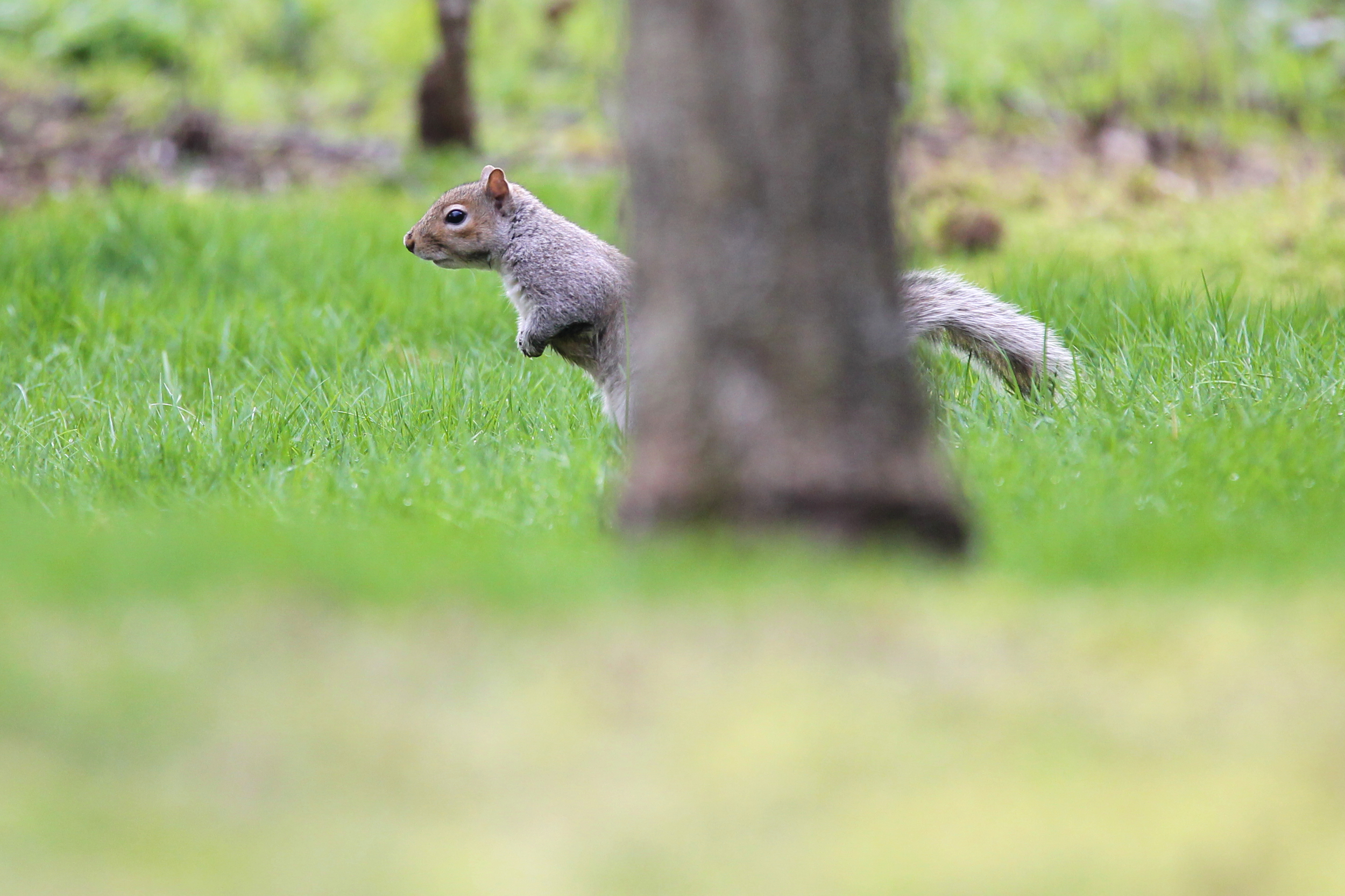
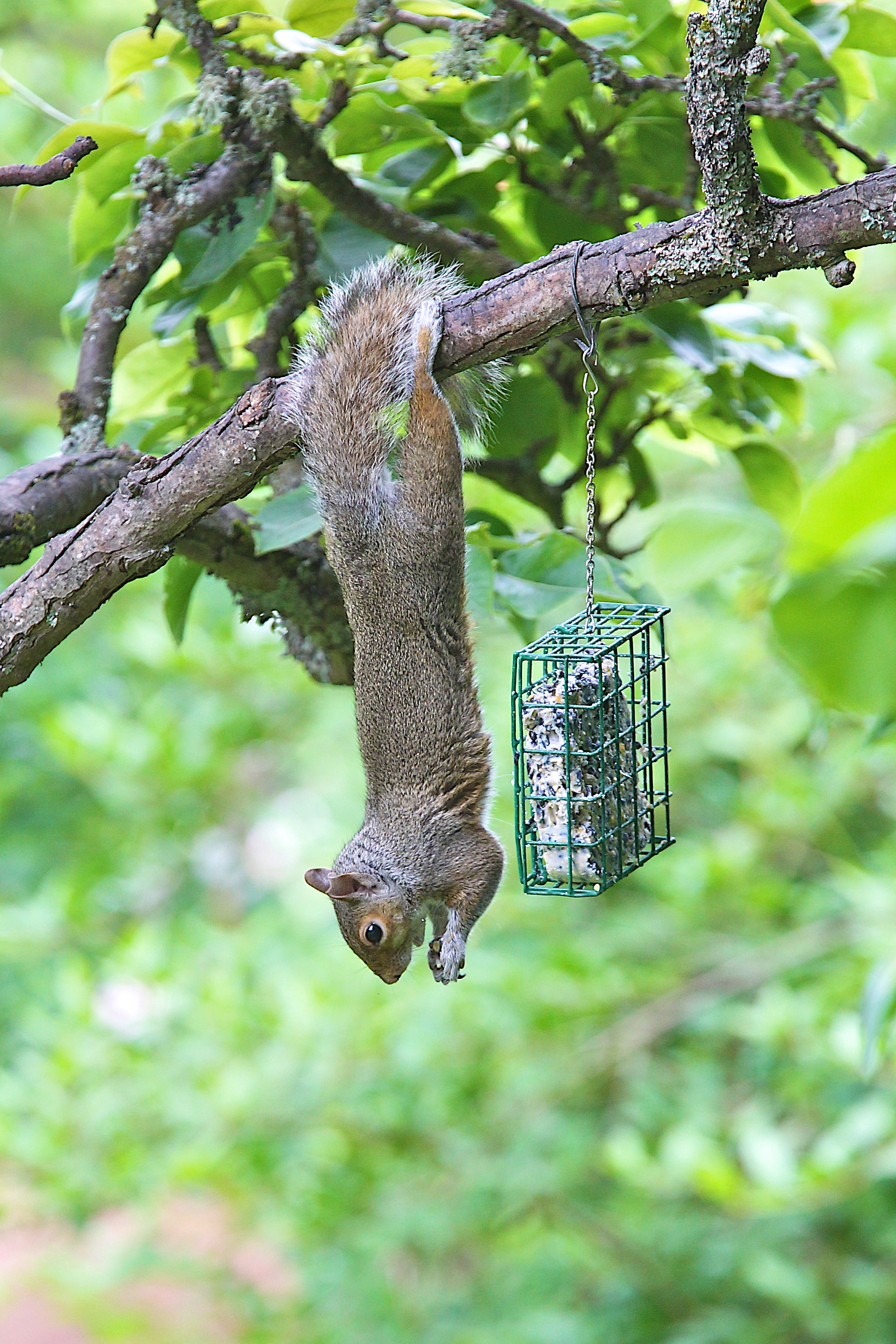
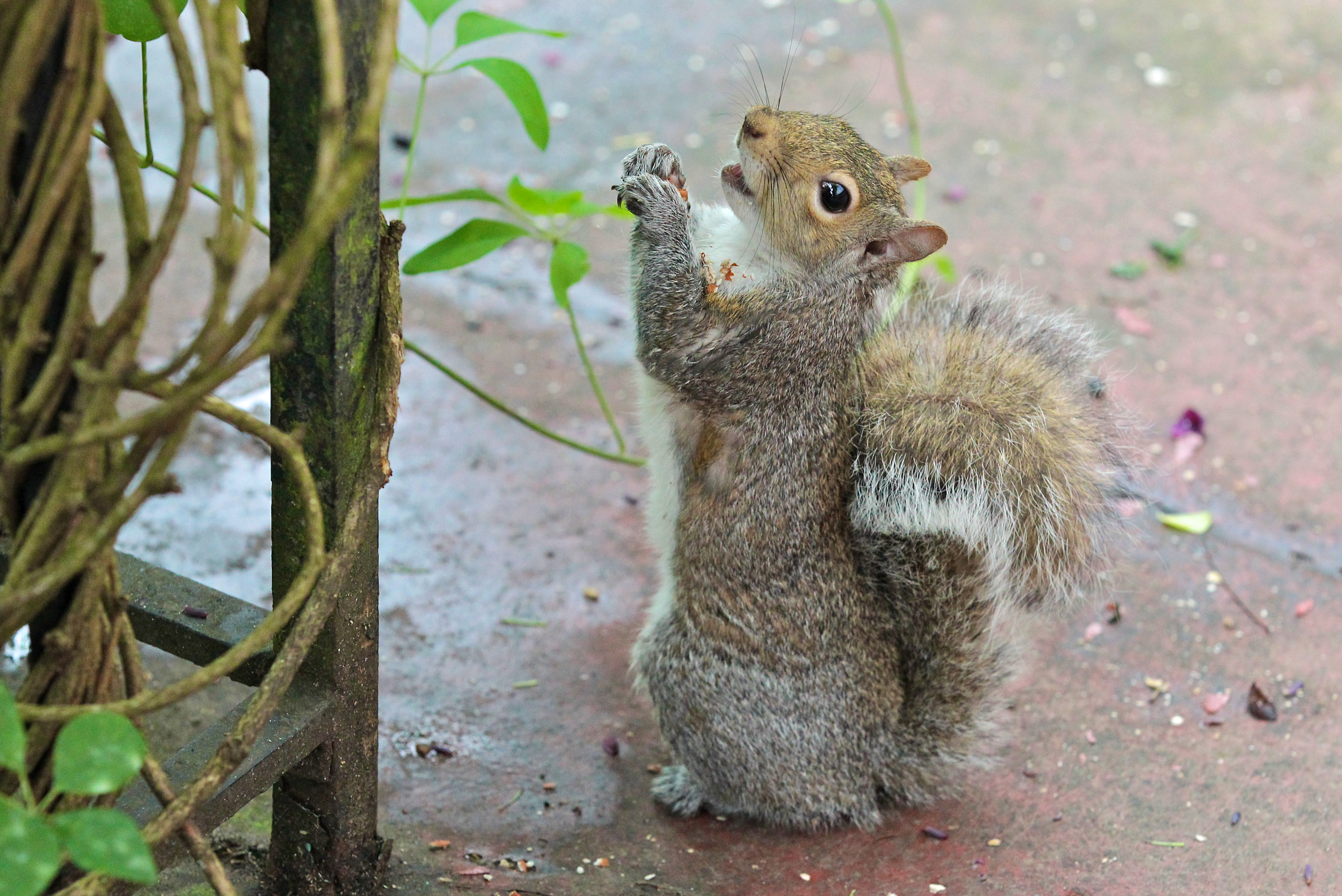
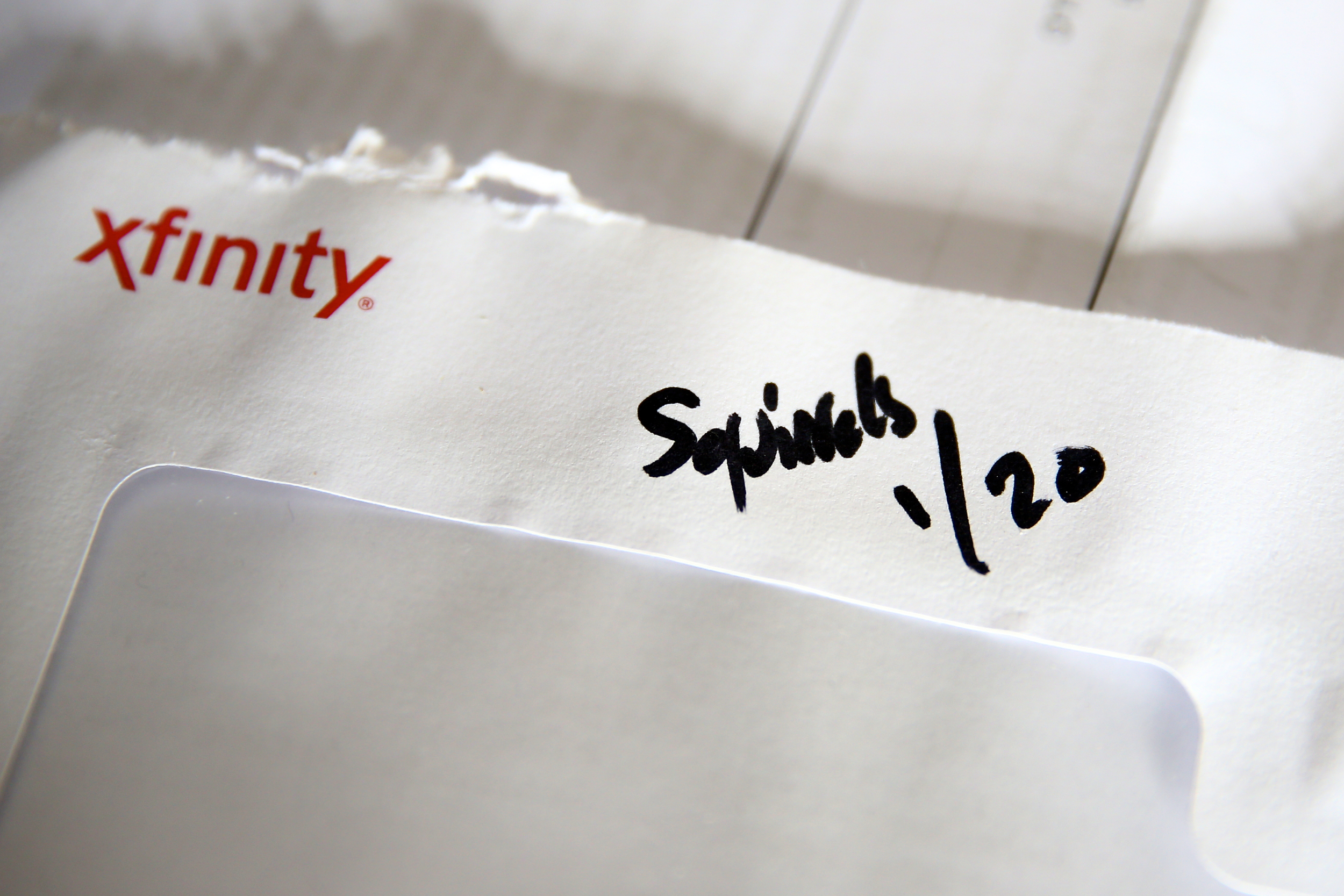
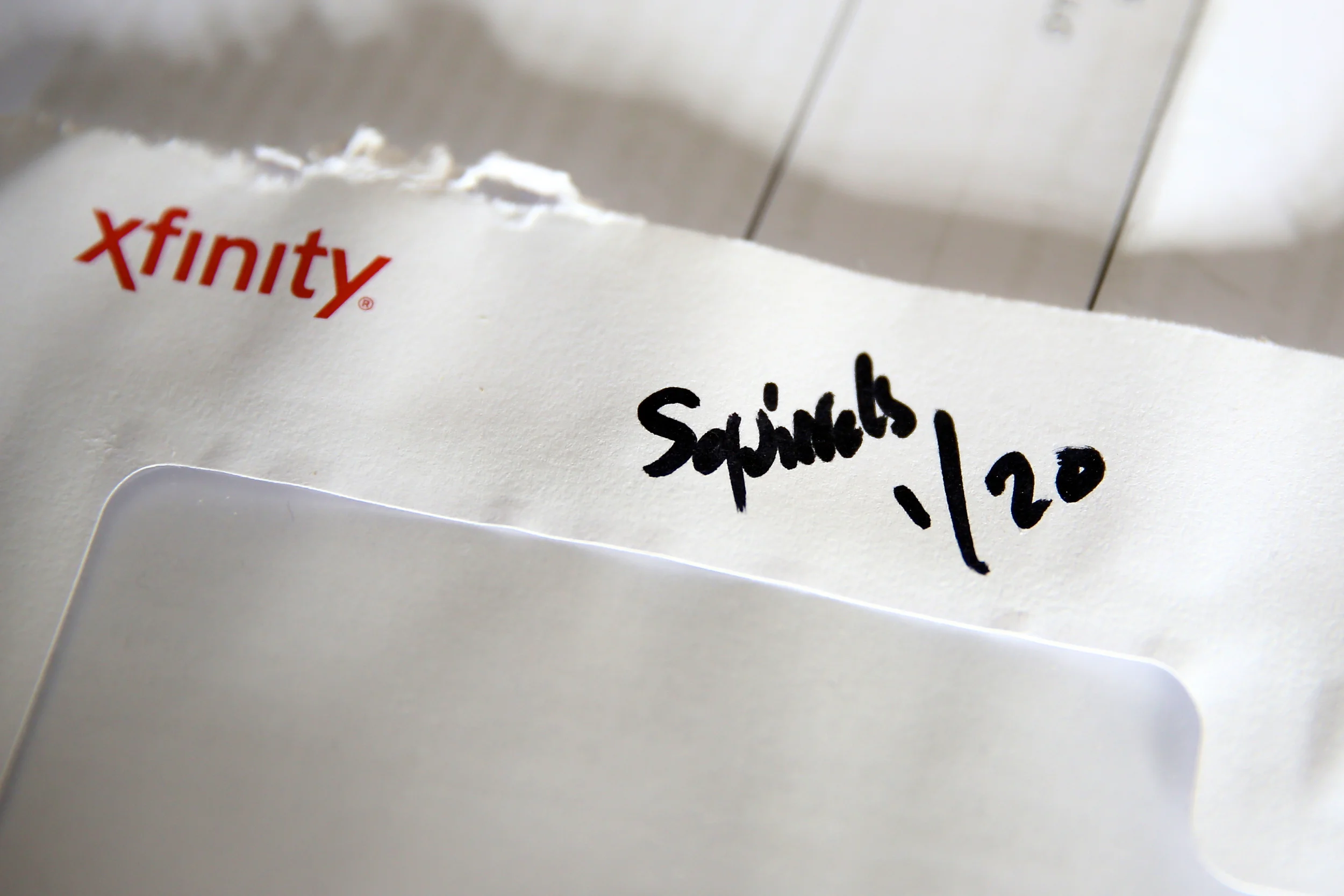
On January 20th, a mailman tried to deliver a piece of mail to an ordinary home. It was the XFINITY envelope you see above. Urgent, we can only imagine. But when the mailman reached the property, he approached a problem: the house was guarded by squirrels. How many, we'll never know, but there were enough. That much is clear. The mailman left the premises promptly, likely by sprint, and much later, he penned the reason for, and date of, undelivery: Squirrels, 1/20. Days later, the mailman returned, the squirrels were gone, and the bill was delivered.

The story could end there, but thankfully, it doesn't. The envelope was addressed to Glenn Tachiyama, an (ultra marathon) trail runner and (adventure) photographer. Glenn's images combine these passions with symmetry, capturing bodies in motion. But he also takes tons of pictures of squirrels.

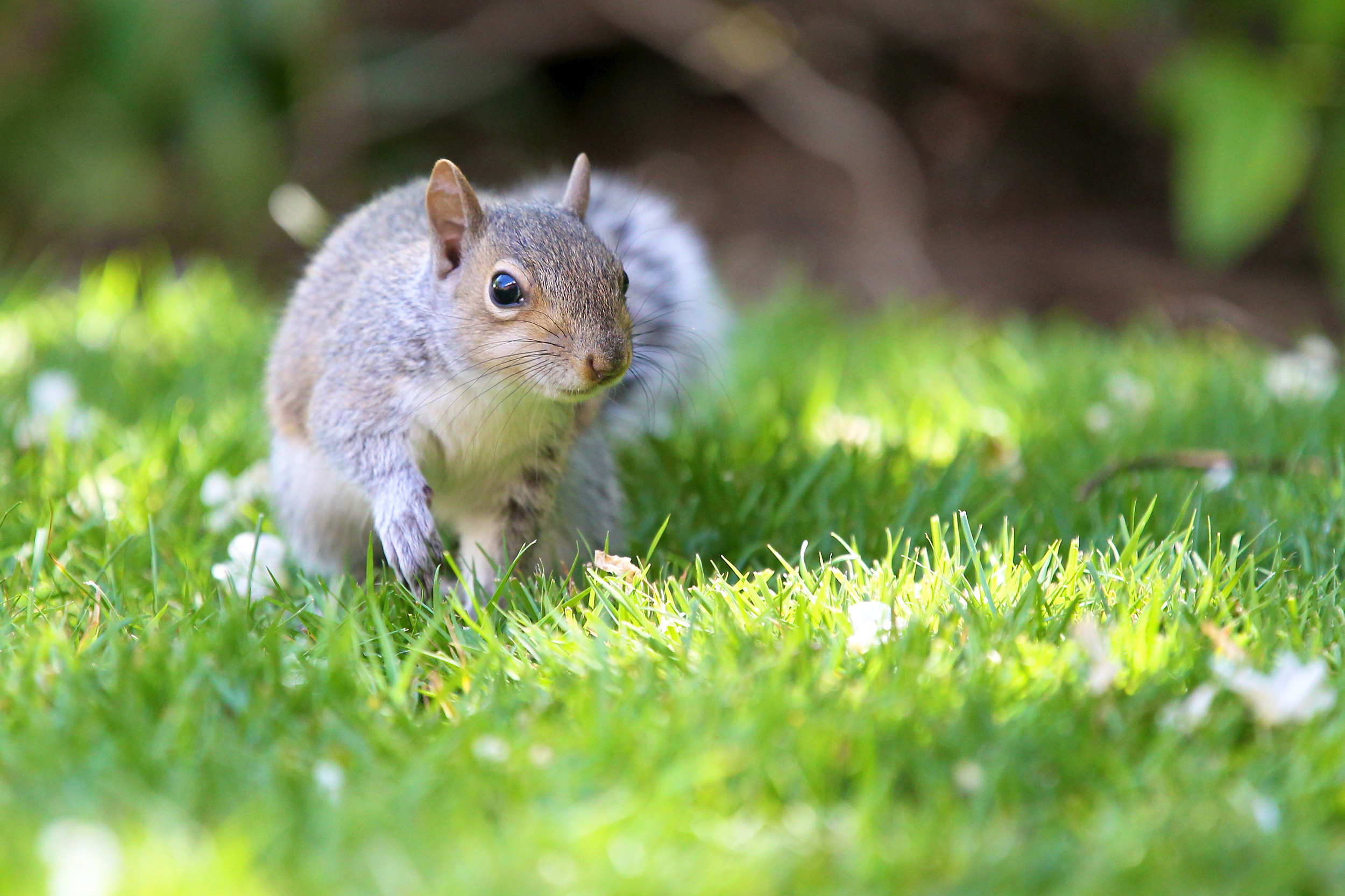
It's a hobby of his: snapping photos of these shadow-seeking, nut-lovers. We've liked every single one we've seen on Instagram: those little concrete-colored cuties frolicking through meadows, the quasi-confused fuzzy rats nibbling on round shards of asphalt, and the small puff-balls plumping up before winter. You could be thinking that all of this was just some freak accident: that a mailman who just happened to be afraid of small furry things arrived to a residence with more than a normal amount of them. But plot-twist: January 21st just so happened to be Squirrel Appreciation Day. So now, like The Usual Suspects, your mind is going back through the clues.

It was all there: the day the mail was delivered, hundreds of squirrels darting around the lawn, unable to contain their appreciation for each other, gathered together for the annual celebration around none other than the home of Glenn Tachiyama, famous photographer and lover, or should we say leader, of squirrels. Is it that far-fetched to wonder whether the squirrels were just prepping for the photo-shoot of their lifetime? 

Obviously, we here at Handwritten lost our marbles. We reached out to Glenn. "Glenn, that squirrel picture is hilarious," we wrote. "What if," we said cutting to the chase, "you sent us 4 - 5 of your fave squirrel images, and we put that in the context of this story?" Glenn replied. "As long as I don't have to write much," he wrote. "Not at all," we responded, "it'll be a visual story."

And so, with permission to use Glenn's images, but without his permission to tell a completely fictional tale, we present to you, on this pseudo-gloomy Monday, the untrue story of the mailman and the squirrel, handwritten by us, of course.

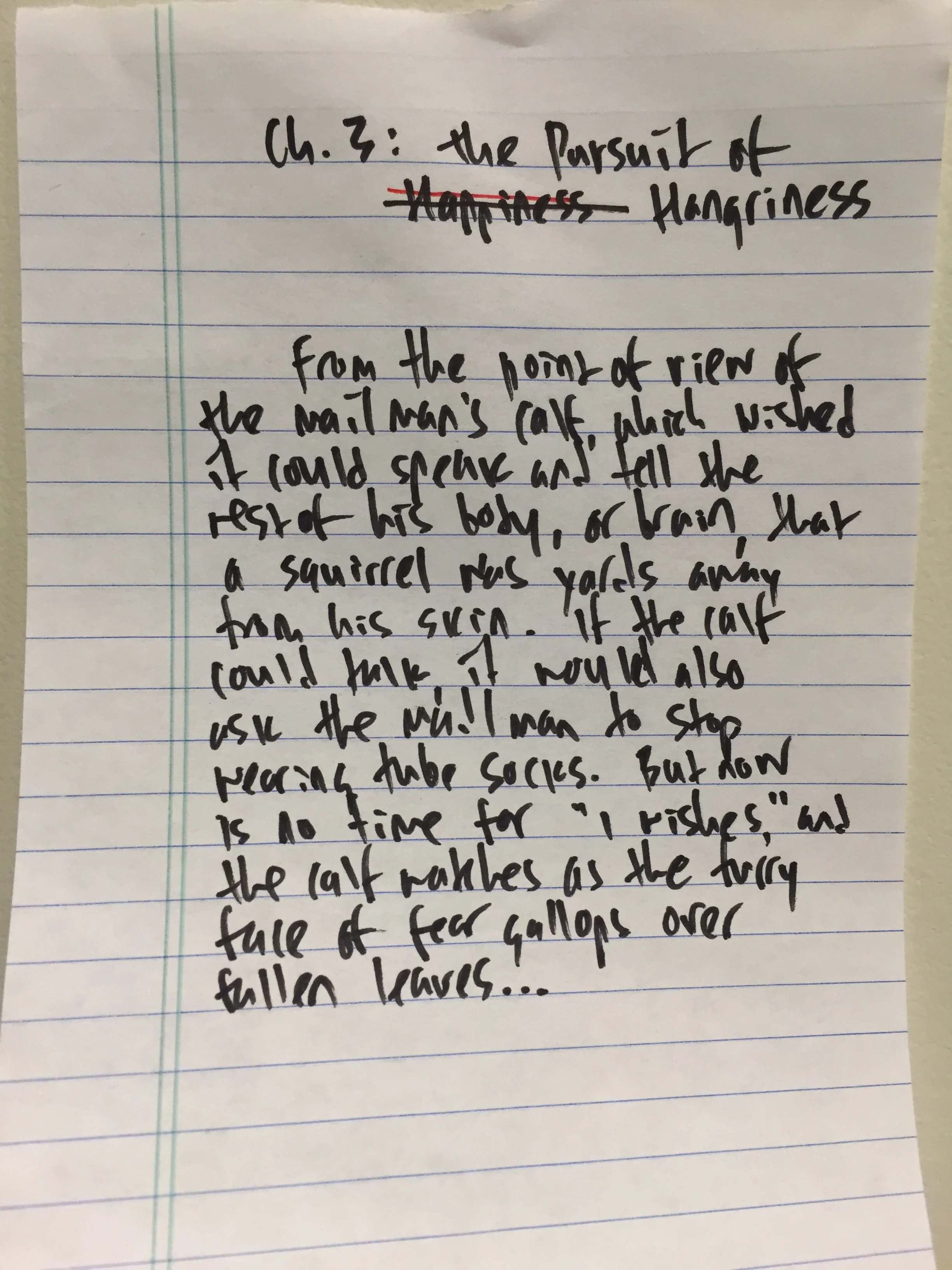
THE HANGRY SQUIRREL
handwritten by Handwritten
illustrations by Glenn Tachiyama 
Read More
On Handwriting Bretty Rawson On Handwriting Bretty Rawson

No Writer Should Live in Fear • Justin Sherwood

The instagram does not exist. In it, a patch of white-gray sidewalk frames a loose circle of dead leaves. In the top left corner, the curb of the road. At the center, yellow graffiti. The graffiti is a crooked arrow pointing into open space, and next to it the words FAG PARKING. You can tell from the way that FAG is scrawled the graffiti first marked something else, that when the text was painted it wasn’t graffiti at all. There are other signs nearby: a pink flag, some white tubing. But there it is, revised: FAG PARKING.


No writer should live in fear

A photo posted by Justin Sherwood (@justin.sherwood) on


I came across the parking space on a run. On shorter runs, anywhere from 30 minutes to an hour, I perform the same loop. I run from my apartment on Ditmars Boulevard to the northernmost avenue in Astoria, then west to Astoria Park, around the park, back to the avenue, and home. I’ve run the avenue hundreds of times. And then this drab, fall day, as I near the top of the hill that marks its middle, I find the inscription. I must have been sensitive that day. The sky was clear and pale, the wind was calm; I’m full of pride, I’m well adjusted. And yet. FAG PARKING. I feel that hot and unmistakable pang: shame.

And then I think, let this be funny. I’ll capture the image and say, “If you’ve ever tried to find parking in Astoria, you know how considerate this is.” The day passes and I go for another run. As I crest the hill, I keep my eyes peeled for the graffiti. I must have missed it—I’ve passed the place I know it to be. I’m nearly in the park and there’s no sign. I make a small circle, run back up the hill, nothing.  I stop at the top to catch my breath. Another sideways glance, then down. 

Justin.jpg

Justin Sherwood's poems and essays have appeared in Women's Studies Quarterly (WSQ), New Criticals, H_NGM_N, and The Poetry Project Newsletter, among other places. He's also a contributor to Scout: Poetry in Review. He teaches at The New School, where he received his MFA in Creative Writing. Find him on Twitter @JustinSherwood

Read More