
Mrs. Cubbard’s Raisin-Stuffed Cookies • Marie Simmons

Note from curator Rozanne Gold: Marie is a trove of handwritten recipes and stories. An award-winning cookbook author and food writer, Marie Simmons wrote Bon Appetit’s “Cooking for Health” column for many years, and is the author of more than 20 cookbooks, including the wildly popular 365 Ways to Make Pasta, The Good Egg, and Lighter Quicker Better. Marie, a self-proclaimed story teller, is alight with thoughts of her mother and grandmother. She says, “These two family cooks taught me how important it is to make sure everyone has something good to eat. I hear their words, and I do the same.”

Mrs. Cubbard’s Raisin-Stuffed Cookies by Marie Simmons
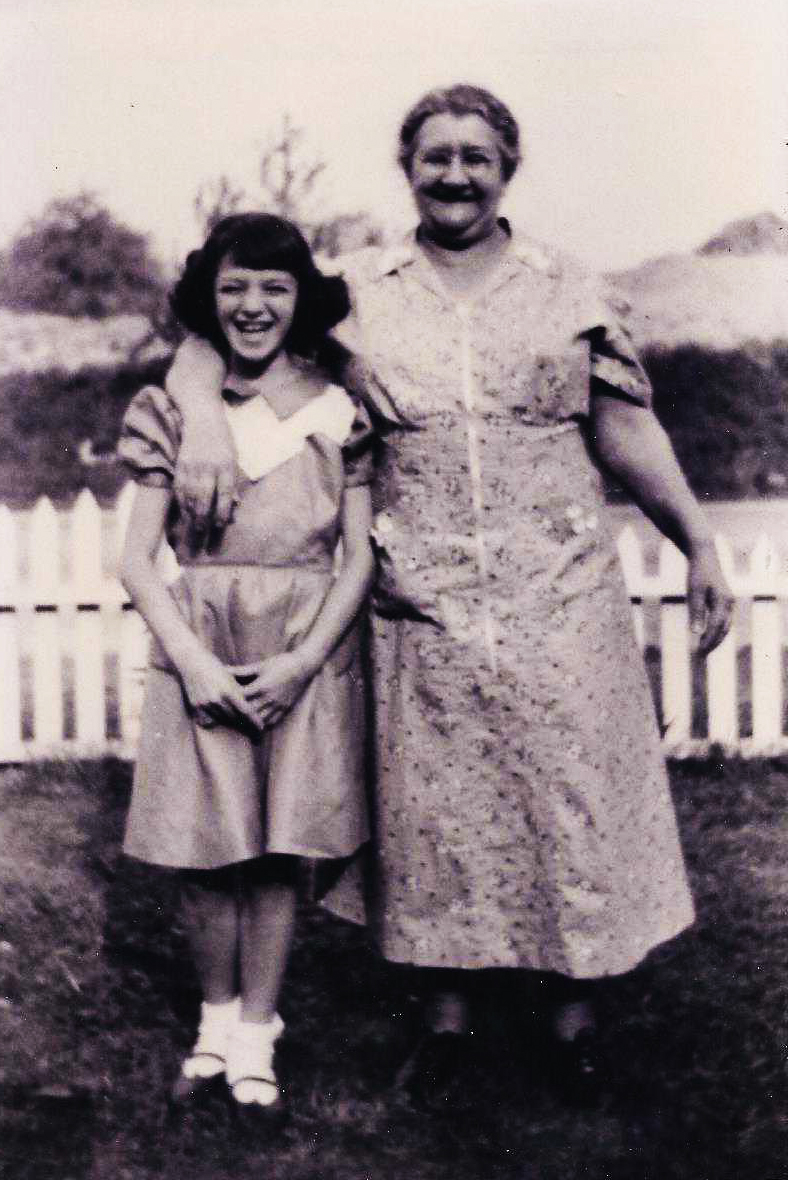
Some children have play dates with friends. My play dates were with my grandmother Nana and we had them every Saturday morning. We made stuffed cookies from a recipe from a lady, whom I can’t quite visual anymore, by the name of Mrs. Cubbard. She was a neighbor who had a boarding house and Nana helped her in the kitchen.
Nana and I needed to keep her large dark-blue canning pot filled to the brim with Mrs. Cubbard’s signature cookies. You never knew when someone might stop by for coffee or iced tea or a glass of cold milk. What a smile it would bring to her face to know that sixty years later, I still keep a large container of cookie stuffing in my freezer so that I can prepare these nostalgic treats in a moment’s notice.
Nana and I had an assembly line going as we sat at her big round table in the center of her kitchen. (She, cutting out the dough, and me, stuffing the cookies.) The cabinets were painted a deep Greek sea blue. My Aunt Tess, the “decorator,” loved color so much that she filled her kitchen with her water colors and oil paintings and hung them on brightly-painted walls, making it quite festive. Imagine, ruffled white calico curtains billowing around the high-set windows that wrapped around the porch...and an apple pie cooling on the porch railing.
We began our morning by sipping weak tea. We always shared a tea bag. And we chatted. Nana said I inherited her gift for gab and anyone who has met me knows that can’t be denied. I sure do like — make that LOVE — to talk. I seem to always have a story to share.
Mrs. Cubbard’s (Stuffed Cookie) Recipe is a basic sugar cookie made with shortening (shortening is so 1950s!) and sugar, milk, nutmeg, vanilla and egg. I still make it with shortening, somehow surviving the nutrition police. The recipe calls for a “stuffing” of raisins, lemon sugar, and chopped lemon. I have updated the recipe with a filling of fig and prune. Nana would roll the dough on her big flannel-covered table top. Her rolling pin was a long broom handle she bought at the hardware store. She would use the rim of a glass dipped in flour to press out rounds for the cookies. It was my job to use her worn thimble (long misplaced, which makes me very sad) to cut out a circle out from the top of each round. Nana spread the raisin filling on the base of the rounds. I would carefully remove the thimble cut-out and hide it in my apron pocket so I could eat them later. Nana of course warned me, “Don’t eat the raw dough…you’ll get a tummy ache.” But I loved the taste of the raw dough. So I snuck it into my pocket and worried about the tummy ache later.
My Saturday morning play dates with Nana, my mentor, my soul mate, taught me to think about food, to love the taste and feel of food, to write about food and to make me want to be a cookbook author. I have now written more than twenty cookbooks with my latest, Whole World Vegetarian (Houghton Mifflin Harcourt), just published this month. I think I’ll make a batch of Mrs. Cubbard’s cookies…and celebrate.


Mrs. Cubbard’s Raisin-Stuffed Cookies
Makes approximately 12 cookies
3/4 cup sugar
6 tablespoons shortening or butter
1 egg
1-1/2 teaspoons vanilla
1-3/4 cups flour
2 teaspoons baking powder
½ teaspoon nutmeg
½ teaspoon salt
Several tablespoons milk, if needed
Filling:
1 cup chopped raisins
½ cup sugar
½ cup water
2 tablespoons flour (dissolved in 2 tablespoons water)
Grated zest of 1 lemon (or 1 teaspoon lemon juice)
Filling: Put raisins in small saucepan with sugar and water. Bring the mixture to a boil and boil 2 minutes. Add dissolved flour and lower heat to medium. Cook 5 minutes, stirring constantly, until mixture is soft, thick and dry. Stir in lemon zest or juice. Set aside and cool completely.
To make cookies: Beat together sugar and shortening (or butter.) Beat in egg and vanilla. Sift together flour, baking powder, nutmeg and salt. Fold into wet mixture. Add enough milk, as needed, to make a roll-able dough. Roll out onto floured surface to 1/8-inch thickness. Cut with 2 or 2-1/2-inch round cutter. Place on oiled cookie sheet and add 1 tablespoon raisin mixture to each cookie. Top with another round cookie (the center cut out with thimble!) and pinch sides together. Preheat oven to 350 degrees. Bake 12 to 15 minutes until just starting to brown. Let cool.
Note from RG: Instead of using a thimble to cut a small round from the top cookie, I used a tiny melon baller.

Mother's Day Handwritten Recipe • Arthur Schwartz’s Marble Meatloaf
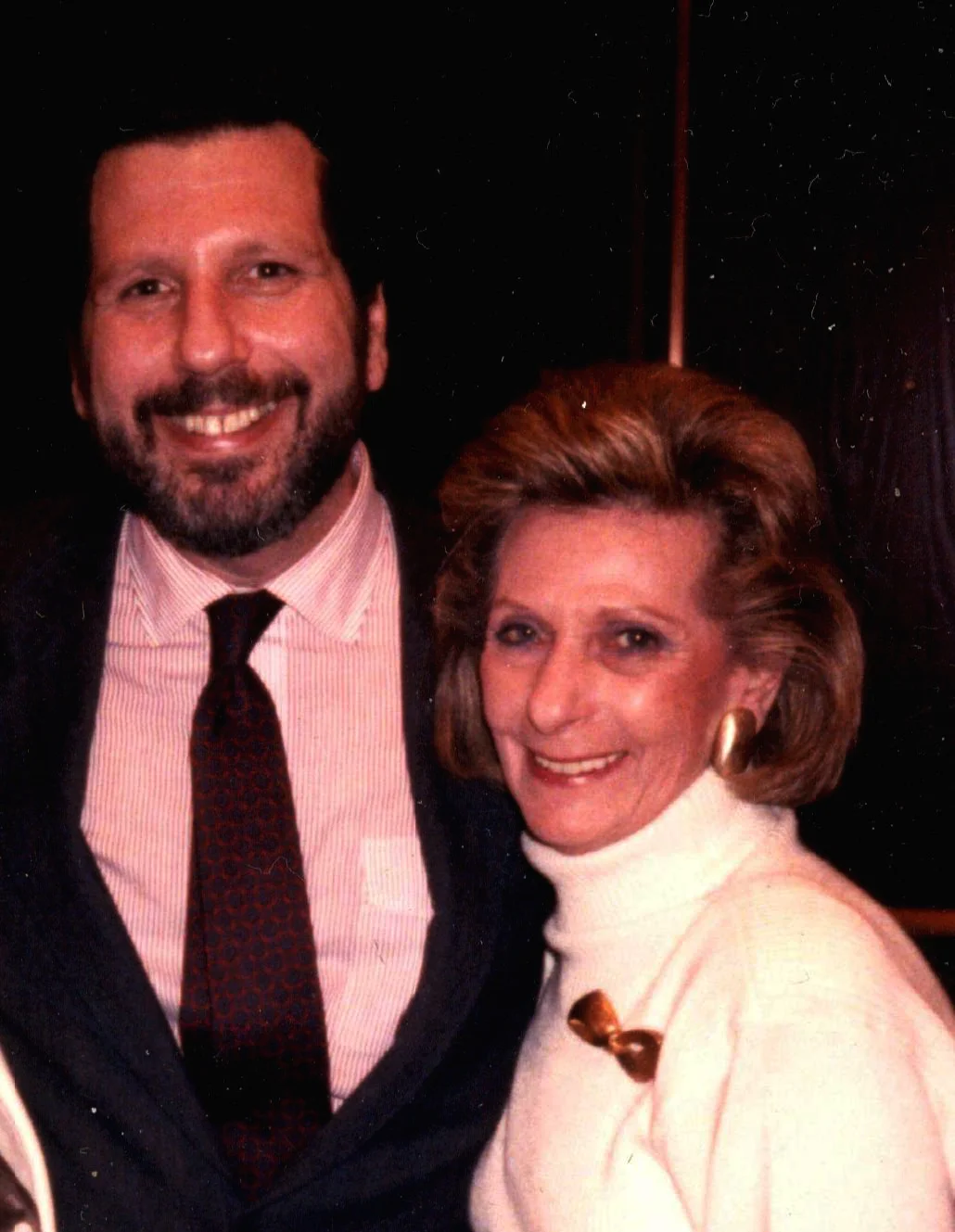
Note from curator Rozanne Gold: This priceless story, so perfect for Mother’s Day, is personal and poignant. It comes from New York’s beloved Food Maven, Arthur Schwartz who happens to be one of my closest friends. We met each other in 1978 in the kitchen of Gracie Mansion, when I was the chef for Mayor Ed Koch and Arthur was the restaurant critic for the New York Daily News. Arthur went on become a legendary food writer and radio personality, but also a well-respected cooking teacher and “walking encyclopedia” of all things Italian, Jewish, and New York. His is a rich and riveting portfolio of knowledge and experience. You can learn more about Arthur from his many cookbooks, including Jewish Home Cooking: Yiddish Recipes Revisited. Many thanks to Arthur for his “Mother’s Day” essay – a treatise on food and memory for sure, but also one, quite fittingly, about the art of handwriting.

Recipes My Mother and Grandmother Wrote by Arthur Schwartz
Elsie was a great and avid cook. My mother, Sydell, her daughter, was a good cook, but she never had the enthusiasm for cooking that Elsie had. It’s obvious from her recipes, however, that she at least wanted to continue family food traditions, which she did, more or less, after my grandmother died. Most of her recipes in that folder, written in my mother’s very neat, even beautiful, penmanship, are from my grandmother’s repertoire. I can tell which were written by Elsie herself because my grandmother’s handwriting was sloppier than my mother’s, though derived from the same New York City standard as my mother’s, and, in fact, my own handwriting, which is somewhere between the two in clarity.
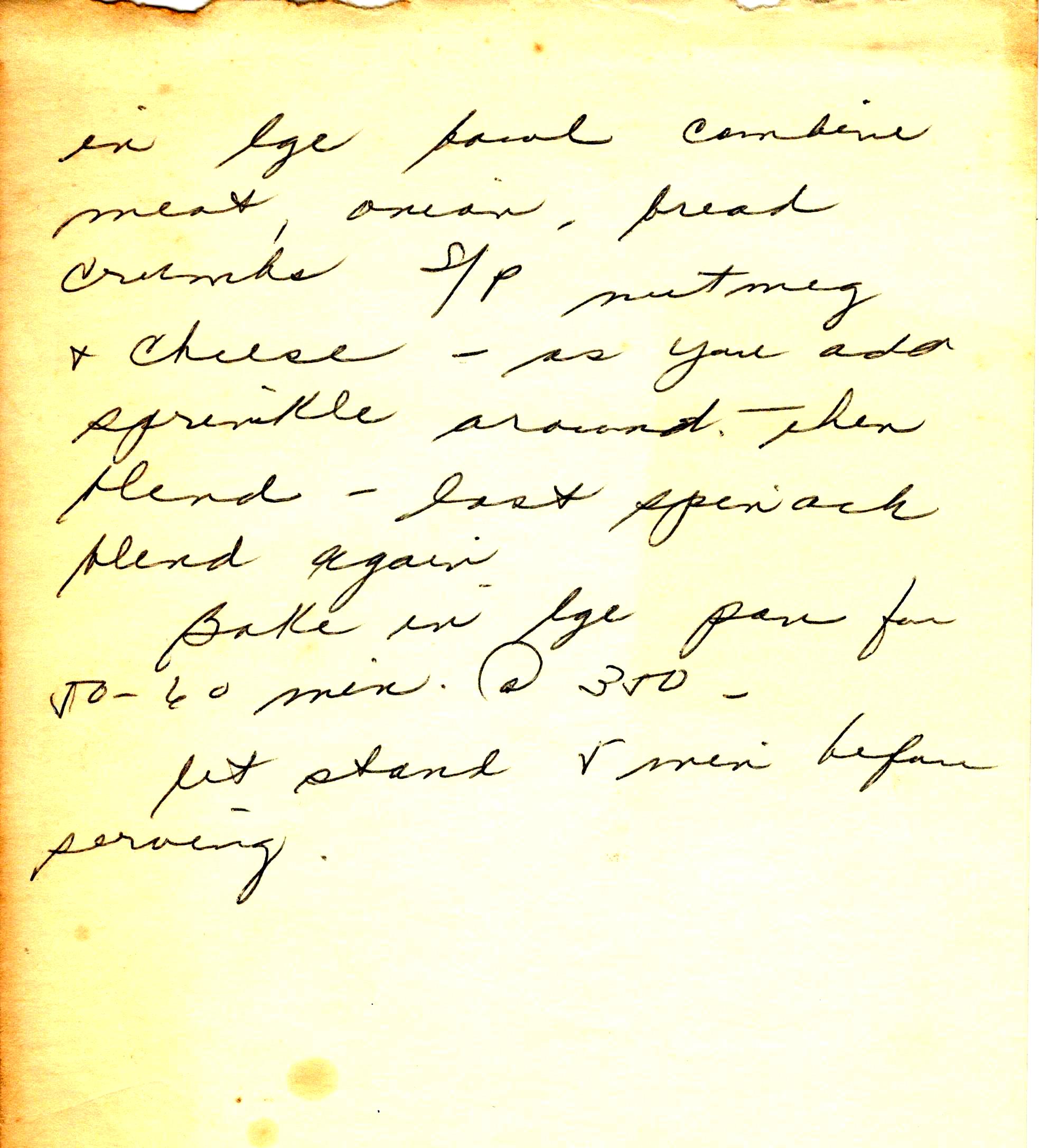
We all learned the same style of penmanship in New York City schools. Called The Palmer Method, it was taught in New York from the late nineteenth or early twentieth century (as far as I can tell) until relatively recently, when cursive writing ceased to be taught altogether. When we all grew up, however, examples of The Palmer Method in which we were mercilessly drilled, was exemplified over every elementary-school blackboard in an alphabet printed on oak tag. For the longest time, I have been looking for a cache of recipes in a manila folder, mostly for Passover, handwritten by my grandmother and mother. They were on odd slips of paper, on the backs of envelopes (my grandmother’s favorite “note” paper, it seems), or scribed onto pages torn from notebooks. Some are mere ingredient lists, some have full or sketchy directions. But for the life of me, for years I couldn’t find them until just a few weeks ago.
Spring cleaning my office, I came across them in time to motivate me to make one of my family’s favorite Pesach dishes for our Seder. It is sweet potato and prune tzimmes, a sweet and sour casserole flavored with a goodly amount of flanken, which, to the Yiddish cook, is short ribs cut across the bone instead of between the bones. It’s one of the few recipes of my maternal grandmother, Elsie Binder Sonkin, that I have not published during the 47 years I have been a food writer and editor, and I was happy to see it outlined in my mother’s neat cursive. It was delicious, by the way.
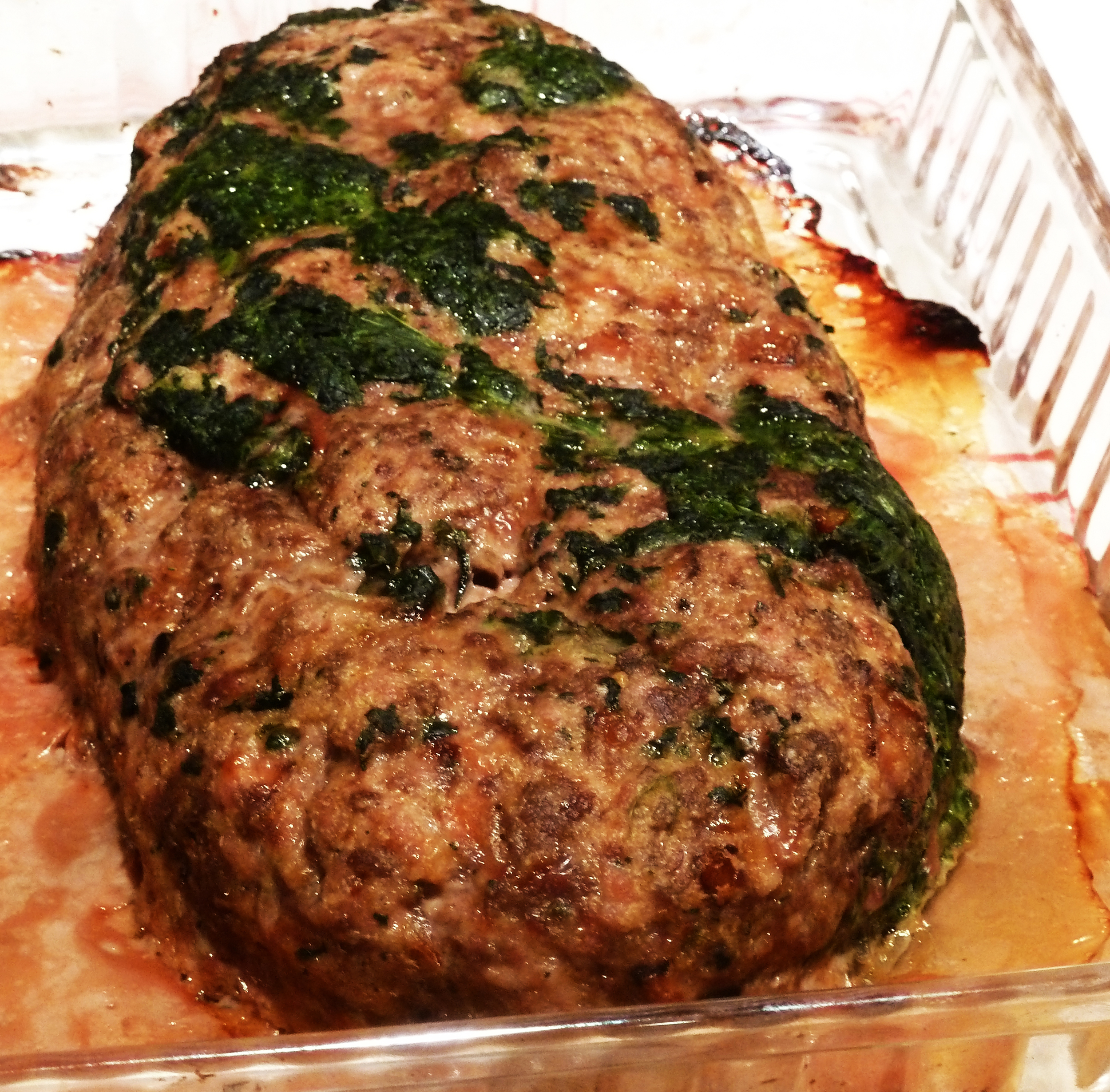
The most thrilling recipe I found in that folder, however, was not any of my grandmother’s, most of which I have already published in books, newspaper columns and magazine articles, but my own. It is for a meatloaf I created about 30-something years ago (before I would have put it on my computer) for the birthday of my long-time partner and now legal spouse, Bob Harned. Bob has fond memories of this meatloaf recipe, which was published in a weekly column called “Sundays in the Kitchen with Arthur” that I was writing for the New York Daily News Sunday magazine. I called it Marble Meatloaf, because it is streaked with spinach. Bob has asked me to make it again from time to time, but I’d lost track of the exact recipe. I am sure the magazine it appeared in is packed in one of the many archival boxes in our storage locker, but I’ve never gotten the energy to pursue the search.
Sydell’s handwritten version to the rescue, a gift from my mother, who died 26 years ago, on Mother’s Day. I think I have to make it this weekend.

Arthur Schwartz’s Marble Meatloaf
Ingredients
1 medium onion, finely diced
2 tablespoons butter or oil
1-1/2 lbs. ground chuck
½ cup fine dry bread crumbs
½ cup milk or water
1 egg
1 teaspoon salt
½ teaspoon freshly ground black pepper
1/8 teaspoons freshly ground nutmeg
3 to 4 tablespoons grated parmesan cheese
10-ounce package chopped spinach, thawed
Serves 4
Directions
- In a small skillet, sauté onion in butter until golden, about 8 minutes. Meanwhile, combine bread crumbs and milk; let stand so crumbs absorb milk, then, with a fork, beat in the egg.
- Take the chopped spinach in small handfuls and squeeze out excess moisture.
- In a large mixing bowl, combine the ground beef, the sautéed onion, the bread-crumb mixture, salt, pepper, nutmeg, and grated cheese. As you add the ingredients, distribute them around the surface of the meat, don't just plop them in.
- With your hands, blend everything together until mixed well. Add the spinach and mix again, just until all the ingredients seem equally distributed. Don't overmix or knead the meat.
- Turn the meat mixture into a rectangular baking dish and pat into a rye-bread shaped loaf about 4 inches across at the bottom and tapered towards the ends. Bake in a pre-heated 350-degree oven for 50 to 60 minutes, depending on doneness desired. Let rest 5 minutes before serving. Serve hot or at room temperature.
